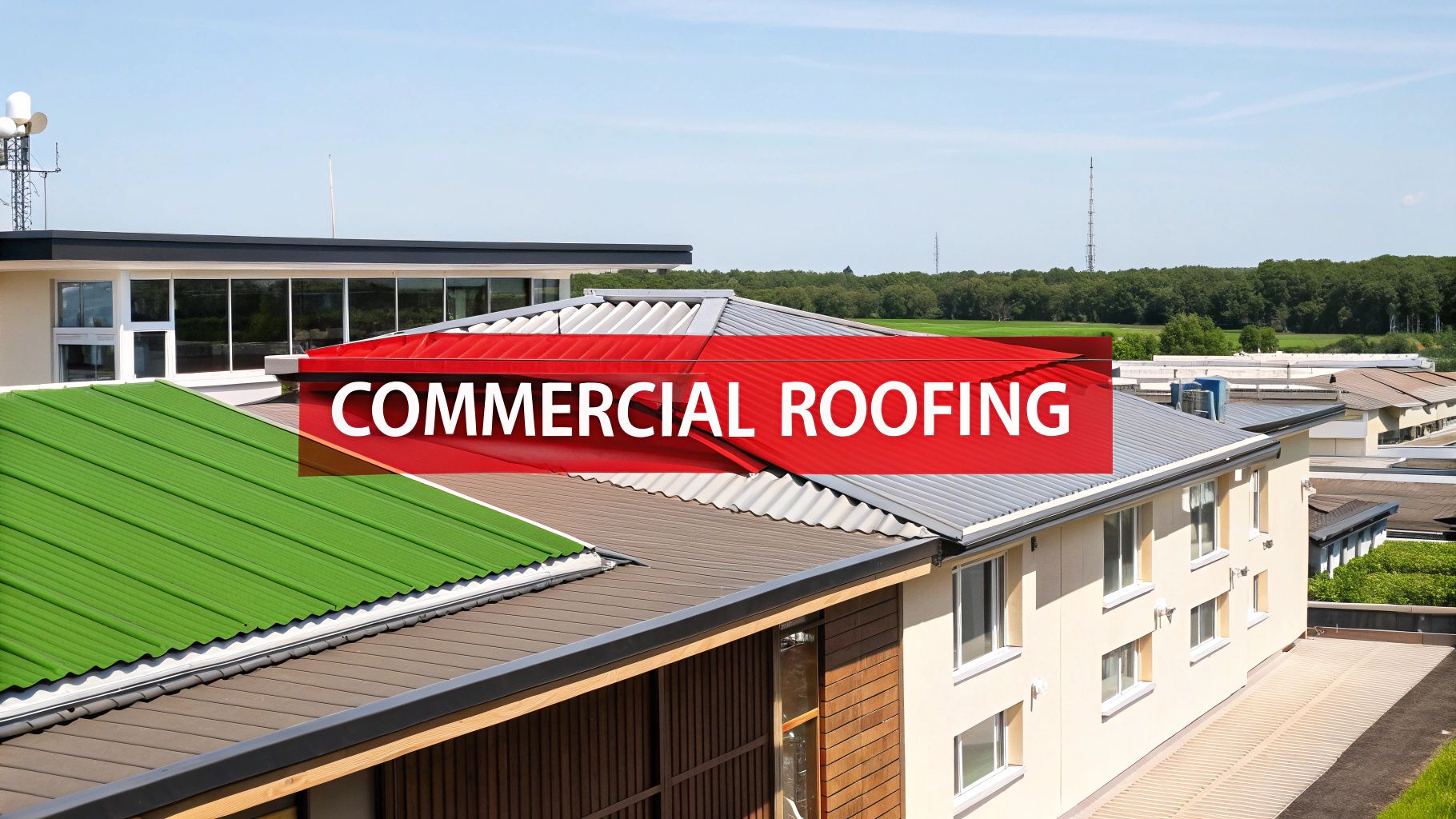

This article covers the real advantages and drawbacks of silicone roof coatings for flat and low-slope commercial roofs, with a focus on how Arizona’s intense sun, monsoon storms, and ponding water affect your decision. Whether you’re evaluating a foam roof recoating in Phoenix or comparing silicone vs acrylic roof coating options, what follows is a practical breakdown to help you spend wisely.
Key Takeaways
- Silicone roof coatings deliver outstanding UV resistance and ponding water performance, making them a strong fit for flat commercial roofs and SPF foam systems across Arizona.
- Silicone coatings can reflect up to 90% of UV rays and last 10 to 20 years with proper application and maintenance.
- Key downsides include dirt pickup that reduces reflectivity over time, slipperiness when wet, limited color options, and adhesion challenges when recoating over old silicone surfaces.
- Silicone is not always the right answer-saturated SPF foam or a structurally failed deck typically requires a full re-roof, not just a coating.
- Read on for details on cost per sq ft, recommended recoat intervals, and how silicone stacks up against acrylic and urethane under Arizona conditions.
What Is a Silicone Roof Coating?
A silicone roof coating is a liquid-applied, moisture-cure, elastomeric membrane designed to restore and protect existing low-slope and flat roofs. Once cured, the coating material forms a rubber-like, seamless layer that bonds to substrates including SPF foam, modified bitumen, built-up roofs, metal panels, and single-ply membranes. Silicone acts as a seamless membrane that seals the building envelope against water intrusion without tearing off the existing roof.
This isn’t roof paint. Silicone roof coating systems function as a waterproofing layer engineered for prolonged exposure to environmental elements. High-solids silicone coatings typically exceed 90% solids content, meaning nearly all of the coating material stays on the roof surface rather than evaporating. They’re also environmentally friendly with low volatile organic compounds (VOCs), making them safe for occupied buildings.
Common use cases in Arizona include:
- Recoating flat SPF foam roofs in Phoenix and Tucson that have lost their protective surface
- Refreshing aged elastomeric coatings on commercial roofs
- Improving energy efficiency on older buildings by adding a reflective white surface across the entire roof surface
When you see terms like “silicone roof,” “silicone coatings,” or “roof coating” used interchangeably, know that silicone refers specifically to polysiloxane chemistry-one type of elastomeric coating among various types, but optimized for UV radiation and standing water.
Silicone vs. Acrylic vs. Urethane in Arizona Sun and Ponding Water
Choosing between these three primary types of roof coatings matters more in Arizona than almost anywhere else. The combination of constant exposure to direct sunlight, 100°F+ summer days, monsoon-driven ponding water, and dramatic temperature swings puts every coating material to the test.
Acrylic coatings are cost effective and highly reflective out of the can. But under Arizona’s harsh conditions, they chalk, erode, and lose reflectivity faster than silicone. Acrylics are generally not rated for long-term ponding water-they can re-emulsify or soften when submerged. If your flat roof drains well, acrylics can work. If not, expect earlier failures.
Urethane coatings offer excellent abrasion and impact resistance, making them a strong choice near HVAC units and areas with heavy foot traffic. However, aromatic urethanes degrade under UV unless top-coated, and they generally cost more upfront. Ponding water resistance is moderate-better than acrylic, but inferior to silicone.
Silicone coatings excel in both UV stability and ponding water resistance. Silicone is completely hydrophobic and handles prolonged ponding water exceptionally well, which is why it’s ideal for flat roofs that experience chronic standing water issues. It also expands and contracts with thermal movement without cracking-critical when Phoenix rooftops swing from 20°F winter nights to 160°F surface temperatures in summer.
One important distinction: “elastomeric vs silicone roof coating” is a common search, but elastomeric simply means flexible. Acrylic coatings are elastomeric. Silicone coatings are elastomeric. Silicone is a specific elastomeric chemistry optimized for good UV protection and water resistance.
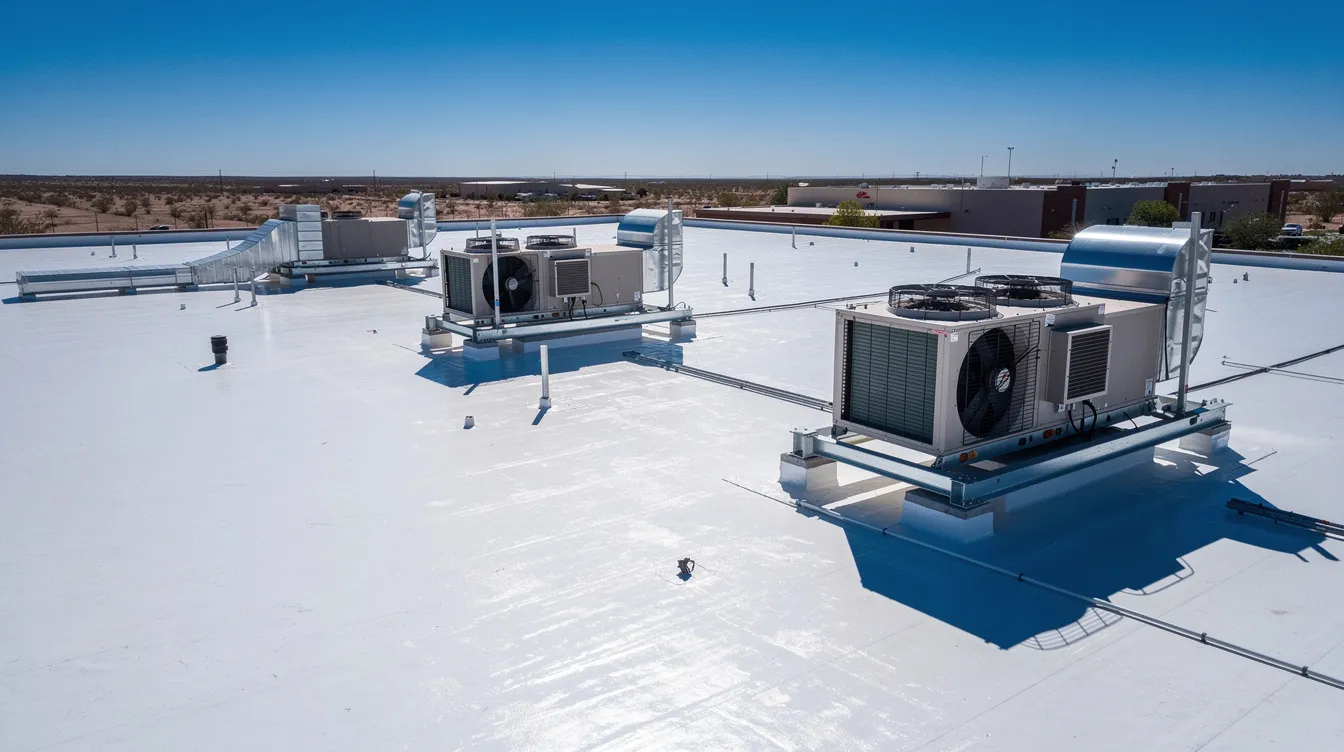
Silicone Roof Coatings: Pros and Cons (With Table)
The core of any silicone roof coating decision comes down to weighing its advantages against its limitations in your specific situation. Here’s a straightforward comparison, especially relevant for commercial roofs and flat residential roofs in hot, sunny markets like Phoenix.
| Pros | Cons |
|---|---|
| Long-term UV resistance even under extreme Arizona sun | Attracts dirt; reflective properties decline without cleaning |
| Resists ponding water without breaking down-handles water sitting for days | Silicone roofs become extremely slick when wet, posing safety hazards near rooftop equipment |
| High solar reflectance reduces heat absorption and lowers HVAC loads | Limited color choices; mostly white or very light tones |
| Restores many substrates: SPF foam, modified bitumen, metal, single-ply | Adhesion issues when recoating over existing silicone or dirty surfaces |
| Monolithic waterproofing around penetrations and HVAC units | Vulnerable to tearing in non-reinforced states on high-traffic areas |
| Minimal tear-off; less disruption and disposal cost | Requires specialized application and cleanup techniques |
| Prolongs roof life by 10–20 years when installed to spec | Higher upfront cost vs. acrylic coatings |
| Can qualify for extended manufacturer warranties with proper thickness | Challenging to apply without proper equipment maintenance |
Expanding on key pros:
- Silicone coatings can reflect up to 90% of UV rays, which directly lowers roof surface temperature and reduces interior heat absorption. Silicone coatings help reduce energy costs by lowering internal building temperatures-reported cooling load reductions on large Phoenix commercial roofs often reach 10–18%.
- The coating’s resistance to ponding water protects flat roof sections where drains clog or slopes are minimal. Unlike acrylics, silicone coatings resist ponding water without breaking down.
- Silicone coatings can be applied using spray equipment or rollers, then recoated later to extend the roofing system’s useful life rather than tearing everything off.
Expanding on key cons:
- Dirt accumulation can reduce a silicone coating’s reflective properties significantly within 6–18 months in dusty Arizona environments. Periodic cleaning is necessary to maintain energy efficiency.
- The slippery surface is a real safety concern. Walk pads or textured coating systems should be installed around frequently serviced HVAC units and access points.
- Surface preparation is crucial for proper adhesion of silicone coatings. Silicone coatings require thorough surface cleaning before application, and proper adhesion testing is recommended before any silicone application over aged roofing materials.
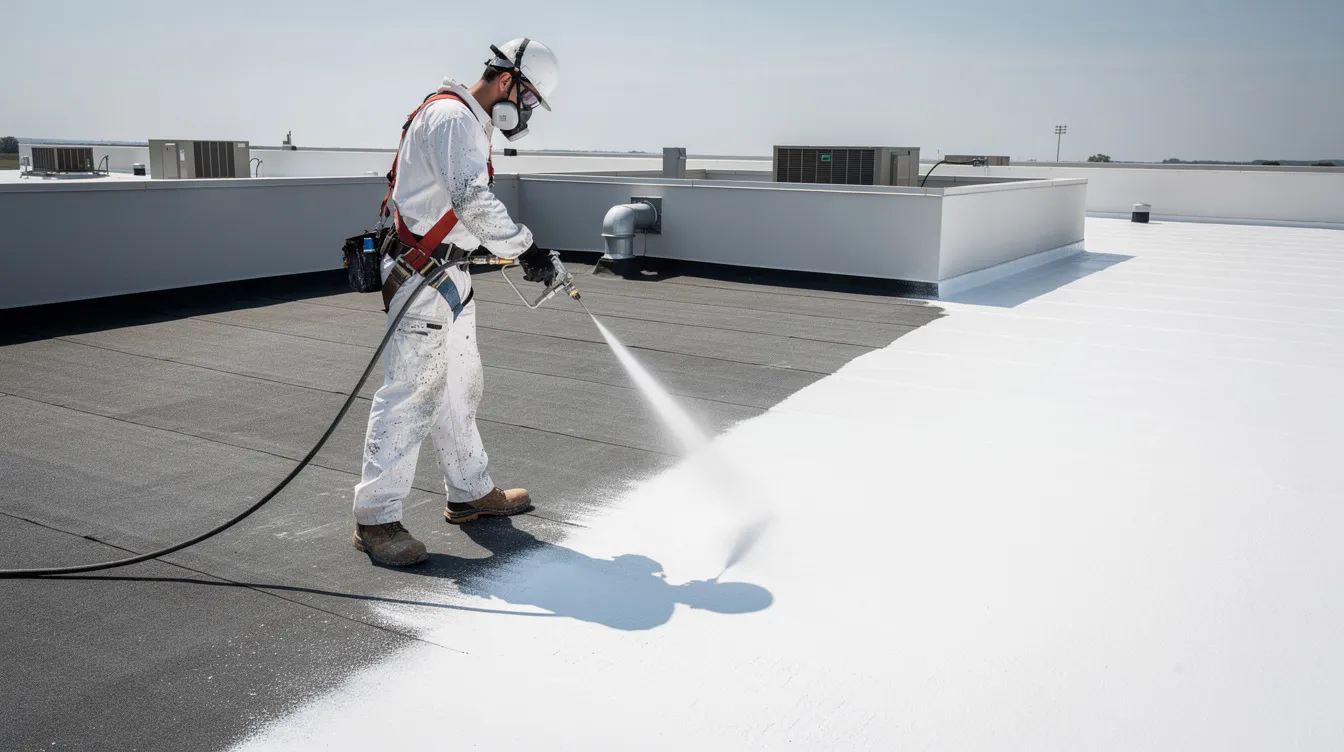
Recoating a Foam Roof With Silicone: Interval and Benefits
Spray polyurethane foam roofs are common on flat and low-slope buildings throughout Phoenix and other Arizona cities. SPF provides excellent insulation, but the foam itself needs a protective coating to survive UV rays and mechanical wear. Without it, the foam turns brown, chalky, and eventually powders away.
Typical recoat intervals:
- Most silicone coating systems on SPF foam recommend recoating every 10–15 years, depending on initial thickness, foot traffic, and maintenance history.
- Thinner or heavily weathered foam roofs may need inspection and recoating closer to 8–10 years, especially under intense Arizona sun.
Benefits of timely foam roof recoating:
- Restores UV protection before the SPF degrades beyond repair, rebuilds coating thickness, and seals minor surface cracks before moisture reaches the foam.
- Applying a silicone coating can extend roof lifespan by 10 to 20 years at a fraction of full replacement cost.
- Regular inspections help detect issues like cracks or blisters early, before they become expensive problems.
Warranty implications: Many manufacturers allow warranty extensions if the roof is inspected and recoated within their specified interval using approved contractors. Documentation matters-keep records of every inspection and recoat.
Before recoating, contractors should take core samples or use infrared scanning to verify foam dryness. Areas of exposed or heavily eroded foam need repair before installing new silicone. A silicone coating over saturated foam is a recipe for failure.
Roof Coating Cost: Silicone Roof Coating Price Per Sq Ft
Exact roof coating cost varies by project size, roof condition, access, and local labor rates. Rather than quoting a fixed number, here are the realistic ranges and key factors that drive silicone roof coating price.
Commercial silicone restoration coating in Phoenix typically falls between $2.00 and $7.00 per square foot installed. Smaller residential foam recoats generally run $2.50–$3.50/sq ft including prep and minor repairs. Acrylic options are lower-often $1.50–$2.50/sq ft in similar scenarios.
Main cost drivers:
- Existing roof type: SPF foam, modified bitumen, built-up roofs, metal, or single-ply-each requires different prep
- Extent of surface prep: power washing, repairing blisters, replacing wet insulation, treating rust, addressing water issues
- Required coating thickness for warranty length-thicker systems cost more but extend roof life further
- Number of details and penetrations: HVAC units, skylights, vents, parapet walls all add labor
- Roof access complexity: multi-story buildings and tight staging areas in dense parts of Phoenix raise costs
Silicone roof coatings are cost effective compared to full replacement because they eliminate tear-off in many cases, reduce debris hauling, and let you re-use existing dry insulation and concrete or metal deck. Silicone coatings are also considered environmentally friendly and safe for use, which avoids disposal complications.
A site-specific inspection is always required before firm pricing. Request an evaluation from a qualified roofing contractor to get a real number.
When a Silicone Roof Coating Is the Wrong Answer
Silicone roof coatings solve many problems, but they don’t solve all of them. There are situations where any roof coating is the wrong answer and re-roofing is the only responsible path.
Common disqualifiers:
- Saturated SPF foam or insulation confirmed through core samples or infrared scans-coating over wet materials traps moisture and accelerates damage
- A structurally compromised deck (rusted-through metal, rotten wood, deteriorated concrete) where a coating would hide but not fix serious weathering and structural failure
- Significant trapped moisture layers that would blister or delaminate under a new coating
- Roofs patched repeatedly with incompatible materials like asphalt mastic over single-ply, making adhesion unreliable without extensive and costly prep
Building codes and numerous products manufacturers limit recover options when too much of the roofing system is damaged. When the existing roof has failed across 25% or more of its surface, restoration typically isn’t code-compliant.
In these scenarios, a full replacement-such as new modified bitumen roofing or another approved commercial system-is the proper approach. A professional roof inspection with moisture survey data will tell you which path makes sense before you spend money on coatings that won’t perform.
Choosing the Right Coating System for Your Commercial Roof
Selecting the right silicone coating system isn’t one-size-fits-all. The decision depends on roof type, climate exposure, ponding water potential, rooftop traffic, budget, and your long-term plans for the building.
Evaluation steps:
- Start with a detailed roof inspection including moisture surveys, checking seams, flashings, and ponding areas
- Identify the existing roofing system and whether there are already coating systems in place
- Review building use: sensitive operations below, heavy traffic around HVAC units, or future solar installations
Silicone is typically favored for:
- Flat or low-slope roofs with chronic ponding water around drains or scuppers
- Older SPF foam roofs that are dry but sun-chalked and need new UV protection
- Buildings prioritizing energy efficiency on large air-conditioned commercial roofs
Acrylic or hybrid systems may fit better when:
- Roofs have excellent drainage with minimal ponding water and budget is tight
- Projects need more color options or specific reflective properties at lower initial cost
One maintenance note: you should pressure wash silicone coatings every 6–12 months to maintain reflectivity and protect your energy savings investment.
Work with roofing professionals who have direct experience with elastomeric and silicone roof coatings in Arizona’s climate. The right contractor will help you avoid coating failures and make sure your system is replaced only when it truly needs to be.
FAQ: Silicone Roof Coatings
These FAQs address common questions from Arizona property owners that go beyond what’s covered in the main sections above.
With proper prep, adequate thickness, and routine inspections, silicone coatings can last 10 to 20 years or longer-even under Arizona’s intense UV radiation and temperature swings. Roofs with heavy foot traffic or severe ponding may trend toward the lower end unless localized touch-ups and regular inspections are performed. Silicone roof coatings can last up to 20 years with proper application and a basic maintenance plan.
Yes, but carefully. Silicone surfaces are highly flexible and walkable for routine maintenance, but they become slippery when wet, dusty, or covered in morning dew. Adding designated walk pads or textured coating paths around HVAC units and access areas improves safety and limits wear on the coating.
Absolutely. White silicone surfaces have strong reflective properties that lower roof surface temperatures dramatically compared to dark roofs, which reduces heat absorption and HVAC loads. Long-term energy efficiency depends on keeping the surface clean-dirt accumulation can reduce a silicone coating’s reflective properties. A simple cleaning schedule protects your savings.
In many cases, yes. Silicone can be applied over various types of existing elastomeric coatings including some acrylics, but proper adhesion testing and thorough cleaning are essential first steps. Existing loose, peeling, or incompatible coatings must be removed or repaired before installing to avoid future delamination. A higher solids content silicone generally performs better in these recover scenarios.
Usually not. Most silicone roof coating installations on commercial roofs can be completed while the building remains occupied. Disruption is minimal compared to full tear-off projects-silicone coatings have low VOCs, and contractors coordinate staging and safety measures to limit noise and odor. Normal operations can typically continue throughout the project.