

Arizona roof insurance claims · step by step
Roof Insurance Claim Help in Arizona: A Step-by-Step Guide
Storm damage to your roof? Here is how the claim process works in Arizona: what to document, what the adjuster looks at, the deadlines your insurer must meet and the rules that protect you. Need it documented now? Call (480) 463-3483.
- Free on-roof inspection & photo report
- We can meet your adjuster on the roof
- Written repair scope
- Licensed & insured — ROC#356304

Get Your Roof Damage Documented
Takes about a minute. Free on-roof inspection with photos and a written report you can use for your claim.
A roof claim usually starts with a stain on the ceiling, tiles in the yard after a monsoon storm, or a drip that will not stop. What you do in the next few days decides how smoothly the claim goes. This guide walks through the roof insurance claim process in Arizona step by step: what to document, when to bring in a roofer, what the adjuster looks at, and the Arizona rules that protect you.
The short version
- Make it safe and stop the water.
- Photograph everything before it is cleaned up or repaired.
- Get a roofer’s inspection and written report.
- Report the claim to your insurer promptly.
- Have your roofer at the adjuster’s inspection.
- Check the insurer’s estimate line by line.
- Repair, then send the final invoice to close out the claim.
Is it an insurance claim at all?
Homeowners insurance pays for sudden, accidental damage: wind that lifts shingles or slides tiles, hail that cracks tile or punctures foam, a falling tree or branch. It does not pay for a roof that has simply worn out, such as tile underlayment that has dried out after 20–30 years in the sun, or for damage caused by poor maintenance.
Two more things decide whether a claim is worth filing:
- Your deductible. If the repair costs less than the deductible, a claim gains you nothing. Price it with our roof repair cost calculator.
- How your policy pays. A replacement cost (RCV) policy and an actual cash value (ACV) policy pay very differently on an older roof. Our guide to whether insurance covers roof replacement in Arizona explains the difference, and our roof depreciation calculator estimates what each would pay on your roof.
Step 1: Make it safe and stop the water
Keep people away from sagging ceilings and from water near lights and outlets. Catch drips, move belongings and do not climb onto a wet or damaged roof. Policies generally expect you to take reasonable steps to prevent further damage, so emergency tarping is usually the right call. Photograph the damage before the tarp goes on, and keep the invoice. If water is coming in now, see emergency roof repair.
Step 2: Document everything
| What to capture | Why it matters |
|---|---|
| The date and time of the storm or event | Ties the damage to a specific covered event |
| Photos and video of the roof from the ground, from several angles | Shows the damage before anything is moved or repaired |
| Broken tiles, shingles or debris in the yard | Physical evidence of wind or impact; keep a few pieces |
| Interior damage: ceilings, walls, insulation, belongings | Interior losses are part of the claim too |
| Receipts for tarping, drying and emergency repairs | Mitigation costs are often reimbursable |
| Past inspection reports and repair invoices | Shows the roof was maintained and the damage is new |
Step 3: Get a roofer’s inspection
An adjuster works for the insurer. A roofer looks at how the roof system has actually been damaged. Before you open the claim, it helps to know what you are claiming for. A useful roof inspection report includes:
- The roof type and approximate age
- Photos of every damaged area, close up and in context
- The likely cause: wind, hail, impact or wear
- Hidden damage, such as torn underlayment under cracked tile or moisture in a flat roof
- Whether repair is viable or replacement is needed, with a written scope
Tile and flat roofs are where damage most often goes unseen. See tile roof insurance claims and, for flat and commercial roofs, thermal inspections, which can find trapped moisture.
Get your roof documented properly
Free on-roof inspection with photos and a written report you can use for your claim.
Step 4: Report the claim
Call your insurer or file online as soon as you can. Give the date of the event, a short description of the damage and your photos. Write down your claim number and the name of everyone you speak to. Your policy sets the reporting deadline, so do not wait.
Step 5: The adjuster’s inspection
The insurer sends an adjuster to inspect the roof. After a big monsoon storm that can take a while. Have your photos, claim number and roofer’s report ready, and ask your roofer to be there. An experienced roofer can point out damage that is easy to miss, such as cracked tile that looks intact from a ladder, lifted flashing or torn underlayment, and answer technical questions on the spot.
Step 6: Check the insurer’s estimate
Compare the insurer’s estimate with your roofer’s scope line by line. Items that are often left out:
- Underlayment under damaged tile, not just the tile itself
- Flashing, drip edge, vents and pipe boots
- Tear-off and disposal, and any decking that needs replacing
- Permits, where your city requires one (see our Arizona roof permit guide)
- Matching: replacement tile in the same profile and colour
If something is missing, your roofer can document it and you can ask the insurer for a supplement or re-inspection. If the claim is denied, read what to do when a roof insurance claim is denied.
Step 7: Repair and close out the claim
Once the scope is agreed, the work is scheduled. On a replacement cost policy, insurers often pay the actual cash value first and release the rest (the recoverable depreciation) after the work is done, so send the final invoice and photos to your insurer to collect it.
Arizona rules that protect you
- Insurer deadlines. Under A.A.C. R20-6-801, an insurer must acknowledge your claim within 10 working days, accept or deny it within 15 working days of receiving proof of loss, and, if it needs more time, explain why in writing and update you every 45 days.
- Storm repair contracts. A.R.S. § 32-1158.02 says a roofer may not negotiate your claim for you. A contract that depends on an insurance claim must say the contractor cannot promise coverage, any down payment is capped at 50%, you can cancel for any reason within 4 business days, and you can cancel within 72 hours after your insurer denies the claim.
- License check. Look up any roofer at roc.az.gov before you sign, especially after a storm when out-of-state crews knock on doors.
- Complaints. If you believe your insurer is not handling the claim properly, you can file a complaint with the Arizona Department of Insurance and Financial Institutions.
Why roof claims get delayed or denied
- Late reporting. The longer the gap between storm and claim, the harder it is to tie the damage to the event.
- Weak evidence. A few blurry photos do not show the extent of the damage.
- Old wear mixed with new damage. If the roof was already worn, the insurer may attribute the problem to age.
- Repairs before documentation. Tarp and protect the house, but photograph everything first and hold off on permanent repairs until the adjuster has seen it.
- Assuming a whole new roof. Damage to one slope does not automatically mean full replacement. Age, matching, code and repairability all play a part.
Guides for your situation
- Wind and monsoon damage claims
- Roof leak insurance claims
- Tile roof insurance claims
- What hail damage looks like
- When a roof claim is denied
Roof insurance claim FAQ
How long do I have to file a roof insurance claim?
Your policy sets the deadline, and many require you to report damage promptly. Report it as soon as you discover it, and note the date of the storm or event. Waiting makes it harder to show the damage came from that event.
Should I call a roofer or my insurance company first?
Make the roof safe and document the damage first. Then get a roofer’s inspection, so that when you open the claim you know what is damaged and can describe it accurately. If water is coming in, call a roofer for emergency tarping right away and keep the receipt.
How long does an Arizona insurer have to respond to my claim?
Under Arizona’s claim-handling rule (A.A.C. R20-6-801), an insurer must acknowledge a claim within 10 working days and accept or deny it within 15 working days of receiving proof of loss. If it needs more time, it must tell you in writing and update you every 45 days.
Can my roofer handle the claim for me?
No. Under A.R.S. § 32-1158.02, a roofing contractor may not negotiate a claim on your behalf. A roofer can inspect, document the damage, write a repair scope and meet the adjuster on the roof, but the claim is between you and your insurer.
Will filing a roof claim raise my premium?
It can, depending on your insurer and claim history. That is one reason to have the roof inspected first: if the damage is small or below your deductible, a repair without a claim may make more sense.
Statewide service
Storm Damage Inspections Near You
Photo-documented roof inspections for insurance claims in all 28 communities we serve. Pick your city.
Real crews, real roofs
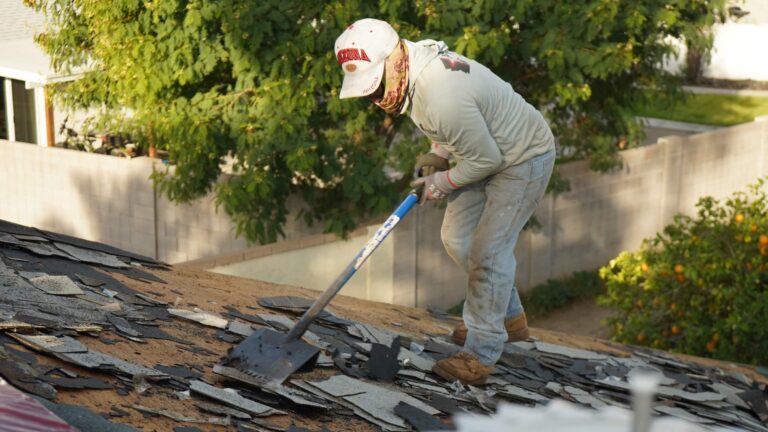
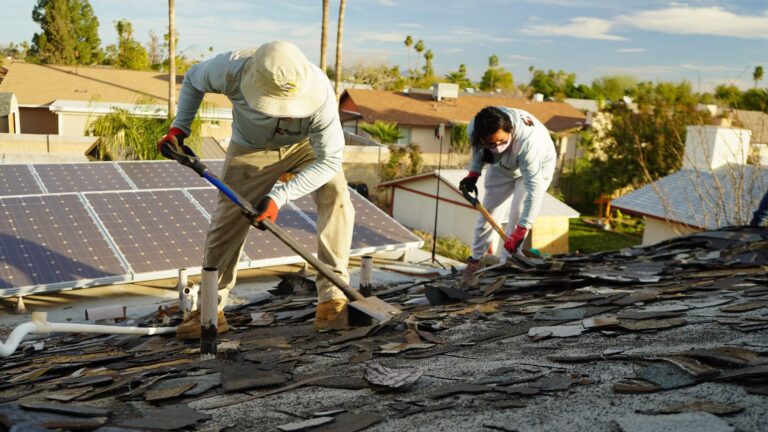
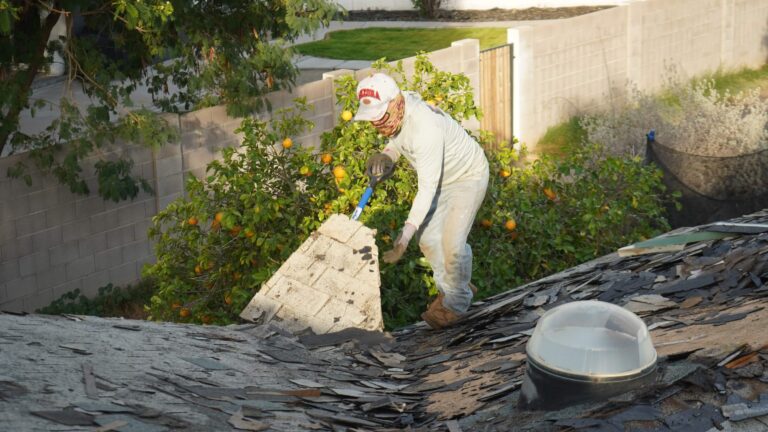
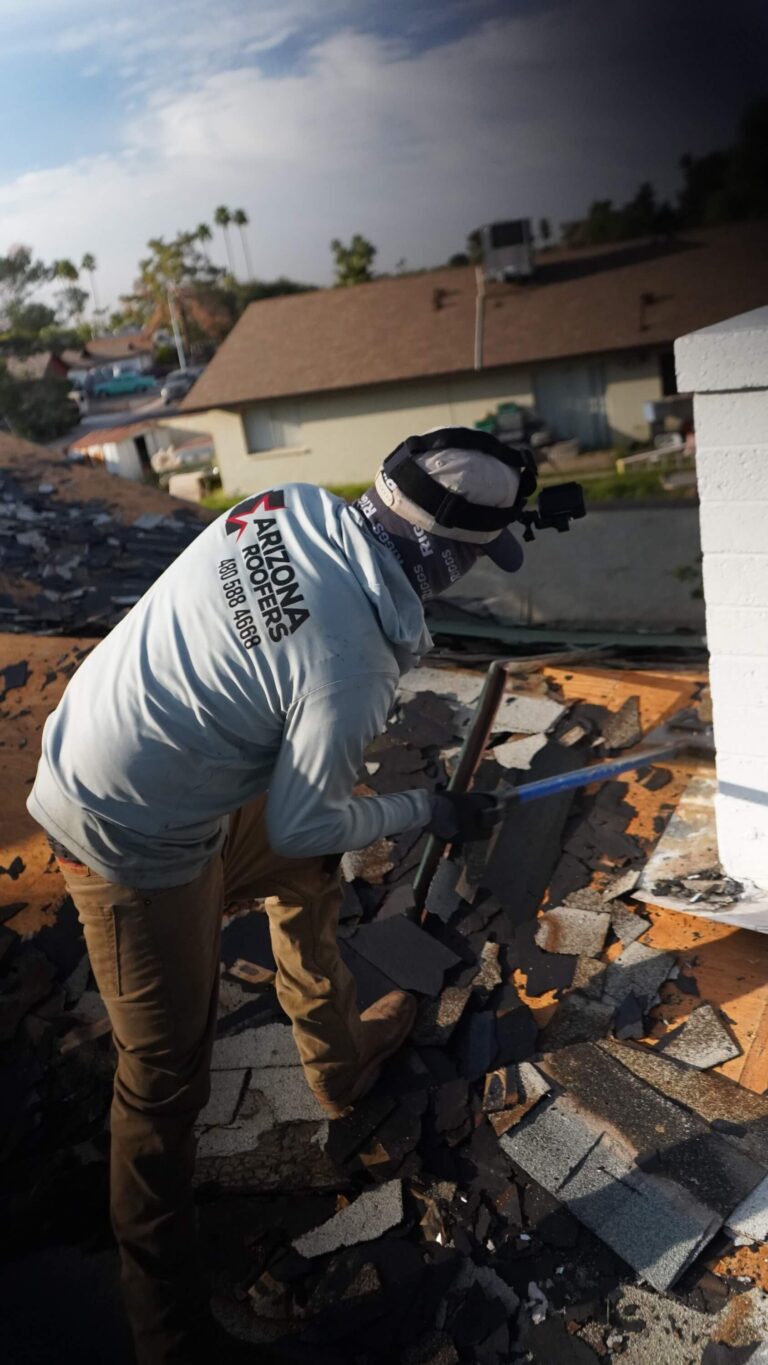
Our Roofing Crews at Work
Photos from recent Arizona Roofers jobs.


Reviews
What Arizona Homeowners Say
Real Google reviews. Read more on our Google Business Profile.


Get Your Roof Damage Documented
Free on-roof inspection, photos of every problem and a written report you can use with your insurer. Licensed ROC#356304.
Book My Free InspectionCall (480) 463-3483Guides written and reviewed by the licensed roofers at Arizona Roofers (ROC#356304 · ROC#356639), a GAF Master Elite® contractor and 2026 GAF President’s Club Residential Award winner. About our team →