
Key Takeaways
Modified Bitumen (Mod-Bit) roofing is a popular choice for commercial flat or low-slope roofs, known for its durability and weather resistance. Here are the essential points to understand before diving into the details:
- What It Is: An asphalt-based roofing material enhanced with polymers (like rubber or plastic) to create a tough, flexible, multi-layer membrane. It’s an evolution of traditional built-up roofing (BUR).
- Best For: Commercial and industrial buildings with flat or low-slope roofs that require superior waterproofing and the ability to withstand foot traffic and harsh weather.
- Key Benefit: The polymer modification gives it excellent elasticity and strength, allowing it to expand and contract with temperature changes without cracking. This makes it highly resistant to leaks, punctures, and UV damage.
- Two Main Types: It comes in two primary forms: SBS (rubber-like and flexible, ideal for fluctuating temperatures) and APP (plastic-like and rigid, perfect for high-heat, high-UV environments like Arizona).
- Lifespan: With professional installation and routine maintenance, a modified bitumen roof can reliably last 20 to 30 years.
- Installation: Requires skilled professionals. Methods range from traditional torch-down and hot-mop applications to safer, modern cold-applied adhesives and self-adhering membranes.
A Modern Take On Asphalt Roofing
Modified bitumen roofing is essentially an asphalt-based system, but it’s been supercharged with polymers to dramatically boost its strength and flexibility. Think of it as the next generation of traditional built-up roofing (BUR), engineered to handle the unique stresses that flat and low-slope commercial buildings endure.
This material marries the time-tested waterproofing power of asphalt with the resilience of modern polymer technology. Bitumen itself has been a roofing staple for over a century, but the game changed back in the 1960s and 1970s when polymer modification became more common. This innovation was born from a very real need for a roofing material that could handle extreme weather and the constant movement of large buildings. For a deeper look at its market history, check out this report on modified bitumen.
The Power Of Polymer Reinforcement
So, what exactly does “modified” mean? Here’s a simple way to think about it. Imagine concrete. By itself, it’s strong under compression but can be brittle and crack easily. Now, add steel rebar to create reinforced concrete—suddenly, you have a material with incredible tensile strength that can bend and flex without failing.
Modified bitumen roofing works on the exact same principle:
- Asphalt (Bitumen): This is your “concrete.” It provides the bulk of the material and, most importantly, the excellent waterproofing.
- Polymers: These are the “rebar.” They give the asphalt membrane elasticity and toughness, allowing it to resist cracking, punctures, and UV damage from the sun.
This powerful combination creates a tough, multi-layered membrane that is worlds away from the brittleness of older asphalt roofs. The infographic below really drives home the performance difference.
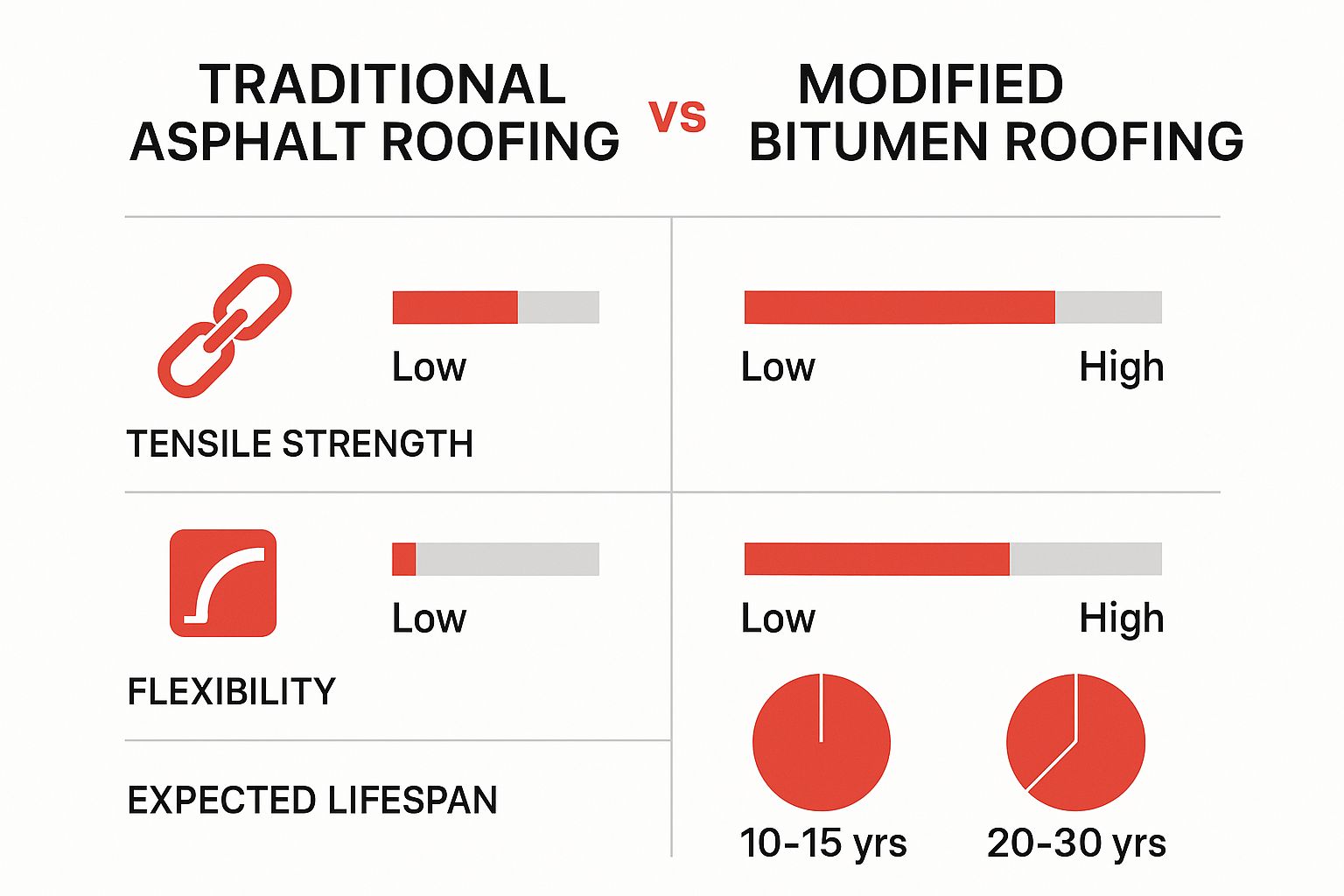
As you can see, adding polymers isn’t just a minor tweak—it fundamentally improves the material’s most important properties. This upgrade is why it has become such a trusted, go-to solution for protecting valuable commercial and industrial properties all over the country.
Understanding The Two Types Of Modified Bitumen
When you start looking into modified bitumen roofing, you’ll quickly discover it isn’t a one-size-fits-all solution. The material comes in two main “flavors,” each getting its unique properties from the specific polymer blended with the asphalt. Think of it like two different recipes for creating a tough, weather-resistant roof—one designed for flexibility, the other for rigid strength.
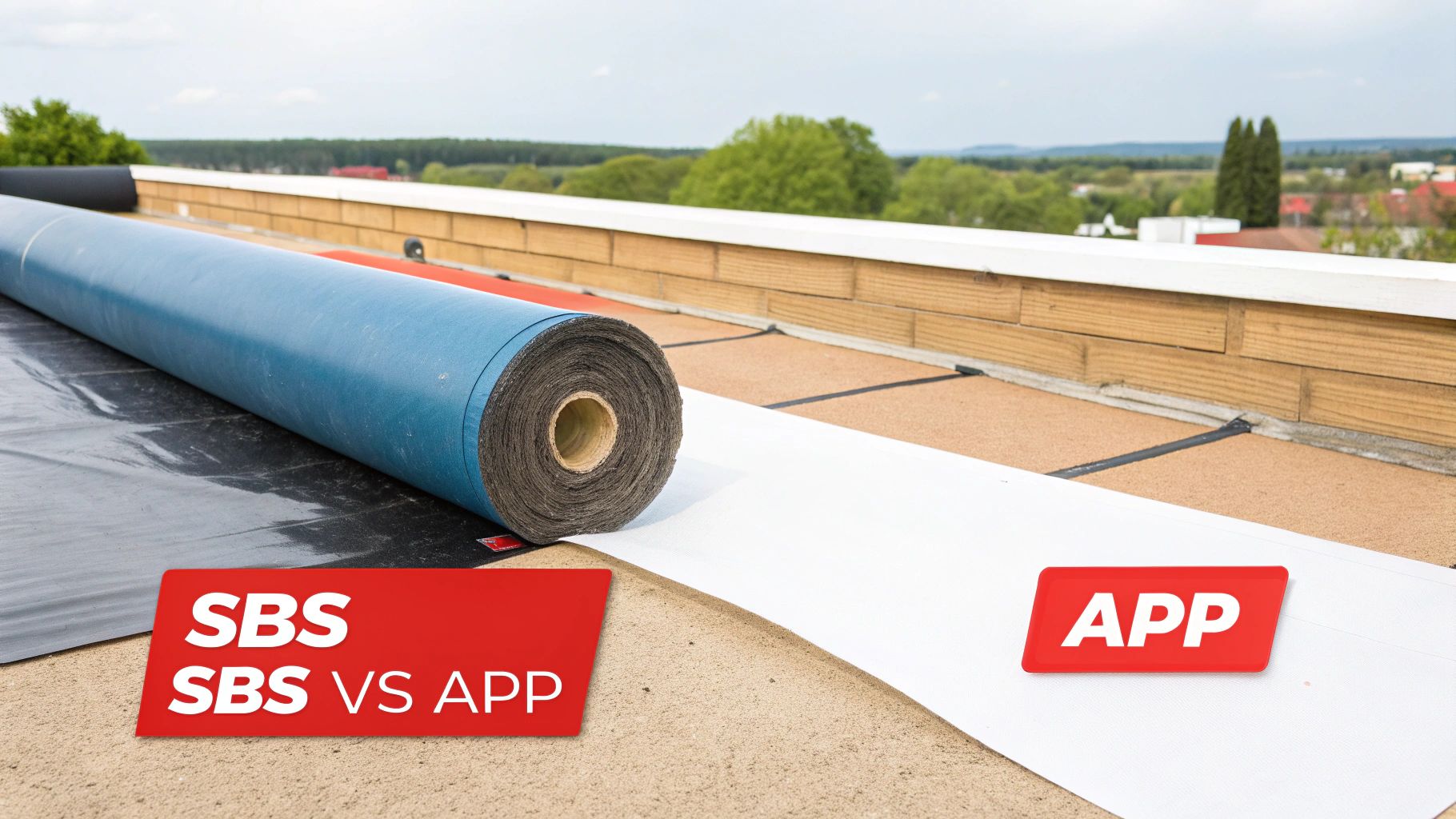
These two types are known as SBS and APP. The names sound a bit technical, but the core difference is pretty simple. One acts more like a stretchy rubber, while the other behaves like a hard plastic. Figuring out which one is right for your building is all about matching the material to your climate and structural needs.
SBS: The Flexible Contender
First up is SBS (Styrene-Butadiene-Styrene). This polymer is a synthetic rubber, and when you mix it into asphalt, you get a roofing membrane that’s incredibly elastic and flexible. That rubber-like quality is its superpower.
Picture a thick, heavy-duty rubber band. You can pull on it, and it snaps right back into place without tearing. An SBS roof does the same thing. It expands during our scorching Arizona summers and contracts on cooler nights, all without developing stress fractures or cracks. This ability to “breathe” with the building makes it a fantastic choice for climates with big temperature swings.
APP: The Resilient Shield
The other option is APP (Atactic Polypropylene). This polymer is a thermoplastic, which gives the asphalt a more plastic-like personality. The final product is a tougher, more rigid membrane with a significantly higher melting point.
You can think of an APP-modified roof as a tough plastic shield. It creates a hard, durable surface that’s exceptional at resisting the sun’s brutal UV rays and warding off long-term degradation.
This high melt point makes APP roofing a true champion in places with relentless sun and heat—like Arizona. It stays stable and won’t get soft, even on the most extreme days. While it doesn’t have the same elastic snap-back as SBS, its plastic nature provides unmatched resistance to weathering and UV damage.
Comparing SBS and APP Modified Bitumen
So, how do you choose? It’s not about which one is universally “better,” but which one is the right fit for your specific building and environment. This table breaks down the key differences to make the decision clearer.
| Feature | SBS (Styrene-Butadiene-Styrene) | APP (Atactic Polypropylene) |
|---|---|---|
| Primary Trait | Elasticity (Rubber-like) | Rigidity (Plastic-like) |
| Climate Suitability | Best for regions with wide temperature swings and extreme cold. | Perfect for areas with constant high heat and intense UV exposure. |
| Flexibility | Excellent; easily expands and contracts without cracking. | Good; more rigid but still offers sufficient flexibility for roofing. |
| Installation Method | Typically installed with hot asphalt, cold adhesives, or self-adhering. | Often installed using the torch-down method due to its high melt point. |
| Puncture Resistance | Superior due to its rubbery ability to absorb impact. | Very good, offering a hard, durable surface against traffic and debris. |
Ultimately, the right choice really boils down to your local climate. While an SBS roof is great for a building in a four-season climate, an APP system delivers the rugged defense needed to not just survive but thrive under the intense Arizona sun. Your roofing contractor can help you weigh these factors to pick the system that will give you the best performance and longest life for your property.
How a Modified Bitumen Roof Comes to Life
Seeing a modified bitumen roof being installed really drives home why you need a pro for the job. It’s not as simple as just rolling out a tarp; it’s a careful, step-by-step process that builds up a tough, watertight barrier one layer at a time. The exact approach your roofing crew takes will depend on a few things, like the type of membrane they’re using (SBS or APP) and the specific needs of your building.
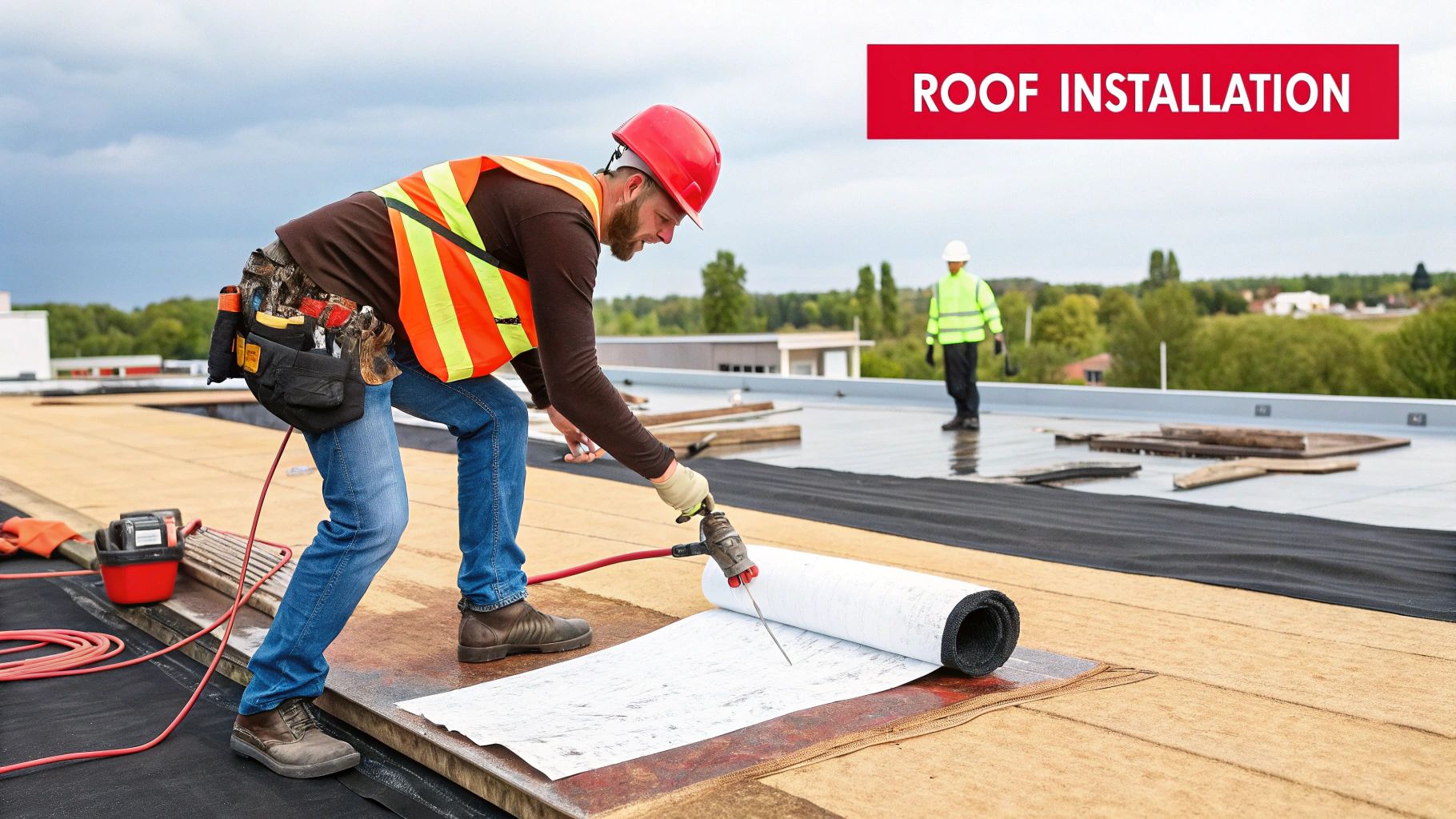
From the classic, heat-based techniques to newer, safer options, every installation method has its place. Understanding the basics helps you know what to expect and underscores why a skilled team is absolutely essential for a roof that’s built to last.
The Building Blocks of a Mod-Bit System
No matter which application method is used, every modified bitumen system is constructed in layers. Think of it like building a waterproof sandwich on your roof—each component has a crucial role to play in protecting your property.
- Prepping the Roof Deck: It all starts at the very bottom. The crew will first inspect your roof deck, tear off the old material, and make sure the surface is clean, totally dry, and solid. Any problems here have to be fixed before a single new piece goes down.
- Laying the Base Sheet: With a clean slate, the base sheet is installed. This is the bedrock of the entire system, offering the first line of defense against water and creating a stable anchor for the layers to come.
- Applying the Plies and Cap Sheet: Finally, one or more ply sheets are laid down, topped off by the cap sheet. This is the layer you actually see, and it’s usually coated with mineral granules that act like a built-in sunblock, shielding the membrane from UV rays and weathering.
This multi-layered design is the secret sauce behind the durability and leak resistance of modified bitumen roofing.
The Old-School Approach: Hot Mop and Torch-Down
For a long time, heat was the go-to tool for getting these roofs installed. These methods work incredibly well, but they require a ton of skill and serious attention to safety because you’re dealing with extreme temperatures and open flames.
- Hot-Mopped: Just like it sounds, crew members mop incredibly hot liquid asphalt (heated to around 500°F) onto the base sheet. They then immediately roll the next membrane layer into the molten asphalt, which fuses everything together into one solid piece as it cools.
- Torch-Down: This is the classic method for APP membranes. It involves using a powerful propane torch to heat the underside of the roofing roll as it’s unfurled. The intense heat melts the bitumen, making it stick directly to the surface below.
Both hot-mopped and torch-down applications create an exceptionally tough, seamless membrane. But the obvious fire risk means they should only ever be handled by seasoned, insured professionals who know exactly how to manage the hazards.
The Modern Way: Cold-Applied and Self-Adhering
To move away from the fumes and fire risks, the industry has come up with smarter, safer ways to install these roofs. These methods are getting more and more popular, especially for buildings that are occupied or located in places with tight fire safety regulations.
- Cold-Applied Adhesives: Instead of heat, this method uses a powerful, solvent-based glue. The adhesive is spread across the substrate with a squeegee or sprayer, and the membrane is rolled right into it. The bond forms as the solvents evaporate and cure.
- Self-Adhering Membranes: This is by far the easiest and safest route. These rolls come with the adhesive already on them, protected by a backing sheet. Installers just peel off the film and press the membrane firmly into place.
Even though these modern methods are safer, they don’t eliminate the need for an expert. Getting the surface preparation just right and applying the correct amount of pressure is key to creating those perfect, waterproof seams. The skill of a qualified commercial roofing contractor is what ensures a flawless installation that will stand the test of time, regardless of the method used.
The Pros and Cons of Modified Bitumen Roofing
Every roofing material has its trade-offs, and modified bitumen is no exception. It’s a top contender for commercial properties for some very good reasons, but that doesn’t automatically make it the right choice for every building. To make a smart investment, you have to look at the whole picture—the good, the bad, and how it all fits with your property’s needs.
Let’s cut through the noise and break down the real-world advantages and potential downsides you need to weigh.
The Upside: What Makes It a Great Choice?
There’s a reason you see so much modified bitumen on commercial rooftops. Its popularity is earned, built on decades of reliable performance that property owners have come to trust. In fact, roofing applications are the biggest slice of the pie in the modified bitumen market, driven by the need for solid waterproofing and insulation. You can see more details about this market growth on dataintelo.com.
Here’s what really makes it stand out:
- Tough as Nails: Thanks to its multi-layer design reinforced with fiberglass or polyester, this stuff is incredibly durable. It can handle maintenance crews walking on it, falling branches, and even hail. With the right care, you can easily expect a lifespan of 20 to 30 years.
- Superior Waterproofing: This is where modified bitumen really shines. The overlapping layers and professionally sealed seams create a monolithic, watertight barrier. It’s a huge advantage for low-slope or flat roofs where water doesn’t drain away instantly.
- “Cool Roof” Energy Savings: A standard black roof soaks up the sun, but you have options. You can get cap sheets with reflective mineral surfaces that bounce sunlight back into the atmosphere. This “cool roof” technology keeps the building cooler and can make a real dent in your summer energy bills.
- Relatively Low Maintenance: Once it’s up there, a modified bitumen roof doesn’t ask for much. Regular check-ups and simple fixes, like patching a minor puncture, are usually quick and affordable. A little preventative care goes a long way.
The Downsides: What to Watch Out For
Of course, no system is perfect. Understanding the potential drawbacks is just as important, especially for real estate investors who need to budget accurately for projects and things like house renovation financing.
Here are the cons you need to keep in mind:
- Requires a Pro (No, Really): This is absolutely not a do-it-yourself job. Whether it’s a torch-down or cold-applied system, installation demands a skilled crew with the right training and safety gear. The integrity of the entire roof depends on perfectly sealed seams, and that takes expertise.
- Installation Odors: Some of the traditional installation methods, particularly those involving hot asphalt or open-flame torches, can produce some pretty strong fumes. The smell goes away once the job is done, but it can be a temporary nuisance for anyone inside the building or nearby.
- Ponding Water is the Enemy: Like any flat roof, modified bitumen can be damaged if water is left to sit on it for days on end. Proper drainage isn’t just a recommendation; it’s essential. Without it, standing water will eventually break down the membrane and find a way in.
At the end of the day, modified bitumen is a workhorse roofing system with a fantastic track record. But its success rides almost entirely on a professional installation that guarantees perfect seams and proper drainage. Get that right, and you’ve got a roof you can count on for decades.
Alright, let’s talk about what a modified bitumen roof is going to cost. When you’re planning for a new roof on your commercial building, the price tag is obviously a huge part of the conversation.
It’s less about a fixed price and more about a long-term investment in protecting your property. You’re balancing what you pay today against the decades of solid performance you’ll get down the road.
https://www.youtube.com/embed/1s42H0KfR7M
As a general ballpark, you can expect the installed cost for a modified bitumen roof to land somewhere between $4 and $8.50 per square foot. But that’s just a starting point. The final number on your proposal will really depend on the materials we use, the labor involved, and the unique quirks of your specific building.
Key Factors That Drive The Price
No two roofing jobs are ever the same, and a few key variables will make the final cost swing one way or another. Knowing what they are helps you understand exactly where your money is going.
The biggest cost drivers are almost always:
- Membrane Type (SBS vs. APP): The choice between the rubbery, flexible SBS and the more plastic-like, durable APP will affect the material cost right out of the gate.
- Installation Method: A torch-down application requires a different set of skills, safety precautions, and time compared to a cold-adhesive or a self-adhering system. The method your roofer uses will definitely influence the labor portion of your bill.
- Roof Size and Complexity: This one’s pretty straightforward. A massive, wide-open roof is simpler and will cost less per square foot than a smaller roof cluttered with vents, pipes, HVAC units, and skylights that all need careful, detailed flashing work.
Other Costs to Keep in Mind
Beyond the big three, a few other things can add to the total investment. Think of these as the prep work and site-specific conditions that have to be handled before the new roof can even go on.
One of the biggest wildcards in any reroofing project is the state of the existing roof deck. You never truly know what’s underneath until the old material is gone. If we find rot, water damage, or structural problems, those repairs have to be made, and that will add to the project’s final cost.
A few other factors to account for include:
- Your Location: Labor rates and material costs simply vary from one part of the country to another.
- Tear-Off and Disposal: Removing the old roof and hauling it away is a big job, and the cost for that labor and disposal is always part of the final quote.
- Insulation: If you need to add or replace insulation to bring the building up to current energy codes, that will also be factored into the price.
At the end of the day, it’s about seeing the full value, not just the initial price on a piece of paper. For a much more detailed breakdown of all the moving parts, check out our guide to understanding roofing costs in 2025. It offers a deeper dive to help you create a realistic budget.
How To Maximize Your Roof’s Lifespan
A modified bitumen roof is built tough, designed to last anywhere from 20 to 30 years. But getting to that 30-year mark doesn’t happen by accident. It’s all about having a smart, proactive maintenance plan. Think of it like your car—you wouldn’t skip oil changes and expect it to run for 200,000 miles, right?
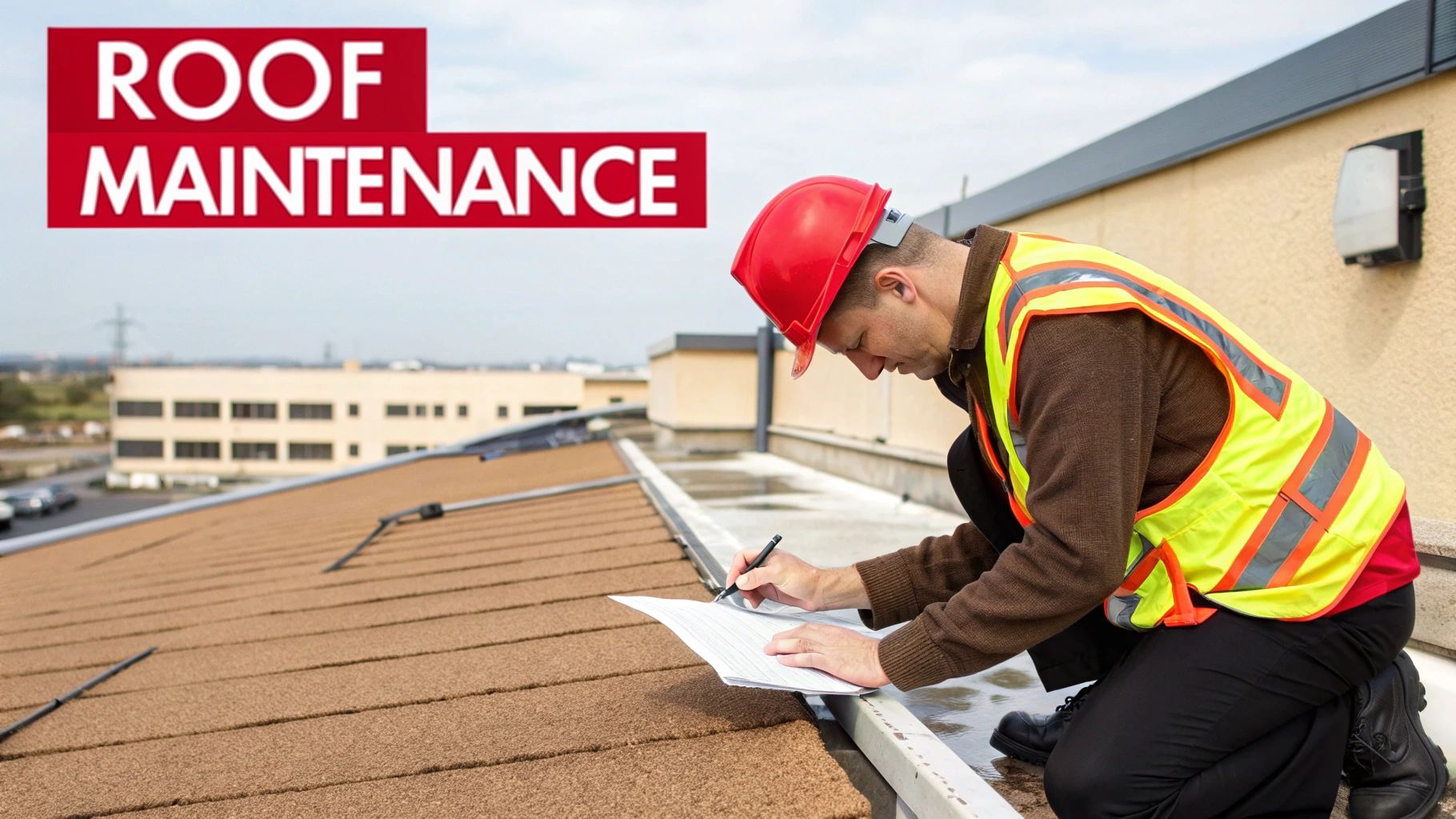
The same logic applies directly to your roof. Simple, consistent care is what protects your investment and stops tiny problems from snowballing into budget-busting repairs. By sticking to a straightforward maintenance schedule, you can keep that roof doing its job for decades to come.
Establish a Routine Inspection Schedule
The absolute foundation of good roof maintenance is regular inspection. On a flat or low-slope roof, issues often start small and out of sight, only revealing themselves once serious damage is already done. Catching them early is always cheaper than fixing them late.
We strongly recommend getting a professional inspection at least twice a year. The best times are in the spring, to check for any winter damage, and again in the fall, to prep the roof for the colder months ahead. This schedule allows a pro to spot damage from seasonal stress and make sure you’re ready for whatever weather is coming next.
A seasoned roofer knows exactly what to look for. They’ll catch subtle signs of wear, stress, and potential failure points that the average person would walk right over, saving you a world of trouble down the line.
Key Areas to Check During Inspections
During these check-ups, your roofing contractor isn’t just taking a casual stroll. They’re focusing on critical areas known for causing trouble on low-slope roofs. Knowing what they’re looking for helps you understand the real value of these inspections.
Here’s a quick rundown of what a professional should be examining:
- Blisters and Cracks: Even tiny blisters or hairline cracks on the surface are an open invitation for moisture to sneak in and start rotting the layers underneath.
- Seam Integrity: The seams—where the rolls of roofing material overlap—are the system’s weakest link. They need a close look to ensure the seals are still tight and completely waterproof.
- Clear Drainage Paths: Gutters, scuppers, and drains have to be clear of leaves, dirt, and any other gunk. Clogged drainage is the number one cause of ponding water.
- Ponding Water: If you see water still standing on your roof more than 48 hours after it rains, that’s a huge red flag. It points to a drainage issue that needs to be fixed immediately before it degrades the roof membrane.
- Flashing: The seals around every pipe, vent, skylight, and HVAC unit are called flashing. These are classic failure points and demand a thorough inspection every single time.
The Importance of Coatings and Cleanliness
Beyond inspections, two simple habits are key to a long and healthy roof life. First, keep the surface clean. Getting debris off the roof prevents it from trapping moisture against the membrane, which slowly breaks it down.
Second, reapplying a protective coating every few years is one of the smartest investments you can make for your roof. Think of these reflective coatings as high-performance sunblock. They shield the asphalt from UV radiation—its greatest enemy—and can even help lower your building’s cooling costs. Of course, the application has to be done correctly, so finding the right person for the job is essential. You can learn more in our complete guide to finding a roof coating contractor.
Frequently Asked Questions
What is the main advantage of modified bitumen roofing?
Its biggest selling point is its exceptional durability and flexibility. The polymer blend allows it to expand in the summer heat and contract in the cold without cracking. It also offers far better resistance to punctures and foot traffic than many other flat roofing systems.
Is modified bitumen roofing a good choice for residential homes?
While you could technically install it on a house, it’s rarely done. The system is really designed for the large, flat, or low-slope surfaces you find on commercial, industrial, and institutional buildings. It’s just not practical or cost-effective for a typical sloped residential roof.
How long does a modified bitumen roof typically last?
With a professional installation and a solid maintenance plan, a modified bitumen roof can easily last 20 to 30 years. The key to hitting that 30-year mark is consistent upkeep—regular inspections and catching small repairs before they become big problems.
How is modified bitumen different from a TPO roof?
The key difference is their composition. Modified bitumen is a multi-layered, asphalt-based system, while TPO is a single-ply membrane made from a synthetic rubber blend. Modified bitumen is generally more puncture-resistant and better for high foot traffic areas due to its multiple layers. TPO is a single, lighter layer that is often more energy-efficient out of the box due to its standard white, reflective surface.
Can you repair a modified bitumen roof?
Yes, absolutely. One of the benefits of modified bitumen is that it’s relatively easy to repair. Small punctures, blisters, or seam issues can typically be fixed by a professional who applies a patch of the same material, fusing it to the existing roof with adhesive or a torch to create a durable, watertight seal.