
Your roof is the primary shield protecting your home, but even the most durable materials have a finite lifespan. Ignoring the subtle warnings of wear and tear can lead to catastrophic damage, turning a manageable replacement project into an emergency crisis. Many property owners in Arizona wait for a visible leak to appear, but by that point, the real damage like mold, structural rot, and saturated insulation is often already underway. This proactive guide is designed to help you identify the critical signs you need a new roof before minor issues escalate into costly, widespread problems.
Understanding these key indicators allows you to plan and budget for a replacement on your own terms, rather than reacting to an unexpected failure. This comprehensive list will walk you through eight definitive signals, from common visual cues to less obvious structural warnings. We'll detail what to look for, explain the underlying issues each sign represents, and provide actionable advice for inspection. By learning to spot these warnings early, you can protect your property's value, prevent expensive secondary damages, and ensure the long-term safety and integrity of your home or commercial building.
Key Takeaways
- Visual Damage is Urgent: Missing, cracked, or curling shingles and excessive granules in gutters are direct signs that your roof's protective layer is failing and requires immediate attention.
- Age and Structure Matter: A roof nearing the end of its typical lifespan (15-20+ years for asphalt) or showing signs of sagging is a high-risk liability that warrants a replacement plan.
- Interior Signs Signal Advanced Problems: Water stains on ceilings, daylight visible from the attic, or sudden spikes in energy bills indicate that the roofing system's failure is already impacting your home's interior and efficiency.
- Proactive Replacement Prevents Emergencies: Identifying these signs early allows you to schedule a roof replacement on your terms, avoiding the high costs and stress of an emergency repair after a major leak or structural failure.
1. Missing, Cracked, or Curling Shingles
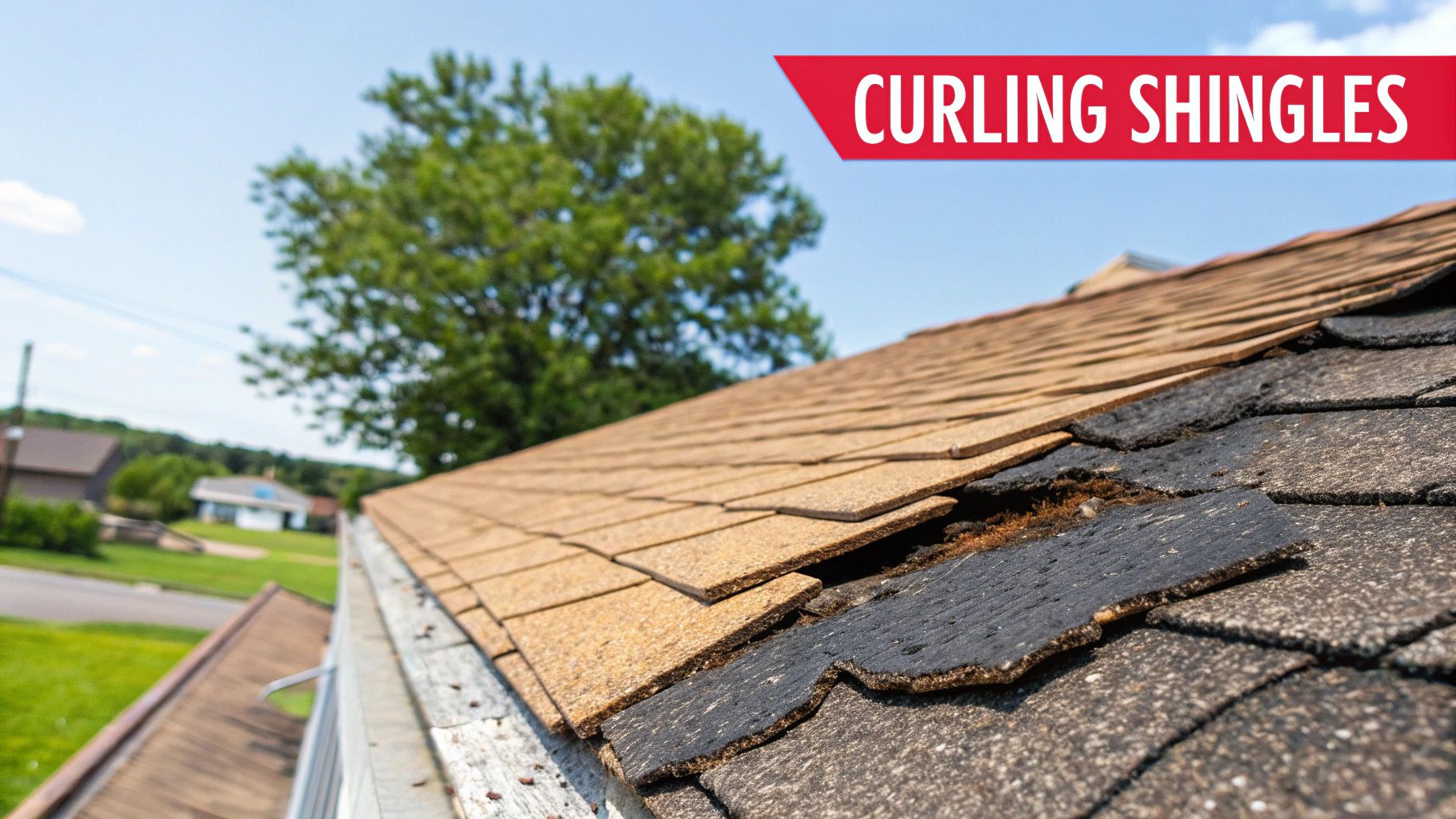
Your roof's shingles are its first line of defense against the elements. When you see shingles that are missing entirely, have developed significant cracks, or are curling up at the edges, it’s one of the most direct visual signs you need a new roof. These issues compromise your roof's ability to shed water, leaving the underlying structure vulnerable to moisture, rot, and leaks that can cause extensive damage inside your home.
Why Damaged Shingles Are a Critical Warning Sign
Shingle damage is rarely just a cosmetic issue. Each type of damage signals a specific problem with your roof's integrity and ability to protect your home.
- Curling Shingles: This happens when shingle edges turn upward or the middle "claws" up. In Arizona's intense heat, this is often a sign of advanced age as the asphalt loses its flexibility. It can also be accelerated by poor attic ventilation, which traps heat and essentially "bakes" the shingles from below.
- Cracked Shingles: Thermal shock, the constant expansion and contraction from hot days to cooler nights, can cause shingles to crack over time. High winds can also bend shingles back and forth, leading to stress cracks that expose the underlayment.
- Missing Shingles: This is often the result of severe wind damage or improper installation. A single missing shingle creates a direct pathway for water to penetrate your roof deck, making it a high-priority problem to address.
Actionable Tips for Inspection and Next Steps
If you notice damaged shingles, it's crucial to assess the extent of the problem to determine if a simple repair will suffice or if a full replacement is necessary.
- Inspect from the Ground: Use binoculars to safely scan your entire roof from different angles. Look for shingles that are lifting, cracked, or have exposed, dark patches where granules have worn away.
- Check After Storms: Arizona's monsoon season can bring high winds and heavy rain. Always perform a quick visual inspection after a significant weather event.
- Document Everything: Take clear, dated photos of any damage you find. This documentation is invaluable if you need to file an insurance claim.
- Assess the Scope: A few isolated damaged shingles can often be replaced. However, if you see widespread curling or find that more than 30% of your roof shows significant wear, a full replacement is the most cost-effective and protective long-term solution.
2. Roof Age Exceeding Expected Lifespan
While visual damage is a clear indicator, one of the most reliable signs you need a new roof is simply its age. Every roofing material has a manufacturer-specified lifespan, and once it approaches that limit, its ability to protect your home diminishes significantly. An older roof is far more susceptible to failure during severe weather, even if it looks okay from the ground. Age becomes a critical factor because the materials degrade over time from constant exposure to UV rays, heat, and moisture, losing their protective qualities.
The bar chart below compares the average lifespans for several popular roofing materials, highlighting how widely they can vary.
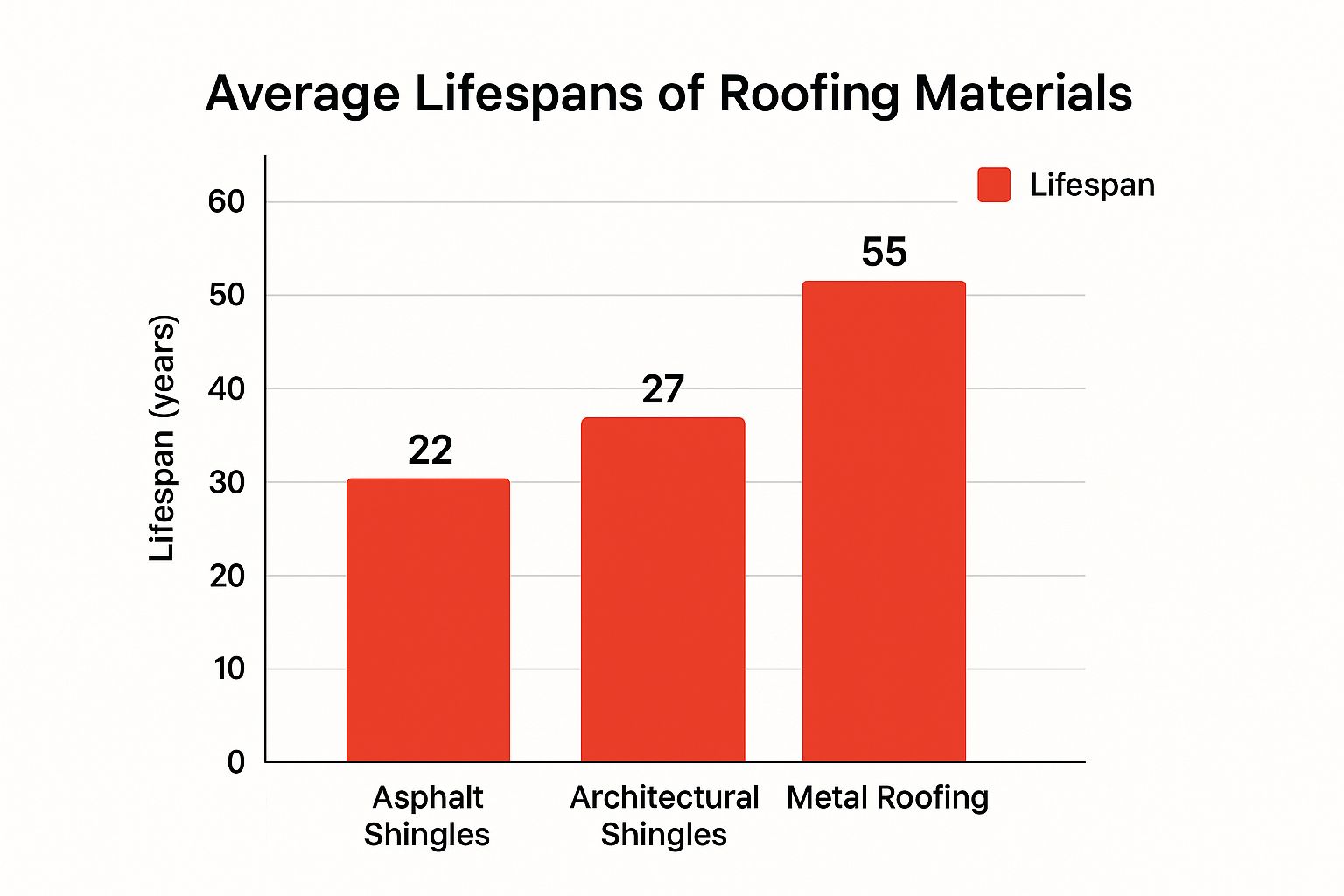
As the data shows, a metal roof can last more than twice as long as standard asphalt shingles, making material choice a key factor in long-term planning.
Why Roof Age is a Critical Warning Sign
Age isn't just a number; it represents years of wear and tear that compromise your roof’s core function. An old roof is a liability, as its performance becomes unpredictable and its components reach the end of their service life.
- Material Degradation: Over two decades, the asphalt in shingles dries out, granules that block UV rays wear away, and the seals that bond them together weaken. This makes the entire system brittle and less resistant to wind and water.
- Outdated Building Codes: A roof installed 20-25 years ago was built to a different standard. Modern building codes often require enhanced underlayment, better ventilation, and superior fastening techniques that older roofs simply lack.
- Accelerated Aging in Arizona: A roof's lifespan is not universal. The intense Arizona sun and dramatic temperature swings can significantly shorten its life. Learn more about how long a roof lasts in Arizona and what factors are at play.
Actionable Tips for Inspection and Next Steps
Knowing your roof's age empowers you to budget and plan proactively instead of reacting to a catastrophic failure. Use these tips to determine your roof's age and plan your next moves.
- Check Your Records: Review the seller's disclosure or home inspection report from when you purchased your property. These documents often list the age of the roof or the date of the last replacement.
- Look for Building Permits: Your local city or county building department may have records of past roofing permits filed for your address, which will include the installation date.
- Ask Your Neighbors: If you live in a development where homes were built around the same time, ask neighbors with similar homes when they had their roofs replaced. This can give you a general timeframe.
- Plan Ahead: If your asphalt shingle roof is approaching the 15-year mark, it’s wise to get a professional inspection. Start budgeting for a replacement 3-5 years before it reaches its expected end-of-life to avoid a costly emergency.
3. Granules in Gutters or Downspouts
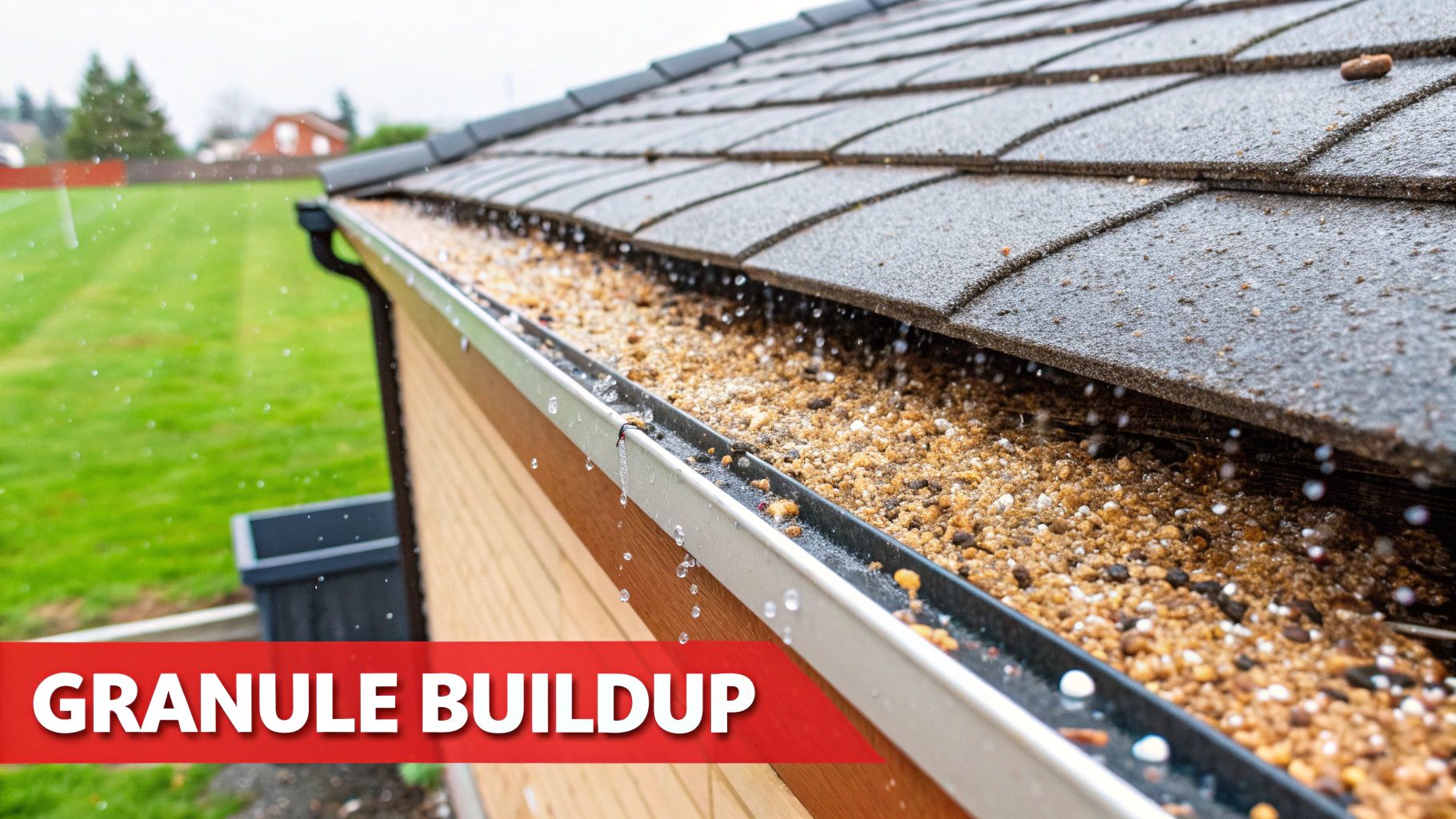
Finding a collection of tiny, sand-like particles in your gutters is a significant red flag. These are asphalt granules, a crucial component of your shingles that shield the underlying asphalt from damaging UV rays and add a layer of fire resistance. When you start finding handfuls of these granules, it’s a clear sign your shingles are deteriorating and losing their protective capabilities, making it one of the more subtle but critical signs you need a new roof.
Why Granule Loss Is a Critical Warning Sign
Granule loss is the roofing equivalent of your skin losing its sun protection. Once these granules are gone, the shingle's asphalt core is directly exposed to Arizona's intense sun, which dramatically accelerates its breakdown and leads to brittleness, cracking, and eventual leaks.
- Advanced Aging: As shingles approach the end of their lifespan (typically 15-20+ years), the bond holding the granules weakens naturally. Consistent accumulation in your gutters indicates the roof is nearing failure.
- Weather Damage: Severe weather, particularly hailstorms, can knock granules loose on impact, creating "bruised" spots on your shingles. Heavy rain and high winds can also wash away granules from already weakened shingles.
- Accelerated UV Exposure: The southern-facing slopes of your roof receive the most direct sunlight and will often show granule loss first. This exposure bakes the asphalt, causing granules to flake off more rapidly.
Actionable Tips for Inspection and Next Steps
Regularly monitoring your gutters for granules can give you an early warning before more severe problems like leaks develop. This proactive approach is key to managing your roof's health.
- Routine Gutter Checks: Clean your gutters at least twice a year, typically in the spring and fall. Pay close attention to the amount and consistency of granule buildup you find.
- Monitor Downspout Runoff: Check the areas where your downspouts discharge water. If you see dark, sandy sediment accumulating on your driveway or in your landscaping, it's likely shingle granules.
- Look for Bare Spots: From the ground, use binoculars to look for dark or "bald" patches on your roof. These spots indicate significant granule loss and direct exposure of the shingle's base layer.
- Document the Volume: A small, thimble-sized amount of granules is normal, especially on a new roof. However, if you are scooping out handfuls after every storm, take photos with a coin for scale to track the progression. This documentation is vital for potential insurance claims.
4. Sagging Roof Deck
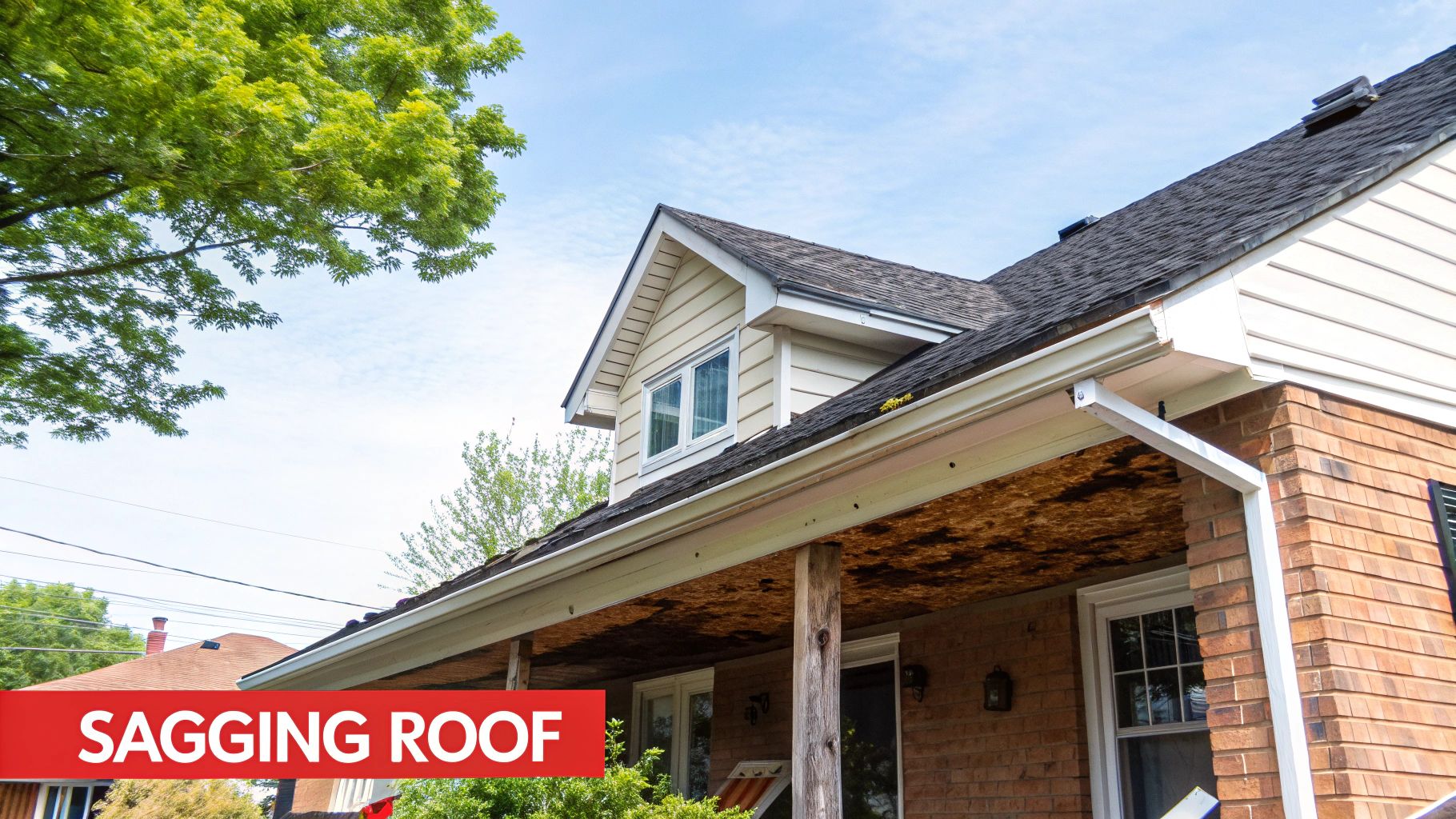
A sagging or drooping roof deck is one of the most serious structural signs you need a new roof. This indicates that your roof's underlying support system has been critically compromised. The roof deck, or sheathing, is the layer of wood that sits on your rafters, forming the base for your shingles. When it sags, it's often due to prolonged moisture exposure from leaks, which causes the wood to rot and weaken. This creates visible dips or waves in your roofline, signaling an urgent problem that goes far beyond a simple repair.
Why a Sagging Roof Is a Critical Warning Sign
Unlike cosmetic issues, a sagging roof represents a potential structural failure. The integrity of your entire roofing system is at risk, and ignoring it can lead to catastrophic consequences.
- Underlying Water Damage: Sagging is almost always a result of water penetrating past your shingles and underlayment. This moisture rots the wooden deck and can even weaken the rafters or trusses that support your entire roof structure.
- Excessive Weight: In some cases, the roof may be sagging under its own weight, especially if multiple layers of old shingles were installed on top of each other without a proper tear-off. This extra load can stress and break down an aging support system.
- Poor Ventilation: In Arizona, inadequate attic ventilation can trap super-heated, moist air. This moisture can condense on the underside of the roof deck, slowly causing the wood to rot from the inside out and lose its structural strength.
Actionable Tips for Inspection and Next Steps
A sagging roof is a clear indicator of a major problem that requires immediate professional attention. Never attempt to walk on a roof that shows signs of sagging, as it is a severe safety hazard.
- Inspect from a Distance: View your roofline from across the street and from different angles on your property. Look for any visible dips, depressions, or areas that look like a "saddleback."
- Check the Attic: Safely go into your attic during the day and turn off the lights. Look for any daylight coming through the roof boards, which indicates holes. Also, check for dark water stains, mold, or damp-feeling wood on the underside of the decking.
- Look for Interior Signs: Sagging on the exterior often corresponds with issues inside. Check for sagging ceilings, cracked drywall, or persistent leaks in the rooms directly below the affected area.
- Call a Professional Immediately: This is not a DIY situation. A sagging roof requires a comprehensive inspection from a qualified roofing contractor who can assess the extent of the damage to the decking and the underlying structural supports. Expect that a full replacement will involve tearing off everything down to the rafters and replacing rotten wood.
5. Water Stains or Leaks in Attic or Ceilings
Discovering water stains on your interior ceilings or inside your attic is one of the most definitive signs you need a new roof or at least an urgent inspection. These stains, which often appear as brown, yellow, or gray discolorations, are direct evidence that your roof's waterproofing has failed. Even small or intermittent leaks signal a significant problem that can lead to severe structural damage, mold growth, and costly interior repairs if left unaddressed.
Why Water Infiltration Is a Critical Warning Sign
A leak is more than just a drip; it’s a symptom of a larger failure in your roofing system. Water can travel a long way from the initial entry point, moving along rafters and insulation before it becomes visible inside your home, making the source difficult to pinpoint without a professional.
- Structural Damage: Persistent moisture rots wooden roof decking, rafters, and ceiling joists, compromising the structural integrity of your home.
- Health Hazards: Trapped moisture creates a perfect breeding ground for mold and mildew, which can trigger allergies, asthma, and other respiratory issues for your family.
- Insulation Failure: Water-saturated insulation becomes compressed and loses its thermal resistance (R-value), leading to higher energy bills as your HVAC system works harder to maintain indoor temperatures.
Actionable Tips for Inspection and Next Steps
If you spot a water stain, acting quickly is essential to mitigate damage. The first step is to carefully investigate the extent and potential source of the infiltration.
- Inspect the Attic: During or right after a rainstorm, safely use a flashlight to scan your attic. Look for wet spots on the insulation, dark stains on the underside of the roof deck, or drips coming from rafters.
- Check High-Risk Areas: Pay close attention to ceilings and walls around chimneys, skylights, plumbing vents, and attic fans. These roof penetrations are common failure points.
- Document and Contain: Take clear photos of all stains and any active dripping. Place buckets under active leaks to protect your flooring and belongings.
- Seek Professional Help: A single, small leak might be repairable, but multiple stains or widespread moisture are strong signs you need a new roof. A professional roofer can trace the leak to its source and determine the best course of action. For more information, read this essential guide to roof leak repair.
6. Daylight Visible Through Roof Boards
Seeing daylight peeking through your roof boards from inside your attic is one of the most undeniable signs you need a new roof. This isn't a subtle warning; it's a direct indication that your roof has holes, gaps, or significant structural decay. Where light can get in, water, pests, and unconditioned air can easily follow, leading to serious water damage, rot, and skyrocketing energy bills.
Why Daylight in the Attic Is a Critical Warning Sign
Visible light from your attic means there is a breach in your home's protective envelope. It's often overlooked because most homeowners rarely venture into their attic, but it signals urgent and potentially widespread problems.
- Direct Path for Water: Each point of light is a potential leak. Even pinholes around nails can allow moisture to seep in, saturating your roof deck, insulation, and framing, which often leads to mold growth and wood rot.
- Compromised Structural Integrity: Light can shine through cracked or split roof decking, separated boards, or holes created by pests like raccoons and squirrels. These openings weaken the entire roof structure.
- Massive Energy Loss: Gaps in your roof allow the conditioned air you pay for to escape, while letting in the extreme Arizona heat. This forces your HVAC system to work overtime, leading to significantly higher utility costs.
Actionable Tips for Inspection and Next Steps
A thorough attic inspection on a bright day is a highly effective way to diagnose the health of your roof's underlying structure.
- Inspect on a Sunny Day: Go into your attic during the brightest part of the day and turn off all the lights. Give your eyes a few minutes to adjust to the darkness to spot even the smallest pinpricks of light.
- Scan Systematically: Look at the entire underside of the roof deck. Pay special attention to areas around vents, chimneys, and skylights, as well as the seams where roof planes meet.
- Document and Mark: Use your phone to take pictures of any light you see. If it's safe to do so, use chalk or a marker to circle the areas from the inside so a professional can easily locate them.
- Check for Corroborating Evidence: Look for water stains, damp insulation, or signs of pest activity on the attic floor directly below the points of light. The presence of these signs confirms an active problem and reinforces that you have one of the clearest signs you need a new roof.
7. Moss, Algae, or Fungus Growth
The appearance of moss, algae, or fungus on your roof is a clear indicator of excess moisture retention, which can signal underlying issues with your roofing materials. While sometimes viewed as a cosmetic problem, these organic growths can accelerate the deterioration of your roof, making their presence one of the key signs you need a new roof, especially when the growth is extensive or returns quickly after cleaning.
Why Damaged Shingles Are a Critical Warning Sign
Organic growth is more than just an eyesore; it's a symptom of a moisture problem that can compromise your roof's structure and shorten its lifespan.
- Algae (Dark Streaks): The black streaks you see, caused by an algae called Gloeocapsa magma, are common in humid climates. While primarily cosmetic, they indicate that your shingles' granules are retaining moisture, which can be a sign of aging.
- Moss Growth: Moss is far more destructive. It grows in thick mats that can lift the edges of your shingles, making them vulnerable to wind and water penetration. Moss also acts like a sponge, holding moisture directly against the shingle surface, which accelerates granule loss and can lead to rot.
- Fungus and Rot: The presence of fungus indicates a more severe and persistent moisture problem. It signifies that the organic materials in your shingles and decking are beginning to decompose, a serious issue that often requires a full roof replacement to correct.
Actionable Tips for Inspection and Next Steps
If you spot organic growth, it's important to assess the situation and take action to prevent further damage. While cleaning is an option, it's often a temporary fix for an aging roof.
- Identify the Location: Note where the growth is heaviest. It typically thrives on north-facing slopes and in shaded areas that receive less sunlight and stay damp longer.
- Improve Sunlight and Airflow: Trim overhanging tree branches to allow more sunlight to reach your roof and promote faster drying after rain.
- Avoid Harsh Cleaning Methods: Never use a pressure washer on your roof. The high-powered stream can strip away protective granules and force water underneath the shingles, causing more harm than good.
- Consider a Replacement: If growth is widespread or returns quickly after a professional cleaning, it’s a strong signal that your shingles have lost their protective qualities. Choosing new algae-resistant shingles, which contain copper granules, is the best long-term solution.
8. Increased Energy Bills or Poor Temperature Regulation
Your roof is a critical component of your home's thermal envelope, so an unexpected spike in heating or cooling costs can be a subtle yet significant sign you need a new roof. A failing roof loses its ability to insulate and ventilate properly, allowing the conditioned air you pay for to escape and the extreme outdoor temperatures to infiltrate. This forces your HVAC system to work overtime just to maintain a comfortable indoor environment, leading directly to higher utility bills.
Why Energy Inefficiency Is a Critical Warning Sign
A sudden change in your energy consumption, when not explained by rate hikes or extreme weather, often points to a performance failure in your home's structure, and the roof is a primary suspect. This is especially true in Arizona, where the roof bears the brunt of the intense solar radiation.
- Heat Infiltration: In summer, an old or damaged roof absorbs and transfers excessive heat into your attic. This superheated attic space radiates heat down into your living areas, making your air conditioner run constantly to keep up. A 20-30% increase in cooling costs is a common symptom.
- Heat Loss: In winter, the reverse happens. Gaps from deteriorated shingles, poor underlayment, or inadequate attic insulation allow warm, heated air to escape. This can sometimes manifest as ice dams forming at the eaves, a clear indicator of a serious heat loss problem.
- Ventilation Failure: A properly functioning roofing system includes ventilation that allows hot air to escape the attic. When this system is blocked or inadequate due to age or damage, it traps heat, "baking" your shingles from below and driving up cooling costs.
Actionable Tips for Inspection and Next Steps
If you suspect your roof is the cause of your high energy bills, you can take several steps to investigate the issue and determine your best course of action.
- Track Your Bills: Monitor your energy bills monthly and compare them to the same period in previous years. A consistent upward trend is a clear red flag.
- Check Attic Temperatures: On a hot day, your attic should ideally be within 10-20°F of the outside temperature. A significantly hotter attic points to poor ventilation, which is a key function of your overall roofing system.
- Inspect Attic Insulation: Look at the insulation in your attic. Is it compressed, damp, or below the recommended depth for your region (typically 10-14 inches)? A compromised roof can lead to moisture that ruins insulation.
- Consider an Energy Audit: A professional energy audit can use tools like a thermal imaging camera to pinpoint exact areas of heat loss or gain through your roof, providing definitive proof of a problem. When it's time for a replacement, you can explore the top efficient roofing options to lower your energy bills on arizonaroofers.com.
Signs You Need a New Roof: Key Indicator Comparison
| Indicator | Implementation Complexity 🔄 | Resource Requirements ⚡ | Expected Outcomes 📊 | Ideal Use Cases 💡 | Key Advantages ⭐ |
|---|---|---|---|---|---|
| Missing, Cracked, or Curling Shingles | Low – Visual inspection, minor repairs possible | Low to Moderate – DIY or contractor for shingle replacement | Prevents moisture intrusion if addressed early; may avoid full replacement | Homes with visible shingle damage or storm effects | Easy identification; clear evidence; early intervention possible |
| Roof Age Exceeding Expected Lifespan | Low – Assessment based on date/records | Low – Mainly documentation review and inspection | Predictable replacement timeline; opportunity to upgrade materials | Roofs nearing or surpassing typical lifespan | Facilitates budget planning and proactive replacement |
| Granules in Gutters or Downspouts | Low – Gutter cleaning and inspection | Low – Routine maintenance required | Early warning of advanced shingle deterioration | Roofs with suspected aging or storm damage | Visible from ground; early detection enabling planning |
| Sagging Roof Deck | High – Structural assessment and complex repair | High – Requires professional structural and roofing repairs | Restores structural integrity; prevents collapse | Roofs showing structural deformation or water damage | Highly visible, urgent warning; compels immediate action |
| Water Stains or Leaks in Attic or Ceilings | Moderate – Inspection plus repairs | Moderate to High – Roof, interior, possibly mold remediation | Stops ongoing interior damage; restores waterproofing | Roofs with interior water damage or mold issues | Definitive sign of failure; motivates prompt repair |
| Daylight Visible Through Roof Boards | Moderate – Requires attic inspection | Moderate – Repair often extensive | Eliminates major gaps; restores energy efficiency and blocking water | Roofs with visible attic light leakage | Undeniable evidence; clear urgency; supports insurance claims |
| Moss, Algae, or Fungus Growth | Low to Moderate – Cleaning and treatment | Low to Moderate – Cleaning products or professional cleaning | Slows deterioration; improves roof appearance and longevity | Roofs in humid, shaded, or heavily treed areas | Early detection; sometimes treatable without replacement |
| Increased Energy Bills or Poor Temperature Regulation | Low to Moderate – Monitoring plus inspection | Low to Moderate – May require energy audit or roof upgrades | Improved energy efficiency and comfort | Homes with rising energy costs and temperature inconsistencies | Detectable early; potential financial incentives available |
Taking the Next Step: Securing Your Home's Future
Recognizing the signs you need a new roof is only half the battle. You’ve learned how missing shingles, sagging decks, and attic leaks point to urgent issues. Now it’s time to translate those insights into results that protect your investment.
Actionable Next Steps
-
Book a Professional Inspection
Reach out to a certified local contractor like AZ Roof Co. for a free, no-obligation evaluation. They will confirm damages and propose targeted repairs or full replacement options. -
Compare Material Options
In Arizona’s heat, choose high-reflectivity shingles or metal roofing with a premium warranty. Ask about rubberized underlayment to guard against leaks. -
Review Financing and Insurance
Many homeowners qualify for low-interest loans or storm-damage coverage. Gather your inspection report and photo evidence to streamline your claim process. -
Schedule Installation Strategically
Plan ahead of monsoon season to avoid project delays. Early scheduling can lock in better rates and reduce exposure during extreme weather.
“A timely roof replacement not only shields your home but also drives down your energy bills and preserves curb appeal”
Maximizing Long-Term Benefits
Investing in a high-quality roof does more than stop leaks. It boosts your home’s resale value, enhances interior comfort, and minimizes maintenance over the next two decades. When considering the long-term value and curb appeal of your property, you might also explore various affordable ways to refresh your home's exterior to complement your new roof.
By mastering these recommended approaches, you secure peace of mind knowing your family and assets are protected under a durable, energy-efficient roof.
Frequently Asked Questions
1. How long does a typical asphalt shingle roof last in Arizona?
In Arizona's harsh climate, a standard asphalt shingle roof generally lasts between 15 and 20 years. The intense UV radiation and extreme temperature fluctuations can accelerate the aging process compared to more moderate climates.
2. Can I just repair my roof instead of replacing it?
Repairs are suitable for isolated issues, like a few missing shingles from a storm on an otherwise healthy roof. However, if you see widespread problems like extensive curling, significant granule loss across multiple areas, or if the roof is over 15 years old, a full replacement is often the more cost-effective and safer long-term solution.
3. Will my homeowner's insurance cover a new roof?
Homeowner's insurance typically covers roof replacement if the damage is caused by a sudden, accidental event like a hailstorm, wind, or a fallen tree (often called an "act of God"). It does not cover replacement due to old age or lack of maintenance. It's crucial to document any storm-related damage with photos and schedule a professional inspection promptly.
4. How much does a new roof cost?
The cost of a new roof varies widely based on the size and slope of your roof, the materials you choose (e.g., asphalt shingles vs. metal), and your geographic location. The best way to get an accurate number is to obtain detailed quotes from several reputable, licensed roofing contractors.
5. What are the signs of a roof leak in the attic?
In your attic, look for dark stains or streaks on the wood decking, damp or compressed insulation, a musty odor, or visible drips during or after rain. Seeing any of these signs means water is getting through your roofing system.