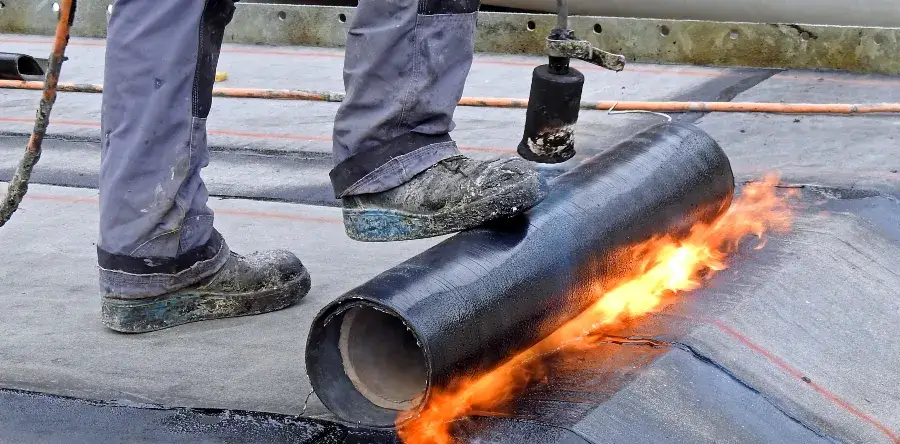

If your Phoenix tile roof is 20 years old and you’re seeing water stains after monsoon storms, there’s a good chance the problem isn’t your tiles – it’s what’s hiding underneath them. Here’s what you need to know about tile roof underlayment replacement costs in 2026, what drives the price, and how to plan your next move.
Key Takeaways
- Most Phoenix tile roofs fail at the underlayment long before the tiles wear out. The tiles might look fine from the street, but the hidden waterproof membrane beneath them degrades under Arizona’s extreme heat and UV exposure, often within 15–25 years.
- Tile roof underlayment replacement in Phoenix typically costs about $4–$7 per square foot installed, or roughly $8,000–$14,000 for a 2,000 square foot tile roof, depending on roof size and complexity. The overall cost of tile roof underlayment replacement can fall between $8,000 and $20,000 for full replacements on larger or more complex homes.
- Labor costs account for 60% of tile roof underlayment projects at a minimum, and can reach 80% to 90% of total expenses on complex jobs. Tile removal, staging, and reinstall drive the bill far more than the material cost of the membrane itself.
- Most clay and concrete tile can be reused during the process. What usually needs replacement is the worn-out underlayment and any damaged decking discovered once tiles are lifted.
- If your tile roof is 20+ years old or you’re dealing with recurring leaks, schedule a professional roof inspection now. The rest of this article breaks down cost drivers, lifespan expectations, signs of failure, and your next steps.
Tiles vs. Underlayment: Why Arizona Tile Roofs Fail From Underneath
When homeowners ask “how long does a tile roof last in Arizona,” the answer depends on which part of the roof system you’re talking about. The visible tile – whether concrete tile or clay – is built to endure decades of punishment. Concrete tile roof lifespan in Arizona typically runs 30–50 years, while clay tile roof lifespan can stretch 50–100+ years under good conditions. These tiles shed water and block UV like they’re supposed to.
The underlayment beneath them is a different story. Original 30 lb felt installed by builders in the 1990s and early 2000s has a useful life of roughly 12–18 years in the Phoenix climate. Even better-grade felt or builder-grade synthetic underlayment maxes out around 18–25 years. Tile surface temperatures routinely hit 150–180°F in summer, and daily thermal cycling combined with wind-driven monsoon rain steadily breaks down asphalt-saturated felt until it becomes brittle and cracked.
This is the key difference between tile roofs and asphalt shingles: an asphalt roof wears out on top where you can see it, but a tile system usually fails at the hidden waterproofing layer underneath. The tiles still look fine, yet water is finding its way through degraded felt and into the decking. Underlayment replacement is the main “reset” that restores a tile roof’s true waterproof integrity, often without needing a new roof at all.
How Much to Replace Underlayment on a Tile Roof in Phoenix?
In the Phoenix metro, a typical tile roof underlayment replacement cost runs about $4–$7 per square foot installed, including the lift and relay of existing tiles, new underlayment installation, and standard flashing work.
Here’s what that looks like by roof size:
- A 1,500 square foot roof: expect roughly $6,000–$10,500
- A 2,000 square foot tile roof: costs $8,000 to $12,000 on average, with more complex jobs reaching $14,000
- A 3,000 square foot roof can exceed $12,000 and may range up to $21,000 depending on pitch and layout
These estimates assume that most existing tile can be reused and that only normal amounts of deck repair and tile replacement are needed. While underlayment replacement costs average around $1.60 per square foot for materials alone nationally, and the national average for roof underlayment replacement on simpler asphalt shingle homes is only $800 to $1,200, tile roof work in Arizona is a completely different animal. Replacing tile roof underlayment is more labor-intensive than standard shingle work because every tile must be carefully handled, stored, and reset. Typical costs for tile roof underlayment replacement range from $1.50 to $4.00 per square foot for materials and basic labor, but once you add full lift-and-relay scope, total installed costs in Phoenix climb to that $4–$7 range. The cost of tile roof underlayment replacement is significantly higher than for asphalt shingle roofs for this reason.
A detailed written estimate after a roof inspection is the only way to know the exact price for your home.
What Actually Drives Tile Roof Underlayment Replacement Cost
Most homeowners focus on the material cost of the new underlayment, but the final invoice in Arizona is mostly about labor, access, and the condition of what’s under those tiles. Underlayment replacement costs vary by location and climate, and costs are higher in states with a higher cost of living – Phoenix’s labor market reflects that reality.
Here are the major cost drivers:
- Roof size and square footage. Roof size significantly affects underlayment replacement costs. Larger roofs require more underlayment material and labor, which is why a 2,500 square foot home costs meaningfully more than a 1,500 square foot one.
- Roof pitch and height. Steeper roofs require specialized safety equipment and increase labor costs. A steep roof on a 1,000-square-foot home costs more to replace than a low-pitch roof of the same size because crews work slower and need harnesses and scaffolding.
- Access and staging. Narrow driveways, limited yard space for tile storage, multi-story houses, and tight street access all create accessibility challenges that can increase labor costs.
- Roof layout complexity. Valleys, hips, dormers, skylights, chimneys, and solar mounts each require detailed flashing work and extra tile handling time.
- Hidden damage. Repairing or replacing water-damaged plywood decking costs an additional $2 to $5 per square foot. Deck repairs can add $2 to $5 per square foot to costs, and you won’t know the full extent until tiles come off. Removing old underlayment can cost between $1,000 and $5,000 depending on how deteriorated it is and how much debris removal is required.
- Labor rates and permits. Labor costs for underlayment replacement range from $1,400 to $3,800 depending on scope. Labor typically accounts for 50% to 90% of a tile roof project’s total cost. Local labor rates and building permits can affect the overall cost of replacing tile roof underlayment.
- Material upgrades. Choosing a premium synthetic or rubberized membrane slightly increases material cost but doesn’t double the project the way added labor or complex access can.
Compare line-item estimates instead of just total price. Lowball quotes that skip likely deck repair or flashing replacement will surface as change orders later.
Roof Size, Pitch, and Layout: How Your Roof Itself Changes the Price
Roof size in squares or square footage is the starting point for any roof underlayment replacement quote. Larger roofs require significantly more time and material for underlayment replacement – more tiles to move, more membrane to install, more labor hours on the clock.
For most Phoenix homes, roofers price underlayment replacement by the “square” (100 square feet). The more squares, the higher the total. But size alone doesn’t tell the whole story:
- Roof pitch matters. Steeper roofs require more materials for underlayment replacement because the actual surface area is larger than the footprint suggests. Labor costs increase for steep roofs due to safety equipment needs, and crews can only move so fast on a 7:12 or 8:12 pitch. Roof pitch also affects the type of underlayment suitable for your home, since low-slope and high-slope applications have different drainage characteristics.
- Multi-story and cut-up layouts. Two-story roofs, lots of valleys, hips, transitions, and roofs with many penetrations involve more detailed flashing and staging time. Every valley and hip intersection is a potential water entry point that demands precision.
- The quick math. Multiply your estimated roof area by $4–$7 per square foot for a ballpark, then expect adjustments for pitch and complexity once a contractor inspects. A single story home with an open layout and modest pitch will fall on the low end; a steep, multi-story home with a dozen valleys will push toward the high end or beyond.
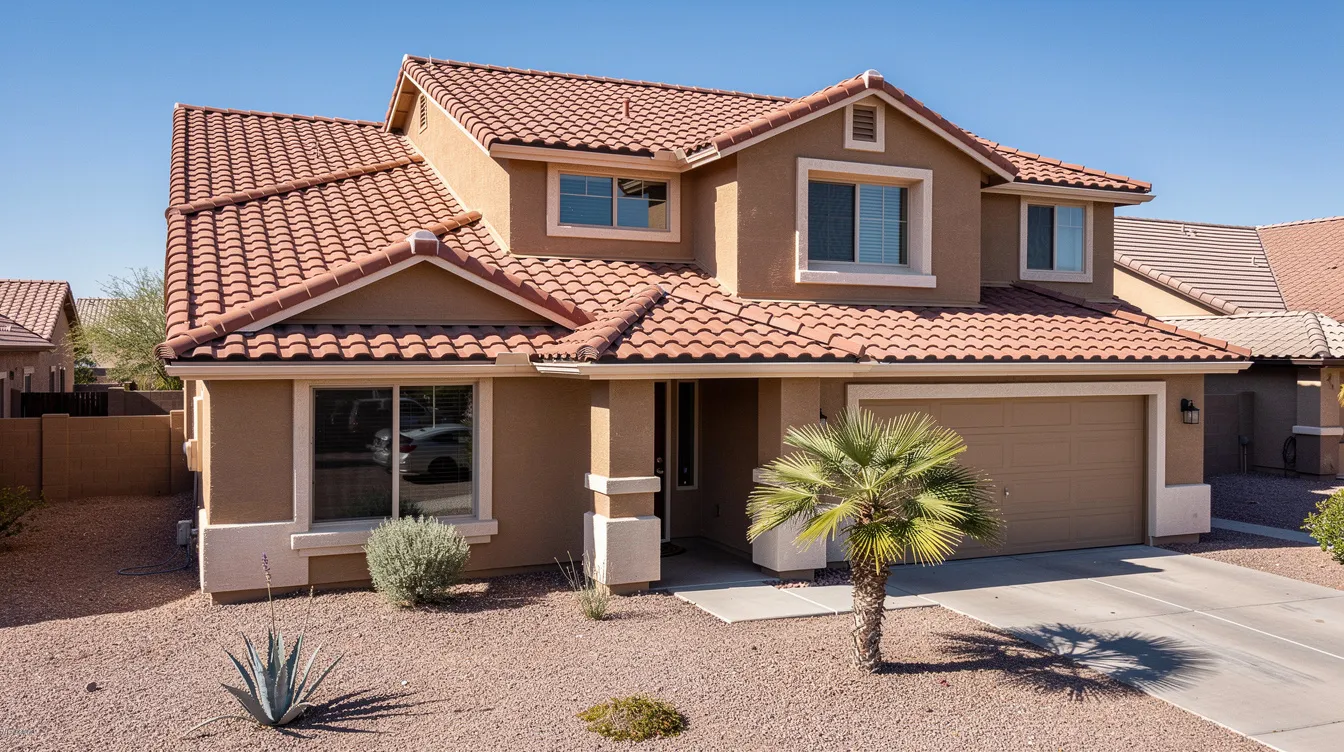
Underlayment Materials and “Lift and Relay” vs. Full Re-Roof
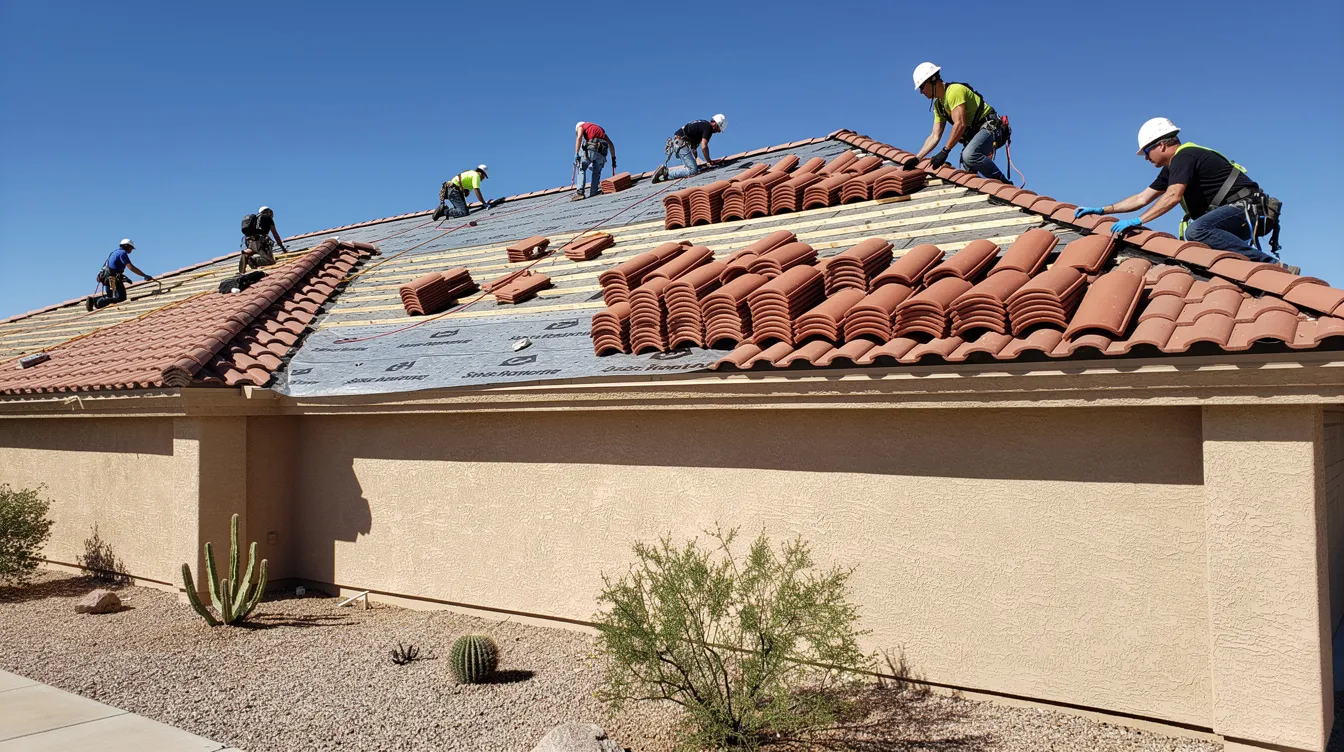
Replacing the underlayment on a tile roof is a specialized project called lift and relay (sometimes called “lift and reset”). Tiles are carefully removed, old underlayment is stripped, new underlayment is installed, and the same tiles are reinstalled. Heavy tile roofs require careful lifting, storing, and reinstalling of existing tiles for underlayment access, and tile roofs require careful handling of heavy clay or concrete tiles during underlayment replacement.
- Tile reuse rate. In most Arizona tile roof projects, the majority of tiles are salvageable. However, tile handling can lead to a 5% to 15% breakage rate during removal and replacement, so contractors factor in replacement tile costs for broken tiles and cracked pieces that need matching.
- Full roof replacement comparison. A new roof with new tiles plus new underlayment, ridge components, and flashing runs $7–$25 per square foot – significantly more than underlayment-only replacement. Lift and relay saves money by reusing existing tile.
- Material options at a glance. Felt underlayment costs about $0.15 to $0.55 per square foot, synthetic underlayment costs about $0.25 to $0.65 per square foot, and rubberized underlayment costs about $0.25 to $0.75 per square foot. Rubber underlayment is the only true waterproof option among these. Choosing felt over synthetic underlayment can save hundreds upfront, but synthetics and peel and stick membranes are popular under tile in Phoenix for their longer service life. The type of underlayment chosen impacts both material costs and the longevity of the roof.
- For detailed product comparisons, see our guide on the best underlayment for tile roofs in Arizona.
The right combination of underlayment quality and tile reuse strategy balances upfront cost against expected roof life and your resale plans.
Typical Arizona Price Examples by Roof Size
These sample scenarios help homeowners sanity-check quotes for common Phoenix-area roof sizes. Roof underlayment replacement costs can reach $8,200 even on modest homes, so understanding what’s included matters.
- Example A – 1,500 sq. ft., single story. A concrete tile roof with easy driveway access, modest pitch, and tiles in good shape. Synthetic underlayment installation, standard flashing replacement, minimal deck repair. Estimated range: $6,000–$9,000. This is as affordable as a tile underlayment job gets.
- Example B – 2,000 sq. ft., typical Phoenix home. Moderate pitch, a few hips and valleys, east/west sun exposure. Some deck spots need repair, a handful of broken tiles need matching. Tile roof underlayment replacement costs $8,000 to $12,000 for this size, and jobs with premium material choices or more detail work may push to $14,000.
- Example C – 3,000 sq. ft., two-story. Steeper areas, multiple valleys, more staging complexity, higher breakage risk. A 3,000-square-foot roof can exceed $12,000 for underlayment replacement and commonly runs $15,000–$21,000. Costs rise faster than size alone because of the compounding effect of pitch, height, and layout.
- Larger properties. Homes in the 4,000–5,000+ square foot range with tight access or prior patchwork repairs may see project totals well above $20,000. The overall cost of a full tile roof underlayment replacement can fall between $8,000 and $20,000 for standard homes, but custom estates with complex features can exceed that.
All examples assume most existing tile is reused and only normal levels of deck and flashing repair are required.
Signs Your Tile Roof Underlayment Is Failing
Underlayment problems usually start quietly beneath intact tile, so interior and ground-level signs are often the first clues. Repairing a small roof leak costs between $500 and $1,000, but repeated leak repair bills are a signal that patchwork isn’t enough.
- Interior warning signs. Recurring ceiling staining after rain, especially in the same room or area. Bubbling paint or drywall near exterior walls. Musty odors that appear during monsoon storms and linger even after things dry out.
- Exterior clues from the ground. Sagging or wavy areas near eaves, water damage on fascia boards from chronic leaks, and tiles that appear slipped or out of place. You don’t need to climb up – these are visible from the street.
- Attic indicators. If your attic is safely accessible, look for daylight showing through roof transitions, signs of past water trails or staining on rafters, or brittle, crumbling felt visible at eaves.
- Don’t walk on it. Walking on a tile roof is dangerous and can cause additional breakage. A professional roof inspection is the safest way to confirm whether underlayment replacement is needed.
If your tile roof is around 20–25 years old in Phoenix and showing any of these symptoms, an underlayment replacement plan should be decided on before water damage leads to major structural problems.
Roof Inspection, HOA Approval, and Permits in Phoenix
Every tile roof underlayment replacement project should start with a thorough roof inspection. A quality inspection documents roof size, pitch, current underlayment condition, and any visible leaks or deck issues before anyone commits to a price.
- What a professional inspection covers. An attic check (if accessible), surface review from ladders or safe roof areas, photos of problem spots, and a written recommendation for underlayment replacement vs. spot repair. This is the foundation of an accurate estimate.
- HOA rules. Many Phoenix-area communities require HOA architectural approval before any visible change to the tile roof. If you’re reusing the same tile color and profile, the process is usually straightforward. If tile color, ridge details, or hip cap style might change, expect a more involved approval process.
- Permits. Most Arizona municipalities require building permits for significant roof replacement and underlayment replacement jobs. Permit costs for roof replacement range from $150 to $500, which is modest compared to overall project cost but must be factored in. In Scottsdale, permits are required even for lift-and-relay work when decking or flashings are replaced.
- Contractor support. Reputable roofers handle permit applications and help with HOA paperwork, including tile samples, color data, and scope descriptions.
Early coordination with HOA boards and city building departments prevents delays once crews are scheduled and tiles are staged in the driveway. Don’t wait until the project is underway to discover you need approval.
Ways to Control Tile Roof Underlayment Replacement Cost (Without Cutting Corners)
In a harsh climate like Phoenix, savings should come from smart planning and scope clarity – not from skipping essential waterproofing or flashing work.
- Request line-item estimates. Ask for detailed breakdowns listing tear-off, tile handling, underlayment type, battens, flashing, deck repairs, debris removal, and cleanup separately. This protects you from change-order surprises and lets you compare bids apples-to-apples.
- Bundle related work. Combining underlayment replacement with other needed roof work – replacing aging skylight flashings, upgrading attic ventilation, or fixing known leak areas – reduces total labor hours versus doing separate projects later.
- Time it right. Scheduling outside the peak monsoon season improves flexibility and reduces weather-related delays, which indirectly helps manage labor costs and keeps the project on plan.
- Choose the right material, not the cheapest or priciest. Picking an appropriate, durable underlayment for your home’s exposure is more cost-effective long term than defaulting to the cheapest felt or overbuying a premium membrane without a clear reason. Maintenance savings over 25+ years often justify the moderate upfront difference.
- Watch for lowball bids. The lowest bid is not always the best value if it omits likely repairs to damaged decking, rusted flashings, or broken tiles. Those items will need attention sooner or later – and paying for them as emergency repairs costs more than addressing them during a planned project.
Next Steps: When to Plan Underlayment Replacement vs. a New Roof
The right next step depends on roof age, tile condition, leak history, and how long you plan to stay in the home.
- When lift and relay makes sense. Your tiles are generally in good shape, the roof is 20–30 years old, and issues are tied to aging underlayment rather than widespread tile failure. This is the most common scenario for Phoenix houses built in the 1990s and early 2000s.
- When a full roof replacement makes more sense. Tiles are badly mismatched from prior repairs, many are cracked or spalled, or you want a completely different look – perhaps switching to a different roof type like high-end asphalt shingles or metal. A new roof costs more but may be the smarter money if tile quality is poor.
- Get the comparison. Schedule a professional inspection and request at least one detailed proposal specifically for tile roof underlayment replacement, along with an option that prices a full new roof. Having both numbers side by side makes the decision clear.
- Financing. For larger projects, financing options can help homeowners spread the cost over time. Check our roofing financing page for current options.
If you’re in Phoenix or a nearby city, the smartest move is to get a roof inspection, an underlayment evaluation, and a written estimate tailored to your roof size and conditions – before the next monsoon season arrives.
FAQ: Tile Roof Underlayment Replacement in Arizona
These frequently asked questions address common concerns not fully covered above. Each answer is specific to Arizona tile roofs.
In Phoenix’s climate, original 30 lb felt underlayment often needs replacement around 20–25 years, while modern synthetic systems can last 25–35+ years if installed correctly. Roof age, leak history, and maintenance matter more than a strict calendar date. A professional inspection every few years after the 15-year mark is the best way to time replacement rather than waiting for leaks to appear.
Localized underlayment repairs are sometimes appropriate for newer roofs with isolated damage from a specific event. On older tile roofs with widespread brittle felt, patching usually only buys short-term relief. Once multiple leaks appear in different areas, a full underlayment replacement is typically more cost-effective and reliable than repeated spot repairs that each cost $500–$1,000 per visit.
Most policies cover sudden storm or impact damage but not normal wear and aging of underlayment. Full replacement due to age is usually considered a maintenance or capital improvement cost. If monsoon wind or hail has clearly damaged a previously sound roof, a claim may help with part of the work. Consult both your insurer and a roofer experienced with Arizona tile roof insurance claims before assuming coverage.
Most homeowners stay in their homes during the project. Work is primarily outside, though there will be noise and vibration as tiles are moved and fasteners are installed. Take simple precautions like protecting attic-stored items from dust and planning focused work or meetings around the noisiest phases if you work from home.
Most homeowners stay in their homes during the project. Work is primarily outside, though there will be noise and vibration as tiles are moved and fasteners are installed. Take simple precautions like protecting attic-stored items from dust and planning focused work or meetings around the noisiest phases if you work from home.
Switching from tile to asphalt shingles, metal, or another system is possible but may require structural review because tile roofs are designed for higher weight loads. Your HOA will almost certainly need to approve any visible change. This kind of change is treated as a full roof replacement rather than just underlayment replacement, so costs, permitting, and appearance rules should all be reviewed with your contractor before making the switch.