
A Phoenix homeowner steps into the garage during a brutal afternoon and finds a trail of granules beneath the HVAC unit. The ceiling stain near the hallway light has grown, the ridge-cap shingles look split, and the roof is old enough that another patch feels less like a solution than a delay. In Tucson, Mesa, Chandler, Scottsdale, and communities across Arizona, that decision is shaped by more than appearance. Extreme heat, ultraviolet exposure, monsoon weather, roof slope, installation quality, local code, and material pricing all affect whether it makes sense to repair or replace asphalt roofing.
A typical asphalt shingle roof is generally replaced every 20 to 25 years, within a broader 15- to 30-year service-life range for asphalt products, according to this industry history and replacement-frequency overview. A quality project therefore starts well before tear-off. The homeowner needs a defensible diagnosis, an accurate measurement, a realistic scope, properly documented permits and insurance decisions, and a contract that explains what happens when the crew exposes damaged decking.
Table of Contents
- Why Arizona Homeowners Are Replacing Asphalt Roofs Right Now
- Warning Signs That Mean It's Time for a Full Replacement
- Choosing Tear-Off vs Overlay and the Right Roofing Material
- What It Really Costs to Replace an Asphalt Roof in 2026
- Permits, Inspections, Insurance Claims, and Financing in Arizona
- Hiring the Right Contractor and Reading the Contract
- Warranty, Maintenance, and Heat-Smart Upgrades for Arizona
Why Arizona Homeowners Are Replacing Asphalt Roofs Right Now
A roof can look acceptable from the driveway and still be nearing the end of its serviceable life. Up close, granules may collect in the gutters, shingles may feel brittle under prolonged sun, and seal strips may no longer keep tabs secured after years of heat cycling. Indoors, the first clue may be a ceiling-fan water mark, a musty attic smell, or a drip that appears only after wind-driven monsoon rain.
Arizona's asphalt-roof history is relatively recent. Henry M. Reynolds is credited with inventing the first asphalt shingle around 1901, and the first asphalt roof was built in 1903. By the 1930s, millions of asphalt shingles were manufactured in the United States. Individually cut shingles appeared in 1912, laminated asphalt shingles arrived in 1967, and the RUBEROID Co. introduced Tite-On shingles in 1933. These developments helped establish the modern mass-market model, as documented in the history of asphalt roofing materials.
Heat changes the replacement calculation
Low-desert roofs age differently from roofs in cooler parts of Arizona. Dark asphalt shingles can run 50 to 60 degrees Fahrenheit hotter than ambient air, reaching about 160 degrees Fahrenheit on a 100-degree day and remaining near that temperature for up to five hours in direct sunlight, according to this heat-focused asphalt shingle report. Heat alone does not rule out asphalt. It does make ventilation, reflective product selection, sound flashing, and accurate fastening more important during replacement.
The subdivision's construction age also affects the decision. Builder-grade roofs installed during earlier building cycles are reaching the point where repeated repairs protect only isolated areas. Once deterioration extends across several slopes, replacing one leak area can leave brittle surrounding shingles, aged underlayment, and compromised penetrations in place. Arizona's code requirements can also limit overlay options, so the existing roof assembly and its condition must be confirmed before choosing between a tear-off and another layer.
Timing matters more than a sticker price
Material inflation has become part of the timing decision. Major shingle manufacturers raised prices by roughly 6% to 10% in 2025, according to reporting on 2025 manufacturer price increases. That makes a current local estimate more useful than an old neighbor's invoice. Homeowners should not rush into a contract, but another season of heat and storms can turn a manageable replacement into a leak response involving decking, insulation, drywall, and interior finishes.
Document the warning signs, confirm whether damage may involve insurance, check the roof's age and slope, and request a written replacement scope. Arizona Roofers offers inspections and replacement planning for homeowners across Phoenix, Tucson, Scottsdale, Mesa, and nearby communities.
Warning Signs That Mean It's Time for a Full Replacement
A useful inspection starts from the curb because broad deterioration is often easier to see than a single defect. Look along the lower edges, hips, ridges, and valleys before climbing onto the roof. Shingles that cup, claw, or curl are losing their ability to shed water evenly, while widespread color changes can signal granule loss rather than simple cosmetic aging.
Start with the shingle field
Granules in the gutter don't always require a full replacement. A few loose granules after installation or a small repair area can be normal. The concern rises when bald spots appear on more than one roof slope, granules collect around downspouts, or the shingle surface feels smooth and exposed in several locations.
Arizona's sun can make the shingles feel hard and brittle. Ridge caps may split at the seal strip, tabs may crack or disappear after a haboob or monsoon wind event, and pipe boots can dry out under ultraviolet exposure. Exposed or rusted nail heads also deserve attention because they can create direct water paths and indicate that fasteners or flashing need correction.
A roof inspection should include:
- Edges and ridges: Look for lifted tabs, split caps, excessive overhang, and failed seal strips.
- Valleys and penetrations: Check for damaged flashing, exposed underlayment, and debris that redirects water.
- Pipe boots: Inspect the rubber or flexible sealing areas for cracks, shrinkage, and brittleness.
- Decking: Walk carefully for soft or springy areas, which can indicate moisture damage below the shingles.
- Interior surfaces: Check ceilings around can lights, ceiling fans, walls, and attic penetrations for stains.
Confirm whether the damage is systemic
Daylight visible through decking seams is not a minor cosmetic issue. It can indicate gaps, damaged sheathing, or an installation condition that needs evaluation from above and below. An attic that registers 150 degrees or higher may also point to an excessive heat load or inadequate ventilation, although a temperature reading alone doesn't prove that the roof must be replaced.
Practical rule: One failed penetration can often be repaired. Granule loss across several slopes, multiple active leaks, widespread brittle shingles, or an asphalt roof beyond its practical service life usually calls for a replacement assessment.
| Warning Sign | Likely Cause | Action |
|---|---|---|
| A small leak around one pipe or vent | Failed boot, sealant, or flashing | Repair the penetration and inspect nearby materials |
| Several missing tabs after a wind event | Wind damage or failed adhesive bond | Document the area and evaluate for an insurance claim |
| Granules across multiple slopes | Widespread surface wear and ultraviolet aging | Price a full replacement rather than isolated patches |
| Soft or springy decking | Moisture intrusion or deteriorated sheathing | Open the affected area and replace damaged decking |
| Stains in several rooms | Multiple leak paths or aging underlayment | Schedule a full-system inspection |
| Split, brittle ridge caps | Heat aging and failed sealing | Replace caps and assess the surrounding roof field |
| Cracked pipe boots at several penetrations | UV-damaged flashing components | Replace boots and determine whether broader replacement is justified |
Age alone isn't the only trigger, but shingles older than 18 to 20 years deserve a serious replacement review, particularly when repairs are recurring. The Arizona asphalt shingle lifespan guide places 3-tab shingles at about 15 to 20 years and architectural asphalt shingles at about 25 to 30 years under standard conditions.
Choosing Tear-Off vs Overlay and the Right Roofing Material
A tear-off and an overlay can both place new shingles on a home, but they don't create the same roof system. An overlay leaves the existing shingles in place. It can reduce labor and disposal costs, but it also limits inspection and may conceal damaged decking, failed flashing, or uneven surfaces.
Arizona homeowners also need to verify local requirements before choosing an overlay. In the Phoenix area, asphalt shingles may be used only on slopes of 2:12 or greater, and double underlayment is required below 4:12. Scottsdale's re-roofing guidance allows only one asphalt-shingle overlay over one existing asphalt shingle roof, as explained in this Arizona and Phoenix-area roof-covering code reference.
Tear-off or overlay
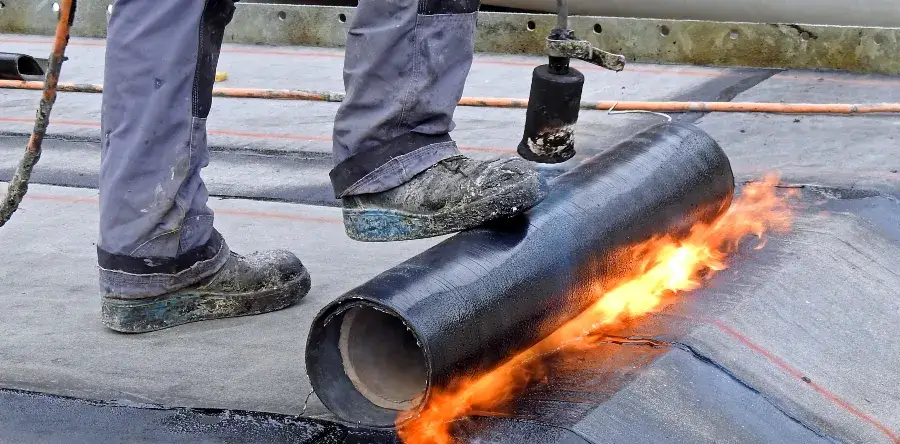
Tear-off removes the old roof down to the decking. That exposes rot, lets the crew correct the substrate, supports new underlayment and flashing, and gives the homeowner a clearer path to manufacturer and workmanship warranty coverage. It's also required when changing to metal, tile, or spray polyurethane foam.
Overlay may make sense when the existing roof is a single, sound layer, the decking is known to be dry and stable, the jurisdiction allows it, and the homeowner accepts the limitations. It isn't a substitute for inspection, and many manufacturers restrict warranty coverage on some shingle lines installed over existing materials.
Match material to the house
Material selection should follow pitch, heat exposure, HOA requirements, desired appearance, and budget.
- Architectural asphalt shingles: A familiar residential appearance and a practical fit for many sloped roofs.
- Class 4 impact-resistant asphalt: A stronger asphalt option for areas where hail exposure and potential insurance discounts influence the decision.
- Standing-seam metal: A durable system with a different appearance, higher initial cost, and careful requirements for thermal movement and detailing.
- Concrete or clay tile: A long-service material that adds weight and requires the structure, underlayment, and flashing to be evaluated together.
- Spray polyurethane foam with elastomeric coating: A useful option for flat or low-slope Arizona roofs when the substrate, drainage, and coating maintenance are properly managed.
Asphalt remains most common in northern Arizona communities such as Flagstaff, Prescott, and Show Low, where temperatures are lower and ultraviolet exposure is reduced relative to the low desert, according to this Arizona roofing-material guide. In Phoenix or Tucson, the decision should give more weight to heat management and ventilation than to appearance alone.
What It Really Costs to Replace an Asphalt Roof in 2026
A credible estimate starts with roof measurements, not the home's floor area. Roofing contractors price roof area, pitch, access, waste, removal, labor, and the components that make the system watertight. A neutral benchmark places a standard asphalt-shingle replacement for a single-family home at roughly $9,000 to $18,000, with installed costs around $4 to $11 per square foot, depending on size, complexity, and material grade, as detailed in this 2026 roofing cost benchmark.
That range isn't a promise for every Phoenix, Tucson, or smaller-market project. A steep roof, multiple valleys, skylights, damaged decking, difficult access, extra flashing, or substantial disposal can move the estimate. The most important comparison is whether every bidder is pricing the same scope.
Where the money goes
The proposal should separate tear-off and disposal from shingles, underlayment, ice and water shield, drip edge, valley materials, flashing, ventilation, decking allowance, permits, labor, and tax. Low bids often look attractive because they exclude one or more of those items.
The 2025 pricing pressure has affected oil-based asphalt inputs and premium impact-resistant products. Labor availability also affects scheduling and crew pricing. Waiting can make sense when the roof is sound and the decision is based only on appearance. It becomes harder to justify when water is entering the building or the roof has widespread surface failure.
| Roof Size (squares) | 3-Tab Shingles | Architectural Shingles | Class 4 Impact-Resistant |
|---|---|---|---|
| Smaller roof | Lower material tier, with labor and site conditions priced separately | Mid-range material tier | Higher material tier, with potential insurance considerations |
| Mid-size roof | Budget-oriented option where appropriate | Common balance of appearance and cost | Added impact resistance and higher product cost |
| Larger or complex roof | Total price rises with area and complexity | Total price rises with area and complexity | Total price rises with area, complexity, and product grade |
A roof square equals 100 square feet, so homeowners should ask contractors to show the measured squares, waste calculation, and pitch factor. The Arizona roof replacement cost estimator can help organize the initial budgeting conversation, but a site inspection remains necessary for a binding scope.
Replace now or patch again
Patching can preserve cash when the damage is localized and the surrounding roof remains serviceable. It becomes poor value when the same roof needs repeated visits, several slopes shed granules, or a repair requires disturbing brittle shingles that may crack during the work.
The resale calculation also deserves a realistic view. A 2025 Cost vs. Value summary placed average asphalt roof replacement at $31,871, with $21,501 in resale value recouped, or about 68%, according to this roof replacement return-on-investment report. That doesn't mean replacement is a guaranteed resale strategy. It means homeowners should weigh remaining service life, leak exposure, energy concerns, insurance requirements, and planned time in the property together.
Permits, Inspections, Insurance Claims, and Financing in Arizona
Roof replacement paperwork varies by municipality, project type, and HOA rules. The contractor generally handles the building permit before tear-off begins, but the homeowner should still request the permit number and receipt. A permit protects the project by creating a documented scope and gives the local authority an opportunity to inspect work that will be concealed by later layers.
What inspectors and homeowners should verify
Inspection points commonly include the decking, fastener placement, underlayment, flashing, valleys, penetrations, and edge details. The number and timing of inspections depend on the jurisdiction and the project, so the contract should state who schedules them and how failed inspection corrections are handled.
The homeowner should retain:
- The permit receipt: This confirms that the project was submitted through the proper local process.
- Photo documentation: Photos of exposed decking, underlayment, flashing, and completed details help with future maintenance and claims.
- The itemized invoice: The invoice should identify materials, quantities, labor, disposal, and approved change orders.
- Warranty registration: Manufacturer registration may require the product name, installation date, and certified installer information.
- Completion records: Keep final approvals, lien waivers, and the signed warranty with property documents.
Handle storm claims before major work
Wind and hail damage may support an insurance claim, while ordinary aging and wear generally do not. After a storm, the homeowner should photograph damage from the ground and attic, prevent additional water entry with temporary protection when necessary, and contact the carrier before authorizing substantial repairs that could obscure the cause.
The policy distinction between Actual Cash Value, which accounts for depreciation, and Replacement Cost Value, which may reimburse eligible replacement costs after the work is completed, can materially change the claim process. Coverage depends on the individual policy, deductible, exclusions, roof age provisions, and adjuster scope. A contractor can provide documentation and attend an inspection, but the insurer makes the coverage decision.
Consider financing carefully
Common funding routes include contractor payment plans, home equity, PACE programs, and FHA 203(k) financing for combined roof and repair projects. Each option has different costs, eligibility rules, repayment terms, and effects on the property, so the homeowner should compare the written disclosures rather than focus only on a monthly payment.
The Arizona roof replacement financing guide can help homeowners identify questions to ask before selecting a payment path. A responsible contractor won't pressure a homeowner to sign financing documents before the roof scope and total price are clear.
Hiring the Right Contractor and Reading the Contract
A low quote doesn't prove a contractor is unqualified, but a vague quote makes comparison impossible. Arizona homeowners should verify the contractor's license through the Arizona Registrar of Contractors, confirm the ROC bond, review complaint history, and request current certificates for general liability and workers' compensation coverage.
Verify the company before comparing bids
A qualified contractor should identify the legal business name, license information, project supervisor, material manufacturer, and installation scope. References should include recent local projects with similar roof types, not only photos selected for marketing.
Manufacturer certifications can expand available warranty tiers, but certification names don't replace contract review. The homeowner should ask what the certification provides, which exclusions apply, and whether registration must be completed after installation.
Read every scope line
The contract should identify the exact shingle brand and product line, color, underlayment type, ice and water shield locations, ventilation approach, flashing replacement policy, drip edge, valley treatment, decking allowance, cleanup, and disposal. It should also state start and completion dates, payment milestones, change-order approval, lien waivers, permit responsibility, and the workmanship warranty.
Contract test: If a component is important to leak resistance but doesn't appear in writing, the homeowner should assume it isn't included until the contractor adds it.
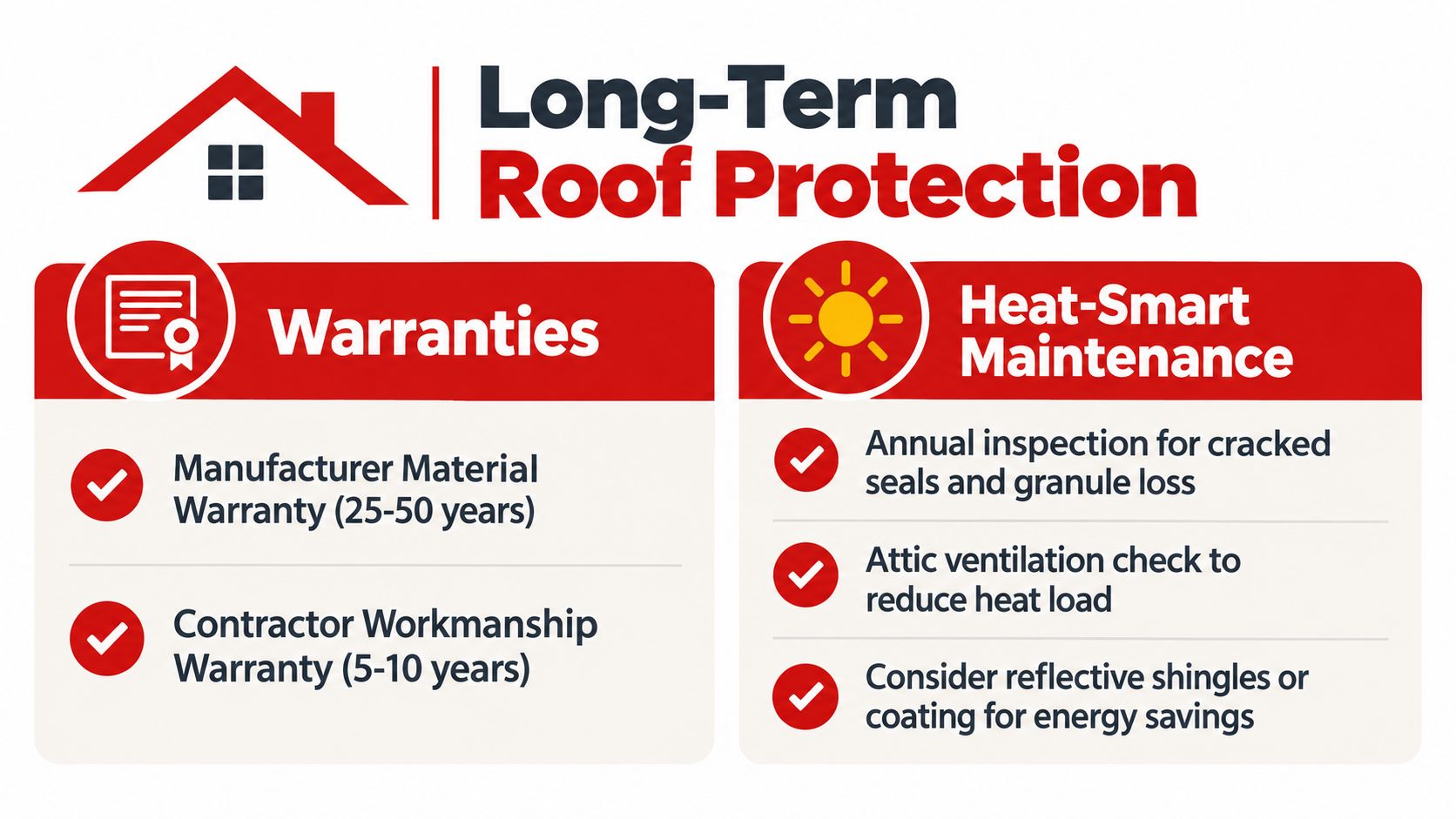
A workmanship warranty of at least 5 to 10 years provides a clearer baseline for comparing bids, but the exact coverage and exclusions matter more than the headline duration. Manufacturer material warranties can also vary by product and installation conditions. A professional proposal explains who responds to a defect, how the homeowner submits notice, and what maintenance could void coverage.
Know when to walk away
Cash-only demands, pressure to sign immediately, vague start dates, no written warranty, unexplained allowances, and requests for a large payment before measurable progress are serious warning signs. Storm work requires particular caution because legitimate contractors can explain the damage without promising insurance approval.
Homeowners who want a defined replacement scope can review residential roof replacement services before requesting bids, then use the same checklist with every contractor. Arizona Roofers should be considered in that comparison as a licensed, insured, and bonded Arizona roofing company offering inspections, replacement work, project documentation, and support for homeowners across major Arizona communities.
Warranty, Maintenance, and Heat-Smart Upgrades for Arizona
A completed roof still needs an operating plan. The manufacturer warranty generally addresses defects in the roofing materials, while the contractor's workmanship warranty addresses installation-related problems. Neither warranty should be treated as a blanket promise against every leak, storm, maintenance failure, ventilation problem, or building movement.
Warranty terms differ by product and contractor. Homeowners should read whether coverage is prorated, what registration requires, which accessories are included, and how heat exposure, inadequate ventilation, unauthorized alterations, and skipped maintenance affect a claim.
Build a desert maintenance routine
Arizona maintenance should focus on the places where heat, dust, wind, and water intersect. A homeowner doesn't need to walk the roof in dangerous conditions. Ground observations, attic checks, and scheduled professional inspections can identify problems before a small defect becomes interior damage.
- After monsoon weather: Look for lifted tabs, fallen branches, damaged ridge caps, and new ceiling stains.
- At valleys and scuppers: Clear leaves, dust, and debris that interrupt drainage.
- At penetrations and flashings: Check visible sealant for cracking, shrinkage, or separation.
- In the attic: Confirm insulation hasn't blocked intended ventilation paths and look for daylight, damp decking, or staining.
- In the gutters: Watch for unusual granule accumulation, which can signal surface wear.
Reduce heat stress where practical
A replacement is the best time to evaluate Cool Roof-rated asphalt shingles, high solar reflectance index products, radiant barrier decking, ridge vents with adequate net free area, and reflective underlayments. These upgrades must be designed around the roof assembly. Adding a ridge vent without a balanced intake path may not deliver the intended ventilation, and reflective materials can't compensate for damaged decking or poor flashing.
Some reflective underlayments are marketed as reducing attic temperatures by 10 to 20 degrees, but the result depends on roof orientation, ventilation, insulation, air sealing, and installation. The contractor should explain the assembly rather than promise a fixed indoor-energy outcome.
A heat-smart roof is a system. Shingle color, ventilation, insulation, flashing, and attic airflow need to work together.
The final step is a professional post-installation inspection with photographs and a maintenance log. Record the installation date, product line, warranty registration, permit approval, inspection notes, repairs, and post-monsoon observations. That record supports warranty compliance and gives the next inspector a reliable history instead of a guess.
Arizona Roofers provides inspections, asphalt roof replacement, storm-damage support, heat-conscious roofing options, project documentation, and financing guidance for homeowners in Phoenix, Tucson, Scottsdale, Mesa, Chandler, and surrounding communities. Call (480) 531-6383 or visit Arizona Roofers to schedule a roof evaluation and receive a clear replacement scope built for Arizona conditions.