
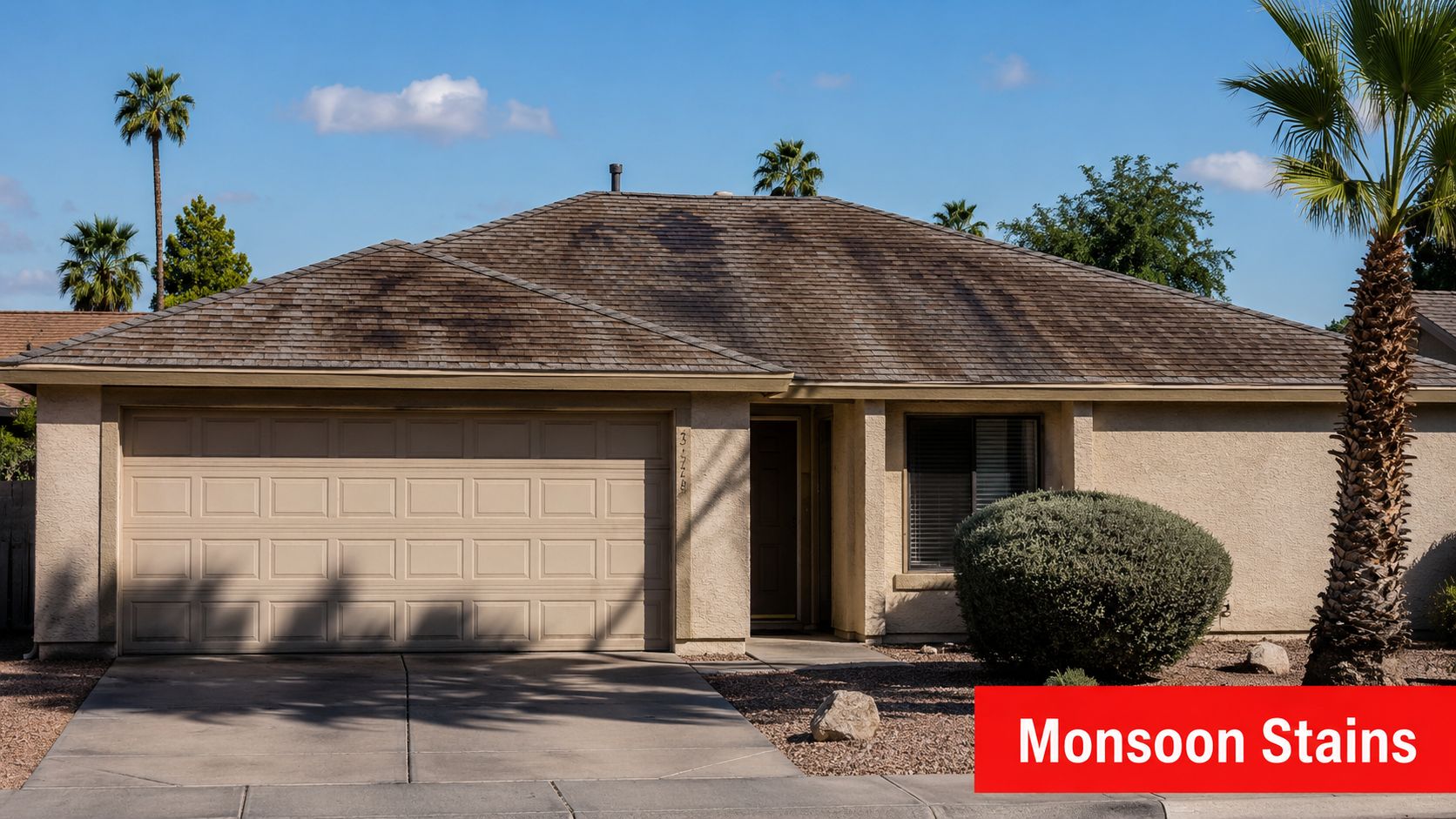
A homeowner in Phoenix or Scottsdale may notice the change after monsoon season: dark streaks run down otherwise clean shingles, dust settles in the valleys, and a roof that looked fine in spring suddenly looks tired. The instinct is understandable, grab a pressure washer and find an asphalt shingle roof cleaner that promises fast results. That shortcut can remove more than the stain.
Arizona roofs face intense sun, extreme heat, monsoon dust, and occasional moisture trapped in shaded roof sections. The safe objective isn't a brighter roof. It's removing biological growth while preserving shingle granules, waterproofing, and manufacturer warranty protection. The practical method is diagnosis first, low-pressure chemical cleaning second, and professional assessment whenever the roof's condition or access makes do-it-yourself work risky.
Table of Contents
- Why Arizona Homeowners Need the Right Asphalt Shingle Roof Cleaner
- Diagnosing Stains on Your Asphalt Shingle Roof
- Choosing a Safe Asphalt Shingle Roof Cleaner and Mix
- Soft-Wash Application and Rinsing Done Safely
- Why Pressure Washing Damages Asphalt Shingles
- When to Call Arizona Roofers Instead of Cleaning It Yourself
- Preventive Maintenance Tips for Arizona Climates
Why Arizona Homeowners Need the Right Asphalt Shingle Roof Cleaner
A roof can show dark streaks without having failed. Historical U.S. surveys identified microorganisms in the Gloeocapsa family as a common cause of asphalt shingle discoloration, with Scytonema appearing less often. Industry guidance later connected this biological growth with the black streaks seen on roofs across the United States and Canada. (Professional Roofing's discussion of asphalt shingle discoloration)
In Phoenix, Mesa, and Chandler, those streaks often arrive with monsoon dust. Wind can pack fine sediment into valleys, wall intersections, around vents, and shaded sections. The buildup can make a cosmetic stain look worse, while Arizona heat and roof traffic reduce a brittle shingle's tolerance for rough cleaning.
What the wrong method can cost
Pressure washing is the most avoidable mistake. Manufacturer guidance favors low-pressure, chemical-based cleaning because forceful water can dislodge protective granules, affect waterproofing, and shorten shingle service life. The guidance describes soft washing as under 100 PSI at the surface, while a shingle-safe rinse should remain well below conventional pressure-washing force. (Asphalt Roofing Manufacturers Association guidance)
Warranty language matters too. An unsuitable nozzle, chemical, or scrubbing method can create damage that resembles normal aging but resulted from cleaning. Choose an asphalt shingle roof cleaner for controlled biological removal, not maximum speed.
A single-story roof with safe access, limited staining, and sound shingles may suit a careful soft wash. Steep slopes, fragile or curling shingles, multiple stories, and widespread growth raise the risk beyond a reasonable Saturday project. In those conditions, a professional assessment or soft-wash service may be the safer option.
Diagnosing Stains on Your Asphalt Shingle Roof
The roof should be identified before an asphalt shingle roof cleaner touches it. From the ground, homeowners can usually separate three conditions: biological streaking, raised organic growth, and surface wear or debris.
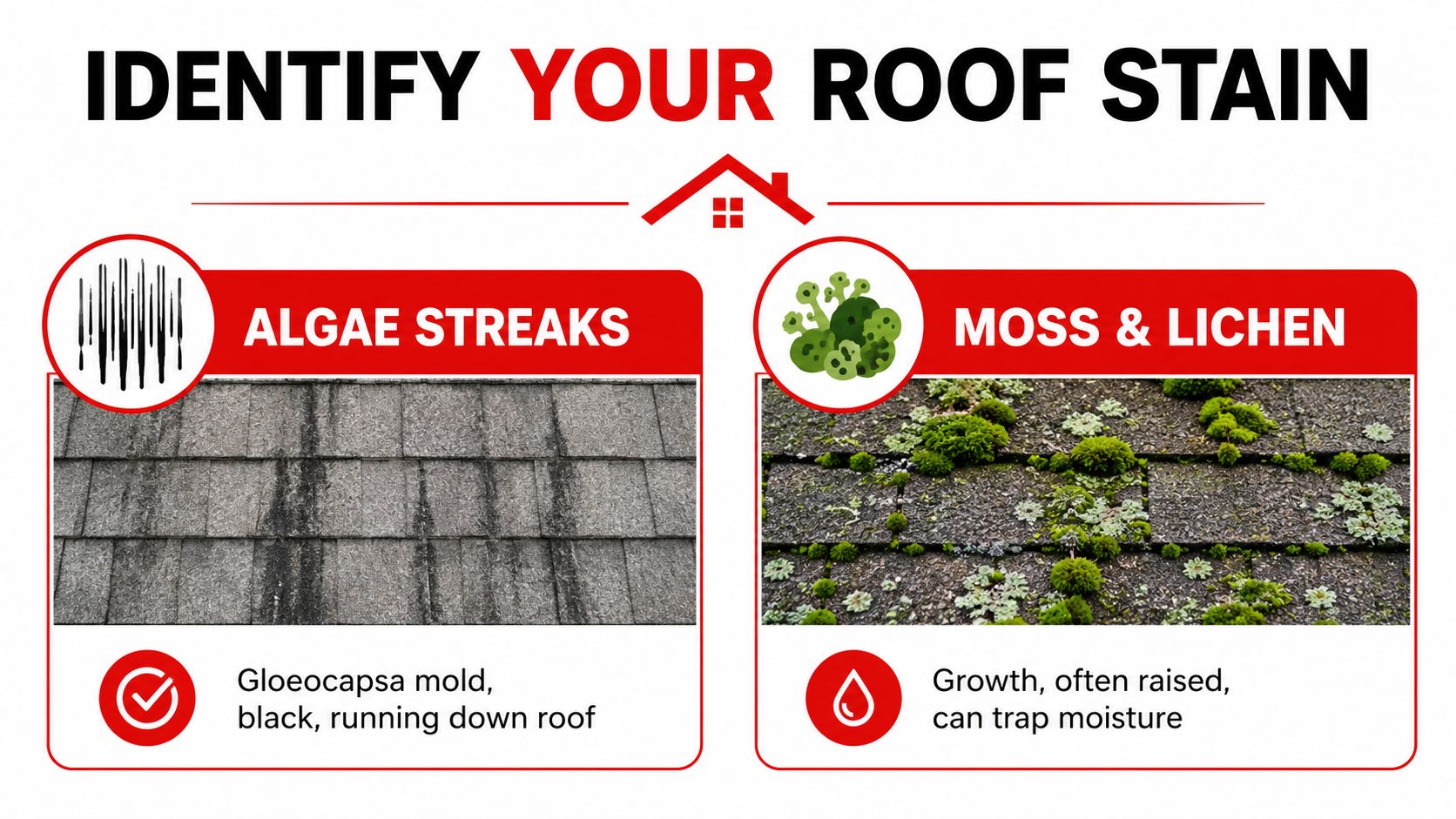
Black streaks usually indicate biological staining
Black or blue-black marks that run vertically down the slope are commonly associated with Gloeocapsa microorganisms, the primary organism family identified in historical surveys of asphalt shingle discoloration. (Professional Roofing's technical background on roof stains) The pattern often follows water flow, so the darkest areas may appear below laps, vents, or sections where runoff concentrates.
This staining is generally cosmetic rather than proof of a structural defect. Biological growth still deserves attention because growth can retain moisture and contribute to granule loss, especially where shade and debris keep the surface damp. (Technical guidance on algae removal from asphalt roofs)
Green growth needs more caution
Moss appears raised, soft, or clumped rather than flat and streak-like. It commonly develops in shaded valleys, beneath nearby trees, and around roof sections that dry slowly. Moss can hold moisture against the shingle surface, so aggressive brushing or scraping is a poor response. The roof may need a controlled treatment, gentle removal, and inspection for lifted edges or weakened areas.
Dust and granule loss can look similar
Tan or gray film around valleys and low-slope transitions may be monsoon dust, pollen, or ordinary roof debris. It may respond to a gentle rinse, but homeowners shouldn't assume every discoloration is dirt. Bare-looking patches, loose granules in gutters, exposed matting, curled tabs, brittle edges, or visible sealant failure point toward roof wear rather than a cleaning problem.
A ladder inspection should stay at the eave or another secure position. Walking across hot shingles can loosen granules and create fall risk, particularly during an Arizona summer. If the roof shows widespread bare areas, moisture damage, moss across large sections, or staining that doesn't follow runoff patterns, the next step is an inspection, not stronger chemistry. For guidance on biological growth and safe treatment planning, homeowners can review how to clean mold off a roof.
Choosing a Safe Asphalt Shingle Roof Cleaner and Mix
On an Arizona roof, choose a cleaner that handles algae or moss while leaving the shingle surface to water pressure, not abrasion. The Asphalt Roofing Manufacturers Association recommends a 50:50 mix of laundry-strength liquid chlorine bleach and water for algae and moss removal. Apply it with a sprayer, allow it to dwell, then rinse with low-pressure water, following the ARMA roof cleaning and maintenance guidance.
Arizona heat changes the working conditions. A mix that sits on a hot roof can dry before it has treated the stained area, while monsoon dust can make runoff look heavier than the biological growth itself. Check the shingle manufacturer's care instructions before mixing. Warranty documents may limit cleaning agents, application methods, or pressure levels. Test a small, inconspicuous area first, and never combine bleach with acids, ammonia, or other household chemicals.
Bleach-based and oxygen-based options
Bleach-based soft washing is commonly used because it can treat algae and moss without high-pressure abrasion. It still demands chemical-resistant gloves, eye protection, controlled application, plant protection, and planned runoff. Oxygen-based cleaners may suit homeowners seeking a different plant-safety profile, but established staining can respond more slowly and may need repeated treatment.
The right choice depends on the shingle warranty, the type of growth, nearby landscaping, roof temperature, and the applicator's ability to control the rinse. A product that is acceptable on one roof may be unsuitable on another.
| Cleaner Type | Typical Use | Pressure Level | Warranty Risk |
|---|---|---|---|
| Diluted chlorine solution | Algae and moss treatment | Low pressure, typically under 100 PSI at the nozzle | Lower when diluted, applied correctly, and permitted by the manufacturer |
| Oxygen-based cleaner | Gentler biological-growth treatment where suitable | Low pressure | Depends on the product, label, and shingle warranty |
| Undiluted bleach or harsh acid | Not appropriate for routine asphalt shingle cleaning | Not applicable | High, with added risk to shingles, plants, and surrounding finishes |
| Pressure-washing approach | Fast mechanical removal attempt | High pressure | High because granule loss and waterproofing damage can result |
Avoid undiluted bleach, harsh acids, abrasive scrubbing, and unverified “miracle” cleaners. Manufacturer guidance favors low-pressure chemical application over pressure washing for asphalt shingles, as described in the ARMA cleaning recommendations. If the roof requires prolonged walking, difficult runoff control, or treatment across widespread growth, a professional soft-wash job is the safer warranty-conscious choice.
Soft-Wash Application and Rinsing Done Safely
A Saturday roof-cleaning project starts on the ground. The homeowner needs chemical-resistant gloves, eye protection, non-slip footwear, suitable clothing, a low-pressure sprayer, a garden hose or controlled low-pressure rinse setup, and a stable ladder positioned according to safe ladder practice. A roof that requires walking, balancing, or leaning beyond a secure position isn't a good DIY roof.
Choose the weather before mixing anything
Cool or overcast conditions are preferable because direct Arizona sun can dry the solution too quickly. Phoenix and Scottsdale roofs can become hot enough that a treatment loses working time before it reaches every stained section. Wind is another reason to postpone the job. Drift can carry solution onto windows, painted walls, vehicles, neighboring property, or a pool.
Before application, pre-wet desert landscaping thoroughly. Cover or move sensitive plants where practical, protect irrigation components, and plan where runoff will go. Pool decks and pool water need special attention because chemical runoff can create a separate cleanup and water-quality problem.
Apply, dwell, and rinse without force
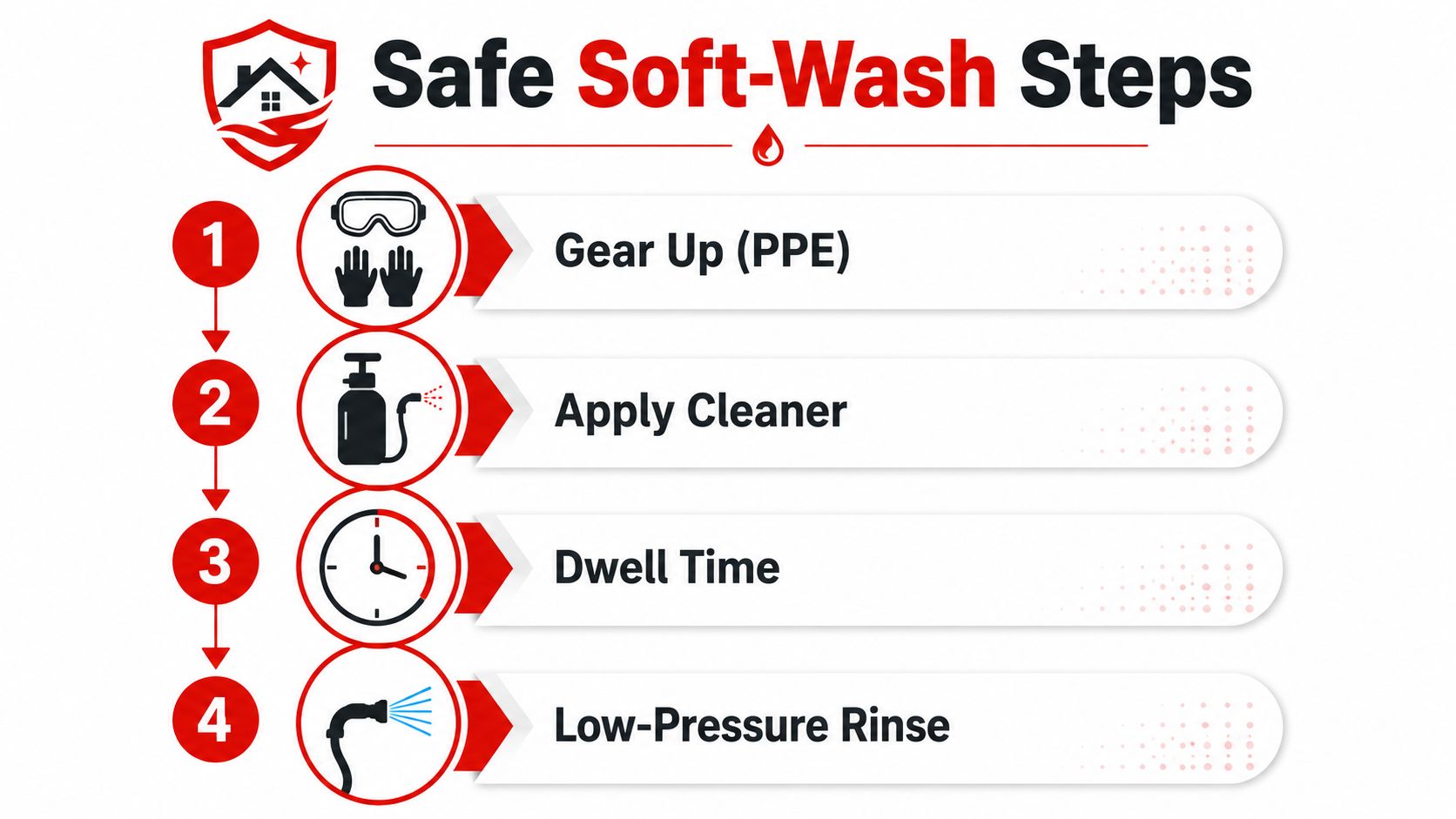
The sequence should stay controlled:
- Gear up and secure the work area. Keep children and pets away, protect nearby surfaces, and confirm that the ladder base won't shift on hot or dusty ground.
- Apply the diluted cleaner from a safe position. Use a low-pressure sprayer and work in manageable sections. The solution should wet the stained surface, not blast it.
- Allow the treatment to dwell. ARMA guidance specifies a dwell period of 15 to 20 minutes, followed by thorough low-pressure rinsing. (ARMA roof cleaning and maintenance solutions)
- Rinse gently and completely. Direct water down the roof slope, never under shingle edges. Avoid scrubbing granules or forcing water beneath tabs.
The first rinse should protect the roof and everything below it. Keep checking gutters, downspouts, stucco, window frames, and plants for runoff. If staining remains, repeating a controlled treatment is safer than increasing pressure or concentration.
Stop immediately: If shingles lift, granules release heavily, runoff reaches a pool, plants begin to wilt, or the roof surface feels brittle, the homeowner should stop and call Arizona Roofers for an assessment.
Why Pressure Washing Damages Asphalt Shingles
A pressure washer can make an Arizona roof look clean in minutes, especially after monsoon dust settles into algae or loose debris. That fast result hides the risk. The spray can remove the granules embedded in the shingle surface, reducing the protection that helps asphalt shingles resist sun, heat, and weather.
The force can also lift shingle tabs or push water beneath the shingle mat. Leaks may not appear during cleaning. Heat cycles and later rain can expose the weakness, turning a cosmetic project into roof damage. Manufacturer guidance warns that pressure washing can cause granule loss and contribute to premature roof-system failure.
Speed isn't the same as safe cleaning
High pressure seems efficient in Mesa, Chandler, and Tucson because it removes visible dirt quickly. The trade-off appears later, when damaged shingles need repair, warranty requirements must be reviewed, or replacement becomes necessary. A cleaner appearance is not worth sacrificing waterproofing or granule retention.
Soft washing uses a different process. The cleaning solution breaks down biological growth, and low-pressure water removes the residue without scouring the shingle surface. Industry guidance identifies low-pressure sodium hypochlorite application, commonly under 100 PSI at the nozzle, as the preferred approach for asphalt shingles and warns against high-pressure washing. (Asphalt shingle cleaning guidance)
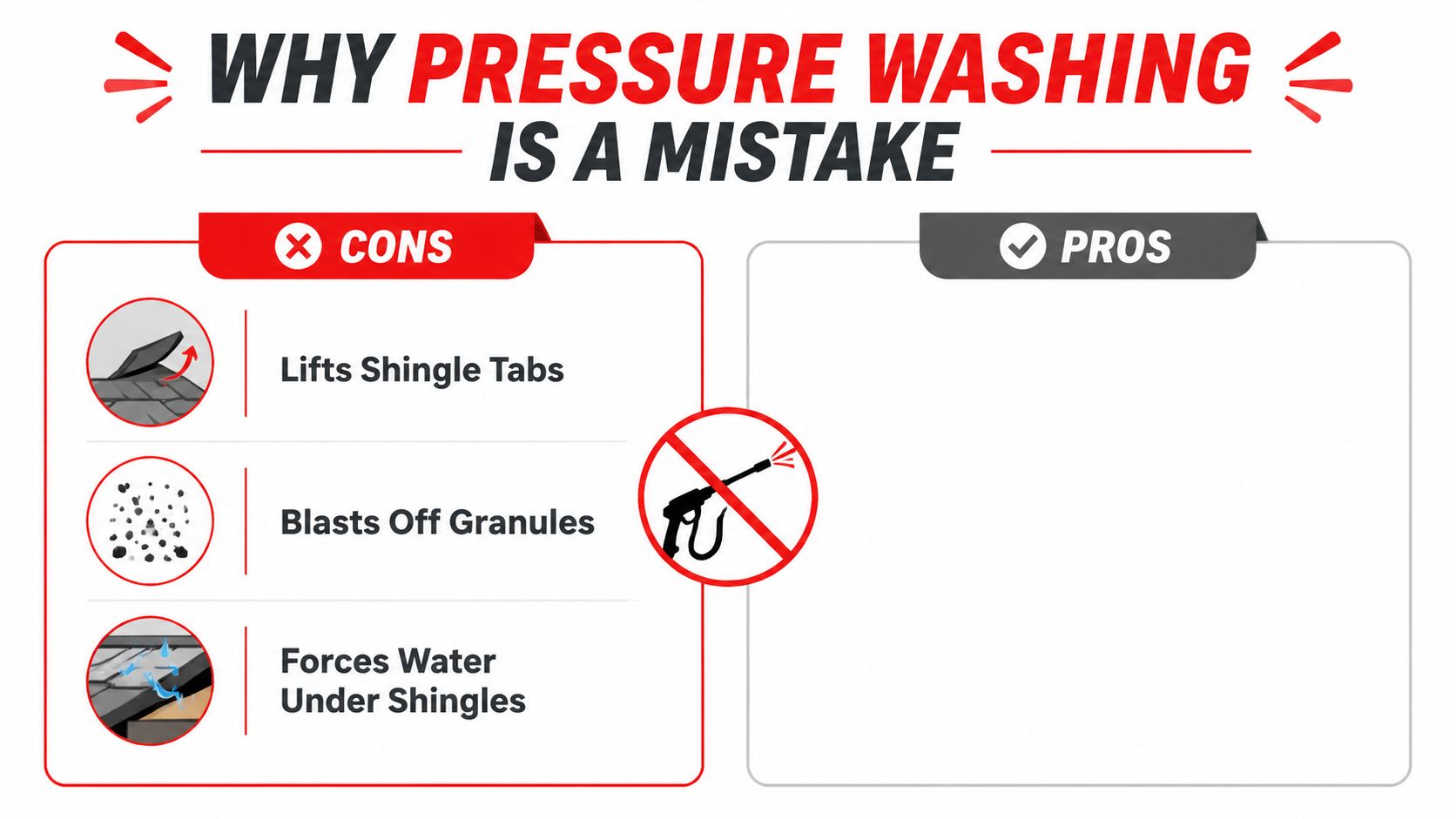
Use a low-pressure method and follow the shingle manufacturer's instructions when chemical treatment is appropriate. If the roof only looks clean after force is applied, stop. Brittle shingles, heavy granule loss, or uncertain roof condition call for assessment rather than blasting.
When to Call Arizona Roofers Instead of Cleaning It Yourself
A Saturday DIY wash is reasonable only when the roof is low, accessible, and structurally sound. Arizona heat can make shingles brittle, while monsoon dust may hide lifted tabs, failed flashing, or soft decking. Stop before climbing if the condition is uncertain.
Use this decision point
Call a qualified roofing contractor before cleaning when any of these conditions apply:
- Steep or multi-story construction: A ladder may not provide secure access for applying solution or rinsing.
- Widespread moss or lichen: Raised growth can conceal lifted tabs, trapped moisture, and weakened shingle surfaces.
- Visible granule loss: Bare patches, heavy gutter granules, brittle edges, or curling suggest that cleaning is not the main repair.
- Unclear warranty requirements: Review the available shingle documentation before applying chemicals.
- Complex Arizona landscaping: Pools, delicate plants, irrigation lines, stucco, and narrow side yards require controlled runoff.
- Suspected roof failure: Leaks, soft decking, damaged flashing, or interior stains require an inspection before cosmetic treatment.
A professional soft-wash job also makes sense when staining covers broad areas, runoff cannot be controlled, or the roof requires repeated ladder repositioning. Those conditions increase the chance of chemical damage, falls, and missed defects.
Arizona Roofers, a locally owned, licensed, insured, and bonded roofing contractor, provides roof inspections, soft-wash services, repairs, replacements, and thermal roof inspection reports for homeowners across Phoenix, Scottsdale, Tucson, Mesa, Chandler, and surrounding communities. Its crews work on asphalt shingles and other Arizona roofing systems.
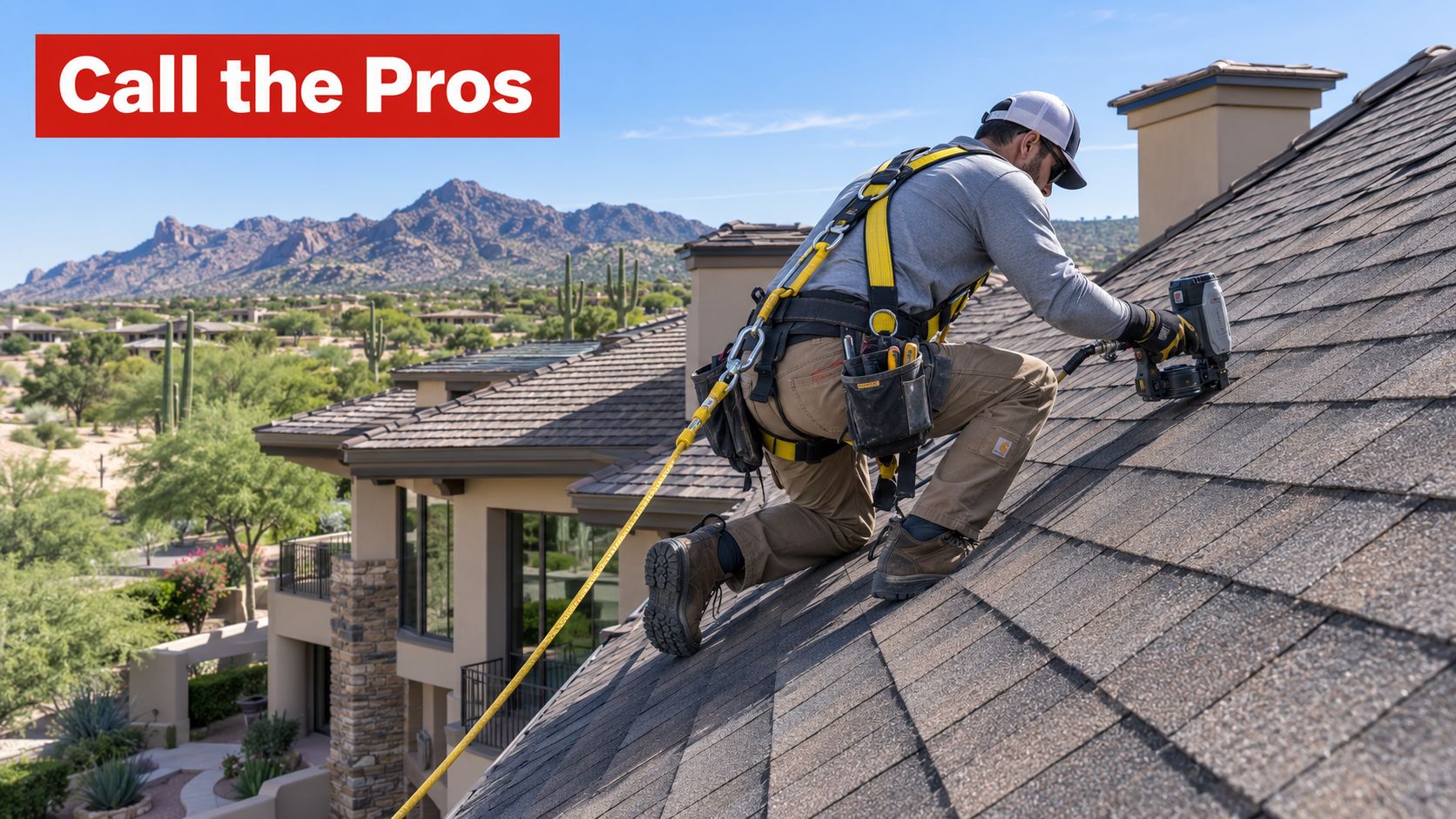
Cleaning will not correct UV degradation, advanced age, or widespread surface failure. Homeowners outside the central Arizona service area can review roof cleaning services in Flagstaff for regional cleaning considerations.
For visible shingle damage or suspected leaks, arrange roof shingle repair before washing begins. Calling (480) 531-6383 lets homeowners compare DIY risk with a documented inspection and a clear recommendation.
Preventive Maintenance Tips for Arizona Climates
Cleaning should follow the roof's environment, not an arbitrary calendar. Dry regions may need cleaning every 5 to 7 years, while humid, shaded, or coastal-influenced roofs may need attention every 2 to 3 years. (Climate-based asphalt shingle cleaning guidance)
Arizona homeowners can reduce regrowth by trimming branches that shade the roof, clearing valleys and gutters before monsoon season, and keeping roof runoff paths open. During replacement, algae-resistant shingles may also be worth discussing with the roofing contractor. A clean, reflective roof supports the cooling-efficiency goals built into Arizona Roofers installations, especially when paired with reflective or insulating roofing solutions.
A practical maintenance rhythm looks like this:
- Before monsoon season: Clear gutters, valleys, drains, and debris traps.
- After major storms: Check from the ground for displaced tabs, new streaks, and fallen branches.
- During routine inspections: Look for granule loss, moisture signs, and shaded growth rather than focusing only on appearance.
- Before cleaning: Confirm the product and method against the shingle warranty.
Homeowners can review asphalt shingle roof maintenance for a broader care plan. Arizona Roofers also offers preventative maintenance programs and thermal roof inspection reports to identify developing problems before a cleaning issue becomes a repair issue.
Arizona Roofers can inspect stained asphalt shingle roofs, verify whether cleaning is appropriate, and provide warranty-conscious soft washing or repairs across Phoenix, Scottsdale, Tucson, Mesa, Chandler, and nearby Arizona communities. Visit Arizona Roofers or call (480) 531-6383 to schedule a free inspection and get a clear recommendation before reaching for a pressure washer.
Guides written and reviewed by the licensed roofers at Arizona Roofers (ROC#356304 · ROC#356639), a GAF Master Elite® contractor and 2026 GAF President’s Club Residential Award winner. About our team →