
Key Takeaways
- Single-Ply Membranes (TPO, PVC, EPDM): These are modern, energy-efficient options popular for their reflective properties (especially TPO and PVC), which significantly lower cooling costs in Arizona. They offer a great balance of performance, durability, and cost.
- Built-Up & Modified Bitumen: These are traditional, multi-layered systems known for their exceptional durability and resistance to punctures and foot traffic. They are heavy-duty, proven performers for industrial and high-traffic roofs.
- Metal & SPF Roofing: These systems offer premium performance. Metal provides superior longevity and architectural appeal, while Spray Polyurethane Foam (SPF) delivers unmatched insulation and a seamless, waterproof barrier ideal for energy efficiency and complex roof shapes.
- Climate is Crucial: For Arizona, the best systems are those that offer high solar reflectivity (“cool roofs”) and can withstand extreme temperature fluctuations and intense UV exposure.
Your commercial roof is more than just a cover; it’s a critical asset protecting your business, inventory, and employees from the elements. Selecting the right system is a significant investment, one that directly impacts your building’s energy efficiency, maintenance costs, and long-term structural integrity. But with so many options available, how do you choose the right one for your specific needs, budget, and especially for the intense Arizona climate?
This comprehensive guide is designed to eliminate the guesswork. We will dive deep into the 8 major types of commercial roofing systems, breaking down the technology, performance characteristics, and costs associated with each distinct option. We’ll explore everything from time-tested classics like Built-Up Roofing (BUR) to modern, energy-efficient solutions such as TPO and Spray Polyurethane Foam (SPF). Our goal is to provide a clear, detailed roadmap, giving you the knowledge to make an informed decision that ensures lasting value and durability. For property owners seeking a broader look at material capabilities, a comprehensive guide to roofing materials can offer additional context on their protective qualities.
By understanding the unique pros and cons of each system, you can better evaluate which material is best suited to withstand Arizona’s relentless sun, monsoon storms, and extreme temperature fluctuations. This guide is your first step toward securing a high-performing roofing investment that not only protects your property but also enhances its value for years to come.
1. Built-Up Roofing (BUR)
Built-Up Roofing (BUR), often called “tar and gravel” roofing, stands as one of the most enduring and trusted types of commercial roofing systems. Its history dates back over a century, offering a proven track record of durability and protection. A BUR system is assembled on-site by layering bitumen (asphalt or coal tar) with reinforcing fabrics known as roofing felts. This creates a thick, multi-ply, seamless membrane.
The system typically consists of three to five layers, creating redundancy that makes it exceptionally resistant to leaks. The final layer is coated with an aggregate material like gravel, slag, or mineral granules. This top coat is not just for aesthetics; it provides critical protection against UV radiation, stabilizes the underlying bitumen, and enhances the roof’s fire resistance. This multi-layered, robust construction is why BUR has been a go-to choice for large-scale projects like industrial plants and historic government buildings for decades.
When to Choose a Built-Up Roof
A BUR system is an excellent choice for property owners who prioritize durability and proven performance over initial cost. It is particularly well-suited for buildings with flat or low-slope designs where water may pool temporarily.
Consider a BUR system for:
- Large Industrial Facilities: Its resilience to foot traffic and mechanical damage makes it ideal for roofs that house heavy HVAC equipment.
- Historic Commercial Buildings: BUR maintains the traditional roofing style while offering reliable, modern waterproofing.
- Buildings Requiring High Fire Resistance: The aggregate surface provides a superior fire rating, which is crucial for manufacturing plants or storage facilities.
The following infographic highlights the core components and expected performance of a typical BUR system.
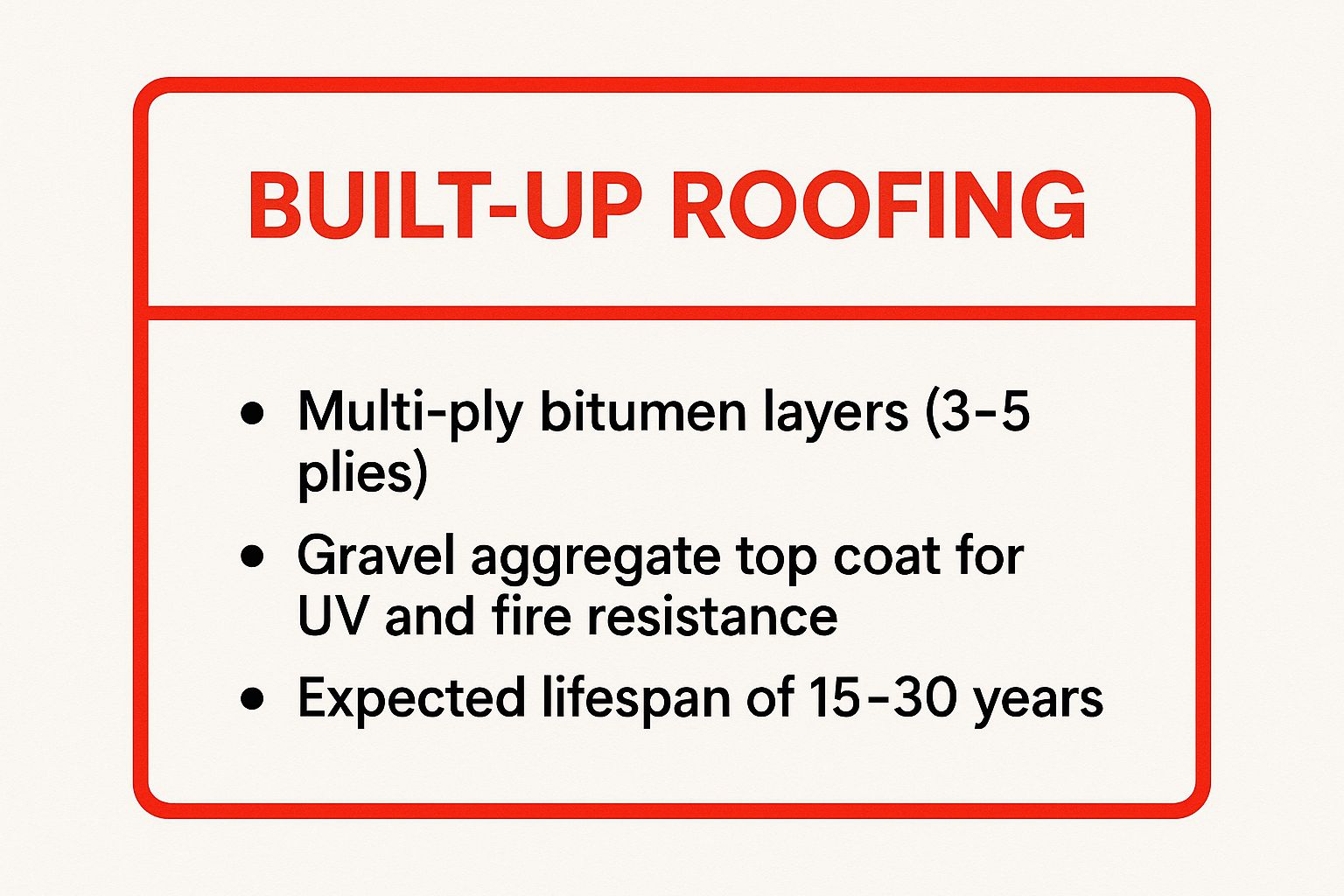
This quick summary shows that the system’s strength comes from its multi-ply design, protective aggregate top layer, and substantial lifespan.
Suitability for Arizona’s Climate
In Arizona, a BUR system’s aggregate surface provides excellent protection against the intense, relentless UV radiation, which can rapidly degrade other roofing materials. The gravel reflects sunlight, helping to keep the membrane cooler and extending its service life. However, its heavy weight requires a building’s structure to have significant load-bearing capacity. Additionally, the black tar material absorbs a great deal of heat, which can increase cooling costs if not properly insulated or coated with a reflective material.
Pro Tip for Arizona: Consider applying a reflective elastomeric coating over the BUR system. This can transform the dark, heat-absorbing surface into a “cool roof,” significantly reducing thermal transfer into the building and lowering energy bills during the scorching summer months.
2. Modified Bitumen Roofing
Modified Bitumen roofing is an evolution of traditional asphalt roofing, engineered for enhanced performance and flexibility. As one of the most versatile types of commercial roofing systems, it blends asphalt with plastic or rubber polymers to create a durable, five-layer system. This modification results in a material with superior tensile strength and resistance to extreme weather conditions. The system is typically composed of a base layer, one or two reinforced plies, and a protective cap sheet.
These factory-manufactured sheets offer greater quality control and consistency compared to on-site assembled systems. Installation methods are varied, ranging from traditional torch-applied techniques to safer cold-applied adhesives and self-adhered sheets. This versatility, combined with its tear-resistant properties, makes Modified Bitumen a popular choice for high-traffic roofs and buildings subject to expansion and contraction. You can learn more about this robust material by exploring our complete guide to what is Modified Bitumen roofing.
When to Choose a Modified Bitumen Roof
Modified Bitumen is an ideal choice for property owners who need a balance of performance, durability, and cost-effectiveness. Its resilience makes it suitable for roofs with regular foot traffic from maintenance personnel or those that support heavy equipment.
Consider a Modified Bitumen system for:
- Retail Strip Malls: It offers a durable, low-maintenance solution that can withstand foot traffic and frequent HVAC servicing.
- Schools and Universities: The system provides a long-lasting, cost-effective roofing solution for large, flat-roofed academic buildings.
- Medical Facilities: Self-adhered or cold-process versions can be installed without the fumes or open flames of torch-down methods, ensuring patient safety.
- Apartment Complexes: Its excellent waterproofing capabilities protect multi-family residential buildings, and the granulated cap sheets offer aesthetic variety.
Suitability for Arizona’s Climate
In Arizona, a Modified Bitumen roof with a granule-surfaced cap sheet excels at reflecting intense UV radiation, which helps protect the underlying membrane and reduce heat absorption. The polymer-modified asphalt (specifically APP-modified) is engineered to resist high temperatures, preventing it from becoming soft or tacky under the relentless sun. This high-temperature stability ensures the roof maintains its integrity and protective qualities throughout the scorching summer months. Its multi-ply structure also provides redundant layers of protection against sudden, heavy monsoon rains.
Pro Tip for Arizona: Opt for an Atactic Polypropylene (APP) modified bitumen system. APP provides enhanced UV resistance and a higher softening point, making it exceptionally well-suited to withstand Arizona’s extreme heat and sun exposure compared to other polymer modifiers.
3. TPO (Thermoplastic Polyolefin) Roofing
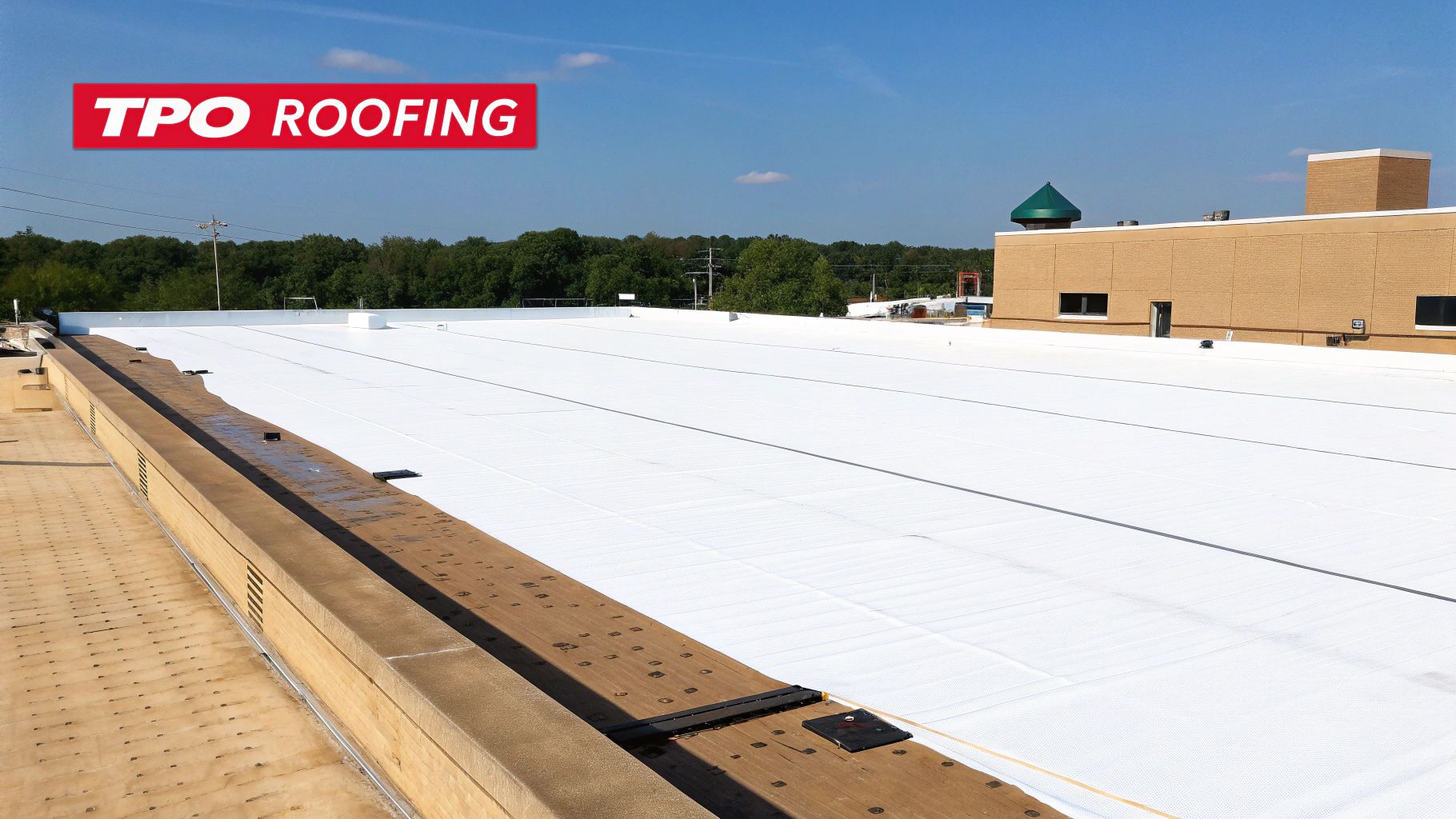
TPO (Thermoplastic Polyolefin) has rapidly become one of the most popular types of commercial roofing systems due to its combination of energy efficiency, cost-effectiveness, and installation ease. This single-ply membrane is made from a blend of polypropylene and ethylene-propylene rubber polymers. The result is a durable, flexible, and highly reflective material that offers excellent performance.
TPO membranes are manufactured in large rolls, typically 10 to 20 feet wide, which helps minimize the number of seams on the roof. During installation, these sheets are attached to the roof deck, and the seams are fused together using a hot-air welder. This process creates a monolithic, seamless surface where the welded seams are often stronger than the membrane itself, providing exceptional resistance to leaks and wind uplift. Its bright white surface is highly reflective, making it a leading choice for modern, energy-conscious building designs.
When to Choose a TPO Roof
A TPO system is the ideal solution for property owners seeking a modern, energy-efficient, and budget-friendly roofing system. Its lightweight nature and heat-welded seams make it a versatile option for a wide range of commercial building structures, both new and old.
Consider a TPO system for:
- Big-Box Retail Stores and Warehouses: Large, flat roof areas on buildings like those for Home Depot or Target benefit greatly from TPO’s cost-effectiveness and reflective properties, which reduce cooling costs.
- Office Buildings and Schools: Buildings seeking LEED certification or simply aiming to lower their carbon footprint often choose TPO for its “cool roof” capabilities.
- Healthcare Facilities: The clean, heat-welded surface is easy to maintain and provides a reliable waterproofing barrier essential for sensitive environments.
Suitability for Arizona’s Climate
TPO roofing is exceptionally well-suited for Arizona’s harsh climate. The standard white membrane has a high solar reflectance value, meaning it reflects a significant portion of the sun’s intense UV rays instead of absorbing them. This “cool roof” effect keeps the building’s interior cooler, drastically reducing the strain on HVAC systems and lowering summer energy bills.
Furthermore, the heat-welded seams are incredibly resilient. Unlike taped or glued seams, they do not degrade under constant UV exposure and extreme heat, maintaining their watertight integrity for years. This makes TPO a reliable and long-lasting choice for protecting commercial properties from Arizona’s unforgiving sun and monsoon storms.
Pro Tip for Arizona: Specify a membrane thickness of at least 60 mils, especially for roofs that require regular foot traffic for HVAC maintenance. Also, ensure your installer is certified by the manufacturer (e.g., GAF, Carlisle) to guarantee proper seam welding and adherence to warranty standards.
4. EPDM (Ethylene Propylene Diene Monomer) Roofing
EPDM (Ethylene Propylene Diene Monomer) roofing, often referred to as rubber roofing, is a highly durable synthetic rubber membrane and a leading choice among types of commercial roofing systems. Used successfully for over 60 years, it is derived from oil and natural gas. This single-ply membrane is known for its exceptional flexibility, resilience, and superior weather resistance, especially against hail and thermal shock.
EPDM comes in large black or white sheets, typically ranging from 45 to 90 mils in thickness. Its wide-sheet format minimizes the number of seams, reducing potential points of failure. Installation methods are versatile and include being fully adhered with bonding adhesive, mechanically fastened with plates and screws, or held in place with a layer of ballast like river rock or pavers. This adaptability makes EPDM a go-to solution for a vast range of commercial buildings, from sprawling industrial warehouses to multi-family housing complexes.
When to Choose an EPDM Roof
An EPDM system is an excellent choice for property owners looking for a long-lasting, cost-effective, and low-maintenance roofing solution. It performs exceptionally well on large, low-slope commercial roofs where durability and weather resistance are paramount.
Consider an EPDM system for:
- Industrial Warehouses & Cold Storage: Its flexibility withstands extreme temperature fluctuations and structural movement without cracking.
- Low-Rise Office Buildings & Plazas: EPDM offers a reliable, proven waterproofing layer with a clean, smooth appearance.
- Schools & Institutional Buildings: Its high resistance to hail damage and overall longevity make it a smart long-term investment for public and private facilities.
The following infographic highlights the core components and expected performance of a typical EPDM system.
This quick summary shows that the system’s strength comes from its robust single-ply composition, superior flexibility, and impressive service life.
Suitability for Arizona’s Climate
In Arizona, a white EPDM membrane is particularly advantageous. It reflects a significant amount of solar radiation, helping to reduce a building’s cooling load and lower energy costs during the intense summer heat. The material’s impressive thermal stability allows it to expand and contract with the extreme temperature swings common in the desert without suffering damage. Its proven UV resistance ensures it will not crack or become brittle under constant sun exposure, providing durable, long-term protection for Arizona businesses.
Pro Tip for Arizona: When installing EPDM, specify a minimum thickness of 60 mils for enhanced durability against UV degradation and physical damage. Also, ensure all seams are properly cleaned, primed, and sealed with seam tape to create a completely monolithic, waterproof surface that can withstand monsoon season downpours.
5. PVC (Polyvinyl Chloride) Roofing
PVC (Polyvinyl Chloride) roofing is a premium single-ply membrane solution that ranks among the most durable types of commercial roofing systems available today. Pioneered in Europe in the 1960s, this thermoplastic material is composed of two layers of PVC with a polyester reinforcement scrim in between. This construction creates a flexible, yet exceptionally strong, roofing sheet that is installed and heat-welded at the seams to form a monolithic, waterproof barrier.
The heat-welded seams are a key feature, as they create a permanent bond that is often stronger than the membrane itself, providing superior leak protection. PVC is renowned for its excellent resistance to chemicals, grease, fire, and punctures. Its typically white or light-colored surface is highly reflective, making it an energy-efficient choice for buildings looking to reduce cooling costs. This combination of resilience and performance makes PVC a top-tier option for a wide variety of commercial applications.
When to Choose a PVC Roof
A PVC roofing system is an ideal choice for building owners who need a long-lasting, low-maintenance roof that can withstand harsh environmental conditions. Its specialized resistance profile makes it uniquely suited for specific industries.
Consider a PVC system for:
- Restaurants and Commercial Kitchens: Its robust resistance to animal fats, grease, and oils vented from kitchen exhaust systems prevents membrane degradation.
- Manufacturing and Chemical Plants: PVC stands up to exposure from a wide range of chemicals, acids, and bases without breaking down.
- Coastal Properties: The heat-welded seams provide exceptional wind uplift resistance, which is critical in high-wind zones and coastal areas.
Suitability for Arizona’s Climate
In Arizona, a PVC roof is an outstanding performer. Its standard white, highly reflective surface can reflect over 80% of the sun’s harsh rays, significantly lowering the roof’s surface temperature. This “cool roof” effect reduces the heat transferred into the building, which can lead to substantial savings on air conditioning costs during the intense summer heat. The membrane’s strong, watertight seams also provide reliable protection during monsoon season downpours.
While its initial cost is higher than some alternatives, its energy efficiency, durability, and long lifespan often result in a lower total cost of ownership. The material’s resilience against UV radiation ensures it will not crack or become brittle under the relentless Arizona sun, providing decades of reliable performance.
Pro Tip for Arizona: Specify a minimum membrane thickness of 60 mils. While 45 mils is standard, the thicker membrane provides extra protection against foot traffic, hail, and the extreme thermal cycling common in the desert environment, maximizing the roof’s service life.
6. Metal Roofing Systems
Metal roofing is one of the most durable and architecturally versatile types of commercial roofing systems available today. These systems use high-performance panels made from materials like steel, aluminum, copper, or zinc to create a robust, long-lasting protective layer. Commercial metal roofs are typically configured as standing seam systems, where interlocking vertical panels with concealed fasteners create a sleek, weathertight surface. This design is highly effective at shedding water and resisting high winds.
The popularity of standing seam metal roofing stems from its exceptional longevity, minimal maintenance requirements, and impressive sustainability. The panels can be installed on roofs with a low slope and are available in a vast array of colors and premium finishes, like Kynar 500/PVDF, which resist fading. This combination of performance and aesthetic appeal makes metal a premium choice for modern commercial architecture, from corporate campuses to retail centers.
When to Choose a Metal Roof
A metal roofing system is an ideal choice for property owners who value long-term performance, energy efficiency, and a modern aesthetic. It excels in applications where durability and low lifecycle costs are paramount, justifying a higher initial investment.
Consider a metal roofing system for:
- Corporate Headquarters and Office Parks: Its clean lines and premium finishes provide significant architectural appeal.
- Airport Terminals and Sports Stadiums: Metal’s ability to span large areas and withstand extreme weather makes it perfect for high-profile public venues.
- Retail Centers and High-End Developments: The wide range of available colors and profiles allows for brand alignment and sophisticated design.
Suitability for Arizona’s Climate
In Arizona, metal roofing is a top-tier choice due to its outstanding performance in extreme heat and sun. Factory-applied reflective coatings, known as “cool roof” finishes, can reflect a significant portion of solar radiation. This drastically reduces the amount of heat absorbed into the building, leading to substantial energy savings on cooling costs during the intense summer months. The material is also fire-resistant, an important feature in a dry climate.
While the material itself is durable, proper installation is key to managing the thermal expansion and contraction that occurs with Arizona’s dramatic temperature swings. Additionally, while metal roofing is not inherently loud, adding a layer of insulation underneath is recommended to dampen the sound of monsoon rainstorms. You can learn more about the benefits and applications by exploring our complete guide to Arizona metal roofing systems.
Pro Tip for Arizona: Specify a minimum 24-gauge Galvalume-coated steel panel with a factory-applied Kynar 500 (PVDF) reflective finish. This combination offers the best defense against corrosion, color fading, and solar heat gain, maximizing both the roof’s lifespan and your building’s energy efficiency.
7. Green Roofing Systems (Vegetated Roofs)
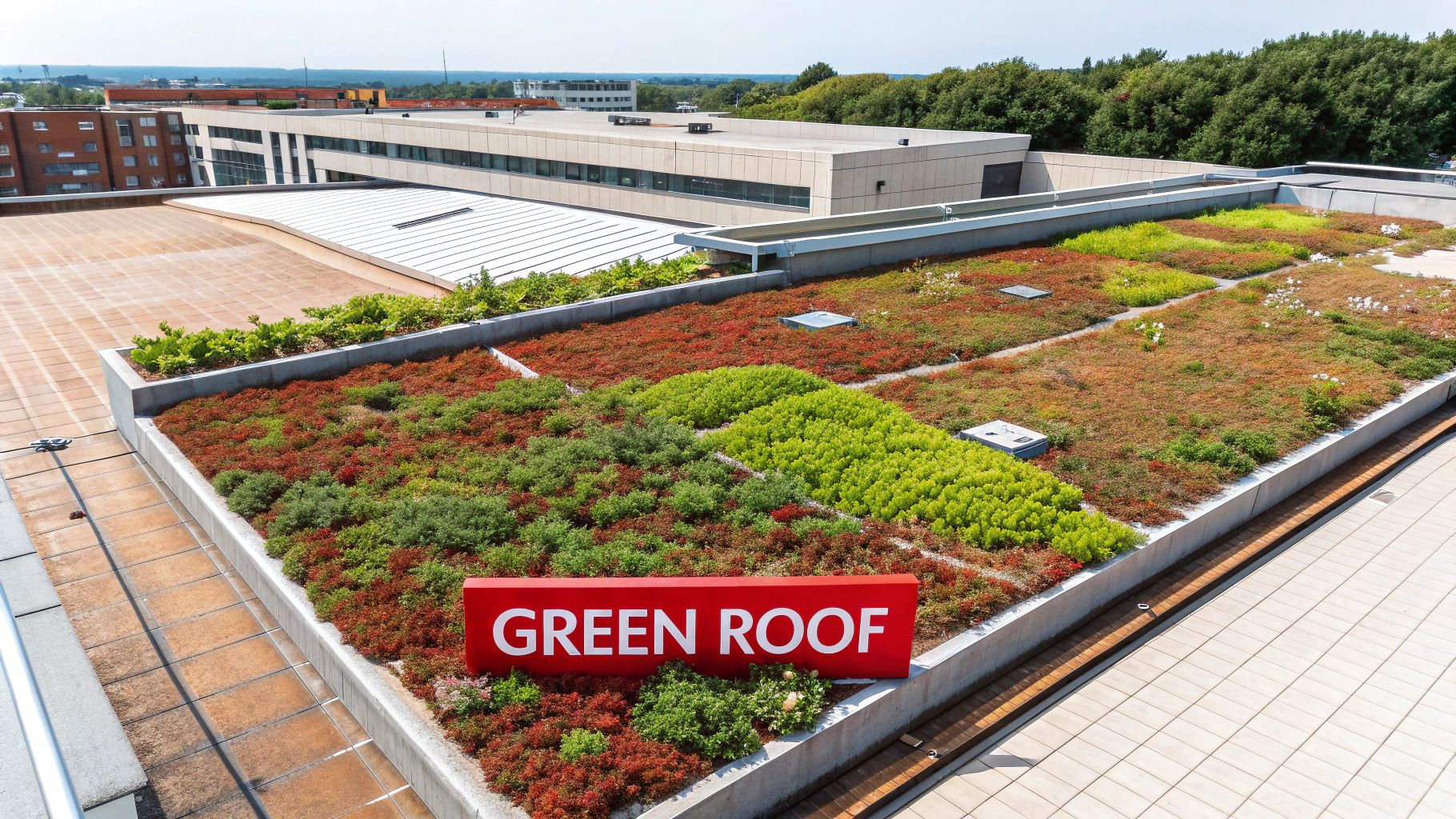
Green Roofing Systems, also known as vegetated or living roofs, are a truly innovative and sustainable entry among the types of commercial roofing systems. This system involves creating a garden-like environment on a building’s roof by installing layers of vegetation and a growing medium over a high-performance waterproof membrane. These systems protect the underlying structure while offering significant environmental and aesthetic benefits.
A green roof is a complex assembly that includes a root-repellent waterproofing layer, a drainage system, filter fabric, a lightweight growing medium, and carefully selected plants. They are broadly categorized as “extensive,” which are shallow (2-6 inches), lightweight, and low-maintenance, or “intensive,” which feature deeper soil, support a wider variety of plants, and function more like a traditional park or garden. Installations like the pioneering green roof on Chicago City Hall and the massive 6.75-acre system on the Javits Convention Center in NYC showcase their large-scale viability.
This video from Green Roofs for Healthy Cities provides an excellent overview of the components and benefits of these living systems.
When to Choose a Green Roof
A green roof is the ideal choice for businesses and property owners committed to sustainability, energy efficiency, and creating usable amenity spaces. It is a premium system best suited for new construction or major retrofits where the building’s structural capacity can be confirmed or engineered to support the additional weight.
Consider a Green Roofing System for:
- LEED-Certified and Sustainable Buildings: Green roofs contribute significantly to earning LEED points for stormwater management, heat island reduction, and energy performance.
- Urban Corporate Campuses and Hospitality Venues: Intensive systems can create valuable rooftop gardens, patios, and recreational areas for employees or guests.
- Municipality and Community Buildings: They serve as powerful public statements on environmental commitment and help manage urban stormwater runoff.
Suitability for Arizona’s Climate
In Arizona, a green roof can provide exceptional insulation, drastically reducing heat transfer into the building and lowering extreme cooling costs. The vegetation and soil act as a natural thermal mass, protecting the waterproof membrane from brutal UV exposure and extending its lifespan significantly. However, plant selection is absolutely critical. Drought-tolerant, native species like succulents and desert grasses must be used to minimize water consumption.
An extensive system is often more practical for the Arizona climate, as its lower water and maintenance needs are better suited to the arid environment. A professionally designed irrigation system is non-negotiable to ensure the vegetation survives the intense, dry summers.
Pro Tip for Arizona: Before committing, invest in a thorough structural load analysis of your building. Even a lightweight extensive green roof adds significant dead load, especially when saturated with water after a monsoon storm. Planning for this from the start is essential for a safe and successful installation.
8. Spray Polyurethane Foam (SPF) Roofing
Spray Polyurethane Foam (SPF) roofing is a seamless, monolithic system created by spray-applying a liquid polyurethane mixture directly onto a roof deck. This liquid expands to roughly 30 times its original volume, forming a rigid, closed-cell foam layer that adheres tenaciously to the substrate. This process creates a continuous, insulated, and waterproof barrier with no seams or joints, which are common sources of leaks in other types of commercial roofing systems.
After the foam cures, a protective elastomeric top coat, typically silicone or acrylic, is applied over it. This top layer shields the foam from damaging UV radiation, provides weather resistance, and offers a durable surface for light foot traffic. The unique combination of superior insulation (high R-value per inch) and seamless waterproofing in a single application makes SPF an incredibly efficient and versatile choice for many commercial properties.
When to Choose an SPF Roof
An SPF system is an ideal choice for property owners who prioritize energy efficiency and need a lightweight, seamless solution for complex roof geometries. It is especially effective for retrofitting existing roofs without the need for a costly tear-off.
Consider an SPF system for:
- Cold Storage & Refrigerated Warehouses: Its exceptional R-value provides superior thermal resistance, which is critical for maintaining stable interior temperatures and reducing energy costs.
- Irregularly Shaped Roofs: The spray application easily conforms to domes, vents, pipes, and other penetrations, creating a perfect seal where traditional sheet membranes would struggle.
- Energy-Efficiency Retrofit Projects: Applying SPF over an existing roof (like metal or BUR) adds significant insulation and creates a new, leak-proof surface, drastically improving a building’s energy performance.
- Retail and Industrial Facilities: Its lightweight nature often means no additional structural support is needed, making it a cost-effective choice for reroofing large commercial buildings.
Suitability for Arizona’s Climate
In Arizona, SPF roofing is an outstanding performer due to its high R-value and reflective top coat. The seamless foam layer acts as a powerful thermal barrier, preventing the intense desert heat from penetrating the building and significantly reducing the load on HVAC systems. The white or light-colored elastomeric top coat reflects a high percentage of solar radiation, further enhancing its cooling properties and creating a true “cool roof” system.
However, SPF requires specialized installation expertise. The application is sensitive to wind, temperature, and humidity, so hiring a qualified, certified contractor is non-negotiable. The foam can also be damaged by punctures from sharp objects, though repairs are typically simple and fast. Learn more about the protective top layer for SPF systems on arizonaroofers.com.
Pro Tip for Arizona: Specify a silicone top coat for your SPF system. While slightly more expensive than acrylic, silicone offers superior resistance to UV degradation, ponding water, and the extreme temperature swings common in the Arizona desert, ensuring a longer-lasting and more durable roof.
Commercial Roofing Systems Comparison Table
| Roofing System | Implementation Complexity 🔄 | Resource Requirements ⚡ | Expected Outcomes 📊 | Ideal Use Cases 💡 | Key Advantages ⭐ |
|---|---|---|---|---|---|
| Built-Up Roofing (BUR) | High – multi-layer installation, labor-intensive 🔄🔄🔄 | Heavy materials, skilled labor needed ⚡⚡ | Durable waterproof membrane, 15-30 years lifespan 📊📊 | Low-slope commercial roofs with strong structural support; budget-conscious projects 💡 | Proven durability, excellent waterproofing, fire resistant ⭐⭐ |
| Modified Bitumen Roofing | Moderate – multiple installation methods, some skill needed 🔄🔄 | Moderate materials, use of heat or adhesives ⚡⚡⚡ | Flexible, durable with 20-25 years lifespan 📊 | Schools, hospitals, retail, versatile climates 💡 | Superior flexibility, chemical resistance, easier repairs than BUR ⭐⭐ |
| TPO Roofing | Moderate – single-ply, heat-welded seams 🔄🔄 | Lightweight materials, requires trained installers ⚡⚡⚡ | Energy efficient, reflective, 15-30 years lifespan 📊📊 | Energy-conscious commercial buildings, big-box retail, healthcare 💡 | High reflectivity, fast install, environmentally friendly ⭐⭐ |
| EPDM Roofing | Moderate – single-ply, adhesion/tape seams 🔄🔄 | Moderate materials, skilled installation ⚡⚡ | Long lifespan (25-30+ years), durable and flexible 📊📊 | Industrial, low-rise offices, cold storage, cost-effective solutions 💡 | Longest track record, high durability, easy repairs ⭐⭐ |
| PVC Roofing | Moderate to High – heat-welded seams, requires skilled labor 🔄🔄🔄 | Higher-cost materials, highly trained installers ⚡⚡ | Chemically resistant, fire resistant, 20-30+ years 📊📊 | Facilities exposed to chemicals and oils, high-wind/coastal areas, premium builds 💡 | Outstanding chemical/fire resistance, strong seams, energy efficient ⭐⭐ |
| Metal Roofing Systems | High – precision panel installation, special tools required 🔄🔄🔄 | Higher upfront cost, requires skilled installers ⚡⚡ | Very long lifespan (30-50+ years), low maintenance 📊📊📊 | Architecturally demanding projects, high wind zones, retrofit and new commercial roofs 💡 | Longevity, wind/fire resistance, sustainability, aesthetic appeal ⭐⭐⭐ |
| Green Roofing Systems | High – complex multi-layer installation, specialized expertise 🔄🔄🔄 | Very high structural and maintenance needs ⚡ | Environmental benefits, extended membrane life, 40-55 years 📊📊📊 | Sustainable buildings, urban stormwater management, amenity spaces 💡 | Environmental impact, energy savings, aesthetic and ecological benefits ⭐⭐⭐ |
| Spray Polyurethane Foam (SPF) Roofing | Moderate – specialized spray application, coating required 🔄🔄 | Skilled applicators, weather-dependent ⚡⚡⚡ | Seamless insulation and waterproofing, 25-50+ years lifespan 📊📊 | Irregular roofs, roof restoration, high insulation needs 💡 | Highest R-value, lightweight, seamless, fast application ⭐⭐ |
Making the Final Decision for Your Arizona Business
Navigating the diverse landscape of commercial roofing systems can feel overwhelming, but by now, you have a solid foundation for making an informed choice. We’ve explored the time-tested resilience of Built-Up Roofing (BUR), the flexible strength of Modified Bitumen, and the superior energy efficiency offered by modern single-ply membranes like TPO, EPDM, and PVC. You’ve also seen the unique advantages of Metal, Spray Foam (SPF), and innovative Green Roofs, each presenting a distinct value proposition for Arizona’s demanding climate.
The journey from understanding these options to selecting the right one involves a strategic assessment of your property’s specific needs, your operational budget, and your long-term business goals. The ideal roof is not just a shield against the elements; it’s a critical component of your building’s operational efficiency and financial health.
From Theory to Action: Your Next Steps
Choosing from the many types of commercial roofing systems is a decision that will impact your business for decades. It requires a careful balance of upfront costs against long-term performance and maintenance requirements. The relentless Arizona sun adds a crucial variable to this equation: energy efficiency. Here’s a structured approach to making your final selection:
- Prioritize Your Needs: Are you primarily concerned with upfront cost, or is long-term energy savings the main goal? Do you need exceptional durability against foot traffic, or is resistance to chemical exposure from industrial processes a top priority? Rank these factors to narrow your options. For instance, a refrigerated warehouse would prioritize the insulation and reflectivity of SPF or TPO, while a manufacturing plant might lean toward the chemical resistance of PVC.
- Conduct a Lifecycle Cost Analysis: Look beyond the initial installation price. A cheaper system like EPDM might seem appealing, but a slightly more expensive TPO or SPF roof could pay for itself in a few years through significant energy savings on cooling costs. Factor in estimated maintenance, repair costs, and the expected lifespan of each system to understand the true total cost of ownership.
- Verify Contractor Expertise: The best roofing material in the world will fail if installed incorrectly. It’s crucial to partner with a roofing contractor who not only understands the Arizona climate but also has certified experience with the specific system you’re considering. Ask for case studies, local references for similar projects, and proof of manufacturer certification. A contractor’s investment in proper tools and machinery is also a key indicator of quality; managing this often involves specialized construction equipment financing, which allows reputable firms to use the best technology for every installation.
Partnering for Long-Term Success
Ultimately, your roof is one of the most significant assets protecting your business. The insights from this guide are your starting point, but the final, crucial step is a professional on-site evaluation. An experienced commercial roofing specialist can identify nuances specific to your building’s structure, drainage patterns, and existing conditions that a guide alone cannot.
Key Insight: A comprehensive roof inspection, complete with a thermal report, can uncover hidden issues like moisture intrusion or insulation gaps. This data-driven approach removes guesswork and ensures the recommended roofing system addresses both visible and invisible problems, maximizing your investment.
At AZ Roof Co, we bring over 25 years of specialized experience to every project across Arizona. We’ve seen firsthand which types of commercial roofing systems stand up to the desert heat and which falter. Our process begins with a free, no-obligation inspection to provide you with a clear, actionable plan tailored to your property. We believe in empowering our clients with knowledge, so you can make a decision with confidence.
Your commercial roof is a long-term investment in the security and efficiency of your business. Let us help you get it right. Contact us today for a same-day quote and let our dedicated project managers guide you toward a durable, high-performing roof that protects your assets for years to come.
Frequently Asked Questions (FAQs)
1. What is the most energy-efficient type of commercial roofing system for Arizona?
For Arizona’s hot climate, the most energy-efficient systems are those with high solar reflectivity, often called “cool roofs.” TPO, PVC, and Spray Polyurethane Foam (SPF) with a reflective coating are top choices. Their white or light-colored surfaces reflect the sun’s UV rays, reducing heat absorption and significantly lowering air conditioning costs.
2. How long does a typical commercial roof last?
The lifespan varies by material. Built-Up Roofing (BUR) and Modified Bitumen last 15-30 years. Single-ply membranes like TPO and PVC typically last 20-30 years, while EPDM can last 30+ years. High-end systems like Metal and SPF can last 50 years or more with proper maintenance.
3. Can a new roofing system be installed over my existing roof?
In many cases, yes. This is called a roof overlay or recover. Systems like Spray Polyurethane Foam (SPF) and some single-ply membranes are lightweight and well-suited for installation over an existing roof, provided the original structure is in good condition. This can save on the cost and disruption of a full tear-off. However, a professional inspection is required to determine if your building is a good candidate.
4. What is the difference between TPO and EPDM roofing?
The main differences are material composition and seam technology. TPO is a thermoplastic membrane with heat-welded seams, creating a very strong, monolithic surface. EPDM is a synthetic rubber membrane with seams that are typically sealed with adhesive or tape. While both are durable, TPO’s white surface is more reflective than standard black EPDM, making it a more energy-efficient choice for hot climates like Arizona.