
Key Takeaways
- Verify Credentials First: Always confirm a roofer's state license and full insurance (both general liability and worker's compensation) before considering them for the job. This is your primary protection.
- Get at Least Three Detailed Quotes: Comparing a minimum of three itemized estimates helps you understand the fair market price and spot red flags like unusually low bids, which often signal cut corners.
- Prioritize Local Reputation: Seek out contractors with a strong local presence, positive community reviews, and manufacturer certifications (like GAF Master Elite®), as these indicate stability and proven quality.
- Read the Contract Carefully: Never sign a vague agreement. The final contract should detail the full scope of work, specific materials, payment schedule, project timeline, and both manufacturer and workmanship warranties.
Finding the right roofer isn't just about a quick online search. It’s about doing a little homework upfront to make sure you're hiring a legitimate, qualified professional. This means verifying their license, confirming they have solid insurance, and checking out their local track record. A few minutes of diligence now can save you from a world of headaches later.
Your Quick Guide to Finding a Reputable Roofer
Think of your roof as your home's first line of defense, especially against the brutal Arizona sun and monsoon storms. Making a hasty decision on who to hire can quickly turn into a costly nightmare of shoddy work, voided warranties, and a whole lot of stress. You need a clear game plan.
This guide is designed to give you a foundational checklist to weed out the bad apples from the start. We'll focus on the absolute must-haves—the non-negotiables that every professional roofer should be able to provide without hesitation. Getting these basics down is the first real step in learning how to find a good roofer you can trust.
Core Vetting Principles
The idea is to cut through the sales pitches and look at the hard facts. You want tangible proof that a contractor is professional, stable, and legitimate. It’s essentially a background check to protect your investment.
Here's what you should demand from any roofer you consider:
- Proper State Licensing: First and foremost, they must be legally licensed to operate in Arizona. This is non-negotiable.
- Full Insurance Coverage: This isn't just one policy. You need to see proof of both general liability (in case they damage your property) and worker's compensation (so you aren't liable if someone gets hurt).
- A Real Local Presence: Are they part of your community? Look for a physical office, a history of local projects, and positive reviews from your neighbors.
- Clear, Detailed Quotes: A pro will give you a detailed, itemized quote without resorting to high-pressure tactics to get you to sign on the spot.
A roofer’s willingness to hand over their license and insurance documents is a huge indicator of their transparency. If they give you the runaround or make excuses, that’s a massive red flag. Thank them for their time and move on.
This initial checklist helps you create a shortlist of contractors worth talking to. It also arms you with the right questions to ask from the very first phone call. Spotting the signs you need a new roof is one thing; finding the right crew to handle the job is the other, equally critical, half of the equation.
To make this even easier, here’s a simple table summarizing what to look for.
Roofer Vetting Checklist
Use this checklist as a quick reference when you start contacting potential roofing contractors. It helps keep the essential criteria top of mind.
| Vetting Criteria | What to Look For | Why It Matters |
|---|---|---|
| State Licensing | A valid license number from the Arizona Registrar of Contractors (ROC). | Ensures they meet state standards for competency and are legally allowed to perform the work. |
| Insurance Coverage | Certificates for both General Liability and Worker's Compensation. | Protects you from financial liability for accidents, injuries, or property damage during the project. |
| Local Reputation | A physical address, positive online reviews, and local project references. | A strong local presence indicates stability and accountability to the community. |
| Detailed Estimate | An itemized quote that clearly lists materials, labor, and project scope. | Prevents surprise costs and demonstrates the contractor's professionalism and thoroughness. |
| Manufacturer Certifications | Official certifications from leading brands (e.g., GAF, CertainTeed). | Shows they've been trained to install specific materials correctly, often enabling better warranties. |
Having these points covered gives you a solid foundation. Any roofer who easily checks all these boxes is likely a professional you can trust to protect your home. From here, you can dig deeper into the specifics of your project with confidence.
Building Your Shortlist of Potential Roofers
Googling "roofer near me" is a surefire way to get overwhelmed. You'll be hit with a wall of ads from companies who are great at marketing, but that doesn't always translate to being great at roofing. A much better starting point is to tap into your local network to find contractors with a proven track record right here in our community.
There’s a reason word-of-mouth is still king. Talk to your neighbors, friends, and family, especially anyone who’s had roof work done recently. Real-world feedback is gold, but you need to dig for the details.
Don't just ask, "Were you happy with them?" Get specific to understand the full picture:
- Did the final bill match the initial quote, or were there surprise charges?
- How was the daily cleanup? Did they leave your yard a mess?
- Could you easily get ahold of the project manager when you had a question?
- Have any small leaks or issues popped up since the job was finished?
Tapping into Industry Insiders
Here’s a pro tip that most homeowners miss: go talk to the people at your local building supply store. The staff behind the pro desk see the same roofers day in and day out. They know who pays their bills on time, who buys quality materials versus the cheap stuff, and who’s always busy—all signs of a well-run, professional company.
Just walk up and ask who they’d recommend. Their reputation is tied to the materials they sell, so they have a real incentive to point you toward contractors who do solid work. This little bit of legwork can connect you with experienced pros who rely on their reputation, not just a flashy website.
Remember, you're not just hiring someone to nail down shingles. You're looking for a partner in protecting your home. Using pre-vetted sources like manufacturer certifications helps you filter out the noise and focus on roofers who have already proven they meet high standards.
Leveraging Pre-Vetted Platforms
If personal referrals don't pan out, there are some excellent resources that do a lot of the initial screening for you. These organizations are designed to connect homeowners with reliable contractors.
A great first stop is the Better Business Bureau (BBB). Look up local roofers and check their ratings. You want to see a history of resolving customer issues effectively and transparently, which is what an A+ rating signifies.
Another incredibly valuable indicator is a manufacturer certification. Major brands like GAF have extremely strict standards. Their GAF Master Elite® certification, for example, is earned by less than 2% of all roofers in the country. Earning this status means the contractor is confirmed to be:
- Properly licensed in Arizona and fully insured for your protection.
- Reputable, with a history of high-quality work in the community.
- Committed to continuous training on the latest materials and installation techniques.
By starting with these trusted channels—real-world referrals, insider knowledge, and official certifications—you build a shortlist of genuine professionals. This groundwork makes the next steps, like checking licenses and comparing quotes, much smoother and far more effective.
Checking a Roofer’s Credentials and Insurance
Alright, you’ve got your shortlist of potential roofers. Now comes the most important part of the whole process: the background check. Talk is cheap, but documentation is everything. A pro will have their paperwork ready without a second thought; if you get any hesitation, that's a huge red flag.
Think of this as your personal due diligence. With the global roofing market projected to hit a staggering $280 billion by 2029, a lot of new companies are popping up, and not all of them are legitimate. Skipping this verification step is a gamble you just can't afford to take.
The Big Three: License, Bonding, and Insurance
Before you even start looking at quotes, you need to confirm three non-negotiables: licensing, bonding, and insurance. These aren't just fancy terms; they're your financial and legal safety net if something goes wrong. If a roofer is missing even one of these, cross them off your list. Immediately.
And don't just take their word for it or accept a piece of paper they hand you. You need to verify this information yourself, directly from the source. It’s easier than it sounds.
Here's a simple way to think about it:
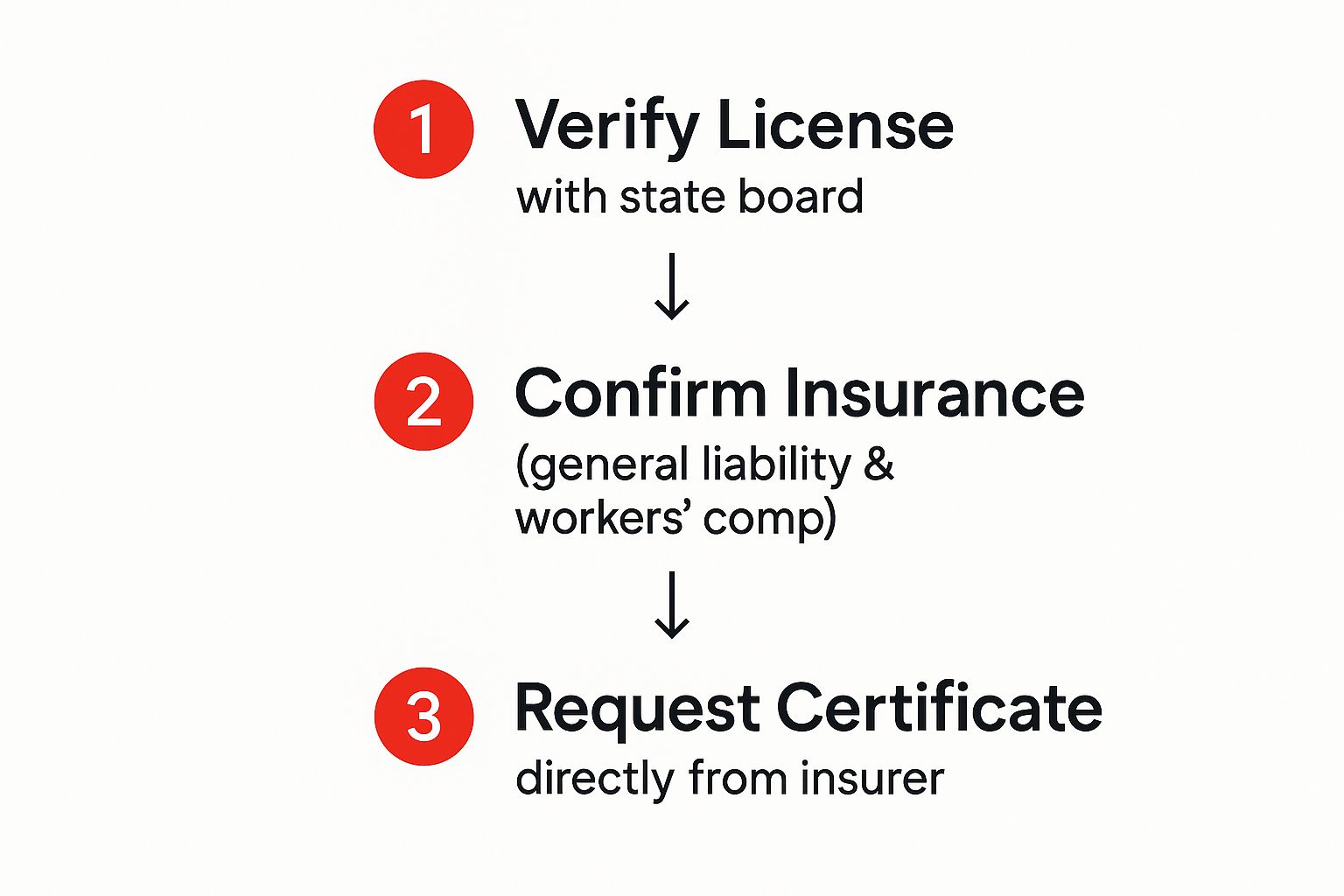
This simple workflow means you're trusting official sources, not just the contractor's claims.
Why Insurance Is Your Most Important Shield
Of all the credentials, insurance is arguably the one that protects you, the homeowner, the most. If a worker gets hurt on your property or your home gets damaged during the job, their insurance is what stands between you and a financial nightmare.
Without it? You could be the one footing the bill.
There are two kinds of insurance every single roofer must have, no exceptions:
- General Liability Insurance: This covers damage to your property. Say a ladder slips and shatters a big window, or a pallet of shingles crushes your prize-winning rose bushes. Their general liability policy is what pays for those repairs.
- Worker's Compensation Insurance: This one is absolutely critical. It covers medical bills and lost wages for any crew member who gets injured while working on your roof. If they don't have it, an injured worker could potentially sue you directly.
Here's a pro tip: Never, ever accept a photocopy of an insurance certificate from the roofer. Instead, ask them to have their insurance company email the Certificate of Insurance (COI) directly to you. This is the only surefire way to know the policy is active and the coverage details are accurate.
Taking a few minutes to verify these documents is just as crucial as getting professional roof inspections in Arizona to assess the initial problem. Both are about protecting your home and your wallet with expert, documented proof. When you do this homework upfront, you're buying yourself peace of mind for the entire project.
How to Compare Quotes and Spot Red Flags
You've done the legwork and have a few estimates from your shortlist of roofers. Now comes the critical part: the analysis. It’s so tempting to just scan for the lowest number, but I’ve seen it a hundred times—the cheapest bid often ends up being the most expensive mistake a homeowner can make.
An unusually low price is almost always a sign that corners are being cut somewhere. It could be subpar materials, inexperienced labor, or even a lack of proper insurance.

Learning to read a quote like a pro is one of the most important skills in finding a good roofer. Your goal isn’t just about getting a fair price; it's about finding the absolute best value and making sure the job gets done right the first time.
Deconstructing a Professional Roofing Quote
A real, professional quote is never just a number scribbled on a piece of paper. It should be a detailed, transparent document that breaks down every single part of the project. If an estimate feels vague or leaves you with more questions than answers, that's a huge red flag.
A proper estimate should clearly lay out:
- An Itemized Material List: This needs to be specific. What’s the exact brand, type, and even color of the shingles? What about the underlayment, flashing, and ventilation products?
- Clear Labor Costs: The quote should separate the cost of labor for removing the old roof and installing the new one.
- A Detailed Scope of Work: Look for specifics on what’s included. Does it cover the tear-off, decking inspection, potential replacement costs for bad wood, and thorough site cleanup?
- A Realistic Project Timeline: A professional will always give you a clear start date and an estimated completion window.
A detailed quote isn’t just good business practice—it's a sign of respect. It tells you the contractor has actually taken the time to thoroughly inspect your roof and plan out the job, minimizing the chance of surprise costs down the road.
You'll also find that the best contractors are using modern tech to dial in their accuracy. Drone inspections, for instance, are becoming a go-to tool, with their use in the industry growing by 28% annually. This technology allows for a much safer and more precise assessment of your roof, which translates to a more accurate estimate and fewer unexpected problems.
When a roofer invests in these kinds of tools, it’s a strong sign of their commitment to professionalism in what has become a $59.2 billion market in the U.S. alone. For more on this, check out the industry statistics over at RoofLink.com.
Common Red Flags to Watch Out For
As you sift through the paperwork, keep your guard up. Over my years in this business, I’ve seen a few tell-tale signs of trouble that pop up again and again. Spotting them early will save you a world of hurt.
Be extremely cautious of any contractor who:
- Leans on High-Pressure Sales Tactics: A reputable roofer will give you space and time to think. If you hear phrases like, "This price is only good for today," it’s a classic move to rush you into a bad decision. Don’t fall for it.
- Demands a Huge Upfront Deposit: A small deposit for materials is normal, usually in the 10-30% range. But if a roofer asks for 50% or more upfront, it could be a sign of financial trouble on their end. And please, never pay in cash.
- Gives You a Vague, One-Line Estimate: A quote that just says "New roof: $15,000" is completely unacceptable. Without a detailed breakdown, you have no real idea what you're paying for.
Knowing what goes into a fair price is half the battle. To get a better feel for what a good estimate looks like, you can dive into our guide on getting accurate roof repair costs. When you know what to look for—and what to run from—you can choose a roofer who is transparent, professional, and dedicated to quality work.
Getting the Contract and Warranties Right
You've sifted through the options, checked the references, and you're ready to hire your roofer. This is a big step, but don't rush past the finish line. The last—and arguably most important—piece of the puzzle is the contract. This document is more than just a formality; it's the blueprint for your entire project and your single best form of protection.
Don't just glance over it. You need to read it, understand it, and make sure it reflects every single thing you've discussed.
A professional contract isn't just a bill. It’s a detailed agreement that protects both you and the contractor by making sure everyone is on the same page. It puts all those verbal promises into a legally binding document. My rule of thumb is simple: if it isn't in writing, it wasn't promised.
What to Look For in a Rock-Solid Roofing Contract
If a contractor hands you a one-page "agreement" with a price and a signature line, that's a huge red flag. A thorough contract is a sign you're working with a true professional who values clear communication.
Make sure your contract spells out these details in plain English:
- A Detailed Scope of Work: The contract should walk you through the entire job. It needs to cover the tear-off of the old roof, what happens if they find rotten decking underneath, and the full installation process for the new system.
- A Specific Materials List: Vague descriptions aren't good enough. The document must list the exact brands, product names, and colors for everything—from the shingles and underlayment down to the flashing and vents.
- A Clear Payment Schedule: You should see the total cost, the required deposit (which shouldn’t be more than 10-30%), and exactly when the rest of the payments are due.
- An Honest Project Timeline: The contract needs a projected start date and an estimated completion date. It should also mention how potential delays, like our infamous Arizona monsoons, will be handled.
- A Commitment to Cleanup: A professional crew cleans up after themselves. The contract should state that the site will be cleaned daily, with a final, thorough cleanup at the end—including running magnetic sweepers to catch stray nails.
Here’s a tip from my own experience: read every single line before you pick up a pen. If you agreed on adding a solar attic fan or using a specific type of ridge vent, find that exact item listed in the contract. A handshake deal is easy to forget, but a written clause holds up.
The Two Warranties You Must Have
This is an area that trips up a lot of homeowners. Your new roof should always come with two distinct warranties, and they cover completely different things. Knowing the difference is crucial for your long-term peace of mind.
A reputable roofer will happily provide clear documentation for both.
1. The Manufacturer's Warranty
This warranty comes straight from the company that made the materials, like GAF or CertainTeed. It protects you against defects in the products themselves. So, if your shingles start falling apart years ahead of schedule because of a manufacturing flaw, this warranty covers the cost of new materials.
2. The Contractor's Workmanship Warranty
This is the roofer’s own guarantee on their work, and frankly, it's the one I care about most. It covers any problems that arise from the installation itself—leaks, blow-offs, or other issues caused by shoddy work.
This warranty is a direct reflection of a company's confidence in its crew. A roofer who offers a strong workmanship warranty, often for 5 to 10 years (or even longer for certified installers), is telling you they stand behind their work 100%. That's the kind of partner you want protecting your home.
Got Questions? We’ve Got Answers.
You've done the research and narrowed down your list, but it's natural to have a few final questions before you sign a contract. In fact, we encourage it. Making sure you have all the details ironed out is the last step in a smart hiring process.
We’ve seen it all over the years, and a few questions pop up time and time again. Let's walk through them so you can move forward with total confidence.
How Many Quotes Should I Get for a New Roof?
We always tell homeowners to aim for at least three quotes from the companies you’ve already vetted. Three is the magic number. It gives you a strong sense of the market rate for your project without sending you into "analysis paralysis."
Once you have three bids in hand, you can start to see a clear picture. You’ll immediately spot if one estimate is way too high or, just as concerning, suspiciously low. Any fewer than three, and you’re just guessing. Get more than five, and you’ll likely find yourself drowning in details and struggling to make a decision.
Getting three detailed quotes is a core part of the process of how to find a good roofer. It allows you to assess value, not just price, and gives you insight into each company's professionalism and thoroughness.
Is It Normal to Pay a Deposit for Roofing Work?
Absolutely. A deposit is a standard part of the process, but the amount is what you need to pay close attention to. A reasonable roofer will ask for 10% to 30% of the project total upfront. This is a good-faith payment that allows them to order materials and schedule your job.
Here’s where you need to be careful: a contractor demanding 50% or more before work even begins is a massive red flag. That can signal that the company is on shaky financial ground. And, as a rule, never pay in cash. Always use a check or credit card so there's a clear paper trail protecting you.
What Is the Difference Between a Roofer's License and Their Insurance?
This is a great question, and it's easy to get the two mixed up. They both protect you, but in completely different ways. I like to think of it like this: a license proves they have permission to do the work, while insurance provides protection if something goes wrong.
Any roofer you seriously consider must have both. No exceptions.
-
A Roofer's License: This is their legal credential issued by the state—here in Arizona, it’s the Registrar of Contractors. It confirms they've passed the necessary exams and met the state’s standards for skill and ethical business practices.
-
A Roofer's Insurance: This is your financial safety net. It comes in two parts: general liability, which covers damage to your home or property during the job, and worker's compensation, which covers medical bills if a crew member gets injured. If they don't have both, you could be the one on the hook for accidents.
Frequently Asked Questions
What are the biggest red flags when hiring a roofer?
The biggest red flags include high-pressure sales tactics ("this price is only good today"), a demand for a large cash deposit (over 30%), an inability to provide proof of license and insurance, and providing a vague, non-itemized quote. A professional roofer will be transparent and give you time to make an informed decision.
How do I check if a roofer is licensed and insured?
Do not just take their word for it. For licensing in Arizona, you can verify their status directly on the Registrar of Contractors website using their name or license number. For insurance, ask the roofer to have their insurance provider send the Certificate of Insurance (COI) directly to you. This confirms the policy is active and valid.
What should a good roofing contract include?
A solid contract should be highly detailed. Look for a complete scope of work (including tear-off and cleanup), a specific list of materials by brand and type, a clear payment schedule, a project timeline with start and end dates, and detailed information on both the manufacturer's warranty for materials and the contractor's warranty for workmanship.
Is the cheapest roofing quote always the best option?
Almost never. An unusually low bid is a major warning sign that a contractor may be using subpar materials, cutting corners on safety, using uninsured labor, or is financially unstable. The best value comes from a fair price offered by a reputable, insured, and licensed roofer who provides a detailed quote and strong warranties.