
Deciding on a new roof is a major home investment, and for many, it comes down to weighing the metal roofing benefits and drawbacks. The core question is simple: do you invest more upfront for a roof that could last over 50 years, or choose a lower-cost material like asphalt that might need replacing in just 15 years? This guide is designed to walk you through everything you need to know, from durability and cost to energy savings and aesthetics, so you can make an informed decision for your home.
Key Takeaways
- Exceptional Longevity: A metal roof is a long-term solution, lasting 40-70 years, which is two to three times longer than traditional asphalt shingles.
- Higher Upfront Cost: The initial investment for a metal roof is significantly higher due to premium materials and the need for specialized installation.
- Energy Efficiency: Metal roofs reflect solar heat, which can reduce cooling costs by up to 40%, a major benefit in sunny climates.
- Superior Durability: Engineered to withstand extreme weather, including high winds and hail, metal roofs offer unparalleled protection and require minimal maintenance.
- Modern Aesthetics: Forget the old "tin roof" image. Today's metal roofing comes in a vast range of colors, styles, and finishes to complement any architectural design.
Your Guide to Metal Roofing
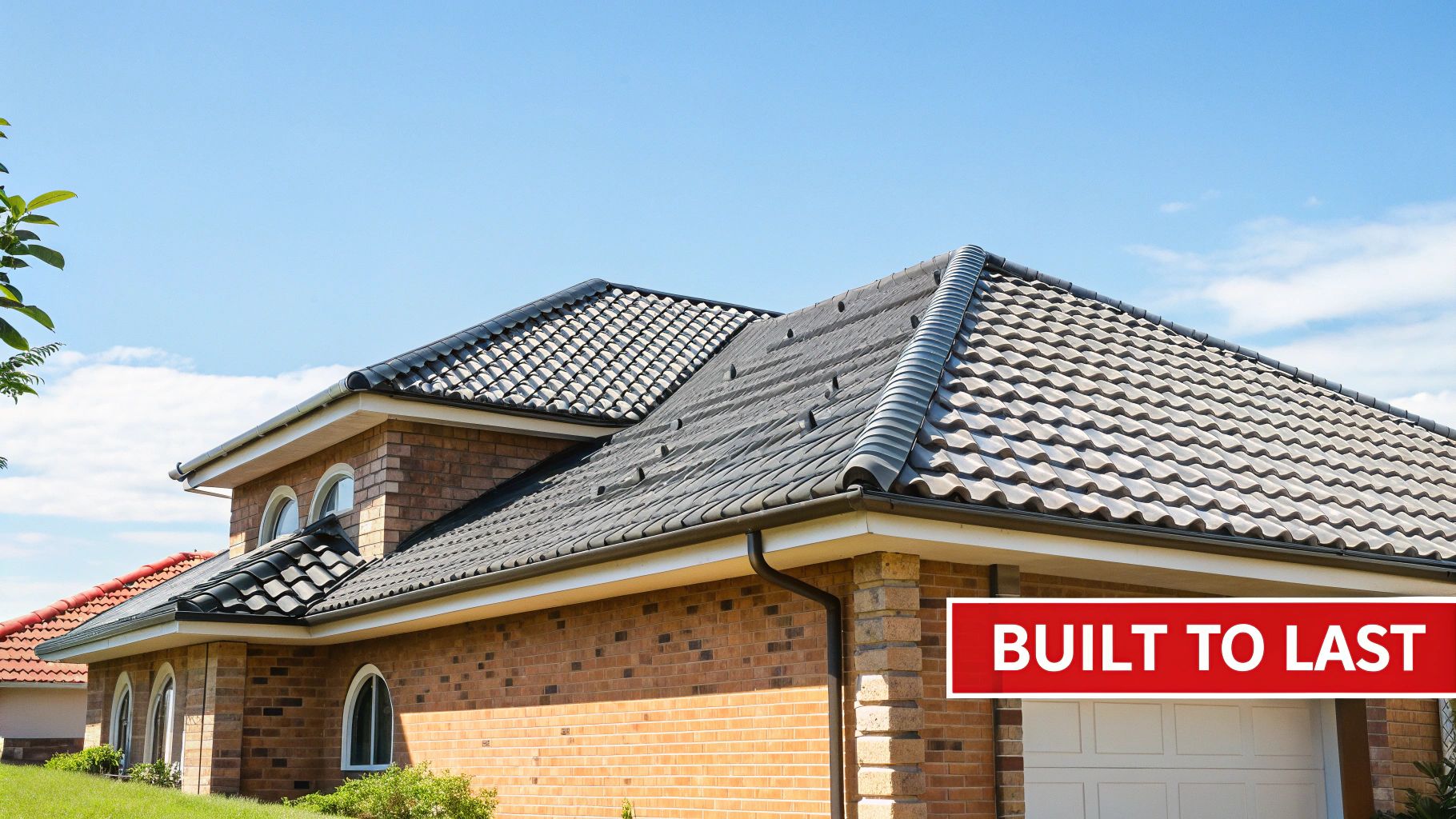
A roof is one of the biggest investments you'll ever make in your home. It’s your first line of defense against everything nature throws at it. But a roof is more than just a shield; it's a long-term commitment to your property's safety, its resale value, and even how much you pay for electricity.
When it's time to choose, the decision often comes down to traditional asphalt shingles versus a modern metal roofing system.
It's a classic trade-off. Asphalt shingles are cheaper to install, which makes them a tempting choice if you're working with a tight budget. The catch? Their shorter lifespan means you could be right back where you started, facing a full replacement in as little as 15 to 20 years.
Metal roofing, on the other hand, asks for a bigger investment from the get-go but delivers serious long-term value. With a lifespan stretching from 40 to 70 years, a well-installed metal roof gives you decades of peace of mind with very little upkeep. That durability means you dodge the cost and headache of replacing your roof over and over again.
This infographic breaks down the key differences between metal and asphalt roofing at a glance, hitting on the most important points like lifespan, cost, and maintenance.
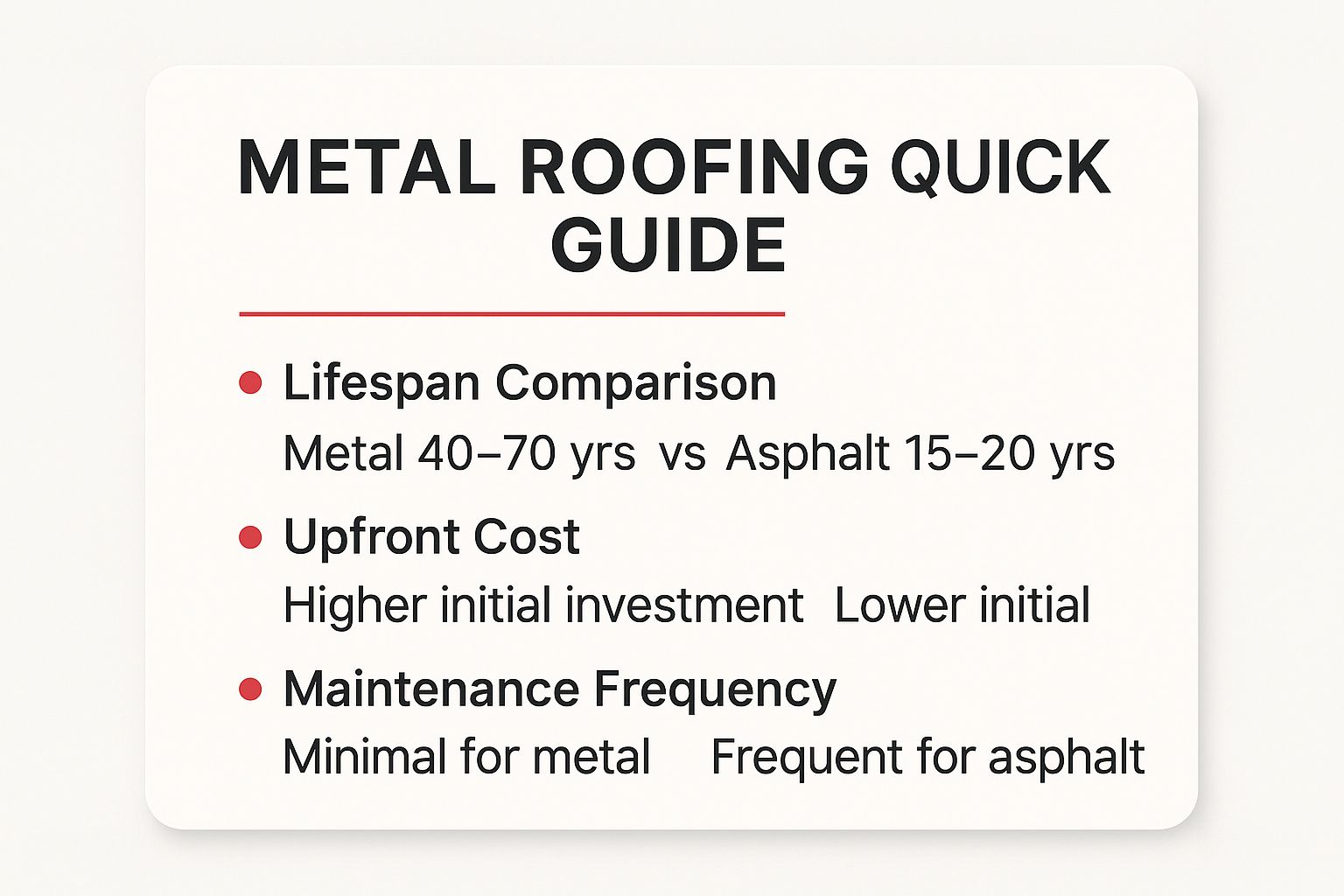
As you can see, the core decision is whether to pay more now for decades of reliable performance or pay less for a solution that won't last as long.
Metal Roofing At a Glance Pros vs Cons
To give you a quick snapshot, here’s a simple table that summarizes the main advantages and disadvantages we’ll be exploring in this guide.
| Key Benefit | Key Drawback |
|---|---|
| Incredible Lifespan (40-70+ years) | Higher Initial Installation Cost |
| Excellent Energy Efficiency | Can Be Louder During Rainstorms |
| Superior Durability & Weather Resistance | Potential for Denting from Hail |
| Low Maintenance Requirements | Repair Work Requires a Specialist |
| Modern, Versatile Aesthetics |
This table covers the big-picture items, but as we continue, we’ll dive deeper into what each of these points really means for you as a homeowner.
The Unmatched Durability of Metal Roofs
Think of a metal roof as a one-and-done investment in your home's protection—like putting on a suit of armor that lasts a lifetime. Its greatest strength is its sheer resilience, with a lifespan that completely changes the conversation about long-term value for homeowners. This is where the debate over metal roofing benefits and drawbacks really begins, starting with its incredible longevity.
Traditional asphalt shingles have a pretty predictable lifecycle, usually tapping out after 15 to 20 years. In stark contrast, a well-installed metal roof can last an incredible 40 to 70 years. For many homeowners, this means they'll install one roof and never have to think about it again. That’s decades of security.
This exceptional lifespan isn’t magic; it comes down to how metal is engineered to handle the elements. It’s built to stand up to everything nature throws at it, from heavy rains and hail to the brutal Arizona sun that can bake other materials until they become brittle and useless.
Engineered for Extreme Weather
The durability of a metal roof isn't just about how long it lasts, but how well it performs under pressure. Metal roofing systems are designed with interlocking panels, which create a formidable shield against the kinds of extreme weather that can tear other roofs apart.
This superior weather resistance is a major reason for the growing popularity of metal roofing worldwide. These systems can withstand wind gusts up to 140 mph, making them a smart and reliable choice even in areas prone to high winds and monsoons. This toughness is a key factor in why metal roofs can last more than 70 years, easily outperforming their asphalt counterparts. You can dig deeper into the global trends in metal roofing on gminsights.com.
In a practical sense, this means that after a major storm rolls through, your neighbors might be picking up shingles from their yard and dealing with leaks. A metal roof, on the other hand, is far more likely to be completely intact, protecting your home when it matters most.
The Financial Side of Longevity
Over time, this incredible durability translates into serious financial savings. Yes, the upfront cost is higher, but you're buying yourself out of the expensive cycle of tearing off and replacing a failing roof every couple of decades.
Think about the long-term financial picture:
- Fewer Replacements: Over the lifespan of a single metal roof, you might have to pay for three, or even four, new asphalt roofs.
- Reduced Repair Costs: Metal simply isn't vulnerable to the cracking, warping, or rotting that often plagues materials like wood and asphalt.
- Potential Insurance Savings: Many insurance companies recognize the resilience of metal and offer discounts to homeowners who have them, thanks to their proven track record.
At the end of the day, durability is the core of what makes a metal roof so compelling. It’s an investment in a permanent solution, freeing you from the cost, hassle, and worry of roof replacements for decades.
The Upfront Cost and Installation: A Long-Term Investment
Let's get right to it and talk about the elephant in the room: the price tag. When you start weighing the metal roofing benefits and drawbacks, the initial cost is often the biggest hurdle for homeowners. There’s no sugarcoating it—a metal roof is a much larger upfront investment than traditional asphalt shingles.
This higher cost isn’t just about the metal panels themselves. It’s a reflection of a complete, high-performance roofing system and the specialized expertise required to get the installation just right.
Think of it like buying a heavy-duty winter coat designed to last for decades versus a trendy jacket that might only survive a season or two. The initial cost is higher, but the quality and longevity are in a different league. The metals used—whether it’s steel, aluminum, or copper—are engineered to withstand extreme conditions for a very, very long time. That level of resilience simply costs more to manufacture than standard asphalt shingles.
A Look at the Numbers
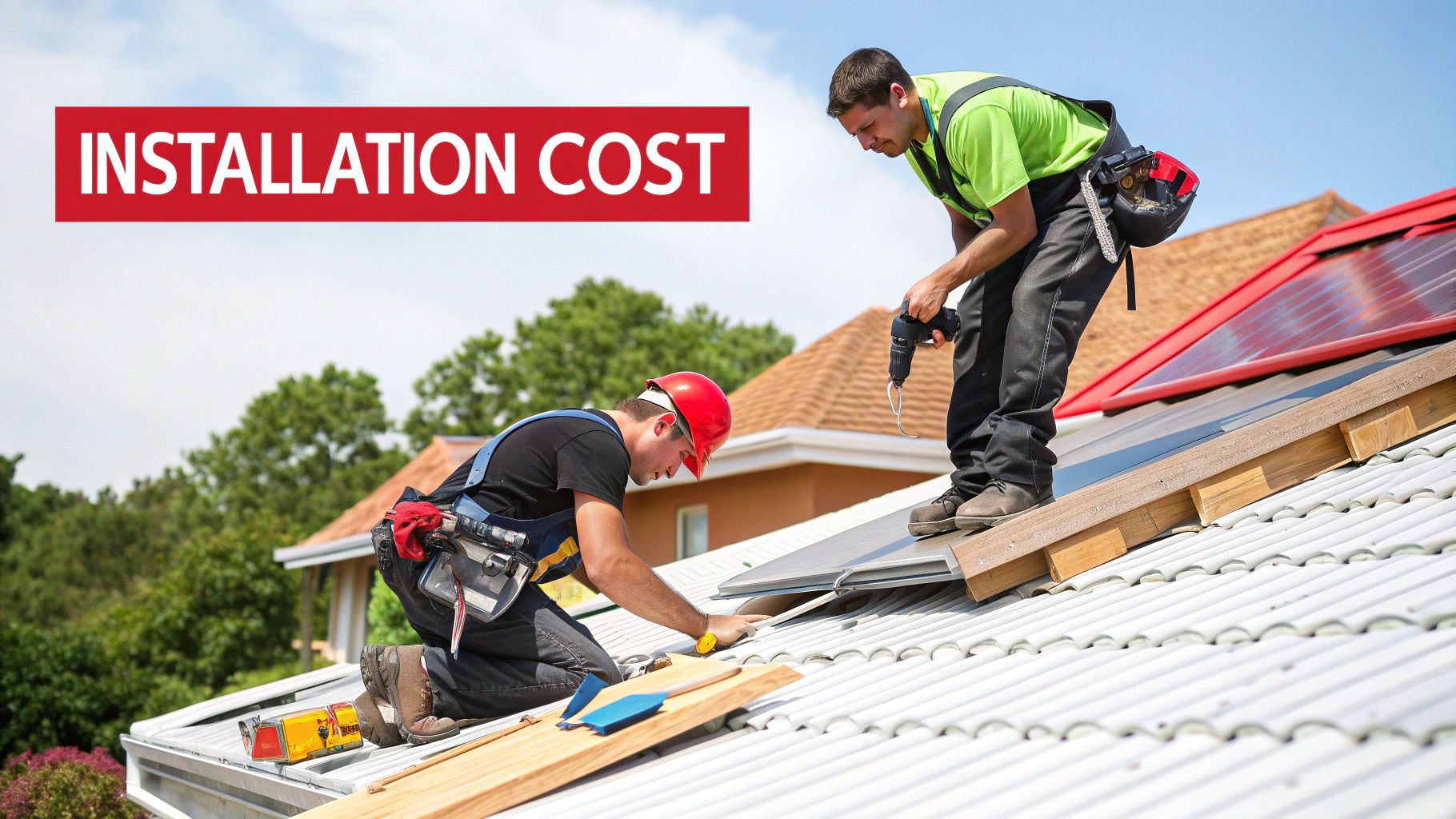
So, what does that difference look like in real dollars? Typically, installing a metal roof can be 30% to 100% more expensive than an asphalt shingle roof.
You can expect to budget somewhere between $7 to $12 per square foot for a residential metal roof. Compare that to asphalt shingles, which usually land in the $3 to $5 per square foot range. That’s a significant gap, and it highlights why you can't just hire any roofer. You need a specialist with the right tools and training to ensure every panel is perfectly fitted and fastened to prevent future headaches like warping or rust.
For a deeper dive into how these figures translate to your specific home, check out our 2025 roofing costs guide.
The sticker shock is real, but it helps to see it as a one-time investment instead of a recurring expense. Over 50 years, you might have to replace an asphalt roof three separate times, paying for new materials, labor, and tear-off costs each time. A metal roof is designed to be the last roof you'll ever need.
Why You Can't Skimp on Professional Installation
This is one area where cutting corners will come back to bite you. Hiring a qualified contractor with proven experience in metal roofing is absolutely non-negotiable. In fact, improper installation is the #1 reason metal roofs fail, which completely wipes out all their durability and weather-resistance benefits.
A single poorly installed panel can create a path for water intrusion. Fasteners driven in at the wrong angle can compromise the metal's protective coating, opening the door for rust. A true expert knows how to account for the natural expansion and contraction of metal in Arizona's extreme temperature swings and ensures every seam and piece of flashing is perfectly sealed.
When you're planning your budget, remember to account for any potential surprises. If you're replacing a very old roof, for example, you might need to look into finding professional asbestos removal services, which can add to the project's scope.
Ultimately, paying for a top-tier installation is the best insurance you can buy for a roof that's built to last a lifetime.
How Metal Roofs Impact Energy Efficiency
A metal roof does more than just shield your home from the elements; it can actively work to lower your energy bills, especially in a sun-drenched climate like Arizona's. This is where the conversation about metal roofing benefits and drawbacks really gets interesting, moving beyond sheer durability to smart, sustainable performance. It all comes down to a concept we call "cool roofing."
Think of your roof like an article of clothing. On a blistering summer day, a dark asphalt roof is like wearing a black t-shirt—it soaks up the sun’s intense heat. That solar radiation gets transferred straight into your attic and living spaces, forcing your air conditioner to work overtime just to keep things bearable.
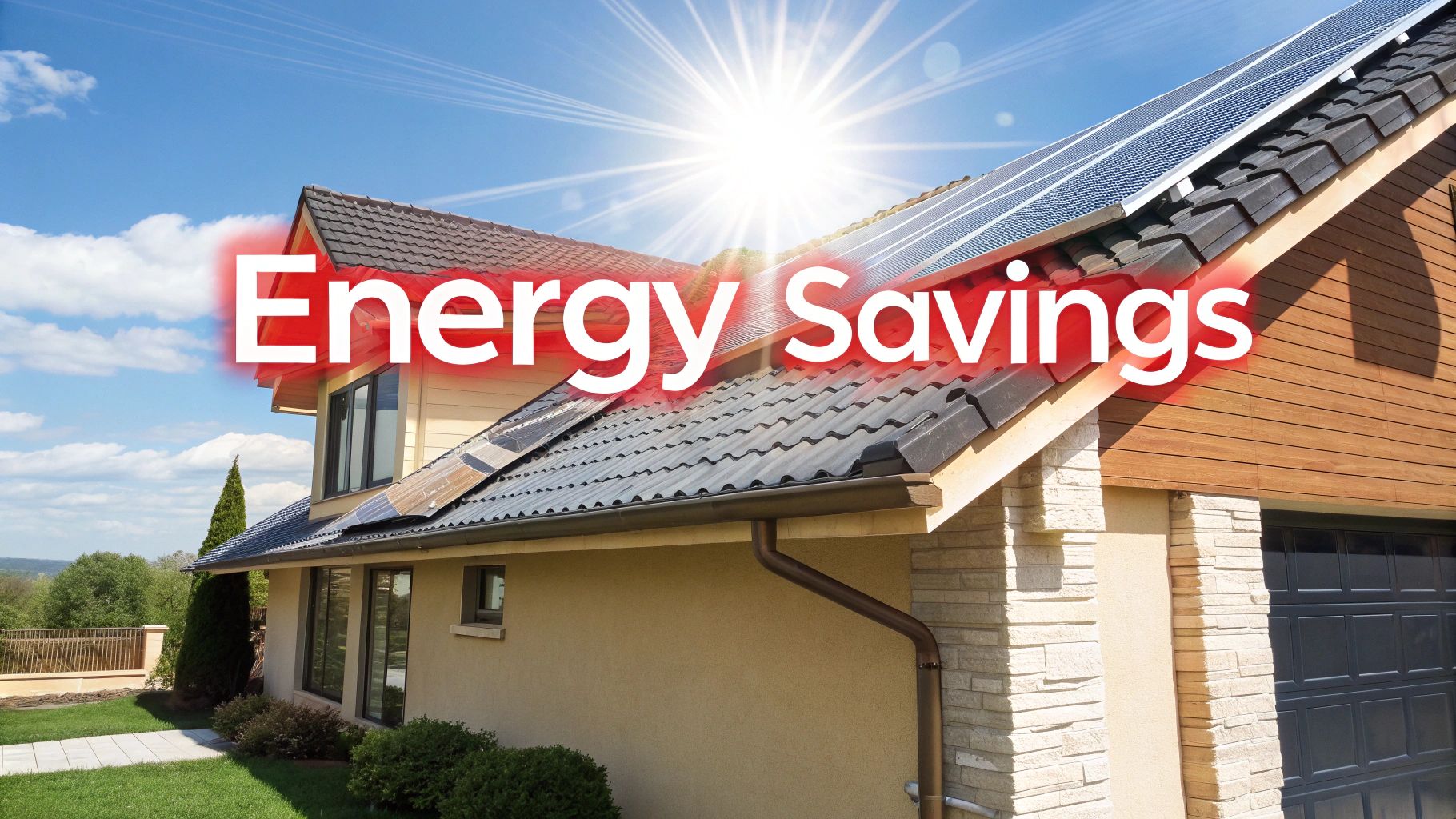
A metal roof, on the other hand, is like wearing a light-colored shirt. Its reflective surface bounces a huge amount of that solar radiation back into the atmosphere instead of absorbing it. This simple act of reflection is what keeps your attic from turning into an oven and, in turn, keeps your whole home cooler.
The Science of Savings
This reflective quality isn't just a minor perk; it translates into real, measurable energy savings. By deflecting the sun's heat, a properly installed metal roof can slash a home's energy consumption by up to 40% in hot climates. That means lower cooling bills and a much more efficient home, a major plus as energy costs continue to rise.
For any Arizona homeowner, this is a game-changer. Our long, intense summers mean air conditioning is often the single biggest household expense. A roof that naturally stays cooler can lead to a noticeable drop in your monthly utility bills, helping the roof essentially pay for itself over its lifespan. For more insights, you can explore our guide on the top efficient roofing options to lower your energy bills.
An Environmentally Conscious Choice
The benefits of a metal roof's efficiency go beyond just your wallet—they also make it a much more sustainable choice for the planet. This is a huge advantage that often gets overlooked in the initial cost comparison.
Unlike traditional asphalt shingles, which are petroleum-based products that mostly end up in landfills, metal roofing has a strong green pedigree. When you look at the entire lifecycle of building materials, it’s a clear winner.
To help you see the difference, this table breaks down how metal stacks up against traditional asphalt shingles on key environmental and energy metrics.
Roofing Material Environmental and Energy Comparison
| Feature | Metal Roofing | Asphalt Shingles |
|---|---|---|
| Recycled Content | Often contains 25-95% recycled materials. | Contains minimal to no recycled content. |
| Recyclability at End of Life | 100% recyclable and can be reused infinitely. | Rarely recycled; adds to landfill waste. |
| Landfill Impact | Creates almost no waste at end of life. | Contributes an estimated 11 million tons of waste annually. |
| Solar Reflectivity | High; reflects significant solar heat. | Low; absorbs and retains significant solar heat. |
| Lifespan | 40-70+ years, reducing replacement frequency. | 15-25 years, requiring more frequent replacement. |
As you can see, choosing metal means you're not just investing in an energy-saving system for your home. You’re also minimizing its environmental footprint from the day it's made to the day it's eventually recycled, decades down the road.
Busting Old Myths About Metal Roofs
When people start talking about the pros and cons of metal roofing, a few old myths always seem to pop up. The two I hear most often are about the noise during a rainstorm and the idea that you can just install one and forget about it forever. Let's clear the air on these.
The biggest fear is that a metal roof will sound like you're living inside a drum during a monsoon. That mental image comes from old-school barns where thin metal sheets were slapped right onto the rafters. Today's residential metal roofs couldn't be more different. We install them over a solid roof deck, complete with layers of underlayment and insulation.
That multi-layered system is fantastic at deadening sound. The reality is, a modern metal roof is usually no louder than an asphalt shingle or tile roof. In fact, most homeowners I talk to say the quiet, gentle sound of rain is actually pretty soothing, not something that drives them crazy.
Not Just for Warehouses Anymore
Another outdated idea is that metal roofs look cold and industrial, like something you'd only see on a commercial building. That might have been true a generation ago, but today's metal roofing is a whole different ballgame. The sheer variety of styles, colors, and finishes available now is incredible.
You can find metal roofing that perfectly mimics the look of classic, high-end materials. Think about it:
- Classic Slate: Get that elegant, chiseled look of slate without the back-breaking weight and astronomical price tag.
- Rustic Wood Shake: You can have the charming, natural appearance of wood shakes, but without ever worrying about rot, mold, or termites.
- Traditional Shingles: If you love the familiar look of asphalt, there are metal panels designed to replicate that same texture and pattern.
This means you get all the strength and longevity of metal without having to compromise on your home's curb appeal. Plus, those modern factory finishes are tough, keeping the color rich and vibrant for decades, even under our intense Arizona sun.
A Realistic Take on Maintenance
Now, while metal roofs are legendary for being low-maintenance, that doesn't mean they're no-maintenance. Knowing what to look out for is the key to getting that 50+ year lifespan. Dents and deep scratches are the main things to be aware of. A freak hailstorm with massive stones or a heavy fallen branch could potentially cause a dent.
The real goal of metal roof maintenance is to protect the specialized coating. If you get a deep scratch that goes all the way to the bare metal, you've created a spot where rust could eventually start. This is why it’s smart to stay off the roof unless necessary and make sure any contractors working up there are careful.
A quick inspection every year or so is a good idea. Just walk the perimeter and look for any leaves or debris piling up in the valleys, check that the fasteners look tight, and see if there are any scuffs that need a quick touch-up. It's a tiny amount of upkeep compared to other roofs, but that little bit of proactive care goes a long, long way. For a deeper dive, check out our expert tips for roof repair and maintenance.
So, Is a Metal Roof the Right Investment for You?
Deciding on a new roof really comes down to weighing the evidence. We’ve walked through the powerful pros and the potential cons of metal roofing, and now the final call rests on your long-term priorities as a homeowner. Is that higher upfront cost a total dealbreaker, or do you see it as a worthwhile entry fee for decades of rock-solid performance?
While there’s no getting around the initial sticker price, the true value of a metal roof reveals itself over time. When you add up the long-term savings from its incredible durability, lower energy bills, and nearly non-existent maintenance, it often proves to be an incredibly sound financial choice, especially here in Arizona’s demanding climate.
A metal roof is an investment in permanence. You’re essentially buying decades of peace of mind and avoiding the recurring costs and hassles of replacing a less durable roof every 15-20 years.
Aligning Your Goals With the Right Roof
Ultimately, this is a personal decision. A homeowner planning to stay put for 30+ years is going to see a very clear and substantial return on their investment.
On the other hand, if you think you might move in the next few years, that higher cost can be harder to justify. That said, the undeniable curb appeal of a sleek metal roof can still be a powerful selling point when it's time to list your home.
The global metal roofing market is set to grow as more homeowners prioritize energy-efficient and resilient building materials—a trend largely driven by increasingly extreme weather patterns. As part of your own evaluation, it’s smart to think about compatibility with future energy upgrades. For example, understanding the essential solar panel roof requirements now can help you plan ahead for a seamless installation down the road.
At the end of the day, if your goal is a durable, efficient, and low-maintenance roof that will protect your home for a lifetime, metal is an outstanding investment.
Frequently Asked Questions About Metal Roofing
Even after weighing all the pros and cons, you probably still have a few specific questions bouncing around. That’s completely normal. Let's tackle some of the most common ones we hear from homeowners to clear up any lingering doubts.
Can you install a metal roof over existing shingles?
In many cases, yes. Installing a metal roof directly over a single layer of existing asphalt shingles is a common practice that can save you the cost and mess of a full tear-off. However, this is not always possible. A professional roofer must first inspect the roof deck to ensure it is structurally sound and free of rot or damage. Local building codes may also have restrictions on roof-overs, so it's critical to check regulations before proceeding.
Are metal roofs noisy when it rains?
This is a persistent myth rooted in the image of rain hitting an old barn's tin roof. Modern residential metal roofing is installed over a solid roof deck, often with layers of underlayment and insulation. This system provides excellent sound deadening, making a metal roof no louder than an asphalt shingle or tile roof during a rainstorm. Many homeowners find the sound to be a gentle, soothing ambiance rather than a nuisance.
Do metal roofs attract lightning?
No, a metal roof does not increase the risk of your home being struck by lightning. Lightning is attracted to the highest point in an area, regardless of the material. In the unlikely event that a home with a metal roof is struck, the roof is actually the safest option. Because metal is an excellent conductor and is non-combustible, it would safely disperse the electrical charge into the ground, reducing the risk of fire that exists with materials like wood shingles.
How does a metal roof affect my home's resale value?
A metal roof significantly boosts a home's resale value. Potential buyers see it as a major long-term benefit, as it means they won't face the expense of a roof replacement for decades. Its durability, energy efficiency, and modern aesthetic are powerful selling points that can help your home sell faster and for a higher price. Studies have shown that homeowners can often recoup a large percentage of their investment in a metal roof upon resale.