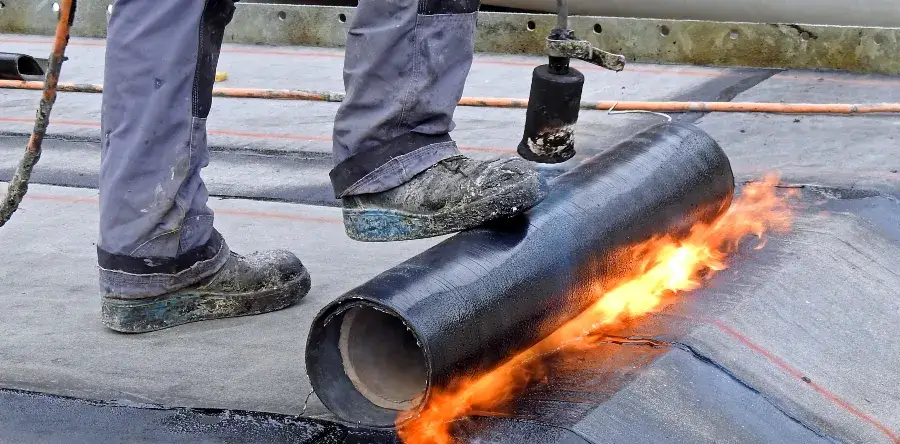

So, what exactly is an elastomeric roof coating? In simple terms, it’s a liquid roofing membrane that’s applied directly over your existing roof. Once it cures, it forms a seamless, rubber-like layer that’s completely waterproof.
Think of it as giving your roof a thick, protective, and flexible second skin. This “skin” is built to shield your building from the harsh sun, driving rain, and anything else the weather throws at it.
Key Takeaways
Here’s a quick rundown of what an elastomeric roof coating can do for your commercial building:
- Creates a Waterproof Barrier: The liquid-applied, seamless nature of the coating eliminates joints and fasteners, which are the most common sources of roof leaks.
- Extends Roof Lifespan: By taking the brunt of UV rays and weather damage, the coating can add 10-20 years to the life of your existing roof, delaying a costly replacement.
- Improves Energy Efficiency: Highly reflective “cool roof” coatings can bounce back up to 85% of solar heat, significantly lowering roof temperatures and reducing your building’s cooling costs.
- Offers Superior Flexibility: The coating is engineered to expand and contract with the roof during temperature changes, preventing cracks and splits that lead to structural damage.
Your Quick Guide to Elastomeric Roof Coatings
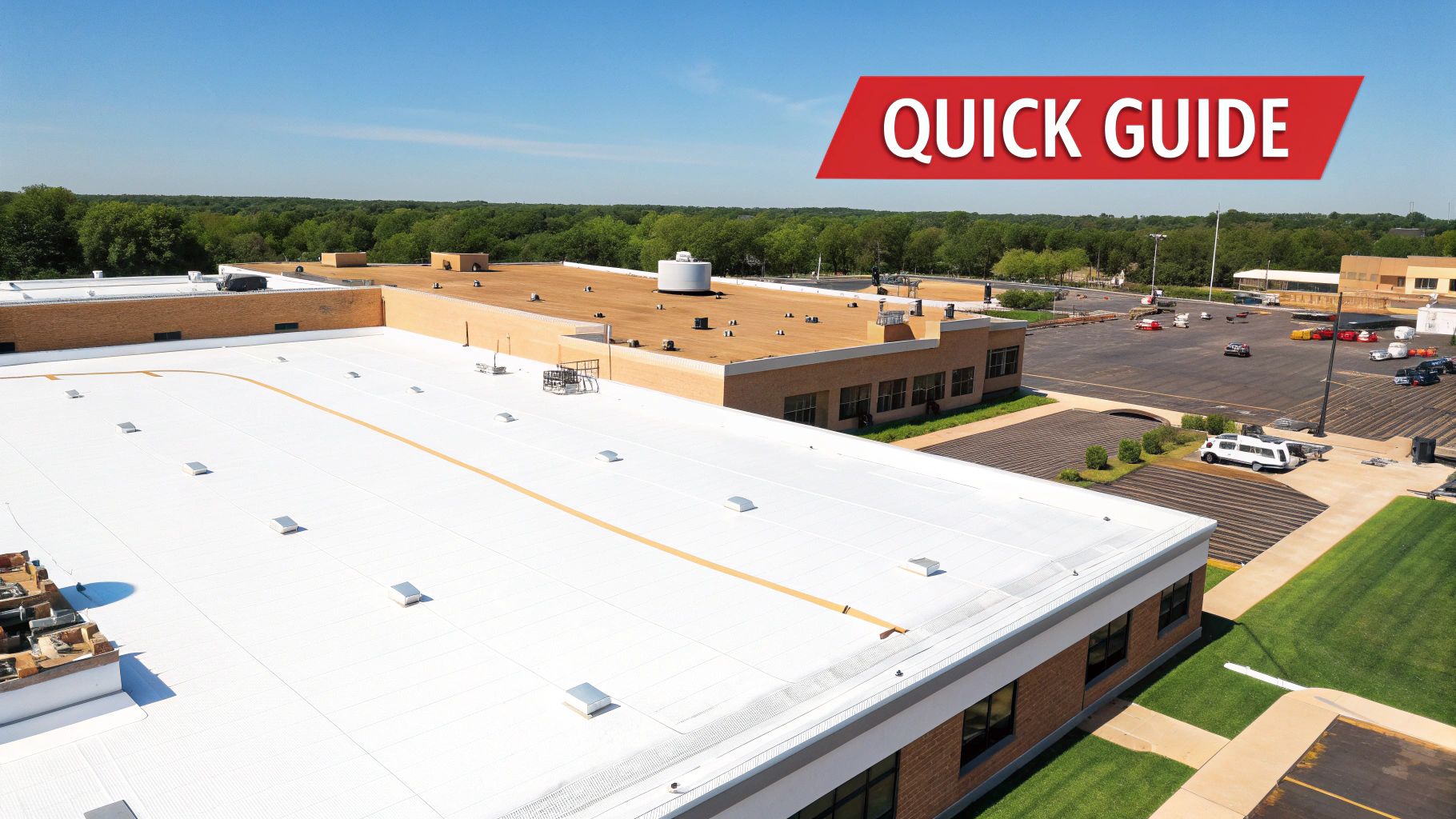
What does this mean for your building? Here’s a quick rundown of the real-world benefits:
- It Waterproofs Your Roof: Because it’s applied as a liquid, it creates a single, monolithic barrier. This gets rid of the seams, joints, and fasteners that are the usual suspects for leaks.
- It Extends Your Roof’s Lifespan: The coating takes the brunt of UV radiation and weather abuse, protecting the original roof material underneath. This can add years to its life, pushing back a full replacement.
- It Improves Energy Efficiency: Most elastomeric coatings are highly reflective. This “cool roof” effect can dramatically lower the temperature of your roof’s surface, which means your AC unit doesn’t have to work as hard, cutting down on energy bills.
- It’s Flexible and Durable: Roofs expand in the heat and contract in the cold. An elastomeric coating is designed to stretch and move with the building, preventing the cracks and splits that often lead to bigger problems.
This kind of coating is often a smart, cost-effective move, especially when your roof is showing its age but isn’t completely shot. Before you jump to a full tear-off, it’s worth knowing how to tell if you need a new roof versus when a restoration coating could be the better answer.
What Is an Elastomeric Coating and How Does It Actually Work?
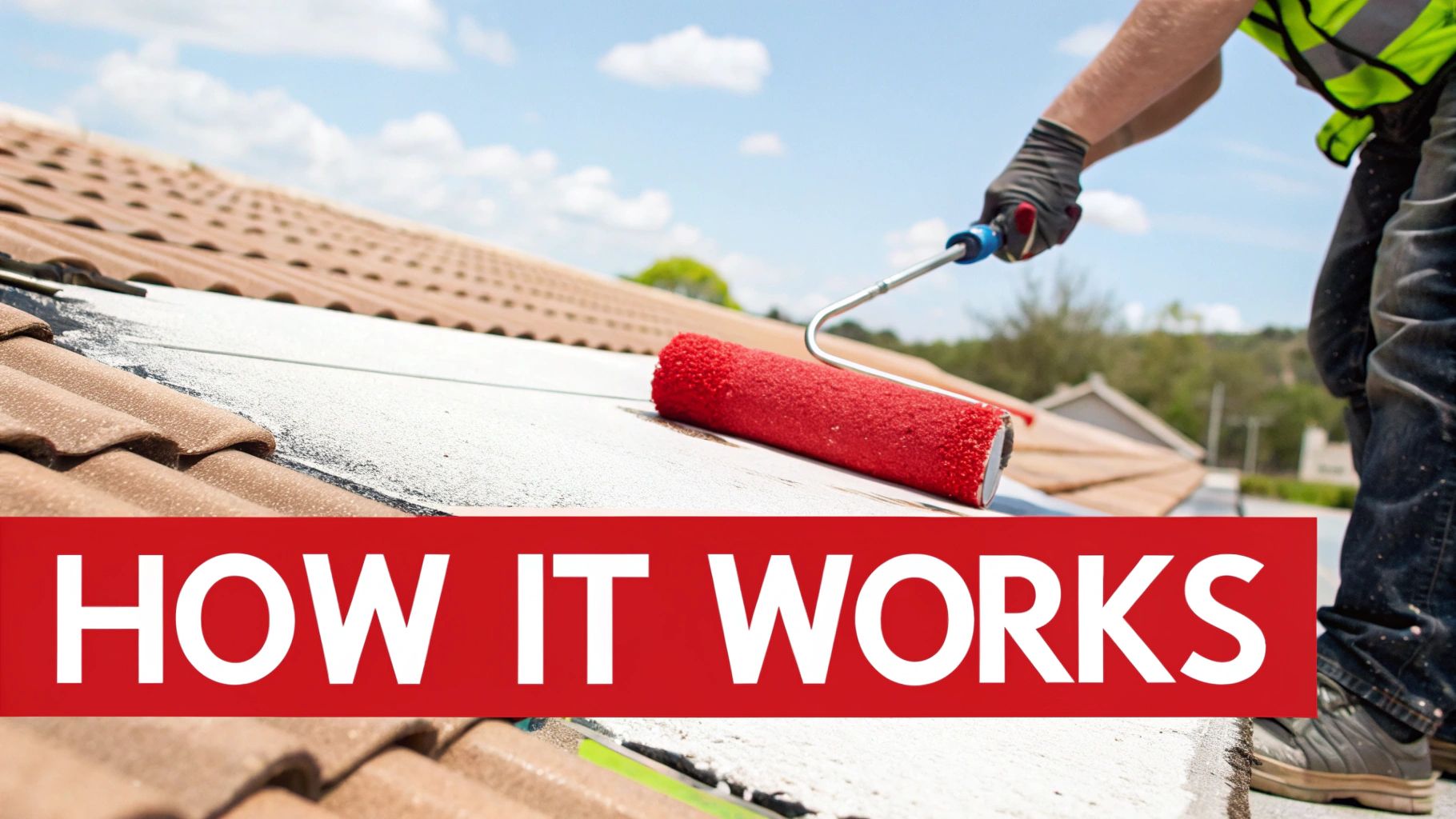
Let’s cut through the industry jargon. Think of an elastomeric roof coating as a thick, rubber-like membrane that’s applied as a liquid and dries to form a seamless, waterproof blanket over your entire roof. It’s far more than just a coat of paint; it’s a high-performance roofing system in a can.
This coating is packed with special polymers—like acrylic or silicone—that give it its incredible flexibility. Once applied, it cures into a tough, durable, and highly elastic layer that’s bonded directly to your existing roof. That elasticity is the secret to its success.
It Moves With Your Roof
Roofs aren’t static. They expand in the brutal Arizona sun and shrink when the temperature plummets at night. This constant movement, known as thermal shock, is what causes traditional roofing materials to become brittle, crack, and eventually fail.
An elastomeric roof coating stretches and contracts right along with your building. It’s engineered to handle this daily thermal cycling without cracking or losing its seal, which is precisely how it prevents leaks before they even start.
This ability to flex and return to its original form is what keeps your roof protected year after year.
Creating a Seamless, Watertight Shield
When applied by a professional, an elastomeric coating creates what we call a monolithic membrane. In simple terms, it means your roof becomes one single, continuous surface with absolutely no seams, joints, or fasteners. These weak points are where most leaks on conventional roofs start.
The application is a multi-step process that ensures a long-lasting result:
- Prep Work: The roof is meticulously cleaned and any existing damage is repaired. This is critical for proper adhesion.
- Priming: A primer is often applied to create a perfect bond between the coating and the roof substrate.
- Application: The coating is then sprayed or rolled on to a specific, uniform thickness, creating a powerful protective barrier.
The finished product is a seamless shield that deflects UV rays, stands up to heavy rain, and protects the underlying roof from the elements, ultimately extending its lifespan for years to come.
So, What Are the Real-World Benefits of a Coated Roof?
You see them everywhere on Arizona commercial buildings, and for good reason. More and more property owners are choosing elastomeric coatings, and it’s not just for a quick fix. They offer some serious long-term value by tackling the biggest headaches in roofing—from relentless leaks to sky-high energy bills.
The most immediate win? Unbeatable waterproofing. Think of it like a thick, seamless rubber blanket stretched across your entire roof. It covers every seam, joint, and fastener, which are the usual suspects when it comes to leaks. This single, unbroken layer gives water nowhere to go, stopping leaks dead in their tracks.
Slash Energy Bills and Extend Your Roof’s Life
The savings on your cooling costs are another huge plus. A white elastomeric coating is incredibly reflective, basically acting as a giant shield against our brutal Arizona sun. This “cool roof” technology can bounce back up to 85% of solar heat, which dramatically drops the temperature on your roof’s surface.
A cooler roof means far less heat gets into your building. Your AC unit doesn’t have to work nearly as hard, and that translates directly to lower energy bills. We dive deeper into this topic in our guide on the top efficient roofing options to lower your energy bills.
An elastomeric coating is more than a repair—it’s an investment in your roof’s future. It shields the underlying material from destructive UV rays and harsh weather, potentially adding 10 to 20 years of life and letting you put off a full, expensive replacement.
This protective layer is key. It stops the slow, steady breakdown of your existing roof, preventing bigger, costlier problems from ever starting. The chart below really puts the performance and longevity gains into perspective.
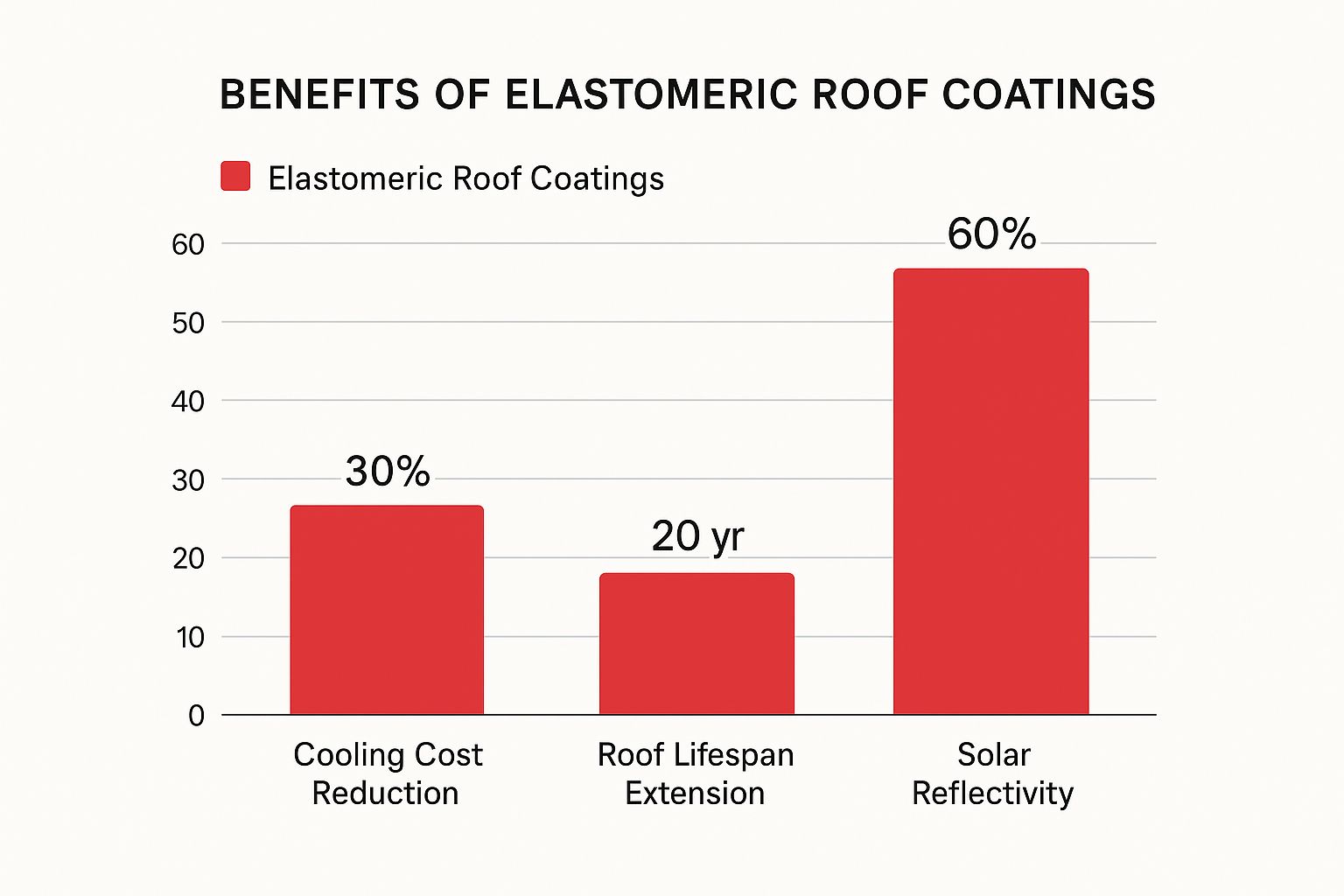
When you look at the numbers, the combination of energy savings and a much longer roof lifespan makes this a pretty smart financial move.
A Smart Choice in a Growing Market
It’s no surprise that the demand for these coatings is climbing. As building owners get more focused on energy efficiency, the market for reflective and cool roof coatings is booming. The elastomeric segment alone was valued at USD 3.3 billion and is expected to keep growing steadily through 2034.
This isn’t just a fad; it’s a clear industry shift toward roofing solutions that are both sustainable and cost-effective. You can dig into the specifics of this trend in this detailed industry analysis.
Picking the Right Type of Elastomeric Coating
Not all elastomeric coatings are created equal. Think of them like different types of tires for your car—what works great in the desert won’t be the best choice for a snowy mountain pass. The right coating really comes down to your specific roof, the Arizona climate, and your budget.
While they all protect your roof, their core chemistry is different. We’ll look at the three main players you’ll encounter: acrylic, silicone, and urethane. Getting this choice right is the key to a roof that performs well for years to come.
Acrylic Coatings: The Versatile Workhorse
For many building owners, acrylic coatings are the go-to choice. They hit that sweet spot between solid performance and reasonable cost. Their biggest selling point, especially here in Arizona, is their incredible reflectivity. They bounce UV rays away from your building, which can make a real difference in your summer cooling bills.
Because they’re water-based, they’re also easier and safer to apply. The one watch-out? Acrylics don’t love standing water. If your roof has areas where water puddles after a rainstorm, an acrylic might start to lose its grip over time. They’re a fantastic option for most sloped commercial roofs with good drainage.
Silicone Coatings: The Waterproofing Specialist
If you have a flat or low-slope roof, you know that “ponding water” is a constant battle. This is where silicone coatings truly shine. Unlike acrylics, silicone isn’t water-based, so it couldn’t care less about standing water. It won’t break down, peel, or lose adhesion, making it the undisputed champion for roofs with drainage challenges.
Silicone is also a beast when it comes to UV resistance. It stays flexible and holds its color for a very long time without getting chalky or brittle under the relentless sun.
It does cost more than acrylic, but for a roof that’s constantly wet, that extra investment buys you serious peace of mind. It’s an incredibly popular choice for restoring commercial roofs, especially when applied over systems like those we cover in our guide to Arizona foam roofing.
Urethane Coatings: The Durability Expert
What if your roof is more like a workspace? If you have crews walking around to service big HVAC units or other equipment, you need something tough. That’s where urethane (or polyurethane) coatings come in. They are hands-down the most durable option, built to resist scrapes, impacts, and even chemical spills.
Urethanes offer the best of both worlds: excellent UV reflection like acrylics and powerful waterproofing like silicones, all wrapped in a super-tough package. They are a premium product with a higher price tag, so we typically reserve them for high-traffic areas where that extra toughness is an absolute must.
Elastomeric Coating Comparison
To make it easier to see the differences at a glance, here’s a quick breakdown of how the three main types of elastomeric coatings stack up against each other.
| Feature | Acrylic | Silicone | Urethane |
|---|---|---|---|
| Best For | Sloped roofs, budget-conscious projects | Flat roofs with ponding water issues | High-traffic areas, extreme durability needs |
| UV Resistance | Excellent | Excellent | Excellent |
| Waterproofing | Good (but not for standing water) | Excellent (impervious to ponding water) | Excellent |
| Durability | Good | Very Good | Superior (resists abrasion & impact) |
| Cost | $ (Most affordable) | $$ (Mid-range) | $$$ (Premium) |
Ultimately, the best choice depends on a careful evaluation of your roof’s specific conditions. Matching the coating’s strengths to your roof’s weaknesses is the formula for a successful, long-lasting project.
The Application Process: What to Expect
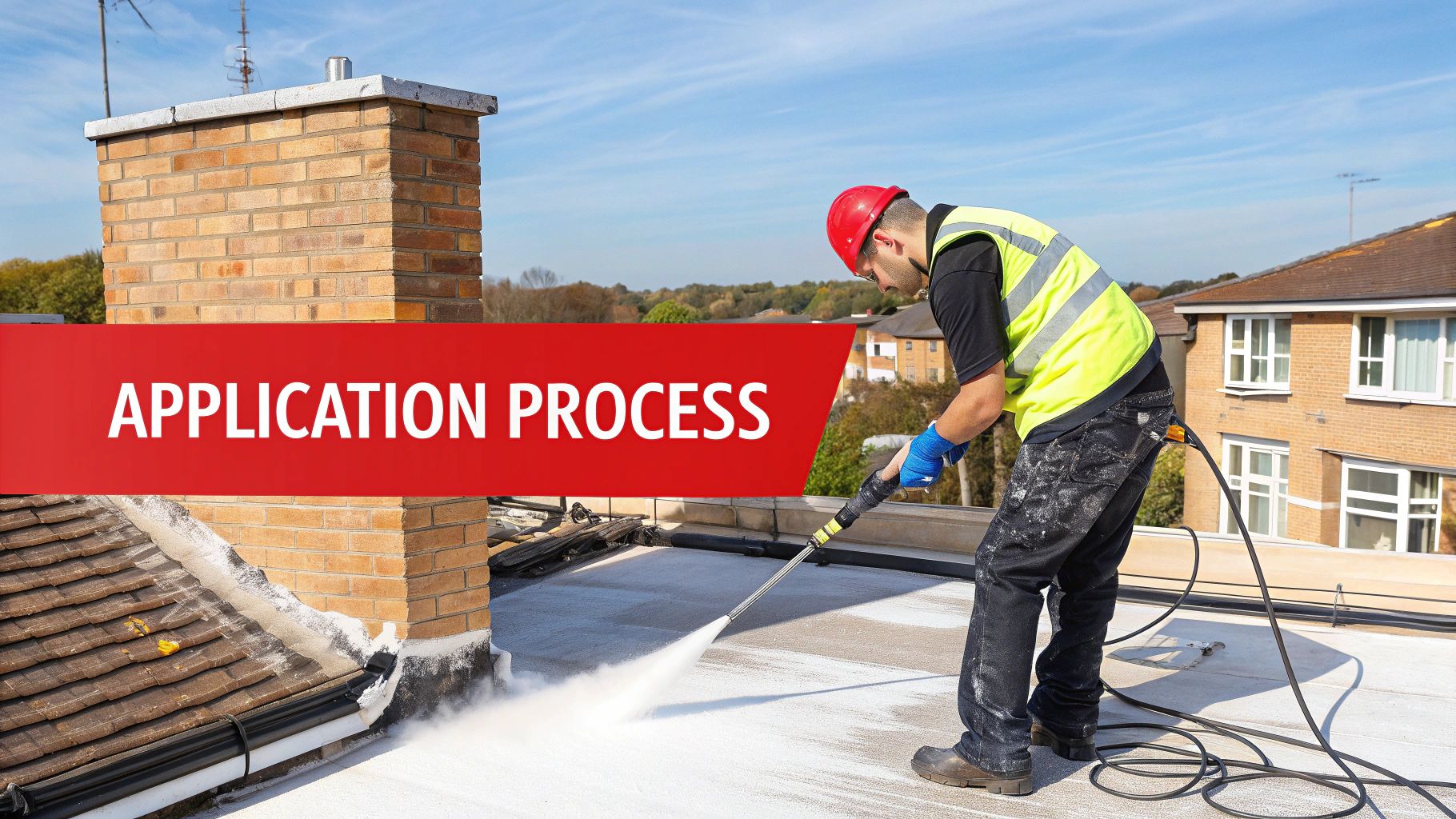
A top-notch elastomeric coating job is all about the prep work. The final white layer you see is important, but its success hinges entirely on the meticulous groundwork laid beforehand. This isn’t just a quick paint job; it’s a full-on roof restoration process.
It all starts with an aggressive cleaning. A professional crew will bring in high-powered pressure washers to strip away years of built-up dirt, grime, and any loose material. This step is absolutely critical—any leftover debris can ruin the coating’s ability to bond to the roof surface.
Next up is a detailed inspection and repair phase. The crew will meticulously fix any cracks, patch up holes, and reinforce weak seams. The goal is to create a solid, stable, and completely dry foundation for the coating to grab onto.
Priming and Application for a Seamless Finish
With a clean and repaired surface, it’s time for the primer. Think of primer as the ultimate double-sided tape between your old roof and the new coating. It ensures the two materials stick together for good, preventing any bubbling or peeling down the road.
Finally, the main event: applying the elastomeric coating. Most pros use a high-volume sprayer to apply a thick, consistent layer. They’re not just guessing, either—they constantly measure the wet film thickness to make sure it meets the manufacturer’s exact specifications for durability and waterproofing.
The aim is to build a seamless, monolithic layer that completely seals the roof from the elements. This methodical approach is what makes the difference between a long-term solution and a temporary patch. To learn more about what separates the pros from the amateurs, take a look at our complete guide to finding the right roof coating contractor.
The success of an elastomeric coating is 90% preparation and 10% application. Cutting corners on the prep work is the fastest way to guarantee a failed roof system.
Understanding the Cost Factors
So, what does a project like this cost? The final price tag depends on a few key things. Roof size is the obvious one, but the current condition of your roof is just as important. A roof needing a lot of patching and repair work will naturally cost more to prepare.
The specific materials chosen and local labor rates will also shape the final quote. It’s a significant investment, but one that more property owners are making. In fact, the global elastomeric roof coating market is expected to hit USD 4.5 billion by 2032, showing just how popular these systems have become.
Common Questions About Elastomeric Coatings
Even after seeing all the benefits, it’s natural to have a few practical questions. Let’s dig into some of the most common things people ask when they’re thinking about using an elastomeric coating.
How Long Does Elastomeric Roof Coating Last?
A professionally applied elastomeric coating is a long-term solution. You can realistically expect it to protect your roof for 10 to 20 years.
Of course, that lifespan depends on a few things: the quality of the product, how thick it was applied, and the condition of the roof underneath. A little bit of simple upkeep, like cleaning it every so often to keep it bright and reflective, can really help push it toward that 20-year mark.
Can Elastomeric Coating Be Applied Over My Current Roof?
Absolutely—and this is one of its biggest selling points. Elastomeric coatings are designed to go right over most commercial roofing materials. This includes:
- Metal roofs
- EPDM and TPO membranes
- Modified Bitumen
- Concrete decks
- Spray polyurethane foam (SPF)
The key isn’t so much what your roof is made of, but the shape it’s in. The existing roof surface must be structurally sound, clean, and completely dry before the coating goes on. Any necessary repairs have to be made first to ensure the coating forms a solid, permanent bond.
Is This Just a Thicker Version of Paint?
That’s a common misconception, but they are entirely different animals. While they both start as a liquid, that’s where the similarity ends. Regular paint is a thin, brittle film that’s mostly for looks. It cracks and peels under the sun, often within just a few seasons.
An elastomeric roof coating is a high-performance, engineered membrane. It’s applied much thicker than paint, is packed with more solids for durability, and is specifically formulated to stay flexible and waterproof through years of expansion and contraction.
How Exactly Does It Lower My Energy Bills?
The savings come down to one powerful feature: solar reflectivity. A bright white elastomeric coating turns your roof into a massive mirror, bouncing the sun’s harsh UV radiation back into the atmosphere instead of absorbing it as heat. This is the whole idea behind a “cool roof.”
When your roof isn’t baking in the sun all day, your entire building stays cooler. This means your air conditioning system doesn’t have to work nearly as hard to keep the indoor temperature comfortable. That reduced workload leads directly to lower energy bills, especially during the peak heat of an Arizona summer.
Frequently Asked Questions (FAQs)
What is the main purpose of an elastomeric roof coating?
The primary purpose is to waterproof and protect an existing roof. It creates a seamless, flexible membrane that seals leaks, prevents new ones from forming, and protects the underlying roof material from UV rays and weather damage, ultimately extending its service life.
Are elastomeric roof coatings worth the cost?
For many commercial property owners, they are a highly cost-effective solution. The cost is significantly lower than a full roof replacement. When you factor in the extended roof lifespan, long-term repair savings, and immediate reduction in energy bills, the return on investment is often very favorable.
Can you apply elastomeric coating yourself?
While DIY products are available, professional application is strongly recommended for commercial roofs. The success of the coating is highly dependent on meticulous surface preparation, proper repair of existing damage, and application to a specific, uniform thickness. Professionals have the equipment and expertise to ensure the job is done right for long-term performance.
What is the difference between acrylic and silicone elastomeric coatings?
The main difference is their tolerance for standing water. Acrylic coatings are water-based and perform best on sloped roofs with good drainage. Silicone coatings are not water-based and are impervious to “ponding water,” making them the ideal choice for flat or low-slope roofs where water may collect.