
Deciding when to replace your roof really boils down to three things: its age, what you can see with your own eyes, and how much you're spending on repairs. Generally, it's time to start planning for a new roof when it’s getting close to the end of its expected lifespan, you're seeing widespread problems like curling shingles, or another patch job just doesn't make financial sense anymore.
Key Takeaways
- Age Isn't Just a Number: For most homes with asphalt shingles, that magic number is somewhere between 15 and 30 years. Trying to stretch it further is a gamble you don't want to lose.
- Your Roof Is Talking to You: Don't ignore the obvious signs. Curling shingles, "bald spots" where the protective granules have worn away, or—worst of all—ceiling leaks are your roof's way of telling you it's failing.
- Do the Math: If a single repair is going to cost you more than 50% of what a full replacement would, it's almost always smarter to invest that money in a brand-new roof.
A Quick Guide to Your Roof Replacement Decision
Making the final call on a roof replacement can feel like a huge, stressful decision. But it doesn't have to be a shot in the dark. The best way to think about it is like any major appliance in your home—it has a predictable service life. Once it hits a certain age or starts showing its wear, its ability to do its one crucial job (protecting everything you own) drops off a cliff.
Putting off a replacement that you know you need is just asking for trouble. What starts as a small issue can quickly become a very expensive disaster, leading to water damage in your attic, ruined insulation, and even problems with the structural bones of your house. Being proactive, on the other hand, puts you in the driver's seat, letting you control the timeline and the budget.
Your Decision-Making Flowchart
To make things a little clearer, this visual guide walks you through the main factors—age, visible damage, and repair costs—to help you land on the right choice.
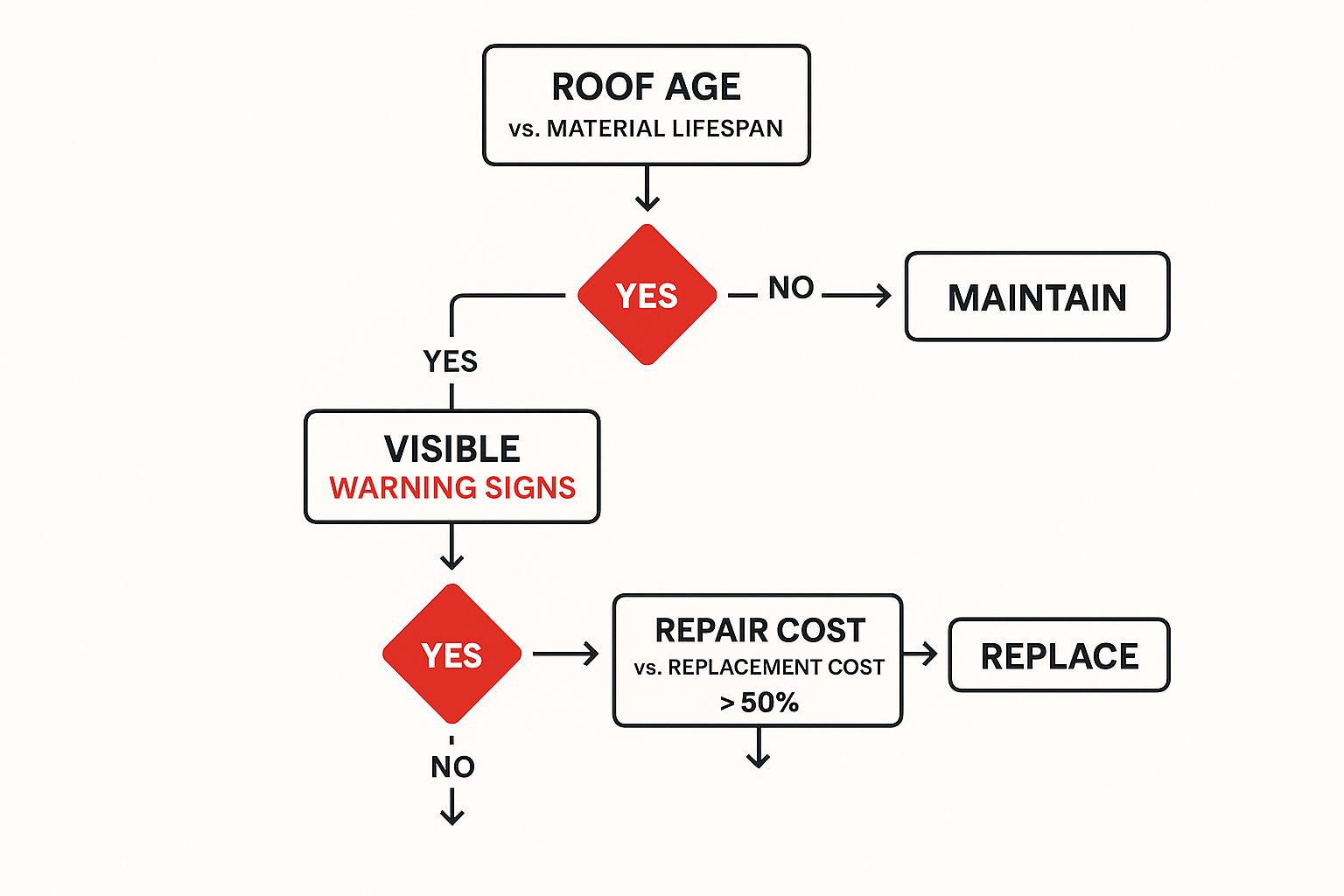
As you can see, if you have an older roof that also has significant damage, replacement is almost always the answer, especially if you're already facing a pricey repair bill.
To help you weigh your options, this quick table breaks down the decision-making process.
Roof Replacement Decision Matrix
| Factor | Consider Repair | Strongly Consider Replacement |
|---|---|---|
| Age | Roof is less than 15 years old. | Roof is approaching or past its 20-25 year lifespan. |
| Damage Scope | Damage is isolated to one small area (e.g., a few shingles). | Damage is widespread across multiple sections of the roof. |
| Leak Severity | A single, minor leak that's easy to locate. | Multiple active leaks or signs of long-term water stains. |
| Shingle Condition | Shingles are mostly flat with granules intact. | Widespread curling, cracking, or "bald spots" are visible. |
| Repair History | This is the first or second minor repair in years. | You're calling a roofer for patch jobs every season. |
This matrix is a great starting point, but nothing beats a professional opinion when you're on the fence.
How Long Does a Roof Really Last?
Think of your roof's lifespan like the "best by" date on a food package. Sure, you might be able to push it a little, but you're taking a risk. Knowing your roof's age and what it's made of is the absolute first step in figuring out when a replacement is on the horizon. A roof is constantly battling the elements, and just like the tires on your car, that exposure slowly but surely wears it down.
Ignoring your roof's age is like driving on bald tires—everything seems fine until a sudden downpour sends you skidding. By understanding its expected lifespan, you can plan and budget for a replacement on your own terms, avoiding the chaos and high-pressure sales tactics that come with an emergency leak.
Lifespan by Roofing Material
The material protecting your home is the single biggest variable in the lifespan equation. The difference between materials isn't just a few years; it can be decades.
- Asphalt Shingles: This is what you see on most homes across the country. A standard asphalt shingle roof will typically give you 15 to 30 years of service. They hit a sweet spot between affordability and durability, but they're not invincible, especially in extreme climates.
- Metal Roofing: If you're looking for a serious upgrade in toughness, metal is a fantastic choice. These roofs can easily last 50 to 70 years, standing up incredibly well to wind, rain, and even fire.
- Tile or Slate: These are the marathon runners of the roofing world. With proper care, tile and slate roofs can last well over 100 years. They come with a higher upfront cost and require a sturdy structure to support their weight, but you can't beat their longevity.
If you're not sure how old your roof is or what its realistic lifespan looks like, our quick quiz can help point you in the right direction. Take a look at our guide on understanding your roof's lifespan and maintenance needs for a more personalized estimate.
A roof's material sets the baseline. Good maintenance can definitely help you reach the upper end of that lifespan, but it won't make a 15-year shingle last for 30. Knowing your material’s limits is fundamental to smart planning.
Why Age Is Such a Critical Factor
As a roof gets older, its defenses weaken. The materials simply lose their ability to do their job effectively.
The adhesives in asphalt shingles dry out and become brittle, leading to cracks and granule loss. The sealants around vents and flashing break down, opening up perfect little pathways for water to sneak in. Essentially, a roof that’s past its prime is living on borrowed time. It becomes far more susceptible to being seriously damaged by a single storm that a newer roof would have easily shrugged off.
7 Telltale Signs Your Roof Is Failing
Your roof can’t talk, but it definitely sends signals when it’s in trouble. Learning to spot these warnings early is the key to preventing the kind of catastrophic damage that a sudden failure can cause. Think of it as a crucial home health checkup.
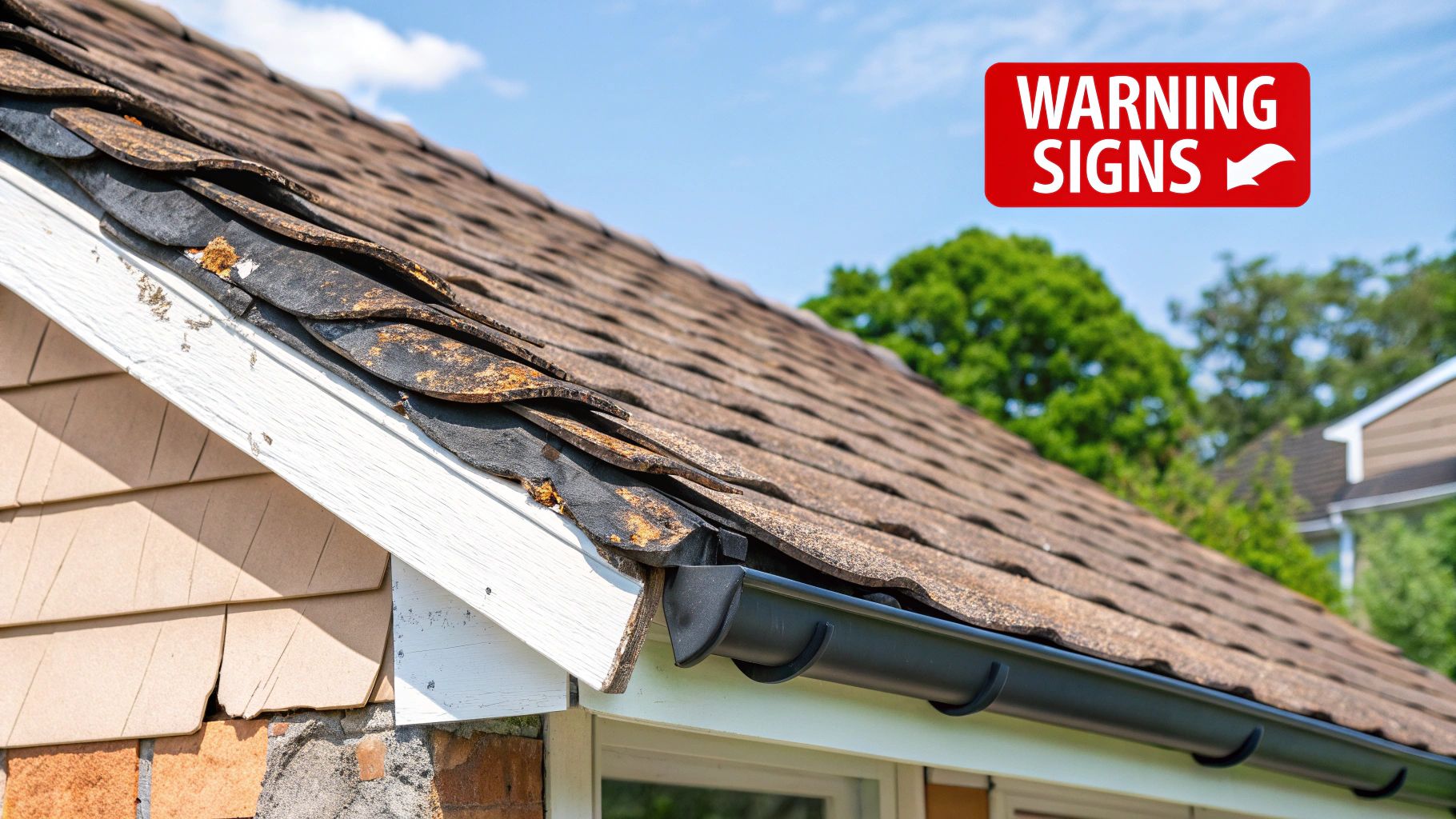
And this isn't a rare problem. Shocking data reveals that nearly 38% of U.S. homes have roofs in moderate to poor condition. This puts millions of homeowners at risk of leaks, structural rot, and terrible energy efficiency. You can dive deeper into the current state of roofing in America from sunsent.com.
So, let's get into the seven most critical signs that your roof is crying out for help.
Curling, Cracking, or Buckling Shingles
Healthy shingles are meant to lie perfectly flat. The moment you see their edges start to curl upward or whole sections begin to buckle in the middle, you’re looking at a roof that’s losing its battle against age and heat. Cracks are even worse—they're a direct invitation for water to seep underneath.
Don't mistake these for simple cosmetic flaws; they are serious functional failures. A single curled shingle can catch the wind just right during a storm, acting like a tiny scoop that gets ripped right off the roof.
Widespread Granule Loss
Those sandy granules on your asphalt shingles? They’re basically a heavy-duty sunscreen. This top layer is what shields the shingle from brutal UV rays and adds critical fire resistance. When you start noticing piles of these granules in your gutters or bald spots on your roof, it means that protective layer is washing away.
This exposes the raw asphalt underneath, which quickly becomes brittle and starts to break down. While losing a few granules is normal over time, seeing a lot of them is a five-alarm fire that your roof is well past its prime.
A roof with significant granule loss is like skin without sun protection—highly vulnerable to accelerated aging and damage from the elements. This is often one of the final signs before leaks begin.
Dark Streaks and Moss Growth
If you’ve seen ugly black streaks running down your roof, you’re looking at colonies of algae. While it’s mostly a cosmetic issue in a dry climate like Arizona’s, in wetter regions it can be a symptom of moisture being trapped on the roof.
Moss, on the other hand, is a much bigger deal. It acts like a sponge, holding moisture against the roof’s surface. As it grows, it can physically lift the edges of your shingles, creating a perfect pathway for water to get in. If you see thick, green patches, your roof is telling you it isn’t shedding water like it should. To get an unbiased and detailed look at your roof's health, especially for these hard-to-spot issues, using specialized drone roofing inspection software can provide a clear picture.
Water Stains or a Sagging Deck
Often, the most undeniable signs of a failing roof aren’t on the roof itself—they’re inside your home. Here’s where to look:
- Check Your Attic: Head up to the attic on a bright, sunny day. Turn off the lights and look up. If you see any slivers of daylight poking through the roof boards, you’ve found a direct route for rain to enter your home.
- Inspect for Stains: Keep an eye out for dark water stains on the underside of the roof deck or on your attic insulation. These are the telltale footprints of an active or previous leak.
- Feel the Deck: A sagging roof is a massive structural red flag that needs immediate attention from a professional. If the roof deck feels soft or spongy underfoot, it’s a sign that moisture has compromised the underlying wood, and it’s likely starting to rot.
How Your Local Climate Affects Roof Health
Think of a roof's advertised lifespan as its "best-case scenario"—not an ironclad guarantee. The single biggest wild card that can shorten that timeline is the local climate. A roof in a mild, forgiving region will age much more gracefully than one battling years of environmental extremes.
Figuring out how your specific weather patterns wear down your roofing material is the key to knowing when to replace your roof. It helps you take that standard 15-30 year asphalt shingle lifespan and adjust it to a more realistic, local expectation.
The Impact of Intense Sun and Heat
Here in Arizona, the roof's most relentless enemy is the sun. Day after day, intense UV radiation essentially bakes your roof, slowly cooking the vital oils and resins right out of the asphalt shingles.
This brutal process, known as thermal shock, is what makes shingles brittle and inflexible. Once they lose their pliability, they crack easily, making them vulnerable to damage from a gust of wind or even just a footstep.
- Accelerated Aging: The sun's constant assault can easily shave years off a shingle’s expected life.
- Fading and Breakdown: UV rays dismantle the shingle's protective outer layer, which you'll see as color fading and loose granules in your gutters.
- Higher Cooling Bills: As the roof degrades, it absorbs more heat, forcing your air conditioner to work overtime just to keep up.
Wind, Hail, and Freeze-Thaw Cycles
While sun is our main concern, other climates face their own set of challenges. Each type of weather finds a unique way to compromise your roof's integrity, making a well-timed replacement absolutely critical.
High winds can get underneath shingles and tear them right off, a risk that's much higher for older, stiffer shingles. Hail is a more direct threat, causing blunt-force trauma that can shatter shingles or dent metal flashing, creating weak points in an instant.
In colder regions, the freeze-thaw cycle is incredibly destructive. Water gets into tiny cracks, freezes and expands, and forces the crack wider. Repeat that process all winter long, and you have a force that can slowly pry your entire roof apart.
The increasing frequency of severe weather is a huge factor in the growing roof replacement market, which is now valued at around $50 billion. You have a combination of aging homes and more powerful storms, which means more roofs are giving out sooner than their owners ever expected. You can find more roof replacement market trends on datainsightsmarket.com.
By understanding your climate’s specific threats, you can get ahead of the curve and plan for a replacement before a small problem turns into a catastrophic failure.
Repair vs. Replace: Making the Right Financial Call
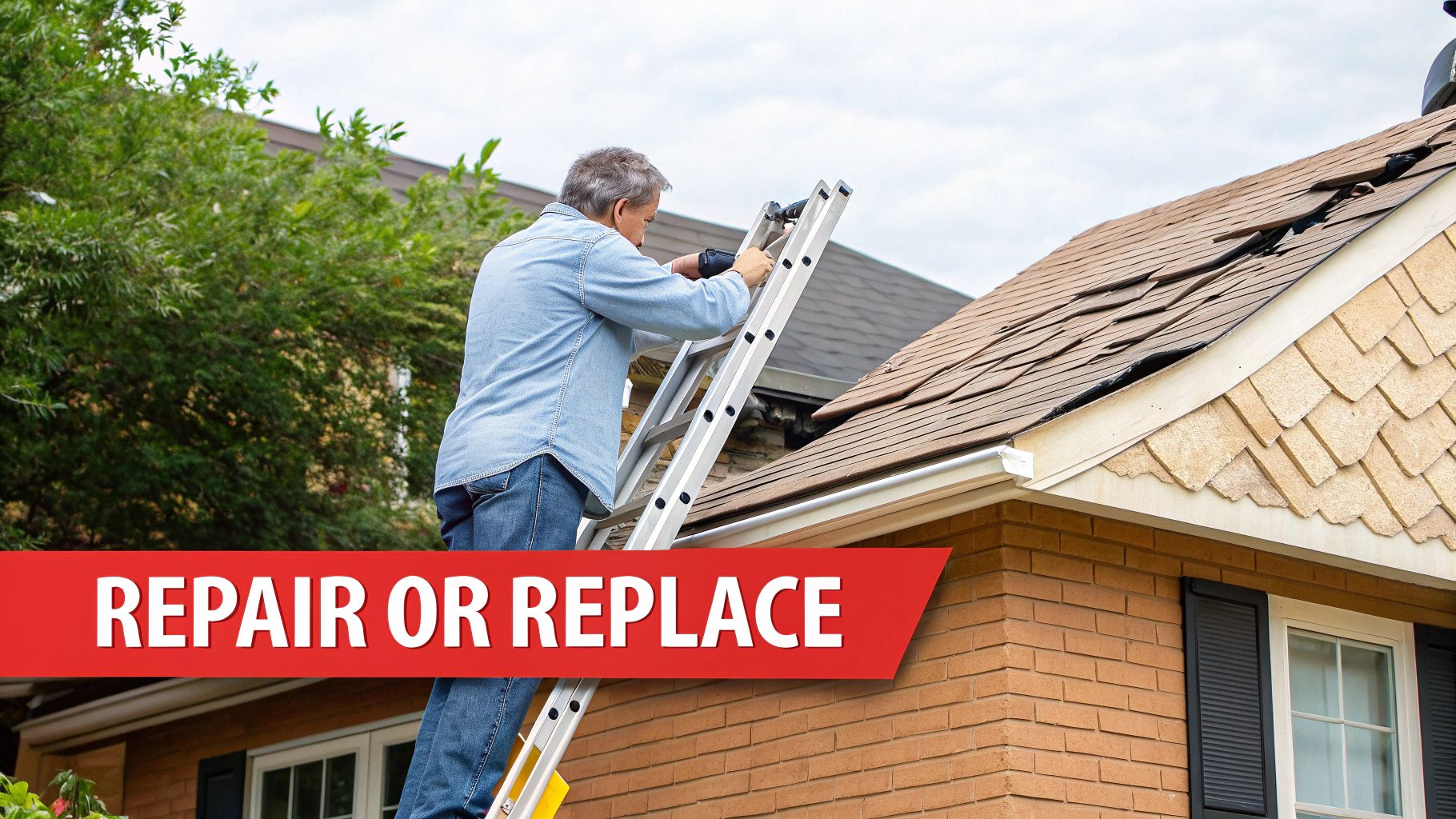
Every homeowner eventually faces this tough question: do you pay for another repair, or is it time to bite the bullet and replace the entire roof? It’s a major financial crossroads, and the right answer is about more than just fixing the immediate problem—it’s a long-term strategic decision for your home.
A great rule of thumb I always share with clients is the ‘50% Rule’. It's simple: if a repair is going to cost you more than half the price of a full replacement, investing in a new roof is almost always the smarter financial move in the long run.
Think of it like an old car that’s always in the shop. You can keep pouring money into constant, expensive fixes, but at some point, you realize that money would be better spent as a down payment on a new, reliable vehicle. Your roof is no different.
Beyond the Initial Price Tag
The upfront cost of a new roof can feel intimidating, but it’s crucial to look at the bigger picture. A full replacement isn't just an expense; it’s a powerful upgrade to your home's single most important protective feature.
Here are a few of the long-term financial wins a new roof delivers:
- A Fresh Warranty: A brand-new roof comes with solid manufacturer and workmanship warranties, offering you peace of mind for years, sometimes decades. A repair, on the other hand, usually only guarantees the specific patch for a very short time.
- Improved Energy Efficiency: Today’s roofing materials are engineered to be far more effective at deflecting the brutal Arizona sun. That translates directly into a cooler home and lower energy bills every single summer.
- Enhanced Curb Appeal: Nothing spruces up a home’s exterior like a new roof. It immediately makes your property look sharp, modern, and well-cared-for.
A Strategic Investment in Your Property
Beyond just shielding you from the elements, a new roof is one of the smartest investments you can make, often increasing your home's property value. It's a massive selling point for potential buyers, signaling that they won't have to face a huge capital expense right after moving in.
Being proactive also keeps you in good standing with your insurance company.
According to insurance industry data, failing roofs can have loss costs 60% higher than well-maintained ones. This can lead to steep premium hikes or even make it difficult to get coverage at all.
Ultimately, getting a clear view of the full financial landscape is key. If you're currently weighing your options, our guide on how much a new roof costs in Arizona can give you the numbers you need to apply the 50% Rule to your specific situation.
Your Step-by-Step Replacement Project Plan
So, you’ve decided it’s time for a new roof. It’s a big job, and it’s easy to feel a little overwhelmed by the whole thing. But if you break it down into a clear, step-by-step plan, it becomes a much more manageable project.
The secret is to take it one stage at a time, starting with the most important part: finding the right team.
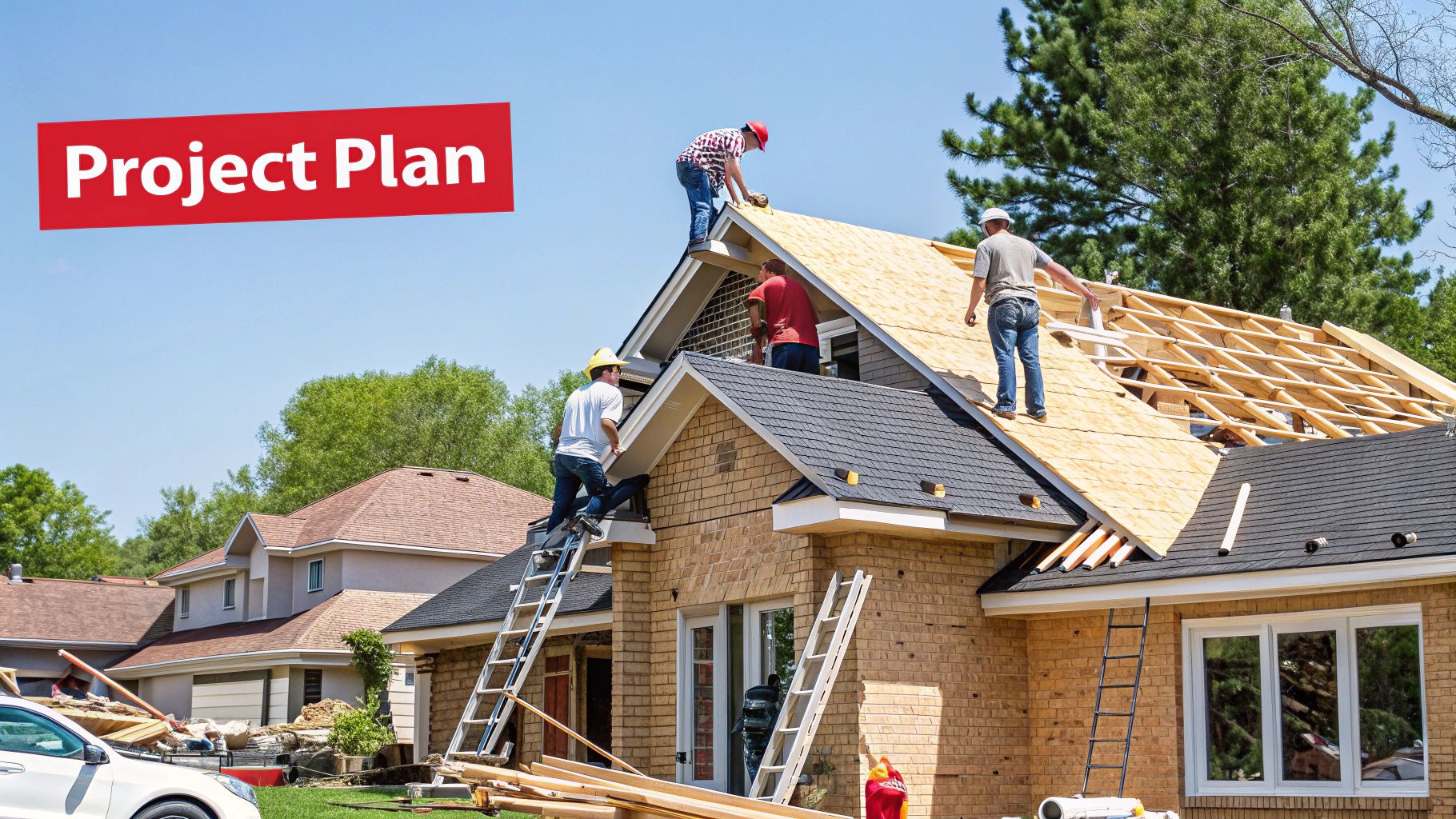
Your first move is to research and vet local roofing contractors. You're looking for professionals who have a solid reputation in the community, plenty of positive reviews, and all their credentials in order.
A quality roofer will always be licensed, bonded, and fully insured. Don't ever feel shy about asking to see proof of these documents—it’s your right as a homeowner.
Securing and Comparing Estimates
Once you have a shortlist of at least three contractors, it’s time to ask for detailed estimates. A good quote is more than just a number; it’s a comprehensive breakdown of the entire job.
Here’s what you should expect to see in a reliable estimate:
- The total cost, with a clear line-item breakdown for both labor and materials.
- The specific materials they plan to use, from the type of shingles right down to the underlayment.
- An estimated project timeline, outlining expected start and completion dates.
- Proof of insurance and licensing to ensure you’re protected from any liability.
- Details on the payment schedule and warranty information covering both the materials and the crew’s workmanship.
Be wary of any estimate that seems unusually low or is vague on the details. This is often a major red flag. Cutting corners on a roof replacement almost always leads to bigger, more expensive headaches down the road.
Choosing the right partner is the most critical decision you'll make in this process. To see what a well-managed project looks like from start to finish, you can learn more about our professional roof replacement service and the steps we follow.
Preparing for Installation Day
After you’ve picked your contractor and signed on the dotted line, the final step is getting your home ready. Your roofer will take care of the heavy lifting and logistics, but a few small preparations on your end can make a huge difference.
Try to clear your driveway, cover any valuables stored in the attic with a tarp, and move things like patio furniture or potted plants away from the house. A little prep work helps the crew work safely and efficiently, ensuring everything goes smoothly from the initial tear-off to the final cleanup.
Frequently Asked Questions
How long does a typical roof replacement take?
For most average-sized homes, a full asphalt shingle roof replacement can often be completed in just 1 to 3 days. The exact timeline can be affected by factors like weather, the complexity of your roof's design, and whether any underlying structural repairs are needed after the old roof is removed.
What is the most urgent sign that I need a new roof?
An active water leak. The moment you see water stains on your ceiling or find dampness in the attic, it’s a red alert. That means the primary barrier of your roof has been breached, and you need to act fast to prevent serious interior damage to insulation, drywall, and even your home's structure.
Can I just install new shingles over the old ones?
While a "roof-over" might seem like a way to save money, it's not recommended by most professional roofers. Laying new shingles over old ones prevents a proper inspection of the underlying roof deck for rot or damage. It also adds significant weight and can trap heat, shortening the life of your new shingles and potentially voiding their warranty.
How much does a new roof cost?
The cost varies widely based on several key factors: the size and slope of your roof, the type of materials you choose (e.g., asphalt shingles vs. metal), the condition of the underlying deck, and local labor rates. It's always best to get at least three detailed quotes from reputable local contractors to understand the expected cost for your specific home.
Can I wait until next season to replace my roof?
Maybe. If the problem is small and localized, like a few shingles blew off in a storm, you can probably patch it and wait. But if you're seeing widespread issues like most of your shingles curling up or massive granule loss, waiting through another season of rain and wind is a huge risk. A big storm could turn a manageable problem into a catastrophic failure.