
Investing in a standing seam metal roof for your Arizona home is a significant decision, with costs typically ranging from $12 to $22 per square foot for a complete installation. This translates to an average total project price of $14,000 to over $40,000, depending on your roof's size, complexity, and the specific materials you choose. While the upfront investment is higher than traditional options like asphalt shingles, a standing seam roof offers unparalleled longevity, energy efficiency, and durability designed to withstand Arizona's harsh climate for decades.
This guide breaks down every factor influencing the cost, from materials and labor to your home's unique architecture, helping you understand the long-term value and make an informed decision for your property.
Key Takeaways
- Average Cost: Plan for a budget between $12 and $22 per square foot in Arizona, which covers both high-quality materials and professional installation.
- Longevity is Key: With a lifespan of 40 to 70 years, this roof pays for itself over time. You won't be re-roofing every 15-20 years like you would with asphalt shingles.
- Energy Savings: The reflective "cool roof" properties are a game-changer in Arizona. You can expect a noticeable drop in your summer cooling bills, often by up to 25%.
- Professional Installation is Non-Negotiable: The performance of a standing seam roof depends entirely on correct installation. This isn't a DIY job; you need an expert to ensure it's watertight and allows for proper thermal movement.
Comparing metal against tile, shingle or foam? Our Arizona roof replacement cost guide puts every roof type side by side.
Understanding Standing Seam Roof Costs in Arizona
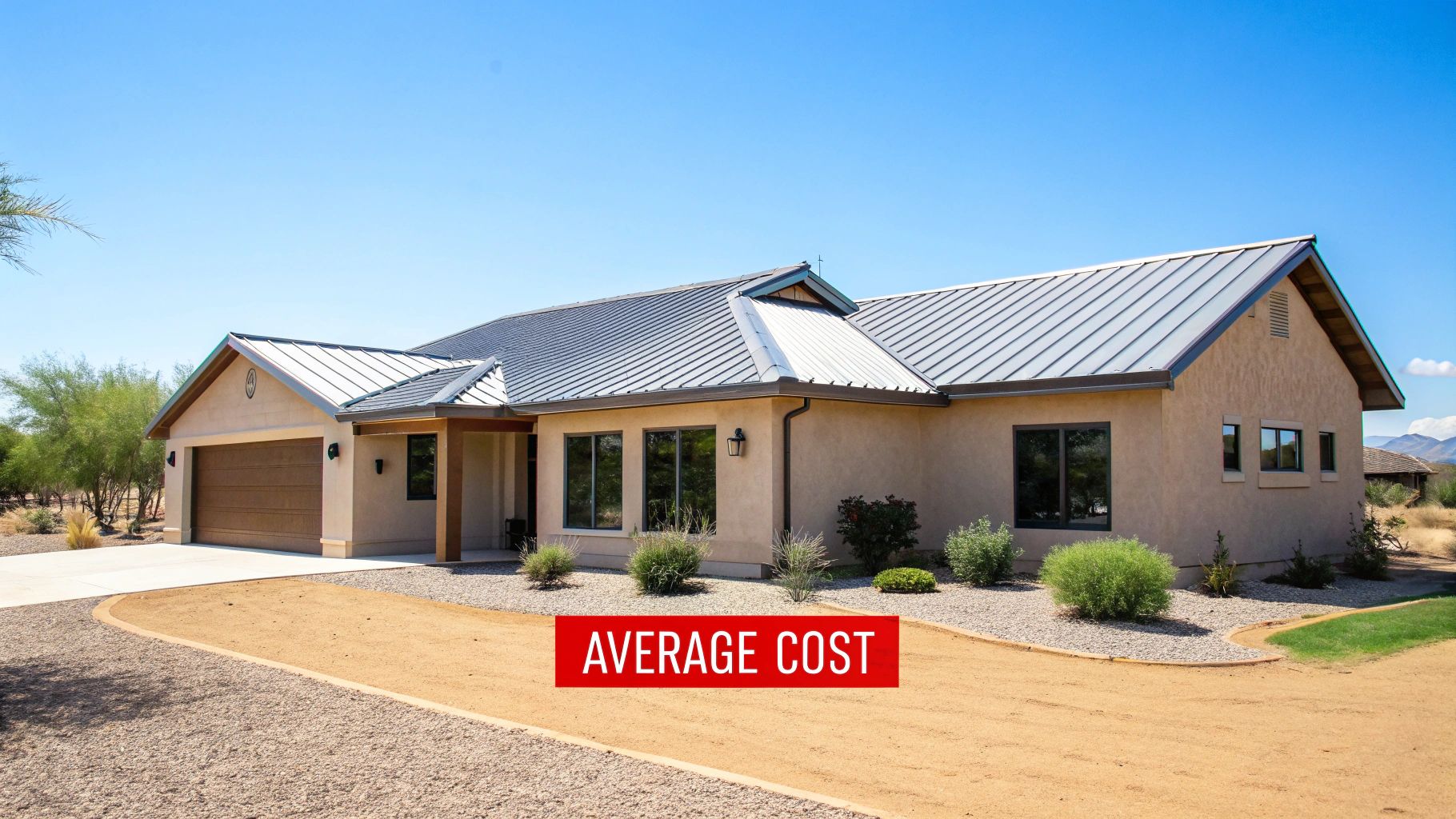
Let's break down what goes into that price tag. A standing seam metal roof is a different beast entirely from traditional roofing. Instead of overlapping shingles with thousands of exposed nails, it uses a system of interlocking metal panels. These panels are attached to the roof deck with hidden clips, creating a seamless, sleek look.
More importantly, this design forms a nearly impenetrable shield against our harsh Arizona elements, from blistering sun to monsoon downpours. It's a modern solution built for modern challenges.
For businesses and commercial property owners facing this significant capital improvement, managing the upfront cost is often the biggest hurdle. Exploring financing options like construction business loans can turn a daunting expense into a manageable project.
Why Is It a Premium Choice?
The "premium" label isn't just about looks; it's about what you get for your money. The higher price is a direct reflection of superior materials, specialized labor, and a lifespan that other materials just can't match.
Here’s a look at what drives the cost:
- Superior Materials: We're talking about high-grade steel or aluminum panels engineered to last 40 to 70+ years. That’s easily two or three times the lifespan of a typical asphalt shingle roof.
- Specialized Labor: Installing a standing seam system isn't a job for a general roofer. It requires technicians with specific training and tools to get it right. The precision needed makes the installation process more meticulous and time-consuming.
- Long-Term Durability: These roofing systems are designed to expand and contract with Arizona's wild temperature swings. This thermal movement is built into the design, preventing the warping, cracking, and damage that plagues other materials in our climate.
A standing seam roof is one of the few home improvements you might only have to pay for once in your lifetime. Its resilience against sun, wind, and rain provides unmatched peace of mind.
Nationally, the story is similar, with residential projects often ranging from $9,400 to over $32,600. While the upfront cost is a consideration, the long-term math often works out in the homeowner's favor. To get a complete picture, it's worth exploring all the metal roofing benefits and drawbacks before making a final decision.
For a quick reference, here’s a simple breakdown of what to expect for project costs in our state.
At-a-Glance Standing Seam Roof Costs in Arizona
This table gives a scannable overview of the typical cost ranges you'll encounter for a standing seam project in Arizona.
| Expense Category | Average Cost Range (Per Sq. Ft.) |
|---|---|
| Materials (Panels & Clips) | $6 – $11 |
| Labor & Installation | $5 – $9 |
| Tear-Off & Disposal (Old Roof) | $1 – $2 |
| Total Installed Cost | $12 – $22 |
These figures are a great starting point, but remember that every roof is unique. Factors like roof pitch, complexity, and material choices will fine-tune the final price.
Cracking the Code of Your Roofing Quote
When you first see the total on a quote for a new standing seam roof, it's easy to get sticker shock. But that number isn’t just pulled out of thin air. It’s a careful calculation of a few key ingredients that all come together to build a long-lasting roof over your head.
Let's break it down. Just like a bill at a great restaurant shows you the cost of the main course, the drinks, and the service, your roofing invoice is built on three main pillars: the actual materials, the skilled labor to install them, and the work of removing your old roof.
The Building Blocks: Your Materials
The biggest chunk of your estimate, usually making up 40% to 50% of the total, goes toward the materials themselves. And we're not just talking about the metal panels you see from the street. This covers an entire system engineered to protect your home for decades.
The main cost driver here is the metal itself. Each one strikes a different balance between price, performance, and looks.
- Galvalume Steel: This is the go-to for most homeowners in Arizona. It's strong, cost-effective, and has fantastic corrosion resistance, which is exactly what you need under our intense sun.
- Aluminum: A bit lighter than steel and virtually rust-proof, aluminum is a great upgrade, especially in areas with more moisture. It does come with a slightly higher price tag.
- Copper & Zinc: These are the "heirloom" metals. They're stunning, develop a beautiful, unique patina over time, and last a lifetime. Naturally, they are the most expensive options and are typically reserved for custom, high-end homes.
Beyond the panels, this part of the invoice also covers all the essential background players—the clips, fasteners, high-performance underlayment, and custom flashing. Every piece is critical for a completely watertight and durable roof.
The Artistry of Installation: Your Labor
Next up is labor, which typically accounts for another 40% to 50% of the project cost. Let's be clear: installing a standing seam metal roof is a different league than slapping down asphalt shingles. It’s a specialized craft that requires precision, expensive tools, and a real understanding of how metal expands and contracts in Arizona’s heat.
Think of it this way: anyone can assemble a basic bookshelf from a box, but it takes a master carpenter to build a custom, solid-wood cabinet. Both hold books, but the skill, precision, and tools required for the custom piece result in a far superior, longer-lasting product.
The labor cost covers much more than just the crew’s time. It also includes:
- Specialized Equipment: Things like portable roll-forming machines that create your panels right on-site, plus mechanical seamers and specialty cutting tools.
- Expert Training: Our crews are trained to manage thermal movement—a huge factor here in Arizona. Proper technique is what stops your roof from warping or pulling apart over the years.
- Insurance and Safety: This covers the necessary licensing, liability insurance, and worker’s compensation that protects both you and our team.
Trying to save money on labor is the surest way to turn a 50-year roof into a 5-year nightmare. The crew's expertise is what truly unlocks the potential of the high-quality materials. To get a feel for how these pieces fit together, play around with our roof replacement cost estimator to see how different choices affect the numbers.
Out With the Old: Tear-Off and Disposal
The final piece of the puzzle, usually about 5% to 10% of the total budget, is tearing off and hauling away your old roof. This is a non-negotiable step. We need to install your new roof system on a clean, solid, and structurally sound surface.
This line item covers the labor to carefully remove the old roofing, the cost of the on-site dumpster, and the fees for properly disposing of all that debris. If we uncover any rotted or damaged wood decking underneath, we'll need to replace it. It might be an additional expense, but it’s absolutely necessary to ensure your new standing seam roof has the solid foundation it needs to last.
How Your Roof's Design Impacts the Final Price
No two roofs are the same, and that's a big deal when it comes to pricing a standing seam metal roof. Think of it like buying a suit. A simple, single-story ranch home is like getting a standard suit off the rack—straightforward. But a multi-level home loaded with dormers, valleys, and skylights? That's a custom-tailored tuxedo. It takes a lot more skill, time, and material to get the fit just right.
Every unique feature on your roof—from a steep pitch to a tricky chimney flashing—requires more intricate labor, specialized safety gear, and custom-fabricated metal pieces. All of these things add up on the final estimate.
Roof Complexity: The Architect's Footprint
A simple, low-slope gable roof is the easiest and most affordable to install. It’s a straight shot for the crew. But many Arizona homes have more complex designs that, while beautiful, definitely increase the cost because of the extra labor and precision needed.
Here are the main design elements that will bump up your project's bottom line:
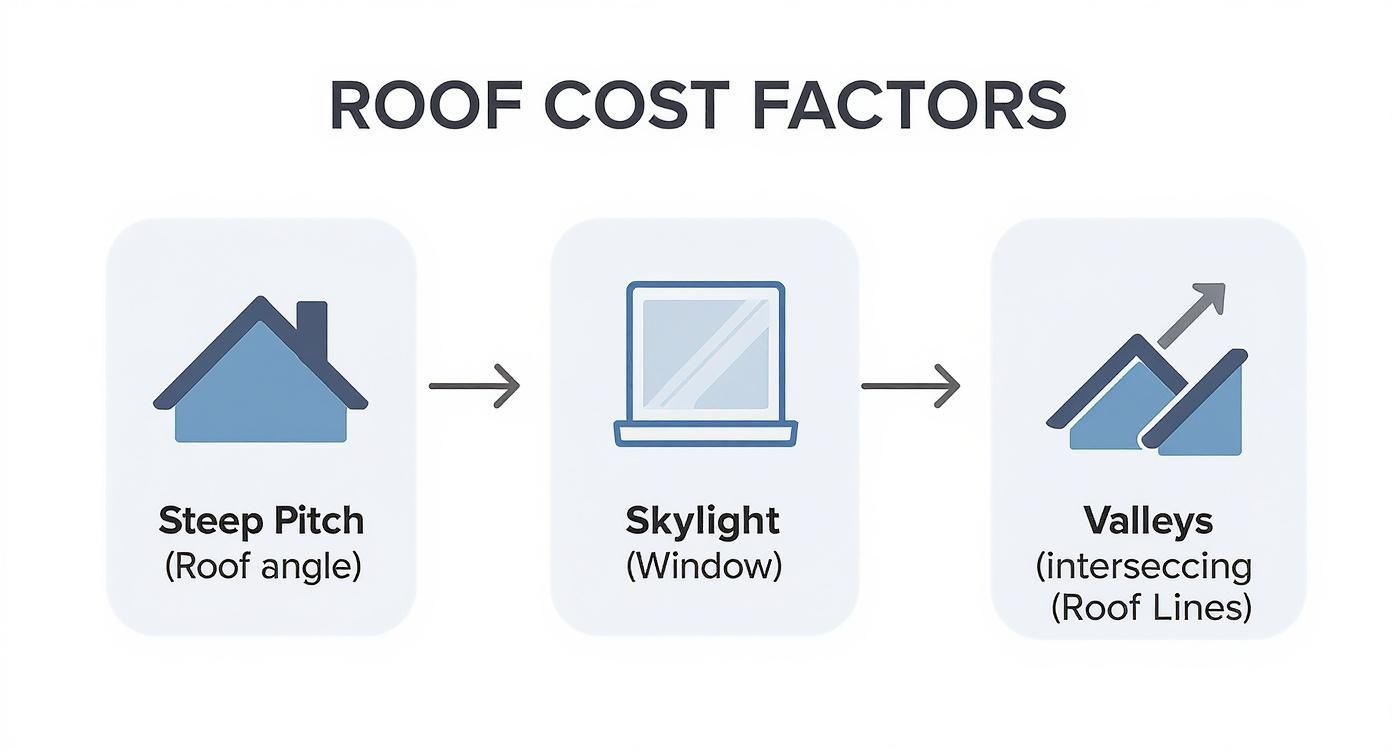
- Steep Pitch: The steeper the roof, the more challenging the job. Crews need more time and extensive safety equipment to work on high pitches. Maneuvering long, heavy metal panels on a steep slope is no easy task.
- Dormers and Valleys: Every time two roof planes meet in a valley or a dormer pops out, you’ve got a transition point. Each one needs to be custom cut, sealed, and flashed perfectly to keep water out. That adds a lot of labor hours.
- Skylights and Chimneys: Just like dormers, any penetration through the roof is a potential leak spot if not handled correctly. Flashing these features with metal is a meticulous, time-consuming process that adds to the cost.
The more cuts, angles, and transitions your roof has, the higher the labor cost will be. A complex roof can easily add 20-30% or more to the labor portion of your bill compared to a simple roof of the same square footage.
Material Details That Matter in the Arizona Sun
Beyond the roof's shape, the specific materials you choose play a huge role in both the initial cost and how well the roof performs long-term, especially under our relentless sun. These choices are where you can really balance your budget with durability.
First up is the metal gauge, which is just a fancy way of saying thickness. It's a bit counterintuitive, but with metal roofing, a lower gauge number means thicker and stronger metal. While 26-gauge is a common choice, upgrading to a thicker 24-gauge panel gives you much better resistance to dents from hail or falling tree branches—a worthwhile investment in many parts of Arizona.
Next, you have the paint finish. This is about more than just picking a color; it’s your roof’s front line of defense against the sun's UV rays. A standard paint might look good for a few years, but it can eventually fade and get chalky. A premium Kynar 500® (PVDF) finish, on the other hand, is engineered to hold its color for decades. It costs more upfront, but it’s a smart investment that protects your home’s curb appeal and value for years to come.
Unseen Heroes: Underlayment and Fasteners
Finally, let's talk about some of the most important parts of the system—the ones you'll never even see.
A high-quality synthetic underlayment is your roof’s crucial second line of defense against water. It’s the protective layer right on top of the wood decking, and skimping here is a recipe for very expensive problems down the road. To get a better handle on this, check out our guide on choosing the best underlayment for a metal roof.
Likewise, the hidden clips and fasteners that attach the panels are engineered to let the metal breathe. They allow for thermal movement—the natural expansion and contraction that happens in Arizona's wild temperature swings from day to night. Using cheap, incorrect fasteners can cause the panels to buckle or get a wavy look known as "oil canning."
When you understand these key factors, you can have a much more productive conversation with your roofer. Knowing how your home’s unique architecture and your material choices affect the price allows you to make smart decisions and invest in what matters most for long-term value.
To see how these choices stack up, here’s a quick breakdown of how different decisions can swing your project’s total cost.
Cost Impact of Key Roofing Factors
| Factor | Lower Cost Option | Higher Cost Option | Reason for Price Difference |
|---|---|---|---|
| Roof Complexity | Simple gable roof, low pitch | Multiple valleys, dormers, steep pitch | Requires more labor, custom cuts, and safety equipment. |
| Metal Gauge | 26-Gauge Steel | 24-Gauge Steel or Aluminum | Thicker metal costs more but provides superior durability and impact resistance. |
| Paint Finish | Standard SMP (Silicone Modified Polyester) | Premium Kynar 500® (PVDF) | Kynar 500® offers vastly superior fade and chalk resistance, extending the roof's aesthetic life. |
| Underlayment | Standard Synthetic Felt | High-Temp, Self-Adhering Underlayment | High-temp options provide better heat resistance and a superior waterproof seal, crucial in AZ. |
| Fasteners | Standard Floating Clips | Expansion/Contraction Clips | Premium clips are better engineered to handle thermal movement, preventing panel stress and "oil canning". |
As you can see, the "best" roof isn't just about the thickest metal or the fanciest paint. It’s about finding the right combination of materials and installation expertise that fits your home's design, your climate, and your budget for the long haul.
Standing Seam Versus Other Arizona Roofing Materials
When you start looking at the numbers for a standing seam roof, it’s natural to stack them up against other popular choices here in Arizona, like asphalt shingles or classic clay tiles. The initial price tag for standing seam is definitely higher, and there’s no getting around that. But a simple side-by-side cost comparison doesn't really give you the full picture.
To get a true sense of the value, you have to think about the roof's entire lifecycle. It's a bit like buying a car. You could grab a cheaper model that guzzles gas and needs constant repairs, or you could invest in a reliable hybrid that saves you real money every single month for years to come. Standing seam is that hybrid—it's a strategic, long-term investment in your home, not just an expense.
The Lifecycle Cost Showdown
In Arizona's brutal climate, roofing materials don't exactly age gracefully. The relentless UV radiation and wild temperature swings from day to night put an incredible amount of stress on a roof, making its lifespan one of the most important factors in its true cost.
-
Asphalt Shingles: This is hands-down the most common budget option, but it's a short-term fix in our environment. An asphalt roof might only last 15-20 years before the sun literally bakes the protective granules off, leaving the material brittle and prone to cracking. Over a 50-year span, you could easily end up paying for a full asphalt roof replacement two, or even three, times.
-
Clay or Concrete Tile: A beautiful look that defines the Southwest, tile is incredibly durable and can last 50 years or more. The downside? It's extremely heavy, which often means paying extra for structural reinforcement to your home's framing. The tiles can also crack from hail or even just being walked on, leading to tricky and expensive spot repairs. Plus, the underlayment beneath the tiles is a known weak point that often fails and needs replacing every 20-25 years.
-
Standing Seam Metal: With a typical lifespan of 40-70+ years, a standing seam roof is very often the last roof you'll ever need to install on your home. It shrugs off UV degradation, it won’t crack from a hailstorm, and it's engineered to expand and contract with the heat without failing.
When you factor in the cost of replacing shingles multiple times or the significant maintenance and underlayment repairs for tile, the higher upfront price of a standing seam roof often proves to be the most economical choice over the decades you'll live in your home.
This isn't just a local trend; the entire construction industry is seeing this shift. Standing seam systems now account for about 8% of spending on new home construction and up to 12% on remodeling projects nationwide. That growth is especially strong in places like Arizona, where homeowners are tired of dealing with weather-related roof problems. You can explore more about this market shift on Maximize Market Research.
Energy Efficiency and Maintenance
Longevity is huge, but two other factors dramatically change a roof's real cost over time: energy savings and maintenance. This is where a standing seam roof really shines, especially in a sun-drenched state like ours.
A metal roof treated with a reflective "cool roof" finish can bounce a huge amount of solar heat away from your home, which keeps your attic cooler. That directly translates into lower air conditioning bills during our long, punishing summers—a continuous return on your investment, month after month. In stark contrast, dark asphalt shingles soak up that heat, basically turning your attic into an oven and forcing your AC to work overtime just to keep up.
Maintenance is the other big win. Standing seam roofs require almost no upkeep beyond an occasional cleaning. There are no shingles to get ripped off in a monsoon storm and no exposed screws that will degrade under the sun and eventually cause leaks. That saves you from the headache and expense of periodic repair calls.
Calculating the Long-Term Value of Your Investment
https://www.youtube.com/embed/51QuzZCQsDg
While the initial price tag for a standing seam roof can seem high, it’s only a small piece of the financial puzzle. To really see the whole picture, you have to look past the upfront cost and focus on the long-term value. This roof isn't just a covering for your house; it’s an asset that pays you back for years and years through energy savings, minimal upkeep, and a boost to your property value.
Think of it like buying a professional-grade power tool versus a cheap one from a discount store. The better tool costs more at first, but it works better, lasts a lifetime, and saves you the headache of having to buy it over and over again. For most homeowners here in Arizona, a standing seam roof is a permanent upgrade—it's the last roof you'll ever have to buy.
Tangible Returns Through Energy Savings
In Arizona, our air conditioners are the unsung heroes of the household, running nonstop for a good chunk of the year. That work adds up to a huge portion of our utility bills. This is where a standing seam roof really starts to earn its keep.
These roofs are often called "cool roofs" for a reason. Coated with special reflective finishes, they are designed to bounce the sun's harsh rays back into the sky instead of soaking up all that heat. This has a massive effect on your home's temperature, keeping the attic cooler and taking a huge load off your HVAC system.
- Lower Cooling Bills: It's not uncommon for homeowners to see their summer cooling costs drop by as much as 25% after getting a reflective metal roof.
- Less HVAC Wear and Tear: When your attic stays cooler, your AC doesn't have to work as hard or as often, which can add years to its lifespan.
- Year-Round Comfort: You'll feel the biggest difference in the summer, but a properly installed and insulated roof system helps keep your home's temperature stable all year long.
When you add up those monthly energy savings over the decades-long life of the roof, we're talking about thousands of dollars. That money goes right back into your pocket, directly offsetting the initial investment.
The Value of Near-Zero Maintenance
Another huge part of the long-term math is what you don't have to spend money on. Asphalt shingles always seem to need a patch job after a big monsoon storm blows through, and tiles can crack and require costly replacements. A standing seam system, on the other hand, pretty much takes care of itself.
The fasteners are hidden, so they're protected from the brutal Arizona sun, and the panels lock together so tightly that our monsoon winds are no match for them. This incredible durability means you can go decades without thinking about roof repairs, saving you a ton of money and stress.
Understanding how to meticulously track expenses and project returns is essential for any property-related decision. For a different perspective on property investment analysis, you can explore methods for calculating cash flow on rental property to see how small, consistent financial gains add up.
Boosting Resale Value and Insurance Perks
Finally, a standing seam roof is a premium feature that makes your home stand out when it’s time to sell. Potential buyers see a high-quality metal roof and know it’s one major expense they won't have to deal with for a very, very long time. That peace of mind can increase your home's resale value by an average of 4-6%.
On top of that, insurance companies love these roofs. Because they have a Class A fire rating and are incredibly resistant to high winds, many carriers will offer you a discount on your homeowner's insurance premiums. When you put all these benefits together—energy savings, no maintenance, higher resale value, and insurance discounts—the initial cost transforms into a smart, clear-cut investment in your home.
Frequently Asked Questions
How much more does a standing seam roof cost than shingles?
You can generally expect a standing seam metal roof to cost two to three times more than a standard architectural asphalt shingle roof. The flip side is that it also lasts two to three times longer, making the lifetime cost very competitive.
Is a metal roof noisy when it rains?
This is a common myth. Unlike an old barn roof, modern standing seam systems are installed over a solid roof deck, high-quality underlayment, and attic insulation. This combination effectively muffles sound, making a metal roof just as quiet as any other roofing material during a monsoon storm.
How long does a standing seam roof last in the Arizona heat?
A standing seam metal roof is engineered for a lifespan of 40 to 70+ years in Arizona. The premium finishes reflect UV rays to prevent fading, and the hidden clip system allows the metal to expand and contract with extreme temperature swings, preventing the buckling and cracking that destroys other materials.
Will a metal roof really lower my summer energy bills?
Yes, significantly. Standing seam roofs with "cool roof" reflective finishes can bounce a large portion of solar energy away from your home. This keeps your attic cooler, reduces the strain on your AC unit, and can lower your summer cooling costs by as much as 25%.
Can I install a standing seam roof myself to save money?
We strongly advise against it. This system requires specialized equipment and deep expertise to create a watertight seal and correctly manage thermal expansion—a critical factor in Arizona's climate. A mistake can lead to very costly leaks and repairs.
Does the color of the metal affect the cost of a standing seam roof?
For standard colors, the price difference is usually negligible. However, if you opt for custom colors or premium, high-performance finishes like Kynar 500, you can expect a slight increase in the material cost.

Guides written and reviewed by the licensed roofers at Arizona Roofers (ROC#356304 · ROC#356639), a GAF Master Elite® contractor and 2026 GAF President’s Club Residential Award winner. About our team →