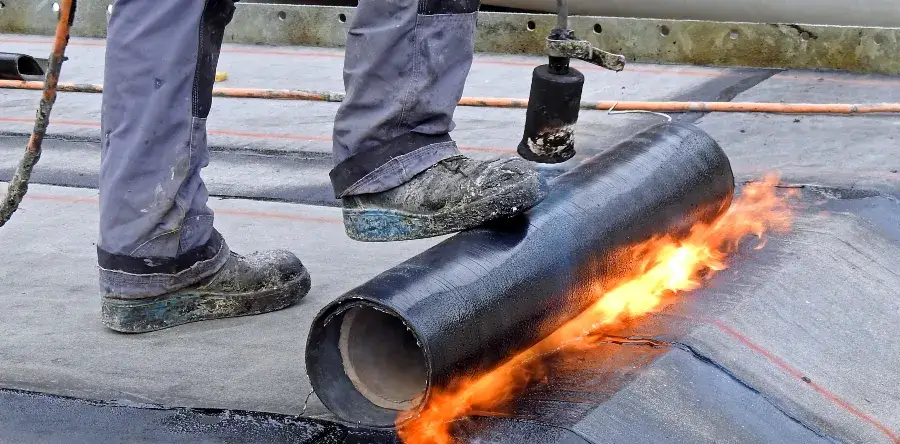

When your roof starts to fail, the thought of a complete tear-off and replacement can be overwhelming, both financially and logistically. For many Arizona homeowners, the high cost and disruption of a full replacement project are major concerns. But what if there was a faster, more affordable alternative? There is: it’s called overlaying a roof, a process where new shingles are installed directly over your existing ones.
This guide will walk you through everything you need to know about this popular roofing method. We’ll explore what a roof overlay is, help you determine if your home is a good candidate, and weigh the critical pros and cons to help you make an informed decision that protects your home and your wallet.
Key Takeaways
Before we dive deep, here are the essential points to understand about overlaying a roof:
- Significant Cost Savings: An overlay can reduce project costs by up to 30% by eliminating the labor and disposal fees associated with tearing off the old roof.
- Eligibility is Limited: This method is only suitable for roofs with a single existing layer of shingles and a structurally sound underlying deck.
- Reduced Lifespan: A roof overlay typically lasts about 80% as long as a full replacement due to trapped heat accelerating the aging of the new shingles.
- Clear Disqualifiers: If your roof already has two or more layers, exhibits soft spots, has widespread curling shingles, or shows signs of significant water damage, a full tear-off is the only safe and viable option.
What Is a Roof Overlay, and Is It the Right Call for Your Home?
So, what exactly is an overlay? Think of it like putting a new slipcover on a perfectly good couch. Instead of throwing out the old one, you’re simply adding a fresh, new layer right on top.
Professional roofers install a new set of shingles directly over your existing layer. This skips the entire messy and expensive process of tearing off the old roof down to the deck.
Because it’s a much faster job, it’s also a lot less disruptive. You avoid the days of loud tear-off work, the big dumpster in your driveway, and the general chaos that comes with a full replacement.
Why Are Overlays So Popular?
It really comes down to the bottom line: money.
The National Roofing Contractors Association (NRCA) found that about 40% of all residential roofing projects in 2023 were overlays. That’s a huge number, and it’s driven almost entirely by the significant savings on labor and disposal. If you want to dig deeper, you can explore more roofing industry statistics and trends to see why so many homeowners are drawn to this option.
But—and this is a big but—it’s not a universal solution. An overlay is only a smart move if the foundation of your current roof is sound. If you just cover up existing problems, you’re asking for much bigger, more expensive trouble down the road. This guide will walk you through how to tell if you’re a good candidate, weigh the real pros and cons, and understand what this all means specifically for you as an Arizona homeowner.
Determining If Your Roof Is a Candidate for an Overlay
So, you’ve heard that overlaying your roof can save you some money. Before you jump to that conclusion, you need to play detective. Not every roof is a good candidate for this kind of project; in fact, most aren’t. Think of it as a pre-flight check—you need to ensure everything is in solid working order before you commit.
Putting a new layer of shingles over a roof with hidden problems is like slapping a fresh coat of paint on a rotting wall. Sure, it looks good for a little while, but the underlying issue is still there, getting worse. We want to extend your roof’s life, not just put a temporary bandage on it. This is why a detailed assessment is non-negotiable, much like a thorough due diligence checklist for real estate before buying a property.
The One-Layer Rule
The first and most important hurdle is the number of shingle layers already on your roof. This isn’t just a suggestion; it’s a hard and fast rule set by building codes across Arizona, based on the International Residential Code (IRC).
The rule of thumb is simple: You can have a maximum of two layers of asphalt shingles. If you already have two layers, a complete tear-off and replacement is your only option.
This regulation exists for a very good reason: weight. Shingles are heavy. A second layer adds a significant load to your home’s structure. A third layer? That could easily push your rafters and decking beyond their designed capacity, creating a genuine safety risk.
Checking the Foundation: The Roof Deck
Right underneath your shingles is the roof deck, usually made of plywood or OSB sheathing. This is the true foundation of your roofing system, and it has to be rock-solid. During an inspection, a professional will carefully walk the entire surface, feeling for any “give” or soft spots under their feet.
Those spongy areas are a huge red flag. They almost always mean water has seeped through the old shingles and started to rot the wood. You absolutely cannot overlay a weak or damaged deck—the new nails would have nothing to bite into, making the new layer completely ineffective.
This simple flowchart breaks down the initial decision-making process.
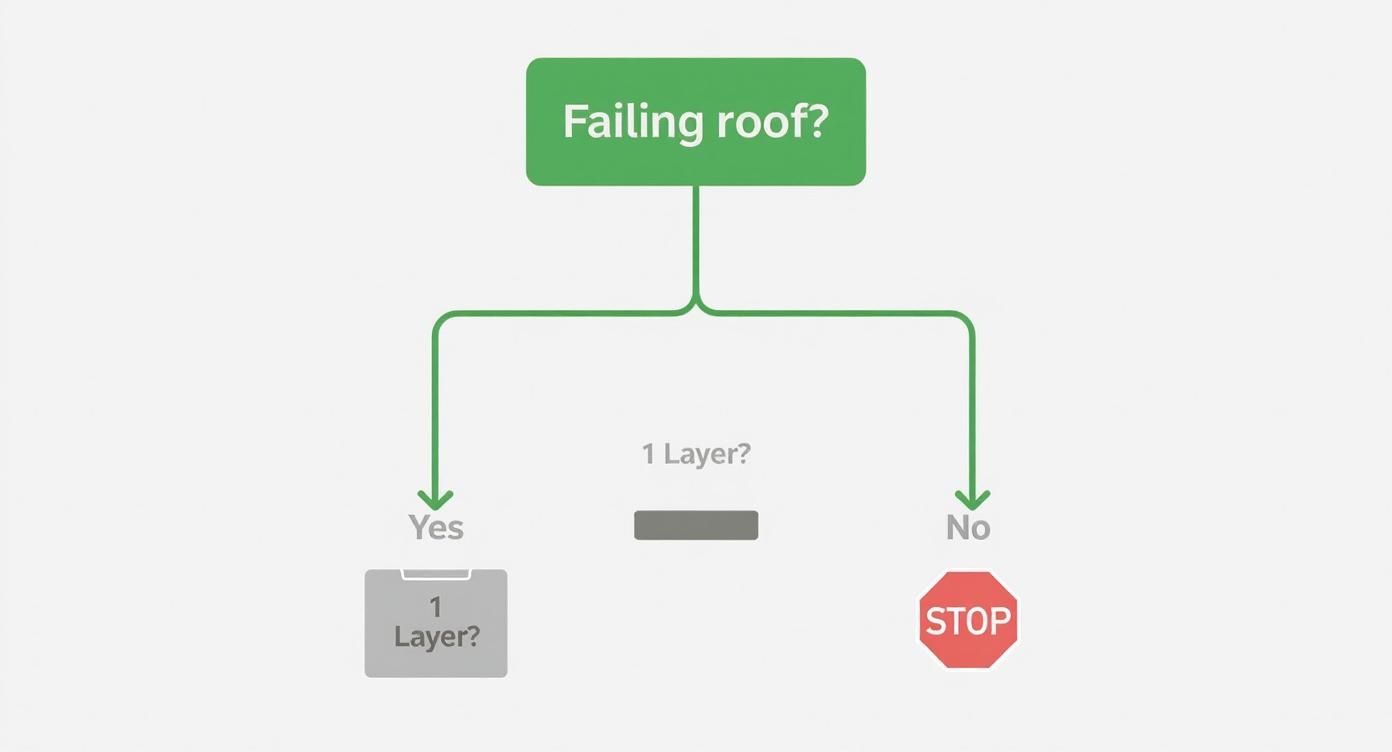
As you can see, the first question is always about how many layers are already up there. If the answer is two, the conversation about an overlay ends right there.
Visual Clues That Disqualify an Overlay
Beyond the number of layers and the deck’s condition, a few visual cues can immediately tell you an overlay is off the table. If you spot any of these problems across large areas of your roof, it’s time for a full replacement. These are all clear signs you need a new roof, not just a new layer.
- Widespread Curling Shingles: If the edges of your shingles are curling up, they’re dried out, brittle, and well past their prime. New shingles won’t be able to lie flat over them, which creates countless little entry points for wind and water.
- Extensive Granule Loss: See those “bald spots” on your shingles where the sandy granules have worn away? That’s your roof’s primary defense against our harsh Arizona sun. Without it, the shingle’s asphalt core breaks down fast.
- Numerous Missing Shingles: Losing a shingle or two in a storm is one thing. But if you have whole sections missing, it often points to a systemic failure of the underlayment or even the decking itself.
- Valleys in Poor Condition: Valleys are crucial for channeling water off your roof. If the shingles in these high-flow areas are cracked, worn, or falling apart, they have to be torn out and rebuilt from the deck up.
At the end of the day, an overlay is really only a good fit for a roof that is structurally sound but is just getting old. If you have a single layer of shingles that are still lying mostly flat and a solid deck underneath, you just might be a perfect candidate. But the only way to know for sure is to get a professional up there to take a look.
Weighing The Pros And Cons Of A Roof Overlay
Choosing between a roof overlay and a full replacement isn’t just about the initial price tag. Think of it as balancing immediate benefits against long-term performance. While an overlay can look like an attractive, budget-friendly fix, it comes with some serious trade-offs every Arizona homeowner needs to understand before pulling the trigger.
Let’s break down both sides of the coin so you can make a truly informed decision.
The Advantages Of An Overlay
The main reason anyone considers an overlay is simple: money. By skipping the messy, labor-intensive job of tearing off all the old shingles, you can pocket some significant upfront savings. We’re talking about avoiding hefty labor costs and disposal fees, which can often slash the total project cost by 25% to 30%.
On top of that, it’s fast. A full roof replacement can turn your property into a noisy, disruptive construction zone for several days. An overlay, on the other hand, can often be wrapped up in a fraction of that time, which means less chaos for your family.
The roofing industry is a massive part of the economy, and the demand for smart solutions like overlays is always growing. The global roofing market was valued at USD 132.5 billion in 2025, with the U.S. market alone making up USD 30.3 billion. A huge chunk of that growth comes from finding efficient ways to deal with our country’s aging homes. You can find more insights about the global roofing market on cognitivemarketresearch.com.
The Downsides Of An Overlay
Now for the other side of the story. Those upfront benefits come with some considerable long-term risks. The biggest drawback is a shorter lifespan for your new roof.
When you layer shingles, you trap a ton of heat between them. Under the brutal Arizona sun, this acts like an oven, essentially baking the new shingles from below and accelerating their aging process. Because of this, an overlay might only last about 80% as long as a roof that was installed fresh onto the decking.
Another major issue is the sheer weight. Asphalt shingles are incredibly heavy, and adding a whole second layer puts a constant, heavy strain on your home’s structural supports. While building codes often allow for two layers, it’s a physical stress on your home that you can’t just ignore.
Worst of all, an overlay can hide serious problems lurking underneath. If there’s any trapped moisture between the layers, it can lead to rot and mold on your original roof deck—a disaster you won’t even know is happening until it’s too late. And if a leak does spring up? Good luck finding it. Water can travel between the two layers for yards before it finally drips through your ceiling, making the source nearly impossible to pinpoint.
Roof Overlay vs Full Roof Replacement A Head-to-Head Comparison
To really put things into perspective, let’s compare a roof overlay and a full replacement side-by-side. This table breaks down the crucial factors that will impact your wallet, your home, and your peace of mind.
| Factor | Roof Overlay (Re-Roofing) | Full Roof Replacement |
|---|---|---|
| Upfront Cost | Lower (saves on labor and disposal) | Higher (includes tear-off and disposal) |
| Installation Time | Faster (typically 1-2 days) | Slower (can take several days) |
| Longevity | Shorter lifespan (approx. 80% of new) | Maximum lifespan per manufacturer specs |
| Structural Impact | Adds significant weight to the home | No additional weight; inspects structure |
| Leak Detection | Difficult to pinpoint future leak sources | Easier to identify and repair leaks |
| Home Value | Can be a red flag for savvy buyers | A strong selling point for buyers |
| Warranty | May void manufacturer shingle warranty | Full warranty coverage is maintained |
So, what’s the bottom line? An overlay can be a smart, strategic move if your roof is structurally sound but just getting old. It’s a quick and cost-effective refresh.
However, if you see any signs of underlying damage—or if you plan on staying in your home for the long haul—a full roof replacement is the only real answer. It’s a bigger investment upfront, but it’s the one that buys you true durability and peace of mind for decades to come.
Navigating Arizona Codes, Insurance, and Warranties
Deciding to overlay your roof isn’t just about the physical condition of your shingles. Here in Arizona, you also have to contend with a tangle of local building codes, insurance policies, and manufacturer warranties. Getting these details wrong can quickly turn what seems like a smart, cost-saving move into an expensive headache.
Before any shingles get nailed down, you need to understand the full picture.
An overlay might look like a simple job, but it has major ripple effects on your home’s compliance, insurance coverage, and long-term protection. Let’s walk through what you absolutely need to know.
Arizona Building Codes for Roof Overlays
While you might think roofing rules are standard everywhere, Arizona actually lets local cities and towns set their own standards. Most municipalities across the state follow the International Residential Code (IRC), which generally allows for a maximum of two layers of asphalt shingles on a roof.
This “two-layer maximum” is a commonsense rule. It’s all about the immense weight shingles add to your home’s structure. But it’s a huge mistake to assume this rule is the same everywhere you go. Cities like Phoenix, Scottsdale, and Tucson often have their own specific amendments. A local ordinance might demand different underlayment or flashing techniques, especially in areas that get hammered by our monsoon storms.
The bottom line? Always check the specific codes with your local city or county building department before you start. A professional, licensed roofer will take care of this, but it’s a detail you can’t afford to get wrong.
How Insurance Carriers See a Roof Overlay
Your homeowner’s insurance policy is the next big piece of the puzzle. An overlay is perfectly legal and common, but insurance companies tend to look at them with a bit of side-eye. From their point of view, a roof with two layers is a bigger risk than one with a single, fresh layer installed right on the deck.
So, why are they so wary?
- Hidden Damage: Insurers are well aware that an overlay can hide old problems. If a leak pops up later, it’s incredibly difficult to determine if it was caused by new storm damage or an old issue that was just covered over.
- Greater Vulnerability: All that extra weight and trapped heat can make an overlaid roof more fragile during a severe storm. Shingles on that second layer just don’t have the same wind uplift resistance as a single, properly installed layer.
- Higher Replacement Costs: This one’s simple math. If a storm completely destroys an overlaid roof, the insurance company is now on the hook to pay for tearing off two layers of shingles, not just one. That significantly increases their potential payout.
Because of these risks, some insurance carriers might charge you higher premiums if you have an overlaid roof—or they might even refuse to cover it at all. And if your roof gets hit by a storm, making a claim can get complicated fast. You can learn more about navigating that process by reading about handling a storm damage roof insurance claim.
The Make-or-Break Issue: Manufacturer Warranties
This is, without a doubt, the biggest financial risk you take with an overlay. Shingle manufacturers offer fantastic warranties—often for 25, 30, or even 50 years—but they come with very strict installation rules. Here’s the catch: installing a new layer of shingles over an old one almost always voids the manufacturer’s warranty.
The reasoning is simple science, and it’s especially true in our blistering Arizona heat. Shingles are engineered to be installed on a smooth, properly ventilated roof deck. When you slap a second layer on top, you essentially create a heat trap. The new shingles can’t cool down properly.
This trapped heat cooks the asphalt in the new shingles, causing them to break down way too soon. You’ll see curling, cracking, and granule loss years before you should. Since the shingles weren’t installed the way the manufacturer specified, they won’t cover the premature failure. That leaves you holding the bag for another new roof. A full tear-off, on the other hand, makes sure your new roof is 100% protected by its warranty.
The Roof Overlay Process From Start to Finish
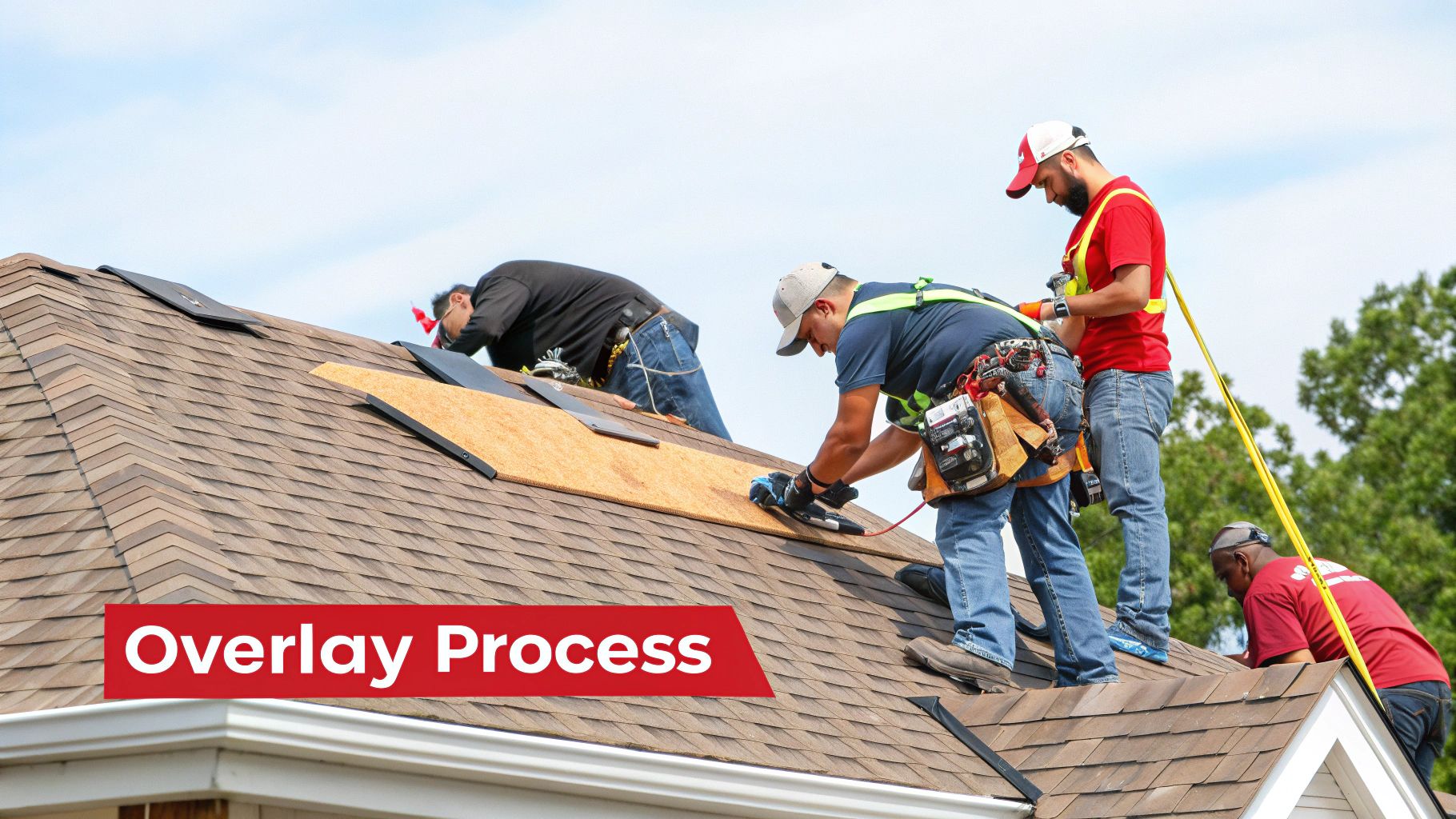
So, you’ve confirmed your roof is a good candidate for an overlay. Great! Knowing what the process actually looks like from the ground up can give you some real peace of mind as the crew gets to work. It’s a lot more involved than just slapping a new layer of shingles over the old one; a professional job is all about careful prep work and technical steps that ensure the final product is both watertight and built to last.
Think of it like this: you wouldn’t paint a car without first sanding and priming the surface. The same principle applies here. A quality roofer meticulously prepares the existing roof to create a smooth, solid foundation for the new layer.
Step 1: Initial Surface Preparation
First things first, we have to prep the old roof. This is probably the most critical stage, as it sets the foundation for the entire project’s success.
The crew will get up there and give the whole surface a thorough cleaning, sweeping away any leaves, dirt, and loose shingle granules. Then they’ll do one last close-up inspection, nailing down or cementing any loose shingles and swapping out any that are missing or too far gone. The goal here is simple: create a flat, stable base for the new shingles.
Step 2: Installing New Flashing and Drip Edge
Once the surface is ready, we turn our attention to the roof’s weakest links. Flashing—those metal strips around chimneys, vents, and skylights—is often the first thing to fail on an older roof.
Even if the old flashing looks decent, a pro will always install brand new, watertight flashing around all the critical spots:
- Chimneys
- Skylights
- Roof vents
- Anywhere a wall meets the roof
They’ll also install a fresh metal drip edge along the eaves. This is a must-do. It makes sure water flows directly into the gutters instead of curling back under the shingles, which is a fast track to rotted fascia boards.
Step 3: Applying Roofing Underlayment
This next step is your roof’s hidden line of defense, and it’s completely non-negotiable. We roll out a high-quality roofing underlayment, usually a modern synthetic felt, over the entire old roof surface. This layer acts as a crucial secondary water barrier, protecting the original roof and the wood decking underneath from any moisture that might sneak past the new shingles.
Cutting corners on underlayment is one of the biggest mistakes you can make on any roofing job. It’s an inexpensive material that provides a massive amount of protection, especially when Arizona’s monsoon season hits hard.
The global roofing underlay market was valued at USD 33.4 billion in 2025 and is expected to reach USD 56.6 billion by 2035, which just goes to show how essential this component is. Residential construction is the biggest driver, proving homeowners and builders alike understand its value. You can see more data on the roofing underlay market on futuremarketinsights.com.
Step 4: Laying the New Shingles
Finally, the moment we’ve been building up to: laying the new shingles. The crew starts at the bottom edge of the roof with what’s called a “starter strip.” This is a special shingle that seals the eaves and gives the roof maximum defense against wind uplift.
From there, they work their way up to the peak, laying the shingles in overlapping courses. It’s not random; they follow a specific pattern to make sure the seams in one row are always covered by the full shingle in the row above. This precise offsetting is what creates a watertight surface that effectively sheds rain.
The last piece of the puzzle is the ridge cap, which covers the very peak of the roof where the two slopes meet. Once that’s on, the job is done. You’re left with a roof that looks brand new and is ready to protect your home for years to come.
When to Choose an Overlay vs. a Full Replacement
Alright, we’ve covered the what and the why. Now comes the big decision: should you opt for a roof overlay or bite the bullet and go for a full tear-off and replacement? This is where you have to weigh the immediate savings against long-term performance.
Think of it this way: an overlay is a strategic, short-term fix for a roof that’s getting on in years but is otherwise healthy. A full replacement, on the other hand, is a long-term investment in your home’s structural integrity. Making the right call now protects your home’s value and gives you peace of mind when those monsoon storms hit.
The Case for a Roof Overlay
A roof overlay can be a fantastic, budget-friendly option, but only under the right circumstances. It’s not a magic fix for every aging roof. If your roof meets a very specific set of criteria, an overlay can be a smart move that saves you a good chunk of money and gets the job done quickly.
An overlay is a solid choice if:
- You only have one layer of shingles on your roof right now. This is the absolute first requirement.
- The underlying roof deck is in great shape. A professional roofer needs to confirm there are no soft spots, sagging areas, or hidden water damage.
- Your existing shingles are mostly flat and intact. A little wear is expected, but you can’t have widespread curling, cracking, or large patches of missing shingles.
Basically, an overlay works best for a roof that’s just old, not failing. It’s like putting a fresh coat of paint on a solid wall, not trying to paint over a crumbling one.
The Case for a Full Replacement
Now, let’s talk about when a full replacement is the only responsible move. If there are any red flags pointing to deeper issues, simply covering them up is a recipe for disaster. It guarantees much bigger, more expensive problems down the road. Our guide on when to replace your roof gets into the nitty-gritty of these warning signs.
A full tear-off is the mandatory choice if:
- Your roof already has two layers of shingles. Arizona building codes are very clear: you can’t add a third.
- An inspection uncovers soft spots, rot, or moisture damage in the sheathing beneath the shingles.
- The existing shingles are heavily damaged, with major curling, bald spots from granule loss, or lots of missing tabs.
A full replacement isn’t just about new shingles. It’s our only chance to get a good look at the bones of your roofing system—the decking and underlayment—and make sure everything is solid. This guarantees the longest possible lifespan and full warranty coverage, making it the smarter investment for the long haul.
Don’t Guess – Get an Expert Opinion
While it’s great to be informed, this isn’t a decision to make from the ground. Getting up on a potentially compromised roof is dangerous, and it takes a trained eye to spot the subtle signs of rot or structural weakness that an amateur might miss.
For homeowners here in Arizona, the only way to know for sure is to have a professional get up there and perform a thorough inspection. The team at AZ Roof Co can give you an honest, expert assessment of your roof’s true condition. We’ll lay out the options clearly and help you decide on the best path forward for your home’s safety and your budget. Give us a call today for a free, no-obligation inspection.
Frequently Asked Questions About Roof Overlays
How much longer will my roof last with an overlay?
An overlay is a life-extender, not a complete reset. Due to the heat trapped between the two layers, the new shingles will age faster than they would on a new roof. A good rule of thumb is to expect an overlaid roof to last about 80% of the lifespan of a fully replaced roof. So, if a new roof is rated for 25 years, an overlay might give you around 20 years.
Can you overlay any type of roof material?
No, this is a critical point. Roof overlays are a solution specifically for asphalt shingle roofs. You cannot install a new layer of asphalt shingles over other materials like wood shakes, metal panels, slate, or clay tiles. The existing surface must be asphalt shingles that are lying relatively flat to provide a stable base.
Will an overlaid roof affect my home’s resale value?
It can. While not necessarily a deal-breaker, a double-layered roof will almost always be flagged during a home inspection. Potential buyers may view it as a temporary fix and factor in the future cost of a full tear-off when making an offer. A full roof replacement, in contrast, is a strong selling point that adds tangible value and peace of mind for buyers.
Does the Arizona climate have a special impact on overlaid roofs?
Yes, absolutely. The intense, year-round heat in Arizona is a major factor. The extra layer traps a significant amount of heat, essentially “baking” the new shingles from underneath. This can accelerate their deterioration, causing them to become brittle, crack, and lose their protective granules much sooner than they would on a properly ventilated, single-layer roof. For this reason, a full replacement is often the superior long-term investment in our climate.