
Choosing a tile roof for your Arizona home is a significant decision, pitting the timeless elegance of clay against the modern versatility of concrete. The clay tile vs concrete tile roof debate comes down to a few key factors: cost, lifespan, aesthetics, and long-term performance under the harsh desert sun. Clay offers unparalleled longevity and color that never fades, while concrete provides a budget-friendly, durable alternative with a wider range of styles.
Understanding these differences is crucial for making an investment that enhances your home's curb appeal and provides lasting protection. This guide will walk you through every critical comparison point to help you choose with confidence.
Key Takeaways at a Glance
- Longevity: Clay tiles can last over 100 years, making them a "lifetime" roof. Concrete tiles have a solid lifespan of 30-50 years.
- Cost: Concrete tiles are significantly more affordable upfront, both in material and installation costs. Clay is a premium material with a higher initial investment.
- Color Durability: Clay's color is baked through and will not fade. Concrete's surface color can fade over time due to intense UV exposure.
- Durability: Concrete is more resistant to impact from hail or debris. Clay is more brittle and can crack under direct impact.
- Aesthetics: Clay offers authentic, classic Spanish and Mediterranean styles. Concrete provides more versatility with flat profiles for modern designs and a wider color palette.
- Weight: Both are heavy, but concrete is often heavier, meaning your home's structure must be professionally assessed to ensure it can support the load.
Choosing Your Arizona Roof: Clay vs. Concrete
Picking the right material for your roof is easily one of the most important decisions you'll make as an Arizona homeowner. Between the relentless sun, the powerful monsoon storms, and the wild temperature shifts, you need a roof that’s more than just a pretty face—it has to be tough.
Clay and concrete tiles are the two heavy hitters in this arena. Each one brings its own unique strengths and weaknesses to the table, and both are well-suited for our tough climate. Let's break down the factors that matter most so you can make a choice you feel confident about.
Clay vs. Concrete Roof Tiles At a Glance
Here’s a quick table to see how these two popular roofing materials stack up against each other side-by-side.
| Feature | Clay Tiles | Concrete Tiles |
|---|---|---|
| Average Lifespan | 100+ years | 30-50 years |
| Initial Cost | Higher | Lower |
| Weight | Heavy (600-1,100 lbs/sq) | Very Heavy (800-1,200 lbs/sq) |
| Color Fade | No (Color is baked in) | Yes (Surface pigment can fade) |
| Durability | Brittle, can crack under impact | More resistant to impact |
| Best For | Authentic Spanish & Mediterranean styles | Budget-conscious homeowners, modern designs |
As you can see, the right choice isn't always obvious and often depends on your specific priorities for your home.
The core decision comes down to this: are you investing in the timeless character and permanent color of clay, or do you prefer the economic sense and design versatility of concrete? For many homeowners in Arizona, this choice directly shapes their home's curb appeal and its long-term value.
This chart gives you a great visual summary of the key trade-offs you'll be making when it comes to cost, lifespan, and how each material handles our intense Arizona heat.
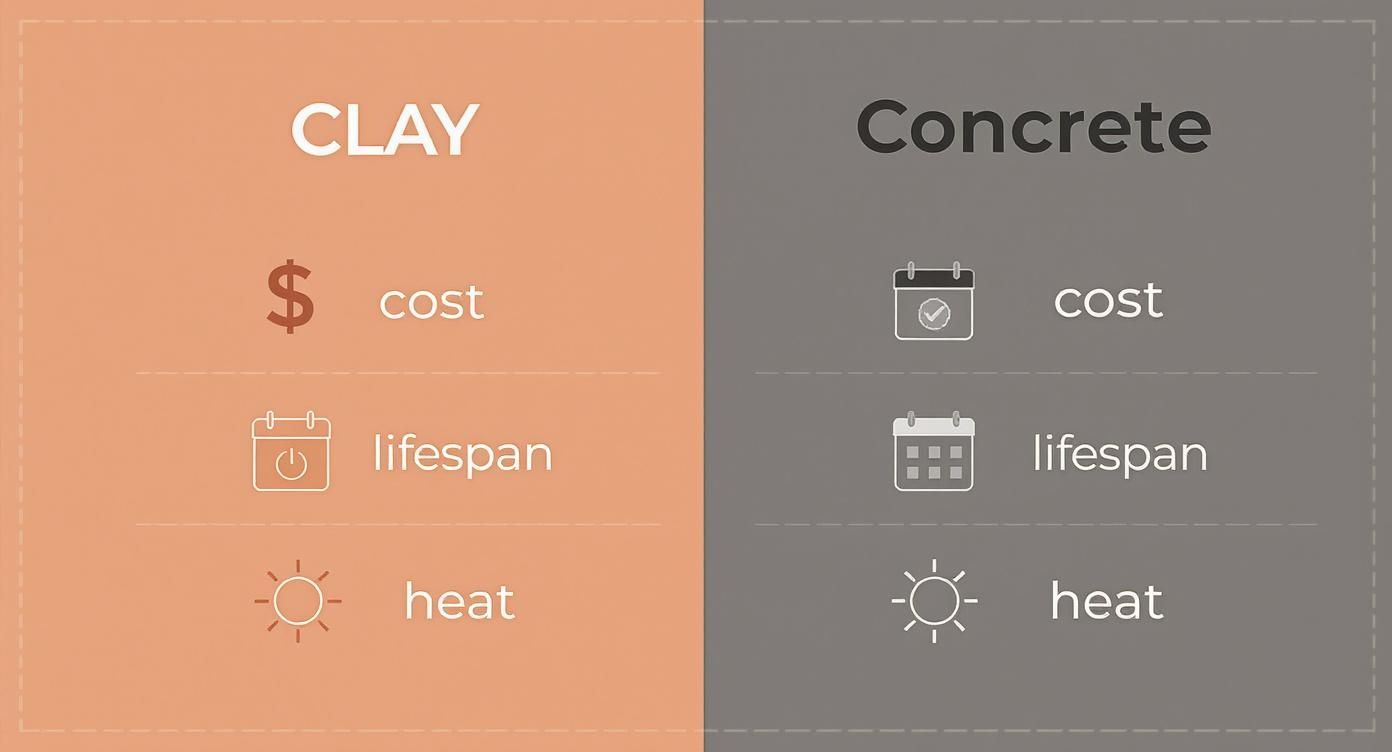
As the comparison shows, clay is the undisputed champion of longevity, while concrete provides a much more accessible entry price. The good news is that both perform exceptionally well at keeping the sun's heat at bay.
Getting to the Real Cost of a Tile Roof
When you're pricing out a new roof, the initial quote is just the starting line. To really grasp the financial side of choosing between clay and concrete tiles, you have to look at the total cost of ownership. This means factoring in everything from the day the crew shows up to long-term maintenance and how the roof impacts your home's value down the road.
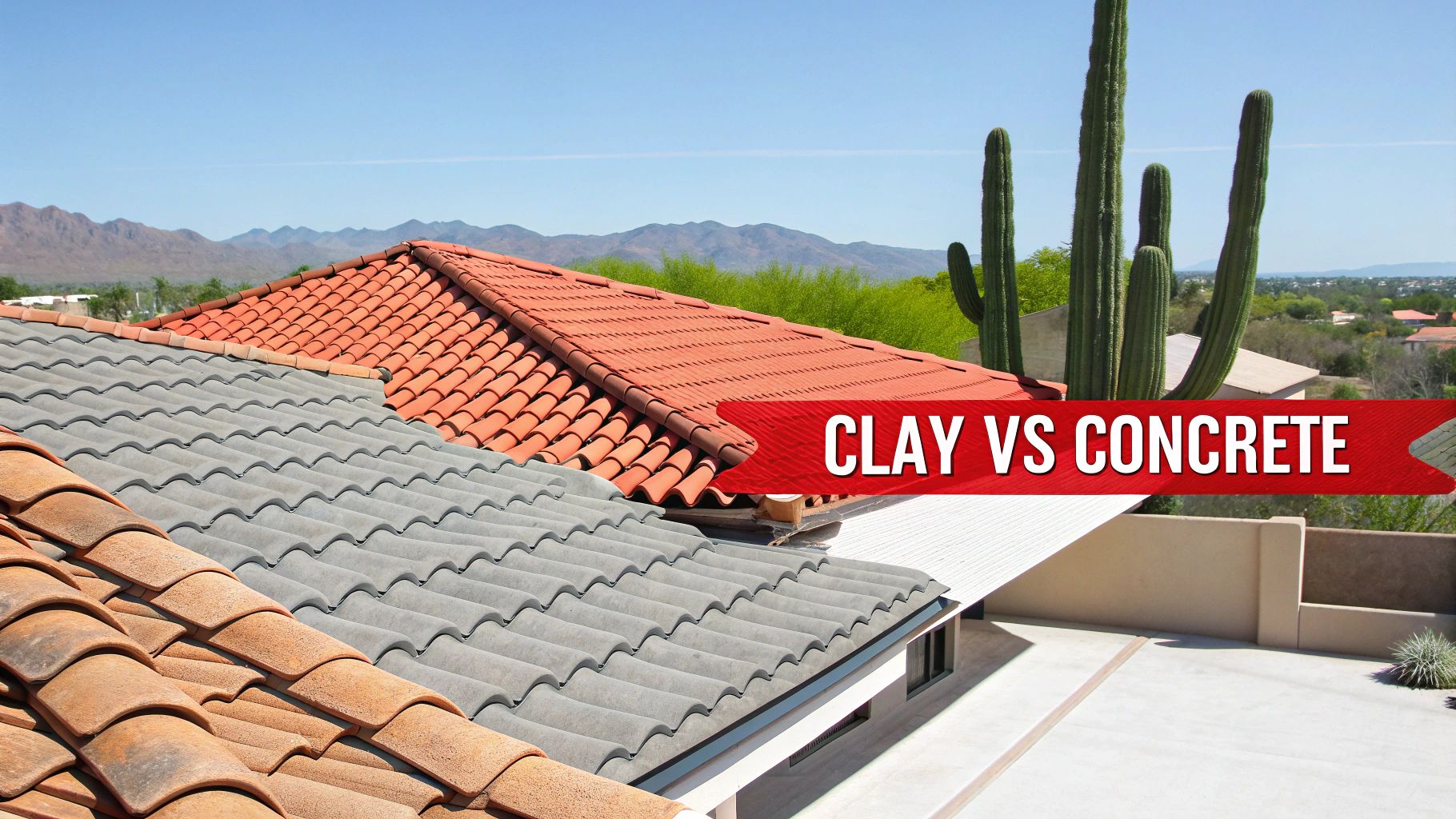
This breakdown compares the upfront spend against the long-term value you get from clay and concrete in the unique Arizona climate. Clay tiles definitely ask for a higher investment at the start, but their incredible lifespan and low-maintenance nature can mean serious savings over the decades.
Upfront Material and Labor Costs
The most immediate difference you'll see is in the price of the tiles themselves. Clay is a premium material; it's made from natural clay fired at extremely high temperatures, a more involved process. Concrete tiles, on the other hand, are a mix of sand, cement, and water, making them cheaper to produce—a saving that gets passed on to you.
You can see this clearly in the numbers. Clay tiles usually run $700 to $1,000 per 100 square feet, while concrete is a more budget-friendly $400 to $900 per 100 square feet. Weight is another big factor; concrete tiles can be up to 40% heavier than their clay counterparts, which has a ripple effect on structural needs and installation labor.
That extra weight translates directly into labor costs. It simply takes more time and muscle to haul and install heavy concrete tiles, which can drive up the man-hours on your bill. Clay tiles are lighter, but they're also more brittle. Installers have to handle them with extra care to avoid breakage, which can also influence the project's timeline and cost. For a deeper dive into how all these elements come together, take a look at our comprehensive guide to understanding roofing costs.
Factoring in Structural Reinforcement
Before a single tile goes on, you have to be certain your home's framing can handle the weight. This is a critical—and often overlooked—expense that can pop up, especially with concrete.
- Structural Check: You may need a structural engineer to inspect your roof's framing to confirm it can support the load. Concrete can weigh up to 1,200 pounds per square (a 10×10 foot area).
- Beefing It Up: If the existing structure isn't strong enough, you'll need reinforcement. This could mean strengthening trusses or adding support beams, potentially adding thousands to your project total before the roofing even begins.
- The Clay Advantage: Clay is still a heavy material, but at 600-1,100 pounds per square, it's less likely to demand major structural work, which could save you a significant amount on those initial prep costs.
The Long-Term Financial Picture
A roof is an investment that should last for decades, so what it costs over its entire life is just as important as the day-one price tag. This is where the cost story starts to flip.
While concrete has a lower price of entry, clay often delivers far better long-term value. With a lifespan that can exceed 100+ years, a clay roof might be the last roof you ever have to buy. A concrete roof, in contrast, will typically need replacement in 30-50 years.
That incredible longevity adds up to huge savings over the life of your home. The color in a clay tile is baked all the way through, so it never fades. This preserves your home's curb appeal and value without ever needing to be repainted. Concrete color is only a surface coating, which can fade and wear away under the harsh Arizona sun, eventually requiring a re-coating to look its best.
Repairs are another point of difference. Clay tiles are more likely to crack if hit by something heavy, but swapping out a single tile is a simple fix. Concrete is tougher against impact but can still break, and finding a replacement tile that matches the color of a faded, 15-year-old roof can be a real headache. In the end, your choice comes down to balancing your immediate budget against long-term performance and peace of mind.
Durability in the Arizona Climate: A Head-to-Head Comparison
When you're choosing a roof in Arizona, durability isn't just a nice-to-have; it's everything. Our climate is unforgiving. We’re talking about relentless, triple-digit heat, the sudden shock of a monsoon storm dropping temperatures in minutes, and some of the most intense UV radiation in the country. How a roof tile stands up to that daily assault is what really matters.
This image of a classic Arizona home shows you exactly the kind of environment these materials have to survive.
The clean, uniform look of this roof is a testament to how a well-installed tile system can not only protect a home but also keep it looking sharp, year after year, under the desert sun.
Lifespan Showdown: Clay vs. Concrete
Right out of the gate, the biggest durability difference is longevity. It’s not even close. Clay tiles are in their own league, often called a "lifetime" or even "multi-generational" roof. When installed correctly and properly maintained, a high-quality clay tile roof can easily last 100 years or more.
Concrete tiles are tough, but they have a finite lifespan, typically around 30 to 50 years. It's a solid run, for sure, but as a manufactured product, it will eventually break down under the elements. For anyone planning to stay in their home for the long haul, that gap is a huge consideration. You can see how these numbers compare to other materials in our guide to how long a roof lasts in Arizona.
Resisting the Sun and Storms
Arizona's climate is a one-two punch: the constant beating from the sun and the abrupt violence of monsoon storms.
- UV Fading: Clay's color is baked all the way through the tile, a process that makes it naturally colorfast. It simply won't fade. Concrete tiles, on the other hand, get their color from a surface pigment or a slurry coat, which will inevitably fade under our intense sun, changing your home's appearance over the decades.
- Thermal Shock: Picture a 110°F day instantly cooled by a monsoon downpour. That rapid temperature swing forces roofing materials to expand and contract violently. Clay's natural makeup handles this stress exceptionally well. Concrete is also quite resistant, but over many seasons, it can be prone to developing hairline cracks from the constant stress.
- Water Absorption: Clay's low water absorption rate of around 6% is another key to its longevity. It means less opportunity for mold or mildew to take hold during our humid monsoon season. You can find historic examples of clay tile roofs lasting for centuries, a fact detailed in this NPS preservation brief.
The real story is in how they age. Clay develops a rich, natural patina, gaining character over a century. Concrete, on the other hand, tends to fade and look weathered, eventually showing its age and signaling that a replacement is on the horizon.
Impact Resistance and Brittleness
This is where the tables turn. While clay is a champion of weathering, its biggest weakness is impact. Clay tiles are more brittle and can crack if hit by large tree branches in a storm or if someone walks on them improperly.
Concrete, however, has superior impact resistance. Its denser composition makes it far less likely to shatter from hail or other debris. This gives it a real advantage for homes with large, overhanging trees or for roofs that see occasional foot traffic from HVAC or satellite technicians.
- Clay Tile: More fragile and at higher risk of cracking from direct impacts. It's an excellent choice where that risk is low.
- Concrete Tile: Far more robust against physical damage, giving it a clear edge in impact durability.
Ultimately, your choice depends on what you're defending against. If you want unmatched longevity and a roof that will laugh at the sun for a century, clay is the undisputed winner. But if your main concern is fending off physical impacts while still getting decades of solid performance, concrete offers a more resilient solution.
Heat Performance and Energy Efficiency
In Arizona, your roof isn't just a cover—it's your home's first line of defense against the brutal sun. How well it manages heat directly translates to your comfort and your cooling bills. When we talk about clay tile vs concrete tile roof systems, the conversation goes beyond the material itself; it’s about how the entire system works to keep your home from feeling like an oven.
Both clay and concrete tiles have a high thermal mass, which is a huge benefit here. They are dense materials that absorb a lot of heat during the day and release it slowly overnight. This process slows down the heat transfer into your attic, giving your AC a much-needed break during peak afternoon hours.
The Real MVP: The Air Gap
Here’s something many homeowners don't realize: one of the biggest cooling features of a tile roof isn't the tile, but the space underneath it. The curved profile of both clay and concrete tiles creates a natural air channel between the tile and the roof deck.
This gap is a game-changer. It allows for constant airflow, creating a thermal barrier. As the sun beats down, the air in that channel heats up, rises, and vents out near the roof's peak, pulling in cooler air from below. This simple convection cycle is incredibly effective at whisking away heat before it ever reaches your attic.
Solar Reflectance and Keeping Cool for the Long Haul
Beyond the physical setup, the color of your roof is critical. Lighter colors have higher solar reflectance, meaning they bounce more sunlight back into the atmosphere instead of absorbing it as heat. Both clay and concrete come in beautiful, light shades perfect for our climate.
But here’s where they start to differ, especially over time:
- Clay Tiles: The color in a clay tile is baked all the way through during firing. A light-colored clay tile is going to stay that color, maintaining its reflectivity for its entire lifespan. No fading.
- Concrete Tiles: The color on concrete tiles is usually a surface-level pigment. After decades of relentless Arizona UV exposure, this pigment can fade. As it fades, its solar reflectance decreases, and the roof gradually becomes less efficient at keeping your home cool.
While both materials perform well out of the gate, clay's built-in colorfastness gives it a serious long-term advantage in maintaining energy efficiency. A roof that reflects the sun just as well in year 30 as it did in year one will deliver more predictable and consistent energy savings.
This is a crucial point to consider. The slightly higher initial cost for clay can easily be recouped through lower cooling bills over the full life of your roof. For a deeper dive, check out our guide on the top efficient roofing options to lower your energy bills.
Which Tile Gives You the Edge on Savings?
If we're looking purely at thermal performance, the difference between clay and concrete is subtle but meaningful. Clay's natural composition and the high-temperature firing process make it slightly less dense than concrete, which helps it slow down heat transfer just a bit more effectively.
To put it in perspective, here’s a look at some key performance metrics that directly impact your energy savings here in Arizona.
Performance Metrics for Arizona Roofing
| Performance Metric | Clay Tile | Concrete Tile |
|---|---|---|
| Thermal Mass | High | High |
| Airflow (Ventilation) | Excellent (due to shape) | Excellent (due to shape) |
| Long-Term Reflectivity | Excellent (color is permanent) | Good (can fade over time) |
| Heat Transfer Rate | Slightly Lower | Slightly Higher |
Both are fantastic choices for an energy-efficient roof in our climate. But for homeowners focused on maximizing long-term savings and performance, clay's superior color retention and slightly better insulating properties give it a small but undeniable edge. Of course, a great roof is just one piece of the puzzle; it works best when combined with other energy efficient home upgrades.
Aesthetic Appeal and Architectural Styles
Beyond the practical stuff like cost and durability, your roof is a huge part of your home's personality. When you're deciding between clay and concrete tile, you're making a choice that defines your home's curb appeal for decades, especially here in Arizona where Spanish, Mediterranean, and Southwestern designs are everywhere.
https://www.youtube.com/embed/hplB8qenlPE
The material you pick can either perfectly lock in with your home’s architecture or feel just a little bit off. It's a big decision that shapes the entire look and feel of your property.
The Timeless Authenticity of Clay Tiles
There’s an authentic, classic beauty to clay tiles that’s just hard to copy. That signature warm terra-cotta color and the traditional curved "S" or barrel shapes are the heart and soul of Spanish and Mediterranean homes. The color isn't just a surface coating; it's baked right into the tile itself during the firing process.
What does that mean for you? A clay tile roof will never fade. The rich color you see on day one is the same color you'll have 50 or even 100 years from now. Over the years, it develops a beautiful, natural patina that only adds to its character. This makes clay the go-to for anyone who wants historical accuracy and a look that feels both premium and permanent.
This image shows just how a well-chosen tile roof can elevate a home's entire architectural presence.
Notice how the consistent, warm tones of the tiles pull the whole design together, giving it that cohesive, high-end finish.
The Versatile Nature of Concrete Tiles
If clay's strength is authenticity, concrete's is versatility. Because it's a manufactured material, concrete can be shaped into almost any profile you can imagine. You can find it in the classic barrel styles that do a pretty good job of mimicking clay, but you can also get it in flat, sleek profiles that are perfect for modern or contemporary homes—a look that’s tough to achieve with traditional clay.
The color in concrete tiles comes from pigments mixed into the concrete or applied as a surface slurry. This process opens up a much wider color palette, from the expected earthy reds to cool grays, deep charcoals, and even blues. This adaptability makes concrete a fantastic design tool, giving homeowners and builders a ton of options.
Concrete roof tiles actually came about as a more affordable alternative to clay back in the late 19th century, and they really took off in the early 20th century. They're typically made from a tough mix of Portland cement, sand, and pigments, all extruded under intense pressure. You can read more about the history of roofing materials on laroofingmaterials.com.
The Fading Factor: A Critical Arizona Consideration
Here’s the biggest aesthetic catch with concrete, especially under the relentless Arizona sun: the color fades. Since the pigments are on the surface, decades of intense UV exposure will inevitably cause them to lighten up. A roof that was a striking deep charcoal when it was installed might look like a pale, washed-out gray 15 years later.
This gradual fading not only affects your long-term curb appeal but can also make it a headache to find matching tiles if you need a repair down the road.
So, if permanent, unchanging color and a truly authentic look are at the top of your list, clay is the undisputed winner. But if you're looking for design flexibility for a more modern style or need to keep a closer eye on the budget, concrete is a very attractive and practical choice.
Which Tile Roof Is Right for Your Home?
So, how do you make the final call in the clay tile vs. concrete tile roof debate? It really boils down to your priorities. Are you focused on budget, long-term performance, or achieving a specific architectural look? Let's walk through the decision-making process to find the perfect fit for your property.
This image shows just how much a tile roof can define a home's character, whether you're aiming for a classic or contemporary feel.

The key takeaway is that the right tile should feel like a natural extension of your home's design, not an afterthought.
Choose Clay Tile If…
Think of a clay tile roof as an investment in pure authenticity and incredible longevity. This is the choice for homeowners who see their roof as a permanent feature and are willing to invest in a material that could genuinely outlast the house itself.
You should lean toward clay if these points hit home:
- Architectural Authenticity is a Must: You own a Spanish, Mediterranean, or Southwestern-style home, and anything less than historically accurate, classic clay just won't do.
- Longevity is Your Main Goal: You're after a true "forever roof." The idea of a 100+ year lifespan is exactly what you're looking for, and you're comfortable with the higher initial investment to get there.
- Color That Lasts is Non-Negotiable: You can't stand the thought of a faded roof. You want the deep, rich color that's baked directly into the clay, ensuring it won't fade under the relentless Arizona sun.
- You're Building a High-End Home: Your project is all about maximizing long-term value and curb appeal. You need a premium material that immediately signals quality and craftsmanship.
Choose Concrete Tile If…
Concrete tile hits that sweet spot between durability, style, and cost. It's the practical, versatile workhorse of the tile roofing world, delivering serious protection and a wide range of looks without the premium price of clay.
Concrete is probably the smarter choice for your project if:
- Budget is a Top Concern: You love the tile look but need a more wallet-friendly option. Concrete delivers that classic profile and durability with significant upfront savings.
- You're Going for a Modern Look: Your home's design calls for a crisp, flat tile profile. This is a look that concrete tiles nail perfectly.
- Impact Resistance is a Priority: With large trees overhead or in areas that might see hail, concrete's tougher composition gives you an extra layer of peace of mind.
- You Need More Color Options: Your design vision calls for a specific shade of charcoal, a cool gray, or another color that you just can't find in traditional terracotta clay.
Ultimately, your decision is a trade-off. Clay offers timeless character and a century of performance, while concrete provides modern versatility and immediate financial accessibility. Both are excellent choices for Arizona's climate; the right one depends entirely on your specific goals.
Remember, no matter which material you pick, the installation quality is what truly protects your investment. A poorly installed tile roof—clay or concrete—is destined to fail. Always do your homework when hiring a contractor. Make sure they are licensed, bonded, and insured, with a long track record of installing tile roofs right here in Arizona. A great material in the hands of an expert is the only way to guarantee a roof that looks fantastic and lasts for decades.
Frequently Asked Questions (FAQs)
Will my house need extra support for a tile roof?
Almost certainly, yes. Tile roofs are significantly heavier than common asphalt shingle roofs. While shingles weigh around 200-400 pounds per square (a 10×10 foot area), tile roofs start at 600 pounds and can exceed 1,200 pounds per square. Before installation, it is essential to have a structural engineer or a qualified roofing contractor inspect your home's framing to ensure it can support the additional load. Reinforcements may be necessary, adding to the overall project cost.
How much does roof color really matter for my energy bills?
In a hot climate like Arizona's, it matters a great deal. Lighter-colored tiles have higher solar reflectivity, meaning they bounce more of the sun's heat back into the atmosphere instead of absorbing it. This reduces heat transfer into your attic, lessening the strain on your air conditioning system and lowering your energy bills. While both clay and concrete offer light colors, clay maintains its reflectivity for life because its color is baked through, whereas concrete's surface color can fade over decades, slightly reducing its efficiency.
Is a clay or concrete tile roof better in a hail storm?
Concrete has the edge when it comes to impact resistance. Due to its denser composition, concrete is less likely to crack or shatter from hail or falling debris compared to the more brittle nature of clay. If your home is in an area prone to severe storms with hail or has large overhanging trees, concrete's superior durability against impact makes it a more resilient choice.
Can I walk on my tile roof?
It is strongly advised that you do not walk on your tile roof. Both clay and concrete tiles can crack under the concentrated weight of a footstep, especially if not walked on correctly. A small, unnoticed crack can lead to significant water damage to the underlayment and your home's interior. For any maintenance that requires roof access, such as cleaning gutters or adjusting a satellite dish, always hire a licensed and insured roofing professional who has the proper equipment and experience to navigate the roof safely without causing damage.
Does a tile roof increase my home's value?
Yes, a high-quality tile roof, whether clay or concrete, can significantly increase your home's value and curb appeal. Tile roofs are widely recognized for their durability, longevity, and aesthetic beauty, especially in regions like Arizona where they complement popular architectural styles. A clay roof, with its 100+ year lifespan, can be a particularly strong selling point, signaling a long-term, low-maintenance investment for potential buyers.