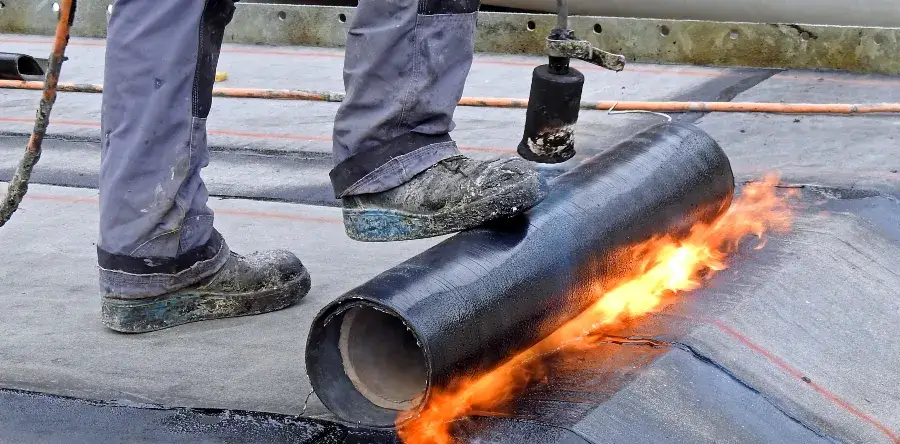

Choosing the best underlayment for a metal roof is a critical decision that ensures your investment lasts for decades. While the metal panels provide the primary shield against the elements, it's the underlayment—a hidden layer of protection—that manages condensation, prevents leaks, and ultimately protects the structural integrity of your home. The top choice for most residential applications is a high-temperature synthetic underlayment, which offers superior durability and heat resistance compared to traditional asphalt felt.
This guide will walk you through everything you need to know to select the right material, ensuring your roof performs flawlessly from day one.
Key Takeaways
- High-Temperature Synthetic is the Gold Standard: For most residential metal roofs, especially in hot climates, a high-temperature synthetic underlayment is the best choice due to its exceptional durability, heat tolerance, and longevity.
- Underlayment is Non-Negotiable: It serves as a crucial secondary water barrier, managing condensation that naturally forms under metal panels and protecting your roof deck from moisture damage, rot, and mold.
- Material Matters: The three main types are asphalt-saturated felt, synthetic underlayment, and self-adhering membranes. While felt is cheap, it degrades quickly under the high heat of a metal roof. Synthetics offer a balanced, high-performance solution, and self-adhering membranes provide the ultimate waterproof seal for low-slope or high-risk areas.
- Installation is Critical: Proper installation, including correct overlaps and the use of cap fasteners, is just as important as the material itself. Mistakes during this stage can lead to premature failure and costly repairs.
Your Guide to Selecting the Right Metal Roof Underlayment
Putting a metal roof on your home is one of the smartest, most durable investments you can make. But its real-world, long-term performance hinges on a crucial layer you'll never even see. This hidden barrier is the underlayment, and it's the unsung hero that prevents condensation and moisture from ever reaching—and ruining—your roof deck.
Without the right underlayment, even the toughest, highest-quality metal can't fully shield your home from the threats of condensation and sneaky leaks.
Before we jump into the specifics for metal roofing, it helps to have a solid grasp of what this component does for any roof. For a great overview of the fundamentals, check out this essential guide to roof underlayment for homeowners. It’ll give you a great foundation for the detailed comparisons we're about to get into.
Choosing the right underlayment is every bit as crucial as selecting the metal panels themselves. It’s your secondary line of defense, working 24/7 to keep your home dry and secure, especially under the intense thermal stress a metal roof has to endure.
Understanding Your Options
While I almost always recommend synthetic underlayment for metal roofs, it’s important to understand all the materials out there. Each one has its place, and taking a one-size-fits-all approach can lead to some expensive headaches down the line. Let’s clear up the differences so you know exactly which option delivers the best protection and value for your home and climate.
| Underlayment Type | Best For | Key Characteristic |
|---|---|---|
| Synthetic Underlayment | Most residential metal roofs | High heat tolerance and tear resistance |
| Self-Adhering Membrane | Low-slope roofs, high-risk areas | Creates a waterproof, airtight seal |
| Asphalt-Saturated Felt | Budget-focused, uninsulated structures | Traditional, low-cost water resistance |
Why Your Choice of Underlayment is So Critical for a Metal Roof
When you invest in a metal roof, you're buying into decades of durability. While those beautiful metal panels are what you see, the underlayment hiding beneath them is doing some of the heaviest lifting. Think of it as your roof's last line of defense—a secondary water barrier that protects your entire home from moisture damage.
This hidden layer has a few critical jobs. Its main function is to handle the condensation that inevitably forms on the underside of metal panels as temperatures shift from day to night. Without a top-notch barrier, that moisture would drip straight onto your roof deck, inviting rot, mold, and serious structural problems down the road.
The underlayment also earns its keep during the installation process. If a sudden monsoon or unexpected delay pauses the job, a solid underlayment keeps your home's wood sheathing protected from the elements until the metal panels are finally locked in place.
Metal Roofs Have Unique Demands
A metal roofing system isn't like a standard shingle roof, and it brings a unique set of challenges that basic asphalt felt just can't handle. The two biggest culprits are heat and movement.
- Extreme Heat Transfer: Metal gets hot. Really hot. In the Arizona sun, surface temperatures can easily soar past 160°F. This intense, radiating heat can literally cook lesser underlayments, causing them to break down, melt, or become brittle.
- Expansion and Contraction: Metal is constantly moving, expanding in the heat of the day and contracting as it cools overnight. This constant thermal movement creates stress and friction that can tear, wrinkle, or simply wear out an underlayment that isn't built for that kind of punishment.
A cheap underlayment that can't take the heat or the movement is a failure waiting to happen. It creates hidden weak points under your roof. That’s why choosing a high-temperature synthetic underlayment isn't just a good idea for a metal roof—it's essential to get the full lifespan you paid for.
A Barrier Against Chemical Reactions
Here’s something many people don’t consider: the underlayment also prevents chemical reactions. Certain types of pressure-treated wood decking contain chemicals that can slowly corrode metal panels from underneath. The underlayment acts as a neutral, stable buffer, making sure the metal's integrity isn't compromised from below.
The roofing industry has certainly taken notice. The global market for roofing underlayment was valued at around USD 25 billion back in 2020 and has been growing ever since. While old-school asphalt-saturated felt still has a place because of its low cost, high-performance synthetics are quickly becoming the gold standard for metal roofs, especially in a demanding climate like ours. You can dig into more market trends about roofing underlayments at GM Insights.
Getting familiar with the specific needs of a metal roof system is the first step. For a complete overview, it's worth taking a look at the key benefits and drawbacks of metal roofing. This careful selection becomes even more important if you're thinking about future upgrades, as the right foundation is one of the essential roof requirements for solar panels on metal roofs. In the end, the underlayment you choose is directly tied to your roof’s strength, longevity, and overall performance.
A Head-to-Head Look at the Top 3 Metal Roof Underlayments
Choosing the right underlayment isn't just a minor detail; it's the hidden workhorse of your entire metal roofing system. This layer is your roof's last line of defense, and your choice will determine how well it handles moisture, stands up to brutal Arizona heat, and ultimately, how long it lasts. Let's break down the three main players in the game: old-school asphalt-saturated felt, modern synthetic underlayment, and the premium option, self-adhering membranes.
Each one brings a different mix of performance, cost, and durability to the table. Knowing where they shine—and where they fall short—is the key to protecting your investment for the long haul.
Asphalt-Saturated Felt: The Traditional Baseline
For generations, asphalt-saturated felt (you might know it as "tar paper") was the only game in town. It’s made by soaking a cellulose or fiberglass mat in asphalt, creating a basic water-resistant barrier. You’ll typically see it in two weights, #15 and the thicker, tougher #30.
While the low price tag is tempting, felt is a poor match for a metal roof, especially in our climate. Its biggest problem is a severe weakness to high temperatures. The heat radiating off metal panels can literally bake the asphalt in the felt, causing it to dry out, turn brittle, and crack. Once that happens, its water-shedding ability is shot.
On top of that, it tears easily during installation and can wrinkle up if it gets wet before the roof is finished, which creates an uneven deck for your new metal panels.
Under the extreme heat of a metal roof, asphalt-saturated felt simply breaks down too quickly. The constant expansion and contraction of the metal can also scrub and tear at the felt's surface, creating weak spots that defeat the whole purpose of a secondary water barrier.
Synthetic Underlayment: The Modern Standard
Synthetic underlayment is where roofing technology really took a leap forward. Made from materials like woven polypropylene, these underlayments are engineered from the ground up to be lightweight, incredibly strong, and completely waterproof. Unlike felt, they don't absorb a drop of moisture, so they stay flat and stable even if it rains mid-installation.
The difference in tear strength is night and day. Installers can walk on it confidently, and it grips fasteners tightly, which helps prevent blow-offs in a monsoon storm. This sheer toughness is a huge reason why it has become the go-to for the best underlayment for a metal roof.
But for a metal roof in a hot climate, this is the most critical feature: its high-temperature tolerance. Quality synthetics are built to handle temperatures well over 240°F, meaning they won’t break a sweat, even under the hottest metal panels in the middle of July.
Self-Adhering Membranes: The Ultimate Seal
If you’re looking for the highest level of protection available, this is it. Self-adhering membranes, often called "peel-and-stick" or "ice and water shield," have a sticky, rubberized asphalt adhesive on the back. It bonds directly to the roof deck, creating a single, seamless, and totally waterproof seal.
That aggressive adhesive delivers a game-changing benefit: it forms a watertight gasket around every single fastener driven through it. This self-sealing magic makes it nearly impossible for water to sneak in, whether from wind-driven rain or backed-up gutters. It's the standard for low-slope roofs and is often required by code in a roof's most vulnerable spots—the eaves, valleys, and around any pipes or vents.
While its performance is second to none, it comes with a much higher price tag and demands a more careful, meticulous installation. For a whole-roof application, it's the premium pick for anyone who wants absolute peace of mind.
This push toward higher-performance materials is an industry-wide trend. Market analyses show the roofing underlayment market is expected to climb to USD 51.5 billion by 2035, largely driven by the popularity of durable, long-lasting systems like metal roofing. You can read more about the growth of the roofing underlayment market at Future Market Insights.
Underlayment Showdown: How They Stack Up
To really see the differences, let's put these three options side-by-side. The right choice often comes down to weighing these key performance factors against your budget and long-term goals.
Here's a detailed comparison of the three primary underlayment types across the performance metrics that matter most for a metal roofing system.
| Feature | Asphalt-Saturated Felt | Synthetic Underlayment | Self-Adhering (Peel-and-Stick) Membrane |
|---|---|---|---|
| Heat Tolerance | Poor; can dry out and crack under metal. | Excellent; engineered for high heat. | Excellent; specially formulated adhesive. |
| Tear Strength | Low; easily damaged during install. | Very High; durable and safe for installers. | High; reinforced for stability and durability. |
| Moisture Resistance | Good; but can absorb water and wrinkle. | Excellent; completely non-absorbent. | Superior; creates a continuous waterproof seal. |
| Longevity | 10-20 years; degrades quickly with heat. | 30-50+ years; built to match the metal. | 40-50+ years; creates a long-lasting bond. |
| Installer Safety | Slippery when wet or dusty. | Good; most have a non-slip surface. | Good; but the adhesive can be messy. |
| Cost | $ (Low) | $$ (Moderate) | $$$ (High) |
When you lay it all out, it becomes clear. While asphalt felt saves a few bucks upfront, its poor performance makes it a risky choice for a lifetime investment like a metal roof. Synthetic underlayment hits the sweet spot, offering a tough, reliable, and cost-effective solution for most homes. And for those who want the absolute best, self-adhering membranes deliver unbeatable, sealed-tight protection.
Underlayment Considerations for High-Heat Climates
Here in Arizona, the sun doesn't just warm things up—it bakes them. Every part of your house is under constant assault, and your roof bears the brunt of it. When you install a metal roof, which can easily hit surface temperatures of 160°F or more, the underlayment underneath is trapped in an oven-like environment, day in and day out. This isn't a small detail; it's the very thing that makes choosing the best underlayment for a metal roof a whole different ballgame here.
The punishing heat and intense UV radiation in our arid climate will absolutely shred the wrong material. Take traditional asphalt felt, for instance. It just can't take the thermal stress. Underneath a hot metal roof, it dries out, gets brittle, and cracks, completely failing at its one job: being a reliable secondary water barrier.
Why High-Temperature Synthetics Are Non-Negotiable
For any homeowner in a high-heat region, a high-temperature synthetic underlayment isn't just a smart upgrade—it's essential. These materials are specifically engineered to stay stable and do their job at temperatures that would make older products fail spectacularly. They’re built to handle the constant expansion and contraction of the metal panels above them without tearing or losing their integrity.
This kind of resilience sidesteps a whole host of problems you'd see with asphalt-based underlayments:
- No Melting or Degrading: High-temp synthetics won’t melt, get sticky, or release nasty Volatile Organic Compounds (VOCs) when they're getting cooked by the sun.
- Long-Term Durability: They are designed to last for the entire 50+ year lifespan of the metal roof itself. That means your roof deck stays protected for the long haul.
- Moisture Management: Unlike felt, they don't soak up moisture, which stops mold or rot from ever getting a foothold in your roof structure.
This decision-tree infographic is a great way to see how different priorities point toward the right underlayment choice for a specific project.
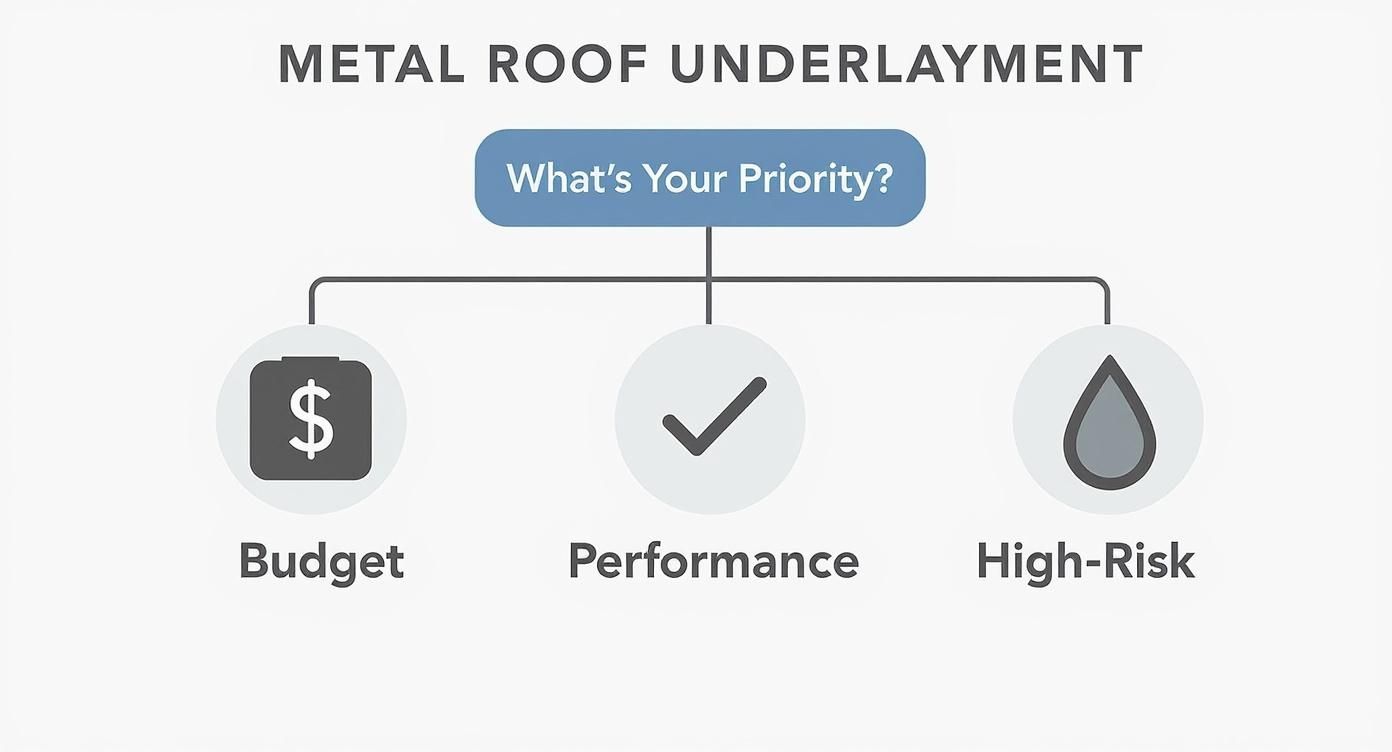
As the graphic makes clear, when peak performance is what you're after, especially in a tough environment like ours, high-temperature synthetic materials are the only way to go.
The Role of Vapor Permeability in Dry Climates
Another thing to think about in an arid climate is vapor permeability, or what we often call "breathability." Having a totally waterproof barrier is critical, of course, but letting trapped water vapor escape is just as important. A breathable synthetic underlayment allows moisture from inside the house (think showers, cooking, and just living) to pass through the roof deck and evaporate. This prevents condensation from building up where it could cause mold.
In Arizona, the main enemy is the sun's heat, but managing moisture from inside your home is still a key part of a healthy roof. A high-temp, breathable synthetic underlayment tackles both challenges, protecting your roof deck from extreme heat above and potential moisture from below.
This dual-functionality is really the cornerstone of a modern, high-performance roofing system.
Energy Efficiency and Underlayment Choice
The right underlayment also plays a subtle but significant role in your home's energy efficiency. By providing a stable, tough secondary barrier, it helps the rest of your roofing system, including the insulation, do its job right. A failing underlayment can let moisture in, which ruins insulation, forces your AC to work overtime, and sends your energy bills through the roof.
Pairing a high-performance underlayment with a reflective metal roof is one of the smartest strategies for keeping an Arizona home cool. If you're serious about maximizing your home's cooling power, you can explore the top efficient roofing options to lower your energy bills to see how all these components work together. Ultimately, choosing an underlayment built for our extreme heat is what guarantees your metal roof will perform like it’s supposed to for decades.
Installation Best Practices for Lasting Protection
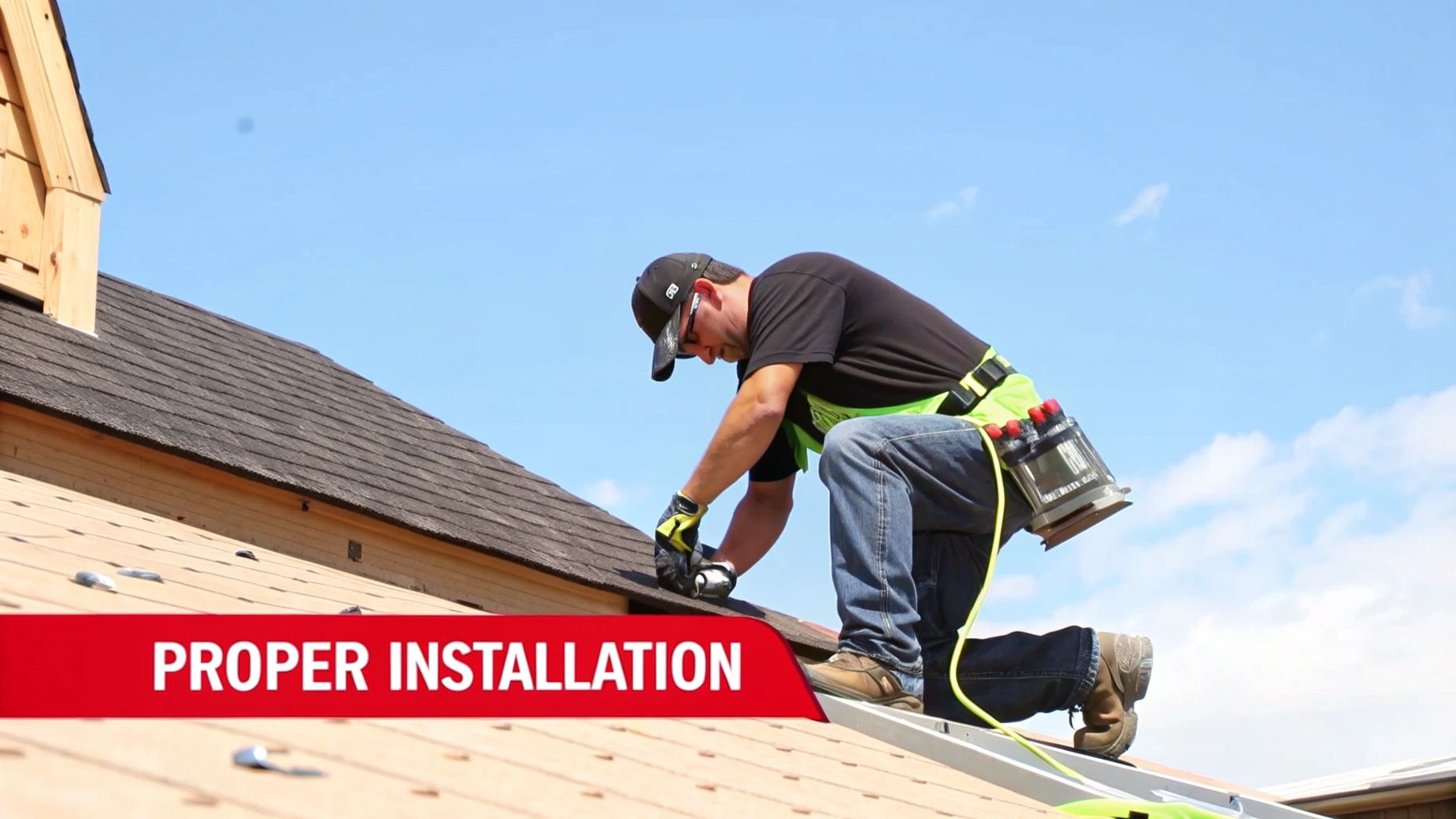
You can pick the absolute best underlayment for your metal roof, but if it's not installed correctly, its performance goes right out the window. Think of it this way: even the most advanced material will fail if it’s applied poorly, turning a smart investment into a future headache. Proper installation is far more than just rolling out a sheet; it’s a meticulous process that creates a seamless, durable secondary water barrier.
From the first sweep of the roof deck to the final seal around a vent pipe, every single detail counts. It's often the small, overlooked steps that lead to the biggest problems down the road—leaks, hidden moisture damage, and a shorter lifespan for your entire roof.
Critical Steps for a Watertight Seal
To get the maximum protection you’re paying for, a few installation steps are simply non-negotiable. Getting these right is what separates a long-lasting, worry-free roof from one that fails prematurely.
- Prepare the Roof Deck: The deck needs to be perfectly clean, dry, and smooth. Any stray debris, old nails, or sharp splinters can easily puncture the new underlayment, creating an instant weak spot.
- Overlap Correctly: Every manufacturer provides specific instructions for overlapping seams, and you have to follow them to the letter. A typical guideline is a 2-inch overlap on horizontal seams and a 6-inch overlap on vertical ones to ensure water flows down and off the roof, not under the layers.
- Use Proper Fasteners: This is a big one for synthetic underlayments. Always use cap fasteners, not just staples. Those wide plastic caps are essential for preventing the material from tearing as the metal panels above expand and contract in the Arizona heat.
One of the most common—and costly—mistakes we see is using the wrong fasteners. Standard roofing staples can rip right through a synthetic underlayment when the metal moves, effectively riddling your roof with hundreds of tiny, potential leak points.
Material-Specific Installation Nuances
You can't install every type of underlayment the same way; each one demands its own technique to perform at its best. A one-size-fits-all approach is a recipe for failure.
Take self-adhering membranes, for example. These require a very careful touch. They have to be rolled out perfectly smooth to avoid wrinkles or trapped air bubbles, either of which will weaken the adhesive bond and compromise the seal. This is especially crucial around tricky areas like chimneys, vents, and valleys where a flawless seal is everything.
The emphasis on quality materials and installation isn't just a contractor's opinion; it's reflected in the industry's growth. The global roofing materials market was valued at an impressive USD 129.62 billion in 2023, and the residential sector makes up more than half of that demand. You can dig deeper into these trends with this detailed roofing materials market analysis.
Avoiding Common Installation Pitfalls
Even seasoned roofers can make mistakes. A frequent error is failing to properly seal around penetrations like pipes and vents, which is like leaving a door wide open for water. Every single opening needs to be meticulously flashed and sealed, following best practices for both the underlayment and the metal roofing.
Another common pitfall is improper layering at the roof's edges—the eaves and rakes. If done incorrectly, water can get trapped behind the fascia board, leading to rot over time.
Because these details are so vital, hiring a skilled professional is the best insurance policy for your roof. A truly experienced crew knows the quirks of each material and can anticipate the unique challenges of your roof's design. If you're looking for the right team, our guide on how to choose a roofing contractor can help you find a true expert.
Final Recommendations for Your Metal Roof Project
https://www.youtube.com/embed/WqNv__KKDFE
Choosing the right underlayment for a metal roof can feel like a tough call, but when you break it down by your specific needs, the picture gets a lot clearer. After weighing the performance, durability, and cost of each option, one material really stands out for most jobs.
For the vast majority of homes and commercial buildings, a high-quality, high-temperature synthetic underlayment is your best bet. It delivers the perfect blend of performance and value, easily handling the intense heat that radiates off metal panels. Plus, its exceptional tear resistance and water-shedding capabilities are built to last for decades, making it the top choice for nearly any standard metal roof installation.
When to Consider a Different Approach
Of course, not every roof is "standard." Certain designs and locations call for a more specialized material. The key to a confident decision is matching the underlayment to the unique challenges your roof will face.
Here are a few specific scenarios to think about:
-
Low-Slope Roofs or Coastal Areas: If you have a roof with a very low pitch or live in an area hammered by high winds and driving rain, don't mess around. A full self-adhering membrane system is the only way to go. It creates a completely waterproof, unified seal across the entire roof deck, offering a level of protection against water intrusion that other materials just can't match.
-
Uninsulated Structures on a Tight Budget: Let's be honest, asphalt-saturated felt really only has a place on non-essential structures like sheds, barns, or detached garages. If the budget is your absolute number one priority and you're not worried about decades of performance, its low upfront cost can make sense.
Ultimately, the "best" underlayment is the one that fits your climate, your roof's design, and your long-term goals. Investing in a high-performance synthetic or a self-adhering membrane is more than just an added cost—it's an investment in protecting your roof deck and ensuring your entire metal roof system lasts as long as it's supposed to.
Getting this final detail right is what guarantees your project’s success. Hopefully, this guide has given you the confidence to make the right call, ensuring your new roof delivers lasting protection and total peace of mind.
Frequently Asked Questions
When you're diving into the specifics of a new metal roof, it’s natural to have questions, especially about that all-important layer underneath: the underlayment. Getting this part right is crucial for the long life of your roof, so we've put together answers to the questions we hear most often from homeowners.
Can I install a metal roof directly on the roof deck?
Absolutely not. Installing metal panels directly onto the wood decking is a recipe for disaster. Condensation naturally forms on the underside of metal panels, and without a protective barrier, that moisture will soak into your wood deck, leading to rot, mold, and significant structural damage over time. The underlayment acts as an essential secondary water barrier that protects the integrity of your entire roof system.
How long can synthetic underlayment be exposed to the sun?
This is a great practical question, as construction delays can happen. Most high-quality synthetic underlayments are rated for UV exposure for anywhere from 60 to 180 days. However, this rating varies significantly between brands and product lines. Always check the manufacturer's specific UV exposure limit for the product you are using. Exceeding this limit can cause the material to degrade, compromising its protective qualities before the metal is even installed.
Should I choose a breathable or non-breathable underlayment?
For most residential homes with proper attic ventilation (e.g., soffit and ridge vents), a breathable synthetic underlayment is the ideal choice. It allows water vapor from inside the home (from showers, cooking, etc.) to pass through and escape, preventing moisture from becoming trapped in the roof assembly. Non-breathable underlayments are typically used in specific commercial applications or unventilated spaces where interior moisture is not a concern. Using a non-breathable layer on a poorly ventilated residential roof can trap moisture and lead to mold and rot.
What is the real cost difference between felt and synthetic underlayment?
While asphalt felt has a lower upfront cost per roll, synthetic underlayment provides far greater long-term value. Synthetics are engineered to be more durable, tear-resistant, and can last for 50+ years, matching the lifespan of the metal panels. This durability means you avoid the risk of premature failure and the costly repairs associated with a failing underlayment. It's a one-time investment that ensures peace of mind for decades.