
Choosing the right roofing contractor is one of the most critical decisions a homeowner can make. Your roof is your home's first line of defense against the elements, and entrusting it to the right professional ensures the safety, value, and integrity of your property for decades to come. However, with so many options available, navigating the process can feel overwhelming. This comprehensive guide will walk you through every step, from initial research to signing the final contract, empowering you to hire a reputable, skilled, and trustworthy roofer with confidence.
Key Takeaways
- Credentials are Non-Negotiable: Always verify that a contractor has a valid state license (like the Arizona Registrar of Contractors – ROC) and carries both General Liability insurance and Workers' Compensation insurance. Ask for proof and verify it yourself.
- Local Reputation Matters: Start by asking for referrals from neighbors and friends. Supplement this by checking online reviews on platforms like Google and the Better Business Bureau, looking for patterns of professionalism and quality work in your specific area.
- Get Detailed, Written Estimates: Never accept a verbal quote. A professional estimate should be a detailed, line-by-line document that specifies the full scope of work, material brands, labor costs, and project timeline. Compare at least three estimates.
- Experience Must Match Your Roof: Ensure the contractor has proven experience with your specific roofing material, whether it's asphalt shingles, tile, metal, or a flat roof system. Ask to see a portfolio of recent, similar projects.
- Read the Contract Carefully: Before signing, ensure the contract includes detailed warranty information (both for materials and workmanship), a payment schedule, and a lien waiver clause to protect you from supplier disputes.
Your Game Plan for Finding a Top-Notch Roofer
Let's be honest: hiring a roofer can feel overwhelming. This is a major decision for any homeowner. You’re not just buying a roof; you’re investing in protection for your biggest asset against Arizona’s relentless sun and wild monsoon seasons. Think of this guide as your step-by-step game plan to turn a daunting task into a series of confident, informed choices.
Why You Need a System
You can’t just wing it when hiring a roofer. The U.S. roofing industry is a massive field, projected to hit $59.2 billion in 2024, with over a quarter-million workers. That's a lot of companies out there—some are seasoned pros, others are fly-by-night operations. A systematic approach is your best defense.
Following a clear process allows you to compare contractors apples-to-apples. Instead of getting swayed by a smooth sales pitch or a surprisingly low bid, you'll be evaluating everyone on the same critical points:
- Verified Credentials: Are they legally allowed to work in Arizona?
- Solid Insurance: Are you covered if someone gets hurt on your property?
- Local Reputation: What are your neighbors saying? Do they have a history of quality work in your area?
- Clear Estimates: Is every single cost, material, and warranty spelled out in writing? No surprises.
For those considering a larger remodel, this guide to smart villa renovation has some great insights on managing contractors that apply here, too.
The goal isn't just finding a crew that can lay shingles. You're looking for a partner—a professional who communicates well, stands behind their work, and treats your property with respect. This upfront vetting is what makes or breaks a project.
By sticking to a plan, you give yourself the power to hire a pro you can actually trust. That's how you get a new roof that provides peace of mind for years, not just a temporary fix.
Building Your Shortlist of Potential Contractors
Before you even think about jumping on Google, start with the people you know and trust. The absolute best way to begin your search for a roofing contractor is by tapping into your local network. These are the folks who will give you the real story, not just a sales pitch.
Ask your neighbors, especially anyone who’s had roof work done in the last few years. They can tell you everything—from how accurate the initial quote was to whether the crew left nails in their driveway. Your family, friends, and even coworkers are great resources, too. Here's a pro tip: swing by your local hardware or building supply store and ask the people behind the counter. They see which contractors are consistently busy, who pays their bills on time, and who buys quality materials.
Expanding Your Search with Online Research
Once you’ve got a few names from people you trust, it’s time to head online. This isn't about starting from scratch; it's about validating the recommendations you've received and maybe adding one or two more contenders to the list. What you're really looking for are signs of consistent quality and professionalism.
Don't just do a quick search and call it a day. Dig a little deeper on these key platforms:
- Better Business Bureau (BBB): Check their rating. More importantly, see if they have any complaints and, if so, read how they responded. A contractor who works to resolve a customer's issue is a far better bet than one with a perfect record and very few reviews.
- Google and Yelp: You want to see a healthy number of recent reviews. I always pay close attention to how a company handles negative feedback. A thoughtful, professional response to a bad review tells you a lot more than a simple "Thanks!" on a good one.
- Contractor Websites: A professional website with a local address and phone number is table stakes. If it looks like it was built in 1998, that might be a red flag. Look for photos of their actual work, not just stock images.
A contractor's digital footprint is their modern-day business card. If their website is a mess, their last review was from two years ago, or they don't seem to have a professional presence, it often reflects how they approach their actual roofing projects.
How to Read Online Reviews Like a Pro
There's a real art to deciphering online reviews. The star rating is just the beginning. You have to learn to read between the lines to get the full picture. Honestly, a handful of detailed four-star reviews that mention a minor hiccup and how the roofer fixed it are often more valuable than a page of generic, five-star "They were great!" comments.
Look for patterns. Do multiple people mention the crew was on time and cleaned up meticulously every day? Is the project manager's communication a recurring theme? These specifics paint a vivid picture of the customer experience. On the flip side, be skeptical of reviews that are overly emotional or lack any real detail. The most trustworthy feedback is balanced and specific.
Evaluating a Contractor's Website
Think of a roofer's website as their digital showroom. It should immediately give you a sense of who they are and the quality of their work. When you're clicking around, keep an eye out for a few key things that separate the pros from the amateurs.
A solid contractor website will always have:
- Proof of Licensing and Insurance: Good roofers are proud of their credentials. They should make their license number easy to find, not hide it.
- A Gallery of Past Work: Photos (and sometimes videos) of completed projects are non-negotiable. You want to see their handiwork. You can see examples of different roof types by looking at our gallery of recent projects in Arizona.
- Real Customer Testimonials: Authentic testimonials, especially those paired with project photos, add a huge layer of credibility.
- Detailed Service Information: The site should clearly spell out what they do. Do they specialize in the tile roof you have or are they mainly a shingle company?
After combining these steps—gathering trusted referrals and doing your own online homework—you should have a solid list of three to five contractors. This is your vetted shortlist, the group of professionals you'll actually invite out to your home to provide a quote.
Don't Skip the Vitals: Licensing and Insurance Are Non-Negotiable
This is the single most important part of choosing a roofing contractor. Before you even think about shingle colors or project timelines, you have to confirm that any roofer you’re considering is properly licensed and fully insured.
Let me be blunt: skipping this step is a huge gamble. It's like handing a stranger the keys to your house and hoping for the best. You're opening yourself up to massive financial and legal risks if things go south.
Why Licensing Is Your First Line of Defense
A contractor's license isn't just a framed certificate for their office wall. It's proof that they’ve met Arizona’s minimum standards for knowledge, competency, and financial stability. Here in Arizona, that means being registered with the Arizona Registrar of Contractors (ROC).
Sure, an unlicensed guy working out of his truck might offer you a tempting price, but he's operating outside the law. That means you have absolutely no official recourse if he botches the job, damages your home, or just vanishes with your deposit. Always ask for their ROC license number and look it up yourself on the official website. It takes five minutes and can save you years of headaches.
The Two Types of Insurance That Actually Protect You
You’ll hear "licensed and insured" thrown around a lot, but the "insured" part is actually two separate policies. A legitimate roofer needs to carry both, and you need to see proof. Asking for a Certificate of Insurance (COI) isn't rude; it's standard practice for a savvy homeowner.
Here’s what you’re looking for:
-
General Liability Insurance: This protects your property. If a crew member accidentally puts a ladder through your living room window or drops a pallet of shingles on your new car, this insurance covers the damage. Without it, good luck getting them to pay for repairs without a fight in court. Understanding the full scope of general contractor insurance requirements is key to protecting yourself.
-
Workers' Compensation Insurance: This one is arguably even more critical for you, the homeowner. Roofing is a dangerous job. If a worker gets hurt on your property—say, they fall from a ladder—this policy covers their medical bills and lost wages.
Here's the scary part: If your contractor does not have workers' comp and someone gets hurt on your property, you could be held personally liable for their expenses. We're talking about a potential lawsuit that could put your home and savings on the line.
Verifying these credentials is a straightforward, three-step process, as this infographic shows.
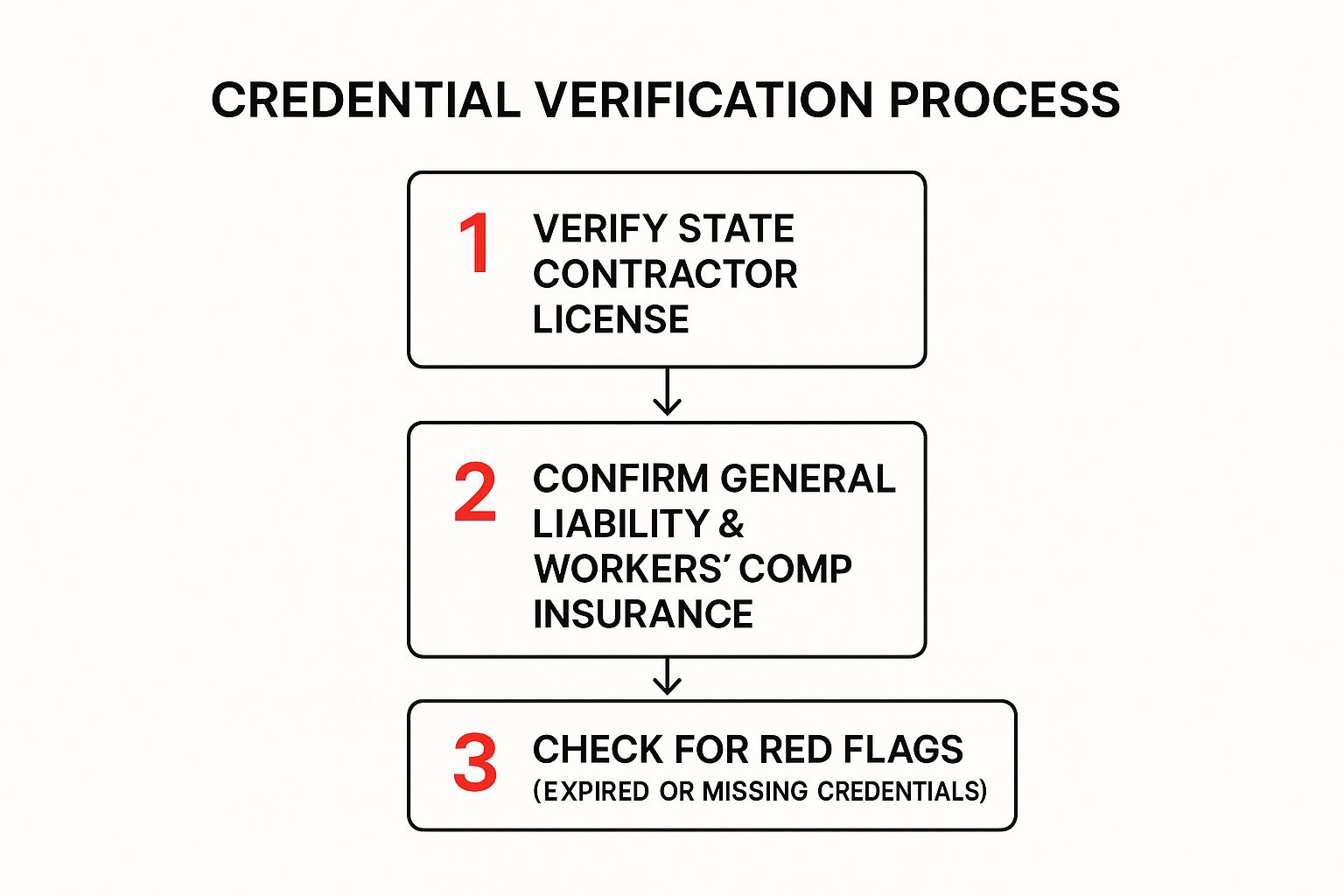
As you can see, you verify the license first, then confirm both types of insurance, and keep an eye out for any red flags along the way. These steps are sequential and non-negotiable.
A Growing Market Means You Need to Be More Careful
The construction business is booming. Between 2021 and 2024, the industry saw a median revenue growth of a staggering 163%, with at least 40 roofing companies landing on the Inc. 5000 list.
While that's great for the economy, it means a flood of new and fast-growing companies are entering the market. That makes your job of checking credentials more important than ever.
Any true professional will be happy to show you their license and insurance info. If you get excuses or hesitation, that’s a massive red flag. This isn't about being difficult; it's about being a smart consumer protecting your biggest investment. If you suspect problems after a job is done, you can always get a second opinion. You can learn more about the value of roof inspections in Arizona in our other guide.
Your Contractor Vetting Checklist
To keep everything straight, I recommend using a simple checklist. As you get quotes from different roofers, you can track their credentials side-by-side. It makes it incredibly easy to see who's a true professional and who isn't.
| Verification Item | Contractor A Status | Contractor B Status | Contractor C Status | Notes |
|---|---|---|---|---|
| AZ ROC License Verified | Check status & complaints on the ROC website. | |||
| General Liability Insurance | Request a current Certificate of Insurance. | |||
| Policy Limit Meets Minimums | Is the coverage adequate for your project size? | |||
| Workers' Comp Insurance | Verify coverage is active for all workers. | |||
| Bonding Confirmed | Provides financial protection for incomplete work. |
This little table helps turn what feels like a complicated process into a clear, manageable task. It ensures you don't miss a single crucial detail in your decision.
How to Analyze Estimates and Read the Fine Print
Alright, you’ve done your homework, vetted a few solid contractors, and they’ve been out to see your property. Now come the estimates. This is where the rubber meets the road, and honestly, it’s where a lot of homeowners make their biggest mistake: looking straight at the bottom line.
Picking the cheapest bid without understanding why it's cheap is a recipe for disaster. The real skill is knowing how to pull these documents apart and compare them apples-to-apples.
A good estimate isn't just a price—it's the entire game plan for your project. If you get a quote that's vague, handwritten on a single sheet, or missing critical details, that’s not just a red flag; it's a giant, waving banner telling you to run. A professional proposal should be a detailed, multi-page document that leaves absolutely nothing to chance.
What to Look for in a Comprehensive Proposal
Every legitimate estimate should give you a line-by-line breakdown of the entire job. This transparency is non-negotiable. It lets you see exactly what you’re paying for and, just as importantly, it confirms every contractor is bidding on the exact same scope of work.
A truly thorough estimate must clearly specify:
- Scope of Work: A detailed play-by-play of every single task, from tearing off the old roof right down to the final magnetic sweep for nails.
- Material Brands and Types: It should name names. Not just "shingles," but "GAF Timberline HDZ shingles in Charcoal," for example. The same goes for underlayment, flashing, and vents.
- Labor Costs: This should be clearly identified, whether it's a separate line item or baked into the total.
- Debris Disposal: The cost for the dumpster and hauling away all the old roofing materials has to be in there.
- Payment Schedule: A clear timeline for the down payment, any progress payments, and the final balance due upon completion.
- Project Timeline: A realistic estimate for a start date and how long the job should take.
For a much deeper dive into the nitty-gritty of what a quote should contain, take a look at our complete roof repair estimate guide to get accurate costs for 2025. It breaks down every single component, so you’ll know exactly what to look for.
Let me tell you from experience: the most dangerous bid isn't the most expensive one—it's the cheapest. A suspiciously low price almost always means someone is cutting corners, whether it’s with shoddy materials, uninsured day labor, or by skipping critical steps like proper flashing installation.
Comparing Bids and Spotting Red Flags
When you have three different estimates in front of you, they can look completely different. Your job is to make them speak the same language. I always recommend creating a simple spreadsheet or even just a checklist on a piece of paper. Line up the key components from each bid: material brand, warranty length, scope of work, and total cost. This is the only way to get a true side-by-side comparison.
While you're reviewing, keep a sharp eye out for these classic red flags:
- Vague Line Items: Descriptions like "replace bad wood" are worthless without a specific cost per sheet. You need to know that price upfront to avoid a surprise bill for hundreds or thousands of dollars.
- High-Pressure Tactics: Any contractor pushing a "sign today or the price goes up" deal is using a car salesman tactic. A true professional respects your need to make an informed decision and will give you the time to do it.
- Large Upfront Payments: A reasonable down payment is typically 10% to 30% to cover materials. If someone asks for 50% or more before a single bundle of shingles has landed on your property, be extremely cautious.
- Lack of a Physical Address: A P.O. Box on an estimate can be a sign of a "storm chaser." These are the crews that blow into town after a big monsoon, do a bunch of cheap work, and are long gone by the time their shoddy roofs start leaking.
Understanding the Final Contract
Once you’ve settled on an estimate, it will become the core of your final contract. This legally binding document is your single most important piece of protection. Before you even think about signing, you need to read every single word—especially the fine print—and confirm it includes these crucial clauses.
Your contract must have:
- Detailed Scope of Work: This section should perfectly match the final estimate you both agreed on. No exceptions.
- Explicit Warranties: It needs to spell out the terms for both the material warranty (which comes from the manufacturer) and the workmanship warranty (which comes from your contractor).
- Lien Waiver Clause: This is critical. A lien waiver is a document you get upon final payment that proves the contractor has paid their suppliers and any subcontractors. Without it, a lumber yard could put a lien on your house if your roofer doesn't pay their bill.
- Change Order Process: The contract needs a clear process for how unexpected issues (like finding extensive rot) will be documented, priced, and approved by you before the work is done.
Taking the time to dissect estimates and scrutinize contracts is the final, essential step in choosing the right roofer. It's what ensures you’re not just buying a new roof, but a professionally managed project that comes with complete legal and financial peace of mind.
Is Their Experience the Right Fit for Your Roof?
Finding a licensed and insured roofer is just the starting line. The real challenge is finding the right roofer for your specific project. Not all experience is created equal, and the next step is to make sure a contractor's background lines up perfectly with what your home needs.
Think of it this way: you wouldn't ask a heart surgeon to set a broken leg. A roofer who’s spent 20 years installing asphalt shingles isn't necessarily your best bet for a tricky flat roof or a classic Spanish tile installation. Their expertise has to be a direct match.
Matching Skills to Your Specific Roof Type
The materials on your roof really dictate the skill set you need to look for. Each one has its own quirks, installation methods, and potential pitfalls that only an experienced crew will know how to handle properly.
For instance, a metal roof requires precision cutting and sealing techniques that are worlds away from laying shingles. Clay tile is heavy and brittle, demanding a crew that understands structural loads and the specific underlayment systems needed to prevent leaks in our dry climate.
A good contractor should have a solid portfolio of jobs using the exact same material as yours.
- Asphalt Shingles: Sure, they're common, but a quality job depends on an expert who knows proper nailing patterns and how to handle valley flashing correctly.
- Tile (Clay or Concrete): You need a crew that’s comfortable handling heavy materials and knows the right underlayment to withstand Arizona’s heat. This is not a job for beginners.
- Metal Roofing: Look for proof of experience with standing seam or corrugated panels. Ask them about how they account for the material's expansion and contraction in the heat.
- Flat or Low-Slope Roofs: This is a whole different ballgame. This is specialized work, so you should ask about their specific experience with systems like spray foam, TPO, or modified bitumen.
A roofer’s material expertise is non-negotiable. Don't just ask, "Do you work with tile?" Instead, ask, "How many tile roofs have you installed in the last year?" The answer tells you everything about their recent, hands-on experience.
Why Local Knowledge and Storm Damage Experience Are Crucial
A roofer's experience shouldn't just be about materials—it has to be local. A contractor from a cooler state simply won't have the same gut-level understanding of what Arizona’s brutal sun and wild monsoon seasons do to a roof. A local pro has seen it all and knows which products and techniques actually hold up here.
This local knowledge is absolutely vital when you're dealing with storm damage. And let's face it, extreme weather is becoming more common. In fact, 2024 saw a staggering 1,882 tornadoes in the U.S., the highest count since 2011. You can see just how much weather drives this industry in this in-depth IBISWorld report.
That's why you need someone who is not only a skilled roofer but also knows how to navigate the insurance claims maze. A contractor with real storm damage experience can document the problems correctly, meet with your adjuster, and fight to ensure the approved scope of work covers everything that needs to be fixed. It makes a nightmare situation far more manageable.
Key Questions to Dig for Real Expertise
When you're talking to potential contractors, it's time to get specific. These questions will help you cut through the sales pitch and see who really has the chops for your project.
Here are a few powerful questions I always recommend asking:
- Can you give me the addresses of 3-4 recent jobs you did in my area with the same roofing material?
- What manufacturer certifications does your team hold for this specific material (like GAF Master Elite for shingles)?
- How do you train your crew, especially new guys, on installing this particular type of roof?
- Tell me about a time you ran into an unexpected problem on a job like mine. How did you solve it?
- What’s your process for working with insurance companies on storm damage claims?
Asking direct questions like these gives you a clear picture of their true capabilities. You’ll know if the team you hire has the proven, real-world skills needed to protect your home for years to come.
Making the Final Call with Confidence
You’ve done the hard work. You've sorted through the bids, vetted your top choices, and now you’re right on the edge of making a decision. This is that final, crucial checkpoint before you sign on the dotted line. It’s all about confirming their recent track record and making sure everyone is on the same page before the first shingle comes off.
Don't just settle for a list of hand-picked references. Ask for something more tangible: the addresses of a few local jobs they wrapped up in the last six months. A roofer who’s proud of their work won't hesitate. Take a drive by. You can spot quality (or a lack of it) right from the curb—look for clean lines, proper flashing, and a tidy overall appearance.
Setting Clear Communication Expectations from Day One
Before a single hammer swings, get your communication plan locked down. So many project headaches boil down to simple misunderstandings. Knowing who to call and what to expect can make all the difference between a smooth project and a stressful one.
Make sure you’ve ironed out these details before they start:
- Who's My Point Person? Find out who you should call with questions or concerns. Is it the owner, a dedicated project manager, or the foreman on site? Get their direct cell number.
- What's the Daily Schedule? Confirm their typical start and end times. This is just practical—it helps you plan for the noise and activity around your house.
- How Do You Handle Cleanup? A pro crew cleans up as they go. You should expect materials to be stacked neatly and your yard to be swept for debris and nails at the end of every single day. No exceptions.
Finalizing your choice is about more than just the lowest price. It's about seeing their recent work with your own eyes and ensuring you and the project manager are completely in sync on how the job will be managed from start to finish.
Your Final Pre-Hire Checklist
Before you give the final "yes," run through this last mental checklist. Think of it as a quick summary of how to choose a roofing contractor in Arizona, ensuring no critical step was missed along the way.
- [ ] Credentials Verified: The AZ ROC license is active and doesn't have any major red flags or complaints.
- [ ] Insurance Confirmed: You have a copy of their current Certificate of Insurance in hand, showing both General Liability and Workers' Comp coverage.
- [ ] Local Reputation Checked: You’ve seen a pattern of positive feedback from online reviews and local word-of-mouth.
- [ ] References Contacted: You've actually spoken with recent customers and, ideally, seen their completed roofs.
- [ ] Contract Scrutinized: The estimate is detailed and transparent, and the final contract puts all material warranties, labor guarantees, and lien waivers in writing.
Ticking off these last few boxes is what gives you real peace of mind. It turns a stressful decision into a confident investment in your home’s future.
Frequently Asked Questions
What are the first steps to choosing a roofing contractor?
Start with word-of-mouth. Ask friends, family, and neighbors who they've used and trusted. Once you have a few names, head online. Check out their websites, and then dive into reviews on Google and the Better Business Bureau. Your goal is to narrow it down to a shortlist of 3-5 solid candidates to call for an estimate.
How do I know if a roofing contractor is legitimate?
A legitimate pro will never hesitate to show you their credentials. They must be fully licensed, bonded, and insured. Ask for proof of general liability insurance and workers' compensation coverage. The most important step? Verify their license yourself with your state's contractor licensing board, such as the Arizona Registrar of Contractors.
Why is local experience so important for a roofer?
Local contractors understand the specific climate challenges of your region. In a place like Arizona, they know which materials and installation methods stand up to brutal UV rays and torrential monsoon rains. They are also experts on local building codes, permitting requirements, and have established relationships with local suppliers.
Is the cheapest roofing bid always the best choice?
Absolutely not. An unusually low bid should be a major red flag, as it often indicates that a contractor is cutting corners by using subpar materials, hiring uninsured labor, or skipping critical installation steps. Focus on the best overall value—a fair price from a reputable, insured contractor who provides strong warranties—rather than the lowest price.
What's the difference between a material warranty and a workmanship warranty?
A material warranty is provided by the manufacturer (e.g., GAF, Owens Corning) and covers defects in the roofing products themselves. A workmanship warranty is provided by the contractor and covers errors made during the installation process. Since most roof failures are due to improper installation, a strong workmanship warranty is essential protection for a homeowner.
How much should I expect to pay as a down payment?
A reasonable down payment for a residential roofing project is typically between 10% and 30% of the total cost. This allows the contractor to order materials and schedule the job. Be very wary of any contractor who demands more than 30% or asks for a large cash payment upfront, as this can be a sign of financial instability or a potential scam.