
Deciding when to replace your roof is a major decision, and the timing can significantly impact the cost, quality, and longevity of the final product. While an emergency leak forces your hand, planning ahead allows you to choose the optimal season for the job. For most homeowners, the sweet spot hits in early fall, with late spring as a close second, thanks to mild temperatures that are ideal for materials and crews alike.
Key Takeaways
- Fall is the ideal season for roof replacement due to stable, mild weather (45°F-85°F), which allows asphalt shingles to seal properly without the risk of extreme heat or cold.
- Spring is the second-best option, offering similar mild temperatures but comes with the challenges of high demand and unpredictable rain delays.
- Summer and winter are less ideal due to extreme temperatures. Summer heat can damage shingles, while winter cold can make them brittle and prevent proper sealing.
- Local climate is crucial. The "best" time in Arizona (late fall/winter) is very different from the best time in the Midwest (early fall/late spring).
- Planning ahead is key. Booking your roofer 2-3 months in advance for peak seasons like spring and fall can secure better pricing and a spot with a reputable crew.
Why Timing Your Roof Replacement Matters So Much
Choosing when to replace your roof isn't just about picking a date on the calendar. It’s a strategic decision that balances Arizona’s unique weather patterns, your budget, and when the best crews are actually available.
Of course, if you have a major leak, you don't have the luxury of waiting. But if you're planning ahead, thinking about the seasons can make a world of difference in the quality and longevity of your new roof. First, though, you need to be sure a replacement is what you need. If you're seeing curling shingles or granules in your gutters, it might be time to take a closer look at the signs you need a new roof.
Timing it right really boils down to a few critical factors:
- The "Sweet Spot" for Temperature: Asphalt shingles, the go-to for most Arizona homes, need heat to properly seal. But not the blistering heat of a July afternoon. They perform best when installed in temperatures between 45°F and 85°F, which allows the adhesive strips to activate and form a watertight barrier.
- The Roofer Rush: Everyone wants their roof done in perfect weather. That means spring and fall are the busiest seasons for roofing contractors. If you want to get on the schedule with a top-notch crew, you'll need to book them well in advance.
- Predictable Weather is Your Friend: Nothing stalls a roofing project like a sudden downpour. Scheduling during a drier, more stable season minimizes delays and keeps your home's structure protected while the old roof is torn off.
This infographic breaks down the ideal seasons perfectly.
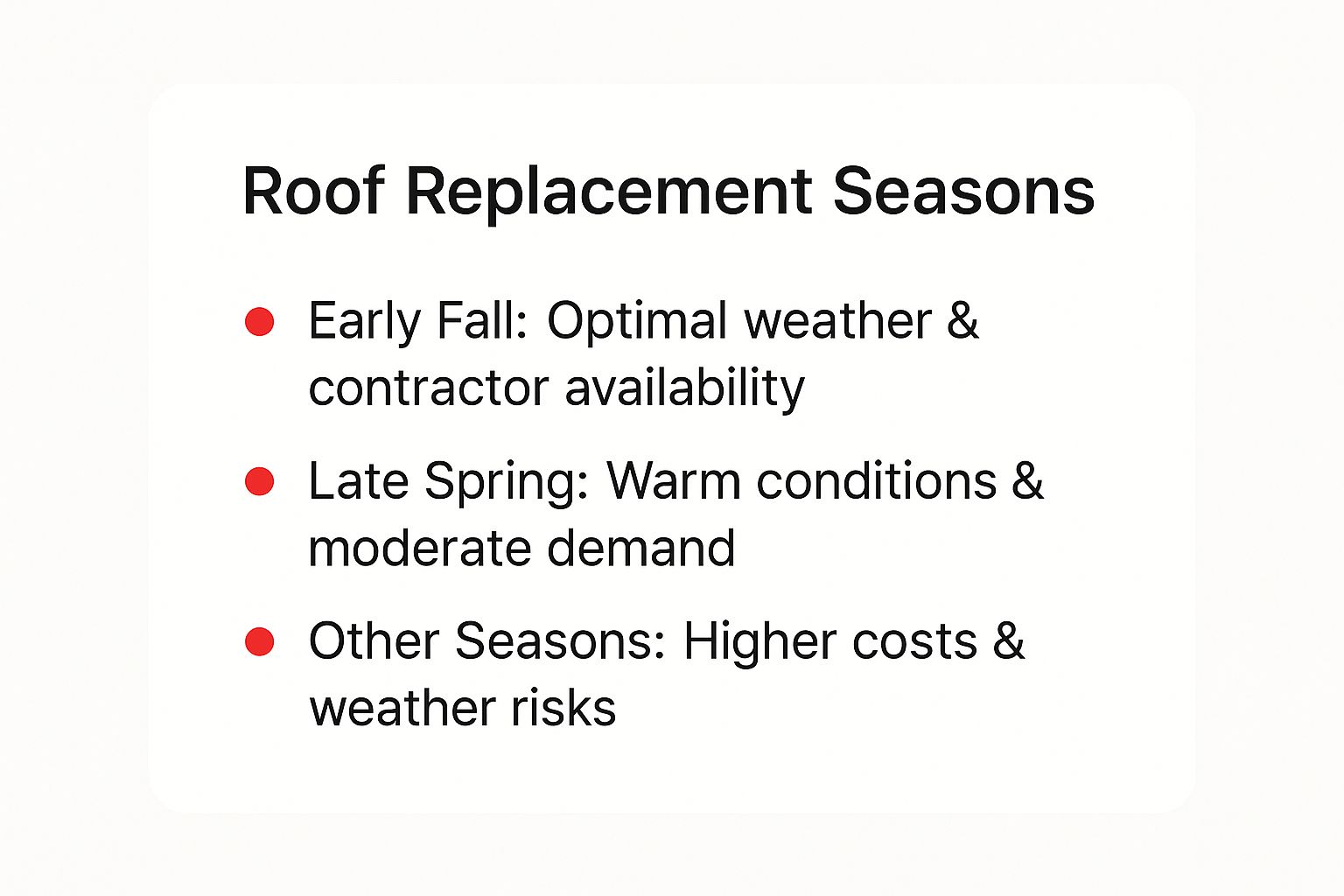
As you can see, fall and spring hit that sweet spot, while summer and winter bring their own set of challenges. This isn't just an Arizona thing, either. It’s a trend across the entire country. Nationally, roofing jobs have been known to jump by about 12% during the second and third quarters as homeowners take advantage of that milder weather.
To give you a clearer picture, here’s a quick breakdown of what to expect during each season.
Roof Replacement by Season A Quick Comparison
This table offers a simple at-a-glance look at the pros and cons of scheduling your roof replacement throughout the year.
| Season | Pros | Cons |
|---|---|---|
| Spring | Mild temperatures are ideal for shingle installation. | High demand can lead to longer wait times; unpredictable rain can cause delays. |
| Summer | Long daylight hours allow crews to work efficiently. | Extreme heat can damage shingles and endanger workers; monsoon storms are a major risk. |
| Fall | Dry, stable weather and ideal temperatures create perfect conditions. | This is peak season, so scheduling can be competitive and prices may be higher. |
| Winter | Lower demand means more contractor availability and potentially lower costs. | Cold temperatures can make shingles brittle and prevent proper sealing. |
Ultimately, while the "off-seasons" might offer some savings, they come with risks that could compromise the quality of your installation.
Why Fall Is the Goldilocks Season for a New Roof
When you're staring down a project as big as a roof replacement, timing really is everything. I've been in this business a long time, and I can tell you that early autumn is what we call the "Goldilocks" season—it's not too hot, not too cold, but just right for a flawless, durable installation. For most homeowners, this window is the sweet spot for a roof replacement, hitting the perfect balance of ideal weather and smart planning.
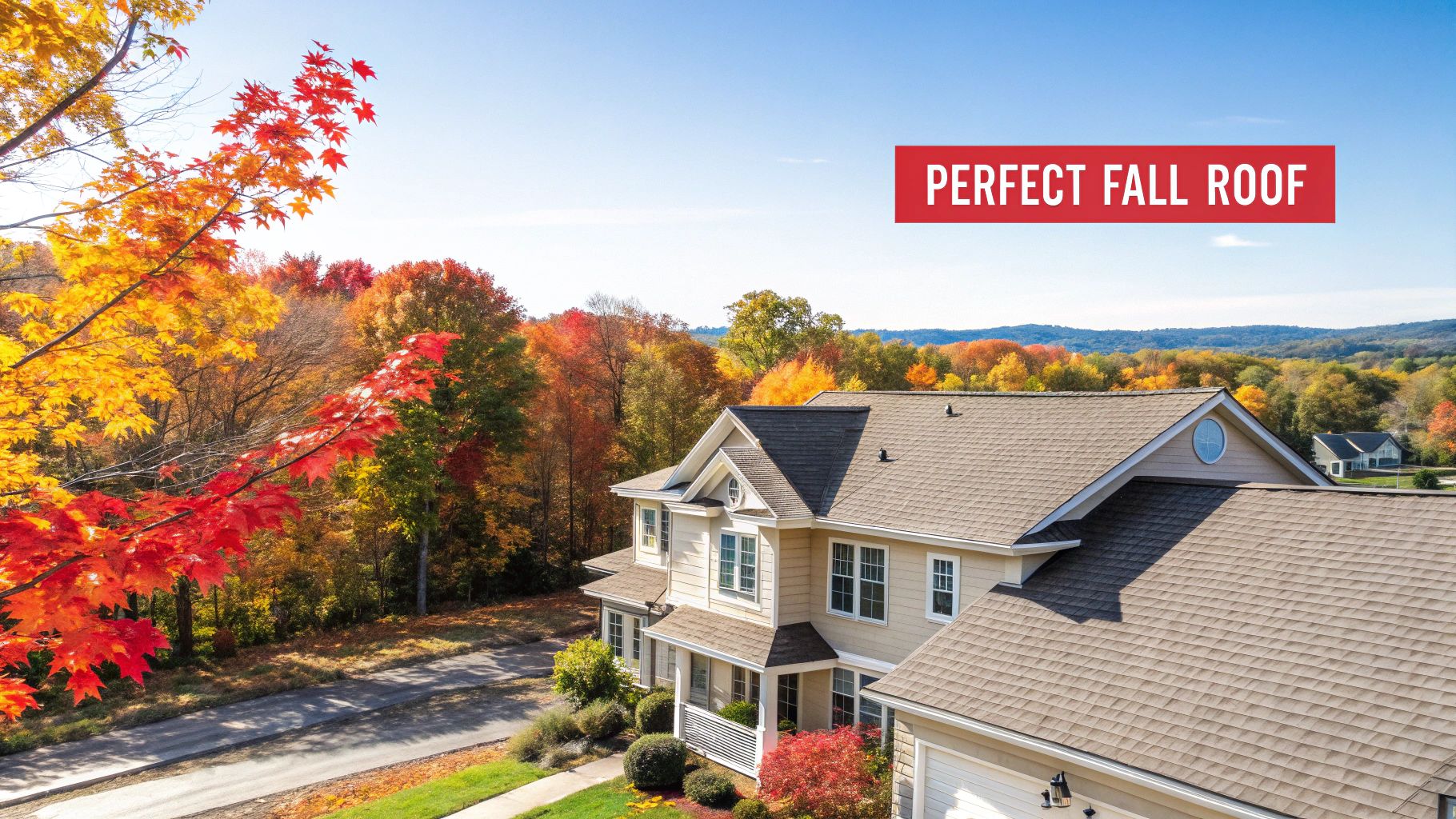
The biggest reason fall stands out is the mild, predictable weather. Almost every roofing material, especially the asphalt shingles that are so common, has a specific temperature range where it performs best.
Fall temperatures, usually hovering somewhere between 45°F and 85°F, are perfect for activating the adhesive strips on asphalt shingles. This lets them create a strong, watertight seal in a process called thermal sealing, which is absolutely critical for the roof's long-term health and wind resistance.
This process ensures every single shingle bonds tightly to the one below it, forming a single, tough shield over your home. If you try to do this when it's scorching hot, the shingles get too soft and are easy to damage. In the cold, they become brittle and might not seal properly at all.
Proactive Protection Before Winter Arrives
Putting a new roof on in the fall is also just a smart, defensive play. You’re essentially reinforcing your home right before the roughest weather of the year rolls in.
Taking care of an aging roof or any weak spots in September or October means you won't be spending the winter worrying about storms, ice dams, or heavy snow causing a catastrophic leak and ruining your ceiling.
Instead of scrambling to fix an emergency leak in the middle of January, you can head into the colder months with total peace of mind. Believe me, this proactive approach saves a ton of money and stress down the road.
Strategic Scheduling and Contractor Availability
Now, while fall is certainly a popular time for roofing, it often gives you a scheduling edge over the mad dash that happens in spring. After the winter thaw, countless homeowners discover leaks and damage, leading to a massive surge in demand for roofing contractors.
That springtime rush can mean long waits and very little flexibility. The demand in fall, on the other hand, tends to be more steady and predictable. If you plan a few months out, you can usually book a top-notch crew without all the chaos. This makes the entire project feel more organized and less frantic, ensuring your home gets the quality workmanship it deserves.
Making the Case for a Spring Roof Replacement
So you missed the sweet spot in fall for that roofing project? Don't sweat it. Late spring often presents the next best window of opportunity, letting you get the job done right before the brutal Arizona summer heat sets in. As the desert thaws and the weather turns pleasant, conditions become just about perfect for a successful installation.
The biggest win for a spring project is, without a doubt, the weather. When temperatures consistently hit that ideal range, asphalt shingles can properly adhere and create the watertight seal they need to last. Getting your roof replaced in the spring is also a smart preemptive strike—it ensures your home is buttoned up and ready for summer’s punishing sun and the monsoon storms that follow.
The Challenges of the Spring Rush
Now, even with its great weather, spring isn't a completely perfect season for roofing. This is the time of year when a lot of homeowners finally notice the damage winter left behind, from a few missing shingles to a brand-new leak in the ceiling.
This sudden wake-up call creates a massive surge in demand for roofing contractors. You'll likely find that the best crews have much longer waiting lists, and that increased competition can sometimes nudge prices up. It’s a classic case of supply and demand.
Your best move is to plan ahead. If you think a new roof is in your near future, start calling contractors in late winter. You might just get on their schedule before the real spring rush kicks off, securing a better price and a faster timeline.
The other major wild card is the unpredictable spring weather. While the temperatures are great, the season is also famous for those out-of-nowhere rain showers. An unexpected downpour can shut a job down in an instant, since crews can't safely work or leave your home’s internal structure exposed to the rain.
These weather delays can easily stretch out your project timeline, sometimes turning what should be a two-day job into a week-long waiting game.
Weighing the Pros and Cons
To make the right call, it helps to lay everything out. Here’s a quick look at the good and the bad of a springtime roof replacement:
- Pro – Mild Temperatures: The weather is often in that “just right” zone for materials like asphalt shingles to seal properly, giving you a strong, long-lasting installation.
- Pro – Summer Preparation: Getting a new roof in May means your home is fully protected before the worst of the summer heat and monsoon season arrives.
- Con – High Demand: You'll be competing with a lot of other homeowners for a roofer's time, which can mean waiting longer for your project to start.
- Con – Unpredictable Rain: Those notorious spring showers are a common reason for work stoppages, potentially dragging out the project longer than expected.
At the end of the day, spring is still a fantastic time for a roof replacement. You just need to plan ahead and choose a contractor who knows how to work around potential weather delays.
Working Around Summer and Winter Roof Replacements
While we all wish our homes would follow a perfect maintenance schedule, life rarely works out that way. Sometimes, a roof gives out at the worst possible time, forcing you into a replacement during the peak of summer or the dead of winter. Both seasons throw some serious curveballs that can affect the quality of the job and the safety of the crew.
Think about what happens to a chocolate bar left in a hot car. That’s pretty much what happens to asphalt shingles in the Arizona summer. Extreme heat softens them up, making them easy to scuff, tear, or damage as they're being handled. But the real problem is how they seal. Shingles have a tar strip that needs to heat up and bond to the shingle below it, a process called thermal sealing.
When it's too hot, that seal can happen way too fast or improperly, which messes with the roof's ability to resist wind and water down the line. It also turns the roof into a giant skillet, creating dangerous working conditions for the crew.
The Problem with Winter Installations
Winter, of course, brings the complete opposite challenge. Cold temperatures make asphalt shingles brittle and stiff. Trying to bend and nail a frozen shingle is like trying to bend a frozen ruler—it’s just going to crack. Every one of those cracks becomes an immediate weak spot on your brand-new roof.
Just like intense heat messes with the sealing process, so does the cold. Those adhesive strips on the shingles need warmth to activate and create that critical, watertight bond. In the winter, this can take weeks or even months to happen naturally. In the meantime, your roof is vulnerable to high winds that can lift the shingles right off.
On top of the material issues, winter just makes the whole process more difficult:
- Shorter Days: Less daylight means less time to work, which can drag out the project and leave your home exposed for longer than anyone wants.
- Snow and Ice: Here in Arizona, this is less of a concern in the valleys, but in the high country, any moisture creates a slick, dangerous work surface. It can also trap moisture under the new materials if the crew isn't careful.
When You Can't Wait for the "Perfect" Season
Despite all these challenges, you can't always afford to wait. The average asphalt shingle roof, the most common type you’ll see, lasts about 20–30 years. When a big storm hits and your old roof finally fails, waiting for spring isn't an option. In fact, hail storms are behind over 60% of emergency roof repairs in some parts of the country. You can dive deeper into market trends by checking out this report on roof replacement services and their impact.
An emergency roof replacement in the "off-season" is always better than letting a major leak cause thousands in structural damage, ruined insulation, and a nasty mold problem.
A truly experienced roofing contractor knows exactly how to handle these seasonal challenges. For winter jobs, they'll take extra steps like keeping the shingles in a warm space right up until they're installed. They will also likely need to "hand-seal" each shingle with a dab of roofing cement to make sure it bonds immediately. It’s not the ideal scenario, but when done right by a pro, it’s a far better alternative than letting your home suffer from water damage.
How Your Local Climate Changes the Game
There’s no universal "best time of year for a roof replacement" that works for everyone. It's a recommendation that shifts dramatically depending on where you live. Think of it like planting a garden—what thrives in the mild Pacific Northwest would shrivel and die in the Arizona desert. The perfect season for a new roof in one state could be the absolute worst time in another.

This regional difference is hands down the most important factor to consider. General advice you hear about "fall and spring" usually applies to places with four distinct seasons, but that blueprint needs a major overhaul for the unique climates we have across the U.S.
Hot Climates: The Southern States
If you live in a scorching state like Arizona or Florida, you can pretty much toss the national advice out the window. Here, the brutal summer heat is the season you want to avoid at all costs. The intense sun can actually soften asphalt shingles, making them easy to damage during installation and preventing them from sealing down correctly.
For these hotter regions, the mild "winter" months are often the golden opportunity for a roof replacement. The cooler, stable temperatures from late fall through early spring create perfect conditions for both the materials and the crew, ensuring a solid installation without the risk of heat damage.
Choosing the right materials is also a huge part of the equation here. For a closer look, you can explore some of the top efficient roofing options to lower your energy bills designed specifically for high-heat environments.
Cold Climates: The Northeast and Midwest
On the flip side, homeowners in the Northeast and Midwest are dealing with a completely different playbook. Their main challenge is dodging the heavy snow and freezing temperatures of a harsh winter. Trying to replace a roof when the temperature dips below 40°F is a big risk, as shingles can get brittle and crack easily.
This is why the fall and spring windows are so critical in these regions.
- Early Fall: This season gives roofers a chance to work in mild weather, making sure your new roof is fully sealed and ready for action before the first snow flies.
- Late Spring: Once the snow melts and temperatures are consistently on the rise, spring offers another great window to fix any winter damage before summer storms roll in.
Unique Regional Weather Events
Beyond just hot and cold, you have to think about the unique weather patterns that define your area. Every region has its own quirks that can stop a roofing project in its tracks.
- Hurricane Season (Southeast): For anyone living in coastal areas from Texas to the Carolinas, scheduling a roof replacement during peak hurricane season (June to November) is playing with fire.
- Tornado Alley (Plains): Across the central U.S., the spring storm season brings a serious threat of tornadoes and severe hail, making it a volatile and unpredictable time for any exterior work.
- Monsoon Season (Southwest): Here in Arizona, the summer monsoon delivers sudden, powerful thunderstorms that can bring a project to a screeching halt and leave your home exposed to water damage.
Understanding the Cost and Scheduling of Your Project
Figuring out the best time to replace your roof goes way beyond just looking at the weather forecast—it's a major financial decision. The roofing world, like any other service industry, runs on supply and demand. Understanding how that rhythm works can save you a lot of money and headaches.
When the weather is beautiful in the spring and fall, everyone wants to get their roof done. This is peak season. The demand for skilled, reliable roofers goes through the roof (pun intended), and their schedules fill up fast. That high demand often translates to longer wait times and higher prices. It’s simple economics at play.
Navigating Peak and Off-Season Pricing
On the flip side, you might find a better deal during the off-season. Think late winter, when business is slower for most roofing crews. With fewer projects lined up, some contractors are willing to offer more competitive bids to keep their teams busy.
In fact, waiting for the right season can sometimes save a homeowner 10–15% on labor costs simply because there's less competition for a contractor's time.
But here’s a critical piece of advice: don't risk major damage just to chase a small discount. Putting off a necessary roof replacement to save a few bucks could backfire spectacularly. If a leak develops, the cost of repairing water damage to your attic, insulation, and ceilings will dwarf any off-season savings you were hoping for.
If you want to get a ballpark idea of what your project might cost, our roof replacement cost estimator is a great place to start.
The Value of Smart Planning
So, what's the best strategy? It all comes down to proactive planning.
Booking your project several months in advance is the smartest move you can make. Even if you're aiming for a popular spring or fall slot, getting on a contractor's calendar early locks in a fair price before their schedule gets chaotic.
This foresight not only secures a spot with a top-tier crew but also gives you ample time to budget properly and choose the right materials without feeling rushed.
Think of it as a long-term investment in your property. A new roof is a huge selling point, and timing the replacement perfectly is one of the smart home repairs before selling that can seriously maximize your home's value and curb appeal. Planning ahead ensures you get the best possible return on that investment.
Frequently Asked Questions About Roof Replacement Timing
What is the cheapest month to replace a roof?
Generally, the slowest months for roofing are late winter, specifically January and February. With lower demand, some contractors may offer more competitive pricing to keep their crews busy. However, this potential cost saving comes with the risk of cold weather, which can make asphalt shingles brittle and prevent them from sealing properly, potentially compromising the installation.
How long does a typical roof replacement take?
For an average-sized single-family home, a complete roof replacement usually takes one to three days. This timeline can vary based on several factors, including the size and complexity of your roof, the type of materials being installed, the size of the crew, and, most importantly, the weather.
Can you replace a roof in the rain?
Absolutely not. Professional and reputable roofers will not work in the rain. Removing the old roofing material exposes the underlying wood deck of your home. If this decking gets wet, it can lead to trapped moisture, which can cause rot, mold, and damage to your home's structure. A good contractor will watch the forecast closely and ensure your home is protected if unexpected rain occurs.
How far in advance should I schedule my roof replacement?
If you want to schedule your roof replacement during the peak seasons of fall or spring, it's wise to book two to three months in advance. The best and most reliable roofing companies have their schedules fill up quickly during these ideal weather windows. Planning ahead secures your spot and helps you avoid long wait times.
Just like timing is key for a new roof, it’s also a big factor for other major home upgrades. For more insight, check out this handy guide on when to replace other major home systems.