
Choosing the right roofing material is one of the most significant decisions a homeowner can make. It impacts not only your home's curb appeal but also its long-term protection against the elements. For those drawn to the classic, durable look of tile, the primary debate often comes down to two leading contenders: clay and concrete. While they may look similar from a distance, these materials offer distinct advantages in cost, longevity, and aesthetic performance.
This guide will walk you through a detailed comparison of clay vs. concrete roof tiles, breaking down everything from their lifespan and durability to their cost and climate suitability. By understanding the core differences, you can make an informed choice that aligns with your budget, style preferences, and long-term goals for your home.
Key Takeaways
Before we dive deep, here are the essential points that set these two roofing materials apart:
- Lifespan & Durability: Clay is the long-game champion, often lasting over 100 years. Concrete offers a very respectable lifespan, typically around 50-60 years.
- Cost: Concrete is the more budget-friendly option upfront. Clay requires a larger initial investment but can offer better long-term value due to its extreme longevity.
- Color Permanence: Clay's color is baked through the entire tile and will not fade. Concrete's color is a surface application, which can lighten over decades of sun exposure.
- Aesthetic Versatility: Concrete is highly versatile and can be shaped and colored to mimic other materials like wood shake or slate. Clay offers a classic, natural, earthy aesthetic.
- Weight: Both are heavy and require a structural assessment before installation. Concrete tiles are generally heavier than clay tiles.
Choosing Your Roof: Clay vs. Concrete Tiles Explained
Putting a new roof on your home is a significant investment, and for many, it comes down to the classic, enduring look of tile. While both clay and concrete bring a lot to the table in terms of strength and style, they aren't interchangeable. Getting to know their fundamental differences is the key to making a choice you'll be happy with for decades.
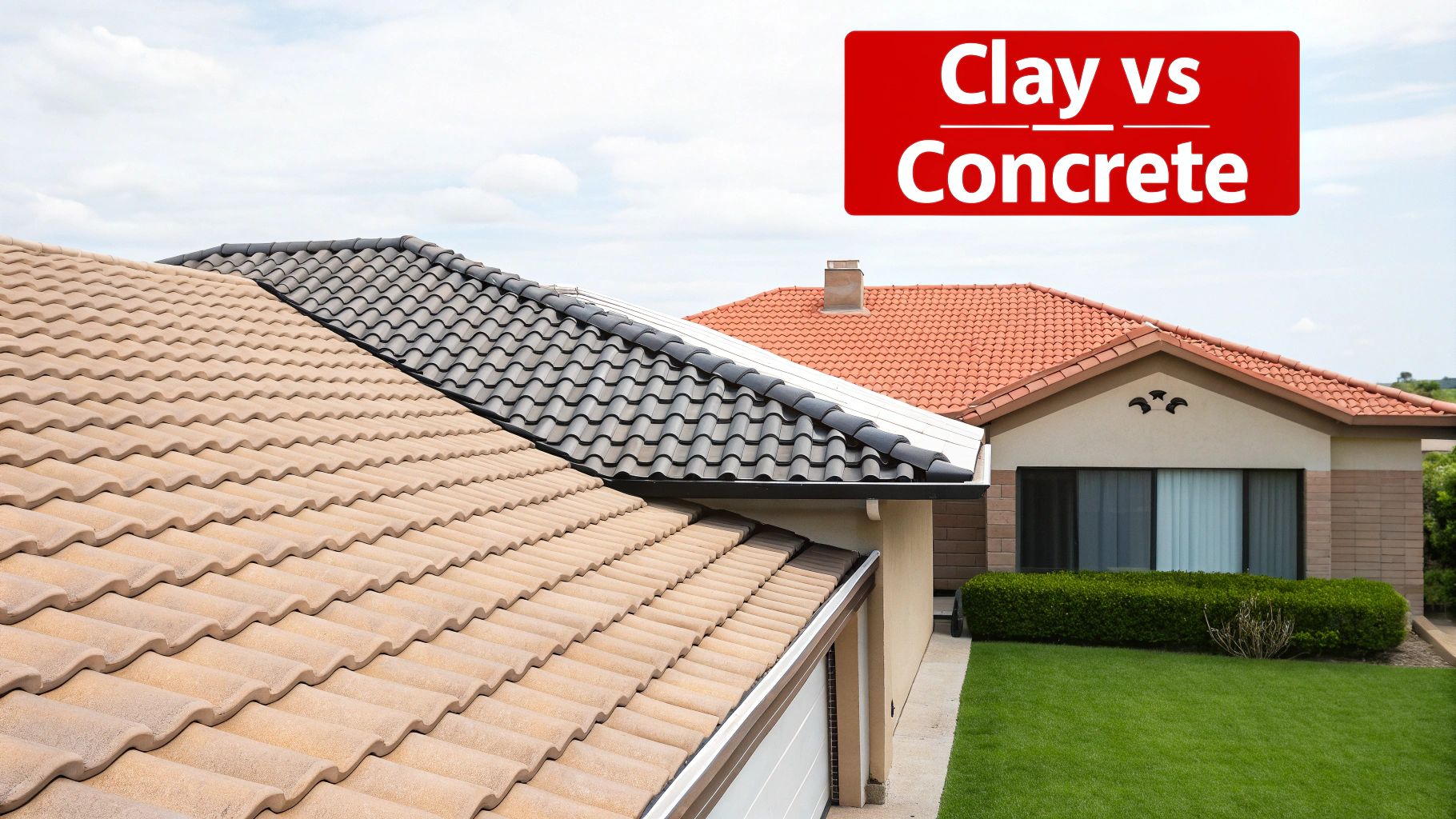
At a Glance Comparison: Clay vs. Concrete Roof Tiles
For a quick, high-level overview, this table breaks down the core characteristics of each material. It’s a great starting point for seeing where your priorities align.
| Attribute | Clay Roof Tiles | Concrete Roof Tiles |
|---|---|---|
| Typical Lifespan | 100+ years | 50-60 years |
| Initial Cost | Higher | Lower |
| Weight | Heavy (structural check needed) | Very Heavy (structural check needed) |
| Color Durability | Color is baked in; does not fade | Surface color; can fade over time |
| Aesthetic | Classic, earthy, natural tones | Highly versatile; mimics wood, slate |
| Maintenance | Low; resistant to weathering | Low; may require periodic sealing |
| Eco-Friendliness | Made from natural, sustainable clay | Higher environmental impact from cement |
While a simple chart doesn't tell the whole story, it clearly highlights the primary trade-offs you'll be making between initial cost, aesthetic flexibility, and long-term performance.
Understanding the Roofing Tile Market
When you're trying to decide between clay and concrete roof tiles, it helps to zoom out and look at the bigger picture. These aren't just two random materials; they're titans of the roofing world, and each holds its ground for very specific reasons. Their popularity isn't an accident—it’s built on decades of real-world performance and offering different kinds of value to homeowners.
You'll often find that concrete tiles dominate the market in terms of sheer volume. A big reason for this is how they're made. The recipe is simple: sand, cement, and water. This process is much less energy-hungry than firing clay in a kiln, which means manufacturers can pump out a huge variety of styles at a price that works for almost any budget.
The Economics Driving the Tile Trend
Globally, the demand for roofing that lasts is what keeps both of these materials front and center. Concrete’s lower cost makes it the go-to choice for new home construction and big developments where sticking to a budget is non-negotiable. It’s this accessibility that has locked it in as the market leader in so many places.
But clay has a firm hold on the premium side of things. It's made from natural clay, fired at incredibly high temperatures, and the result is a tile famous for its incredible lifespan and color that just doesn't fade. The process is more involved and relies on specific resources, which explains the higher price tag, but it also solidifies its reputation as a true lifetime investment for a home.
Clay's appeal really comes down to its authenticity and quality that stands the test of time. While concrete gives you a ton of design options, clay offers a classic, timeless look that simply can't be duplicated, securing its spot as a high-end, sought-after material.
A Look at Market Share and What Homeowners Are Choosing
The roofing industry is a massive global business. We're talking tens of billions of dollars, and within that, concrete tiles consistently come out on top as the single largest material segment. In fact, clay and concrete tiles together were reported to make up about 30.6% of roofing materials revenue in 2023. Even though concrete moves more units, the market for clay tiles alone is a multi-billion-dollar industry, which tells you it’s a powerful and distinct choice for buyers who know exactly what they want. You can find more insights about the global roofing market from detailed industry research.
This back-and-forth creates a really healthy market where one material doesn't just knock the other out. Concrete fills the need for a durable, flexible, and affordable roof. Clay, on the other hand, satisfies the demand for historical character, natural beauty, and a roof that will outlast almost anything else. Once you understand these dynamics, you stop seeing two similar tiles and start seeing two very different solutions for different priorities.
Comparing Key Performance Factors Head-to-Head
When you're trying to decide between clay and concrete roof tiles, the decision goes way beyond what looks good in a showroom. You need to know how these materials will actually perform on your roof, day in and day out. Let's break down the practical differences in durability, looks, weight, and of course, cost, so you can see how they really stack up.
Durability and Real-World Longevity
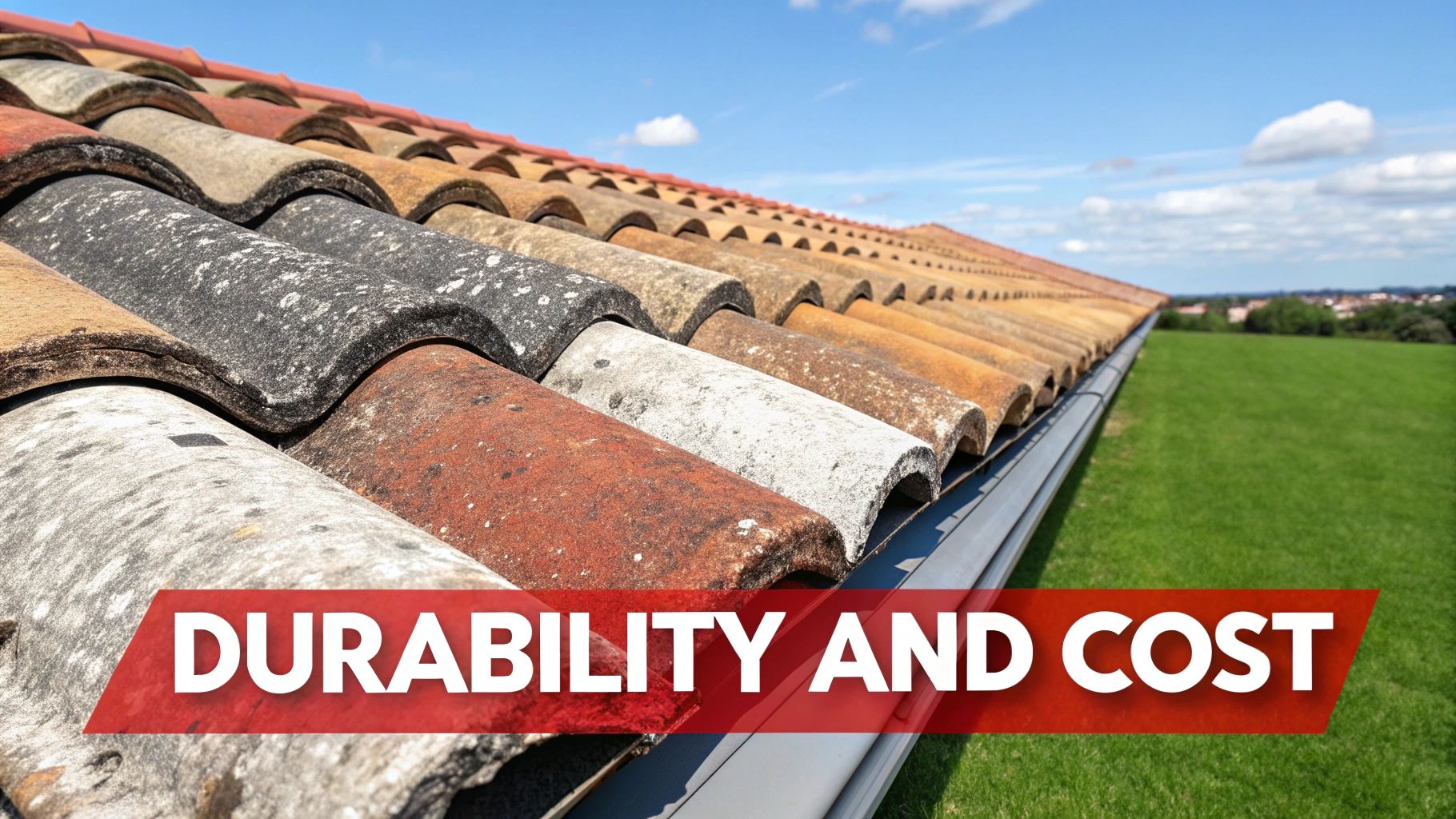
On paper, both clay and concrete look like champions of durability. Clay tiles are legendary for their lifespan, often lasting over 100 years if they’re installed and cared for correctly. They're fired in a kiln at incredibly high temperatures, which creates a tile that naturally shrugs off weathering and decay.
Concrete tiles also have a very respectable lifespan, typically around 50 to 60 years. While that’s still a fantastic long-term solution, they are more porous than clay. This means they can absorb more moisture over time, which, without periodic sealing, could make them more prone to mildew or slow degradation, especially in certain climates.
Aesthetics and How Each Material Ages
One of the biggest visual differences between clay and concrete tiles is how their color holds up over the years. For many homeowners, this is the single factor that tips the scales.
-
Clay Tiles: The color you see in a clay tile isn't just a surface coating; it's baked all the way through the material. This is huge because it means those rich, earthy tones won't fade, even after decades under the intense Arizona sun. They age beautifully, developing a natural patina that many people feel just adds to their character.
-
Concrete Tiles: Concrete is a chameleon, offering incredible design flexibility. It can be made to look like wood shake, slate, and even classic clay. The catch is that its color is a surface pigment. After years of UV exposure, that pigment will slowly but surely fade, changing the look of your roof.
While both materials offer impressive longevity, clay's color is integral to the tile itself, ensuring it won't fade over time. Concrete's color is applied to the surface, making it susceptible to fading from UV exposure over several decades.
Structural Weight and Installation Needs
Let's be clear: both clay and concrete are heavy. You can't just install them on any roof structure that wasn't designed to handle the load. A professional structural assessment is pretty much non-negotiable before moving forward with either one.
Generally speaking, concrete tiles are the heavier of the two. A roof decked out in concrete can weigh substantially more than a clay one, demanding an even more robust support structure. If you're thinking of upgrading from asphalt shingles to tile, be prepared for the possibility of significant structural reinforcement. To see what that involves, you can learn more about the complete process of a concrete tile roof installation from our detailed guide.
Total Cost of Ownership: A Deeper Look
At first glance, concrete looks like the clear winner for your wallet. The lower upfront cost is definitely an attractive feature for a lot of homeowners. But when you start looking at the total cost of ownership over the entire life of the roof, the math gets a little more interesting.
Clay tiles require a higher initial investment, but they often turn out to be more cost-effective in the very long run. Their 100+ year lifespan means it’s highly unlikely you’ll ever have to replace your roof again. With concrete's shorter lifespan, a full replacement could be on the horizon within your lifetime, which is a massive future expense. Ultimately, the choice often comes down to balancing your immediate budget against the best long-term value.
Climate Suitability and Regional Roofing Trends
When you're choosing between clay and concrete roof tiles, it’s not just a matter of picking a material. Where you live is arguably the most important factor in the decision. A tile that performs beautifully in one climate might be a poor choice in another, so understanding your local environment is key to a long-lasting roof.
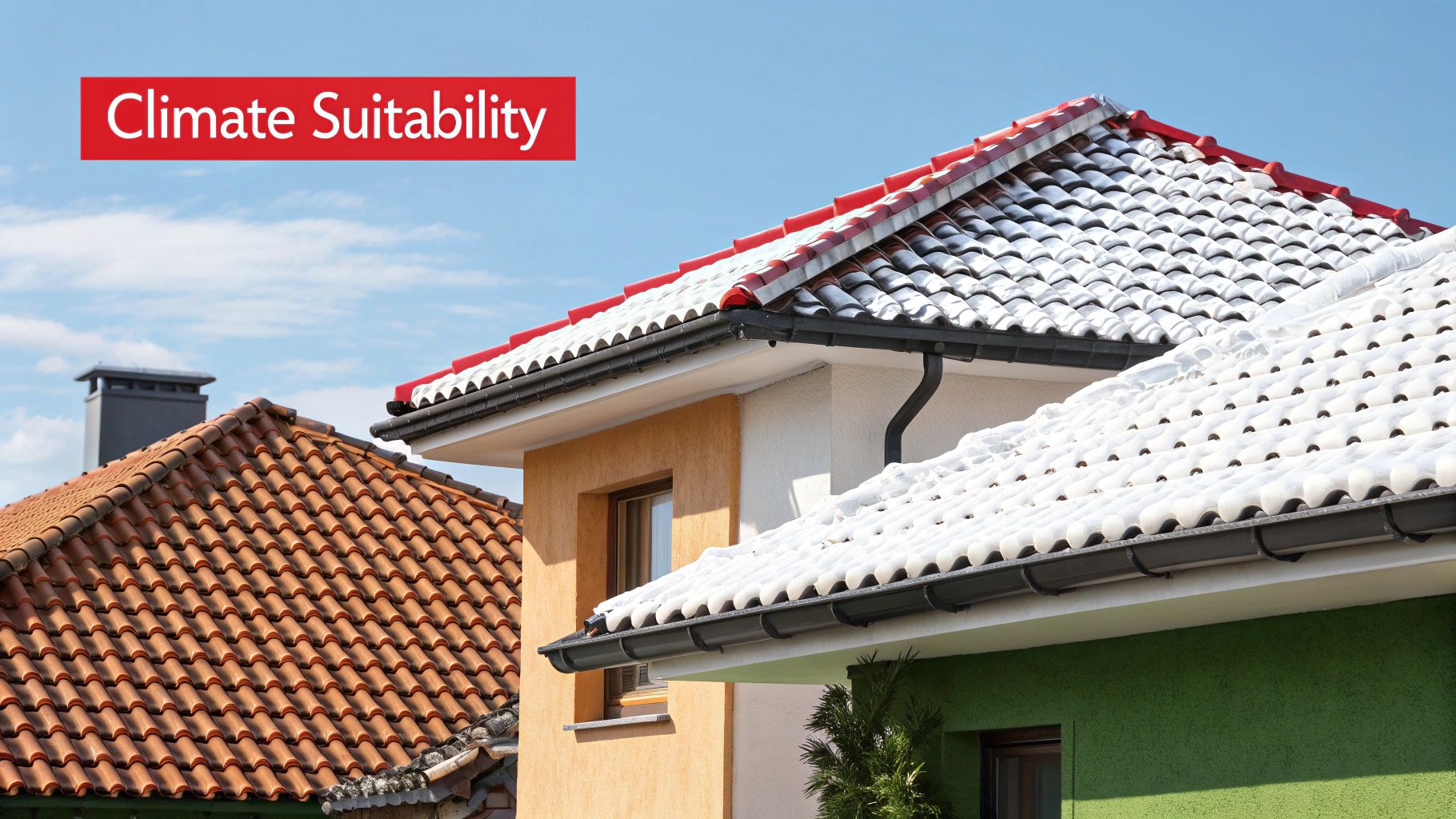
For anyone living in a hot, sunny climate like ours here in Arizona, clay tiles have long been the go-to. Their natural thermal properties are a huge plus, reflecting solar heat and helping keep homes cooler—which can make a real difference on your energy bills during our scorching summers. Another big advantage is that the color is baked right into the clay, so it stands up to relentless UV rays without fading.
That said, don't count concrete out. Older concrete tiles had a reputation for struggling in areas with frequent freeze-thaw cycles, but modern manufacturing has come a long way. Today’s concrete tiles are made with special admixtures that boost their resilience, making them a solid choice for colder, wetter climates where their lower porosity is a real asset.
Global Trends and Local Preferences
If you look at roofing trends across the country and the world, you’ll see these climate-driven choices play out everywhere. Clay tiles are practically synonymous with Mediterranean and Southwestern U.S. architecture, celebrated for both their timeless look and their heat-beating performance. In many neighborhoods, the color palette of these roofs defines the entire aesthetic—you can see just how much impact color has in our guide to tile roof colors.
Globally, the picture gets more complex. Market analyses often point to the Asia-Pacific region as the biggest and fastest-growing market for roofing tiles, accounting for over 40% of global revenue. In many of these areas, concrete tiles lead the way due to their lower cost and versatility. You can dive deeper into these global roofing tile market trends to see how economics influence material choice worldwide.
In short, climate dictates performance while regional economics often shape popularity. Hot, dry areas lean on clay’s natural cooling and colorfastness, while diverse climates frequently favor concrete’s engineered adaptability and affordability.
This regional split gives homeowners a clear takeaway. While clay is famous for its incredible longevity—often lasting 50 to 100+ years in the right climate—concrete offers a very respectable 40 to 60 years of reliable service with a much wider range of styles. Ultimately, the best choice comes down to matching the tile’s inherent strengths to your local weather challenges.
Installation and Long-Term Maintenance
Picking between clay and concrete tiles is just the first step. The real test of your roof's performance comes down to two things: the quality of the installation and how well you keep up with it over the years. Both materials are fantastic, but they demand a certain level of expertise to make sure they deliver on their promise of a long life.
Before a single tile is laid, the process always starts with a structural check-up. Clay and concrete are heavy—far heavier than typical asphalt shingles. You have to be sure your home's framing can handle the load. A professional structural assessment isn't just a suggestion; it's a must-do to avoid serious problems down the road.
Why Professional Installation is Non-Negotiable
Once your home gets the structural green light, it's time for the pros to take over. This isn't a DIY-friendly project. A botched tile installation can cause leaks, shorten the roof's lifespan, and even make your warranty worthless.
- Clay Tile Installation: These tiles need a delicate touch. They can crack or break if handled roughly. A seasoned installer knows exactly how to set them for perfect water runoff and to stand up against strong winds.
- Concrete Tile Installation: While a bit tougher than clay during the install process, concrete tiles still have to be placed with precision. Their sheer weight makes the job physically demanding, which is another reason you want an experienced crew on your roof.
A great roof is a complete system, not just a pile of materials. The skill of the person installing it is every bit as critical as the tile you choose. A perfect installation is what ensures you get the full 50 or 100-year lifespan you're paying for.
A Practical Approach to Maintenance
The good news is that tile roofs don't need a lot of hand-holding, but they do need a little consistent attention. A quick inspection twice a year, usually in the spring and fall, can stop small issues from spiraling into expensive repairs.
When you're up there, you're mainly looking for the obvious stuff: cracked, chipped, or tiles that have slipped out of place. Also, make sure to clear out any leaves or debris that have collected in the roof valleys or near the chimney, as this can cause water to back up. If you want a deeper dive into what this involves, our guide on the best practices for effective tile roof repair is a fantastic resource.
Every now and then, you might need to give the roof a cleaning. While algae and moss aren't a huge problem in Arizona's dry heat, it can happen. A gentle power wash is usually all it takes. For those who want to stay on top of things without climbing a ladder, modern tools like drone roofing inspection software are changing the game, making it easy to spot trouble from the ground. A little bit of care really does go a long way in protecting your investment.
Which Roof Tile Is the Right Choice for You?
So, how do you make the final call between clay and concrete? It really boils down to what you value most for your home—your budget, your architectural vision, and your long-term priorities. There’s no universal "best" tile, just the one that's a perfect fit for you.
When to Choose Clay Tiles
Go with clay tiles if longevity and authentic, fade-proof color are at the top of your list. For historic homes or classic Mediterranean and Southwestern designs, nothing beats the timeless, premium look of real clay. It’s simply non-negotiable for preserving that specific aesthetic.
If you see your roof as a true lifetime investment and you're prepared for the higher upfront cost, clay is the undisputed winner. You're paying for a material that will likely outlive the structure it’s protecting.
When to Choose Concrete Tiles
Concrete tiles are the pragmatic, intelligent choice when your decision is driven by budget and a desire for design flexibility. They deliver a tough, dependable roof without the sticker shock of clay.
Want the look of slate, wood shake, or even a specific clay profile? Concrete can mimic them all in a massive range of colors and shapes. It’s a fantastic solution for new homes or for any homeowner who wants a strong, beautiful roof that offers incredible value over its 50-year lifespan.
The decision between clay and concrete roof tiles is a classic balancing act: long-term, old-world value versus modern-day flexibility and cost-effectiveness. Clay brings a heritage and color permanence that can’t be matched, while concrete opens the door to versatility and affordability.
This decision tree gives you a simple roadmap for the basic maintenance that keeps any tile roof in great shape, from routine inspections to necessary repairs.
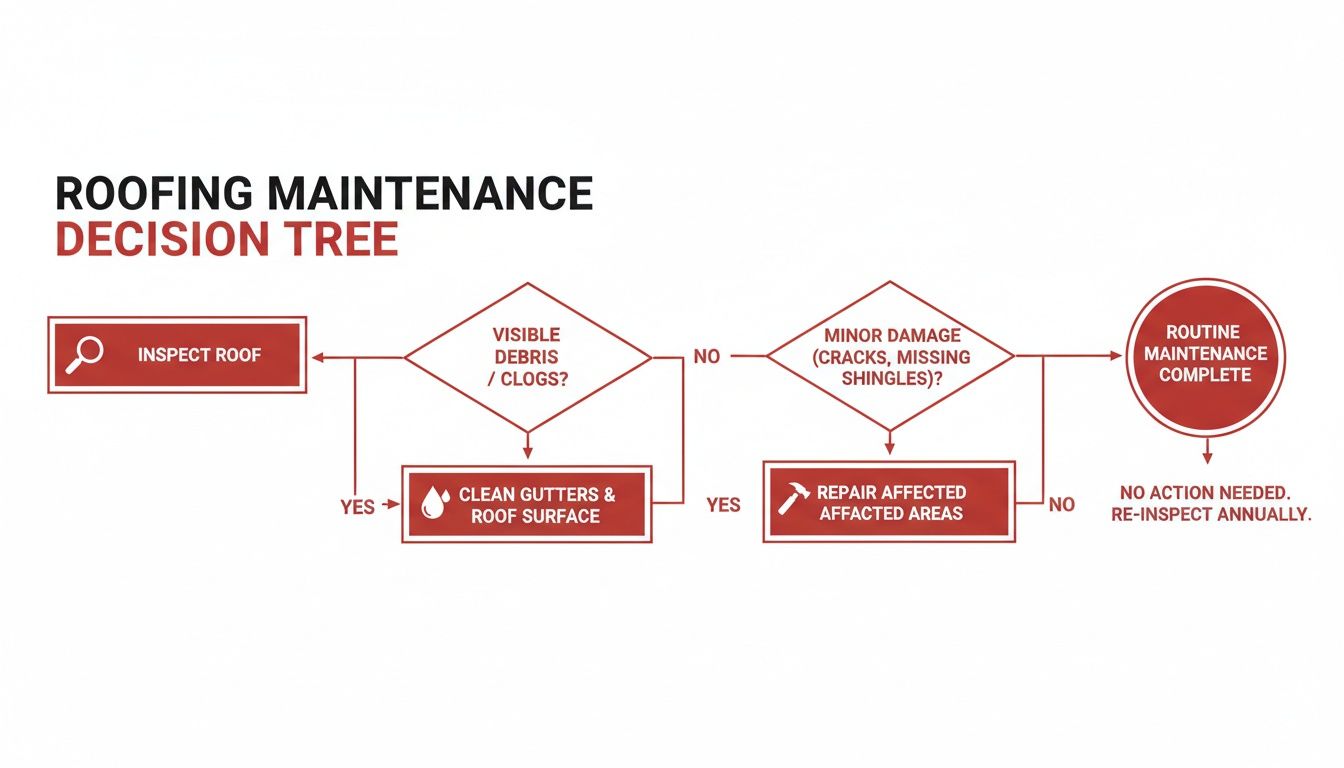
This process highlights a straightforward workflow that is key to getting the most out of either tile. For more expert insights on weighing your options for different home materials, check out this guide on Comparing Cedar vs. Pressure-Treated Fence Materials.
Frequently Asked Questions About Clay and Concrete Tiles
Here are some of the most common questions we get from homeowners trying to decide between clay and concrete tiles. Getting straight answers on these practical points is often the last step before making a confident choice.
Do I need to reinforce my roof for clay or concrete tiles?
Almost certainly, yes. Both clay and concrete tiles are significantly heavier than materials like asphalt shingles. Before any reputable roofer begins work, they will require a structural engineer to inspect your home's framework to ensure it can handle the additional load. It's a critical safety step, and some reinforcement is often necessary when switching from a lighter material.
How does concrete tile color hold up compared to clay?
This is a key difference. Clay tile color is baked all the way through the material, so it won’t fade, even after decades of intense sun exposure. Concrete tile color is a surface finish. While modern manufacturing produces a durable finish, the color will inevitably lighten over the years due to UV radiation. Clay's color is permanent; concrete's is not.
Which tile is more resistant to impact from hail?
Generally, concrete tiles are more resistant to impact damage from hail than traditional clay tiles. The dense, heavy nature of concrete gives it an edge in standing up to severe weather. However, there are impact-resistant classes available for both materials, so it's important to check the specific product ratings if hail is a major concern in your area.
Which tile offers better energy efficiency?
Both are excellent for improving a home's energy efficiency, but clay tiles often have a slight advantage. The natural thermal properties of clay, combined with the air channel created by the tiles' curved shape, provide a highly effective insulation barrier. This design significantly reduces heat transfer into your attic, which can lead to lower cooling costs, especially in hot climates.
What is the typical warranty for clay and concrete roofs?
Warranties vary by manufacturer, but there’s a general trend. Concrete tiles typically come with a limited lifetime warranty, which often covers the product for about 50 years. Due to their extreme durability, high-end clay tiles are frequently backed by a lifetime or even a transferable lifetime warranty, reflecting the manufacturer's confidence that the product will last 100 years or more.