
Choosing a color for your tile roof in Arizona is a bigger decision than it might seem. It's not just about aesthetics; it's a practical choice that significantly impacts your home's energy efficiency, curb appeal, and long-term durability under the intense desert sun. The right shade can complement your home's architecture, adhere to HOA guidelines, and even lower your monthly cooling costs.
This guide will walk you through everything you need to know, from the science of "cool roofs" to coordinating colors with your home's style. We'll explore popular color trends, the importance of HOA approval, and how to ensure your chosen color stands the test of time.
Key Takeaways
- Cooler Colors, Lower Bills: Lighter tile roof colors reflect more sunlight, which can keep your roof surface up to 50°F cooler and potentially lower your annual cooling costs by 10-25%.
- Style is Key: The roof color should harmonize with your home's architectural style, whether it's a Spanish Revival, a modern build, or a classic ranch.
- Check with Your HOA: Before you commit to a color, you must get approval from your Homeowners Association (HOA) to avoid costly mistakes.
- Quality Matters for Longevity: Opt for high-quality tiles with UV-resistant finishes and color-through technology to prevent fading from the relentless Arizona sun.
How Your Roof Color Manages That Intense Desert Heat
Ever touched the hood of a black car after it's been sitting in a Phoenix parking lot all day? Then you know it's hot enough to fry an egg. A white car parked right next to it will still be hot, but noticeably less so. Your roof works on the exact same principle.
Choosing the right tile color isn't just about curb appeal; it's a critical decision that directly impacts how much solar heat your home soaks up versus how much it deflects. This isn't a small detail—it's one of the biggest factors in your home's overall energy performance and, ultimately, your monthly cooling bills.
The Science of "Cool" Roofs, Simplified
When we talk about how a roof handles the sun, two terms really matter: solar reflectance and thermal emittance.
Think of solar reflectance as how well your roof acts like a mirror to the sun. A tile with high solar reflectance bounces a huge portion of the sun's rays back into the sky before they ever have a chance to heat up your house.
Thermal emittance is the flip side of the coin. It's your roof's ability to quickly release whatever heat it does absorb. The best tile roofs for Arizona do both jobs exceptionally well, keeping your attic and your entire home cooler from the top down.
Dark vs. Light Tile: A Clear Winner for Arizona
Dark tiles—think deep charcoals, rich terra-cottas, and dark browns—are beautiful, but they have very low solar reflectance. They act like a sponge for solar energy, absorbing heat all day and radiating it down into your attic. This forces your AC to run constantly just to keep up, which you'll definitely see on your utility bill.
On the other hand, lighter colors like sand, light gray, beige, and white are what we call "cool roof" colors. They have high solar reflectance and act like a shield against the sun. By bouncing away most of that solar radiation, they can keep your roof's surface up to 50°F cooler on a scorching summer afternoon. That massive temperature difference means far less heat gets into your home, which translates directly into real savings.
The idea of using color to manage heat is nothing new. Think of the classic, light-colored architecture in the Mediterranean and Latin America. Those natural terracotta and white stucco buildings weren't just for looks; they were a centuries-old, practical way to keep interiors comfortable in hot climates.
This infographic sums up the three main things every Arizona homeowner needs to juggle when picking a roof color.
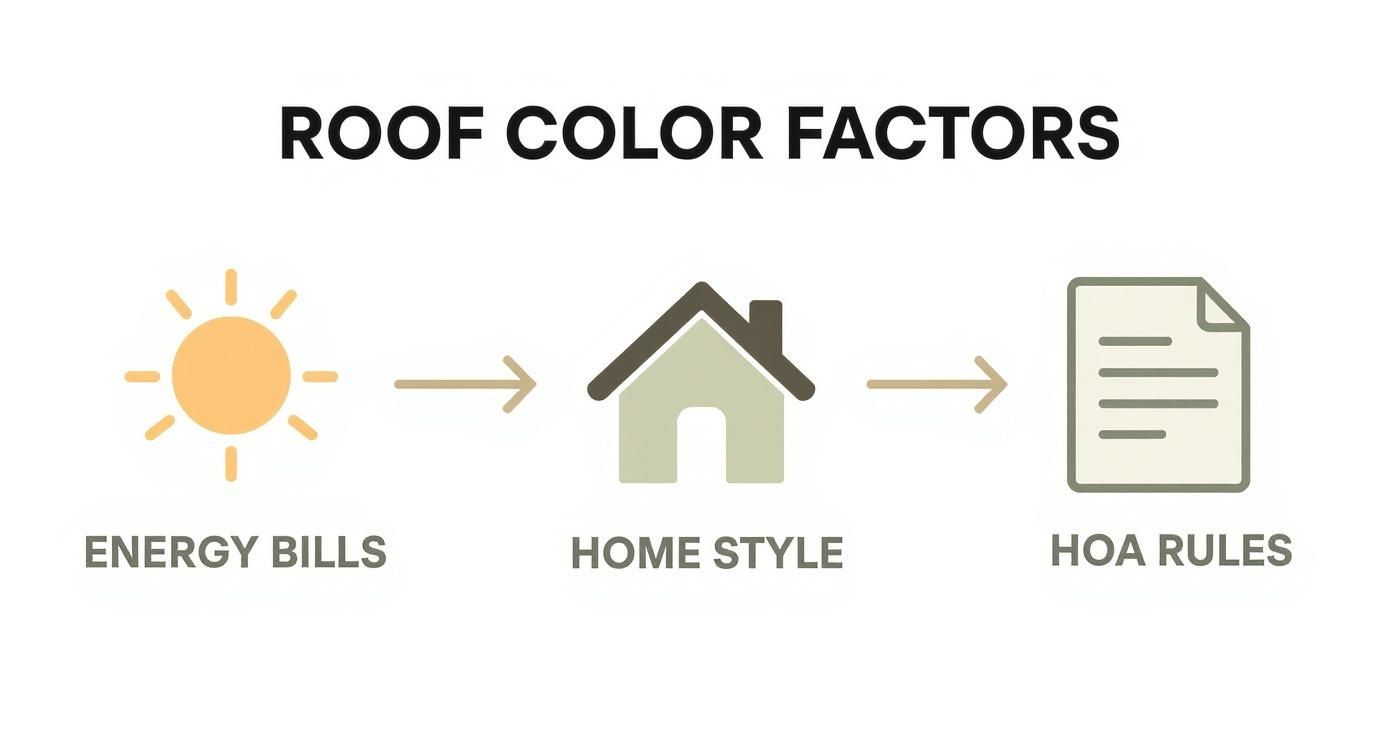
As you can see, it's a balancing act between energy efficiency, your home's architectural style, and what your local HOA will allow.
How Tile Color Impacts Roof Temperature and Cooling Costs
The numbers don't lie. A lighter-colored tile directly leads to a cooler roof and lower energy bills. This table breaks down what you can expect on a typical Arizona summer day.
| Tile Roof Color Family | Typical Surface Temperature (Phoenix Summer) | Solar Reflectance Index (SRI) | Potential Annual Cooling Savings |
|---|---|---|---|
| Dark (Black, Charcoal) | 160°F – 190°F | 0 – 20 | 0% (Baseline) |
| Mid-Tones (Red, Brown) | 140°F – 160°F | 21 – 35 | 5% – 10% |
| Light (Tan, Beige) | 120°F – 140°F | 36 – 60 | 10% – 15% |
| Very Light (White, Off-White) | 100°F – 120°F | 61 – 100+ | 15% – 25% |
It's clear that moving toward the lighter end of the spectrum provides a significant cooling advantage that pays you back every single month.
The Real-World Impact on Your Energy Bills
Opting for a reflective, lighter tile color is one of the smartest moves you can make for your home's energy efficiency. While a dark roof is actively working against your air conditioner, a light "cool roof" works with it to reduce the cooling load.
It’s not uncommon for homeowners who make the switch to see their summer energy bills drop by 10-25%. For a deeper dive into this, you can check out our guide on the top efficient roofing options to lower your energy bills. This one decision provides a passive cooling effect that works for you day in and day out, for years to come.
Popular Tile Roof Colors and Finishes in Arizona
When you think of a classic Arizona home, a certain picture probably pops into your head: a warm, earthy roof soaking up the sun against a brilliant blue sky. That look is timeless for a reason. But these days, the world of tile roof colors has exploded, giving homeowners an incredible range of options to shape their home's personality and even improve its performance.
From the tried-and-true classics to sleek, contemporary shades, the color you choose can completely redefine your home's curb appeal.
The Classics: Terracotta and Spanish Reds
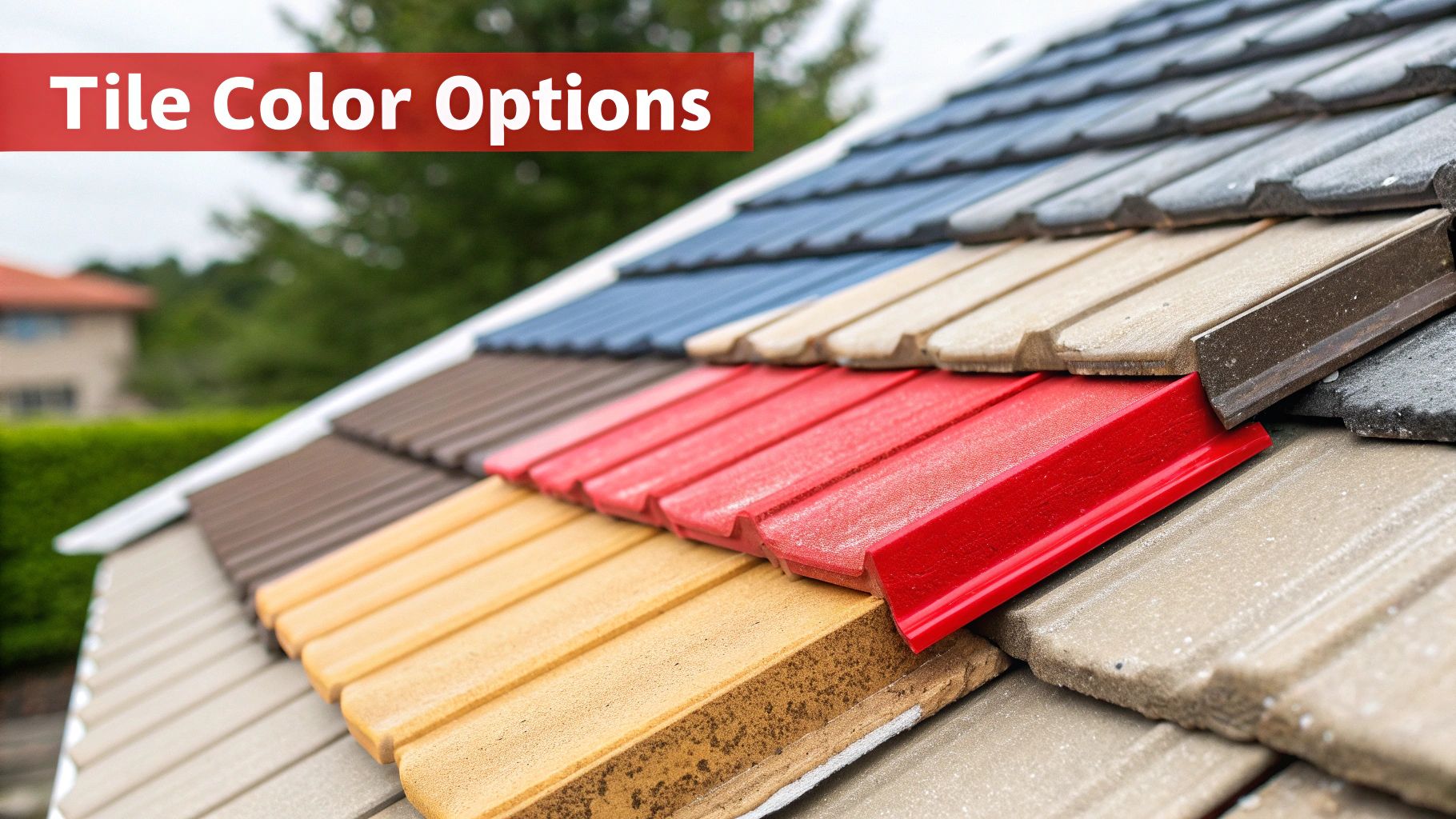
For decades, the soul of Arizona's residential look has been its warm, sun-baked hues. Terracotta and Spanish Red aren’t just paint colors; they're woven into the very fabric of our region's architecture.
- Terracotta: This is the quintessential earthy orange-brown that mirrors the natural clay of the desert itself. It's the perfect match for Spanish, Mediterranean, and Santa Fe-style homes, creating a look that feels both authentic and incredibly welcoming.
- Spanish Red: Think of this as terracotta’s slightly deeper, richer cousin. It brings a touch of drama and elegance, especially when paired with crisp white or cream stucco walls. The contrast is stunning—traditional, yet undeniably upscale.
These warm tones are so deeply rooted in Arizona's aesthetic that they offer a look that simply never feels dated.
The New Wave: Modern Neutrals and Cool Tones
While the classic reds will always have their place, a new wave of modern neutrals is showing up on rooftops all over the state. More and more, homeowners are leaning into cooler, more versatile shades that deliver a clean, contemporary look along with some serious energy-saving perks.
Lighter tile roof colors like soft beige, tan, and taupe are masters at reflecting the sun's harsh rays. This simple act of physics helps keep your attic—and your entire home—cooler, taking a significant load off your air conditioning system during those long summer months.
Lighter shades aren't just a style choice; they're a smart, practical response to our climate. Swapping an old, dark roof for a sandstone or light gray one can make a real, measurable difference in your attic's temperature, which you'll feel in both comfort and your monthly utility bills.
Shades of gray, from a gentle dove gray to a bold charcoal, have also surged in popularity. They bring a sophisticated, modern vibe that works with almost any home style, whether it’s a classic ranch or a sharp, minimalist new build.
Adding Dimension with Color Blends
Why pick just one color when a blend can create so much more character? Many homeowners are now choosing blended tile roof colors, which involves mixing two or three complementary shades right on the roof. It’s a fantastic way to add texture and a custom-designed feel.
Some of the most popular blends we see in Arizona include:
- Red and Brown Blends: A mix of terracotta with darker browns creates a rich, rustic look full of warmth.
- Tan and Gray Blends: This is a more subtle combination that adds a ton of visual interest without screaming for attention.
- Multi-Tone Earth Blends: A sophisticated medley of beige, brown, and muted red gives the roof a dynamic, natural appearance.
This strategy completely breaks up the flat, uniform look of a single-color roof. It adds depth and a bespoke quality that gives your home's curb appeal a major boost.
This desire for variety is a big deal globally. The roofing tiles market hit about USD 35.2 billion in 2024, and North America makes up over 40% of that. Color preferences often track with materials; traditional clay tiles, famous for their natural red and terracotta shades, are expected to hold a 42% market share by 2035. At the same time, concrete tiles, which can be made in a much wider array of colors like modern grays and blacks, are becoming more popular. You can dive deeper into these global roofing tile market trends and forecasts.
It’s Not Just Color—It’s the Finish
Beyond the color itself, the tile's finish has a huge impact on the final look. The exact same color can look completely different based on how its surface is treated.
- Standard Finish: This is a smooth, even surface that delivers a clean, consistent color across the whole roof.
- Sand-Cast Finish: Here, the surface is slightly textured with a matte feel. It gives the tile a more rustic, weathered, and natural look.
- Glazed Finish: This is a high-sheen, protective topcoat. It can make colors appear deeper and adds a reflective quality, though it’s less common for homes here because of the intense glare it can produce.
Finding the right mix of color and finish is how you create a look that’s truly yours—one that not only matches your style but also stands up to the intense Arizona sun.
Pairing Roof Colors with Your Home's Architecture
Think of your roof as the fifth wall of your house. It’s one of the biggest and most visible features, covering a massive amount of real estate. The right color tile doesn't just protect your home; it ties the entire look together, making everything feel intentional and cohesive. If you choose a color that clashes, it can throw off the whole vibe. But the perfect match? That can take your curb appeal to a whole new level.
This guide is all about helping you nail that perfect match for common Arizona home styles, so your new roof honors your home's unique character.
Spanish and Mediterranean Revival Homes
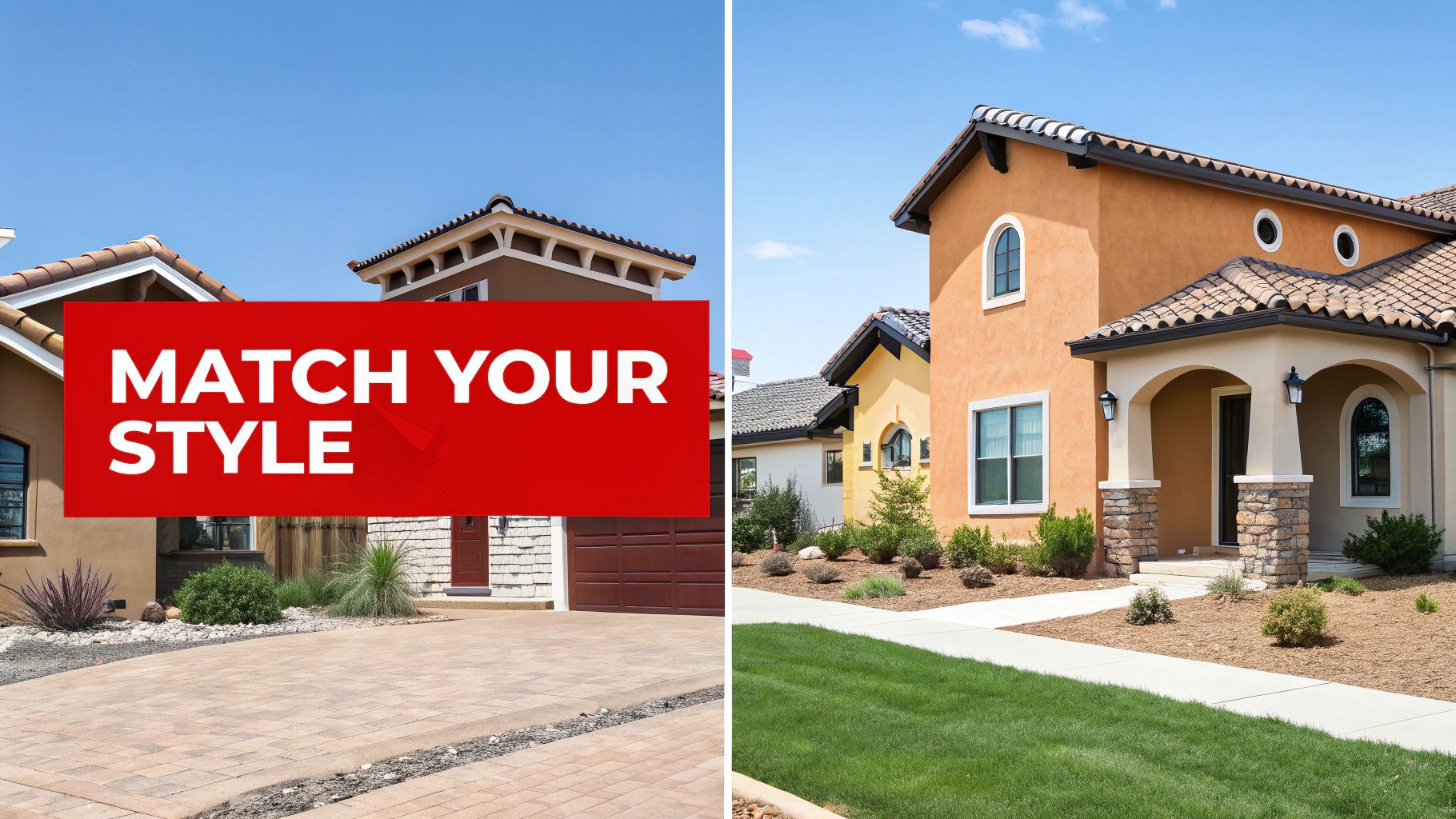
Spanish and Mediterranean homes are all about warmth and romance. Think white stucco, arched windows, and maybe some beautiful ironwork. These houses need a roof that complements that earthy, sun-drenched spirit.
The classic choice here, and for good reason, is Terracotta or a traditional Spanish Red. These warm, reddish-brown tones are historically authentic and create a stunning pop of color against light-colored walls. You also can't go wrong with multi-toned brown and red blends. They add texture and a rustic, sun-baked look that feels perfect for the desert.
Modern and Contemporary Properties
Modern architecture is a completely different ballgame. It's all about clean lines, bold geometric shapes, and a less-is-more attitude. Here, the roof should be a sleek, unifying element that enhances the structure, not distracts from it.
Cooler tones are the clear winner. A Charcoal Gray or even a striking Deep Black tile roof creates a sharp, sophisticated contrast that makes those modern angles pop. For a slightly softer but equally clean look, a crisp Light Gray or a solid white can make a powerful statement, especially on homes with flat or low-pitched roofs.
The secret is finding the right balance between contrast and harmony. A white Spanish-style home just sings with a warm terracotta roof. A sleek, modern home gets an instant boost of sophistication from a dark charcoal one. The goal is to make both the roof and the siding look their absolute best.
Pueblo and Santa Fe Styles
Pueblo and Santa Fe architecture is pure Southwest, drawing inspiration from the region's Native American and Spanish colonial roots. These homes are defined by their massive, earth-colored walls, soft rounded corners, and flat roofs with those iconic protruding wood beams (vigas).
The perfect tile colors for these homes are organic and muted. You want the roof to feel like it grew right out of the landscape. Think of shades that mimic the desert itself: sandy beige, muted reds, and light brown or tan hues. The roof should feel like a natural extension of the adobe-like walls, not a separate feature competing for attention.
Classic Ranch Homes
The Ranch is easily one of Arizona’s most common and versatile home designs. With its single-story layout and low-pitched roofline, it’s a fantastic canvas for a wide range of color palettes. This flexibility is great news for homeowners because it opens up a ton of options.
A classic Ranch can pull off almost any color, as long as it works with the siding and trim.
- Brown and Tan Blends: This is a safe bet. They provide a warm, inviting look that complements most exterior paint colors.
- Muted Grays: These offer a more contemporary update to a traditional Ranch, giving it a fresh, modern edge.
- Earthy Greens: For something truly unique, these can create a beautiful, nature-inspired feel, especially on homes that already have stone or wood accents.
The key is to step back and look at the whole picture—siding, trim, stonework, and even your landscaping—to create a unified look. It can be hard to picture the final result, which is why exploring the top architectural rendering software can be a huge help in visualizing how different colors will look on your actual home. And of course, the material itself plays a role; you can learn all about the differences between clay and concrete roof tiles in our detailed guide. By carefully considering all your options, you'll find the perfect tile color to make your home shine.
Understanding HOA Rules and Local Building Codes
Before you fall in love with a specific tile roof color, there’s a crucial step you absolutely cannot skip: checking the rulebook. In many Arizona neighborhoods, especially in planned communities across Scottsdale and Paradise Valley, your choice isn’t entirely your own. It has to pass muster with your Homeowners Association (HOA) and local city ordinances.
It might feel like navigating red tape, but these rules are there for a reason. Ignoring them can lead to some serious headaches—think frustrating delays, hefty fines, or even the nightmare scenario of having to tear off and replace a brand-new roof that isn't compliant. Getting a handle on the process from the start is the secret to a smooth project.
Why Your HOA Cares About Your Roof Color
So, why does your HOA have a say in your roof? It all comes down to maintaining a cohesive, attractive look that protects property values for everyone in the community. Since the roof is one of the most prominent features of any home, HOAs almost always have a list of pre-approved color palettes.
These palettes are carefully chosen to complement the neighborhood's architectural style and blend with our unique desert landscape. The idea is to prevent that one lime green roof from sticking out like a sore thumb and disrupting the visual harmony of the entire street.
"Always treat the HOA approval process as the very first step, not an afterthought. Getting their written sign-off before you order any materials protects you, your contractor, and your investment from any potential disputes down the road."
Your first move should be to get a copy of your HOA's specific architectural guidelines. This document is your roadmap, detailing the approved tile roof colors and the exact steps you need to follow for submission.
Navigating the HOA Approval Process
Getting approval is usually pretty straightforward, as long as you follow the process to the letter. Most rejections happen when people rush or submit incomplete paperwork.
Here’s how it typically works:
- Review the Guidelines: Get your hands on the official architectural standards from your HOA. Find the section on roofing and read it carefully.
- Obtain Samples: Ask your roofing contractor for physical samples of the tile colors you’re considering—make sure they are from the HOA's approved list.
- Submit Your Application: Fill out the architectural review form. You’ll almost always need to include the physical tile samples, a brief description of the work, and your contractor's details.
- Wait for Written Approval: This is the big one. Don't let any work begin until you have that formal, written approval in hand from the HOA board or its committee.
Following these steps keeps everyone on the same page and covers you from any future problems. For more advice on making a great choice, check out our guide on how to choose a roof color.
Local Building Codes and Cool Roof Requirements
On top of HOA rules, you also have to consider what the city requires. In an effort to push back against the urban heat island effect, many Arizona cities now have building codes that mandate or encourage "cool roofs."
These codes often specify a minimum Solar Reflectance Index (SRI) value for roofing materials. Simply put, a higher SRI means the roof reflects more sunlight and absorbs less heat, which helps keep your home cooler. As you’d expect, lighter tile roof colors tend to have a much higher SRI.
A good, local roofing professional will know the specific code requirements for your city and can help you find options that check all the boxes—satisfying the building inspector, your HOA, and your own personal style.
How Your Roof's Color Will Hold Up Over Time
A new tile roof is a huge investment in your home. It's not just about how it looks the day it's installed, but how that color will look after years under the intense Arizona sun. Thinking about long-term performance now is the key to being happy with your choice down the road.
The biggest challenge here is our relentless UV radiation. It's just a fact of life in Arizona. Darker pigments absorb more of that intense sunlight, which means they're naturally more prone to fading over many, many years compared to lighter shades. A deep charcoal or a rich terra cotta might look stunning and hide dust well, but it's got a tougher fight ahead of it.
But don't let that scare you away from darker colors. Top-tier tile manufacturers know all about our sun. They've engineered advanced, UV-resistant finishes and, more importantly, "color-through" technology. This is where the pigment is mixed all the way through the tile, not just baked onto the surface. These innovations make a massive difference, slowing down the fading process so your roof holds its color for decades, not just a few years.
Protecting Your Color and Your Investment
No matter what color you pick, a little bit of maintenance goes a long way in keeping it looking fresh and doing its job. Think of it as simple upkeep to protect a major part of your home.
- Walk the Property: At least once a year (maybe after monsoon season), do a quick visual check from the ground. Look for obviously cracked or broken tiles, piles of leaves in the valleys, and any dark streaks that could be algae starting to form.
- Clean with Care: If you notice dirt or buildup, a gentle, low-pressure rinse is all it takes. Never let someone blast your roof with a high-pressure washer. It can strip the protective finish right off and even damage the tiles themselves.
- Clear the Debris: Get leaves, branches, and palm fronds off the roof and out of the gutters. Letting that stuff sit creates mini-dams, trapping moisture that can lead to stains and mildew.
People often ask, "Can't I just paint my roof tiles a new color later on?" While you can, it's a really bad idea here in Arizona. The sun will bake, peel, and flake that paint in no time, which not only looks terrible but can trap moisture and damage the tile underneath. Plus, it's a surefire way to void your manufacturer's warranty.
The Warranty: Your Color's Best Friend
Your manufacturer's warranty is the ultimate backup for your color choice. Before you sign on the dotted line, you absolutely have to read the fine print and see what it says about color.
Look for specific language that covers significant fading or discoloration. Most quality tile brands offer color warranties that last anywhere from 20 years to the lifetime of the tile. This is their promise to you that the beautiful roof you paid for will stay that way. Double-check that the exact color you've picked is fully covered, as some custom blends or very dark shades can sometimes have different terms. A little diligence now gives you peace of mind for the next few decades.
Frequently Asked Questions About Tile Roof Colors
Navigating the world of tile roof colors can bring up a lot of questions. Here are clear, straightforward answers to some of the most common concerns Arizona homeowners have.
Will a lighter roof color actually lower my energy bill?
Yes, absolutely. A lighter, more reflective tile roof can significantly reduce the amount of solar heat your home absorbs. This lessens the strain on your air conditioning system, which doesn't have to work as hard to cool your home. Homeowners who switch from a dark roof to a lighter "cool roof" can often see their annual cooling costs decrease by 10-25%.
Do dark tile roofs fade faster in the Arizona sun?
Darker pigments naturally absorb more UV radiation, which can make them more susceptible to fading over many years compared to lighter colors. However, reputable manufacturers combat this with advanced UV-resistant finishes and "color-through" technology, where the pigment is mixed throughout the entire tile. When choosing a dark color, prioritize a high-quality brand with a strong warranty against fading.
What is the most popular tile roof color in Arizona?
Classic earth tones like terracotta, Spanish red, and sandy beige blends remain the most popular choices. They perfectly complement the desert landscape and are a staple of Southwestern and Spanish-style architecture. However, modern neutrals, particularly shades of light and charcoal gray, are rapidly gaining popularity for their clean, contemporary look and versatility.
Can I just paint my existing roof tiles a new color?
While it is technically possible to paint roof tiles, it is strongly discouraged in Arizona's harsh climate. The intense sun will likely cause the paint to crack, peel, and fade within a few years, creating an unsightly appearance and potentially trapping moisture that could damage the underlying tiles. A full roof replacement is the only recommended long-term solution for a durable and warrantied color change.
How do I choose a color that won't look dated in 10 years?
To ensure a timeless look, stick with colors that harmonize with your home's fixed elements (like brick or stone) and the surrounding natural landscape. Earth tones, neutrals like gray and beige, and classic terracotta are safe bets that rarely go out of style. Blended colors can also add a classic, textured look that ages well.