
Choosing a new roof color is one of the biggest aesthetic decisions a homeowner can make. It dramatically impacts your home's curb appeal, can influence your monthly energy bills, and is a choice you'll live with for decades. In a place like Arizona, where the sun plays a major role, the decision becomes even more critical. This guide is designed to walk you through every factor, from matching your home's architectural style to understanding the financial benefits of a lighter, more reflective roof under the intense desert sun.
Key Takeaways
- Consider Your Climate: In hot climates like Arizona, lighter roof colors are more energy-efficient. They reflect sunlight and reduce heat absorption, which can lower your cooling costs by 7-15%.
- Harmonize with Your Home's Exterior: Your roof should complement your home's existing elements like brick, siding, stucco, and trim. Use physical samples against your house to see how colors look in different lighting conditions.
- Material Matters: The type of roofing material (asphalt shingles, tile, metal) dictates the available color and texture options.
- Check HOA Rules: Before you get attached to a color, review your Homeowners' Association guidelines. Most have a pre-approved color palette to maintain neighborhood consistency.
- Think Long-Term: Neutral colors like grays, tans, and browns have broader appeal and can positively impact your home's resale value.
Choosing Your Perfect Arizona Roof Color
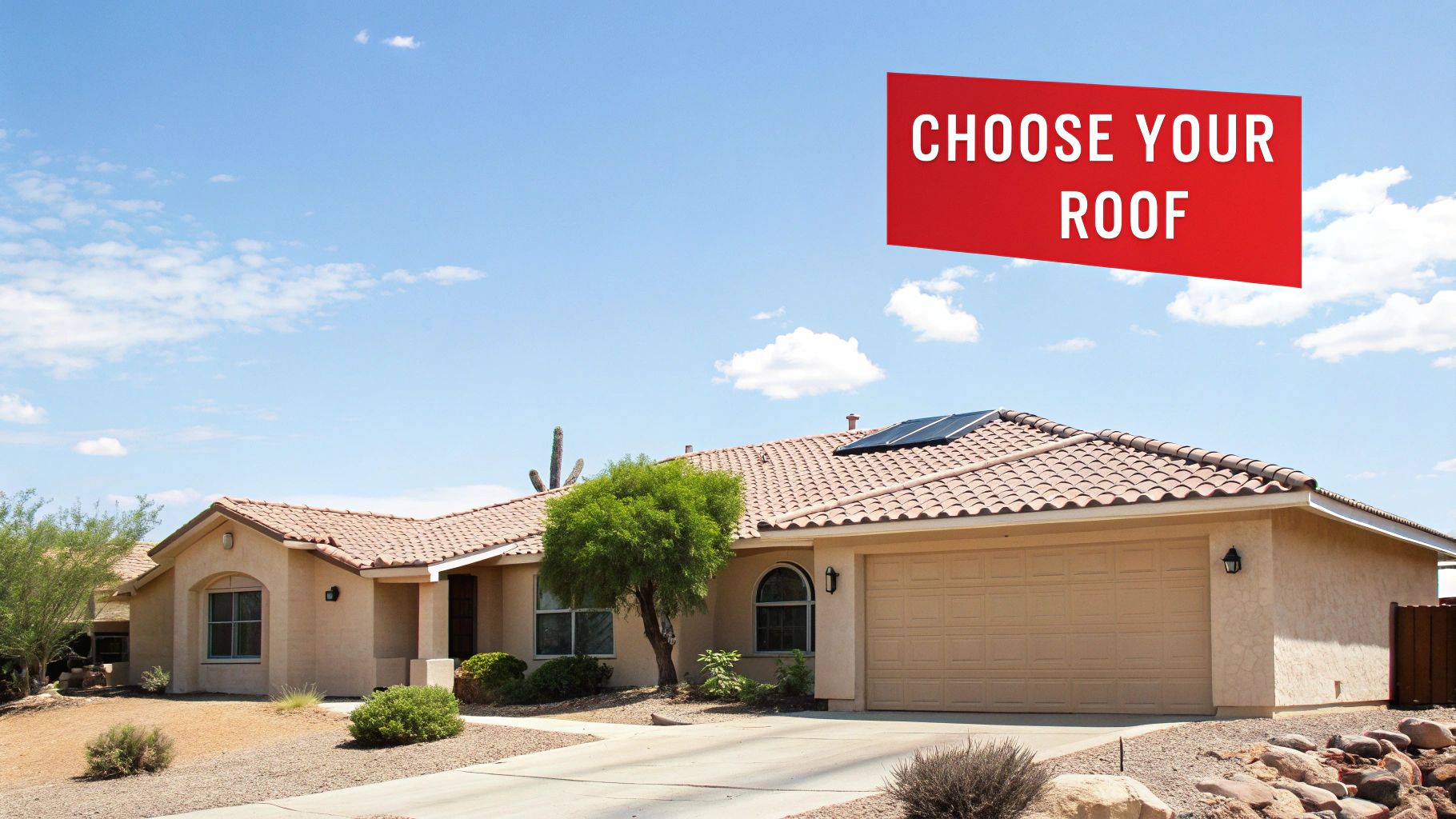
Picking a new roof color is easily one of the most visible design choices you'll ever make for your house. Think about it—your roof can make up as much as 40% of what people see from the street. The color you land on has a massive impact. It’s not about finding a shade that looks nice on a tiny sample chip. It's about finding a color that creates a cohesive look with your home's architectural style, its paint or stucco, and the unique Sonoran Desert landscape that surrounds us.
Here in Arizona, this decision carries extra weight. The relentless sun means color isn't just about style—it's about function. Your choice directly affects your home's internal temperature and, by extension, your monthly energy bills. A lighter, more reflective "cool roof" can keep your attic dramatically cooler than a dark, heat-absorbing one, which takes a huge load off your HVAC system during those scorching summer months.
Key Takeaway: The best roof color for an Arizona home is a strategic blend of personal taste, architectural harmony, and climate-conscious engineering. It should boost curb appeal while actively working to keep your home cool.
What to Expect in This Guide
I’ve designed this guide to cut through the confusion of choosing a roof color. We'll walk through everything an Arizona homeowner needs to consider, from the practical limitations to the creative possibilities. My goal is to help you understand how to:
- Figure out what your current roofing material can and can't do, color-wise.
- Grasp the real connection between roof color and energy efficiency.
- Coordinate a new roof with your home's existing exterior elements.
- Navigate tricky HOA rules and think about long-term resale value.
By the time you're done reading, you’ll have a solid game plan for picking a color that not only looks incredible but also performs beautifully under the Arizona sun.
Start with Your Roofing Material and Condition
Before you get lost in paint chips and color swatches, the first real step is a practical one. You need to get up close and personal with your current roof. What’s it made of, and what kind of shape is it in? The material itself dictates your color palette, grounding what seems like a purely cosmetic choice in the physical reality of your home.
Every roofing material has its own personality, and that directly impacts the colors and textures available. What looks great on tile might not even be an option for metal.
- Asphalt Shingles: These are the chameleons of the roofing world, offering an incredible spectrum of colors. Most aren't just one flat color; they use granular blends to create a multi-toned, textured look that adds a lot of visual depth.
- Clay or Concrete Tiles: A true Arizona classic. These are all about rich, earthy tones—think terracotta, warm browns, and sandy beiges. The color is baked right into the material, giving it a natural, long-lasting finish.
- Metal Roofing: If you're going for a clean, modern aesthetic, metal is a great choice. The colors are typically solid and applied as a durable coating, running the gamut from deep charcoal to highly reflective silvers and whites.
Don't forget about texture. The gritty, layered surface of dimensional shingles creates a beautiful, complex look that you just can't get with a smooth metal panel. If you want to dive deeper, understanding architectural shingles can really help you see how different materials create different visual effects. Knowing this helps you match your vision with what’s actually possible.
Repair, Re-coat, or Full Replacement?
Next up is a hard look at your roof's current condition. This is a critical assessment because it determines whether you’re making a small tweak or a major change. Are you just patching things up, or are you starting with a completely blank slate?
A simple repair or re-coat is going to narrow your options considerably. If you’re just swapping out a few broken tiles or rolling a new elastomeric coating over an existing foam roof, your main job is to match the current color. This isn't the time for a big makeover; the goal is to make the repair disappear.
A full roof replacement, on the other hand, changes everything. It’s your chance to completely transform the look of your home's exterior. A new roof opens up the entire catalog of colors and even gives you the freedom to switch materials if your home’s structure can handle it.
This is a crucial fork in the road. A roof replacement is a major investment, but it provides complete creative freedom. A repair is more budget-friendly but locks you into your current color scheme.
Figuring out which path to take is your first real decision. If your roof is getting old—and in the harsh Arizona sun, that can be 15-20 years for many asphalt shingle roofs—a full replacement often makes more sense in the long run than pouring money into constant repairs. This initial reality check sets the stage for everything that follows, making sure your creative ideas align with what your roof actually needs.
How Your Roof Color Directly Impacts Your Energy Bills
Here in Arizona, your roof does more than just keep the rain out—it's your home's first line of defense against the relentless sun. The color you pick plays a huge role in your home's energy efficiency, directly affecting how comfortable you are and how much you pay SRP or APS each month.
It really boils down to a simple concept: dark colors absorb heat, and light colors reflect it. Think about a car sitting in a parking lot on a July afternoon. A black car feels like an oven inside, while a white one is noticeably cooler. Your roof works the exact same way. A dark roof soaks up the sun's energy, transferring that heat down into your attic and living spaces, which forces your HVAC system to work overtime.
The material you choose is just as important as the color. Some materials are naturally better at handling the Arizona sun than others.
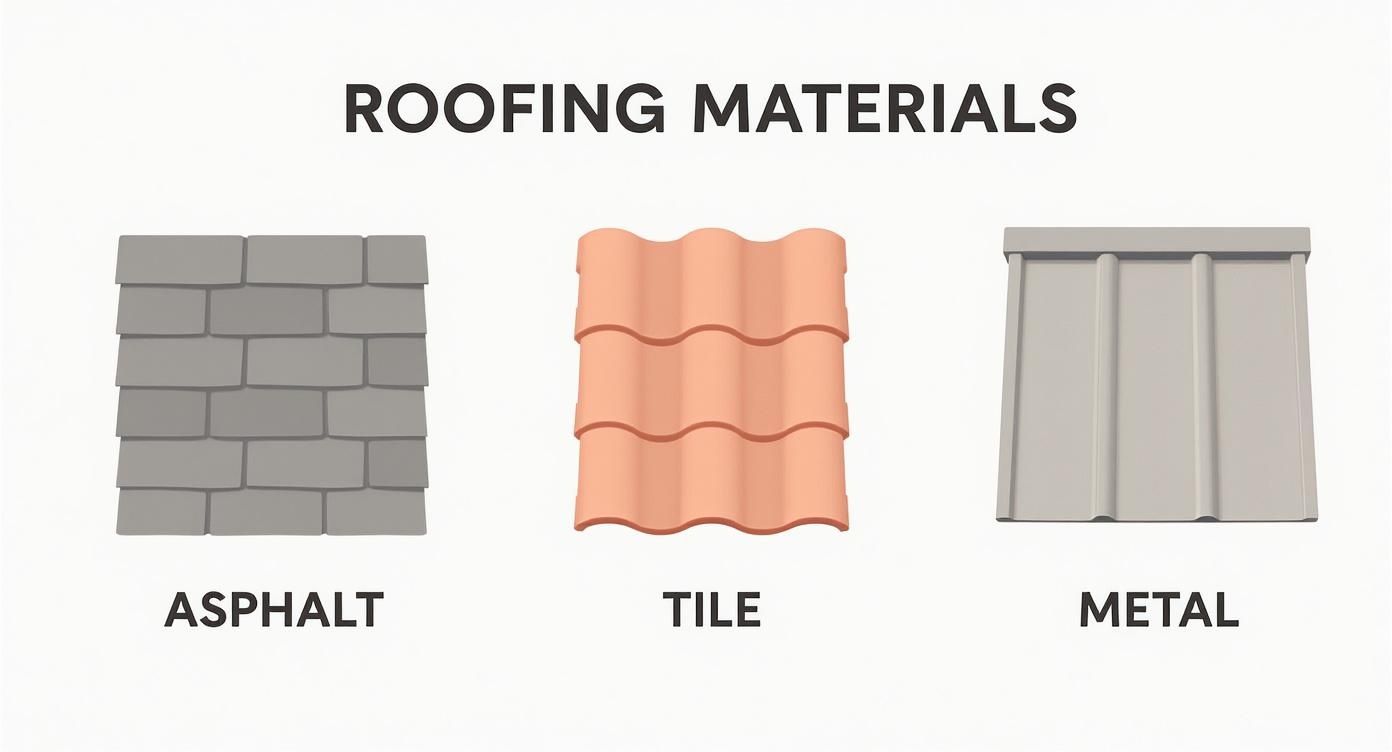
As you can see, materials like tile and metal have great built-in reflectivity, which is a big head start when it comes to saving on energy costs.
What Are “Cool Roofs” and How Does Solar Reflectivity Work?
You'll hear the term "cool roof" thrown around a lot, and it's a straightforward idea. A cool roof is simply one designed to reflect more sunlight and absorb less heat than a standard roof. This is done using highly reflective paints, special coatings, or tiles and shingles manufactured to be reflective.
The primary goal is to drop the roof's surface temperature, sometimes by more than 50°F. A cooler surface means significantly less heat gets conducted down into your house.
This isn't just a gimmick; the science is solid and the savings are real. Research in sun-drenched regions has shown that white roofs can absorb up to 40% less solar energy than black roofs. In practical terms, that led to a 25% reduction in cooling needs during the hottest summer months.
This is where a term like the Solar Reflectance Index (SRI) comes in handy. It might sound technical, but it's just a simple score that measures how well a roof rejects solar heat. A higher SRI value means a cooler roof, period.
My Pro Tip: When you’re talking to a roofing contractor, always ask for the SRI values of the materials they’re proposing. For most homes in Arizona, you want an SRI of 29 or higher. Hitting that number can make a massive difference in your cooling bills.
Breaking Down the Financial Impact of Lighter Roof Colors
So, how does this translate to your bank account? A cooler attic means your air conditioner isn't fighting a losing battle all day long. Since your A/C is usually the biggest energy hog in your home, this is a big deal. Homeowners with a cool roof often see savings of 7-15% on their total cooling costs.
Over the 20-30 year lifespan of a new roof, those savings can easily add up to thousands of dollars.
Let's imagine two neighbors on the same Phoenix street in August:
- Home A (Dark Roof): They went with a beautiful dark charcoal shingle. Their attic temperature regularly hits 150°F, and the A/C runs almost non-stop from May to September.
- Home B (Light Roof): This neighbor chose a light tan tile. On the same day, their attic stays closer to 120°F. Their A/C cycles on and off much less, using far less electricity.
The homeowner in Home B isn't just saving money every month; they're also putting less wear and tear on their HVAC system, which helps it last longer. The choice of roof color becomes a long-term financial win.
To see just how big an impact your roof can have, check out this guide on the top efficient roofing options to lower your energy bills.
The table below gives a quick visual of how different color families perform under the Arizona sun.
Roof Color Energy Efficiency Comparison for Arizona Homes
| Color Category | Typical Solar Reflectance | Heat Absorption | Impact on Cooling Costs | Example Colors |
|---|---|---|---|---|
| Light/White | 0.70 – 0.85 | Low | Highest Savings | White, Off-White, Light Beige |
| Pastels/Light | 0.50 – 0.70 | Moderately Low | Significant Savings | Light Gray, Sand, Tan, Light Terracotta |
| Medium | 0.25 – 0.50 | Moderate | Moderate Savings | Medium Gray, Earth Tones, Weathered Wood |
| Dark | 0.05 – 0.25 | High | Minimal to No Savings | Charcoal, Dark Brown, Black, Deep Red |
As the data shows, moving from a dark to a light color has a dramatic effect on how much heat your roof absorbs, which directly translates into how hard your A/C has to work.
There's no denying the classic, sharp look of a dark roof. But here in the desert, you have to weigh that aesthetic choice against the very real financial and comfort benefits of a lighter, more reflective color. The good news is that you can often find a great middle ground—like a soft gray, a sandy tan, or even a specially treated "cool" dark color—that gives you both beautiful curb appeal and smart performance.
Matching Your Roof to Your Home's Style
Think about it: your roof can make up a whopping 40% of what people see from the curb. It’s a huge part of your home's visual real estate. Getting the color right is what separates a home that looks "off" from one that feels thoughtfully designed and complete. This isn't just about picking a color you like; it's about making sure your new roof looks like it truly belongs.
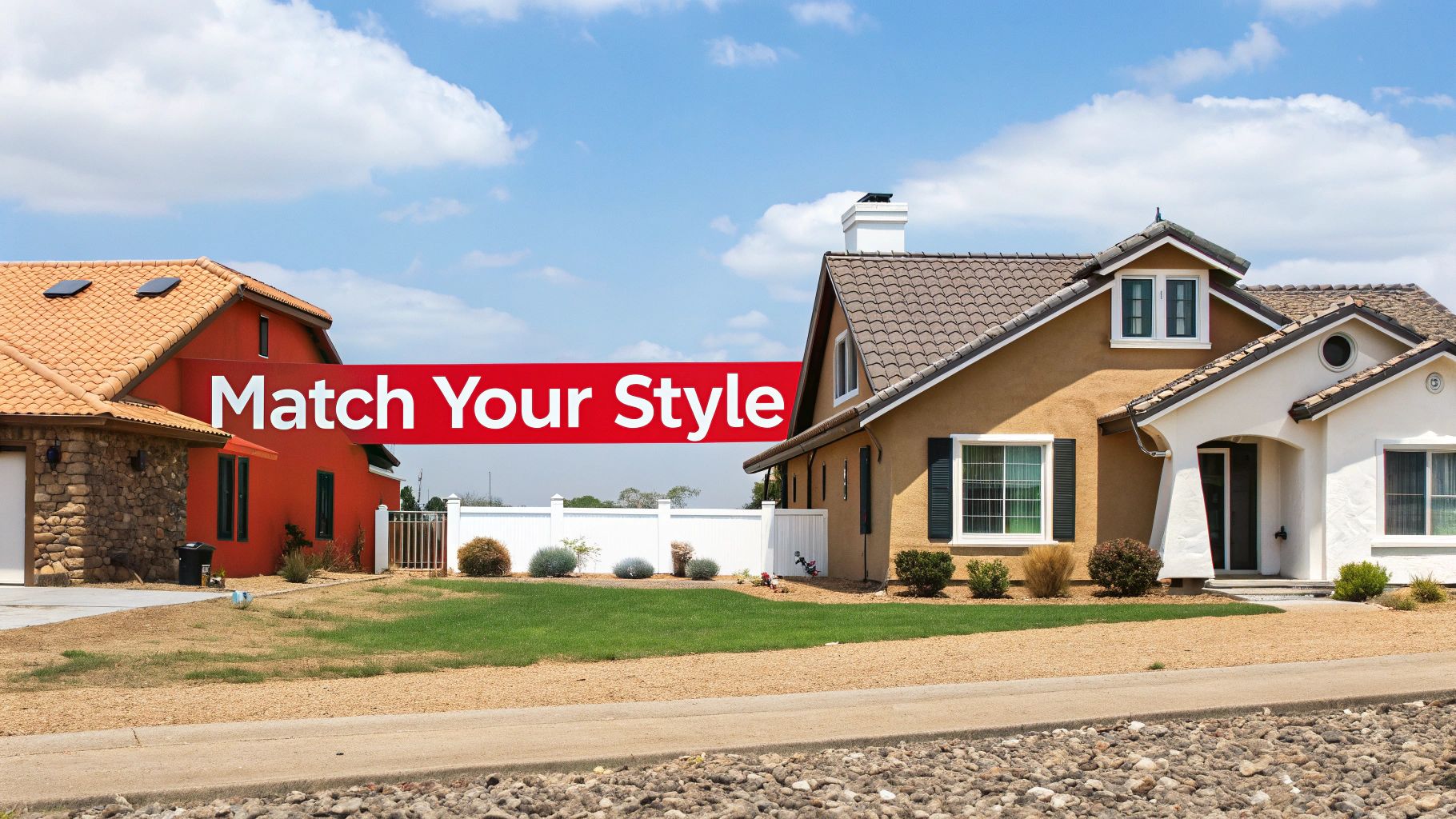
The best place to start is by looking at what isn't changing. I’m talking about the "fixed" features of your home—the brick, the stone accents, or the base color of your stucco. These materials have their own undertones and color stories, and your roof has to get along with them, either by complementing them subtly or by creating a deliberate, eye-pleasing contrast.
A simple guideline I often share with homeowners is to go for a bit of contrast. If your home's body is light and airy, a slightly darker roof adds definition and weight. On the flip side, if you have a darker home, a lighter roof keeps it from looking too heavy and monolithic.
For example, a house with warm, reddish brick just sings when paired with a deep brown or a charcoal gray roof that has warm undertones. But if your home has cool-toned gray stone, it’ll look incredibly sharp with a slate gray or even a nearly-black shingle with blueish undertones. The trick is to identify whether your home's permanent features lean warm (reds, yellows, browns) or cool (blues, grays, blacks).
Arizona Architectural Styles and Color Palettes
Here in Arizona, our architecture has a distinct personality that’s meant to blend with the desert landscape. Picking the right roof color is absolutely essential to nail that authentic look.
- Spanish Colonial & Territorial: These homes, with their classic stucco walls, just beg for warm, earthy colors. Terracotta tile is the obvious, traditional choice, but you can capture the same vibe with shingles in rich browns, deep reds, or even sandy beiges. You're aiming to echo the natural hues of clay and desert soil.
- Modern Desert Contemporary: This style is all about clean lines and minimalist flair. These homes look stunning with sleek, monochromatic roof colors. Imagine a dark charcoal or pewter gray metal roof creating a powerful, sophisticated look against light-colored stucco or block walls.
- Classic Ranch: The beauty of the ranch is its versatility. A "weathered wood" style shingle—a beautiful mix of browns and grays—can add a ton of rustic character. If you're going for a more updated feel, a solid medium-gray or a warm tan roof can give a classic ranch a fresh, clean look that really emphasizes its long, low profile.
A recent survey from GAF Roofing confirms that these versatile, neutral shades are what homeowners are choosing nationwide. For 2025, the top colors are Charcoal (27%), Weathered Wood (24%), Pewter Gray (22%), and Barkwood (18%). That means these four colors alone account for over 90% of new shingle roofs—a clear sign that people value colors that work well across many home styles.
Creating a Cohesive Exterior Look
Once you've narrowed it down to a color family, it's time to zoom out and look at the whole picture. Your roof doesn't exist in a vacuum. It has to coordinate with your trim, shutters, garage door, and even the plants in your front yard.
All these elements need to feel like they're part of the same design. A home with a brown roof might look fantastic with cream-colored trim and a deep green front door, pulling all those natural, earthy tones together. Getting this right is key, so I always suggest exploring different exterior paint color combinations to see what resonates with your home's style.
To help you get started, here's a quick guide I've put together based on common materials we see on Arizona homes.
Roof Color Pairing Guide for Common Exterior Finishes
| Exterior Material/Color | Complementary Roof Colors | Contrasting Roof Colors | Notes for Arizona Homes |
|---|---|---|---|
| White/Cream Stucco | Light Grays, Tans, Weathered Wood | Charcoal, Dark Brown, Terracotta | A classic, versatile base. Darker roofs create a popular, crisp look under the bright sun. |
| Red/Orange Brick | Dark Brown, Warm Charcoal, Black | Deep Greens, Slate Gray (use with caution) | Stick to warm-toned grays and browns to avoid clashing with the brick's undertones. |
| Tan/Beige Stucco | Weathered Wood, Brown, Bronze | Charcoal, Black | Creates a warm, earthy, and very "Arizona" monochromatic palette. |
| Gray/Blue Siding | Pewter Gray, Slate Gray, Black | White, Light Gray | A cool-toned roof enhances a modern aesthetic. A black roof offers a bold, sharp contrast. |
| Natural Stone | Pull a secondary color from the stone (e.g., gray, tan) | Dark Charcoal or Black to make the stone the focal point. | Look closely at the stone—it will have flecks of different colors you can match to. |
This table is a starting point, of course. The key is to find a combination that not only looks good on paper but also feels right for your home and your personal style.
Don't Forget the Neighbors: HOA Rules and Resale Value
You might have the perfect, bold roof color picked out, but hold on. Before you fall in love with a sample, there are two huge, real-world hurdles to clear: your neighborhood rules and your home's future market appeal.
Getting this part right isn't just about avoiding a headache; it's about making sure your new roof is a smart investment that pays off for years to come.
First Stop: Your HOA's Rulebook
If you live in a community with a Homeowners' Association (HOA)—and let's face it, that's a lot of us here in Arizona—they absolutely get a say in your roof color. This isn't optional. Your very first step, before you even call a roofer, should be to get a copy of their architectural guidelines.
Most HOAs have a specific, pre-approved palette of colors. They do this to keep a consistent, clean look throughout the neighborhood. Trying to bypass these rules is a recipe for disaster. You could be facing hefty fines or, in the worst-case scenario, be forced to tear off and replace a brand-new roof on your own dime. Never assume a "neutral" color will be okay. Get your specific shingle choice approved in writing before a single nail is hammered.
Thinking Like a Future Buyer
Now, let's think about the long game: resale value. That vibrant terracotta roof might feel like the perfect expression of your style, but it might not click with the average homebuyer when you decide to sell. A roof is a massive part of a home's curb appeal, and its color can either attract buyers or scare them away.
When it comes to resale, safe and strategic is the name of the game. Timeless, neutral colors are almost always your best bet.
Shades that consistently do well on the market include:
- Weathered Grays: These multi-tonal shingles look like natural slate and seem to work with just about any color of stucco or siding.
- Earthy Browns: From a light sandy tan to a deep, rich chocolate, these colors fit right into the Arizona desert landscape.
- Classic Charcoals: A dark gray or soft black roof provides a sharp, clean contrast that adds a touch of modern sophistication.
The key is to pick a color that feels both current and classic. A roof that looks too trendy or stuck in a specific decade can signal a big, expensive replacement project to potential buyers.
Regional tastes matter, too. A 2025 industry survey revealed that while black is the most popular roof color nationally at 32%, preferences shift by location. For instance, in the Southeast, brown is the top choice at 38%. This just goes to show why you need to consider both national trends and local Arizona preferences. You can dig deeper into these 2025 color trends on ReadMetalRoofing.com.
Finding the Sweet Spot: Your Taste vs. Market Appeal
So how do you pick a color you'll actually enjoy that also makes financial sense? It’s all about finding that happy medium.
You can still show off your style within that "safe" neutral zone. The secret is in the details, like tone and texture. A high-definition architectural shingle in a "Weathered Wood" blend has way more character and depth than a flat, one-dimensional brown shingle, for example.
At the end of the day, your roof is one piece of a much larger puzzle. It's smart to think about your home's overall value proposition. Understanding the impact of other projects by exploring how to be maximizing home value through various upgrades can help you see your new roof as part of a bigger investment strategy.
By carefully navigating your HOA's rules and keeping a future buyer in mind, you can confidently land on a roof color you'll love for years—one that also happens to be a fantastic long-term investment.
Finalizing Your Choice with Confidence
Alright, you’ve done the hard work. You've thought about your home’s architecture, wrestled with the realities of the Arizona climate, and narrowed down your color choices. Now it's time to bring it all home—literally.
This is the make-or-break moment. Choosing a roof color shouldn't be done by squinting at a tiny square in a brochure or clicking through a sterile online gallery. You absolutely have to see how your top contenders look in their natural habitat: on your property, under that intense Arizona sun.
Get Physical Samples in Hand
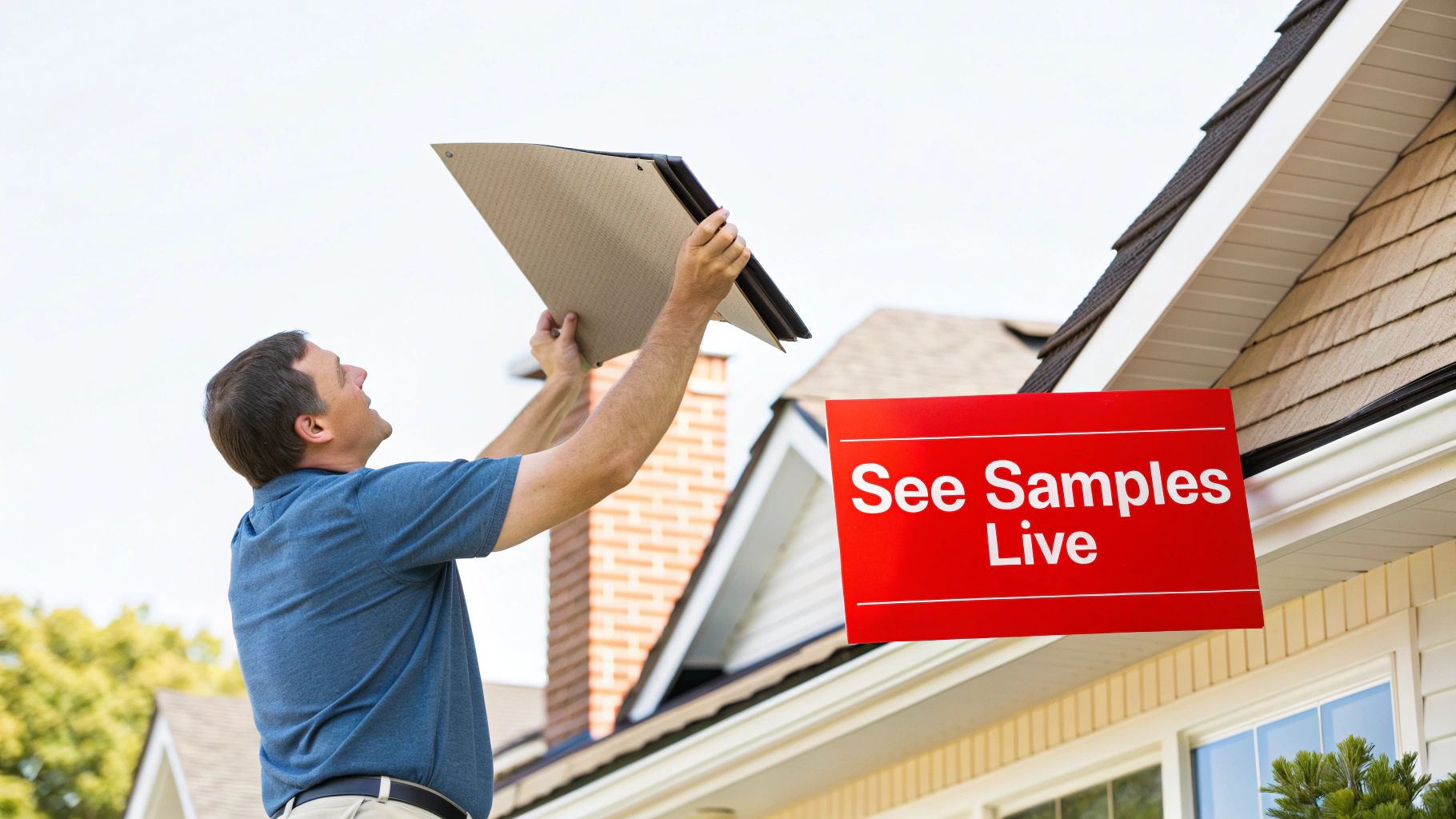
First things first: insist that your roofing contractor gets you large, physical samples of your top two or three colors. I'm not talking about a tiny chip. You need a sample board or at least a few full-sized shingles or tiles to make a decision this big.
Once you have the samples, put them to the test:
- Set them right up against your home’s exterior. You need to see the color directly next to your stucco, brick, or siding to see how they play together.
- Watch them all day long. A color can look fantastic in the soft morning light, only to look completely washed out or jarringly bright under the full force of the midday sun. Don’t forget to check it in the late afternoon glow, too.
- Move them around. The light on the north side of your home is worlds away from what you get on the south-facing side. Test the samples in different spots to avoid surprises.
This simple exercise is your best defense against color regret. It’s the only way to be sure the undertones in the roofing material truly work with your home's permanent features.
Expert Tip: Viewing a large sample against your home in natural, changing light is the single most important step you can take. It’s what closes the gap between a picture in your mind and the final, installed product.
Leverage Modern Visualization Tools
Along with physical samples, don't be afraid to lean on technology. Most major roofing manufacturers now have online visualizer tools, and they’ve gotten pretty good. You can upload a photo of your house and "try on" different roof colors and styles digitally.
While it’s no substitute for seeing the real thing, a visualizer is a fantastic way to quickly rule out options. It can help you see right away if a particular color family just isn't going to work with your home's overall look, saving you time and effort.
Key Questions for Your Contractor
Before you sign that contract, it’s time for one last crucial conversation with your roofer. This is where you nail down the details that go beyond color and ensure you’ll be happy with your new roof for years to come.
- Product & Labor Warranties: Get specific. What exactly does the manufacturer’s warranty cover when it comes to fading or defects? Just as important, how long is the contractor’s own warranty on their workmanship?
- Reflective Coatings: Especially here in Arizona, ask about cool roof coatings or special granules that can boost solar reflectivity, even on some of the darker shades. It's a great way to get the look you want without sacrificing energy efficiency.
- Installation Specifics: Get a clear timeline. What should you expect during the installation process? A good contractor will walk you through everything, ensuring there are no miscommunications down the line.
And if you’re contemplating a really dramatic color change, it's smart to know all your options. While a full roof replacement is usually the best path, some people ask about other methods. To understand the pros and cons, our guide can help answer the question, "can you paint a roof?"
By testing real samples, playing with visualizers, and having a frank talk with your contractor, you can lock in your decision with total confidence.
Frequently Asked Questions (FAQs)
What is the most popular roof color in Arizona?
The most popular roof colors in Arizona are earthy and neutral tones that blend with the desert landscape and offer good heat reflectivity. These include light grays, tans, sandy beiges, and terracotta. These colors are favored for both their aesthetic appeal and their energy-efficient properties.
Will a dark roof really make my house hotter?
Yes, significantly. A dark-colored roof absorbs more of the sun's energy and transfers it as heat into your attic and home, potentially raising attic temperatures by 30-50°F compared to a lighter roof. This forces your air conditioning system to work harder and longer, increasing your energy bills.
Are there any "cool" dark roof colors?
Yes. Modern roofing technology has produced shingles and tiles that use special reflective granules. These "cool" versions of darker colors like charcoal or dark brown can reflect more solar energy than their standard counterparts, offering a compromise between a classic dark look and energy efficiency. Always ask for the Solar Reflectance Index (SRI) value to be sure.
How much can I really save with a light-colored roof?
Homeowners who switch to a light-colored or "cool" roof in a hot climate like Arizona can typically save between 7% and 15% on their annual cooling costs. Over the 20-30 year lifespan of a roof, these savings can add up to thousands of dollars.
Will a dark roof void my shingle warranty in a hot climate?
Generally, no. Major roofing manufacturers design and test their products to withstand extreme heat, and their standard warranties cover shingles of all colors. However, it is always a good practice to review the specific warranty details for the product you choose to confirm there are no climate-based limitations.