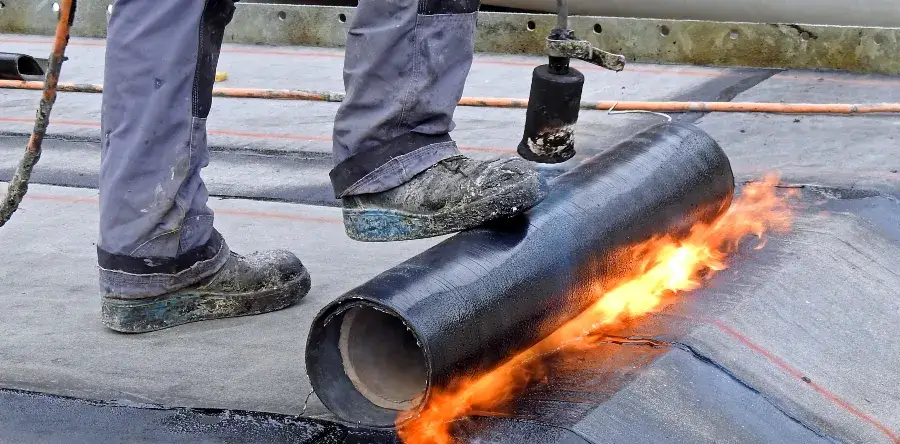

Thinking about giving your roof a facelift? You might be wondering, "Can you paint a roof?" The answer is a resounding yes, and it’s one of the smartest upgrades a homeowner can make. Modern roof coatings are far more than just paint; they are advanced, liquid-applied shields designed to protect your home, boost its energy efficiency, and dramatically improve its curb appeal.
This comprehensive guide will walk you through everything you need to know. We’ll cover the tangible benefits of painting your roof, how to select the perfect coating for your specific roof type, the critical prep work that guarantees a lasting finish, and the maintenance required to protect your investment. Whether you're a seasoned DIYer or considering hiring a pro, this is your roadmap to a successful project.
Key Takeaways
- It's More Than Paint: Roof coatings are specialized formulas that provide a protective, waterproof barrier, extending the life of your roof and preventing damage from UV rays and harsh weather.
- Boosts Energy Efficiency: Light-colored or "cool roof" coatings reflect sunlight, significantly lowering your roof's temperature, which can lead to substantial savings on your cooling bills.
- Preparation is Paramount: The success of your project hinges on meticulous preparation. A thorough inspection, deep cleaning, and proper priming are non-negotiable steps for a durable, professional finish.
- Choose the Right Product: Different roofing materials (asphalt shingles, metal, tile) require specific types of coatings, such as acrylic, elastomeric, or silicone. Using the wrong product can lead to premature failure.
Understanding the Benefits of Painting Your Roof
Painting a roof, especially here in Arizona, has become one of the smartest home improvement projects you can tackle. This isn't just about changing the color. It's a practical move that can add years to your roof's life and even help you save on those daunting summer energy bills. For many, it's a savvy alternative to a full-blown roof replacement—you get a fresh look and renewed protection for a fraction of the price.
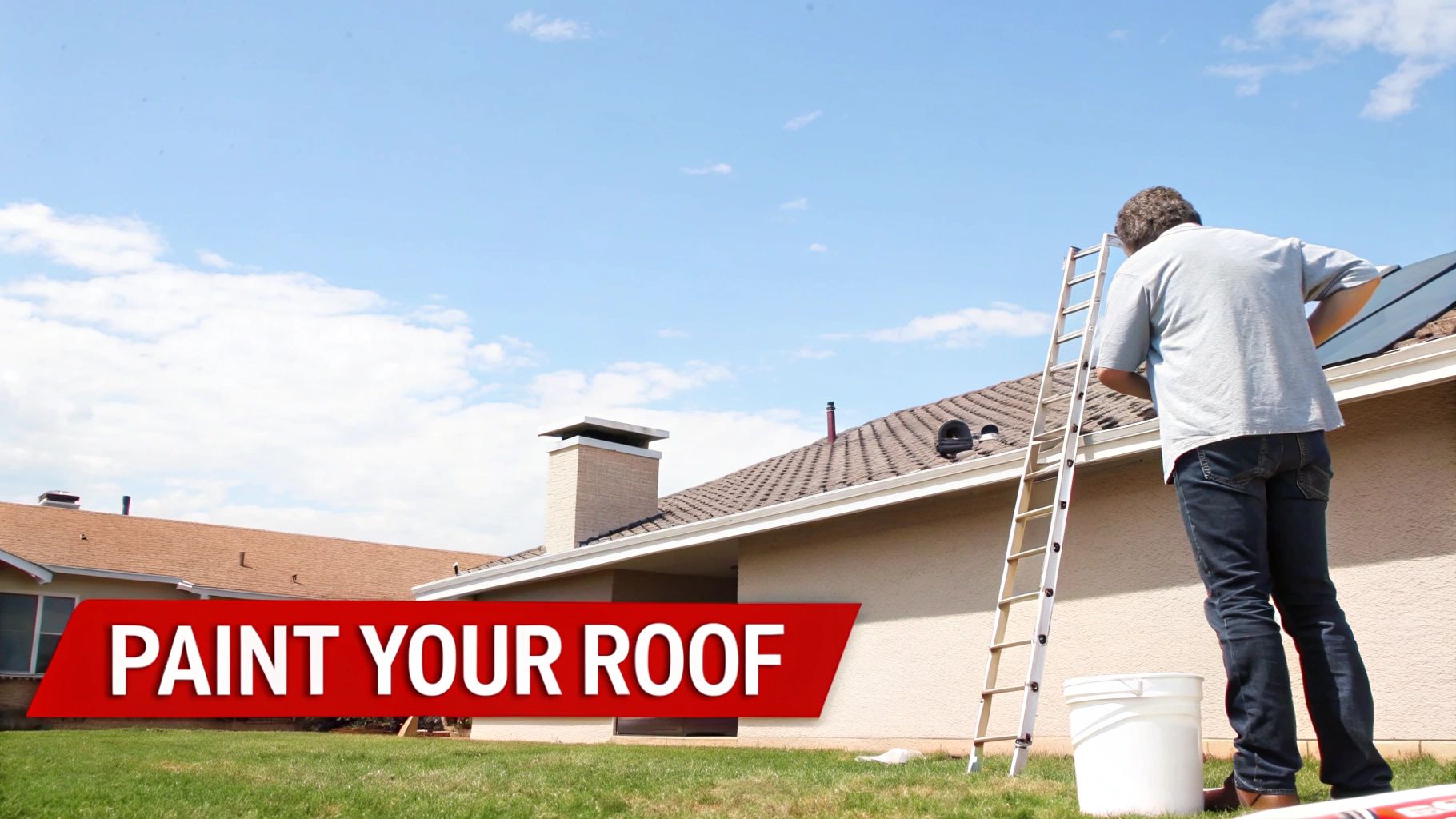
This guide is built from real-world experience to show you how to do this job right. We’ll cover everything from picking the right coating for your specific roof type to the make-or-break prep work that ensures your new finish lasts.
Protection from the Elements
Think of a quality roof coating as armor for your home. It creates a seamless barrier that deflects harsh UV rays, stands up to monsoon rains, and resists wind damage. All this helps slow down the aging process of your roofing materials, preventing them from becoming brittle and failing prematurely.
A Boost in Energy Efficiency
This is a huge one for Arizona homeowners. Lighter-colored or specialized reflective "cool roof" coatings are designed to bounce sunlight away from your home instead of absorbing it. This simple change can dramatically reduce heat buildup in your attic, keeping your whole house cooler and giving your AC unit a much-needed break.
A Fresh Look and Enhanced Curb Appeal
Nothing makes a house look tired like a stained, faded roof. A fresh coat of paint instantly revitalizes your home's entire exterior. It's the perfect way to cover up old discoloration and create a clean, uniform look that signals your property is well-cared-for.
A Smart, Cost-Effective Solution
Let's be honest, a full roof replacement is a massive expense. Painting, on the other hand, is a much more budget-friendly way to extend the life of your current roof. For a relatively small investment, you can add several years of reliable performance and protection.
Before you jump in, it’s wise to look at both sides of the coin. Here’s a quick breakdown to help you decide if this project is the right fit for your home.
Weighing the Pros and Cons of Painting Your Roof
| Key Benefit | Potential Drawback |
|---|---|
| Instantly improves your home's curb appeal. | Requires meticulous surface preparation to succeed. |
| Extends the life of your existing roof. | Not a permanent fix for a roof that is already failing. |
| Can significantly lower cooling costs. | The wrong coating can trap moisture and cause damage. |
| Much more affordable than a full replacement. | Can be a dangerous DIY project without proper safety gear. |
Ultimately, painting your roof is an excellent choice for many, but it isn't a magic bullet for every situation.
Our Takeaway: Deciding to paint your roof is an investment in both its appearance and its longevity. When done correctly with the right materials, it's a smart move that pays dividends in protection and performance.
The success of this project really hinges on a few key factors: the current condition of your roof, what it's made of, and whether you're committed to doing the prep work properly. Let's walk through each of those considerations.
Choosing the Right Coating for Your Roof Material
When you decide to paint your roof, picking the right coating isn't just a choice—it's the most critical decision you'll make for the entire project. This isn't like grabbing a can of paint for a bedroom wall. Roof coatings are specialized, high-performance formulas engineered to protect specific materials from brutal conditions.
Getting this wrong can be a costly mistake. The wrong product might look good for a few months, but it can quickly peel, crack, or worse, trap moisture against your roof deck. That leads to rot and damage, which is the exact opposite of what you're trying to achieve.
Match the Coating to Your Roof Type
Every roofing material has its own personality—how it expands, contracts, and weathers. The coating you choose has to be compatible with it.
-
Asphalt Shingles: You absolutely need a 100% acrylic latex coating. Shingles are flexible; they swell in the desert heat and shrink at night. A standard paint would turn brittle and crack in no time. Acrylic latex moves with them, ensuring it doesn't flake off.
-
Metal Roofs: With metal, you're fighting two battles: adhesion and rust. While direct-to-metal (DTM) acrylics work, I often find that elastomeric coatings are the superior choice here. They create a thick, rubber-like membrane that's completely waterproof and expands and contracts right along with the metal panels.
-
Tile Roofs (Clay or Concrete): High-quality acrylic coatings are the professional standard for tile. They are formulated to be breathable, which is a huge deal. This allows any moisture that gets under the tiles to escape instead of being trapped and fostering mold. They also bond incredibly well to the naturally porous surface of clay and concrete.
A Pro's Takeaway: Don't ever fall for an "all-purpose" exterior paint for your roof. The chemistry is just not the same. Before you buy anything, pull up the manufacturer's technical data sheet online and confirm it’s explicitly made for your specific roofing material.
Understanding Elastomeric, Acrylic, and Silicone Coatings
Once you've narrowed it down by material, you'll still see a few different chemical types on the shelf.
Elastomeric coatings are a fantastic all-around solution for many Arizona homes, especially for flat or low-slope sections. As the name suggests, they are incredibly elastic. They can stretch and shrink back without tearing, which is perfect for bridging small cracks and creating a seamless waterproof barrier. You can explore the benefits of elastomeric coatings to see if this durable option is right for your property.
Acrylic coatings are the versatile workhorses of the industry. They're cost-effective, offer great protection against our intense UV rays, and come in countless colors. Being water-based also means cleanup is much simpler and they're a bit more eco-friendly.
Silicone coatings have a very specific job: they're the go-to for flat roofs where water tends to puddle. Their biggest strength is being almost completely waterproof, so they can handle standing water without breaking a sweat. The trade-offs? They get very slippery when wet, and recoating them down the line requires special primers and prep work.
The value of these advanced coatings isn't a secret anymore. The global roof coatings market was valued at USD 6.58 billion in 2024 and is expected to climb to USD 10.33 billion by 2032. This growth shows just how many property owners are realizing these products are a smart investment against the elements. You can read the full research on roof coatings to see the data behind this trend.
Laying the Groundwork: A Flawless Roof Prep
I can't stress this enough: a top-notch roof paint job has almost everything to do with the prep work. Honestly, this stage is 90% of the work, and cutting corners here is the number one reason I see otherwise beautiful roof coatings fail within a year. You wouldn't paint a dirty, damaged wall inside your house, right? Your roof needs that same level of care, if not more.
If you skip these steps, you're just setting yourself up for a bad result. I’ve seen it happen time and again—homeowners spend good money on a premium coating only to see it peel and flake off after the first big monsoon. This is your game plan to avoid that costly mistake and make sure your new finish looks great and lasts for years.
First Things First: A Thorough Inspection
Before a single drop of cleaner hits your roof, you have to play detective. A detailed inspection is absolutely critical to find any problems lurking up there. Remember, paint is a shield, not a structural fix.
Get up there and look for cracked shingles, tiles, or any loose flashing around vents, skylights, and chimneys. Pay close attention to areas where you see a lot of shingle granules in your gutters, as that's a sign of serious wear.
For a really comprehensive look, many people are now using advanced drone roof inspection software to get a bird's-eye view without climbing a ladder. It's amazing what these things can spot. Whatever you find, fix it first. Painting over damage just hides the problem and often makes it worse.
Getting It Spotless: Deep Cleaning Your Roof
With all repairs handled, it's time to clean. Your roof is a magnet for years of accumulated dirt, desert dust, pollen, and even algae. All that grime forms a film that will prevent your primer and paint from getting a solid grip.
A pressure washer is your best friend here, but you have to use it with a bit of finesse.
- Keep it on a low-pressure setting—somewhere between 1,200 to 1,500 PSI is perfect. Any higher and you risk stripping the protective granules right off your shingles.
- Always spray in a downward motion, going with the grain of the shingles, just like how rain falls. Never, ever spray upward; you'll force water under the shingles and create a huge mess.
- If you've got stubborn green or black streaks (usually mold or algae on shady spots), a simple mix of one part bleach to three parts water works wonders. Let it sit for about 15-20 minutes, then rinse it off gently.
After the wash, the roof must be bone dry before you even think about the next step. Even in the dry Arizona heat, give it a full 24 hours to be safe. Trapping even a little bit of moisture under a fresh coat of paint is a guaranteed recipe for bubbles and peeling.
Priming for a Perfect Finish
The final, and absolutely crucial, step in your prep work is the primer. Think of primer as the ultimate double-sided tape between your roof and the paint. It seals up porous surfaces, stops old stains from bleeding through, and gives the topcoat a perfectly uniform surface to grab onto.
My Two Cents: Don't even think about skipping the primer. A high-quality, exterior-grade primer made specifically for your type of roof is what ensures your paint job will stick like it’s supposed to and give you that long-lasting protection you're paying for.
The infographic below really helps visualize the next phase: picking the right coating for your specific roof. It all starts with the prep we just covered.
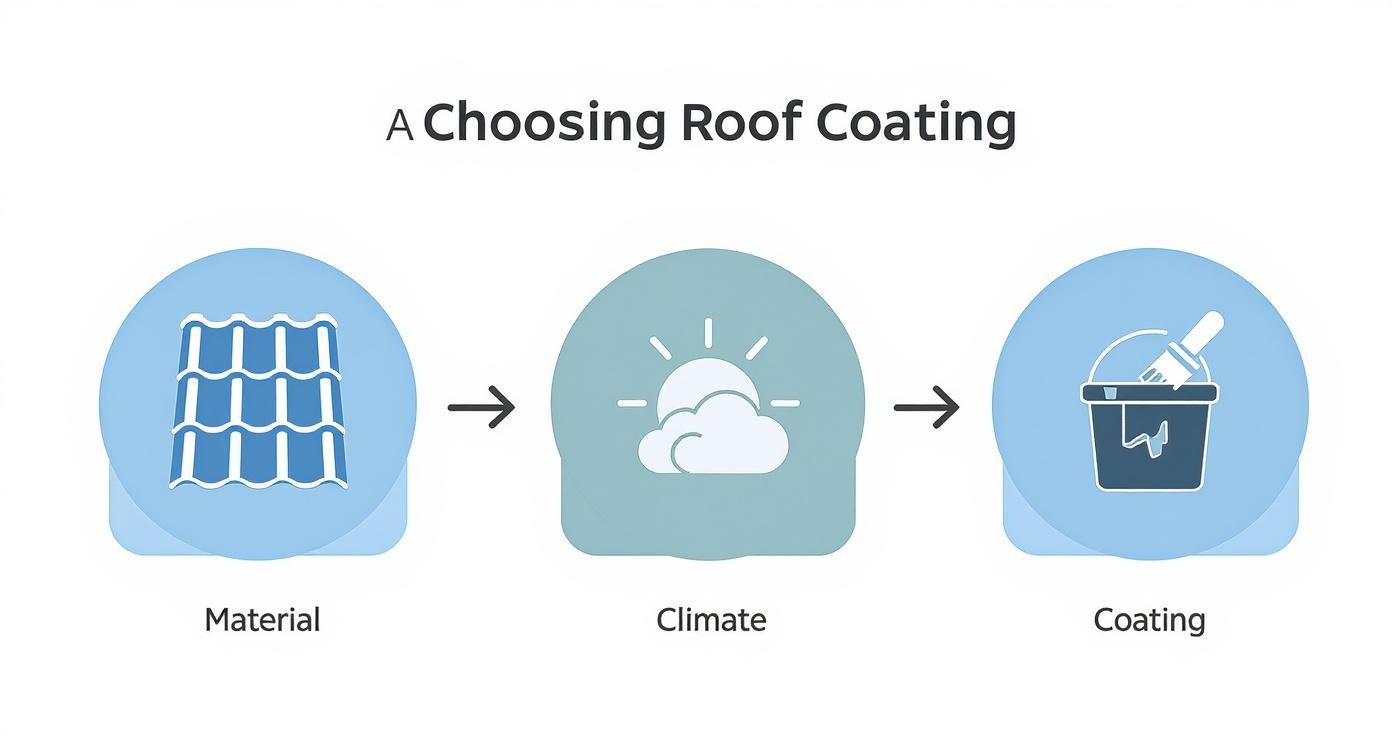
As you can see, matching the coating to your roof material and our Arizona climate is non-negotiable for a successful project, and it all hinges on getting this prep work done right.
Applying the Coating for a Professional Finish
With your roof cleaned and prepped, it's time for the main event—the coating. Getting that smooth, uniform finish you see on professionally done jobs isn't magic; it comes down to solid technique, smart timing, and using the right tools for the job.
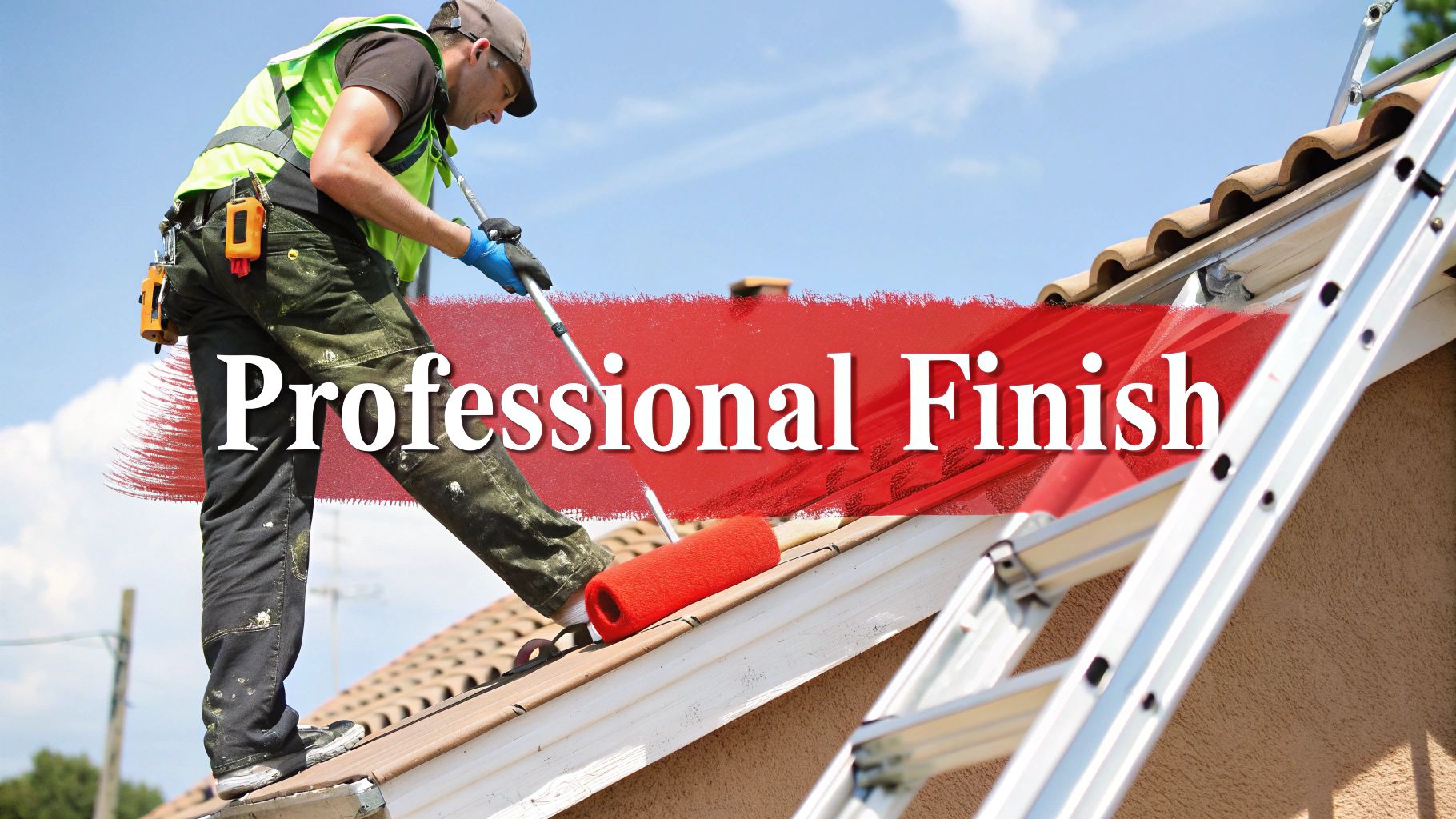
You really have two main ways to get the coating on the roof: an airless paint sprayer or the trusty roller-and-brush combo. Each has its pros and cons, and the best choice often depends on your roof's material and your own comfort level with the equipment.
Sprayer Versus Roller: What's the Best Call?
Deciding between a sprayer and a roller often boils down to the size and texture of your roof.
-
Airless Sprayer: This is what the pros use, especially on large commercial roofs or tricky textured surfaces like tile. A sprayer lays down a perfectly consistent coat that gets into every nook and cranny much faster than a roller ever could. The downside? It takes more setup, there's a learning curve to avoid drips, and you have to be very careful with overspray on even slightly windy days.
-
Roller and Brush: For smaller, flatter roofs, or if you're not used to handling a sprayer, a high-quality roller is your best bet. It gives you incredible control and practically eliminates overspray. Just make sure you get a thick-nap roller (think ¾-inch or more) to hold plenty of coating and glide over minor imperfections.
Honestly, a hybrid approach is often the best. You can use a sprayer for the big, open areas to cover ground quickly, then immediately follow up by "back-rolling" with a roller. This pushes the coating into the surface and gives you that perfect, uniform texture.
Timing Your Application is Everything
In Arizona, the weather is your most important coworker. Trying to paint a roof in the blistering midday sun is a surefire way to waste your time and money. The extreme heat will "flash dry" the coating, causing it to dry on the surface before it has a chance to properly bond. This creates a weak finish that will almost certainly crack and peel.
Your sweet spot is a cool, overcast day with temperatures between 50°F and 85°F. Always, and I mean always, check the forecast to make sure there’s no rain on the horizon for at least 24-48 hours. The coating needs that uninterrupted time to cure properly.
A key pro-tip for avoiding those ugly overlap lines is to always maintain a "wet edge." This just means applying the next section of coating before the edge of the previous section starts to dry. Working in smaller, manageable sections makes this much easier.
Nailing the Technique for a Durable Finish
Once you get started, your application technique is what separates an okay job from a great one.
Here are a few pointers to make sure your hard work lasts:
- Start High, Finish Low: Always begin at the highest point of the roof and work your way down. It seems obvious, but this prevents you from stepping on your own fresh work.
- Two Thin Coats are Better Than One: Resist the temptation to slop on one thick, heavy coat. You’ll get a much stronger, more waterproof membrane by applying two thinner coats. Let that first coat dry completely—based on the manufacturer's directions—before you even think about starting the second.
- Safety First, Always: I can't stress this enough. Use a properly secured ladder, wear non-slip shoes, and if you’re on any kind of slope, use a safety harness tethered to a solid anchor point. Never work alone, and keep your tools secured so they don’t go sliding off.
While you can definitely tackle this project yourself if you’re detail-oriented, the challenges and safety risks are very real. For many, hiring a professional is the smarter move. If you're leaning that way, our complete guide to finding the right roof coating contractor is a great resource to help you find a pro who will deliver a flawless result.
How Cool Roofs Lower Your Energy Bills
Here in Arizona, painting a roof is about more than just a fresh look—it's a smart strategy for fighting back against our relentless summer sun. This is where "cool roof" coatings really shine. They're a high-tech solution that can transform your roof from a heat magnet into a powerful heat reflector.
The idea behind it is straightforward but remarkably effective. Think about how hot a dark-colored car gets sitting in the sun. Your roof is no different. A traditional dark roof can easily soar past 150°F, soaking up the sun’s energy and dumping all that heat right into your home. A cool roof coating, on the other hand, is engineered with special pigments that bounce sunlight away, keeping the roof's surface temperature much, much lower.
Understanding the Science of Solar Reflectance
So, how do you measure a cool roof's power? It all comes down to its Solar Reflectance Index (SRI). This is a simple 0 to 100 scale that tells you exactly how well a surface can reflect solar heat.
- A standard black shingle roof might have an SRI as low as 5.
- A top-tier reflective white coating can score an SRI of over 80.
When you choose a coating with a high SRI, you’re preventing a huge amount of heat from ever making its way into your attic and living spaces. That means your air conditioner doesn't have to work nearly as hard to keep your home comfortable. The end result is a home that feels better and utility bills that are noticeably lower, especially from May through September.
The Bottom Line: A cooler roof means a cooler home. By reflecting instead of absorbing the sun's harsh rays, these specialized coatings reduce the heat load on your house, leading to significant energy savings and less wear and tear on your HVAC system.
Real Savings and Market Growth
The financial upside here isn't just a talking point; it's the real reason this technology has taken off. The global cool roof coatings market was valued at USD 4.5 billion in 2023 and is on track to hit USD 7.02 billion by 2030. You can learn more about the cool roof coatings industry to see the full trends. That kind of growth is driven by property owners who see the clear, long-term payoff from lower energy bills.
This trend underscores a huge benefit: when you decide you can paint a roof, it’s a golden opportunity to upgrade its performance. Opting for a cool coating isn't just a cosmetic touch-up; it's an investment in a more energy-efficient and comfortable home. If you're serious about cutting down on energy costs, it's also worth looking into the top efficient roofing options to lower your energy bills for even more ways to create a smarter home environment.
Keeping Your Painted Roof Looking and Performing Its Best
Once that final coat is dry, the real work begins—protecting your investment. Think of it this way: you wouldn't buy a new car and never wash it or check the oil. Your newly painted roof needs the same kind of simple, regular attention to keep it in prime condition.
A quality roof coating, when properly cared for, can easily last 10 years or more. But if you just paint it and forget it, you'll be lucky to get half that. The great thing is, keeping it in shape is pretty straightforward.
Your Annual Inspection Checklist
I tell all my clients to get up there and take a good look at their roof at least once a year. The best time is right after the monsoon season has passed, as that's when any potential issues are most likely to show up. You're looking for the small stuff that can be fixed now before it becomes a major problem.
Here’s exactly what to keep an eye out for:
- Peeling or Blistering: Pay close attention to the edges, seams, and especially around vents and flashing. These spots are usually the first to show signs of trouble, like small bubbles or flakes where moisture might be getting underneath.
- Chalking: Run your hand across a section of the roof. Does a powdery, chalk-like residue come off? That's the paint's binder starting to break down from all that intense Arizona sun. A little bit is normal over time, but if it's heavy, your protective layer is getting thin.
- Fading or Discoloration: If you notice some spots look lighter than others, it's not just a cosmetic issue. Uneven fading often means the coating is wearing thin in those areas, which kills its reflective, energy-saving properties.
- Physical Damage: Monsoon storms can leave behind more than just rain. Look for scuffs from fallen branches or other debris. Any scrape or gouge is a weak spot that can compromise the waterproofing.
A Pro's Takeaway: Catching a tiny peel or a minor scuff early is everything. A five-minute touch-up today can save you from a massive failure down the road, preventing a premature and expensive full recoat.
Gentle Cleaning and Knowing When to Recoat
To keep that bright, reflective surface doing its job, a gentle rinse every couple of years is a fantastic idea. It washes away the dust and grime that builds up and dulls the finish. Just use a regular garden hose or a pressure washer on its absolute lowest setting. Stay away from harsh chemicals or detergents; they can do more harm than good.
Of course, nothing lasts forever. Eventually, even the best coating will reach the end of its life. You'll know it's time for a fresh coat when you see widespread chalking, multiple spots of peeling, or significant, uniform fading across the whole roof.
It’s one thing to ask, "can you paint a roof," but knowing when to do it again is what truly protects your home. Stay on top of this simple maintenance, and you'll get a solid decade, or even more, out of your roof coating.
Frequently Asked Questions
How long does a painted roof last?
With proper preparation and high-quality coatings, a painted roof can last anywhere from 10 to 15 years. The longevity depends heavily on the quality of the prep work, the specific coating used, local climate conditions, and how well the roof is maintained over time.
Can you paint any type of roof?
Most common roofing materials can be painted, including asphalt shingles, metal, concrete tiles, and clay tiles. However, it's crucial to use a coating specifically designed for your roof's material. For example, asphalt shingles require a flexible acrylic latex coating, while flat roofs often benefit from silicone or elastomeric coatings.
Is painting a roof a good idea?
Yes, painting a roof is an excellent idea for many homeowners. It's a cost-effective way to extend the life of your existing roof, improve curb appeal, and increase energy efficiency by using reflective "cool roof" coatings. It is not, however, a substitute for necessary structural repairs on a failing roof.
How much does it cost to paint a roof?
The cost can vary significantly based on the size and slope of your roof, the type of coating you choose, the amount of prep work required, and whether you hire a professional or do it yourself. Generally, it is far more affordable than a full roof replacement.
Can I paint my roof myself?
Painting a roof can be a DIY project if you have the right tools, experience, and a strong commitment to safety. The work involves heights, potentially steep slopes, and meticulous prep work. If you are not comfortable with these factors, hiring a licensed and insured professional is the safest and most effective option.