
Your home's roof is its first line of defense against the elements, but it's often a case of "out of sight, out of mind" until a leak appears. A professional roof inspection service acts as a crucial health checkup for your property, identifying potential weak spots long before they escalate into costly, stressful repairs. By proactively assessing your roof, you gain peace of mind and protect your most significant investment from hidden leaks, structural damage, and premature aging.
This guide will walk you through everything you need to know, from the different types of inspections available to what you can expect during the process and how to hire a qualified professional.
Key Takeaways
- Proactive is Cheaper than Reactive: Regular inspections catch minor issues like cracked flashing or loose shingles before they lead to thousands of dollars in water damage and structural repairs.
- Knowledge is Power: A detailed inspection report, complete with photos, gives you a clear understanding of your roof's health, empowering you to make informed decisions about maintenance and budgeting.
- Types of Inspections: Different situations call for different methods. A standard physical inspection is great for routine checks, while drones offer safe access to steep roofs, and infrared technology can uncover hidden moisture.
- Hiring Matters: Choosing a licensed, insured, and reputable inspector with local experience is the most critical step. Always verify credentials and check recent reviews.
- It's an Investment: A professional inspection is not just a cost; it's an investment that can extend your roof's lifespan, improve energy efficiency, and increase your home's resale value.
Think of a professional roof inspection service as a health checkup for your home. It’s your first and best defense against the kind of expensive, headache-inducing repairs that can sneak up on you, identifying potential weak spots long before they turn into major problems. An inspection gives you peace of mind, protecting your biggest investment from things like hidden leaks or developing structural issues.
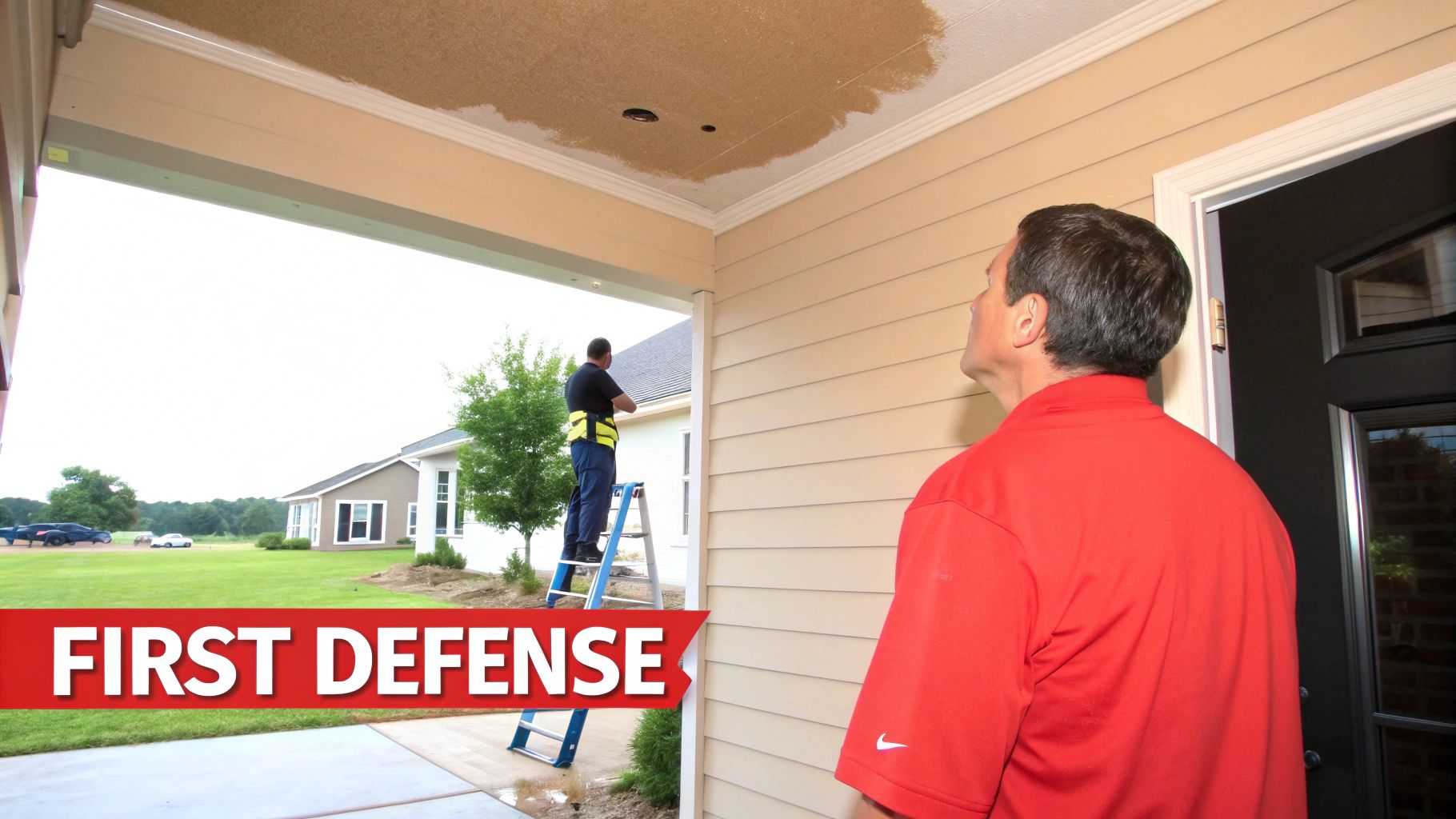
Why a Roof Inspection Service Is Your First Defense
We’ve all been there—that tiny, ominous water stain appears on the ceiling, or a particularly nasty monsoon storm rolls through, leaving you wondering what kind of damage it left behind. Before you start to worry, it’s important to know what your best move is: calling in a professional for an inspection. This isn't just a reaction to a crisis; it's a smart, proactive investment in your home's long-term health.
This guide is designed to be your complete roadmap for understanding everything about roof inspections. We'll walk through the process, highlight the hidden benefits, and give you the confidence you need to protect your home.
Making this a priority is a growing trend. The global market for roof inspection services is on track to hit USD 19.5 billion by 2033, a clear sign that more and more homeowners are seeing the value in being proactive. If you're interested in the numbers, you can dive deeper into this industry trend in this market research report.
A professional roof inspection is more than just a damage assessment; it’s an investment in your home’s long-term health, safety, and durability, especially under the harsh Arizona climate.
What Kind of Roof Inspection Do You Really Need?
Trying to pick the right roof inspection service can feel a bit like ordering off a menu in a foreign language. You know you need something, but what exactly? It's important to remember that not all inspections are created equal. Each one is designed to answer very different questions about your roof's condition.
Figuring out which one you need is the key to making a smart investment in your home. The right choice depends entirely on your situation—are you just doing a routine check-up, dealing with the aftermath of a monsoon storm, or in the middle of buying a new Arizona property?
The Standard Physical Inspection
This is the classic, hands-on roof check-up. Think of it as your roof's annual physical. A trained inspector will actually get up on your roof to get a close-up, tactile feel for its condition. It's the difference between a mechanic just listening to your car's engine versus actually getting under the hood to see what's going on.
During a physical inspection, the pro is going to walk every inch of your roof, looking for specific trouble signs:
- Material Condition: Are any shingles or tiles cracked, curling up at the edges, or missing altogether?
- Flashing Integrity: They'll check the metal strips around your chimney, vents, and skylights for rust, gaps, or bad seals that let water sneak in.
- Structural Soundness: The inspector will literally feel for soft spots under their feet, which are a dead giveaway for water damage in the wood decking underneath.
- Drainage Systems: Your gutters and downspouts get a thorough look to make sure they aren't clogged or damaged, which could cause water to pool on the roof.
This is the go-to inspection for routine annual maintenance and is usually what’s required for most general repair quotes.
High-Tech Drone Inspections
Let’s be honest, not every roof is easy to walk on. Some have incredibly steep pitches, others have complex designs, and certain materials like clay tiles are too delicate to handle foot traffic. In these cases, putting someone up there is just too risky. That’s where a drone inspection becomes the perfect solution.
Using a high-resolution camera, a drone can capture incredibly detailed photos and videos from every conceivable angle—perspectives you simply can't get from the ground or even while standing on the roof. You get a complete bird's-eye view of your roof's health without anyone ever taking a single step on it.
Drone technology gives an inspector the power to safely document every square inch of a roof. This can reveal subtle issues like hairline cracks in tiles or widespread hail damage that might be hard to spot up close.
This method is a real lifesaver for initial damage assessments after a big Arizona monsoon. It allows for a quick survey of the entire roof, providing clear evidence for insurance claims without putting anyone in harm's way.
Revealing the Unseen with Infrared Inspections
Now we're getting into some seriously advanced technology. An infrared (or thermal) inspection lets an inspector see what the naked eye can't. It's essentially an X-ray for your roof, using a special camera to detect tiny temperature differences that point to hidden problems.
Here’s how it works: areas where moisture has seeped into your roofing system hold onto heat differently than dry spots. On a thermal camera, these pockets of trapped moisture light up as clear temperature anomalies. This is an absolute game-changer for finding leaks long before you see a water stain on your ceiling.
An infrared inspection is your best bet when:
- You have a sneaky, slow leak that you just can't pinpoint.
- You want to find where your home is losing energy through poor insulation in the roof.
- You have a flat or low-slope roof, where water intrusion is notoriously tricky to detect.
By catching hidden moisture before it can lead to rot, mold, and serious structural damage, an infrared inspection can save you a fortune in future repairs. It gives you a definitive, data-driven picture of your roof’s true condition, making it one of the most powerful diagnostic tools in the industry.
What to Expect During a Professional Roof Inspection
Thinking about getting your roof checked out can feel a little nerve-wracking, especially if you’re worried about what they might find. But knowing what a real roof inspection service involves can take a lot of that mystery—and anxiety—out of the process. This isn’t just a quick look from the street; it's a systematic, top-to-bottom evaluation of your roof’s health.
Think of it like a detective investigating a case. The inspector starts with the obvious clues on the outside, then moves to the hidden evidence inside, and finally gets hands-on with the roof itself. When you understand the steps, you'll know exactly what the inspector is looking for and why it matters.
The whole thing generally breaks down into four key stages.
Stage 1: The Ground-Level Exterior Check
Believe it or not, the first part of the inspection happens with both feet planted firmly on the ground. A trained professional can learn a surprising amount just by walking around the perimeter of your house. This initial walk-around is like a doctor taking your vitals—it gives them a baseline and highlights specific areas that need a much closer look.
From this vantage point, the inspector is hunting for big-picture problems.
- Gutter and Downspout Integrity: Are the gutters sagging, leaking, or pulling away from the fascia? Clogged or busted gutters are a classic cause of water backing up under your shingles.
- Siding and Masonry Stains: Dark streaks running down your home's exterior walls are often a tell-tale sign of a persistent leak coming from the roofline or flashing.
- Soffit and Fascia Condition: The inspector will check the boards under your roof’s overhang for any rot, pest damage, or peeling paint. These are often the first victims of hidden moisture issues.
This ground-level view creates a mental map of potential trouble spots to investigate more thoroughly once they get up close.
Stage 2: The Interior and Attic Examination
Next up, the inspector heads inside—specifically, into your attic. This is where some of the most critical evidence of roof failure shows up, often long before you see a stain on your ceiling. What's happening in the attic tells a story the outside of the roof can't always reveal.
An attic inspection is so important because it reveals the effects of a roof problem, not just the potential cause. If you can see daylight peeking through the roof deck or find damp, compressed insulation, you have undeniable proof that it's time to act.
Up in the attic, the focus is on the underside of the roof deck. The inspector is searching for subtle clues like water stains on the wood, signs of mold or mildew, and issues with ventilation. An attic that can't breathe traps heat and moisture, which will cook your shingles from below and dramatically shorten your roof's lifespan.
The demand for these detailed inspections is skyrocketing. The commercial roof inspection market alone was valued at USD 0.44 billion in 2024 and is projected to hit USD 1.1 billion by 2033. You can dig deeper into this industry growth by checking out this report from Business Research Insights.
Stage 3: The On-Roof Assessment
Now for the main event. With all the proper safety gear, the professional gets up on your roof for a detailed, hands-on examination. This is where true expertise shines, as a seasoned inspector can spot tiny indicators of wear and tear that the average person would walk right over.
They’ll methodically work their way across every surface, checking things like:
- Roofing Materials: Looking for cracked, warped, loose, or completely missing shingles and tiles.
- Flashing: Carefully examining the metal seals around chimneys, vents, and skylights for any gaps or corrosion.
- Valleys and Ridges: Making sure these critical junction points are secure and clear of debris.
- Sealants and Caulking: Checking for old, dried-out, or cracked sealant around any roof penetrations.
This infographic gives a great overview of the modern techniques inspectors might bring to the job, from traditional hands-on checks to advanced drone and infrared technology.
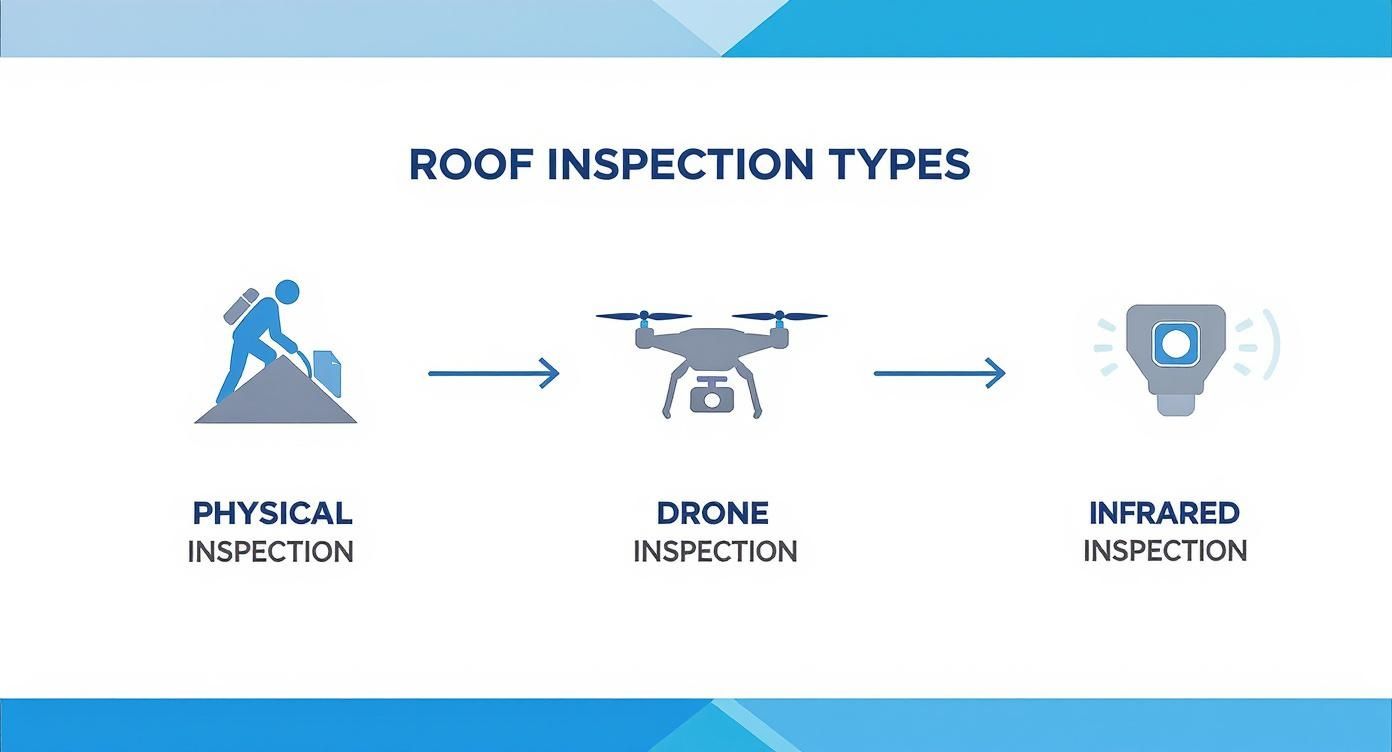
As you can see, a modern inspection can be anything from a tactile physical assessment to a high-tech analysis using drones and thermal imaging for a complete diagnosis.
Stage 4: The Final Report and Recommendations
Once the fieldwork is done, all the findings are pulled together into a comprehensive report. This document is your game plan. A good report won't be filled with confusing jargon; it will be straightforward and must include annotated photographs that clearly show you exactly what the inspector found.
It will lay out the roof's overall condition, list any specific problems, and give you clear, practical recommendations. A trustworthy contractor will also provide estimates for any proposed repairs, giving you the power to make an informed decision without feeling pressured. This final step is what turns a simple inspection into a powerful tool for protecting your home.
Uncovering The Real Value Of Regular Inspections
Think of a regular roof inspection service as more of a strategic investment than a simple chore. It's not just about finding problems; it’s about protecting your home's long-term health, safety, and financial standing. You're actively building value by sidestepping disastrous repair bills and making sure one of your biggest assets is in top shape.

Most of us only think about the roof when a water stain appears on the ceiling. By that point, the real damage is already done. Shifting to a proactive mindset turns your roof from a potential liability into a well-managed part of your home. Let's dig into the tangible benefits you get from having a pro look things over regularly.
Early Problem Detection Saves Thousands
Picture this: an inspector discovers a small crack in the flashing around your chimney. It’s a pretty common issue here in Arizona, where the relentless sun bakes and breaks down sealants over time. The fix might only cost you a few hundred dollars. Simple.
Now, let's say that same cracked flashing goes unnoticed. One good monsoon storm is all it takes. Rainwater gets forced underneath, soaking the roof decking, seeping into your attic insulation, and ultimately causing a huge, ugly water stain—or worse, a collapse—in your living room ceiling.
The difference between a minor repair and a catastrophic failure is often just a matter of timing. A proactive inspection catches the small issue, preventing a repair bill that could easily climb into the thousands for structural work, drywall replacement, and mold remediation.
That right there is the core value. You’re catching small, cheap-to-fix issues before they morph into budget-destroying nightmares.
Extend Your Roof's Lifespan
Every roof has an estimated lifespan, but that number isn’t guaranteed. It’s based on ideal conditions and proper care. Ignoring your roof is like never changing the oil in your car; you just know it's going to lead to a premature and very expensive breakdown.
A professional inspection helps you squeeze every last year of service out of your roof by taking care of the little things that cause it to wear out faster.
- Debris Removal: An inspector will spot piles of leaves and dirt in roof valleys that are notorious for trapping moisture and causing rot.
- Minor Repairs: They’ll find and recommend fixing loose shingles or cracked tiles before a strong wind has a chance to rip them off completely.
- Ventilation Checks: They make sure your attic is breathing correctly. Poor ventilation traps heat and moisture, which essentially "cooks" your shingles from the inside out.
Staying on top of this kind of upkeep can add several years to your roof’s life, pushing back the five-figure cost of a full replacement. For a more structured approach, you can learn more about a complete roof maintenance checklist on arizonaroofers.com.
Boost Energy Efficiency And Property Value
A good roof inspection looks at performance, not just damage. An inspector can pinpoint spots with poor attic ventilation or old, compressed insulation that makes your AC work way too hard during our brutal Arizona summers. Fixing these issues can lead to some very real savings on your monthly power bill.
On top of that, having a certified inspection report in hand is a powerful tool when it's time to sell. It gives buyers peace of mind, removes a huge negotiating point, and can even boost your home's final sale price. This same logic applies to other rooftop installations. For instance, a strong, well-maintained roof is essential for solar panels, a point covered in these Expert Solar Power System Maintenance Tips.
When you get right down to it, a professionally verified, well-maintained roof is a direct investment in your family’s safety and your financial future.
Understanding Roof Inspection Costs in Arizona
When it's time for a professional roof inspection, one of the first questions on every homeowner's mind is, "How much is this going to cost?" While it would be great to have a simple, one-size-fits-all answer, the truth is that the price is tailored to your specific home.
Think of it less like buying a product off the shelf and more like getting a detailed health check-up for your roof. The final quote isn't just a random number; it's a careful calculation of the time, skill, and tools needed to do the job right. A straightforward, single-story home with a gentle slope is a much different beast than a sprawling two-story house with steep pitches, multiple valleys, and a handful of skylights.
What Shapes Your Roof Inspection Quote
The price tag for a roof inspection can vary quite a bit, and it all comes down to the unique characteristics of your roof. Here are the main variables that contractors consider when putting together a quote for you.
| Cost Factor | Description | Impact on Price |
|---|---|---|
| Roof Size & Complexity | The total square footage and architectural features like gables, dormers, and valleys. | Larger, more complex roofs take more time to inspect thoroughly, increasing the cost. |
| Roofing Material | The type of material covering your roof, such as asphalt shingles, clay tiles, metal, or foam. | Specialty materials like tile or metal require more expertise and care, which can raise the price. |
| Accessibility & Pitch | How easy it is to get on the roof and how steep it is. | Steep or hard-to-access roofs may require extra safety gear, increasing labor costs. |
| Inspection Type | The depth of the inspection, from a basic visual check to an in-depth analysis with drones or thermal imaging. | Advanced inspections using specialized technology are more expensive but provide far more detail. |
As you can see, a higher price often reflects a more comprehensive and technically advanced inspection. This gives you a much clearer, more valuable picture of what's really happening on your roof.
The Key Factors That Shape Your Inspection Quote
The material on your roof is a huge factor. Inspecting a standard asphalt shingle roof is pretty routine. But a delicate clay tile roof? That requires a specialist's touch and careful footwork to avoid cracking tiles, which naturally means the inspection will take longer and cost more.
Accessibility also plays a big part. If a roof is dangerously steep or tricky to get onto, the inspector might need extra safety equipment or even a drone to get a proper look. These additions will be factored into the final quote.
The goal of a paid inspection is to provide a definitive diagnostic report on your roof's health. This detailed document, complete with photographic evidence, is a valuable asset for maintenance planning, insurance claims, or real estate transactions.
Free Estimates vs. Paid Diagnostic Inspections
It’s really important to know the difference between a free estimate and a paid, in-depth inspection. A free estimate is usually a sales tool. A roofer comes out, spots an obvious problem like missing shingles after a storm, and gives you a price for the repair. It’s focused on a specific issue and designed to lead to a sale.
A paid diagnostic inspection, however, is a comprehensive professional service. You're paying for an expert's time, their years of experience, and a completely unbiased assessment of your entire roofing system. This is what you need for routine maintenance, when you're buying or selling a house, or when you suspect a sneaky leak that isn't immediately obvious.
The report you get is a valuable, actionable document. For a deeper dive into the numbers, check out our complete guide on discovering the true roof inspection cost in 2025 on arizonaroofers.com. By understanding these factors, you’ll be much better equipped to interpret the quotes you receive and choose the right service for your home.
How to Hire a Qualified Roofing Inspector
https://www.youtube.com/embed/M6yEzZ9lVRs
Choosing the right expert for a roof inspection service is hands-down the most important decision you'll make. A thorough, honest assessment hinges entirely on the pro you hire. Think of this section as your field guide to finding a true expert who will protect your investment, not just try to sell you a new roof.
Finding the right person really comes down to knowing what to look for and which questions to ask. We’ll cover the absolute must-have credentials, how to read between the lines of online reviews, and the red flags that should have you running for the hills.
Key Takeaways for Hiring an Inspector
- Verify Credentials: Always, always confirm the contractor is licensed, bonded, and fully insured. Don't just take their word for it—ask to see proof of general liability and worker's compensation coverage.
- Check Local Reputation: Go deeper than the star ratings. Read detailed reviews on Google and other platforms to see how they actually communicate, if they show up on time, and how they handle problems when they pop up.
- Ask About Experience: Make sure they have real, hands-on experience with your specific roof type. An asphalt shingle roof is a world away from the tile or foam roofs so common here in Arizona.
- Avoid Red Flags: Be wary of anyone using high-pressure sales tactics. If they demand a huge upfront payment or give you vague, verbal-only promises, walk away. Everything should be in writing.
Verifying Licenses and Insurance
Before you waste a minute talking about your roof, your very first step is to confirm their credentials. In Arizona, a roofer needs to be licensed, bonded, and insured. This isn't just red tape; it's your financial safety net if things go wrong.
- General Liability Insurance: This is what protects your property. If an inspector accidentally puts a foot through your ceiling or damages your siding, this policy covers the repair costs. Without it, you could be on the hook.
- Worker's Compensation Insurance: This one protects you. If an inspector gets injured while on your property, this coverage ensures you aren't held liable for their medical bills. It’s a huge deal.
Never hire anyone who can't immediately provide a certificate of insurance showing both liability and worker's compensation coverage. A legitimate professional expects this question and will have the documents ready without any hesitation.
Gauging Reputation and Local Experience
Once you've confirmed they're legit, it's time to dig into their local reputation. Online reviews are a great starting point, but you have to read them with a critical eye. Look for patterns in the comments. Are people consistently praising their clear communication and detailed reports, or are there recurring complaints about missed appointments? As you research, you might find it helpful to use broader strategies for finding top home service companies in Arizona.
Experience with Arizona’s unique roofing materials is also a non-negotiable. Our intense sun and monsoon season are brutal on roofs. Ask them directly: "How many clay tile roofs have you inspected this year?" or "What's your experience with spray foam roofing systems?" Their answers will tell you a lot. For a deeper dive, our guide on https://arizonaroofers.com/roofing/how-to-choose-a-roofing-contractor/ has a full checklist.
Finally, trust your gut and watch out for red flags during those first conversations. An inspector pushing a "today-only" price or who seems reluctant to put all the details and costs into a written agreement is not the professional you want. A trustworthy expert gives you a clear, documented plan and the breathing room to make a smart decision.
Frequently Asked Questions
How often should I get my roof inspected?
For most homes in Arizona, an inspection every one to two years is a smart preventative measure. If your roof is older (over 10 years), or after a major weather event like a severe monsoon or hailstorm, it's wise to schedule one annually or as needed to catch potential damage early.
Can I inspect my own roof?
While you can and should visually check your roof from the ground for obvious issues like missing shingles, a professional inspection is far more thorough. Professionals are trained to spot subtle signs of wear and tear that an untrained eye would miss. Crucially, they have the safety equipment and experience to get on the roof without risking injury or causing damage.
What does a comprehensive roof inspection report include?
A quality report should be easy to understand and provide a complete picture of your roof's condition. It must include photographic evidence of any noted issues, a written summary of the findings for each roof component (shingles, flashing, gutters, etc.), and a clear, prioritized list of recommendations for any necessary maintenance or repairs.
What's the difference between a free estimate and a paid inspection?
A free estimate is typically a sales tool focused on providing a quote for a specific, often obvious, repair. A paid diagnostic roof inspection service is a comprehensive assessment of your entire roofing system. You are paying for an expert's unbiased, detailed analysis, which results in a valuable report you can use for maintenance planning, insurance purposes, or real estate transactions.
What if the inspection finds problems?
Don't panic. The purpose of an inspection is to find problems while they are small and manageable. A reputable inspector will provide a detailed report explaining the issues and their severity. They should offer clear, no-pressure recommendations and provide an itemized estimate for repairs, empowering you to make the best decision for your home and budget.
Will an inspection find every single problem?
A thorough inspection from a qualified professional will identify all visible and accessible issues. Modern tools like drones and thermal imaging—part of a market expected to hit USD 889.2 million by 2035—make this process more effective than ever. However, no standard inspection can see inside walls or underneath deep layers of insulation, where some very rare issues could be concealed. An experienced inspector can often spot secondary signs that point to these hidden problems.