
Choosing the right tile roof in Arizona is a major decision, pitting the timeless, natural appeal of clay against the versatile, modern strength of concrete. This choice goes beyond simple curb appeal; it’s a long-term investment in your home's protection, energy efficiency, and value. For decades, these materials have been the top contenders for shielding homes from the intense desert sun and powerful monsoon storms.
This guide is designed to give you a clear, side-by-side comparison to help you decide. We'll break down the critical factors—from lifespan and cost to durability and style—so you can confidently choose the material that best fits your home, budget, and priorities.
Key Takeaways
- Lifespan: Clay tiles are a generational investment, often lasting 75-100+ years. Concrete tiles offer a robust lifespan of 50-60 years.
- Cost: Concrete tiles have a lower upfront installation cost, making them more budget-friendly. Clay tiles are a premium product with a higher initial price but may offer better long-term value.
- Durability: Concrete is generally more resistant to impact from hail, while clay offers superior color retention and will not fade in the Arizona sun.
- Energy Efficiency: Clay's natural thermal properties and airflow design make it the superior choice for keeping homes cool and lowering energy bills in extreme heat.
- Weight: Concrete tiles are significantly heavier than clay, which may require a structural assessment and potential reinforcement of your home's frame, adding to the overall cost.
- Aesthetics: Clay provides a classic, authentic look ideal for Spanish and Mediterranean homes. Concrete offers vast versatility in shape and color, able to mimic other materials like slate or wood shake.
Choosing the Right Tile Roof for Arizona's Climate
Here in Arizona, a roof does more than just keep the rain out. It's your home's shield against a relentless sun, triple-digit heat, and the sudden fury of our monsoon storms. This is exactly why tile roofing reigns supreme in our demanding desert environment.
But picking between concrete and clay is a crucial decision that impacts your home’s protection, curb appeal, and monthly energy bills for decades to come. Each material responds differently to the unique pressures of Arizona's climate, whether it’s the scorching summer heat of Phoenix or the freeze-thaw cycles in Flagstaff.
Key Considerations at a Glance
Before we get into the nitty-gritty, let's look at a high-level snapshot. Seeing how clay and concrete stack up on the factors that matter most to Arizona homeowners helps set the stage for a deeper dive.
| Feature | Clay Tile | Concrete Tile |
|---|---|---|
| Average Lifespan | 75 – 100+ years | 50 – 60 years |
| Initial Cost | Higher (Premium) | Lower (Budget-Friendly) |
| Weight | Lighter (600-900 lbs/sq) | Heavier (820-1,100 lbs/sq) |
| Cooling Performance | Excellent natural insulation | Good thermal mass |
For many homeowners, the starting point is budget, and this decision tree provides a simple visual for that thought process.
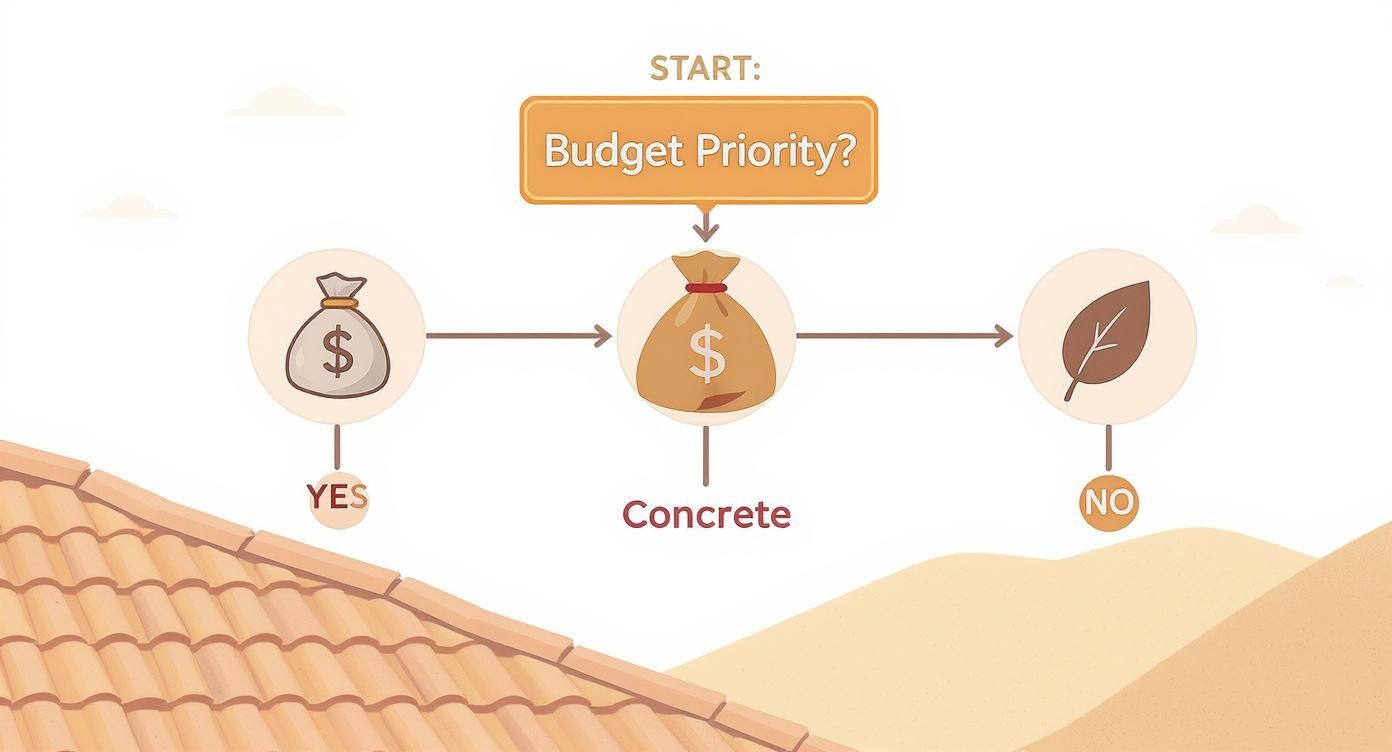
As you can see, if upfront cost is the primary driver, concrete tile is often the perfect fit. But for those with a more flexible budget looking for generational performance, clay becomes a very attractive option.
What to Expect in This Guide
This guide is designed to give you a comprehensive, side-by-side comparison to make this big decision with confidence. We’ll cover everything from long-term financial value and structural needs to cooling performance and aesthetic choices.
When you select a tile roof in Arizona, you're not just picking a material; you're investing in decades of reliable performance. The right choice will lower your energy bills, boost your home's value, and give you peace of mind through every scorching summer and wild monsoon season.
By the time you're done reading, you'll have a crystal-clear picture of which material best aligns with your home, your budget, and our local climate realities.
Lifespan and Long-Term Value: Thinking Beyond the Price Tag
When we talk about a new tile roof, the initial price is just one part of the story. The real question is about the long-term investment. A roof is a massive part of your home, and its lifespan directly impacts your wallet and your home's value for decades to come.
It's all about the lifecycle cost. A cheaper roof that you have to replace in 20 or 30 years can easily end up costing you more than a premium option that lasts a lifetime. This is the heart of the debate between concrete and clay tile here in Arizona.
Clay Tile: A Generational Roof
Let's be blunt: a clay tile roof is often a "once-in-a-lifetime" purchase. And we mean that literally. When installed correctly and looked after, these roofs are famous for lasting generations, shrugging off the brutal Arizona sun without breaking a sweat.
- Exceptional Longevity: We regularly see clay tile roofs last 75 to 100 years. In some historic areas, you can find clay roofs that are even older.
- Color That Lasts: The rich color of a clay tile isn't a surface coating; it's baked all the way through the material. That means it won’t fade or peel under our relentless UV rays, keeping your home looking sharp for decades.
- Avoid Future Replacements: Because they last so long, it's highly unlikely you'll ever face the cost and headache of a full roof replacement again.
That incredible durability means the higher upfront cost gets spread out over a very, very long time, often making it the cheaper option when you look at the cost per year of service.
Concrete Tile: Durable, Dependable, and Smart
Concrete tiles hit a real sweet spot for many homeowners, offering a fantastic mix of toughness, style, and a more accessible price point. They might not have the hundred-year lifespan of clay, but they deliver solid, reliable protection that easily outclasses materials like asphalt shingles.
For most Arizona homeowners, a concrete tile roof is a practical, long-term investment. You can expect a lifespan of 50 to 60 years, which is a service life that will see most people through their time in a home.
The key financial difference isn't just the 20- to 40-year gap in lifespan. It’s about the probability of ever having to replace it. With a concrete roof, a future replacement is a possibility. With clay, it’s a rarity.
Calculating the True Cost of Ownership
To figure out the real cost, you have to look beyond the installation quote. Clay's big advantage is its extreme longevity, often pushing past 75 to 100 years with basic care. This long lifecycle means fewer major repairs and almost certainly no full replacement down the road.
Concrete, on the other hand, comes in with a shorter but still very respectable lifespan of 50 to 60 years. Its lower initial cost makes it a compelling choice if the budget is a primary concern.
It's also critical to consider how your homeowners insurance views these materials. After a major storm, your policy can make a huge difference in your out-of-pocket costs. It's always a good idea to research insurance coverage for roof replacement to understand how your choice might affect your premiums and coverage. To see how different roofing materials hold up over time, you can check out our comprehensive guide on how long does a roof last in Arizona.
Understanding Roof Weight and Structural Needs
When you're deciding between concrete and clay tile, one of the most critical factors—and one that's easy to overlook—is the sheer weight. These aren't your standard asphalt shingles. We're talking about a roofing system that is substantially heavier, and that weight directly impacts your home's structural integrity, your safety, and the final project cost.
The weight difference between the two is significant. While both are heavy, clay tiles are the lighter of the two options. Concrete tiles, on the other hand, are much denser and bring a heavier load that your home's frame must be ready to support, day in and day out.
The Numbers Behind the Weight
Let's put this in perspective. Concrete tiles are roughly 40% heavier than their clay counterparts. A standard concrete tile roof can weigh anywhere from 820 to 1,100 pounds for every 100 square feet (what we in the roofing world call a "square").
Clay tiles typically come in between 600 to 900 pounds per square. That might not sound like a huge difference on paper, but spread across an entire roof, it adds up to several tons of constant, extra pressure on your home’s structure. You can dive deeper into these material differences by checking out expert analysis on concrete vs clay tile roof specifics.
This is precisely why a structural assessment is non-negotiable. Many homes, particularly older ones or those originally designed for much lighter roofing, simply don't have the support built into their trusses and walls to handle that kind of load.
Why Structural Reinforcement Might Be Necessary
If a house wasn't engineered to carry this kind of weight, installing a heavy tile roof can introduce serious safety risks. Trying to put heavy concrete tiles on a frame that can barely support clay could lead to sagging, cracking, or, in the worst-case scenario, a catastrophic structural failure down the road.
This is where reinforcement comes into the picture. To safely support a heavier concrete tile roof, we might need to:
- Strengthen the existing roof trusses so they don't bow or break under the pressure.
- Add extra support beams or columns to help transfer that weight down to the foundation.
- Confirm the foundation itself can handle the increased total weight of the entire home.
These reinforcements add a layer of complexity, time, and, frankly, significant cost to the installation. Opting for the lighter clay tile can sometimes help a homeowner sidestep these extra expenses, as long as the structure is already rated for its weight.
A professional structural evaluation isn't just a good idea—it's an essential first step for safety and code compliance. It's the only way to be certain your home can carry the load of your new roof for its entire lifespan, protecting both your family and your investment.
The Non-Negotiable Professional Assessment
Before we even think about ordering a single tile, a complete structural evaluation is mandatory. A qualified roofing expert needs to get in there and assess your home's existing framework to figure out its maximum load capacity. This is a critical step for meeting Arizona's strict building codes, which are in place to make sure homes can safely handle our local conditions.
At AZ Roof Co, this is a standard part of our comprehensive process. To see what this looks like, you can learn more about our professional roof inspection service, where we check every component to guarantee your home is ready for the beautiful, durable roof you've picked out. Getting that professional sign-off gives you peace of mind, knowing your roof isn't just stunning but also structurally sound.
Comparing Energy Efficiency in Extreme Heat
Here in Arizona, your roof is the first and most important line of defense against our relentless summer sun. How well it handles the heat directly affects not only your comfort but also your monthly cooling bills. When you’re choosing between concrete and clay tile, understanding their energy performance is absolutely critical for a smart, long-term investment.
While both are a huge leap forward from standard asphalt shingles, they manage heat in very different ways. The material itself, the shape of the tile, and the way air flows beneath it all contribute to how effectively your roof keeps that scorching desert heat out of your home. Getting to know these differences is the key to picking a roof that will truly perform when the temperatures soar.
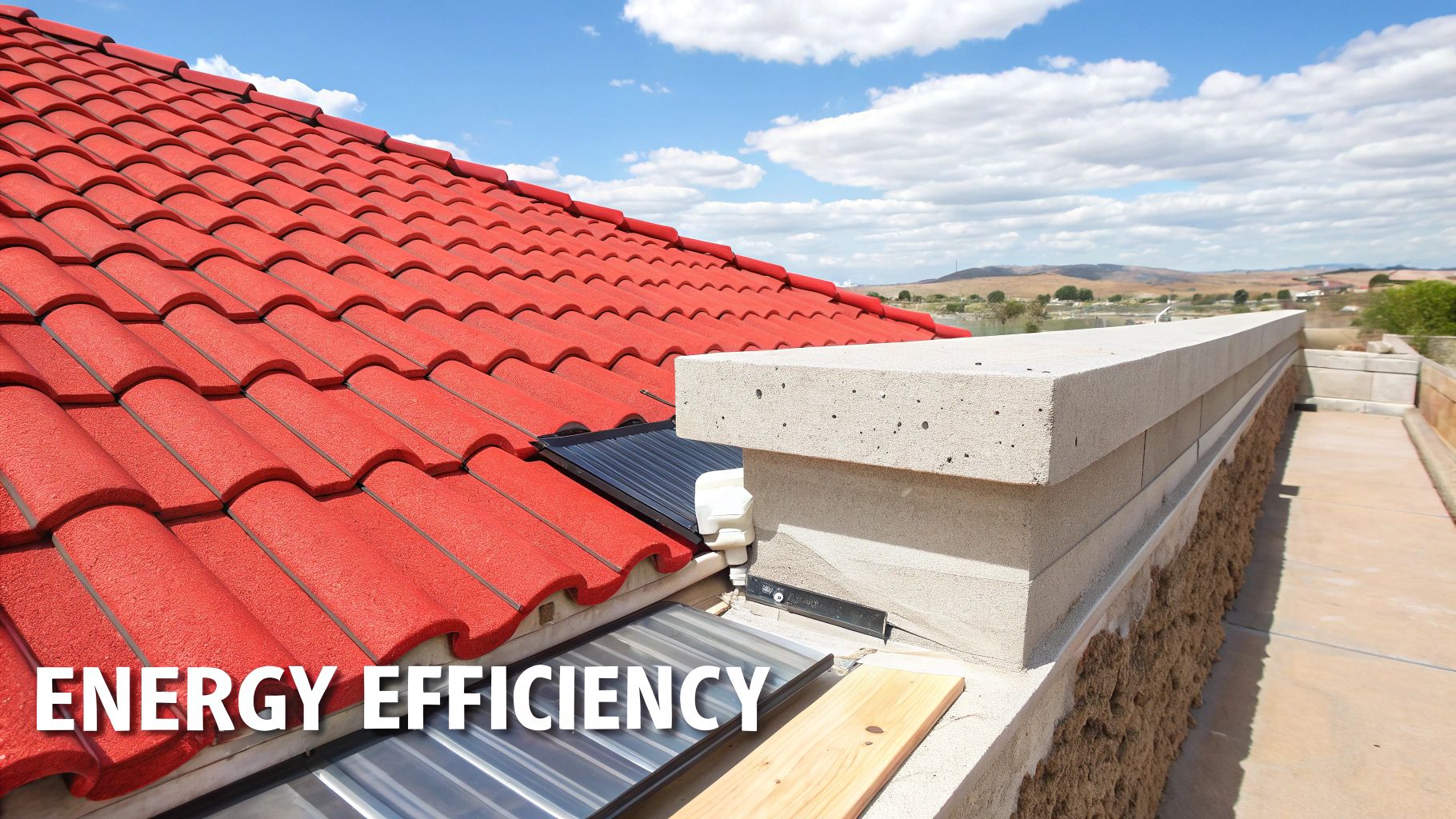
How Clay Tiles Keep Things Cool
When it comes to natural cooling, clay tiles are the clear winner. This is thanks to two major properties: their ability to reflect sunlight and release heat.
The natural, lighter tones of clay are fantastic at bouncing sunlight away from your home, a quality known as high solar reflectance. This simple act prevents a massive amount of solar energy from ever being absorbed into the roof in the first place.
But it’s not just about color. The classic curved or "S" shape of many clay tiles is a brilliant piece of functional design. It creates a natural air channel between the tile and the roof deck, allowing air to flow freely. This constant ventilation whisks away any absorbed heat before it has a chance to seep into your attic. It's an active cooling system built right into the roof's design.
Concrete's Method: Slowing Heat with Mass
Concrete tiles take a different approach, relying on thermal mass. Because they are so dense and heavy, they absorb the sun's heat very slowly throughout the day. This delayed reaction means it takes a lot longer for that solar energy to work its way through the tile and start warming up your house.
The downside? Once concrete gets hot, it holds onto that heat for a long time, slowly releasing it well into the night. That might be a plus in a cold climate, but in an Arizona summer where evenings stay warm, it means your roof can continue to radiate heat down into your home long after sunset.
Clay’s real edge is its one-two punch: it reflects a huge amount of solar energy right off the bat and then uses natural airflow to dissipate whatever heat is left. Concrete mainly just slows the heat down, a more passive strategy that can struggle during our long, intense summers.
For a homeowner in Phoenix or Tucson focused squarely on energy efficiency, the natural cooling properties of clay give it a distinct advantage. While concrete is a solid insulator, we often find it needs a helping hand from radiant barriers or extra attic insulation to compete with clay's performance.
To dive deeper into what makes a roof energy-efficient, check out our guide on the top efficient roofing options to lower your energy bills.
Quick Comparison: Clay vs. Concrete Tile for Arizona Homes
To help you see the differences at a glance, we've put together a simple table summarizing the key points for Arizona homeowners.
| Feature | Clay Tile | Concrete Tile |
|---|---|---|
| Cooling Method | High solar reflectance & natural air gap ventilation. | High thermal mass (slows heat absorption). |
| Heat Retention | Low; cools down quickly after sunset. | High; retains and radiates heat long into the night. |
| Best For | Maximizing cooling and reducing A/C load in hot climates. | Balanced performance, especially in moderate climates. |
| Energy Efficiency | Superior, especially in lighter colors. | Good, but often requires extra insulation to match clay. |
| Natural Ventilation | Excellent, due to the inherent shape of the tiles. | Limited; relies on specific installation methods. |
Ultimately, both materials are robust choices, but for peak energy performance under the Arizona sun, clay's ability to actively combat heat gives it the upper hand.
Matching Your Home's Architectural Style
Your roof is a huge part of your home’s first impression. It's one of the first things people see, and it can single-handedly define the entire look and feel of your house. When you're choosing between concrete and clay tiles, you’re not just making a practical choice—you're making a design statement.
This is especially true here in Arizona, where our architecture is so heavily influenced by Spanish, Mediterranean, and Southwestern designs. The right tile doesn't just sit on top of your house; it becomes part of its identity, tying it all together into a beautiful, cohesive look that feels right at home in the desert.
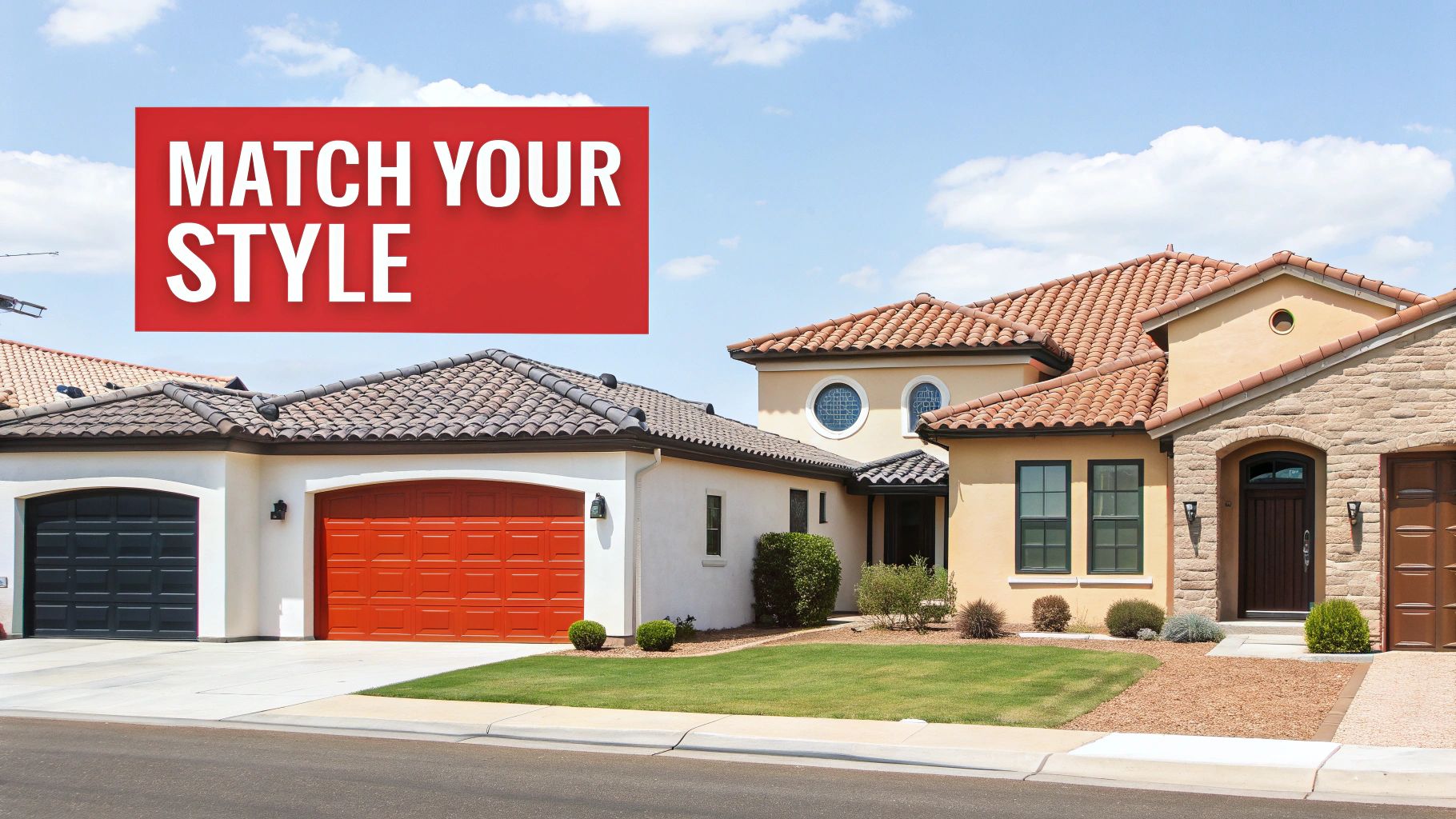
The Timeless Appeal of Clay Tiles
Picture a classic Arizona home. Chances are, you’re imagining the warm, rustic reds and oranges of a clay tile roof. For good reason—clay is the real deal, the authentic choice for homes that need that traditional, earthy character.
The iconic terracotta color isn't just a surface coating; it's baked right into the tile. That means it won’t fade, even after decades under our relentless sun. This enduring, natural beauty makes clay the perfect fit for:
- Spanish Colonial Homes: Nothing says Spanish Colonial like the classic barrel or "S-curve" clay tiles.
- Mediterranean Villas: The warm, sun-baked tones are essential for capturing that coastal European vibe.
- Southwestern & Pueblo Revival: Clay’s earthy reds blend perfectly with stucco walls and the natural desert landscape.
When you want a look rooted in history and tradition, clay tile is simply unmatched. It delivers an authenticity that other materials can only try to imitate.
The Design Versatility of Concrete Tiles
If clay is the master of authenticity, concrete is the champion of adaptability. Since concrete tiles are poured into molds, manufacturers can create an incredible range of shapes, profiles, and colors. This makes concrete an incredibly flexible design tool.
Concrete's biggest strength is its ability to convincingly mimic other materials, including some that are far more expensive. This opens up a whole new world of design possibilities for homeowners on a budget.
You can get the look of a high-end roof without the high-end price tag or the structural upgrades those heavy materials often require. For example, concrete tiles can be crafted to look just like:
- Natural Slate: You get that sophisticated, layered slate appearance for a fraction of the cost and weight.
- Wood Shake: Get the rustic, textured charm of wood shake without the fire hazard or constant maintenance.
- Classic Clay: Modern manufacturing can create concrete tiles that look remarkably similar to traditional barrel-shaped clay.
If your main goal is achieving a very specific aesthetic—whether that's copying a different material or finding a unique custom color—concrete gives you a much bigger toolbox to work with. The concrete vs clay tile roof debate often boils down to this key difference: timeless tradition versus modern versatility.
The Realities of Installation and Maintenance
Deciding between concrete and clay is only the first step. The day-to-day reality of living with a tile roof comes down to two things: a flawless installation and a smart maintenance plan. Both materials demand a roofer who knows what they're doing, and their upkeep requires a gentle, proactive touch to make sure that century-long lifespan actually happens.
Installing a tile roof is a different beast entirely compared to asphalt shingles. This isn't a job for a general contractor or a weekend warrior. It takes a specialized crew that understands everything from building the right batten system to fastening each tile just so. Cutting corners with an inexperienced team is a recipe for leaks, a voided warranty, and watching your investment crumble.
It Takes a Specialist to Install Tile Right
The work begins well before a single tile touches your roof. Since both concrete and clay are incredibly heavy, a professional structural assessment is an absolute must. After that, the process diverges.
- Working with Clay Tile: Clay is the more fragile of the two, so installers need a careful hand. They have to be skilled at cutting and placing the tiles without causing a pile of expensive, broken pieces. It’s all about precision—getting that perfect, watertight fit.
- Working with Concrete Tile: Concrete can take a bit more of a beating, but it's significantly heavier. The installation crew is wrestling with more weight on the roof, which makes the labor more demanding and requires meticulous preparation of the roof deck.
Here’s something most homeowners don't realize: the most important part of your tile roof isn't the tile itself—it's the underlayment. That waterproof barrier is what's really keeping the rain out. Since the underlayment typically lasts 20-30 years (far less than the tiles), you'll eventually need a "lift and relay," where we carefully remove the tiles, replace the old underlayment, and set them right back in place.
Long-Term Upkeep and Repair Costs
Once it's up, your roof needs regular check-ups to go the distance. We're not just talking about a quick cleaning. It’s about catching small issues before they become big, expensive problems.
Arizona monsoons are no joke—they bring punishing winds and hail. Even an air conditioning technician walking on the roof can crack a tile if they aren't careful. The real difference in maintenance comes down to how each material handles that kind of stress.
- Repairing Clay Tiles: Clay is more likely to crack from a sharp impact, like a piece of hail or a dropped tool. When one breaks, we have to replace it delicately to avoid a domino effect on the surrounding tiles. The good news? Color matching is a breeze because clay's color is baked all the way through and doesn't really fade.
- Repairing Concrete Tiles: Concrete is tougher against impacts but can still break under enough force. The biggest headache with concrete repairs is the color match. The Arizona sun fades the color coating over time, so a brand-new replacement tile can stand out like a neon sign against the rest of the weathered roof.
No matter which you choose, do yourself a favor: ask us to leave a bundle of extra tiles from the original installation. Stashing them in your garage is the best insurance policy you can have. It guarantees a perfect match for any future repairs, keeping your roof looking flawless for years to come.
Frequently Asked Questions
Which tile is better for the Arizona sun, concrete or clay?
Hands down, clay tiles are superior in the intense Arizona sun. Their natural material composition provides incredible thermal resistance. They reflect sunlight effectively and, more importantly, create an air buffer beneath the tiles that keeps your attic from turning into an oven. This translates directly into better energy efficiency and lower AC bills when it matters most.
Is concrete or clay tile more durable in a hailstorm?
While both are tough, concrete tiles generally have a slight edge when it comes to impact resistance. They are simply less brittle than their clay counterparts and can often handle a direct hit from hail or falling debris a bit better. That said, a severe hailstorm can damage any roof, which is why a professional installation with high-quality underlayment is non-negotiable for real protection.
Do concrete tiles fade in Arizona?
Yes, concrete tiles can and do fade over time from our intense UV exposure. Modern concrete tiles are made with color mixed all the way through (integral color), but the surface color will inevitably lighten after a few decades of sun-baking. Clay tiles, on the other hand, get their color from the natural minerals baked into them—it's part of the tile itself and won't fade.
Can any house support a tile roof?
Not always. Both concrete and clay tiles are significantly heavier than standard asphalt shingles. Before any tile job, a structural assessment from a qualified roofing contractor is absolutely essential. We need to ensure your home's framing can safely support the immense weight. Because concrete is heavier than clay, a home that can handle clay might still need extra reinforcement to be ready for a concrete tile roof.