
Choosing the right roofing material for an Arizona home is a major decision, pitting the relentless sun and intense monsoon season against your budget and long-term goals. The debate between architectural shingles vs composite shingles often boils down to a classic choice: the proven, cost-effective standard versus a premium, high-performance upgrade. Architectural shingles offer an excellent balance of durability, aesthetics, and value, making them the most popular choice for homeowners. Composite shingles, on the other hand, are engineered for ultimate longevity and storm resistance, mimicking the look of natural slate or wood shake for a top-tier investment.
This guide will break down the critical differences in performance, cost, and lifespan to help you decide which material is the right fit for your home.
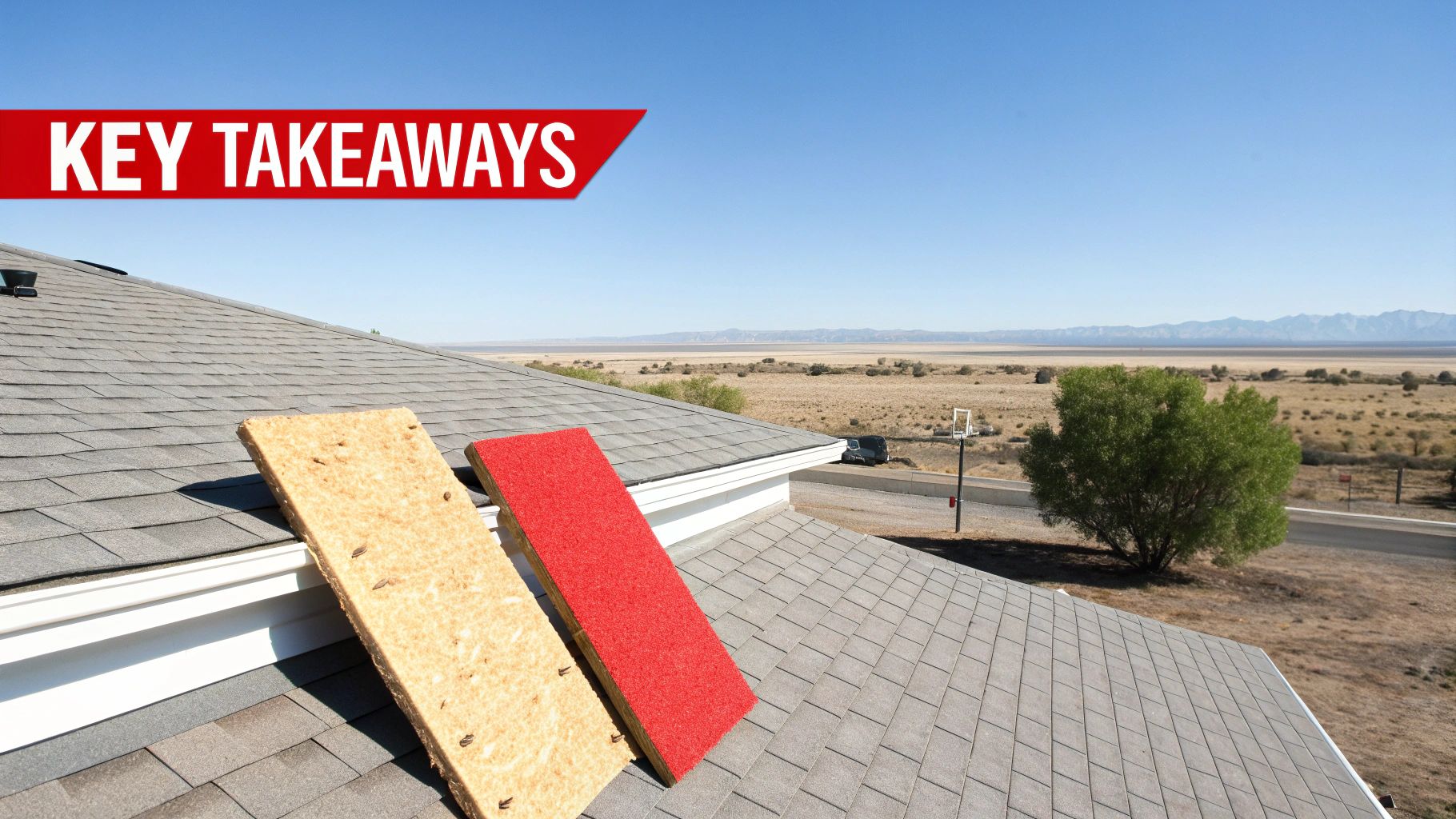
Key Takeaways for Choosing Your Next Roof
- Architectural Shingles: The industry standard, known for their dimensional look and 25-30 year lifespan. They offer the best balance of cost, durability, and curb appeal for most homeowners.
- Composite Shingles: A premium, engineered product with a 50+ year lifespan. They provide superior storm and impact resistance (Class 4 rating) and mimic high-end materials like slate and wood.
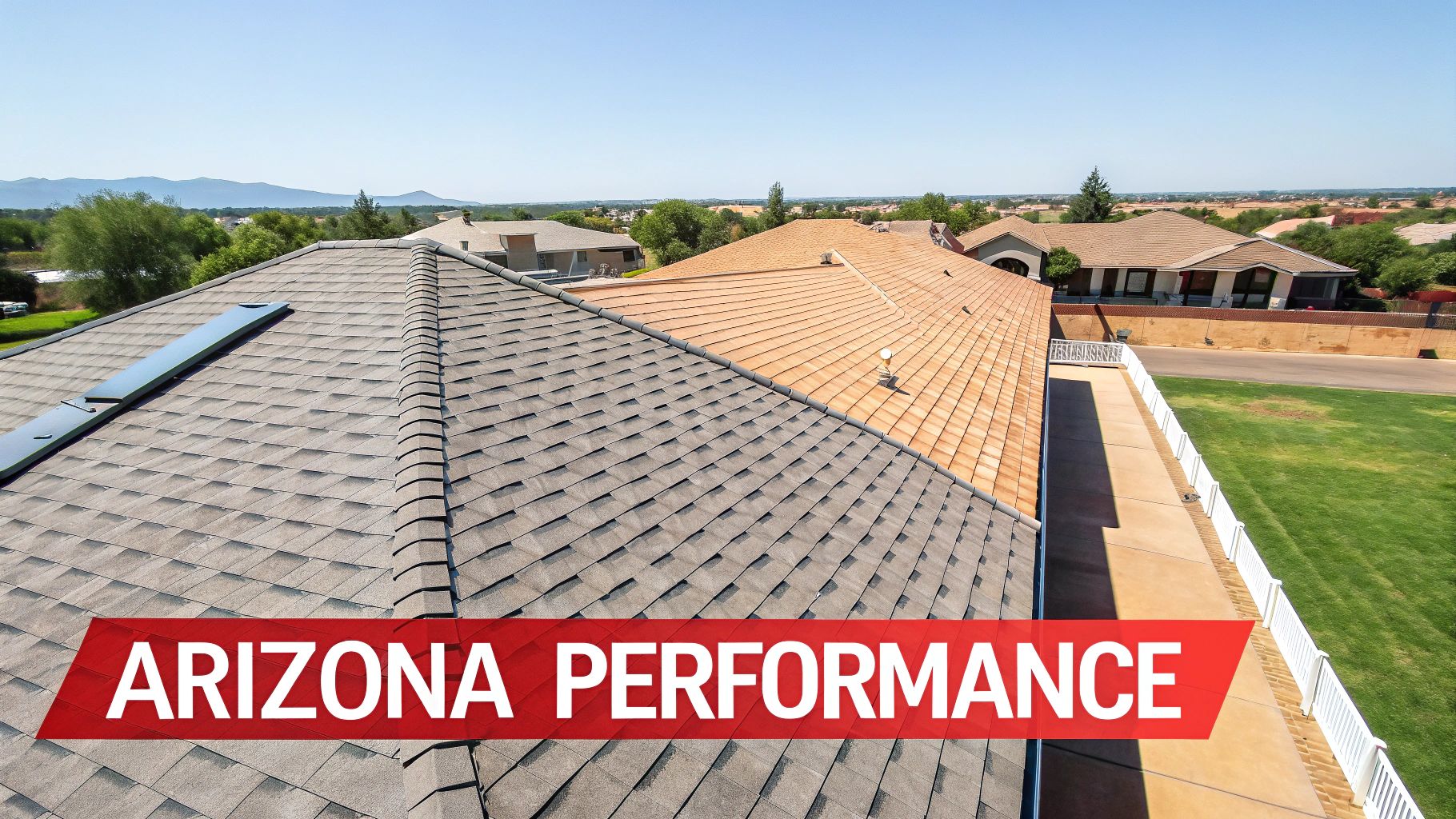
- Arizona Performance: Composite shingles offer better long-term resistance to Arizona's extreme UV radiation and heat cycling, while architectural shingles provide reliable protection at a more accessible price point.
- Cost vs. Value: Architectural shingles have a lower upfront cost, making them budget-friendly. Composite shingles have a higher initial investment but offer a lower total cost of ownership due to their extreme longevity and potential insurance discounts.
When you're trying to decide between architectural and composite shingles, the choice really comes down to a classic balancing act: upfront cost versus long-term performance.
Think of it this way: Architectural shingles offer fantastic value. They've proven themselves over decades, look great, and come at a moderate price point, which is why they’re the go-to choice for most homeowners. On the other hand, composite shingles are a serious upgrade, built for superior longevity and storm resistance with a high-end look that backs up their higher price tag.
Understanding the Core Differences
Picking a new roof here in Arizona is a big deal. You're not just choosing a color; you're choosing protection against our brutal sun, wild monsoon storms, and relentless heat. Both architectural and composite shingles are great options, but they're tailored for different priorities and budgets.
Architectural shingles, which you might also hear called dimensional or laminate shingles, are the modern industry standard. They give your roof a thick, multi-layered look that adds a lot of depth and character. It's a huge improvement over the old, flat 3-tab shingles you used to see everywhere.
Composite shingles are a different beast altogether. They are engineered from the ground up for maximum strength and a picture-perfect appearance. Made from a blend of synthetic polymers, recycled materials, and other additives, they do an incredible job of mimicking natural materials like slate or cedar shake—without the hefty weight, constant maintenance, or brittleness. This makes them a perfect fit for anyone who puts top-tier performance and curb appeal at the top of their list.
The core question for most Arizona homeowners is this: Do you want the reliable, cost-effective standard that holds up well for decades (architectural), or are you looking for the lifetime, high-performance option that delivers ultimate peace of mind against our harshest weather (composite)?
To make things a bit clearer right from the start, here’s a quick table that lays out the essential differences between the two for a typical Arizona home.
Architectural vs Composite Shingles At a Glance
This summary table hits the most important points for Arizona homeowners weighing their roofing options.
| Feature | Architectural Shingles | Composite Shingles |
|---|---|---|
| Primary Material | Fiberglass mat base coated with asphalt and ceramic granules | Synthetic polymers, recycled plastics, and other composites |
| Typical Lifespan | 25-30 years | 40-50+ years |
| Upfront Cost | $$ (Moderate) | $$$$ (High) |
| Impact Resistance | Good (Some available with Class 4 rating) | Excellent (Most are Class 4 rated for hail) |
| Aesthetics | Dimensional, textured look in various colors | Premium look of natural slate, wood shake, or clay tile |
| Best For | Homeowners seeking the best balance of cost, durability, and curb appeal. | Homeowners prioritizing maximum longevity, storm protection, and high-end aesthetics. |
This quick overview gives us a great starting point. To truly understand why these two materials perform so differently under the Arizona sun, we need to look at what they're actually made of. First, we'll dive into the composition of architectural shingles and see what has made them the most popular roofing material in the country.
Understanding Architectural Shingles
When you picture a modern, high-quality shingle roof, you're almost certainly thinking of architectural shingles. You might also hear them called dimensional or laminate shingles, but they all refer to the same thing: a major leap forward from the flat, one-dimensional 3-tab shingles that used to be the standard. Their design is what truly sets them apart.
Unlike their old-school predecessors, architectural shingles are built with multiple layers of material fused together. This process creates a thicker, tougher shingle with noticeable variations in shape and thickness. The result is a roof with a rich, textured appearance that does a great job of mimicking premium materials like wood shake.
The Anatomy of an Architectural Shingle
At its heart, an architectural shingle is a carefully engineered composite of materials built for resilience. Digging into its structure, you'll typically find:
- A Fiberglass Mat: This is the backbone, providing strength and a solid foundation.
- Waterproof Asphalt: A heavy layer of asphalt is bonded to the mat, acting as the main barrier against water.
- Ceramic-Coated Granules: The top layer is embedded with tiny ceramic granules. These are the unsung heroes—they shield the shingle from brutal UV radiation, provide the color, and even add a degree of fire resistance.
This multi-layered construction isn't just for looks. It's directly responsible for the shingle's durability and longevity, which is absolutely critical in a climate like ours here in Arizona. The extra weight and thickness make architectural shingles far more resistant to wind uplift—a huge plus when monsoon season rolls around.
The real game-changer with architectural shingles is their laminated, multi-layer design. It’s not just about creating that popular high-definition, dimensional look. It's about building in superior weight and rigidity, which are essential for fighting off high winds and resisting damage over the years.
This blend of better design and performance is why they’ve become the go-to choice for residential roofing. In fact, by 2024, architectural and laminated shingles made up about 57.8% of the entire global asphalt shingle market. This shift shows a clear homeowner preference for roofing solutions that perform better and last longer, driving much of the demand for reroofing projects.
Lifespan and Resilience in Arizona
Here in Arizona, a roof’s number one job is to withstand intense, relentless sun. Architectural shingles are engineered specifically for that challenge. The ceramic granules on their surface do an excellent job of deflecting UV rays, which helps slow down the breakdown of the asphalt underneath. While our extreme heat can take a toll on any roof, a professionally installed architectural shingle roof can realistically last 25 to 30 years.
On top of that, many top manufacturers infuse these granules with copper or other additives to prevent the growth of blue-green algae. This helps stop those ugly dark streaks you might see on roofs in more humid climates. Their tough construction also gives them better impact resistance than the old 3-tab style shingles.
For a deeper dive into their construction and benefits, you can learn more about understanding architectural shingles in our detailed guide. In short, they hit a sweet spot, offering an attractive, tough, and affordable roofing system that stands up to the elements without the high-end price tag of other materials. This combination of aesthetics, performance, and value is exactly why they remain the top choice for the vast majority of new roofs and replacements today.
Diving into Premium Composite Shingles
If architectural shingles are the industry's gold standard, then composite shingles are the luxury, high-performance upgrade. They represent the premium end of the roofing market, engineered for homeowners who want exceptional longevity and a flawless, high-end look and are willing to invest in it. Think of them as the next evolution in roofing—designed to eliminate the natural weaknesses of traditional materials like slate and wood.
At their heart, composite shingles are a feat of modern engineering. Manufacturers blend a sophisticated mix of materials—often recycled polymers, rubber, and other tough synthetic compounds—to create a shingle that looks astonishingly like natural slate or cedar shake. This process perfectly captures the authentic textures, rich color variations, and chiseled edges of those classic materials, but without the baggage of extreme weight, rot, or pest damage.
Where Durability and Design Come Together
The biggest draw for composite shingles is their sheer resilience. They are specifically formulated to handle the harshest conditions, which makes them a fantastic, albeit pricey, choice for Arizona's punishing climate.
- Top-Tier Impact Resistance: Nearly all composite shingles carry a Class 4 impact rating, the highest you can get. This means they are built to withstand serious hail damage—a critical feature for many parts of our state.
- Decades of Performance: These shingles are truly built to last. It's not uncommon to see warranties for 50 years or more, and their functional lifespan often stretches well beyond that with proper installation.
- Unmatched Aesthetic Flexibility: Since they're manufactured, the design possibilities are virtually endless. You can get the prestigious look of thick-cut slate or the rustic charm of wood shake in a format that's lighter and far more durable.
Composite shingles aren't just a different product; they reflect a different philosophy about roofing. The objective is to put a roof on your home that will perform at an elite level for half a century with almost no fuss, making it a true long-term asset rather than just another component of your house.
This premium status is clear in their market position. While they’re still a niche product compared to asphalt, the global market for composite slate roofing alone was estimated at USD 2.17 billion in 2024. These are high-end products seeing significant growth as they become the go-to substitute for natural materials on luxury homes and major remodels. You can dig deeper into this trend in detailed industry reports.
Is the Higher Investment Worth It?
Let's be clear: composite shingles come with a much steeper upfront cost than architectural shingles. But that initial investment buys you decades of real, tangible benefits. The cost is really a reflection of their incredible durability, which means fewer repairs and a replacement cycle that's more than twice as long.
On top of that, the minimal maintenance required over a 50-year lifespan saves you both headaches and money down the road. For anyone planning to stay in their home for the long haul or seeking the ultimate protection against severe weather, the math often works out in favor of composite. Add in the major boost to curb appeal and potential home value, and it's easy to see why they're considered a wise, though substantial, investment in your property's future.
Performance Under the Arizona Sun
The real test for any roofing material in Arizona isn't just how it looks, but how it holds up to our relentless heat, intense UV radiation, and violent monsoon storms. When you put architectural and composite shingles side-by-side, their performance under our sun reveals the fundamental differences in their engineering.
UV Resistance and Heat Reflectivity
An Arizona roof is in a constant battle with the sun. Architectural shingles fight back with a layer of ceramic-coated granules. These tiny specks are designed to deflect solar radiation and shield the asphalt underneath from UV damage. Over a couple of decades, however, this protection slowly wears away as granules get knocked loose by rain and wind.
Composite shingles, on the other hand, are made from synthetic polymers that have UV resistance baked right into their chemical makeup. This integral protection means they don't get brittle or crack from sun exposure nearly as easily. Their color holds up better too, resisting the fading you often see on older asphalt roofs.
When it comes to keeping your home cool, both have "cool roof" options. These are lighter-colored shingles that reflect more sunlight and absorb less heat, which can make a real difference in your attic temperature and AC bills.
- Architectural Shingles: You’ll find a solid selection of ENERGY STAR® rated colors, mostly in lighter grays, whites, and tans.
- Composite Shingles: Also come in highly reflective colors, but often with advanced pigments that can reflect infrared light even in darker shades.
A cooler roof doesn't just save you money; it also extends the life of the entire roofing system. After picking a reflective shingle, looking into the best roof insulation for hot climates is a smart next move to really maximize your home’s efficiency.
Durability Against Monsoon Winds and Hail
Our monsoon season is about more than just rain—it brings high-velocity winds and, in some areas, serious hail. This is where the structural differences between these two shingle types become crystal clear.
Heavyweight architectural shingles actually do quite well against high winds, with most being rated for 110 to 130 mph. Their thick, laminated construction gives them the heft to resist uplift. The flip side is that their flexibility drops in extreme heat, making them more prone to cracking if hit by large hailstones.
Composite shingles are truly engineered for impact. Their polymer material has a rubber-like quality that lets them absorb and dissipate the force of hail instead of shattering. It's why nearly all composite products earn a Class 4 impact rating—the highest you can get. For homeowners who are serious about storm protection, this is a game-changer.
In a nasty hailstorm, a composite shingle's flexibility is its biggest advantage. A heavy architectural shingle is tough, for sure, but the engineered "give" of a synthetic composite allows it to shrug off impacts that would crack more rigid materials.
For those wanting even more advanced protection, especially on flatter roof sections, it's worth looking into options like durable elastomeric coatings that can provide a seamless, weather-resistant barrier.
Realistic Lifespan in the Arizona Climate
Manufacturer warranties give you a starting point, but Arizona’s climate is an accelerator for roof aging. You have to look past the number on the warranty and think about a realistic, functional lifespan based on our local conditions.
Architectural shingles often come with "lifetime" limited warranties, but here, a realistic lifespan is closer to 25 to 30 years. The constant thermal cycling—expanding in the 110-degree heat and contracting in the cool of the night—eventually weakens the asphalt and its adhesive bonds.
Composite shingles are built for the long haul. Their synthetic composition is simply far more resistant to the thermal stress and UV damage that breaks down asphalt. With a realistic lifespan of 40 to 50 years or more, a composite roof is often a one-and-done installation. That incredible longevity is the main reason they cost more upfront; you're paying for a roof you likely won't have to think about again.
Analyzing the Lifetime Financial Value
When you're deciding between architectural and composite shingles, the initial price tag is just the first chapter of a much longer story. A roof is a serious long-term investment, and its true cost really only becomes clear over decades of performance. To get the full picture, you have to look at the total cost of ownership—that means factoring in installation, maintenance, insurance, and the eventual replacement.
There's no question that architectural shingles have a lower upfront cost. They're a familiar, accessible option for most homeowners, and their popularity helps keep installation and labor costs down to earth. That initial affordability is a huge part of why they dominate the market.
Composite shingles, on the other hand, are a different animal entirely. You’re looking at a much steeper initial investment. The premium materials and the specialized skills needed for a perfect installation both contribute to that higher price. The trade-off, however, is a significantly longer lifespan and far fewer costs down the road.
Total Cost of Ownership Breakdown
To really wrap your head around the financial side of things, you have to look past that first invoice. The total cost of ownership is a moving target, with several factors that come into play over the life of your roof.
- Upfront Installation Costs: This is the easiest number to compare. Architectural shingles are simply cheaper to buy and install. For a deeper dive into what makes up this initial expense, it’s worth reading a complete guide on how much a new roof costs.
- Maintenance and Repair Expenses: With architectural shingles, you can probably expect some occasional repairs for cracked or missing tabs, especially after one of our monsoon storms blows through. Composite shingles are incredibly tough and rarely need a service call, which adds up to real savings over time.
- Insurance Premium Discounts: Here’s where composites really shine. Most carry a Class 4 impact rating for hail resistance. That single feature can often qualify you for significant discounts on your homeowner's insurance premiums, creating a nice little annual return on your investment.
While you're thinking about your roof, don't forget about other assets up there. If you have solar, for example, running through a good solar panel maintenance checklist for Arizona homes ensures every part of your rooftop is pulling its weight and protecting your investment.
Decoding Roofing Warranties
A warranty offers peace of mind, but you absolutely have to read the fine print to understand what you're getting. Both architectural and composite shingles usually come with long-term manufacturer warranties, but the coverage can be worlds apart.
Architectural shingle warranties are almost always "lifetime" limited warranties, which means they are prorated. As the roof gets older, the coverage value shrinks. A manufacturing defect that shows up in year 25 will get you a much smaller payout than one that appears in year five. These warranties are designed to cover defects from the factory, not the brutal wear and tear from our Arizona climate.
A prorated warranty is great for product defects, but its value drops every year. A composite shingle's non-prorated period is often much, much longer—that’s the manufacturer showing confidence in its durability and giving you far greater financial security.
Composite shingle warranties are typically much stronger. Many offer 50 years of coverage with a generous non-prorated period. This means you get full replacement value for a much longer time, which is a huge financial safety net.
Impact on Resale Value
The kind of roof you install can also move the needle on your home’s resale value. A brand-new architectural shingle roof is always a solid selling point; it tells buyers they won't have to worry about a big-ticket replacement anytime soon.
A composite roof, however, can elevate your home into a premium category. It’s a clear signal of top-tier quality and durability. For savvy buyers, that can be a powerful motivator and might even boost your home's market value.
Of course, budget is always a major factor. Industry stats show that about 60% of homeowners put material cost at the top of their concerns, which explains why asphalt shingles remain so popular, even with shorter service lives. Ultimately, the best choice really comes down to your long-term financial goals and how long you see yourself staying in the home.
Making the Right Choice for Your Arizona Home
So, what's the verdict? When it comes to picking between architectural and composite shingles, it’s not about finding a single "best" option. It's about figuring out which one makes the most sense for your home, your budget, and how long you plan to live there.
Think of it this way: architectural shingles are the workhorse of the industry for a reason. They offer a fantastic balance of looks, durability, and cost, giving you a solid 25-30 years of protection. For most homeowners in Arizona, they’re an incredibly smart, value-driven choice that looks great without breaking the bank.
But if your top priority is building a fortress on your roof that will stand up to anything Arizona throws at it for the next half-century, then composite is where you should be looking. That higher price tag upfront is buying you elite performance, unmatched storm resistance, and the peace of mind that comes with knowing you won't have to think about your roof again for a very, very long time.
Your Decision Checklist
Let's cut through the noise. Answering these four questions will pretty much make the decision for you.
- What’s your immediate budget? If keeping initial costs down is the most important factor, architectural shingles deliver a high-quality roof without that premium price.
- How long are you staying? If this is your forever home, the 50+ year lifespan of a composite roof is a huge long-term win. If you see yourself moving in the next 10-15 years, architectural shingles give you a more practical return on your investment.
- What look are you going for? Architectural shingles have that classic, textured appearance that works on almost any home. But if you’re chasing the authentic, high-end look of real slate or wood shake, only composite can replicate it convincingly.
- How much storm protection do you really need? Architectural shingles are tough, no doubt. But with a standard Class 4 impact rating, composite shingles offer the absolute best defense against our monsoon winds and the surprise hailstorms that can pop up.
This decision tree breaks it down even further, showing how your main priority—budget or longevity—points you to the right material.
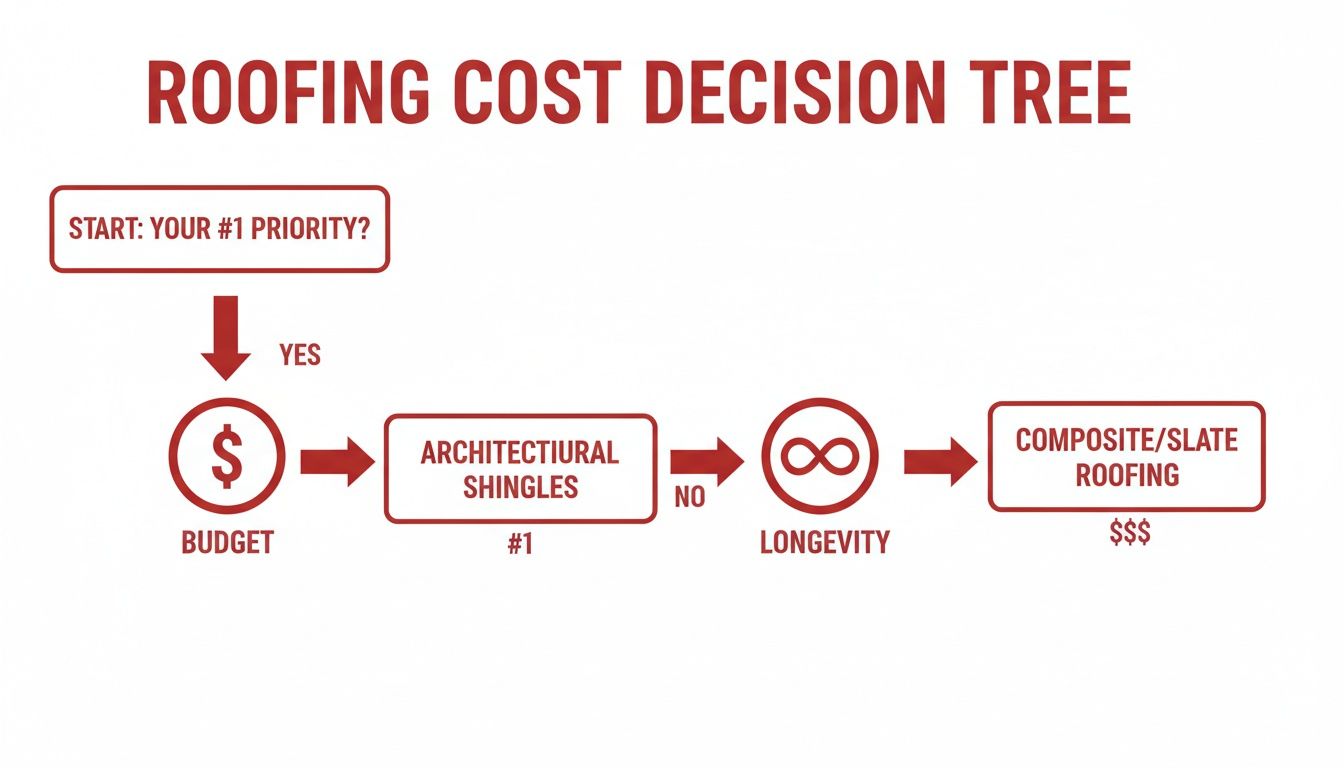
Ultimately, this infographic boils down the whole "architectural shingles vs composite shingles" debate to a simple choice: immediate affordability or ultimate, long-term durability.
The best way to lock in your decision is to get a professional opinion. Having an expert physically look at your roof, talk through your goals, and give you hard numbers for both options is the only way to ensure you’re making the perfect choice.
The next step is getting that personalized advice. Reaching out to a trusted local expert like AZ Roof Co for a free inspection will give you the clarity you need to invest in your home with total confidence.
Frequently Asked Questions
When you're trying to decide between architectural and composite shingles, a few key questions always seem to come up. Let's tackle some of the most common ones we hear from Arizona homeowners to help you get the clarity you need.
Do composite shingles really look like slate or wood?
Honestly, yes—the high-quality ones are incredibly convincing. Top-tier manufacturers create molds from real quarried slate and hand-split wood shakes. This technique captures every subtle texture, cleft, and grain pattern. They also use sophisticated color blending to avoid a repetitive, cookie-cutter appearance. From the curb, it's nearly impossible to tell the difference between premium composite and the natural material it mimics.
Which shingle type is better for monsoon season?
While both are strong performers, composite shingles have a clear advantage during Arizona's brutal monsoon season. Their synthetic, often rubberized, composition provides superior flexibility and strength, leading to higher wind ratings (often exceeding 130 mph). This resilience allows them to absorb the impact from flying debris and resist wind uplift more effectively than the more rigid structure of an architectural shingle, giving you greater peace of mind.
Can I get an insurance discount for using composite shingles?
There’s a very good chance you can, and it's something you should absolutely bring up with your insurance agent. Most composite shingles come with a Class 4 impact rating, which is the highest certification for hail resistance. To an insurer, that rating means you're a much lower risk for a costly claim after a hailstorm. Many insurance carriers offer significant premium discounts for homes with a Class 4 roof, so be sure to provide your agent with the specific product details to see what savings you qualify for.

Guides written and reviewed by the licensed roofers at Arizona Roofers (ROC#356304 · ROC#356639), a GAF Master Elite® contractor and 2026 GAF President’s Club Residential Award winner. About our team →