
A shingle roof is one of the most significant investments you'll make in your home, acting as the primary shield against the elements. But how long can you realistically expect it to last? While the general answer is often "15 to 30 years," the true longevity of your roof depends on a complex mix of factors, from the type of shingles you choose to the relentless Arizona sun. Understanding these variables is the key to protecting your investment and ensuring your home stays safe and dry for decades.
This guide will walk you through everything you need to know about the shingle roof lifespan. We'll break down the different types of shingles, explore the critical factors that can shorten or extend your roof's life, and provide a practical checklist to help you stay ahead of potential problems.
Key Takeaways
To get started, here are the most important things to remember about your roof:
- Not All Shingles Are Equal: Your standard asphalt shingles will typically give you 15-20 years of service. Upgrading to thicker, more durable architectural shingles can push that lifespan to 25-30 years or even more.
- Arizona's Climate Is a Game-Changer: Our intense UV radiation is public enemy number one for asphalt shingles. It bakes the life right out of them, making them brittle and causing them to shed their protective granules way too early.
- Maintenance Is Your Best Friend: I can't stress this enough. Proactive inspections and small, timely repairs are the single most effective way to get the most out of your roof. Catching a small problem today prevents a catastrophic—and expensive—failure tomorrow.
- Installation Is Everything: You can buy the best shingles on the market, but if they're installed poorly, your roof could fail in just a few years. Quality workmanship is absolutely non-negotiable.
Understanding Your Roof's Lifespan
Putting on a new roof is a major investment. You’re not just paying for shingles; you're buying security for your family and peace of mind for years to come. But the lifespan printed on the shingle wrapper is just the starting point—a best-case scenario. The true longevity of your roof depends on a whole host of real-world factors.
It's a lot like the MPG estimate on a new car. The sticker might say 30 miles per gallon, but your actual mileage depends on your driving habits, the road conditions, and how often you get an oil change. A roof is exactly the same. A basic 3-tab shingle might be rated for 20 years, but under the relentless Arizona sun, it could start showing its age much sooner without the right care.
Comparing Shingle Types and Their Expected Lifespans
Choosing a new roof isn't just about picking a color. It’s about investing in a material that will protect your home for years, even decades, to come. But not all shingles are created equal, and knowing the difference is the key to getting the most for your money. The shingle roof lifespan you can expect is directly tied to the type of shingle you install.
Think of it like buying tires for your car. You can get a basic set that will get the job done for a while, or you can invest in a premium, all-weather set designed for superior performance and longevity. Shingles work the same way, with each type offering a different balance of price, durability, and style.
The Reliable Standard: 3-Tab Shingles
The most basic and budget-friendly option you'll see on homes across Arizona is the 3-tab shingle. These are made from a single, flat layer of asphalt. They get their name from the cutouts along the bottom edge that make them look like three separate pieces when installed.
While they are certainly an economical choice, their single-layer design makes them more vulnerable to wind uplift and the brutal effects of our desert sun. This means they have the shortest lifespan of the asphalt shingle family.
- Average Lifespan: 15 to 20 years. Here in Arizona, they almost always fall on the lower end of that range.
- Best For: Homeowners on a tight budget, rental properties, or anyone planning to sell their home in the near future.
- Key Consideration: The low initial cost is appealing, but you'll likely be replacing them much sooner than other options.
The Popular Upgrade: Architectural Shingles
Taking a big step up in both toughness and style, architectural shingles (also called dimensional shingles) are what most homeowners choose for their new roofs today. Unlike 3-tab shingles, they’re built with multiple layers of asphalt laminated together. This creates a thicker, stronger shingle with a beautiful, textured appearance that adds real depth and curb appeal to a home.
That multi-layer construction does more than just look good. It provides far better resistance to wind, hail, and the relentless sun—a must-have for any roof in our climate. While they cost more upfront, their longer lifespan makes them a smarter investment in the long run.
The Top-Tier Choice: Premium Shingles
At the very top of the asphalt shingle lineup are premium shingles, sometimes called luxury shingles. These are the thickest, heaviest, and most durable options you can buy. They are expertly crafted to mimic the look of high-end roofing materials like natural slate or cedar shakes, giving you that stunning aesthetic without the massive cost and constant upkeep.
Their superior construction gives your home the best possible defense against severe weather and pushes the shingle roof lifespan to its absolute maximum. For homeowners who refuse to compromise on curb appeal and want top-tier performance, premium shingles are the clear winner.
- Average Lifespan: 30 to 50 years. Their robust build helps them stand up to the elements for decades longer than other types.
- Best For: Homeowners seeking maximum longevity, high-end looks, and the best possible return on their investment.
- Key Consideration: They have the highest initial cost among asphalt shingles, but they deliver unmatched performance and beauty.
To make comparing these options easier, we've put together a quick reference table.
Shingle Type Lifespan and Cost Comparison
This table breaks down the most common asphalt shingle types, comparing their average lifespan, typical installed cost, and defining characteristics. It’s designed to help you see exactly what you get at each price point, making it easier to choose the right fit for your home and budget.
| Shingle Type | Average Lifespan | Cost per Sq. Ft. (Installed) | Key Features |
|---|---|---|---|
| 3-Tab | 15-20 years | $3.50 – $5.50 | Single-layer, flat appearance. Most affordable option. |
| Architectural | 25-30 years | $4.50 – $7.00 | Multi-layered, dimensional look. Excellent durability and value. |
| Premium | 30-50+ years | $6.00 – $9.00+ | Thickest construction, mimics slate/shake. Maximum longevity. |
Ultimately, the right shingle depends on balancing your immediate budget with your long-term goals for your home. By understanding these key differences, you can make an informed choice that will keep your home protected for years to come.
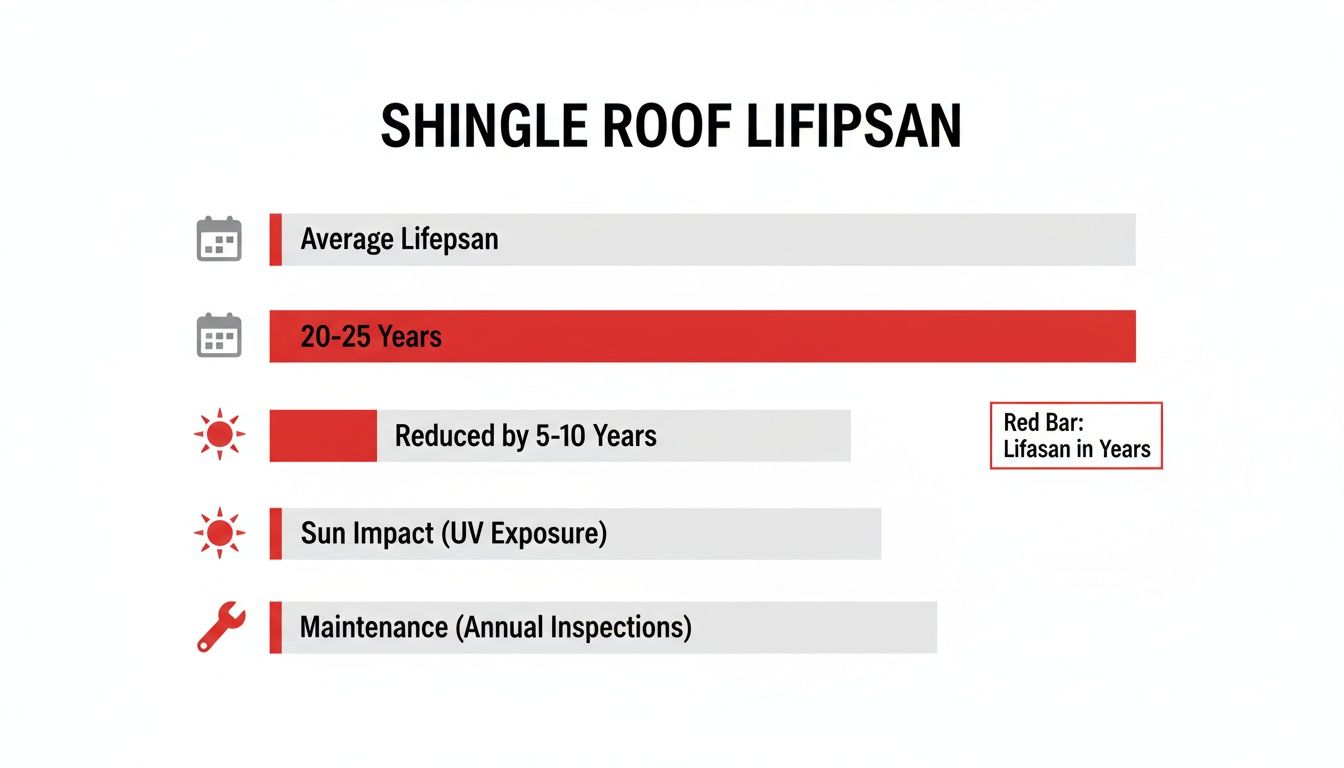
As you can see, the manufacturer's estimate is just a starting point. Real-world factors like intense sun exposure—something we know all about in Arizona—and how well you maintain your roof play a huge role in how long it actually lasts. For a deeper dive, you can explore our full guide on how long architectural shingles last.
What Really Determines Your Roof's Lifespan?
The lifespan printed on a shingle package is a lot like the "best by" date on a carton of milk—it’s a useful guideline, but it assumes ideal conditions in a lab somewhere. Out here in the real world, your shingle roof lifespan is decided by a relentless series of battles fought on your home every single day. The outcome is influenced by everything from the angle of the sun to the quality of the nails used to put it all together.
Think of your roof not as a single product, but as a complex system. Every component has to work in harmony, and when one part fails, it can trigger a chain reaction that dramatically shortens the life of the whole thing. Understanding what you're up against is the key to protecting your investment.
The Arizona Climate: An Unrelenting Adversary
Nowhere are those battles more intense than right here in Arizona. Our climate is the ultimate stress test for any roofing material, and asphalt shingles get hit particularly hard. Two major forces are constantly working to wear down your roof’s defenses.
The first, and most powerful, enemy is the sun. That intense, year-round UV radiation is incredibly destructive to the petroleum-based asphalt that makes shingles waterproof and flexible. This constant solar assault literally bakes the life out of them, causing the essential oils to evaporate. Before you know it, they become dry, brittle, and prone to cracking—just like a car dashboard that’s been left in the sun for too many years.
Then there's our monsoon season. The brutal cycle of extreme heat followed by sudden, torrential downpours and high winds puts immense stress on the entire system. This thermal shock forces materials to expand and contract violently, which can loosen seals and pop fasteners over time.
Key Insight: Here in Arizona, a standard 20-year shingle might only give you 12-15 years of reliable service because of our harsh climate. The sun's UV radiation alone can speed up the aging process by as much as 30-40%.
The Hidden Culprit: Poor Attic Ventilation
While the sun attacks your roof from the outside, one of the biggest threats is actually coming from inside your home: a poorly ventilated attic. A properly ventilated attic is supposed to act like a chimney, letting hot, moist air escape. Without that crucial airflow, your attic becomes a superheated oven during our long summer months.
It's no exaggeration—temperatures in a stuffy attic can soar to over 150°F. This trapped heat literally cooks your shingles from the underside, destroying the asphalt and causing them to age at a shocking rate. It's a silent killer for roofs and a fast way to void a manufacturer's warranty, because it creates conditions the shingles were never designed to handle.
A healthy roof needs a balanced system:
- Intake Vents: These are usually in the soffits (the underside of your roof's eaves) and draw in cooler, fresh air.
- Exhaust Vents: Positioned near the peak of the roof (like ridge or box vents), they give hot air a way to escape.
When these work together, they create a continuous flow of air that keeps your roof deck and shingles at a much more stable temperature, adding years to their life.
The Foundation of Longevity: Quality of Installation
You can spend a fortune on the most advanced, 50-year premium shingles on the market, but if they aren't installed correctly, you’ll be lucky to get 10 years out of them. The quality of the initial installation is, without a doubt, the single most important factor in your roof's real-world lifespan.
Even tiny mistakes can lead to catastrophic failure down the road. For example, improper nailing is a huge problem we see all the time. Drive a nail too deep, and it tears the shingle. Don't drive it far enough, and the wind will lift it right up. Using the wrong number of nails is just as bad, completely compromising the shingle's wind rating.
Other critical details that have to be perfect include:
- Proper Underlayment: This is the waterproof barrier between the shingles and your roof deck. A cheap or poorly installed underlayment is a guaranteed point of failure.
- Correct Flashing: The metal pieces around chimneys, vents, and in roof valleys are your primary defense against leaks in the most vulnerable spots.
- Shingle Overhang: Getting the shingles to hang over the roof edge by just the right amount is vital for guiding water into the gutters and keeping it off your home's fascia boards.
Other Significant Factors at Play
Beyond our climate and the quality of the workmanship, a few other things can make a big difference. The slope, or pitch, of your roof plays a surprisingly large role. Steeper roofs are great at shedding water and debris, which helps prevent moisture damage and things like algae growth. A low-slope roof, on the other hand, lets water linger, which is always an invitation for trouble.
Finally, take a look at the environment right around your home. Big, overhanging trees might offer welcome shade, but they also drop leaves, pine needles, and branches. This debris can trap moisture against the shingles, creating a perfect breeding ground for moss and algae that can literally eat away at the protective granules. A little bit of tree trimming and regular cleaning can go a long way.
A Proactive Maintenance and Inspection Checklist
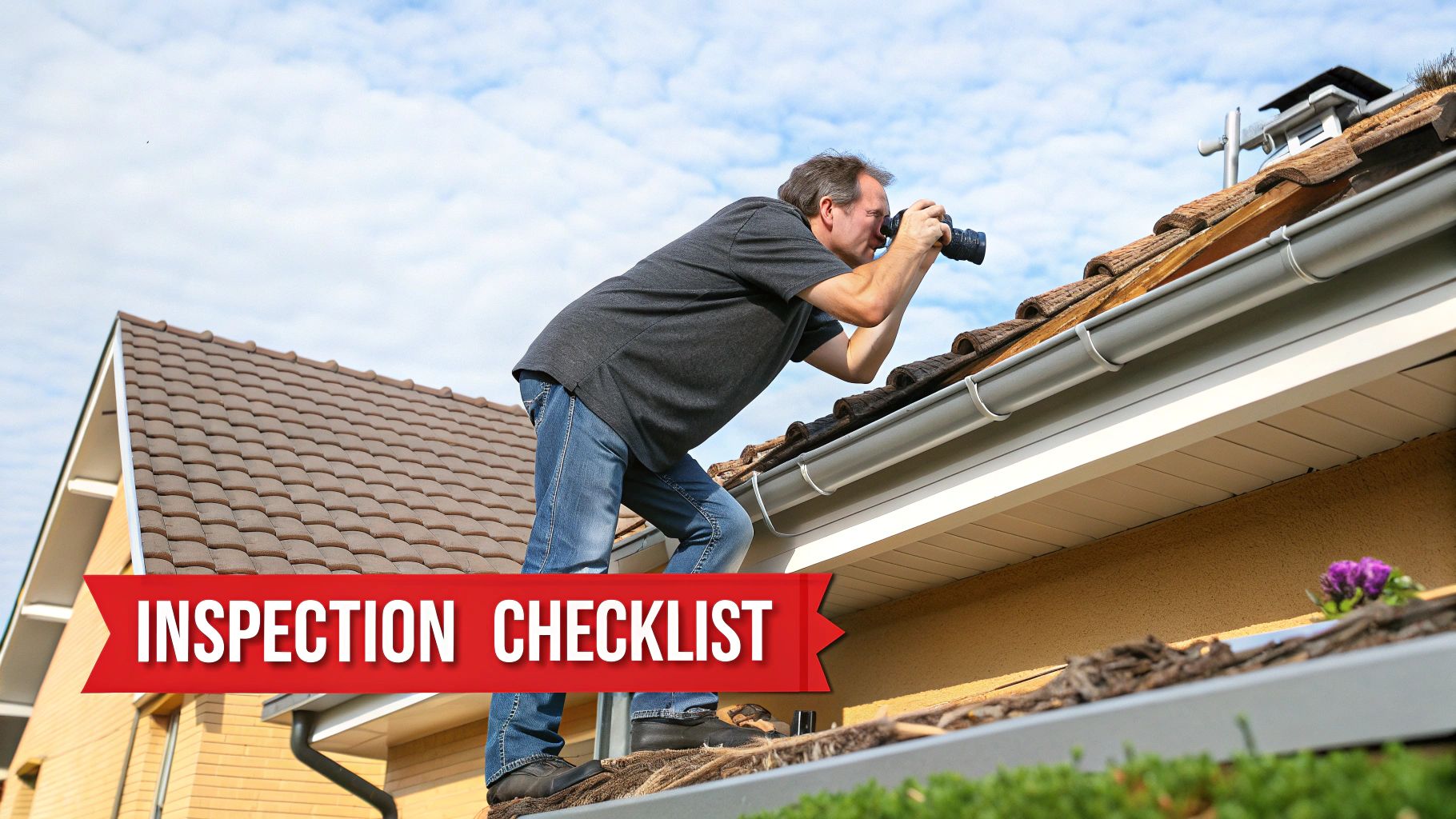
Getting the most out of your shingle roof lifespan is no accident. It comes down to a simple shift in mindset: moving from being reactive (fixing problems after they happen) to being proactive. Think of it like your car. You don't wait for the engine to seize up to get an oil change, right? Regular check-ups are what keep it running smoothly for years, and the very same logic applies to the roof over your head.
This straightforward checklist is your new best friend, putting you in the driver's seat of your roof's health. When you know what to look for, you can spot the quiet little warning signs long before they scream for attention with costly leaks and damage. The whole point is to catch small issues while they're still small, potentially saving you thousands on a premature roof replacement.
Your Seasonal DIY Inspection Guide
Believe it or not, you can get a great read on your roof’s condition without ever leaving the ground. We recommend doing a quick walk-around twice a year—once in the spring as things warm up, and again in the fall before the winter weather or monsoon season rolls in.
What to Look For from the Ground:
- Check Your Gutters and Downspouts: Take a peek inside. A few granules here and there are normal, but if you see handfuls of what looks like coarse sand, it’s a red flag. Those granules are the protective "sunscreen" for your shingles, and losing too many leaves them vulnerable.
- Scan for Obvious Damage: Grab a pair of binoculars and get a closer look. Do you see any shingles that are obviously cracked, missing, or curling up at the edges? Pay special attention to the areas around vents, pipes, and the chimney.
- Look for Dark Streaks or Stains: See any dark, vertical streaks running down your roof? People often mistake this for dirt, but it's usually blue-green algae. While it’s mostly a cosmetic problem at first, it can trap moisture and slowly wear down your shingles over the long haul.
- Inspect Overhanging Trees: Are tree branches touching the roof or hanging directly over it? They can act like sandpaper in the wind, scraping off those vital granules, and they pose a serious threat during a storm.
Running through these quick checks helps you stay a step ahead. For a deeper dive, our guide on asphalt shingle roof maintenance has even more detail.
The Professional’s Eye: What We See That You Might Miss
A DIY inspection is a fantastic first line of defense, but it can’t replace the trained eye of a professional. An annual inspection goes deeper to uncover hidden problems that could be silently threatening your roof's structure.
A professional roofer actually gets up on the roof to physically check the condition of the materials and the quality of the installation. We’re looking closely at the flashing—the metal seals around vents, skylights, and chimneys, which happen to be the most common culprits for leaks. We'll also assess the sealant around these areas to make sure it hasn't become brittle or cracked from relentless sun exposure.
A proactive approach makes all the difference. We've seen firsthand how proper installation combined with consistent maintenance can extend a shingle roof lifespan by 25-50%. That can easily turn a standard 20-year roof into one that reliably protects your home for 30 years or more.
Why Proactive Care Is a Financial Win
Honestly, investing a small amount in an annual roof check-up is one of the smartest things a homeowner can do. Even the National Association of Home Builders notes that with proper care, standard asphalt shingles can hit that 25 to 30-year mark. This is especially true when you fix underlying issues like poor attic ventilation, which can shorten a roof's life by a whopping 30% all on its own.
By catching a few loose shingles, resealing a vent pipe, or just clearing off debris, you stop water intrusion in its tracks. That means you avoid the rot, damaged insulation, and interior water stains that lead to repairs costing thousands of dollars. A little prevention now truly saves a fortune later.
Red Flags: When Your Shingle Roof Is Crying for Help
So, how do you know when you've moved past simple repairs and are staring down a full roof replacement? Knowing the tell-tale signs is crucial for preventing a small problem from turning into a catastrophic one. A roof rarely gives up the ghost overnight; it sends out warning signals first. Learning to spot them means you can plan for a replacement on your terms, not in a panic.
This isn't about being an alarmist—it's about being a savvy homeowner. Think of yourself as a detective for your own property. If you can identify these clues, you’ll know exactly when it’s time to bring in a professional for the final verdict.
Widespread Curling and Cracked Shingles
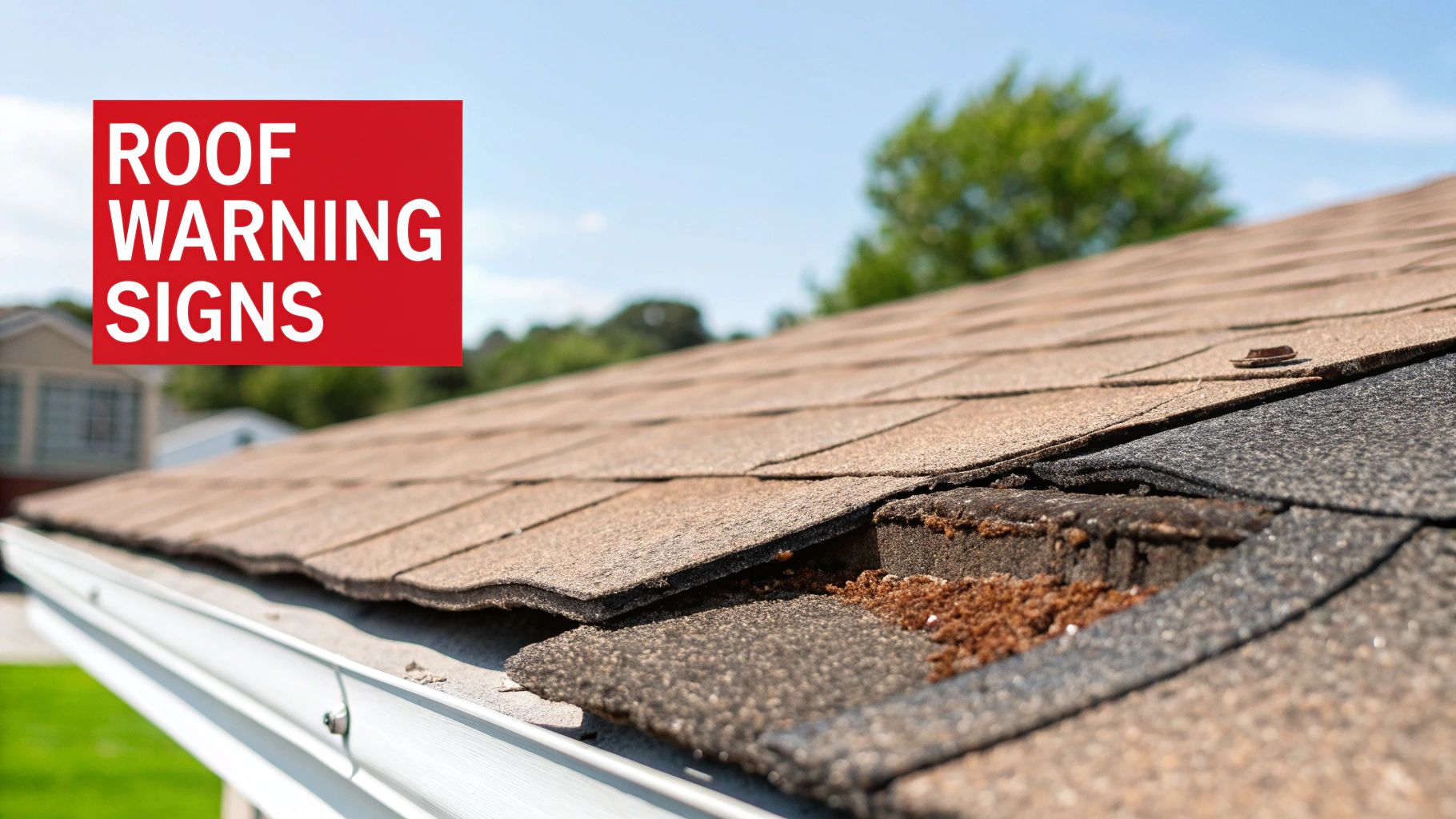
The most obvious clues are right there in the shingles themselves. After years of baking in the sun, the asphalt dries out and shingles lose their protective granules, causing them to warp. You might see the edges curling up like potato chips or the corners clawing downward. That’s a clear signal they’ve become brittle and lost their seal.
You may also spot cracks spreading across the shingle surfaces. Sure, one or two cracked shingles can be fixed, but when you see cracking across multiple sections of your roof, you're looking at a system-wide failure. Each crack is an open door for water to sneak in and start rotting the structure underneath.
Major Granule Loss and 'Bald' Spots
Those little sand-like granules on your shingles aren't just for show. They're the roof's first and best defense against harsh UV rays. It's normal to find a few granules in the gutters after a new roof installation, but if you're suddenly cleaning out handfuls or see "bald" patches on your roof, that’s a major red flag.
A roof that has lost most of its granules is like sending someone out into the Arizona sun without sunscreen. The protective layer is gone, leaving the asphalt core exposed to the elements. This massively accelerates deterioration and cuts the remaining shingle roof lifespan down to almost nothing.
Dark Streaks and Moss Growth
Those ugly black streaks running down your roof aren't just dirt. They're typically a type of algae called Gloeocapsa magma. While it's mostly a cosmetic problem at first, it can trap moisture against the shingles over time, speeding up wear and tear.
Even more troubling is moss. If you see green, fuzzy moss taking hold, it means moisture is sitting on your roof for long stretches. Moss can work its way under the shingles, lifting them up and creating a perfect pathway for water to get in and cause serious rot. While it's less common in our dry climate, you should never ignore it.
Seeing Daylight from the Attic and Interior Water Stains
The most undeniable signs of roof failure are the ones you find inside your house. Head up to your attic on a bright day. If you see little beams of daylight punching through the roof deck, you have a serious problem. Every sliver of light is a hole where water will pour in during the next monsoon.
Also, keep an eye on your ceilings and walls for any water stains, discoloration, or bubbling paint, especially after a storm. These are the classic calling cards of a leak that has already breached your home's defenses. To learn more, check out our guide on the top signs you need a new roof. If you spot any of these issues, it’s time to take action—fast.
Protecting Your Home and Maximizing Your Investment
At the end of the day, how long your shingle roof lasts isn't a game of chance. It boils down to a simple formula: the right materials + a quality installation + consistent maintenance. Every choice you make, from picking a durable architectural shingle over a basic 3-tab to getting it checked out once a year, directly adds years to your shingle roof lifespan.
Your roof is much more than just a cover; it’s the primary shield protecting your home's structure and, more importantly, your family. Investing in its health isn't just about maintenance—it's about protecting your home's value and stopping small, fixable problems from turning into budget-breaking disasters. Being proactive is the smartest way to get the most out of this crucial investment.
Your roof is one of the hardest-working parts of your house, silently taking a beating from the intense Arizona sun day in and day out. A little proactive care ensures it can keep doing its job for decades.
Your Next Step to a Secure Roof
You shouldn't wait for a water stain on the ceiling to signal that something's wrong. If you have any nagging doubts about your roof's age or how it's holding up, the next move is straightforward. The team here at AZ Roof Co can give you the clarity and peace of mind you need.
Let our GAF Certified professionals take a look. We'll give your roof a thorough, honest inspection to assess its true condition. Get in touch today for a free, no-obligation estimate, and let's make sure your most valuable asset is protected.
Frequently Asked Questions
What is the average lifespan of a shingle roof?
The average is between 15 and 30 years. Your more affordable 3-tab shingles usually fall in the 15-20 year range, while the heavier architectural shingles are designed to last closer to 25-30 years.
How does the Arizona climate affect a shingle roof's lifespan?
The sun is the biggest culprit. The constant, intense UV exposure literally cooks the asphalt in the shingles. This process dries them out, leads to cracking, and causes them to lose the tiny granules that act as their primary shield against the elements.
Can I make my shingle roof last longer?
Absolutely. Regular maintenance is the key. Simple things like keeping your gutters clean and removing debris from the roof surface make a big difference. More importantly, scheduling a professional inspection every year or two allows you to catch and fix minor issues—like a few cracked or missing shingles—before they turn into a major leak.
Will my homeowners insurance pay to replace an old roof?
In most cases, the answer is no. Homeowners insurance is designed to cover sudden, accidental damage, like from a storm or fire. It is not a maintenance plan. When a roof reaches the end of its natural life due to age and normal wear, the replacement cost is the homeowner's responsibility.
Can I put new shingles on top of old ones?
This practice, called a "roof-over," is generally not recommended. It adds significant weight to your roof structure and, more importantly, it covers up potential problems like soft spots or rot in the underlying roof deck. A complete tear-off ensures a solid foundation for your new roof and is often required to validate the manufacturer's warranty.