
When investing in a new roof, one of the most critical questions homeowners face is, "How long will it actually last?" Architectural shingles, known for their durability and style, often come with impressive "30-year" or "lifetime" warranties. But what does that mean in the real world, with blazing sun, harsh storms, and the simple passage of time? Understanding the true lifespan of your roof is key to protecting your home and making a smart financial decision.
This guide will break down the realistic lifespan of architectural shingles, moving beyond the marketing claims to give you the practical knowledge you need. We'll explore the crucial factors that can add or subtract years from your roof's life and help you identify when it's time for a replacement.
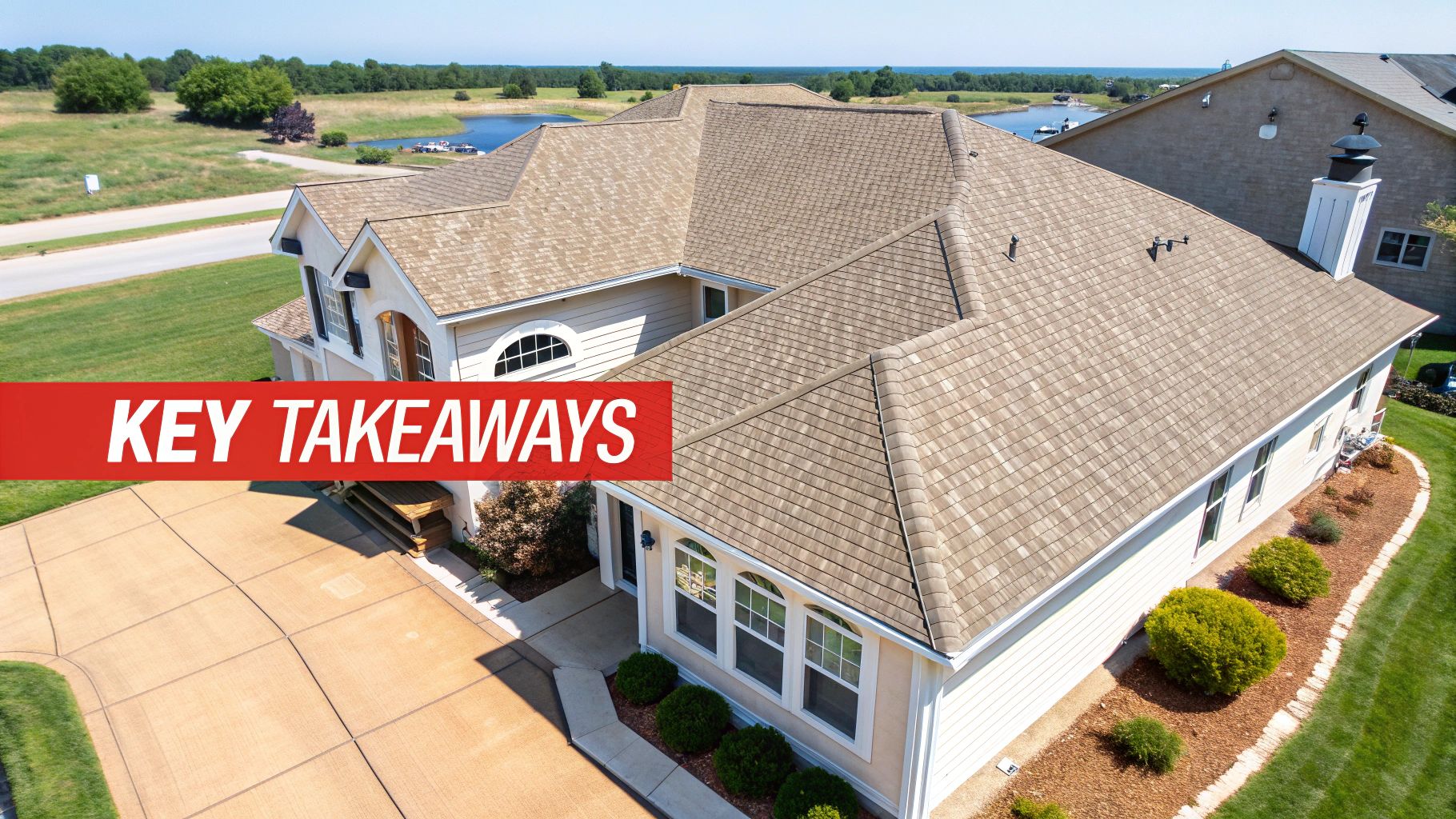
Key Takeaways
- Realistic Lifespan: While often sold with a 30-year warranty, a professionally installed architectural shingle roof typically lasts 22 to 25 years in average conditions.
- Installation is #1: The quality of the installation is the single most important factor determining your roof's longevity. Poor workmanship can cut a roof's life in half.
- Climate Matters: Intense heat and UV exposure, like that in Arizona, can shorten a shingle's lifespan to 18-22 years, while milder climates may see 25+ years.
- Maintenance is Key: Regular inspections and proactive repairs can prevent small issues from becoming catastrophic failures, adding years to your roof's service life.
- Warranty vs. Reality: A manufacturer's warranty primarily covers material defects, not wear and tear. Understand the "prorated" period, as this is the true measure of coverage.
What's the Real Lifespan of Architectural Shingles?
Knowing your roof's realistic lifespan isn't just trivia—it’s essential for smart homeownership. It helps you budget for the future and protect one of your most significant investments. While that manufacturer warranty is a good starting point, it's not the full story, especially in a tough environment like we have here in Arizona.
Here’s what you absolutely need to keep in mind:
- Warranty Isn't Lifespan: That "30-year" label is a best-case scenario. For most homes, the functional life of architectural shingles is closer to 22-25 years.
- Installation is Everything: This is the big one. A flawless installation from an experienced, certified roofer is the single most critical factor in getting the longest life out of your shingles.
- Climate is a Game-Changer: The relentless sun, punishing heat, and monsoon storms we see here will absolutely accelerate aging and can shorten that lifespan.
- A Little Maintenance Goes a Long Way: Don't just set it and forget it. Regular professional inspections and catching small repairs early can stop major problems in their tracks and add years to your roof's life.
To give you a clearer picture, this table breaks down how different scenarios can impact your roof's longevity.
Architectural Shingle Lifespan At a Glance
| Condition | Expected Lifespan | Key Influencing Factor |
|---|---|---|
| Ideal Conditions | 25+ years | Professional installation, mild climate, proper attic ventilation, regular maintenance. |
| Average Conditions | 22-25 years | Good installation, moderate climate with some seasonal extremes, decent ventilation. |
| Harsh Climate (like AZ) | 18-22 years | Intense UV exposure and extreme heat, which accelerates granule loss and material aging. |
| Poor Installation | 10-15 years | Incorrect nailing, improper flashing, or poor underlayment causing premature failure. |
As you can see, where you live and who installs your roof matter just as much as the shingle you choose.
The Real Lifespan of an Architectural Shingle Roof
https://www.youtube.com/embed/eJM6DFl0gLA
When you're shopping for a new roof, you'll see architectural shingles advertised with impressive labels like "30-year" or even "lifetime." It’s easy to think you're buying a set-it-and-forget-it solution, but what happens in the real world is a different story. That number on the package reflects performance in a perfect, controlled lab setting—not the daily battle your roof wages against sun, wind, and rain.
Think of it like the MPG sticker on a brand-new car. The official rating is a great starting point, but your actual mileage depends on how you drive, road conditions, and whether you keep up with maintenance. It’s the exact same principle for your roof. The true answer to how long do architectural shingle roofs last is always: it depends.
Warranty vs. Reality
That manufacturer's warranty is a promise against material defects, not a countdown clock for your roof's entire service life. Architectural shingles are tough, there's no doubt about it. But while they are often sold with a 30-year lifespan, decades of real-world data from roofers and homeowners tell us they typically last about 22 to 25 years.
That’s roughly 80–85% of the advertised duration. You can find more details on these figures from industry experts who have analyzed shingle performance over time.
This difference isn't because the product is bad. It’s because factors like brutal sun, poor installation, and a lack of maintenance can take years off a shingle’s life. Understanding these variables is the key to setting realistic expectations for your investment. For a closer look at what makes these shingles so popular, you can explore our guide to architectural shingles.
A roof's warranty is a measure of the manufacturer's confidence in their product under perfect circumstances. Its true lifespan is a testament to the quality of its installation and its resilience to the local environment.
Why the Difference Matters
Knowing the realistic lifespan isn't just trivia—it's crucial for your financial planning. An unexpected roof replacement is a major expense that no one wants to be surprised by. When a roof fails before its time, it can spiral into much bigger, costlier problems like interior water damage and even structural issues.
When you understand that a "30-year" shingle will likely give you a solid two decades of protection, you can plan ahead. You can budget for a future replacement and know when to start scheduling more frequent inspections as the roof enters its golden years. This knowledge puts you in control and helps you protect your home the smart way.
Four Factors That Define Your Roof's Longevity
That lifespan printed on the shingle package? Think of it as a best-case scenario, not a guarantee. To really answer the question, "how long do architectural shingle roofs last?", we need to look at the forces working on your roof every single day. Four key factors ultimately decide whether your roof lives a long, healthy life or fails years ahead of schedule.
It's a bit like building a house. You wouldn't skimp on the foundation, and for a roof, that foundation is the quality of the installation itself.
1. Installation Quality: The Foundation of Durability
You can choose the best, most expensive architectural shingles money can buy, but if they're put on wrong, you've wasted your money. Their lifespan will nosedive. A professional job ensures every shingle, every nail, and every layer works together as a single, seamless system.
This means using the right nailing patterns to fight wind uplift, laying down the proper underlayment to shield the roof deck, and installing watertight flashing around every pipe, vent, and chimney. Just one mistake—a nail driven too deep or an exposed seam—creates a weak spot that water or wind will eventually find.
A poorly installed roof is like a chain with a weak link—it's destined to fail at its most vulnerable point, regardless of the strength of the other components.
2. Attic Ventilation: Your Roof's Breathing System
A roof has to breathe. This is one of the most critical and frequently overlooked factors in shingle life, especially here in the Arizona heat. Proper attic ventilation creates a constant, circulating airflow that pushes out trapped, super-heated air and pulls in cooler, drier air from outside.
Without that flow, your attic basically becomes an oven. On a hot summer day, temperatures can easily soar past 150°F. This intense heat bakes your shingles from the underside, cooking the life right out of the asphalt and making them brittle and weak long before their time.
3. Material Grade: Not All Shingles Are Equal
While any architectural shingle is a significant upgrade over old-school 3-tab shingles, there are still different levels of quality and performance. Your standard architectural shingle is a great workhorse, but you'll also find premium or "designer" versions that come with features specifically designed for a longer, tougher life.
These upgrades often include:
- Thicker Construction: More layers of asphalt and fiberglass mean better resistance to impacts from hail or falling debris.
- Enhanced Sealants: Beefier adhesive strips provide a much stronger bond, helping shingles hold tight during intense windstorms.
- Reflective Granules: These special granules are designed to bounce more of the sun's UV rays away from your roof, keeping it cooler and slowing the aging process caused by extreme heat.
4. Proactive Maintenance: Protecting Your Investment
Finally, a roof is never a "set it and forget it" project. Think of it like your car—it needs regular check-ups to keep running smoothly. Proactive maintenance is all about spotting small problems before they turn into huge, expensive disasters. Things like leaves and branches piling up can trap moisture, which encourages algae and wears away the protective granules.
Simple habits, like keeping your gutters clean and getting a professional inspection once a year, can literally add years to your roof's life. Remember, the roof is a crucial part of your home's entire protective shield. Understanding the broader concept of a building envelope really highlights how everything works together. For a more detailed breakdown, check out our guide on asphalt shingle roof maintenance.
How Your Local Climate Impacts Shingle Durability
Your roof is constantly at war with the weather, and your home’s location is a pretty good predictor of who will win. An easy way to think about it is that your shingles are like skin—different climates cause different kinds of wear and tear. The answer to how long do architectural shingle roofs last is often written in the local weather patterns.
An architectural shingle roof in a mild, forgiving region will have a much easier life than one in an extreme climate. Take Arizona, for example. The intense, relentless UV radiation here acts like a low-and-slow oven, gradually baking the essential oils right out of the asphalt. This makes the shingles brittle, prone to cracking, and causes them to shed their protective granules much faster.
The Heat and Sun of the Southwest
In a hot, sunny climate, your roof's biggest enemy is the sun. Every single day, your roof goes through a process called thermal cycling—it expands as it bakes in the heat and contracts as it cools down at night. This constant movement puts a massive amount of stress on the shingles and the seals holding them together. Over time, that flexing can weaken the adhesive and create tiny gaps for wind-driven rain to sneak underneath.
The lifespan of architectural shingle roofs varies significantly by climate. A roof in the Southwest might only last 14 years due to intense UV exposure, while the same roof in a cooler, northern climate could easily last 19 to 20 years or more.
The infographic below shows the key non-climate factors that you, the homeowner, can actually control to get the most life out of your roof, like proper installation and simple maintenance.
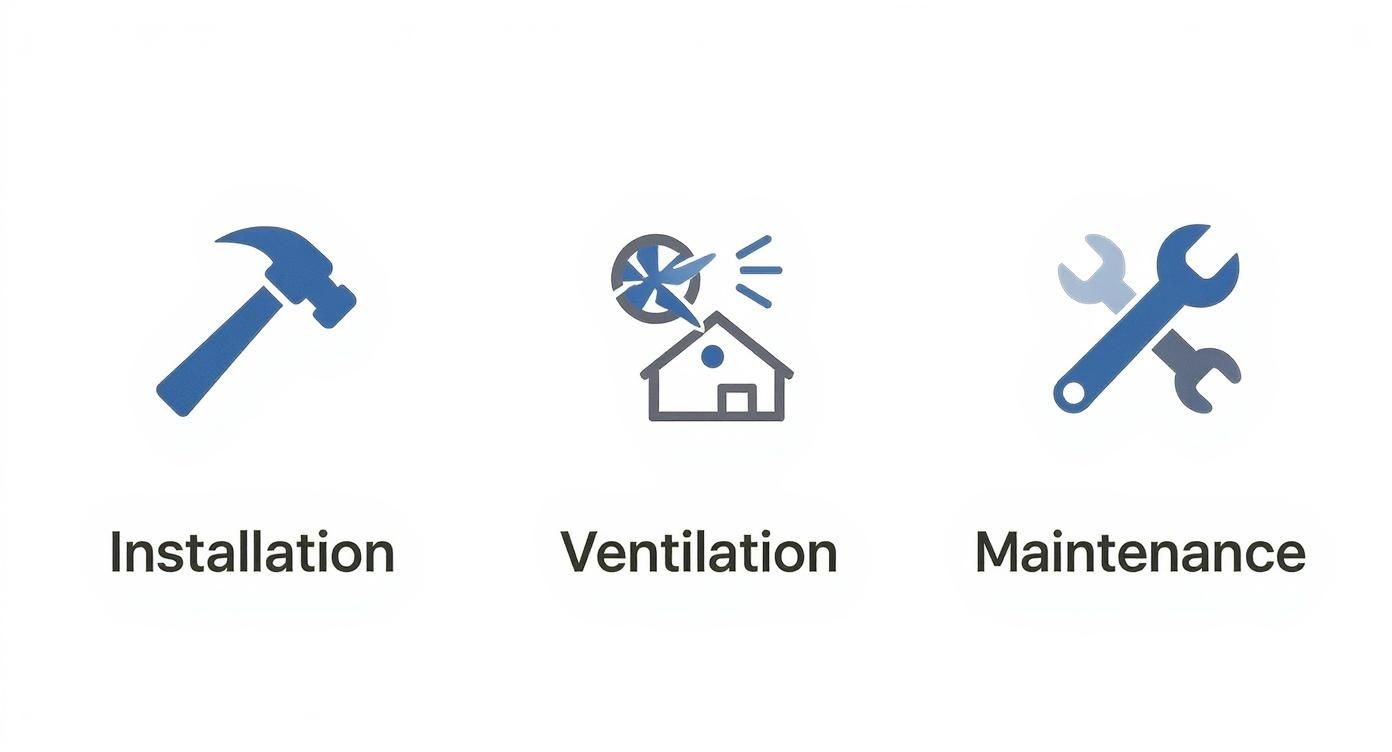
The takeaway here is that while you can't change the weather, you can give your roof a fighting chance by focusing on top-notch installation, good attic ventilation, and regular upkeep. Extensive research shows a clear difference in shingle longevity based on where you live, which you can explore in this analysis of roofing lifespans.
Colder Climates and Moisture Challenges
On the other side of the coin, colder regions come with their own unique set of problems. The biggest threat up north is the constant freeze-thaw cycle.
- Moisture Absorption: Shingles aren't completely waterproof; they can absorb tiny amounts of moisture. When the temperature plummets, that trapped water freezes and expands, creating micro-cracks from the inside out.
- Ice Dams: Heavy snow can melt and refreeze along the eaves of your roof, forming ice dams. This blocks water from draining properly, forcing it to back up under the shingles where it can refreeze, lifting them up and causing damage to your roof deck and even the inside of your home.
- Hail and Wind: While a risk everywhere, severe hail and wind in storm-heavy areas can physically shatter, dent, or rip shingles right off the roof, causing immediate and serious damage.
Knowing what your local environment throws at your home is the first step in picking the right materials and creating a smart maintenance plan.
What About the Warranty and My Return on Investment?
A roofing warranty can feel like a safety net, but it's not always as straightforward as it seems. When you see a "30-year" or "lifetime" shingle, it's easy to assume your roof is covered, no questions asked, for that entire period. The reality is a little more complicated.
You’re actually dealing with two separate promises. First, there's the manufacturer's material warranty, which covers defects in the shingles themselves—things like premature cracking or granule loss. Then, there's the roofer's workmanship guarantee, which covers the actual installation. A top-of-the-line shingle won't last if it's nailed down wrong, making your contractor's guarantee just as vital as the shingle's brand name.
Prorated Coverage: The Fine Print That Matters
That big "lifetime" promise on the packaging often comes with a huge catch: prorated coverage. This means the warranty's value shrinks over time. For the first few years, you might be fully covered. But after a decade, the manufacturer might only pay for a small fraction of a new roof, leaving you to foot the rest of the bill. It's less of a full-replacement guarantee and more of a discount coupon as the years go by.
Real-world data shows that architectural shingles reliably last 25 to 30 years, which is a huge leap from the 15 to 20 years you'd be lucky to get from old-school 3-tab shingles. They cost more upfront, sure, but their sheer endurance and better warranty terms deliver far more value in the long run.
Don't forget, a new roof is more than just a repair—it’s a major upgrade to your home's value. A durable, good-looking roof is one of the most effective strategies to increase property value by boosting both curb appeal and structural security.
Upfront Cost vs. Long-Term Value
It's tempting to go with the cheapest quote, but that's often a recipe for future headaches and higher costs. While 3-tab shingles look cheaper on paper, you'll almost certainly have to replace that roof once, maybe even twice, in the time a single architectural shingle roof would have lasted.
Think about it: that's double the material costs, double the labor, and double the disruption to your life. To get a clearer picture of how these materials affect your budget, playing around with a roof replacement cost estimator can be incredibly helpful.
To make it even clearer, let's look at a side-by-side comparison of where your money really goes.
Architectural vs. 3-Tab Shingles Cost & Value Comparison
This table cuts through the noise and shows you the true difference between a short-term savings and a long-term investment.
| Feature | Architectural Shingles | 3-Tab Shingles |
|---|---|---|
| Upfront Cost | Higher (Typically 15-25% more) | Lower |
| Expected Lifespan | 25-30 years (or more) | 15-20 years |
| Wind Resistance | Excellent (Rated for 110-130 MPH) | Fair (Rated for 60-70 MPH) |
| Curb Appeal | High (Dimensional, modern look) | Basic (Flat, uniform appearance) |
| Long-Term Value | Excellent ROI; one replacement cycle | Poor ROI; requires multiple replacements |
As you can see, the higher initial cost for architectural shingles buys you a roof that performs better, looks better, and lasts significantly longer, making it the smarter financial choice over the life of your home.
Signs Your Architectural Roof Needs Attention
Even the most durable architectural shingle roof has a finite lifespan. The real trick is catching problems early, long before a small leak turns into a full-blown interior disaster. Think of it like your car's check engine light—it's a warning, giving you time to act before you're stranded on the side of the road. Learning to spot these "warning lights" on your roof is key.
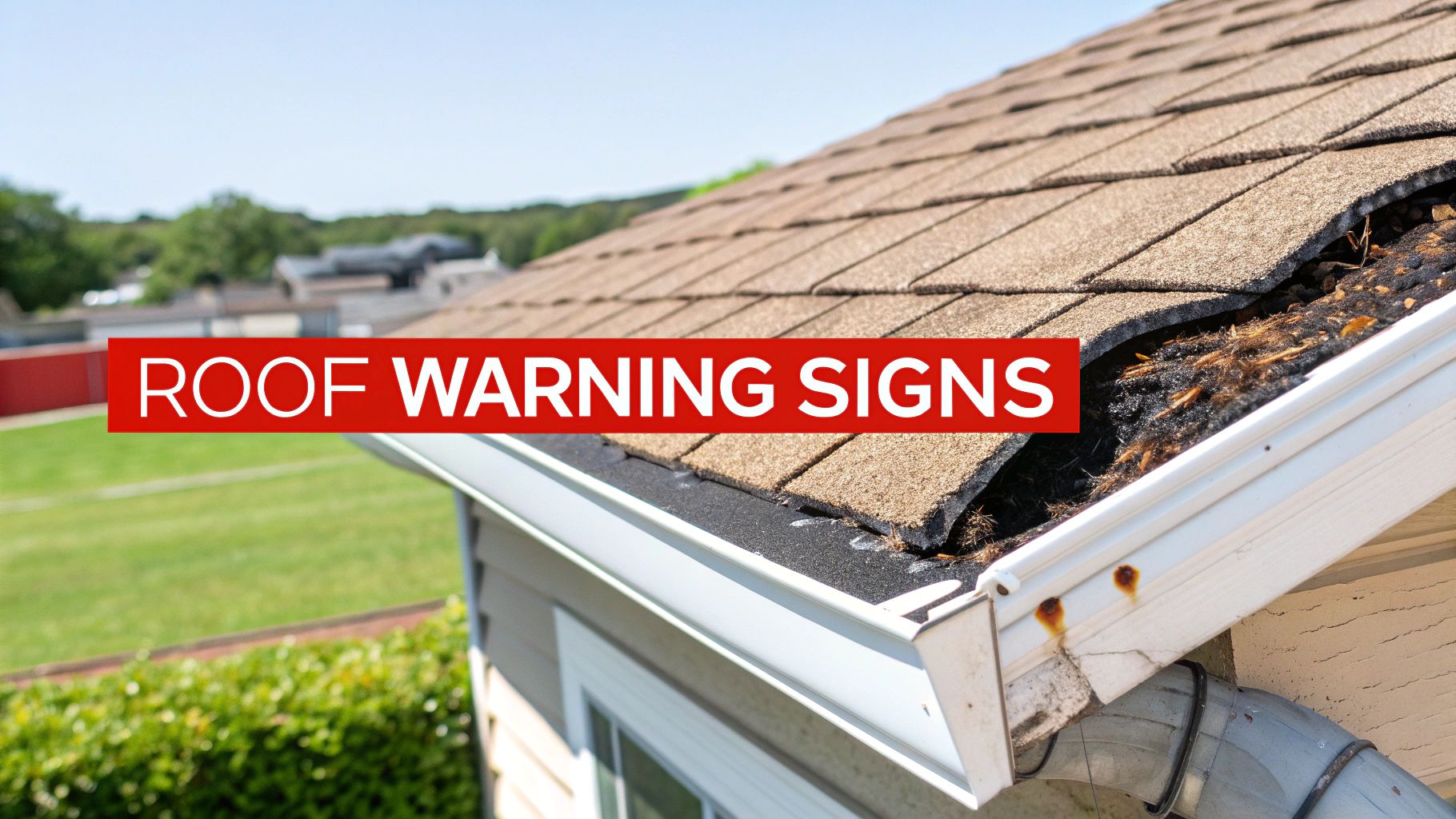
Some red flags are impossible to miss, like a water stain suddenly appearing on your ceiling. But most signs of aging are much more subtle. They require a conscious effort to look, either from the ground or—if you can do it safely—from a ladder. Spotting these issues early directly impacts how long do architectural shingle roofs last, because a simple repair today can prevent a catastrophic failure tomorrow.
What to Look for from the Ground
You don’t need to be a roofing pro to spot the early signs of trouble. Just take a walk around your home and look up. You might be surprised by what you find.
- Curling or Cupping Shingles: Are the edges of the shingles starting to lift up? Or are the centers starting to pop, creating a cupped shape? Both are classic signs of old, brittle shingles that have lost their seal and can no longer keep water out.
- Cracked or Missing Shingles: This one’s a no-brainer. Any gap in your roof is a direct invitation for water to seep in. Even a single missing shingle can expose the vulnerable underlayment to sun and rain, leading to rot.
- Dark Streaks or Algae: Those ugly black or green streaks aren't just cosmetic. They're typically a type of algae feasting on the limestone filler in the shingles. Over many years, this can slowly degrade the shingle's integrity.
A healthy architectural shingle lies perfectly flat against the roof, has a consistent, gritty texture, and maintains its color. If you see curling edges, bald spots, or dark stains, you're looking at a shingle that's losing its ability to protect your home.
Clues in Your Gutters and Attic
Sometimes, the best evidence of a failing roof isn't on the roof at all. Two of the most telling places to check are your gutters and your attic.
First, take a look inside your gutters. Do you see piles of what looks like coarse, black sand? Those are the protective granules from your shingles. Think of them as a shingle's sunscreen, shielding the asphalt core from brutal UV rays. A brand-new roof will shed some loose granules, but if you're finding handfuls of them on a roof that's 15 or 20 years old, it's a sign that its primary defense is washing away.
Next, head up to the attic on a bright, sunny day. Don't turn on any lights. If you see little pinpricks or slivers of daylight shining through the roof deck, you have active holes in your roof. This isn't something to put off—it's time to call a professional right away.
Frequently Asked Questions
Can I just install new shingles over my old ones?
While technically possible in some cases, it's a shortcut that is almost never recommended. Putting a new roof over an old one, known as a "roof-over," adds a massive amount of extra weight to your home's structure and can trap heat, drastically shortening the new shingles' life. More importantly, it hides potential problems with the underlying roof deck, like rot or water damage. A full tear-off is the only way to ensure a quality, long-lasting installation and keep your warranty intact.
How bad is hail for my shingle roof?
Hail is one of a roof's worst enemies. Architectural shingles are tough, but large hailstones can physically crack the shingle's internal fiberglass mat or knock off large patches of the protective granules. Once those granules are gone, the raw asphalt is exposed to UV rays, which will cause it to break down rapidly. After any significant hailstorm, it's crucial to have a professional inspection, as this type of damage is often covered by homeowner's insurance.
What's the real difference between "30-year" and "lifetime" shingles?
This is largely a marketing distinction. Years ago, a "30-year shingle" was a specific product tier. Today, "lifetime" has become the standard term for high-quality architectural shingles. Instead of focusing on the name, pay close attention to the warranty's non-prorated period. This is the number of years the manufacturer will cover 100% of the replacement cost for defective materials. A longer non-prorated period is a better indicator of a superior product.
I see granules in my gutters. Is my new roof failing?
If your roof was just installed, don't panic. It is perfectly normal for a new roof to shed a small amount of loose "hitchhiker" granules that were left over from the manufacturing process. However, if you are finding a steady or heavy stream of granules in your gutters from a roof that is 15-20 years old, it is a major red flag. This indicates the shingles are aging, losing their UV protection, and nearing the end of their functional lifespan.