
Your asphalt shingle roof is your home's first line of defense against the elements, but it's not a "set it and forget it" feature. Proactive asphalt shingle roof maintenance is the single most effective way to prevent minor issues from escalating into costly structural damage. By understanding the common signs of wear, adopting a seasonal inspection routine, and knowing when to call a professional, you can significantly extend the life of your roof, protect your investment, and ensure your home stays safe and dry for years to come.
Key Takeaways
- Inspect Twice a Year: Perform ground-level visual inspections in the spring and fall to catch potential issues like cracked, curling, or missing shingles early.
- Keep it Clean: Regularly remove leaves, branches, and other debris to prevent moisture buildup, which can lead to algae growth and shingle deterioration.
- Stay Off the Roof: Avoid walking on your shingles, especially in the heat, as this can dislodge the protective granules. Use binoculars from the ground or a secure ladder at the roof's edge for inspections.
- Ventilation is Vital: Ensure your attic has proper ventilation (soffit and ridge vents) to prevent heat buildup from cooking your shingles from below, which is a common cause of premature failure.
- Know When to Call a Pro: While minor tasks like sealing a lifted shingle are manageable, widespread damage, active leaks, or soft spots on the roof require immediate professional attention to prevent further damage.
Why Your Arizona Roof Needs Proactive Care
Here in Arizona, your asphalt shingle roof is the only thing standing between your home and our state's punishing one-two punch of relentless sun and wild monsoon seasons. The thing is, the shingles being put on roofs today aren't the same as the ones your parents might have had.
Shingles manufactured now often have less asphalt in them, which makes them more rigid. That's a real problem when they're baking in extreme desert heat and getting blasted by UV rays day after day.
This shift in how shingles are made means that routine care isn't just a nice-to-have anymore; it's absolutely essential. Without it, those shingles can get brittle fast, leading to cracks, lost granules, and a roof that gives up years before it should.
The Shifting Quality of Shingles
So, what's behind this change? A lot of it comes down to shifts in crude oil refining over the years. The result is that modern asphalt shingles can contain 25-33% less liquid asphalt than the shingles made back in the 1990s. That liquid asphalt is what gives shingles their flexibility and durability—the very things they need to survive intense heat. Less of it means they weather and age much, much faster.
This reality really drives home the need for a solid maintenance plan. When you catch the little issues early, you sidestep the staggering cost of a full roof replacement and keep your home protected. Plus, keeping your roof in good shape is a big deal when it comes to understanding home insurance implications for your roof; it’s all about protecting your investment.
Your Seasonal Roof Inspection Playbook
Knowing what to look for is the first step in any solid roof maintenance plan. Here in Arizona, the rhythm of the seasons gives us two perfect opportunities to check on our asphalt shingles: once after the winter chill is gone, and again after the last of the monsoon storms have rolled through. Think of these as your twice-a-year check-ups to catch problems before they get serious.
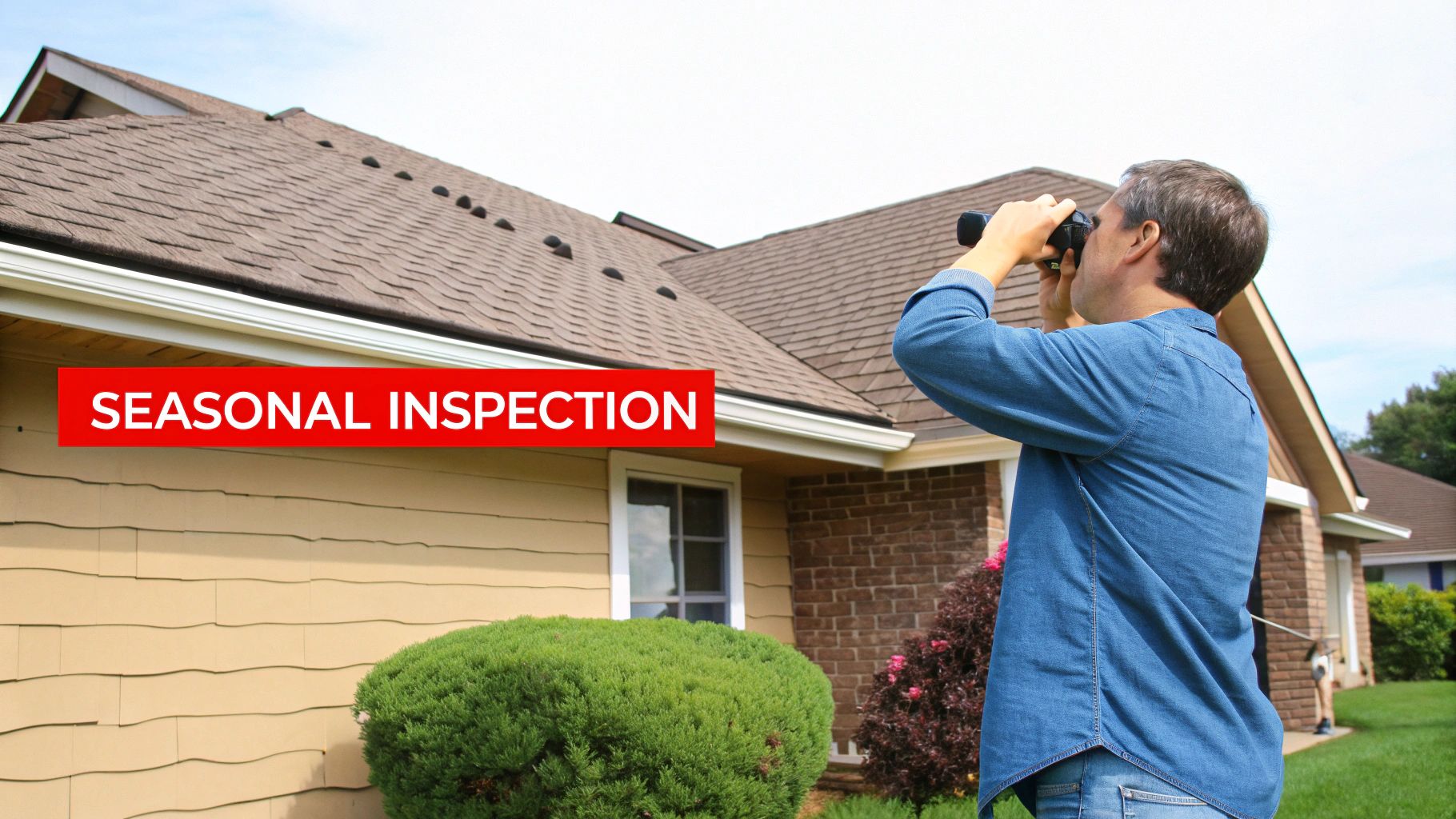
The good news? You don't have to climb up there just yet. A surprising amount can be spotted from the safety of your yard. Grab a decent pair of binoculars and take a slow walk around your home. This ground-level inspection is your first, and most important, line of defense.
What to Look for From the Ground
Take your time and scan the entire roof from a few different angles. You're searching for anything that just looks… off. The relentless Arizona sun is brutal on asphalt, and it leaves behind some tell-tale signs of aging.
Keep an eye out for these specific red flags:
- Curling or Clawing Shingles: Do the edges of the shingles look like they're lifting up? Or are the corners turning inward like a claw? That's a classic sign of heat damage. The shingle is drying out, getting brittle, and losing its seal.
- Cracked or Missing Shingles: Look for obvious cracks, which often show up after a monsoon storm brings high winds. Even more critical are the "bald spots" where a shingle has been ripped off completely, leaving the underlayment exposed.
- A Flood of Granules: Check inside your gutters and at the base of your downspouts. See a lot of what looks like coarse, black sand? Those are the protective granules from your shingles. While losing a few is normal, a big pile means your roof's main shield against UV rays is washing away.
- Ugly Dark Streaks: Those dark, vertical stains running down your roof aren't just dirt. It's usually a type of algae (Gloeocapsa magma) that actually eats the limestone filler in your shingles. It's not an emergency, but it holds moisture against the roof and can speed up wear and tear.
Spotting these issues early from the ground can be the difference between a simple fix and a major leak. Honestly, a ten-minute walk-around twice a year is one of the smartest things a homeowner can do.
To help you stay on track, we've put together a simple table outlining the key tasks for each season. This checklist makes it easy to remember what to look for and when.
Seasonal Asphalt Shingle Maintenance Checklist
| Task | Spring (Post-Winter) | Fall (Post-Monsoon) |
|---|---|---|
| Ground Inspection | Check for granule loss and any shingles damaged by cold, brittle conditions. | Look for wind damage, missing shingles, and hail impacts from monsoon storms. |
| Gutter & Downspout Cleaning | Clear out leaves and debris accumulated over winter. Ensure proper water flow. | Clear out debris blown in by summer storms to prepare for winter rains. |
| Flashing Check | Inspect sealant around vents, chimneys, and skylights for cracks from winter cold. | Examine flashing for any damage or lifting caused by high winds or heavy rain. |
| Attic Inspection | Look for signs of moisture, leaks, or condensation that may have occurred over winter. | Check for any new water stains or signs of leaks after heavy monsoon rains. |
| Tree Trimming | Trim back any branches that have grown too close to the roof over the winter. | Cut back branches that could scrape shingles or fall during winter storms. |
Following a consistent schedule like this is the best way to extend the life of your roof and prevent unexpected surprises. It turns roof care from a reaction into a routine.
A Closer Look for the Confident Homeowner
If you're comfortable and know how to use a ladder safely, a view from the roof's edge can reveal problems you’d never see from the ground. But please, never walk on your roof. The intense heat can cause you to damage the shingles, not to mention it's a huge safety risk.
From the ladder, carefully check these critical spots:
- Damaged Flashing: Flashing is the metal trim around chimneys, vents, and skylights. Look for rust, dents, or gaps where the sealant has cracked and pulled away. This is one of the most common sources of roof leaks.
- Popped Nails: Thermal expansion and contraction can cause roofing nails to slowly back out, "popping" up through the shingle. A nail pop is a tiny, direct tunnel for water to get under your shingles and into the roof deck.
- Soft or Spongy Spots: Even without walking on it, you can sometimes spot areas that look sunken or saggy. This is a major warning sign that moisture has gotten through and is causing the wood decking underneath to rot.
Taking this proactive approach puts you in control, allowing you to find trouble spots before they become a costly emergency. For an even more detailed guide, you can use a comprehensive Arizona roof maintenance checklist to walk you through every step.
Safe and Effective Roof Cleaning Methods
A clean roof isn't just about curb appeal; it's a huge part of keeping your asphalt shingles in good shape for the long haul. Here in Arizona, everything from monsoon dust to fallen leaves and pine needles can pile up. When they do, they act like a sponge, trapping moisture right against your shingles.
That trapped moisture is a breeding ground for algae and moss, and it actively speeds up the breakdown of the asphalt itself. Your goal is to get that stuff off without creating a new problem in the process. Often, the simplest tools are the best—a leaf blower is perfect for clearing away dry, loose debris from a safe spot on your ladder. If you have some more stubborn buildup, a soft-bristle broom can gently sweep it away without damaging the shingle surface.
Why You Should Never Pressure Wash Your Roof
I'm going to say this as clearly as I can: never use a pressure washer on an asphalt shingle roof. It's one of the most common mistakes I see homeowners make. That high-pressure jet of water is way too aggressive and will blast the protective granules right off your shingles.
Think of those granules as your roof's built-in sunscreen. Once they're gone, the underlying asphalt is left completely exposed to our brutal Arizona sun, which drastically shortens its lifespan. Not only that, but using a pressure washer will almost certainly void your roof's warranty. It's a quick way to turn a simple cleaning job into a massive, expensive headache. If you're dealing with stubborn stains, looking into professional soft wash house cleaning techniques is a much safer bet.
Dealing with Algae and Moss
Have you spotted those ugly black streaks running down your roof? That's a specific type of algae called Gloeocapsa magma. While it's not going to make your roof cave in overnight, it does hold moisture and feeds on the limestone filler used in many shingles, which isn't great.
Thankfully, there’s a straightforward DIY solution.
A 50/50 mix of regular household bleach and water is a time-tested way to kill algae. Just put it in a garden pump sprayer, apply it to the affected areas, and let it sit for about 20 minutes. Then, rinse it all off with a gentle spray from your garden hose.
This approach effectively kills the growth without any harsh scrubbing or the risky, high-pressure water we just talked about.
Safety Is Not Optional
Before you even set up a ladder, let's talk about safety. Working on a roof is no joke, and a few precautions are absolutely essential.
- Get the Right Shoes: Wear soft-soled shoes with excellent traction. Think rubber-soled work boots. Never, ever get on a roof that's wet, frosty, or covered in morning dew.
- Ladder Discipline: Make sure your ladder is planted on solid, level ground. It should extend at least three feet above the edge of the roof. It’s always a good idea to have a spotter at the bottom holding it steady.
- Work Smart, Not Hard: Pick a good day for the job—avoid intense heat or windy conditions. The best approach is to do as much work as you can from the ladder or even the ground, minimizing the time you actually spend walking on the shingles.
Handling Minor Repairs and When to Call a Pro
One of the biggest parts of maintaining your asphalt shingle roof is knowing when you can tackle a problem yourself and when it’s time to call in the experts. Some small fixes are perfect for a confident DIYer, but others can put you—and your roof—at serious risk. Knowing where to draw that line is absolutely critical.
You can probably handle more than you think. For example, if you see a single shingle tab that's lifted a bit after a strong gust of wind, securing it with a dab of roofing cement is a quick and easy fix. That simple step keeps the wind from getting underneath it again and tearing it off completely.
Likewise, sealing a tiny crack around a vent flashing with some high-quality roofing caulk can prevent a future leak before it even starts. These small, proactive measures can save you from massive headaches and expensive repairs later on. If you're facing a small tear or a cracked shingle, we've got detailed instructions on how to patch a roof shingle that can walk you through it.
When to Put Down the Tools and Pick Up the Phone
The game changes entirely when you're looking at something more than just a minor imperfection. Trying to tackle a major repair without the proper experience or safety equipment can turn a fixable issue into a full-blown disaster. Even worse, it could void your roof’s warranty.
Here are some dead giveaways that you need to get a certified professional on the line:
- Widespread Damage: If you're missing a whole cluster of shingles from a recent storm, this is no longer a simple patch job. You need an expert to evaluate the area and make sure the underlayment and decking are still intact.
- Active Leaks: Those dreaded water stains on your ceiling are a sure sign the leak has already penetrated every layer of your roof. A pro has the experience to trace that leak back to its true source—which is rarely directly above the stain—and fix the root cause.
- Structural Concerns: If you feel any soft, sagging, or spongy spots while walking on your roof, get off it immediately and call someone. This points to rotted decking, a serious structural problem that is not a DIY project.
This decision tree gives you a good visual for figuring out whether your roof issue is a simple cleaning task or something more complex.
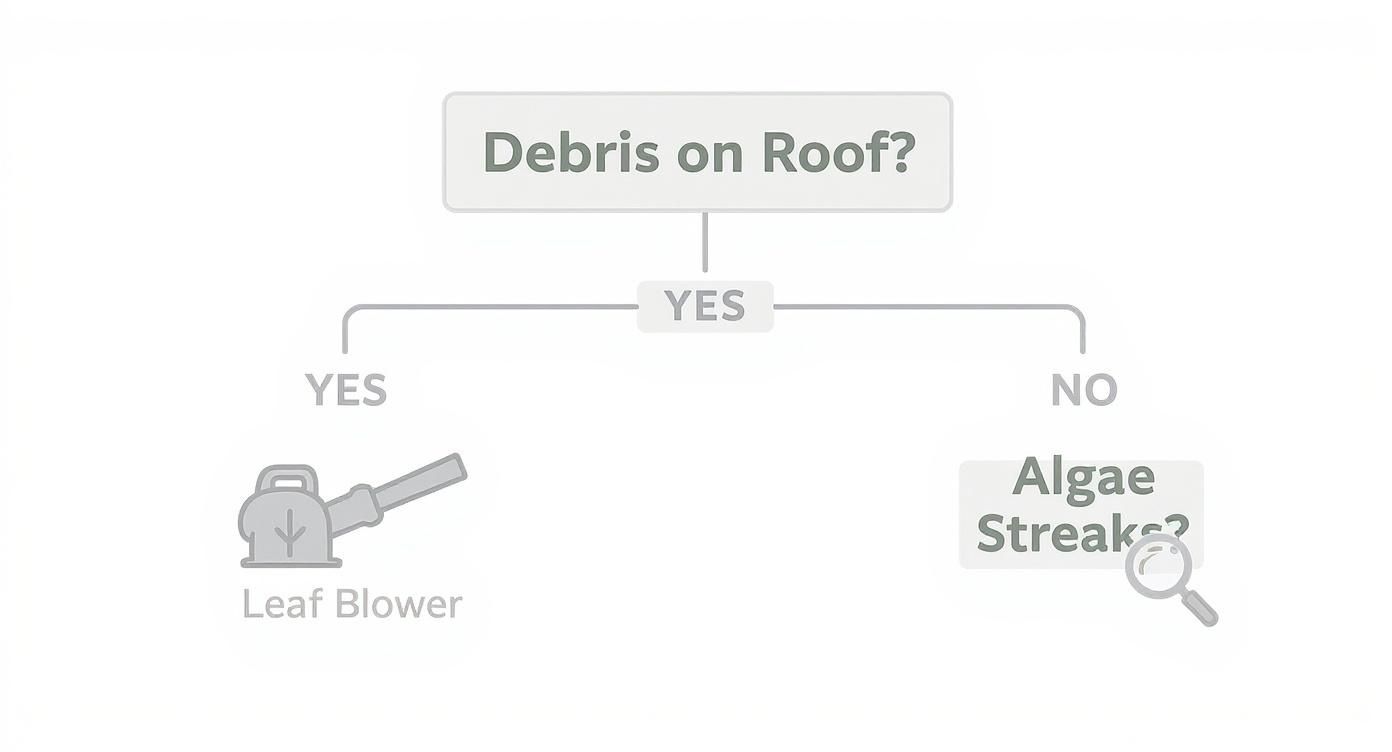
As you can see, even with cleaning, different types of debris and growth require different approaches and tools to be handled safely and effectively.
The Financial Sense of Professional Repairs
Putting off a big repair or trying a shoddy DIY fix is a great way to end up with a much bigger bill. The average cost for a full residential roof replacement can run anywhere from $8,500 to $14,300. Suddenly, paying for a professional repair doesn't seem so bad, does it?
Think of it as an investment. A proper repair on a serious issue costs a fraction of a replacement and ensures you squeeze every last year of life out of your current roof.
A professional roofer doesn't just fix the visible problem; they assess the entire roofing system. They can identify related issues—like inadequate ventilation or failing underlayment—that may have caused the damage in the first place, ensuring a long-term solution.
Preventative Steps to Maximize Roof Lifespan
When it comes to getting the most out of your asphalt shingle roof, the best defense is a good offense. Instead of waiting for a leak to show up, a proactive approach can stop damage before it even starts. This is how you really add years to your roof's life.
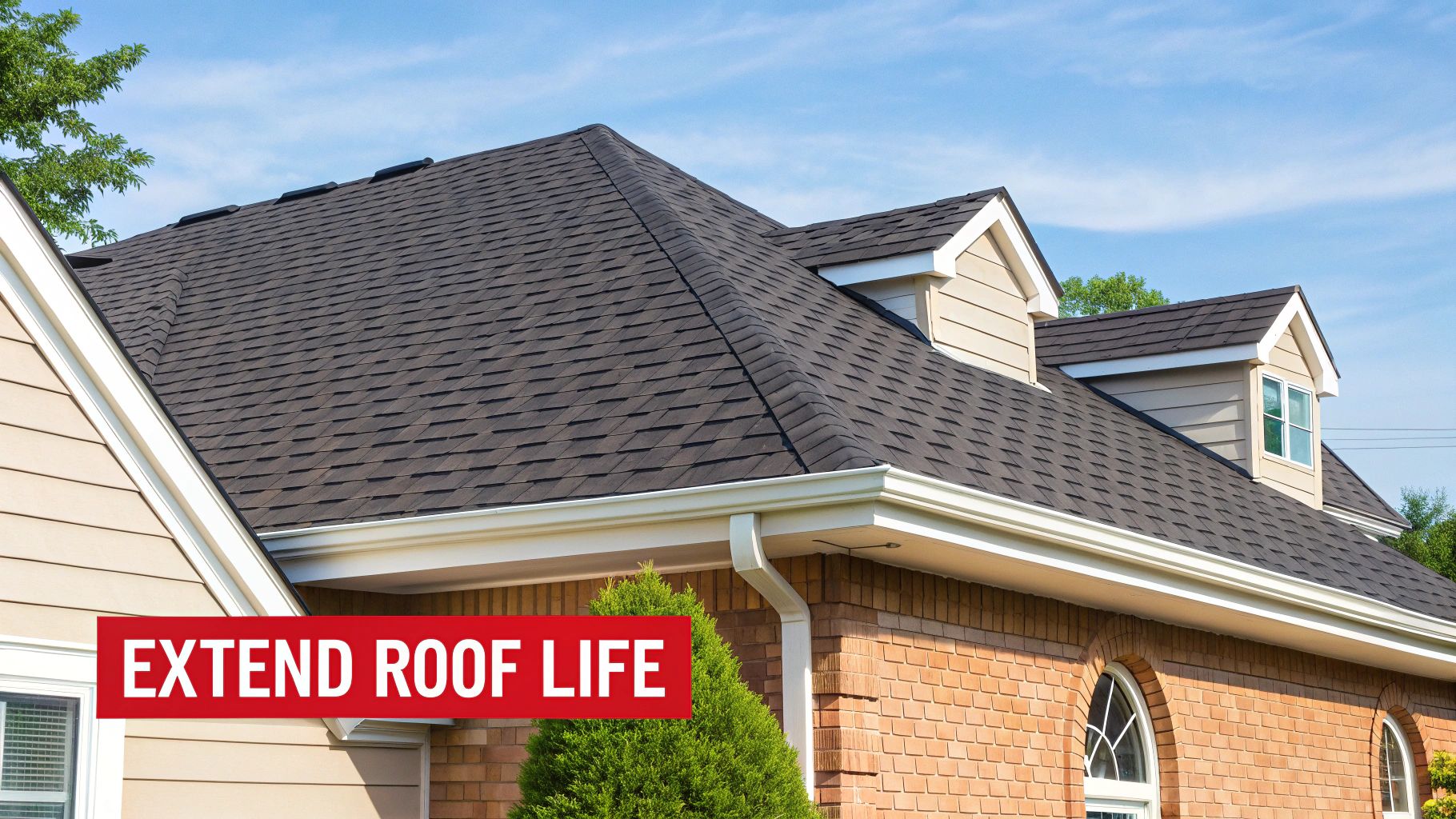
Here in Arizona, one of the biggest threats to your shingles has nothing to do with what’s on top of your roof, but what’s happening right underneath it. Proper attic ventilation isn't just a nice-to-have; it's absolutely critical. Without a way to escape, trapped attic heat can hit extreme temperatures, literally cooking your shingles from the inside out and dramatically shortening their lifespan.
The Power of Good Airflow
Think of your attic like it needs to breathe. The most effective ventilation systems aren't complicated—they just create a steady, continuous flow of air using a balanced pair of intake and exhaust vents.
- Soffit Vents: Located under the eaves, these are your intake vents. They pull in cooler air from outside.
- Ridge Vents: These run along the very peak of your roof and act as the exhaust, letting all that hot, humid air out.
Together, they create a natural convection current that pulls damaging heat out of the attic before it has a chance to bake your shingles. I've seen countless cases where a poorly ventilated attic was the number one reason for premature roof failure in our climate.
Small Habits, Big Impact
Beyond ventilation, a few simple routines can make a world of difference. One of the easiest wins? Trimming back those overhanging tree branches. When limbs constantly scrape against your roof, they wear away the protective granules. Plus, the falling leaves and twigs clog up gutters and trap moisture right where you don't want it.
Keep tree branches at least six to ten feet away from your roof. It's a straightforward fix that prevents physical scrapes and stops debris from causing water backups that can sneak under your shingles.
Another smart move is to look into some of the newer treatments designed to extend shingle life. As shingles get older, the oils that keep them flexible dry out, which leads to them becoming brittle and cracked. Certain restorative treatments are made to soak into the shingle, rehydrate the asphalt, and bring back that flexibility while helping the protective granules stick better.
Exploring Modern Roofing Solutions
If your home gets blasted by direct sun all day, reflective roof coatings are an excellent option to consider. These are specialized coatings applied right over your existing shingles. They're designed to reflect a huge portion of the sun's UV rays instead of absorbing them as heat.
This does two things: it helps keep your attic and your entire home cooler (which can lower your energy bills), and it reduces the constant thermal stress on the shingles themselves. The market for these types of solutions is growing for a reason—homeowners are looking for smarter, more durable options. The global asphalt shingle roofing market was valued at USD 8.8 billion in 2024 and is expected to keep climbing. You can dig deeper into what drives the roofing market and see the trends for yourself.
These preventative tasks aren't just more chores on your to-do list; they're smart investments in your home. Each one helps you delay a costly roof replacement and gives you peace of mind that your home is protected, come sun or monsoon.
Frequently Asked Questions About Shingle Roof Maintenance
How often should I get a professional roof inspection?
While you should perform your own visual checks twice a year, it’s wise to have a professional roofer conduct a thorough inspection every 2-3 years. The only exception is after a major storm with high winds or hail, in which case you should schedule a professional inspection immediately to check for hidden damage.
What are the black streaks on my roof?
Those unsightly black streaks are a type of algae called Gloeocapsa magma. While it's primarily a cosmetic issue, it can trap moisture against your shingles and feed on the limestone filler in them, which may accelerate granule loss over time. It can be cleaned using a gentle, low-pressure wash with a 50/50 water and bleach solution.
Is it safe for me to walk on my roof?
It is strongly recommended that you stay off your roof. Walking on asphalt shingles, especially on a hot day when they are soft, can easily dislodge the protective granules that shield them from UV rays. For safety and to prevent damage, perform inspections from a secure ladder or from the ground using binoculars.
Does homeowners insurance cover roof maintenance?
No, standard homeowners insurance policies do not cover routine maintenance or issues arising from normal wear and tear. Insurance is designed to cover sudden and accidental damage, such as from a fire, hail, or a fallen tree. Neglecting regular maintenance can even lead to the denial of a claim if the lack of care contributed to the damage.