
A roof is one of the most critical components of your home, but it's also one of the most expensive to replace. Understanding its expected lifespan is key to budgeting and avoiding costly surprises. So, how long does a typical roof last? The answer ranges from 20 years for common asphalt shingles to over 100 years for premium materials like slate. The final number depends heavily on the roofing material, your local climate, and how well you maintain it.
This guide breaks down everything you need to know about roof longevity, from the durability of different materials to the warning signs that indicate it's time for a replacement.
Key Takeaways
- Material Matters Most: The lifespan of a roof is primarily determined by its material. Asphalt shingles last 20-30 years, while metal can last 40-80 years, and slate or tile can exceed 100 years.
- Climate is a Critical Factor: Intense sun, heavy snow, high winds, and freeze-thaw cycles all contribute to wear and tear, potentially shortening your roof's expected lifespan.
- Maintenance is Non-Negotiable: Regular inspections, cleaning gutters, and trimming overhanging branches are essential to reaching—and even exceeding—your roof's advertised lifespan.
- Warning Signs Are a Call to Action: Curling or missing shingles, granules in the gutters, and a sagging roof deck are clear indicators that your roof needs immediate attention.
Understanding Your Roof's Lifespan
Three things really dictate how many years you'll get out of your roof: the material it's made from, the weather it endures, and how often you give it a little TLC.
The material is, without a doubt, the biggest piece of the puzzle. A standard asphalt shingle roof—the most common type in the U.S.—will typically give you a solid 20 to 30 years. Step up to a metal roof, and you're suddenly looking at 40 to 80 years of service. And then you have the lifetime materials, like slate, which can easily last for a century or more.
What Every Homeowner Should Know
- The Material Sets the Baseline: Your roof's potential lifespan is largely determined the day it's installed, based on the material you pick.
- Weather Is the Enemy: Intense sun, freeze-thaw cycles, high winds, and heavy rain all work to shorten that lifespan.
- Maintenance Makes the Difference: Regular, proactive care is the single best thing you can do to get every last year out of your investment. Our roof maintenance checklist is a great resource to get you started.
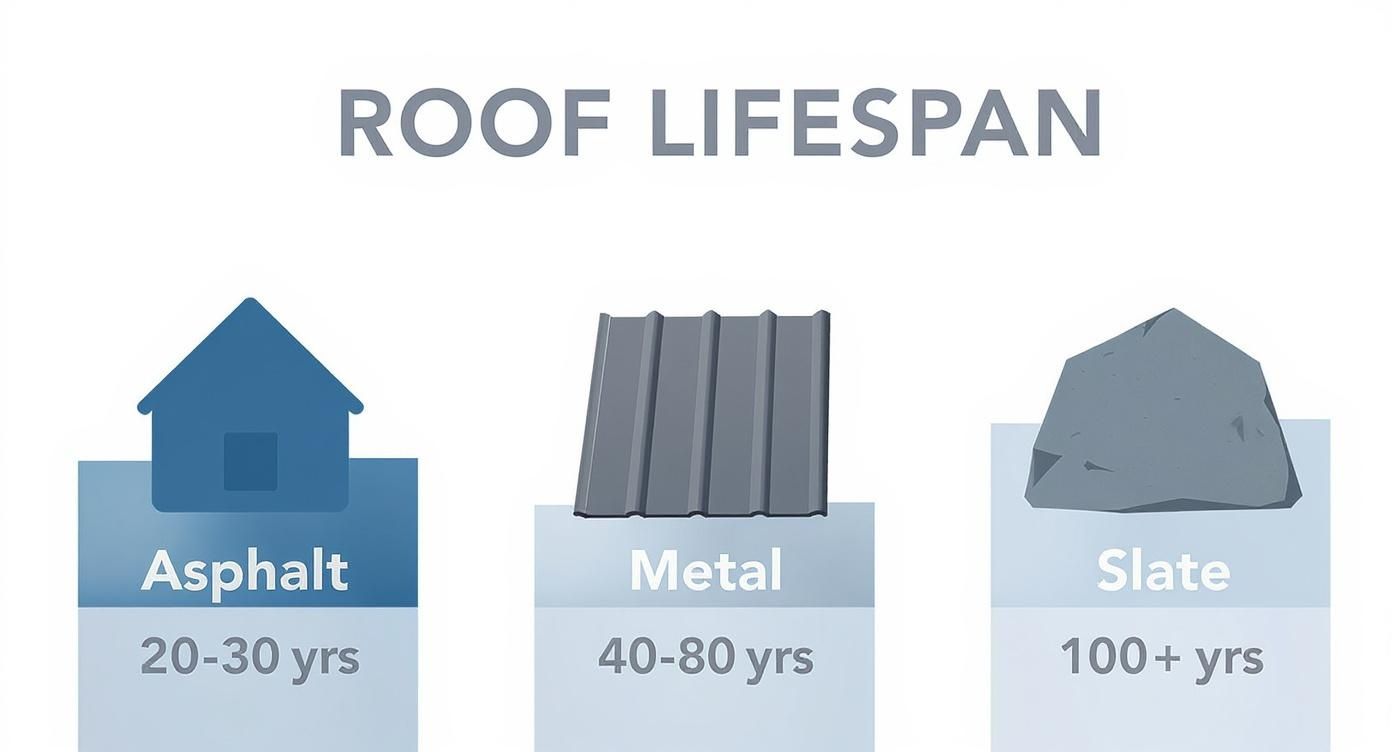
Average Roof Lifespan by Material
Here’s a quick-glance table that breaks down the typical lifespan you can expect from the most popular residential roofing materials.
| Roofing Material | Typical Lifespan (Years) |
|---|---|
| Asphalt Shingles (3-Tab) | 20 – 30 |
| Architectural Shingles | 30 – 50 |
| Wood Shingles/Shakes | 25 – 40 |
| Metal (Steel, Aluminum) | 40 – 80 |
| Clay or Concrete Tiles | 50 – 100+ |
| Slate | 100+ |
As you can see, the difference is huge. An investment in a premium material like slate or tile can mean you'll never have to think about replacing your roof again.
Why Some Roofing Materials Outlast Others
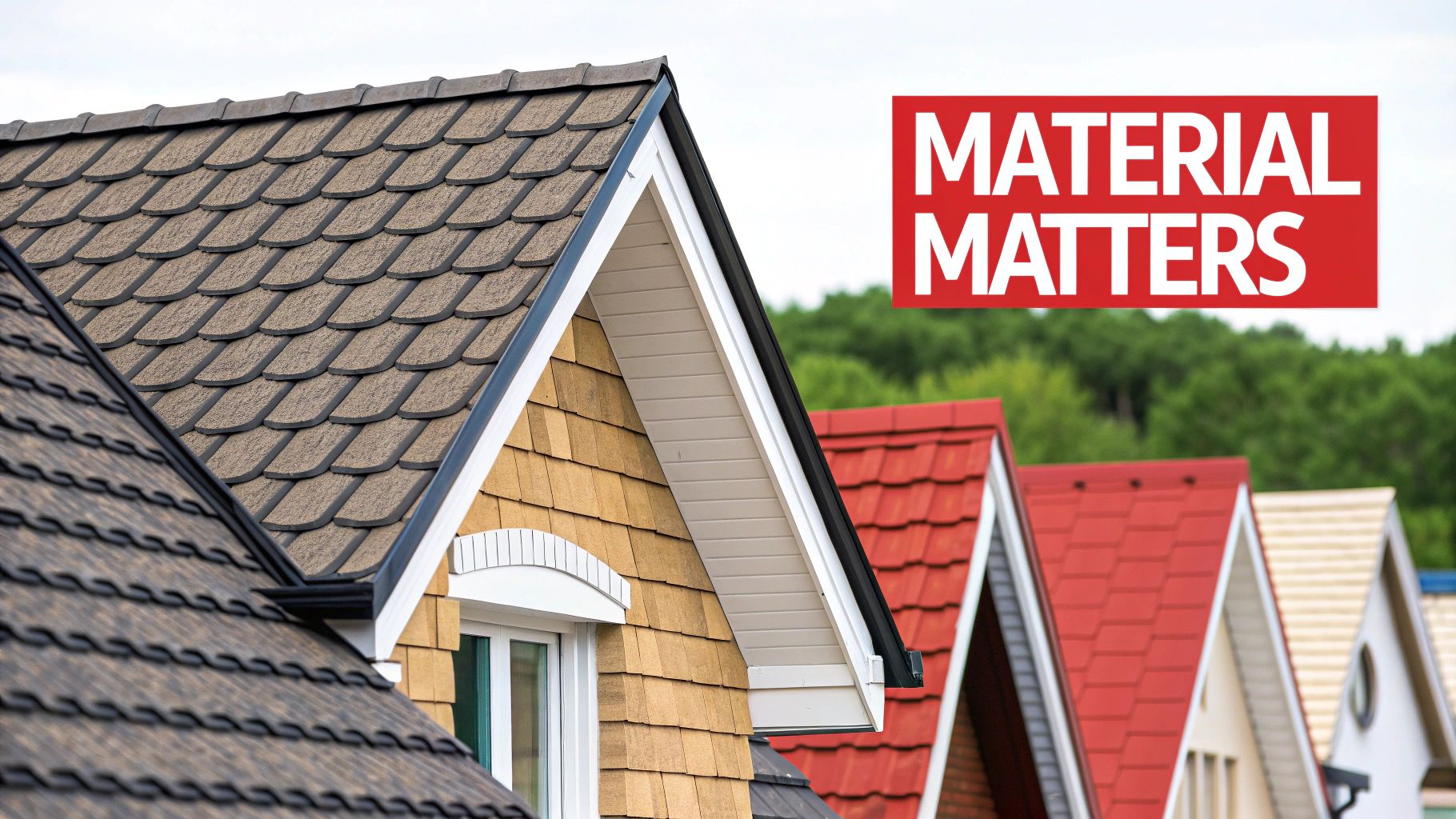
When you ask, "how long does a typical roof last?", the first thing any seasoned roofer will talk about is the material. It's the single biggest factor in the equation. After all, not all roofs are created equal, and what they're made of explains the huge differences you see in their lifespans.
The secret really comes down to how well a material can stand up to a daily beating from sunlight, rain, and wild temperature swings.
Think of it this way: a standard asphalt shingle roof is kind of like the family sedan. It's dependable, gets you where you need to go, and is the most common choice on the road. It'll serve you well for a solid 20 to 30 years. A metal roof, on the other hand, is the heavy-duty truck of the industry. It's built to take a beating and can easily last 40 to 70 years, sometimes even longer.
And then you have the luxury models, like slate. It's a major investment upfront, no doubt, but its natural stone composition is so dense and resilient that a slate roof can protect a home for well over a century.
It's All in the Makeup
At its core, the difference is simple: some materials are just inherently tougher. Take asphalt shingles. They're built from a fiberglass mat that's soaked in asphalt and covered with tiny mineral granules. Over the years, the sun's UV rays slowly cook the oils out of the asphalt. This makes the shingles dry, brittle, and prone to cracking or curling.
Materials with natural staying power, however, handle this abuse much differently.
- Metal: Standing seam metal roofs are fantastic at shedding water and snow. They also reflect a ton of solar heat instead of absorbing it, and modern coatings make them incredibly resistant to rust. To get the full picture, check out our guide on the metal roofing benefits and drawbacks.
- Tile (Clay and Concrete): These are baked in a kiln at incredibly high temperatures, which makes them dense and almost immune to fire and rot. They don't break down from sun exposure like materials with organic components do.
- Slate: As a natural quarried stone, slate barely absorbs any water and isn't bothered by freeze-thaw cycles. It's why slate has the most impressive track record of any roofing material out there.
The key to a long life is a material's ability to resist its environment. The ones that expand and contract less, shrug off moisture, and deflect UV radiation will always win the marathon against materials that are more susceptible to the elements.
A Quick Look at the Numbers
The gap in performance becomes crystal clear when you line them up. Asphalt shingles own the market in terms of popularity and generally last 15 to 30 years. But depending on the climate, that lifespan can swing by as much as 40%.
Metal roofing offers a serious upgrade, lasting 40 to 70 years on average, with high-end options like copper or zinc easily surpassing the 100-year mark. Clay, concrete, and slate roofs are in a league of their own, routinely lasting anywhere from 50 to over 200 years when properly installed and maintained.
This is exactly why choosing the right material is the most important decision you'll make for the long-term health of your roof.
How Your Local Climate Impacts Roof Longevity
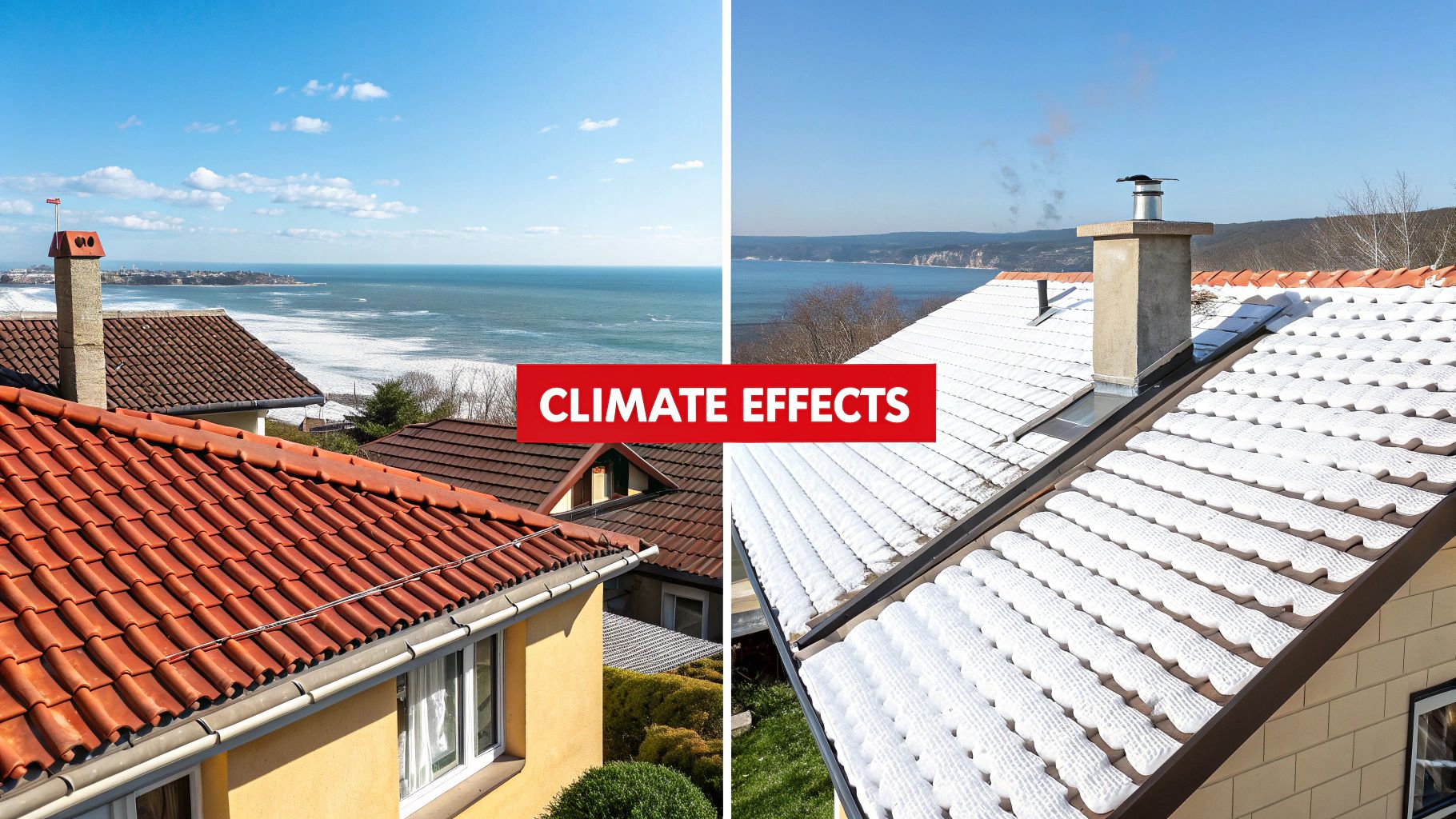
When a roofing material comes with a "30-year" warranty, that's really just a starting point. Your local weather writes the rest of the story, putting your roof through a relentless stress test, day in and day out. To get a real sense of how long a roof will last, you have to look at the specific environmental challenges it’s up against.
Think of it this way: a roof's material is its genetic potential. But the climate is the lifestyle that determines whether it lives a long, healthy life or fails prematurely. It’s no surprise that a roof in mild, temperate San Diego faces a completely different set of challenges than one battling the extreme conditions of Phoenix or Minneapolis.
The Challenge of Sun and Heat
In scorching climates like we see in Arizona, the sun is the number one enemy. All that intense ultraviolet (UV) radiation essentially bakes the life right out of certain materials, especially asphalt shingles. The sun degrades the protective oils, making the shingles brittle, cracked, and unable to flex.
It gets hot up there. Summer roof temperatures in Arizona can easily soar past 160°F. This extreme heat forces materials to constantly expand and contract, a cycle that slowly but surely weakens seals and loosens fasteners, creating weak spots long before the material itself wears out.
A roof's ability to withstand its specific climate is the true measure of its longevity. The same asphalt shingle roof that lasts 25 years in a moderate climate may only last 15-20 years under the punishing Arizona sun.
The Impact of Cold, Snow, and Ice
Head to colder regions, and the threat shifts to the brutal freeze-thaw cycle. When moisture seeps into tiny cracks in roofing materials, it freezes, expands, and turns those small fissures into much bigger problems. This process is especially tough on materials like concrete tiles and older, less flexible asphalt shingles.
Heavy snow brings its own issues, putting a massive structural load on the entire roof deck. But the real sneaky danger comes from ice dams. As snow melts and refreezes at the eaves, it can block drainage, allowing trapped water to creep up under the shingles, leading to serious leaks and water damage inside your home.
Coastal Corrosion and High Winds
If you live near the coast, even the air can be an adversary. Salt spray is incredibly corrosive and can drastically speed up the rusting process on metal roofs, particularly those that aren't specifically treated for a marine environment.
On top of that, coastal and storm-prone areas deal with high winds that constantly test the uplift resistance of every single shingle and panel. This persistent force can gradually work fasteners loose over the years, making the roof vulnerable to being peeled back or having entire sections torn off during a major storm.
The Hidden Costs of Neglecting Roof Maintenance
When a roofing material is advertised with a certain lifespan, think of that number as a best-case scenario, not a guarantee. It’s what you can expect under ideal conditions with consistent, proactive care. Without regular maintenance, even the toughest materials can fail a decade or more ahead of schedule. Suddenly, your long-term asset becomes a premature, five-figure liability.
Ignoring your roof is a bit like ignoring the “check engine” light in your car. What starts as a small, easily fixable issue can quickly spiral into a catastrophic failure. Take a clogged gutter, for instance. It seems minor, but it forces water to pool and back up under your shingles. Before you know it, the underlying wood deck is rotting, creating the perfect environment for mold to thrive.
This gap between a roof's potential lifespan and its actual lifespan is a surprisingly common and costly problem. Surveys show that over half of U.S. homeowners don't inspect their roofs regularly, and a concerning 8% admit they don’t even know how old their roof is. This lack of awareness means minor problems go completely unnoticed until a major leak finally shows up.
Your Proactive Maintenance Checklist
The best defense against premature roof failure is building simple, consistent habits. By dedicating just a few hours each year to basic upkeep, you can dramatically extend your roof's service life and sidestep those unexpected disasters. Think of these small efforts as an investment that pays huge dividends down the road.
Answering "how long does a typical roof last" really comes down to how well it was cared for. To get a better sense of the hidden costs and how to prevent them, a comprehensive commercial building maintenance checklist can offer some valuable insights, even for residential properties.
Here are the essential tasks every homeowner should have on their radar:
- Clear Gutters and Downspouts: Make this a twice-a-year habit, once in the spring and again in the fall. Clogged gutters are one of the biggest culprits behind ice dams and water damage to your roof deck and fascia.
- Trim Overhanging Branches: In high winds, tree limbs can scrape away the protective granules on asphalt shingles, significantly shortening their lifespan. They also create a convenient bridge for pests to get onto your roof.
- Do Your Own Visual Inspections: After a major storm, take a walk around your property. Use binoculars to scan for any shingles that are missing, cracked, or curling. Catching these signs of damage early is key.
- Schedule Professional Check-Ups: A professional roofer has a trained eye and can spot subtle signs of trouble you might miss, like failing flashing around chimneys and vents. An annual inspection is a small price to pay for real peace of mind.
Ultimately, the cost of proactive maintenance is a drop in the bucket compared to the alternative. A premature replacement can be a massive financial shock, and understanding how much a new roof costs makes the value of regular upkeep crystal clear.
Warning Signs Your Roof Needs Attention Now
Long before you see a dreaded water stain on your ceiling, your roof will start sending out subtle—and not-so-subtle—distress signals. Learning to spot these clues is the key to catching a small problem before it turns into a massive, wallet-draining disaster.
Think of it this way: knowing these signs helps you answer the "how long does a roof last" question for your specific home, not just the average one.
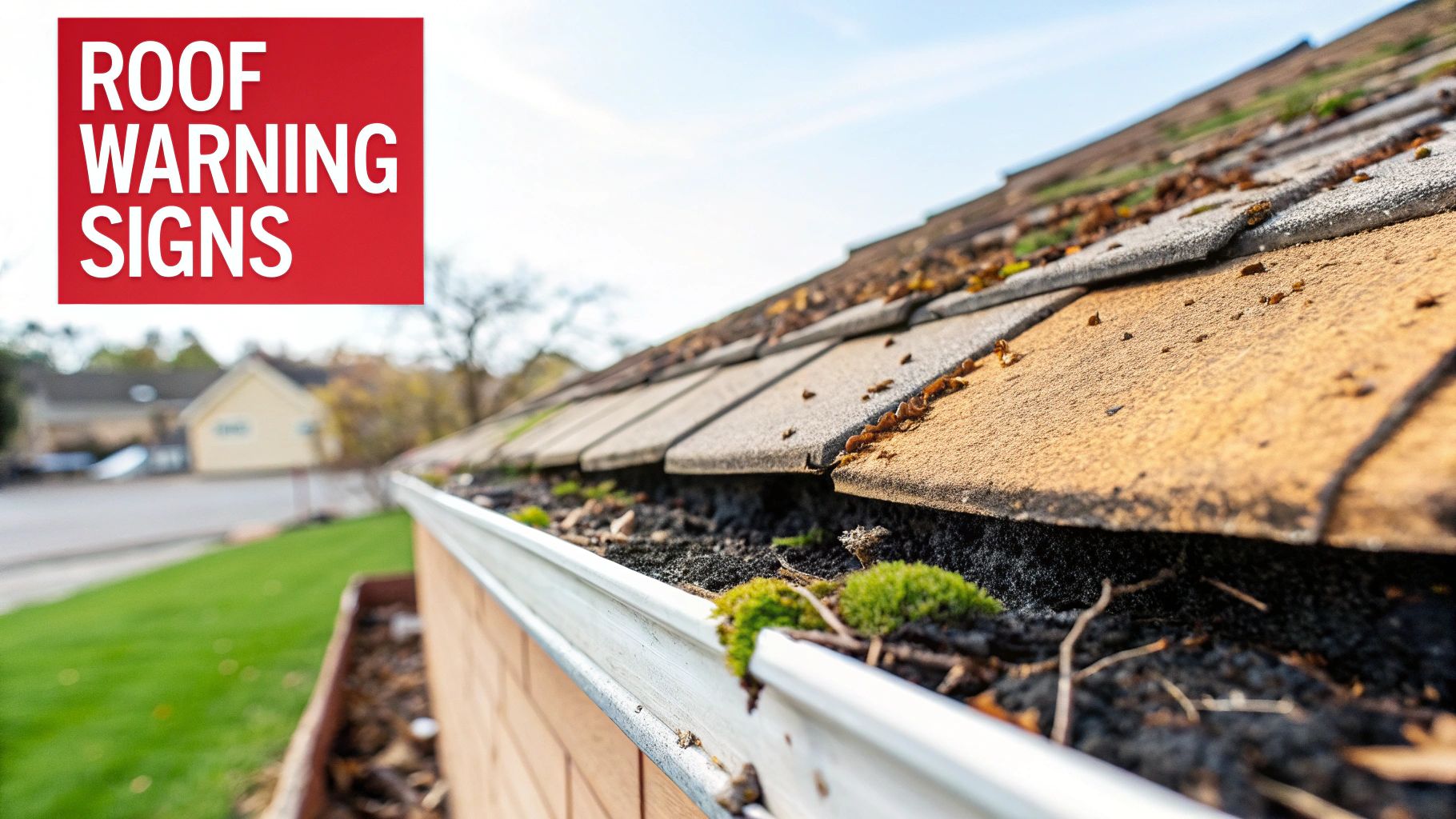
Thankfully, many of the most obvious red flags are visible right from your yard. Take a walk around your house and look up. Are the shingles curling up at the edges, cracking, or looking buckled and warped? That's a classic sign they've lost their flexibility and are becoming brittle.
Another easy catch is missing granules. Those little sand-like specks are your roof's sunscreen, shielding it from harsh UV rays. If you notice "bald spots" on your roof or find a pile of granules in your gutters, it means that primary layer of defense is wearing away.
Looking Past the Obvious
Not all warning signs are quite so direct. Some symptoms are a bit more subtle and require a closer look, but they can be just as serious.
- Dark Streaks or Moss: In humid areas, this can sometimes be just a cosmetic issue. But widespread algae or dark staining can also point to trapped moisture, which is a slow but steady killer for most roofing materials.
- A Sagging Roof Deck: Stand back from your house and look at the ridgeline. Is it perfectly straight? Any dips, sways, or "swoops" are a huge red flag. A sagging roof points to a serious structural problem that needs a professional, and fast.
- Sunlight in the Attic: This is the easiest inspection you can do. On a bright, sunny day, head up to your attic (be safe!) and turn off the lights. If you see little beams of daylight poking through the roof deck, you have active holes. It’s that simple.
When you're trying to get an objective look at your roof's health, a professional assessment can be incredibly valuable. This helpful independent building inspection guide explains how experts can spot issues you might miss.
The real skill is learning to tell the difference between normal aging and a critical failure. A couple of cracked shingles can often be repaired. But if you're seeing widespread granule loss and curling edges? That’s your roof telling you it's tired and ready for retirement. When you're not sure, an expert inspection is the best way to get a clear answer and protect your home.
Frequently Asked Questions
How long does a 30-year roof really last?
A "30-year" shingle will typically last between 25 and 28 years under ideal conditions. The 30-year label refers to the manufacturer's warranty period, not a guaranteed service life. Factors like extreme weather, poor attic ventilation, and lack of maintenance can significantly reduce this lifespan, sometimes to as little as 15-20 years.
What are the first signs of roof failure?
The earliest warning signs are often visible from the ground. Look for shingles that are curling at the edges, cracked, or missing. You might also find an accumulation of asphalt granules (which look like coarse black sand) in your gutters. Inside your home, look for water stains on the ceiling, peeling paint near the roofline, or signs of light coming through the attic.
Can I install a new roof over my old one?
While it's sometimes possible to install a new layer of shingles over an existing one (a "roof-over"), it is generally not recommended. This practice adds significant weight to your roof structure, can trap heat and reduce the new roof's lifespan, and most importantly, it covers up potential problems with the underlying roof deck, such as rot or water damage. A complete tear-off is almost always the better long-term solution.
How much does a professional roof inspection cost?
A professional roof inspection typically costs between $200 and $600. The price can vary based on the size and complexity of your roof, your geographic location, and the level of detail in the inspection report. Many reputable roofing contractors also offer free visual inspections as part of the quoting process for a repair or replacement.
Will my homeowners insurance cover a new roof?
Homeowners insurance generally covers roof replacement only if the damage is caused by a sudden, accidental event, such as a storm, hail, or a fallen tree. It does not cover replacement due to old age, wear and tear, or lack of maintenance. It's crucial to review your policy to understand what is covered before you need to file a claim.