
Are you looking for a long-term solution to sky-high energy bills and the constant threat of monsoon leaks in Arizona? A spray polyurethane foam (SPF) roof might be the answer. This innovative roofing system isn't just another layer of material; it's a seamless, insulated, and highly reflective shield that is custom-applied to your building. By creating a single, unbroken barrier, an SPF roof directly tackles the challenges of intense desert heat and powerful storms, offering unmatched protection and significant energy savings for property owners.
Key Takeaways
- Unbeatable Insulation: SPF delivers one of the highest R-values (a measure of thermal resistance) per inch you can find. This means it’s incredibly effective at stopping heat from getting into your building in the first place, giving your AC unit a much-needed break.
- A Truly Seamless & Waterproof Barrier: Because the foam is applied as a liquid, it expands to create one solid, continuous membrane. There are no seams, joints, or fasteners—the typical weak spots where leaks love to start. This is your best defense against our powerful monsoon rains.
- Serious Energy Savings: The foam is protected by a highly reflective topcoat that can bounce back up to 85% of the sun's heat. This "cool roof" technology keeps your building significantly cooler and can slash summer energy costs by 30% or more.
- Built for the Long Haul: An SPF roof is a renewable system. With a simple recoat every 15-20 years and basic maintenance, it can last indefinitely. It’s not just a roof; it’s a long-term, cost-effective asset for your property.
Why Arizona Buildings Need a Smarter Roofing Solution
Living and working in Arizona means dealing with a unique set of problems. The relentless sun, punishing UV rays, and the surprise downpours of monsoon season aren't just weather—they're expensive headaches for property owners.
Most traditional roofing materials just can't keep up. The constant cycle of baking in the sun and then cooling off at night causes them to expand and contract, which eventually weakens seams and creates perfect little entry points for water. This leads to sky-high energy bills and a constant cycle of repairs.
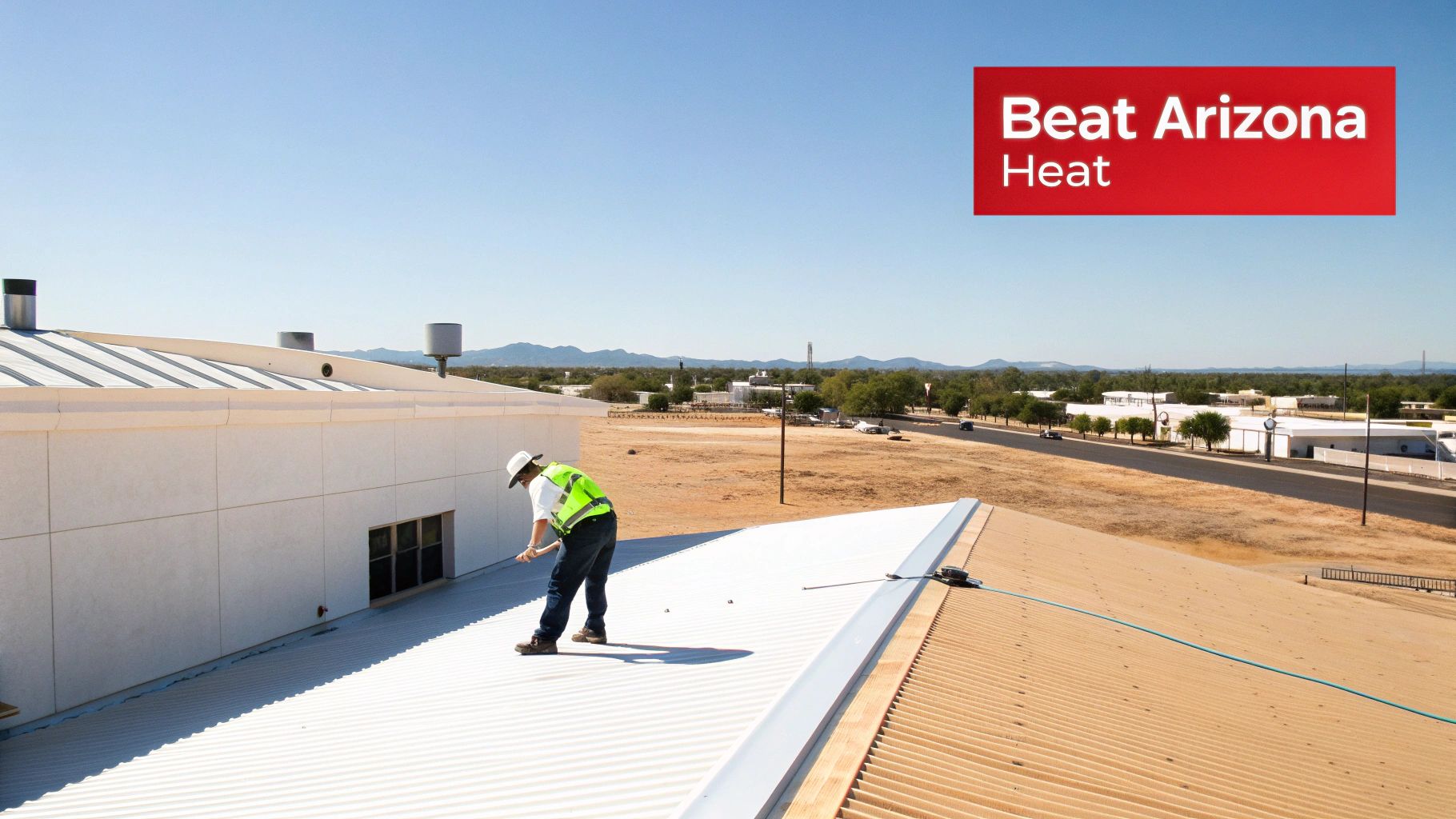
This guide is all about why SPF roofing is so perfectly suited to conquer these exact problems. It’s not just another layer of material; it's a high-performance system that forms a seamless, insulated barrier, designed to dramatically cut your energy costs and protect your building for decades.
When you're looking for a serious roofing solution in Arizona, leak protection is at the top of the list. Digging into proven roof leak prevention strategies quickly shows you why having a single, unbroken surface—exactly what SPF delivers—is such a game-changer.
What Exactly Is a Spray Polyurethane Roof?
Think of it like giving your building a custom-fit, insulated jacket. One without any seams, zippers, or gaps where the brutal Arizona heat can sneak in. That's the best way to understand a spray polyurethane roof.
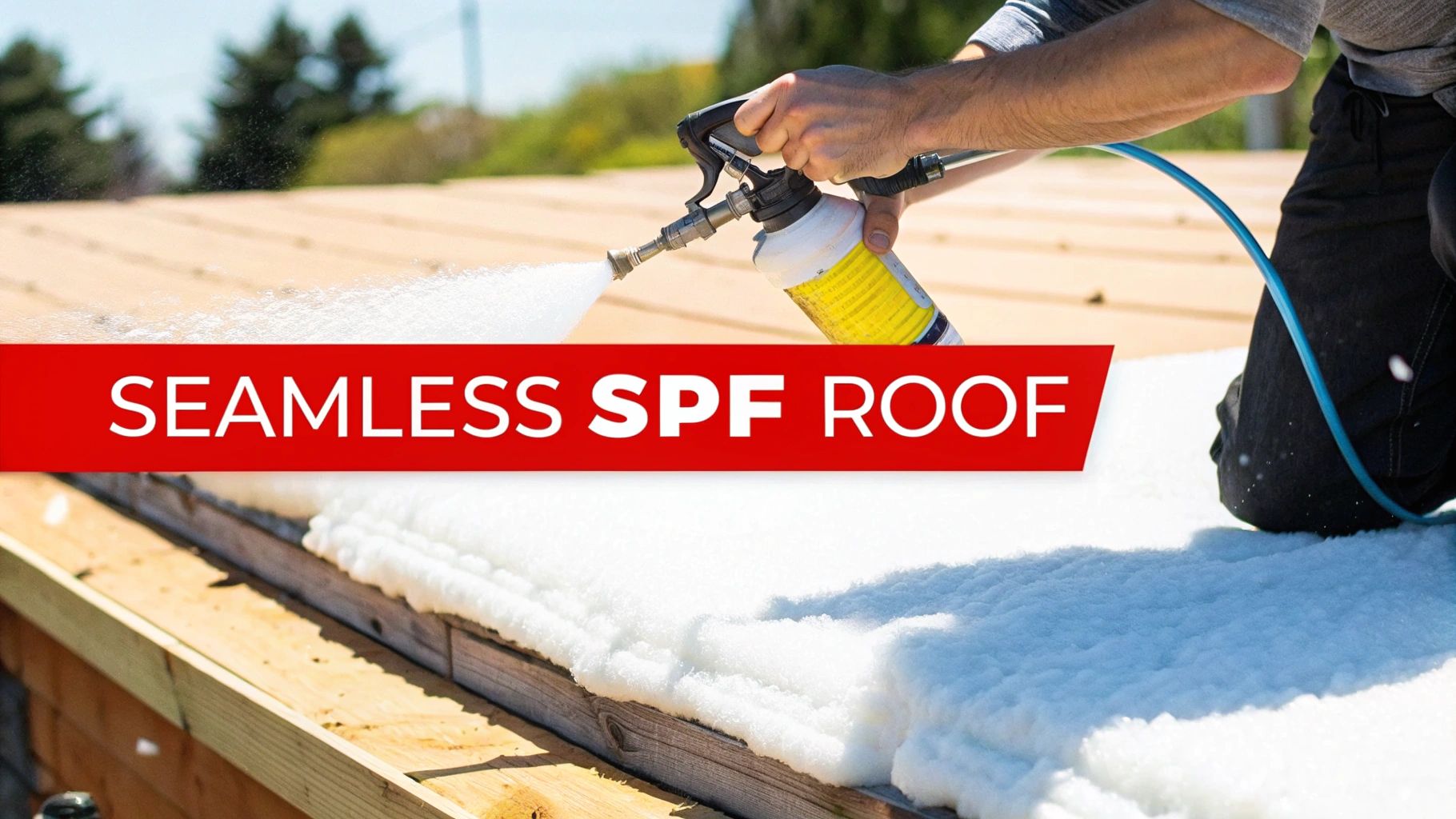
Unlike conventional roofing that comes in pre-made sheets or rolls, a spray polyurethane foam (SPF) roof begins as two separate liquids. We mix these components together right on-site at your property.
The Magic Happens in the Mix
The process itself is pretty impressive. Two distinct liquids, an isocyanate and a polyol resin, are pumped through a heated hose up to a specialized spray gun. The moment they meet at the tip, a chemical reaction kicks off.
This mixture is sprayed directly onto the existing roof surface. In a matter of seconds, it expands up to 30 times its original liquid volume, hardening into a solid, rigid, yet surprisingly lightweight layer of foam.
It's this rapid expansion that makes SPF so effective. The foam flows into every nook and cranny, perfectly conforming to pipes, vents, drains, and HVAC curbs. What you're left with is a single, continuous membrane across your entire roof. No seams.
This seamless quality is the system’s greatest strength. Traditional roofs fail at the seams, but with SPF, those weak points are completely eliminated, creating a powerful, leak-proof barrier against Arizona’s monsoon downpours.
More Than Just Foam
But applying the foam is only the first half of the job. While the foam is tough, it's susceptible to damage from the sun's ultraviolet (UV) radiation. It needs a shield.
So, the final, crucial step is applying a durable, elastomeric topcoat over the entire foam surface. This protective layer does two very important things:
- UV Protection: It acts like a powerful sunscreen, shielding the foam from UV rays that would otherwise make it brittle.
- Physical Durability: It adds a tough, weather-resistant finish that can handle foot traffic and impacts from hail or debris.
This protective coating is almost always bright white, which effectively transforms your roof into a "cool roof." It reflects the sun’s intense heat away from your building, which keeps the inside significantly cooler and eases the burden on your AC units.
The foam and the coating work together to create a complete system. You can explore the details of how we apply our polyurethane foam roofing for maximum performance on our services page. The final result isn't just a roof that waterproofs—it's one that actively insulates and cools your building from the top down.
Spray Polyurethane Foam provides incredible benefits like thermal insulation and even adds a bit of structural reinforcement. For roofing, we use a closed-cell SPF that delivers R-values (a measure of how well it resists heat) above 6.0 per inch. This drastically improves a building's energy efficiency compared to just about any other roofing material out there. If you're curious about the data, you can learn more about SPF's impact on energy use in this detailed industry report about the spray polyurethane foam market.
Beating the Heat with Superior Insulation and Efficiency
Here in Arizona, your roof is on the front lines of a daily battle with the sun. It’s not just about keeping the rain out during the occasional storm; it’s about winning the war against intense, relentless heat. This is exactly where a spray polyurethane foam (SPF) roof shines, delivering thermal performance that older, traditional materials just can’t touch.
The secret to its success is a powerful one-two punch: incredible insulation paired with a highly reflective surface.
The R-Value Advantage
Let’s talk about thermal resistance, or R-value. You can think of R-value as a material’s ability to stop heat dead in its tracks. The higher the R-value, the better it is at insulating.
Most common roofing insulation materials give you an R-value somewhere between R-3 and R-4 per inch. Spray foam, on the other hand, comes in at an impressive R-6.5 per inch, sometimes even higher. Its dense, cellular structure creates a formidable barrier between the scorching outside air and your air-conditioned space.
It's not just a roof; it's a powerful tool for cutting a building's operating costs. Studies have shown that a properly installed SPF roof can often pay for itself in as little as five years through energy savings alone.
Slash Your Cooling Costs
This best-in-class insulation has a direct and immediate impact on your bottom line. By dramatically reducing how much solar heat gets into your building, an SPF roof lightens the load on your HVAC system. Your air conditioner simply doesn't have to work as hard or run as long to keep things comfortable inside.
For many Arizona building owners, this means a serious drop in cooling costs—often by 30% or more. This isn’t a one-off perk; it’s a consistent return on your investment that you’ll see on every single utility bill, summer after summer. To really get a handle on this, it's worth understanding the role of R-value in roofing and how it directly affects your energy consumption.
The Power of a "Cool Roof"
Insulation is only half the story. The other key ingredient is the bright white, reflective topcoat that gets applied over the foam. This tough, elastomeric coating acts like a massive mirror, bouncing up to 85% of the sun's brutal solar radiation right back into the atmosphere before it ever has a chance to heat up your building.
This "cool roof" effect keeps the actual surface of your roof far cooler than a typical dark roof, which can easily top 150°F on a blistering afternoon. A cooler roof means less heat seeping down into your building, giving your AC unit an even bigger break.
A Seamless Defense Against Monsoon Season
Beyond its incredible thermal performance, the very nature of an SPF roof makes it a fortress against Arizona’s monsoon season. Think about traditional roofs—their weak points are always the seams, joints, and spots where vents or drains poke through. That’s where leaks start.
A spray polyurethane roof completely eliminates these vulnerabilities by creating one single, solid membrane across the entire roof deck.
- No Seams, No Leaks: The foam is applied as a liquid that expands and hardens into one continuous, seamless layer. There are no joints that can fail or pull apart over time.
- Self-Flashing: It naturally molds itself around every pipe, vent, and HVAC curb, creating a perfect, watertight seal without the need for separate flashing materials that can break down.
- Waterproof Barrier: The foam itself has a closed-cell structure, which means it doesn't absorb water, adding yet another layer of protection.
This unique combination makes an SPF roof the ultimate defense against the sudden, heavy downpours our summer storms are known for. It’s more than an energy-efficient choice; it’s an investment in a leak-free, climate-proof future for your property.
The SPF Roof Installation and Renewal Process
A high-performance spray foam roof isn't just about the material itself—it's about the skill and precision that go into the application. A perfect installation is what unlocks those decades of energy savings and leak-proof protection. The whole process, from prepping the old roof to spraying the final topcoat, is a science that has to be done right.
https://www.youtube.com/embed/L57gEbBq4Y4
Think of it like getting a custom suit made for your building. The process doesn't start with adding new material. It starts with preparing the existing surface to guarantee a perfect, unbreakable bond. Honestly, this first step is the most important part for making the roof last.
Step 1: Meticulous Surface Preparation
Before a single drop of foam is sprayed, the roof we’re working on has to be perfectly clean, dry, and structurally sound. We always kick things off with a serious power washing to blast away any dirt, debris, or old, loose material that could get in the way of a solid bond.
After it's clean, we do a detailed inspection to spot and fix any little problems. We take care of any minor repairs right then and there to make sure the surface is completely stable. The goal here is to create a pristine canvas that the foam can grab onto and never let go.
Step 2: Priming and Foam Application
With the surface prepped, we apply a specialized primer. This primer is the handshake between your old roof and the new foam—it’s a powerful bonding agent that makes sure the two become one single, solid structure. Skipping this step is a recipe for disaster, as it prevents the foam from peeling or separating down the road.
Next, our certified technicians get to work spraying the polyurethane foam. This is where real expertise comes into play. The foam is applied in careful, even layers, slowly building up to the required thickness—usually 1.5 to 2 inches—to hit the target R-value and form a seamless, waterproof membrane across every inch of the roof.
Step 3: Applying the Protective Topcoat
On its own, the raw foam is an amazing insulator, but it can't stand up to the sun's UV rays. To protect it, we apply a durable, elastomeric topcoat. This flexible coating is sprayed over the entire foam surface, creating a tough, weather-resistant shield that’s also highly reflective.
This bright white topcoat is what officially makes it a "cool roof." It bounces the sun’s brutal heat away from your building and adds the final layer of defense against physical damage. What you're left with is a roofing system that's incredibly efficient and built to last.
The diagram below really shows how these benefits work together. It starts with reflecting heat, then insulating the building, which ultimately leads to big savings.
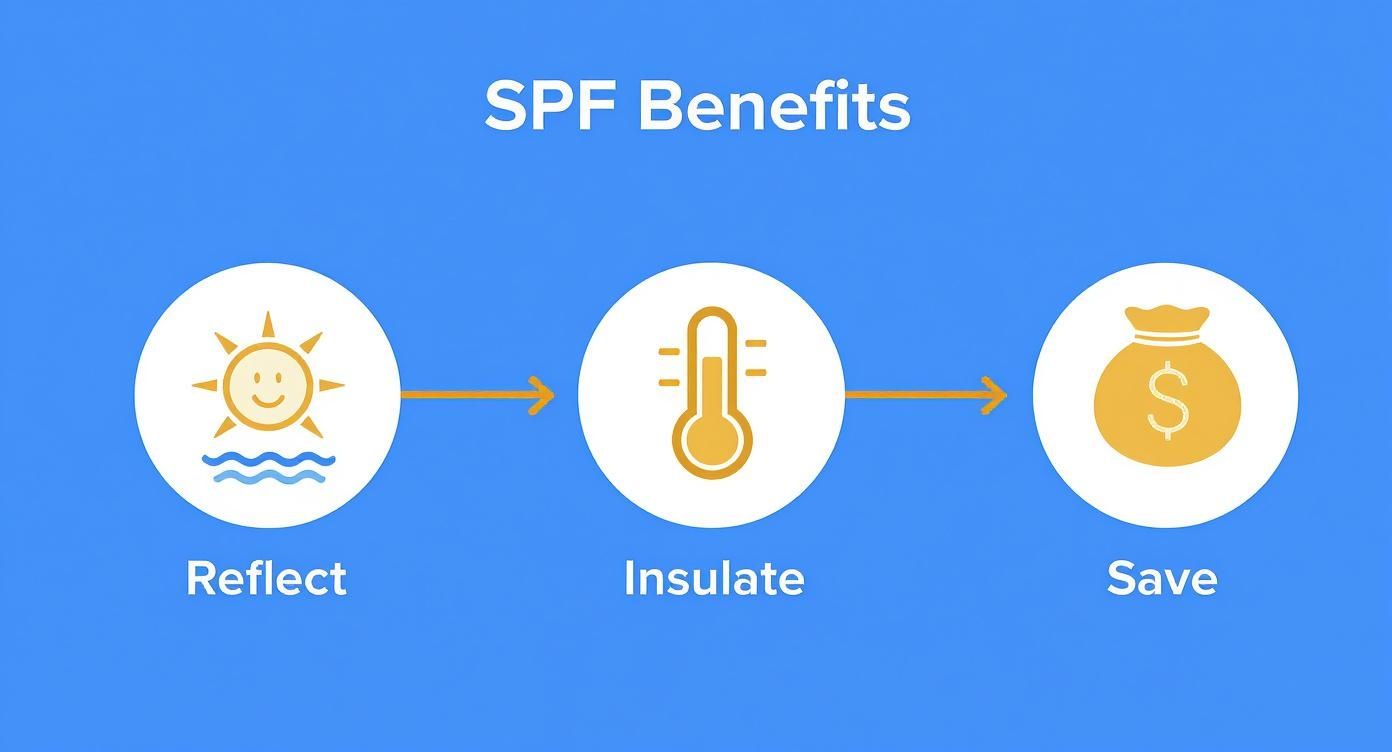
This simple flow highlights how the reflective coat and insulating foam combine to create a powerful, cost-saving roofing solution for any property in Arizona.
The Simple Renewal Process
Here's one of the best parts about a spray foam roof: it’s a renewable system. With just a couple of inspections a year and some basic upkeep, the roof will perform without a hitch for years on end.
Then, every 15 to 20 years, the roof is ready for a simple renewal. The process is incredibly straightforward:
- Cleaning the Surface: We give the roof a thorough cleaning to wash off any dirt that’s built up over the years.
- Applying a New Topcoat: We spray on a fresh layer of the protective elastomeric coating.
That’s it. This quick recoat process hits the reset button on your roof's lifespan without the huge expense and waste of a full tear-off. It turns your spray foam roof into a true long-term asset that can protect your building indefinitely. It's no wonder the system is getting so popular; roofing is expected to account for 42.8% of the entire SPF market revenue by 2025. You can dig into more stats on the global spray polyurethane foam market to see just how fast it's growing.
Calculating the Cost and Long-Term Value of Your SPF Roof
When you're looking at a new roof, it's easy to get hung up on the initial price tag. But with a spray polyurethane foam roof, that's only half the story. The real value isn't just what you pay today, but what it saves you over the next 20, 30, or even 50 years. Think of it less as a purchase and more as an investment that starts paying you back the day it's installed.
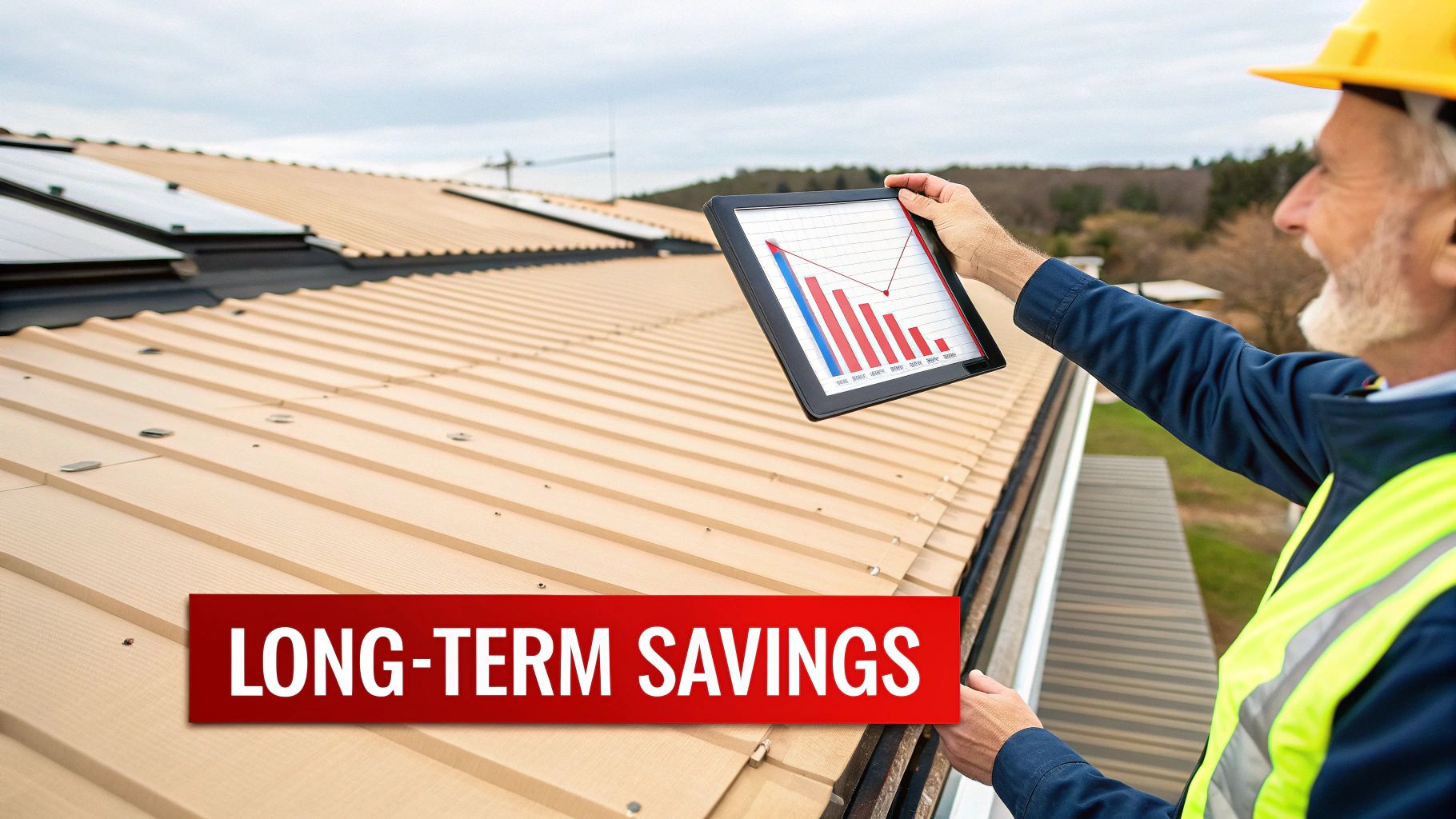
Of course, the upfront cost isn't a simple one-size-fits-all number. Every roof is different, so several key variables come into play. A professional assessment is the only way to get a firm number, but knowing what goes into the quote will help you understand the big picture.
Factors Influencing Initial Installation Cost
A professional roofer isn't just looking at the square footage to come up with a price. They're evaluating the whole system to give you an accurate quote.
- Roof Size and Complexity: It's pretty straightforward—a massive, complex commercial roof dotted with pipes, vents, and HVAC units is going to demand more labor and material than a simple, flat residential roof.
- Existing Roof Condition: We can't just spray foam over a failing roof. If your current roof has water damage or soaked insulation, that has to be addressed first. Proper prep work is non-negotiable for a permanent, watertight bond.
- Required Foam Thickness: This is all about the R-value, or thermal resistance, you're aiming for. Here in Arizona, we typically recommend a minimum of 1.5 to 2 inches of foam to really make a dent in those summer cooling bills.
Want a ballpark idea for your specific property? Our roof replacement cost estimator can give you a preliminary look at the numbers.
The Real ROI: Energy Savings and Beyond
This is where an SPF roof stops being an expense and starts becoming a powerful financial asset. The real magic happens long after the installation crew leaves, as the roof actively works to lower your building's operating costs.
A landmark study by Texas A&M University put this to the test. They found that the energy savings generated by an SPF roof were so significant that the system could pay for itself in as little as five years.
A huge chunk of that return comes from slashing your building's air conditioner running costs. By creating a seamless, highly insulated barrier, the foam stops the brutal Arizona sun from superheating your building. Your HVAC system can finally take a breather, and you'll see the difference on your monthly utility bills.
But the savings don't stop there. Because SPF roofs are renewable, you'll never face the massive expense of a full tear-off and replacement again. Simple, periodic recoating is all it takes to keep it going for decades. This incredible long-term value is why the global SPF roofing market was valued at nearly USD 1.5 billion in 2023 and continues to climb. Property owners everywhere are catching on to the proven performance and financial upside.
Choosing the Right SPF Roofing Team in Arizona
Deciding on a spray polyurethane roof is a fantastic choice for any property owner in Arizona. You're getting top-tier insulation, a completely seamless and waterproof surface, and a serious drop in your energy bills. But here's the thing about SPF roofing: the final product is only as good as the crew that installs it.
This isn't just another roofing job; it's a highly technical process. The right contractor is just as important as the material itself. A perfect application is what gives you decades of reliable performance and savings. In a place like Arizona, that means you need a team that truly gets our intense climate, not just someone with the right equipment.
What Makes a Great SPF Contractor?
Not all roofers have the specialized skills needed for spray foam. It's a different ballgame entirely. An inexperienced crew can easily create a mess—an uneven surface, a weak bond to your roof deck, or a shoddy top coat. Any one of these mistakes can wipe out all the benefits you were hoping for.
So, how do you spot a true professional?
- Real-World Arizona Experience: They need to know how to properly mix and apply foam in our blazing heat and dry air, which can dramatically affect how the material cures.
- Certified and Seasoned Installers: The team handling the spray gun should have specific training and a long list of successful SPF projects under their belt.
- Top-Shelf Materials: A good contractor won't cut corners. They'll use high-grade foam and protective coatings from trusted brands specifically made to handle our relentless sun.
The difference between a roof that lasts 10 years and one that lasts 50 often boils down to one simple thing: the quality of the initial installation. A top-tier contractor isn't just putting on a roof; they're building a long-term asset for your property.
Let's Get Your Project Started Right
Your building deserves a roof that works perfectly from the moment we leave the job site. At AZ Roof Co, we bring decades of hands-on Arizona experience to every project. Our certified pros apply each layer with absolute precision, making sure you get a flawless, durable, and long-lasting roof.
Think an SPF roof might be the solution for you? Let's talk.
Schedule a complimentary, no-obligation roof assessment with our SPF specialists today. We'll come out, take a hard look at your current roof, answer every question you have, and give you a straightforward, honest recommendation. It's time to protect your investment and start saving on energy costs with the team that knows Arizona roofing inside and out.
Frequently Asked Questions
How long does a spray foam roof really last in the Arizona sun?
With proper installation and routine maintenance, a spray polyurethane roof can last 50 years or more. The foam itself is durable, but the key to its longevity is the protective topcoat. This coating shields the foam from UV rays and needs to be cleaned and reapplied every 15 to 20 years. This simple renewal process extends the roof's life indefinitely without the need for a full tear-off.
Can I walk on a spray polyurethane roof?
Yes, a professionally installed SPF roof is strong enough to handle regular foot traffic from maintenance workers or HVAC technicians. The closed-cell foam used for roofing has a high compressive strength. However, sharp, heavy objects can cause punctures. For commercial roofs with significant rooftop equipment, designated walkways can be installed for added durability.
What happens if the roof gets damaged?
Repairs for an SPF roof are typically quick, easy, and inexpensive. Because the foam has a closed-cell structure, water cannot travel laterally. If a puncture occurs, the damage is contained to that specific spot. A contractor can fix it by cutting out the small damaged area, drying it, filling it with a sealant, and applying a new layer of protective coating over the patch.
Is SPF roofing an eco-friendly choice?
Yes, a spray polyurethane roof is a highly sustainable option. Its superior insulation significantly reduces energy consumption, lowering a building's carbon footprint. In many cases, it can be applied directly over the existing roof, which reduces landfill waste from tear-offs. Finally, its renewable nature—being able to be recoated instead of replaced—makes it a durable, long-term asset that minimizes environmental impact.
Can a spray polyurethane roof be installed over my existing roof?
In most cases, yes. One of the major advantages of an SPF roof is that it can be applied over many existing roof types, including built-up roofs (BUR), modified bitumen, metal, concrete, and wood. The existing roof must be structurally sound and properly prepared (cleaned and primed) to ensure a strong, permanent bond. This avoids the cost, disruption, and landfill waste associated with a complete roof tear-off.