
If you've ever seen a roof being coated with what looks like a thick, expanding paint, you've likely witnessed a Spray Polyurethane Foam (SPF) roof installation. It’s a game-changer in the roofing world, especially for a climate like ours in Arizona. A properly installed foam roof creates a seamless, insulated, and fully waterproof barrier that can slash energy bills and last for decades.
This guide will walk you through everything you need to know about polyurethane foam roofing, from how it works to its long-term value. Whether you own a commercial building or are exploring options for a flat-roofed home, understanding SPF can help you make a smart, sustainable investment.
Key Takeaways
- Superior Insulation: SPF provides an R-value of R-6.5 to R-7 per inch, making it one of the most effective insulators available and significantly reducing HVAC costs.
- Seamless and Waterproof: Applied as a liquid, it expands to form a single, monolithic layer with no seams, eliminating the most common source of roof leaks.
- Exceptional Longevity: With proper maintenance, including periodic recoating, a polyurethane foam roof can last for 50 years or more.
- Lightweight and Versatile: It adds minimal structural weight and can often be applied directly over an existing roof, saving on tear-off costs and reducing landfill waste.
What Is Polyurethane Foam Roofing?
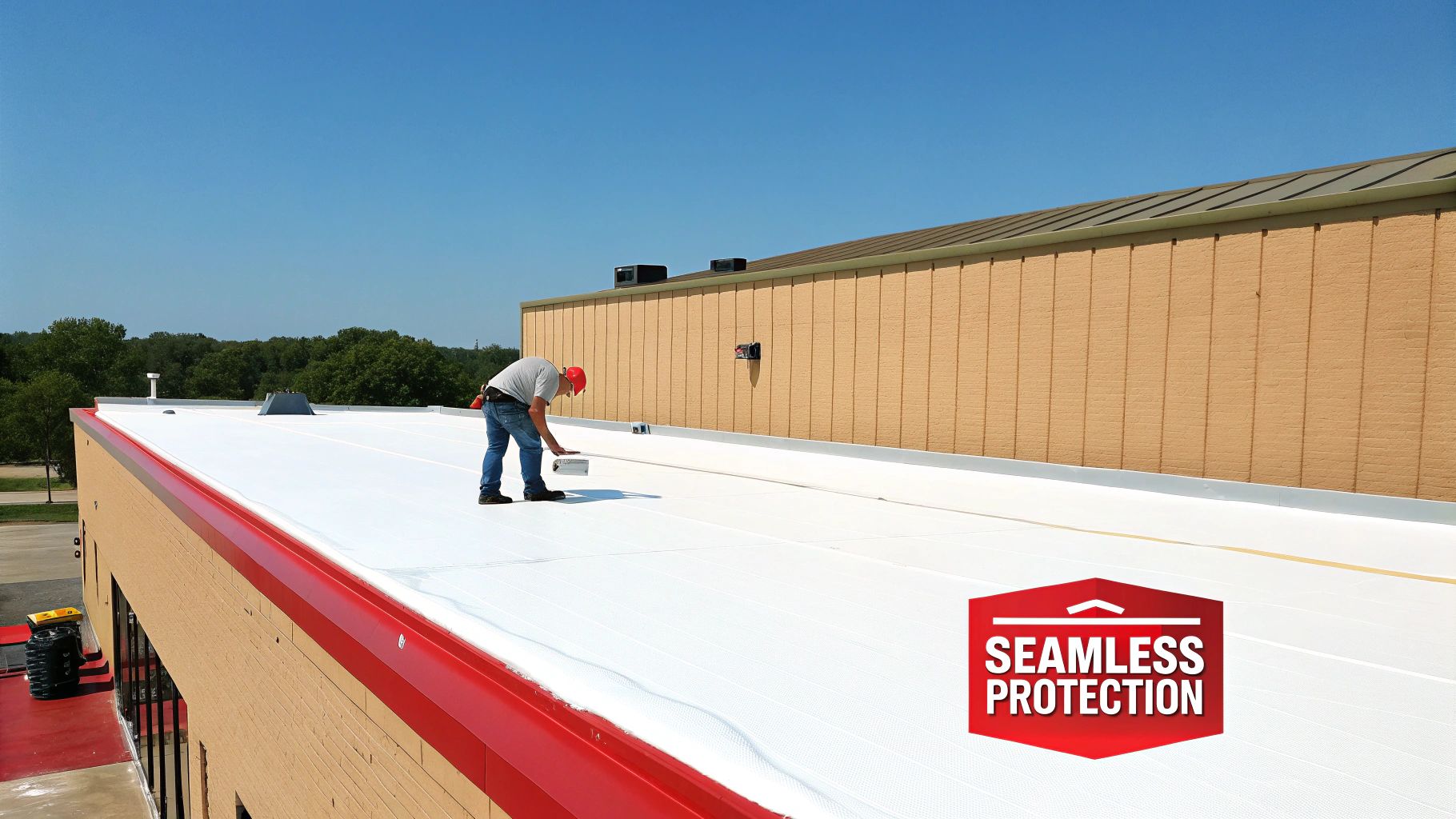
At its core, polyurethane foam roofing is a two-part liquid system that, when mixed and sprayed, undergoes a fascinating chemical reaction. The two components—a polyol resin and an isocyanate—are combined right at the spray gun.
The moment this mixture hits the roof deck, it expands up to 30 times its original volume in a matter of seconds. It's this rapid expansion that allows the foam to flow into every crack, seam, and crevice, creating a single, monolithic layer that bonds directly to the surface. It literally becomes part of your roof's structure.
But the process doesn't stop there. Once the foam cures into a rigid, closed-cell layer, it's topped with a protective elastomeric coating. This coating, typically silicone or acrylic, shields the foam from the sun's harsh UV rays and adds another layer of durability. It also creates a bright, reflective surface that bounces sunlight away, keeping the building significantly cooler.
The Science Behind the Strength
So, what makes this foam so effective? The magic is in its closed-cell structure. Think of it as millions of microscopic, tightly packed bubbles, each one trapping an insulating gas. This cellular structure is what gives SPF its incredible insulating power and makes it nearly impossible for water to penetrate.
The biggest advantage of SPF is that it eliminates the weakest link in most roofing systems: the seams. By creating one continuous, fully adhered membrane across the entire roof, you get rid of the joints and fasteners where leaks almost always start. This is why it’s so reliable, especially on complex roofs with lots of pipes and vents.
This seamless, self-flashing quality makes polyurethane foam one of the most resilient and efficient types of commercial roofing systems available today. Its ability to conform to any shape and seal off potential leak points is unmatched, which is why so many property owners trust it for long-term performance.
How Spray Polyurethane Foam Roofing Works
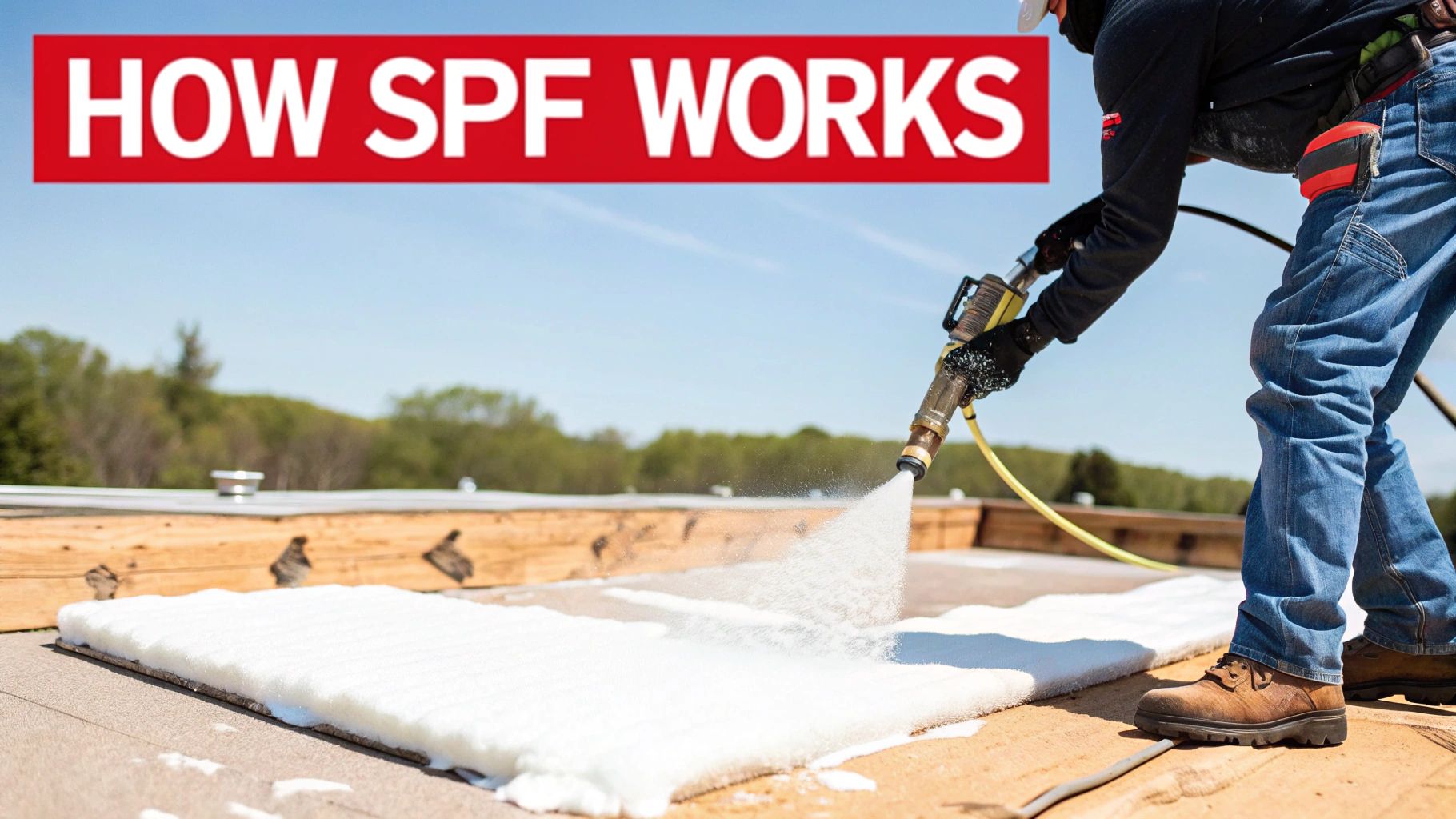
Think of spray polyurethane foam (SPF) roofing as a high-tech chemistry experiment happening right on top of your building. It’s a pretty incredible process. It all starts with two distinct liquid compounds, an isocyanate and a polyol resin, which are kept separate until the moment they’re needed.
These liquids are pumped from their containers through heated hoses to a special spray gun. The magic happens right at the tip of that gun, where the two liquids meet under high pressure. As soon as this mixture hits the roof surface, a chemical reaction kicks off instantly. The liquid expands up to 30 times its original volume in a matter of seconds, hardening into a solid, seamless layer of foam. This crazy-fast expansion is what allows it to fill every gap and perfectly contour to the roof.
What you’re left with is a monolithic barrier. It’s a single, solid piece, completely unlike traditional roofing materials that involve rolling out sheets and relying on fasteners and sealants. An SPF roof literally becomes one with the roof deck, eliminating seams, which are almost always the weak point where leaks start.
The Critical Role of Closed-Cell Foam
Now, not all spray foam is the same, and when it comes to roofing, this detail is everything. The industry uses closed-cell foam almost exclusively, and there’s a very good reason for that.
Picture the difference between a kitchen sponge and a solid piece of styrofoam. Open-cell foam is like the sponge; its air pockets are all connected, so it can soak up water. Closed-cell foam, on the other hand, is made up of millions of tiny, individual bubbles, each one sealed off from the others.
This tightly packed, sealed-cell structure is what gives it a few major advantages for roofing:
- Superior Water Resistance: Since the cells are closed, water simply can't get in. This makes it a fantastic waterproofing material.
- Exceptional Strength: The dense structure provides high compressive strength, so it can handle foot traffic and light impacts without any trouble.
- Higher R-Value: Closed-cell foam is a powerhouse insulator. It delivers a higher R-value per inch, meaning you get more insulation without needing a super thick layer.
The use of closed-cell foam transforms the roof into more than just a cover; it becomes a structural component that insulates, strengthens, and waterproofs the entire building envelope in one seamless application.
The Growing Market for Efficient Roofing
It's no surprise that this technology is shaking up the roofing industry. North America, in particular, has become a huge market for SPF, driven by building codes that demand better energy efficiency. In 2023, the U.S. market for spray polyurethane foam in construction was valued at around USD 668 million.
Experts predict it will grow by over 7.3% annually, which really shows a major shift toward roofing systems that not only last longer but also slash energy bills. You can explore more market trends on the growth of spray polyurethane foam from Precision Business Insights.
At the end of the day, it's the science that makes polyurethane foam roofing such an effective solution. That on-the-spot chemical reaction creates a custom-molded, incredibly durable, and highly insulated shield that protects a building from the top down, solving many of the chronic headaches that come with older roofing methods.
What Makes Foam Roofing Such a Great Choice?
Picking a new roof is a big decision and a serious investment. You need to know you're getting real, tangible benefits for your money. This is where polyurethane foam roofing really shines. It's not just another material; it's a complete system that tackles the biggest roofing headaches, from persistent leaks to sky-high energy bills.
The best way to think about it is that spray polyurethane foam (SPF) roofing works like a high-end thermal cooler for your entire building. It’s designed to keep the brutal summer heat out and your cool, conditioned air right where it belongs—inside.
Unmatched Energy Efficiency
The star of the show is foam's incredible insulation power. Polyurethane foam delivers one of the highest R-values per inch of any material on the market, typically clocking in between R-6.5 and R-7. The R-value is just a way of measuring how well a material resists heat flow. The higher the number, the better the insulation.
By creating a seamless, airtight seal across your entire roof deck, SPF dramatically cuts down on thermal bridging—that's when heat sneaks in or out through gaps and joints in the roof structure. Your HVAC system doesn't have to work nearly as hard, which translates directly into lower energy bills month after month. It's no surprise that it’s considered one of the top efficient roofing options to lower your energy bills.
A Truly Seamless and Waterproof Shield
Think about most traditional roofs. They're a patchwork of shingles, panels, or membranes, all held together by countless seams, fasteners, and glues. Where do almost all leaks start? Right at those seams. SPF roofing completely sidesteps this fundamental weakness.
Since spray foam is applied as a liquid, it expands and cures into a single, solid, continuous membrane. There are no joints, no gaps, and no fasteners. It creates a monolithic, waterproof barrier that's perfectly custom-molded to your roof's every contour.
This also means it's "self-flashing," sealing perfectly around tricky spots like pipes, vents, and AC units that are a constant source of leaks with other systems. This seamless quality is what makes it such a reliable defense against water damage.
Toughness and a Long Lifespan
Don't let the word "foam" fool you. Closed-cell SPF is incredibly durable and strong. It has a high compressive strength, so it can easily handle regular foot traffic from maintenance crews. It's also formulated to stand up to the worst weather, from punishing sun to heavy rain and high winds, without cracking or losing its integrity.
With proper, simple maintenance—usually just a quick recoat every 15 to 20 years—an SPF roof can easily last for 50 years or more. That kind of longevity makes it a fantastic long-term investment that offers decades of peace of mind.
Lightweight and Structurally Sound
Another huge plus is how light it is. SPF roofing adds very little weight to a building, typically around 1-3 pounds per square foot. This is a game-changer for older buildings or structures that weren't designed to support heavy systems like concrete tiles or multiple layers of asphalt.
Because it's so light, foam can often be applied directly over an existing roof, as long as the old one is in decent shape. This saves a massive amount of money and mess by avoiding a full tear-off, cutting down on labor costs, installation time, and landfill waste.
This advantage is becoming more critical as cities grow. The construction industry is a huge market for polyurethane foam, a trend driven by the need for more efficient buildings. With the world's urban population expected to rise from 58% in 2024, the push for energy-saving materials is only getting stronger. Foam roofing helps meet this demand by reducing HVAC loads and carbon footprints, especially as construction output grows by over 7% in some key markets. You can find more details on the polyurethane foam market's growth on Research Nester.
SPF Roofing vs Traditional Roofing Systems
To really see the difference, it helps to compare SPF directly with the roofing materials you're probably more familiar with. Each has its place, but foam offers a unique combination of benefits that others can't match.
| Feature | SPF Roofing | Asphalt Shingles | TPO/EPDM | Metal Roofing |
|---|---|---|---|---|
| Waterproofing | Monolithic & seamless | Seams are weak points | Seams are weak points | Seams can leak |
| Insulation (R-Value) | R-6.5 to R-7 per inch | R-0.45 per layer | Minimal (R-0.2 – R-0.3) | Minimal (needs separate insulation) |
| Lifespan | 50+ years | 15-30 years | 20-30 years | 40-70 years |
| Weight | Very light (1-3 lbs/sq ft) | Heavy (2.5-4 lbs/sq ft) | Light (0.5-1 lb/sq ft) | Light (1-1.5 lbs/sq ft) |
| Application | Sprayed, conforms to any shape | Nailed in overlapping layers | Rolled out and heat-welded | Installed in large panels |
| Maintenance | Recoat every 15-20 years | Replace damaged shingles | Repair seams and punctures | Repaint, check fasteners |
As you can see in the table, while options like metal offer great longevity, they lack the built-in insulation of foam. And while TPO is lightweight, its seams remain a long-term vulnerability. SPF stands out by combining top-tier insulation, seamless waterproofing, and a long, durable lifespan into one integrated system.
How a Polyurethane Foam Roof Comes to Life
The real beauty of a foam roof isn't just the material itself, but how it’s made. It's not like laying down shingles or rolling out a membrane. Instead, an SPF roof is custom-built, right on top of your building, creating a single, solid surface. This process is a blend of science and skill, and it absolutely needs a seasoned crew to get it right.
Think of it less like old-school construction and more like a high-tech application. Every single step, from getting the old roof ready to spraying the final protective coat, is make-or-break. This is one job you don't want to DIY—the final product lives and dies by the crew’s expertise and even the weather on application day.
Step 1: Getting the Surface Ready
A great foam roof starts with an impeccably clean, dry, and solid foundation. Honestly, this prep work is the most important part of the whole project. A professional crew will start by giving the existing roof a deep clean, getting rid of every bit of dirt, dust, loose gravel, and anything else that doesn't belong.
They'll often use power washers or heavy-duty vacuums to get the job done. Any lingering oils or grime that could mess with the foam’s ability to stick have to go. The crew will also give the roof a thorough inspection, patching up any blisters, cracks, or water-logged spots before moving on.
After it's clean, the roof needs to be 100% dry. Moisture is the absolute nemesis of a good SPF application. It can throw off the chemical reaction and stop the foam from grabbing onto the roof deck like it should.
Step 2: Spraying the Foam
Once the roof is prepped and ready, it's time for the main event. This is where the magic happens. Two liquid components, a polyol and an isocyanate, are pumped through heated hoses to a special spray gun. The moment they mix and hit the roof, they expand like crazy, creating a seamless, solid layer of polyurethane foam.
The foam is applied in passes, or "lifts," usually about one to one-and-a-half inches thick at a time. This layering technique lets the installer build up the foam to the exact right thickness, ensuring you get a consistent R-value and top-notch insulation across the entire roof.
One of the coolest things about this process is how you can literally build drainage right into the roof. If you have low spots where water tends to puddle, the installer can just spray a little extra foam there to build it up. No more ponding water, which is a huge cause of leaks on flat roofs.
The foam also "self-flashes," meaning it forms a perfect, watertight seal around every vent, pipe, and HVAC unit. You're left with one solid, monolithic barrier with zero seams for water to sneak through.
Step 3: Applying the Protective Coating
While the foam itself is tough as nails and waterproof, it does have one weakness: the sun. If you leave it exposed, UV rays will eventually break it down. That’s why the final step is to apply a protective top coat.
This is usually a tough, elastomeric coating, like silicone or acrylic, which is sprayed or rolled over the entire foam surface. This coating does a few critical jobs:
- UV Protection: It acts as a powerful sunblock for the foam, keeping it from getting brittle.
- Weather Resistance: It provides an extra shield against rain, hail, and foot traffic.
- Reflectivity: These coatings are typically bright white, turning your roof into a "cool roof." They reflect a huge amount of the sun's heat, which can lower the roof's surface temperature by up to 75 degrees Fahrenheit and give your building's energy efficiency a serious boost.
After this final layer cures, the polyurethane foam roofing system is complete. What you have is a durable, seamless, and incredibly well-insulated roof designed to perform for decades with very little fuss.
Cost Analysis and Long-Term Value
When it comes to a new roof, the sticker price is often the first thing people look at. It's only natural. While polyurethane foam roofing can have an upfront cost that's in the same ballpark as—or sometimes a bit higher than—some traditional materials, its real financial power isn't on the initial invoice. It's in the long game.
Figuring out that initial investment involves a few key variables. The cost per square foot for an SPF installation depends on the roof's total size, the shape it's currently in, how thick the foam needs to be for proper insulation (R-value), and even where you're located. To get a solid number for your specific building, it's always best to use a detailed roof replacement cost estimator.
Beyond the Initial Installation Price
The true economic genius of a polyurethane foam roofing system really starts to show itself after the installation crew has packed up and gone. This isn't just a roof; it's a system designed to pay you back over time through serious operational savings and fewer future headaches. Think of it less like a one-off purchase and more like a smart, long-term investment in your property’s health and efficiency.
One of the biggest paybacks comes from your energy bills. With an impressive R-value of R-6.5 to R-7 per inch, SPF acts like a formidable thermal blanket over your building, drastically cutting down on heat transfer. This means your HVAC system can finally take a breather, leading to some very welcome reductions in your monthly utility costs.
This graphic breaks down the straightforward, three-step process for installing a polyurethane foam roof, from prepping the surface to applying that final protective coat.
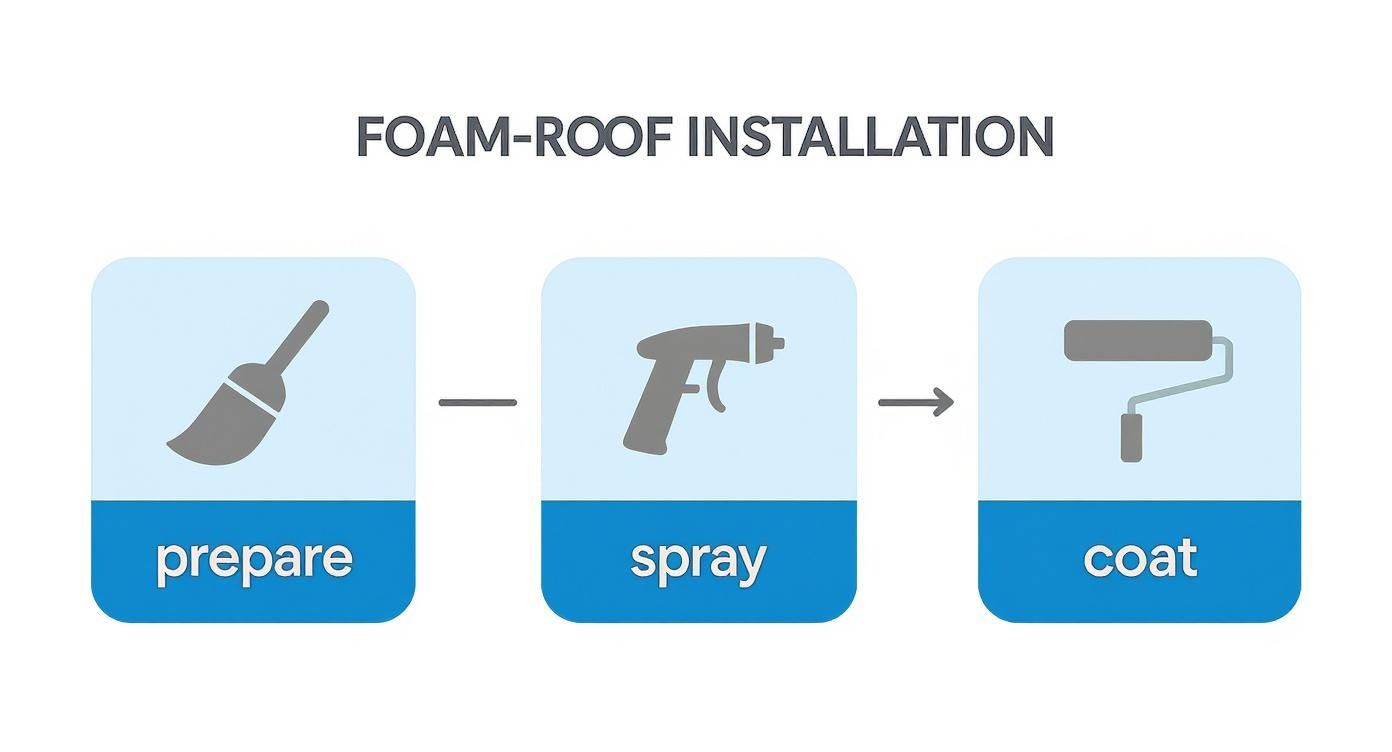
Each of these stages is absolutely critical to creating a seamless, durable roof that performs for decades, which is why professional application is so important.
Calculating the Total Cost of Ownership
The financial perks don't stop with energy savings. Because an SPF roof is applied as a seamless, solid layer, it gets rid of the most common weak spots found in other roofs—the seams and fasteners. That means you’ll be dealing with far fewer leak repairs and maintenance calls.
On top of that, a simple recoat of the protective layer every 15-20 years can extend the roof's life for 50 years or more. This lets you completely sidestep the massive cost and disruption of a full tear-off and replacement down the road.
When you crunch the numbers—factoring in the energy savings, the minimal maintenance, and the incredibly long lifespan—the total cost of owning an SPF roof is often significantly lower than conventional roofing systems over a 20 or 30-year timeframe.
This isn't just a niche opinion; the market is voting with its dollars. The spray polyurethane foam (SPF) roofing market was valued at about USD 3.5 billion in 2024 and is on track to grow by roughly 6.9% annually, hitting USD 5.7 billion by 2031. That kind of growth shows a clear industry shift towards roofing solutions that are built to last and save energy.
For homeowners, coupling an energy-efficient roof with additional strategies to reduce energy consumption in their home can truly maximize savings. It’s a powerful one-two punch for lowering your utility bills for good.
Maintenance and Extending Your Foam Roof Lifespan
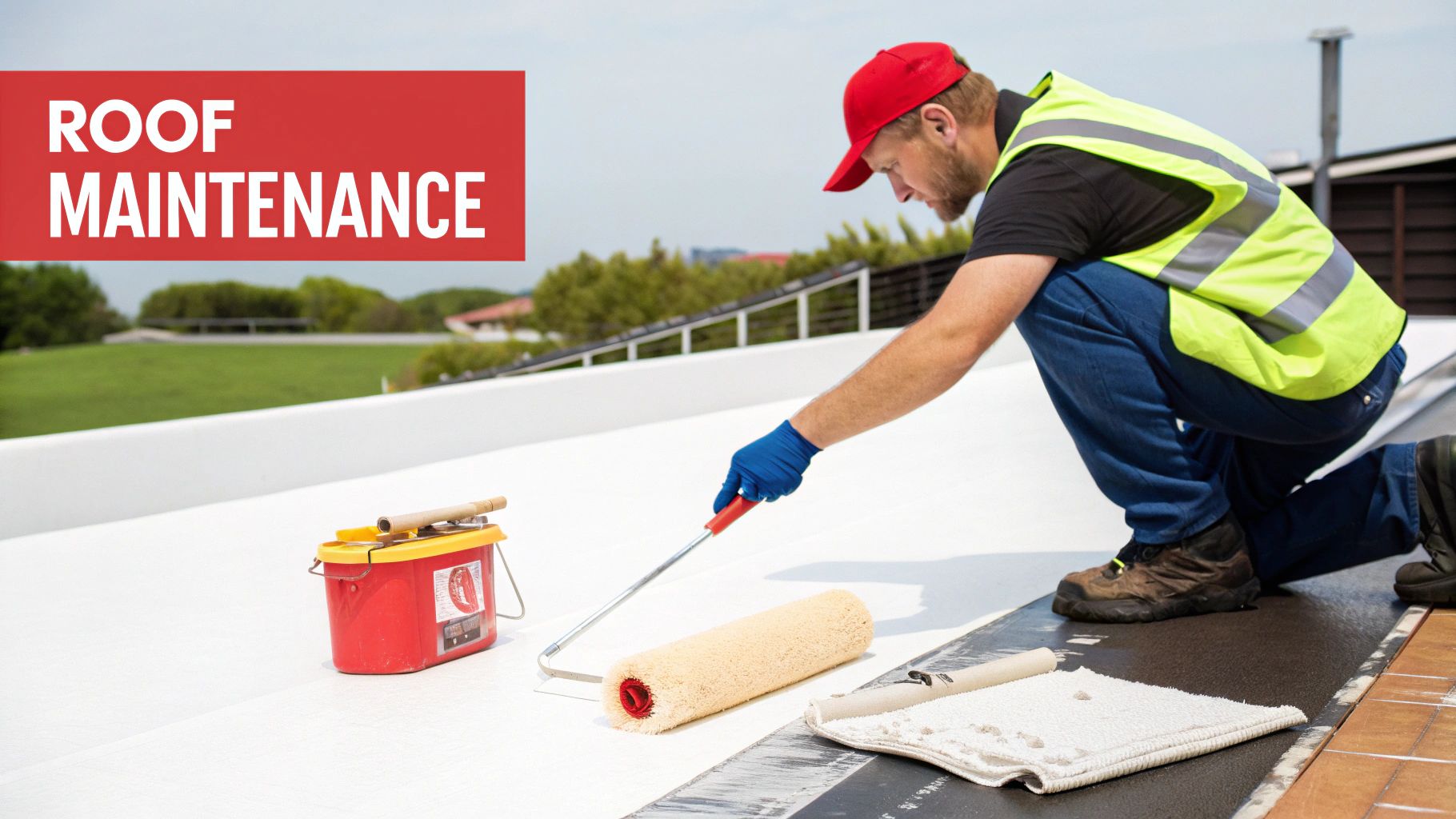
A polyurethane foam roof is a serious long-term asset, but its incredible durability isn't a "set it and forget it" deal. The good news? Keeping an SPF roof in peak condition is surprisingly straightforward and won't break the bank.
With a little proactive care, you can easily see your foam roof perform flawlessly for well over 50 years. The whole secret is catching small issues before they have a chance to become big headaches. This ensures the foam core stays protected and keeps doing its job for decades to come.
Why Regular Inspections Are Your Best Friend
Think of inspecting your roof like a routine physical for your building—it’s all about prevention. It’s always cheaper and easier to head off a problem than to fix it after the fact. For foam roofs, inspections are simple. Plan on doing a walkthrough at least twice a year, usually in the spring and fall after the worst of the weather has passed.
Here's what you or your roofing pro should be looking for:
- Punctures or Dents: Keep an eye out for small cuts or indentations. These are often caused by dropped tools, heavy foot traffic, or debris tossed around during a storm.
- Blisters or Cracks: Look closely at the protective top coat. Any signs of blistering, peeling, or cracking can be an early warning of weathering or moisture trying to get in.
- Debris and Proper Drainage: Make sure the roof is clear of leaves, branches, or any other gunk. Clogged drains are a primary cause of pooling water, which is something you want to avoid.
The Magic of Simple Repairs and Recoating
One of the standout features of an SPF roof is just how easy it is to fix. If you find a small puncture, the repair is no big deal. A professional will simply clean the area, apply a bit of sealant or foam to fill the void, and then coat the patch to seamlessly blend it back into the roof's protective barrier.
The single most important maintenance step is recoating the roof every 10 to 15 years. This protective top coat is your roof's shield against the sun's harsh UV rays. Over time, it naturally wears thin.
This simple recoating process is what makes a foam roof a truly sustainable system. Instead of a full, costly tear-off, you’re simply refreshing the protective layer, effectively resetting the clock on your roof’s lifespan for a fraction of the cost of replacement.
Proper maintenance is especially crucial if you plan on adding other systems, like solar panels. Understanding how solar panels are fixed to the roof can help you anticipate potential stress points and take the right precautions. By staying ahead of these simple maintenance tasks, your polyurethane foam roof will continue to be a durable, waterproof, and energy-saving shield for your property for a lifetime.
Frequently Asked Questions
1. How long does a polyurethane foam roof actually last?
When properly installed and maintained, a foam roof can easily last for 50 years—and often even longer. The key to its longevity lies in the protective top coat. About every 10 to 15 years, that coating needs a simple, cost-effective reapplication. This process essentially hits the reset button on your roof's lifespan, ensuring it stays a seamless, waterproof barrier for decades.
2. Can you walk on a foam roof?
Absolutely. The closed-cell foam used in roofing is surprisingly strong and dense. It has a typical compressive strength between 40-60 pounds per square inch (psi), which is more than enough to handle regular foot traffic from maintenance crews and inspectors. That said, it’s not meant to be a rooftop patio, and dropping heavy or sharp tools could cause punctures. Designated walkway pads can be installed for high-traffic areas.
3. Is polyurethane foam roofing an environmentally friendly choice?
Yes, it is considered one of the most sustainable and eco-friendly options available. Its powerful insulating ability drastically cuts down on a building's energy consumption and carbon footprint. Furthermore, since foam can often be applied over the existing roof, it reduces landfill waste from tear-offs. The long lifespan and renewable nature (through recoating) also prevent the waste associated with frequent roof replacements.
4. What is the R-value of polyurethane foam roofing?
Spray Polyurethane Foam boasts an impressive R-value, typically ranging from R-6.5 to R-7 per inch of thickness. This makes it one of the absolute best insulators you can put on your roof, directly translating to lower energy bills year-round.
5. Can SPF roofing be applied over an existing roof?
Yes, and it's one of its best features. As long as the existing roof is stable, clean, and dry, SPF can be applied directly over materials like built-up roofing (BUR), modified bitumen, metal, or even concrete. This not only speeds up the installation but also keeps old roofing material out of the landfill.