
If you have a home with a flat or low-slope roof, you might feel limited to traditional materials that often crack, leak, and absorb intense sunlight. Fortunately, there's a modern alternative changing the game for homeowners: residential TPO roofing. This high-performance system brings the durability and energy efficiency once reserved for commercial buildings right to your doorstep, protecting your home and helping to lower your cooling costs.
Key Takeaways
- Exceptional Energy Efficiency: TPO's bright white surface reflects the sun's harsh UV rays, significantly reducing the heat absorbed by your home. This lightens the load on your air conditioner and can lead to lower energy bills, a major advantage in sunny climates.
- Superior Durability and Flexibility: Engineered to resist punctures, tears, and chemical exposure, TPO is a tough material. It also flexes with your home's natural expansion and contraction, preventing cracks that can plague more rigid materials.
- Leak-Proof Seams: TPO's superpower lies in its heat-welded seams. This process fuses the membrane sheets into a single, continuous barrier, creating a bond that is often stronger than the material itself and highly resistant to leaks.
- Cost-Effective Long-Term Solution: When you consider its long lifespan (20-30 years) and the consistent energy savings, TPO provides an excellent return on investment compared to many other flat roofing options.
Uncovering TPO Roofing for Your Home
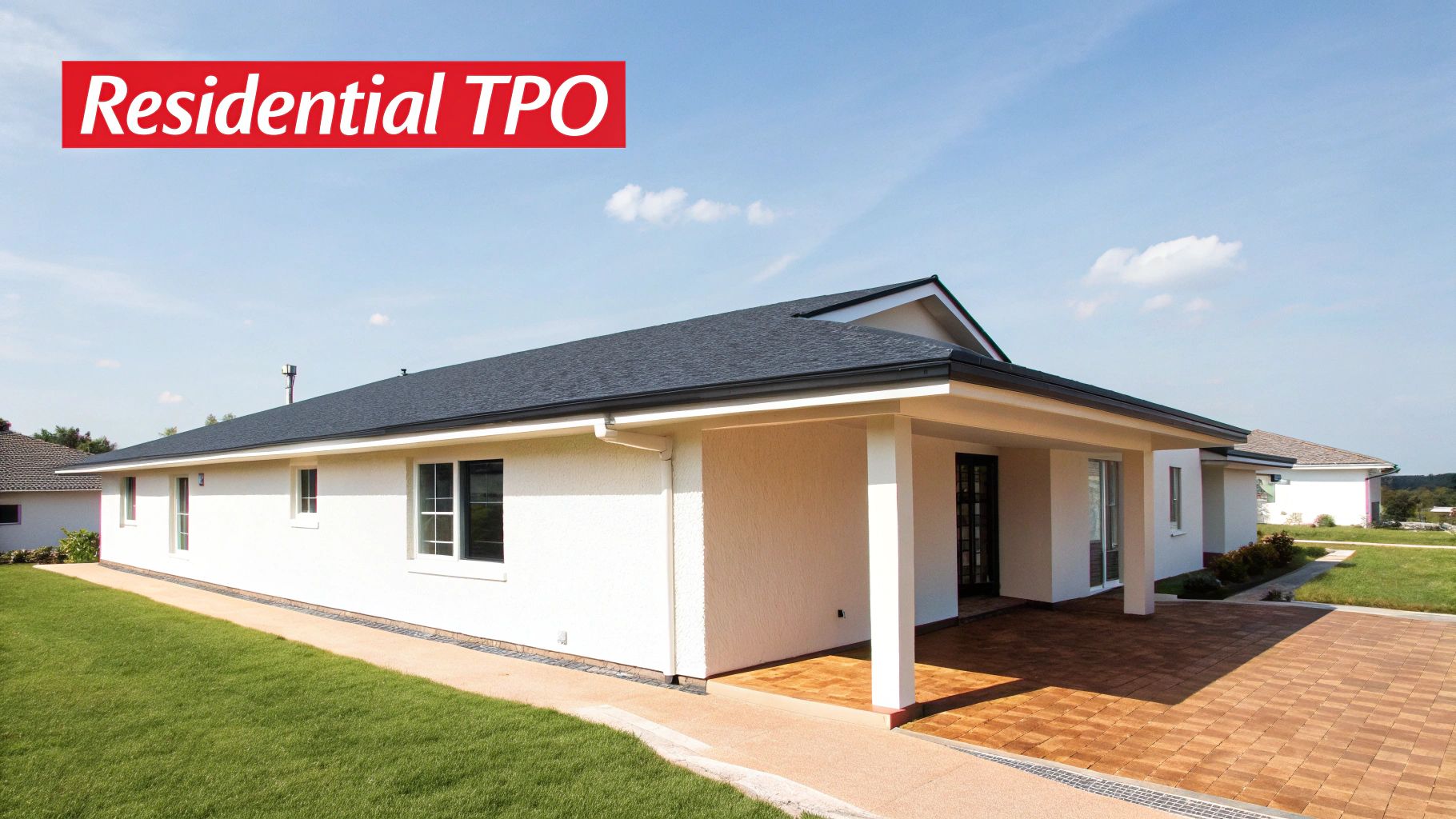
TPO is short for Thermoplastic Polyolefin, a flexible, single-ply roofing membrane that has been the go-to choice in the commercial world for years. Think about those huge, bright white roofs you see on big-box stores and warehouses—chances are, that's TPO. Now, that same tough, reliable technology is becoming a top choice for homes, especially those with the flat or low-slope roofs common in modern architecture.
The best way to picture it is not as a collection of shingles, but as a single, custom-fit protective skin for your roof. Installers roll it out in large sheets and then use hot air to weld the seams together. This process literally fuses the material into one continuous, monolithic barrier, making it incredibly resistant to leaks at its most vulnerable points.
So, What Exactly Is TPO Roofing?
To really get why residential TPO roofing is such a big deal, you have to look past the acronym and understand what it’s made of. Forget shingles or tar—think more along the lines of a high-tech, engineered fabric designed to be the ultimate shield for your home. At its core, TPO is a single, flexible sheet made from a carefully balanced blend of polypropylene and ethylene-propylene rubber.
This specific recipe is what gives TPO its "thermoplastic" magic. Imagine a material that's soft and easy to work with during installation but cures into a tough, solid surface once it's in place. This unique quality allows installers to use a special hot-air gun to weld the seams together, literally melting the overlapping sheets until they fuse into one continuous, monolithic membrane. The bond created is often even stronger than the TPO material itself, creating a seamless, waterproof barrier that’s incredibly tough for leaks to penetrate.
The Three Pillars of TPO Performance
The real power of TPO roofing comes down to three key characteristics that work in perfect harmony. These are the properties that put it a cut above many older flat roofing materials and make it such a reliable, long-term solution.
- Serious Solar Reflectivity: A white TPO roof is brilliantly reflective. It acts like a giant mirror, bouncing a huge portion of the sun's harsh UV rays away from your house before they ever have a chance to get absorbed as heat.
- Built-in Durability: This stuff is engineered to take a beating. It’s tough enough to resist punctures from falling branches, damage from chemicals like bird droppings, and the ugly growth of algae or mildew.
- Engineered to Be Flexible: Your house isn't a static block; it expands and contracts with the changing seasons. TPO is designed to move right along with it, flexing without cracking or getting brittle—a common failure point for more rigid roofing materials.
This powerful combination is precisely why TPO is one of the top Arizona single ply roofing systems—it’s practically tailor-made for our intense sun and dramatic temperature swings.
How TPO’s Makeup Benefits Your Home (and Your Wallet)
The smart engineering behind TPO roofing has a direct and positive impact on your home's comfort and your monthly bills. The biggest win, by far, is its solar reflectivity, what we in the industry call its "cool roof" capability. By deflecting so much sunlight, a white TPO roof keeps its surface temperature way down compared to a traditional dark roof that just soaks up heat and radiates it straight into your home.
What does that mean for you? It means your air conditioner doesn't have to run full-blast all day just to keep the house cool. This translates into very real energy savings, especially during our long, scorching Arizona summers. It's a major reason TPO has become a go-to for energy-conscious building projects.
The numbers don't lie. The global market for TPO roofing membranes hit $3.2 billion in 2023 and is on track to reach $5.7 billion by 2030. A huge driver of that growth is its incredible solar reflectance—some membranes bounce back 70-87% of sunlight. For homeowners, that can mean saving around 15% on cooling costs. You can dig deeper into these market trends over at strategicmarketresearch.com.
This impressive efficiency, backed by its rock-solid construction, makes residential TPO roofing a genuinely smart investment for any modern home.
TPO vs Other Flat Roofing Materials
To really see where TPO shines, it helps to put it side-by-side with other common materials you'll find on flat or low-slope residential roofs. While every material has its place, TPO often hits that sweet spot of performance, cost, and lifespan.
Here's a quick rundown of how the main players compare.
| Feature | TPO (Thermoplastic Polyolefin) | EPDM (Rubber) | Modified Bitumen |
|---|---|---|---|
| Energy Efficiency | Excellent: Highly reflective white surface significantly reduces cooling costs. | Poor to Fair: Standard black color absorbs heat; lighter colors are available but less common and more expensive. | Poor: Typically dark-colored, leading to high heat absorption and increased energy use for cooling. |
| Seam Strength | Excellent: Heat-welded seams create a permanent, monolithic bond that is incredibly strong and leak-proof. | Good: Seams are sealed with adhesive tapes or liquid primers, which can degrade over time and become a weak point. | Good: Seams are heat-fused with a torch, creating a strong bond, but one that is less precise than TPO welding. |
| Durability | Very Good: Highly resistant to punctures, tears, and chemical exposure. | Excellent: Very durable and resistant to hail and punctures due to its rubbery composition. | Good: Often has a granular surface that provides good impact resistance but can scuff or wear over time. |
| Installation | Requires skilled professionals for proper heat welding to ensure a watertight seal. | Simpler installation process that is often more forgiving than TPO. | Complex and potentially hazardous due to the use of open-flame torches during installation. |
As you can see, while materials like EPDM offer great durability, they can't touch TPO's energy efficiency. And while Modified Bitumen is a time-tested material, its installation is more complex and its seams aren't as strong as TPO's welded bonds. For many homeowners, TPO simply delivers the best all-around package.
Weighing the Pros and Cons of TPO Roofing for Your Home
No roofing material is perfect for every situation, and TPO roofing is no different. It brings some game-changing benefits to the table, especially for homes with flat or low-slope roofs, but it's crucial to look at the whole picture. A smart decision comes from weighing the good against the not-so-good.
This honest look will help you figure out if TPO is the right long-term move for your home. We'll get into everything from its amazing energy efficiency to why a top-notch installation is absolutely critical.
The Clear Advantages of Choosing TPO
For many homeowners, the upsides of a TPO system are hard to ignore, particularly in sunny climates where cooling costs are a real headache. This material was specifically engineered to solve many of the chronic problems that plague older flat roof systems.
1. You'll See Real Energy Savings
This is TPO’s claim to fame, and for good reason. A white TPO membrane acts like a giant mirror for the sun. Instead of soaking up all that heat and baking your house, it reflects a huge chunk of UV radiation right back into the sky.
This "cool roof" effect gives your air conditioner a much-needed break. It doesn't have to run as long or as hard to keep your home comfortable, which often translates directly into lower monthly energy bills. Over the life of the roof, those savings can really add up.
2. Watertight Seams That Last
A roof is only as strong as its weakest link, and on most flat roofs, that's the seams. Tapes and glues can break down over years of exposure, eventually letting water in. TPO tackles this head-on with a process called heat welding.
Using a special hot-air welder, installers essentially melt the overlapping TPO sheets together. This creates a single, unified membrane across your entire roof. The welded seam is often even stronger than the material itself, turning a common failure point into a source of strength.
3. Tough, Flexible, and Built to Endure
Modern TPO is designed to be incredibly resilient. It stands up well to punctures from falling branches, resists damage from common chemicals, and doesn't support mold or algae growth.
On top of that, it stays flexible. Your house naturally expands and contracts with changing temperatures, and TPO can move with it without cracking or turning brittle.
The Potential Downsides to Consider
While TPO has a lot going for it, you need to be aware of the challenges. These aren't necessarily deal-breakers, but they’re things you need to plan for.
1. Installation is Strictly for the Pros
Putting on a TPO roof correctly is a highly technical job. It demands specific training and some pretty expensive equipment, especially that hot-air welder. If a weld is too hot or not hot enough, you get a weak spot that can compromise the whole roof. This is why hiring a certified and experienced installer is non-negotiable. This is not a weekend DIY project.
2. It Can Be Punctured During Installation
Once it's down, TPO is tough. But during the installation process, the membrane can be vulnerable to punctures from dropped tools, stray screws, or even heavy work boots. A professional crew knows how to work carefully to avoid this, but it highlights the need for a team that is meticulous from start to finish.
3. It's Still the "Newer Kid on the Block"
TPO has been the go-to for commercial buildings for decades, but it doesn't have the same long history in residential settings as something like EPDM rubber, which has been around for over 60 years. While today's TPO is far superior to early versions, some homeowners simply prefer the comfort of a material with a longer residential track record.
That said, confidence in TPO is growing fast. The global market for TPO roofing is on track to hit around USD 4.2 billion by 2032. This growth is fueled by homeowners wanting sustainable, energy-saving options. North America is leading the charge, thanks to a combination of new construction and a push for greater energy efficiency. You can dig deeper into these TPO market trends to see the data for yourself.
At the end of the day, choosing TPO is an investment in a high-performance system that pays you back with lower energy bills and fewer worries. As long as you understand its strengths and its very specific installation needs, you can make a great choice for your home.
How TPO Roofing Is Installed on a Home
Seeing a TPO roof go on a house is pretty different from watching a crew lay shingles. It’s a technical craft that requires specialized tools and a whole lot of precision. Honestly, the quality of the installation is what separates a roof that’ll last you decades from one that causes headaches down the road.
Everything starts with a clean slate. The crew has to meticulously prep the roof deck, which for most homes means tearing off all the old roofing material right down to the wood. This is a crucial step because it lets them find and fix any rot, water damage, or weak spots. You can't build a great roof on a shaky foundation.
Laying the Groundwork: Insulation and Membrane
With the deck clear and solid, it's time for the insulation. Crews lay down large, rigid boards—usually a material like polyisocyanurate (polyiso)—across the entire roof. This isn't just about R-value and keeping your home cool; it also provides a perfectly smooth, stable surface for the TPO membrane to rest on. These boards are fastened securely to the deck, creating a uniform plane.
Next up, they roll out the big, white TPO sheets. They’re carefully positioned to make sure there's enough overlap between sections, typically a few inches. From there, the membrane has to be secured, and there are two main ways to do it:
- Mechanically Fastened: This is a very common method. The crew drives special screws and plates through the membrane right at the seam, fastening it directly to the roof deck. The next sheet then overlaps this line of fasteners, hiding them before the seams are welded shut.
- Fully Adhered: For this approach, a powerful bonding adhesive is spread across the insulation boards. The TPO membrane is then rolled right into the glue, creating a solid, uniform bond across the entire roof surface.
This infographic breaks down the essential steps of a professional TPO installation, from the initial tear-off to the final welding.
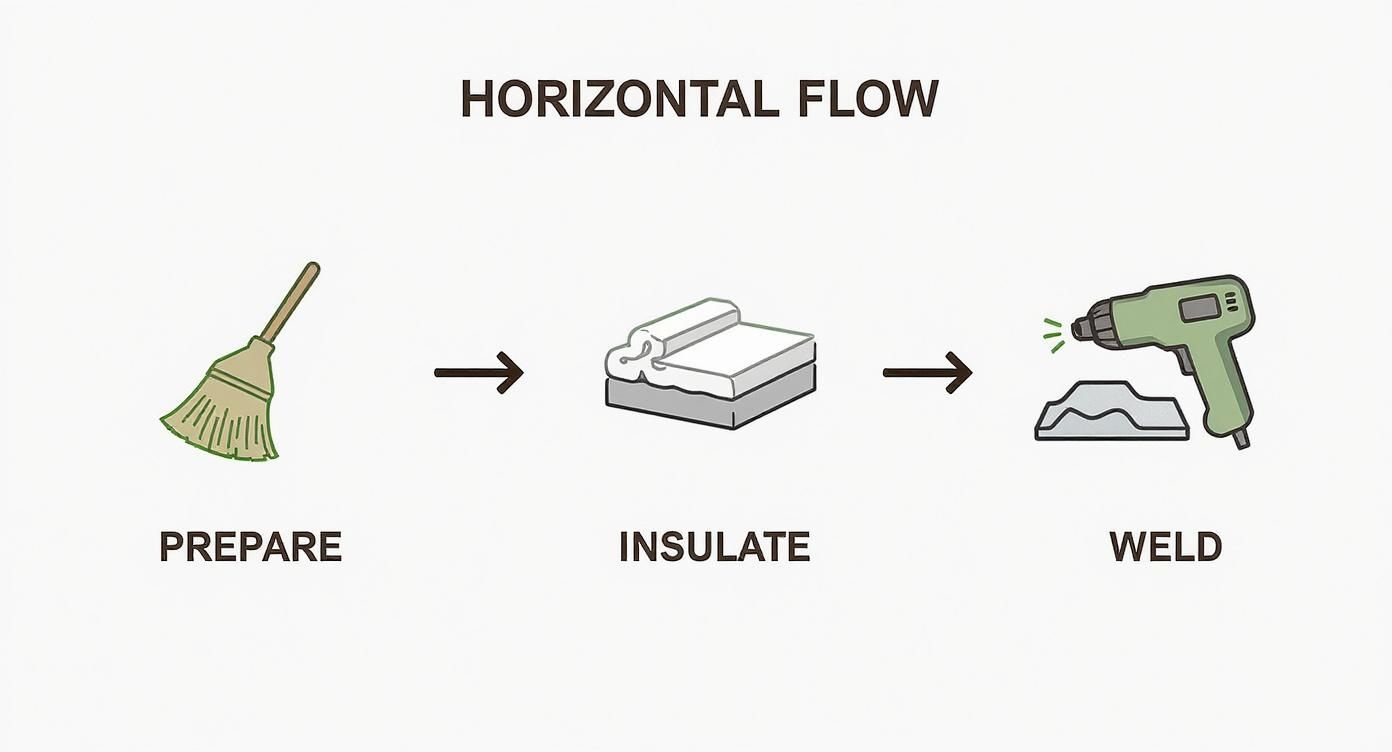
As you can see, each layer methodically builds on the last to create a tough, integrated system.
The Most Critical Step: Heat-Welding the Seams
Here’s where the real magic happens, and it’s why you absolutely cannot cut corners on hiring an experienced crew. The seams are where a TPO roof becomes truly waterproof.
Installers use a hot-air gun, a specialized tool that blasts air at temperatures between 400 and 600 degrees Celsius. As this superheated air passes over the overlapped TPO sheets, it melts the top and bottom layers. Right behind the welder, a small silicone roller presses the two molten pieces together, permanently fusing them into a single, monolithic piece of plastic.
"The integrity of a TPO roof lives and dies by the quality of its welds. An experienced installer knows how to adjust their welder's temperature and speed based on ambient conditions to create a perfect, continuous seal. It's a skill that takes years to master."
When done right, a welded seam is actually stronger than the TPO membrane itself. It creates a seamless barrier that makes it virtually impossible for water to find a way in.
To finish the job, the crew installs flashing around every pipe, vent, and skylight, and along the entire perimeter of the roof. These detail pieces are also heat-welded directly to the main membrane, sealing every last potential leak point. After a final inspection and cleanup, you’re left with a clean, durable, and highly efficient roof.
The True Cost and Maintenance of a TPO Roof
https://www.youtube.com/embed/d9hv7Vlk-GI
Breaking Down the Investment in a TPO Roof
When you're looking at getting a residential TPO roofing system, the price tag you see upfront is really just the beginning of the story. It's better to think of it as an investment in your home's long-term health and efficiency. The total cost gets shaped by a few key things that play into both the initial bill and what you get back over time.
The thickness of the TPO membrane itself is a big factor. Measured in "mils," a thicker 60-mil sheet will cost more than the standard 45-mil option, but you're paying for extra durability and a longer life. Of course, professional labor is a major slice of the pie, as it takes real skill and specialized equipment to get a TPO installation just right.
But the real number to watch isn't on that first invoice—it's the savings that add up over the years. A white TPO roof is so good at reflecting sunlight that it can genuinely lower your cooling bills, giving you a return on your investment summer after summer.
Lifespan and Long-Term Value
With a quality installation and a little bit of care, a TPO roof can easily protect your home for 20 to 30 years. That kind of longevity makes it a smart, durable asset, not just another repair job.
A few things will determine just how long it lasts. Obviously, a thicker membrane installed correctly in a place without extreme weather swings is going to hold up better. But honestly, the single most important factor is the quality of the installation—those heat-welded seams are what make or break the system and prevent problems down the road.
You don't just have to take my word for it; the market tells the same story. TPO roofing is booming globally, with the market valued at around $2.65 billion in 2025 and projected to grow by 5.2% every year through 2033. Why? Because builders and homeowners are catching on to its lightweight strength, weather resistance, and incredible energy efficiency.
A Simple Maintenance Checklist to Protect Your Investment
The great thing about a TPO roof is that it doesn't need constant babysitting. A little proactive care goes a very long way in keeping it looking and performing its best, helping you squeeze every bit of value out of its long lifespan.
Just follow a simple routine twice a year, and you'll be in great shape.
- Clear Away Debris: In the spring and fall, take some time to gently clear off any leaves, branches, or dirt. Piled-up debris can trap moisture and lead to stains or other issues.
- Inspect All Flashings: Take a close look at the seals around every vent, pipe, and skylight. These penetration points are the most common culprits for leaks, so making sure they're tight is critical.
- Gentle Cleaning for Peak Performance: If the roof starts looking a bit grimy, a quick wash with a soft-bristle brush and a mild, eco-friendly cleaner will bring back that bright white, reflective surface.
For a more detailed game plan, feel free to check out our complete roof maintenance checklist. While this keeps your TPO roof in prime condition, it's also helpful to see the bigger picture of homeownership costs. Resources on understanding overall property maintenance costs can provide a broader perspective, ensuring your roof—and your entire home—delivers value for decades to come.
Why TPO Is a Smart Choice for Arizona Homes
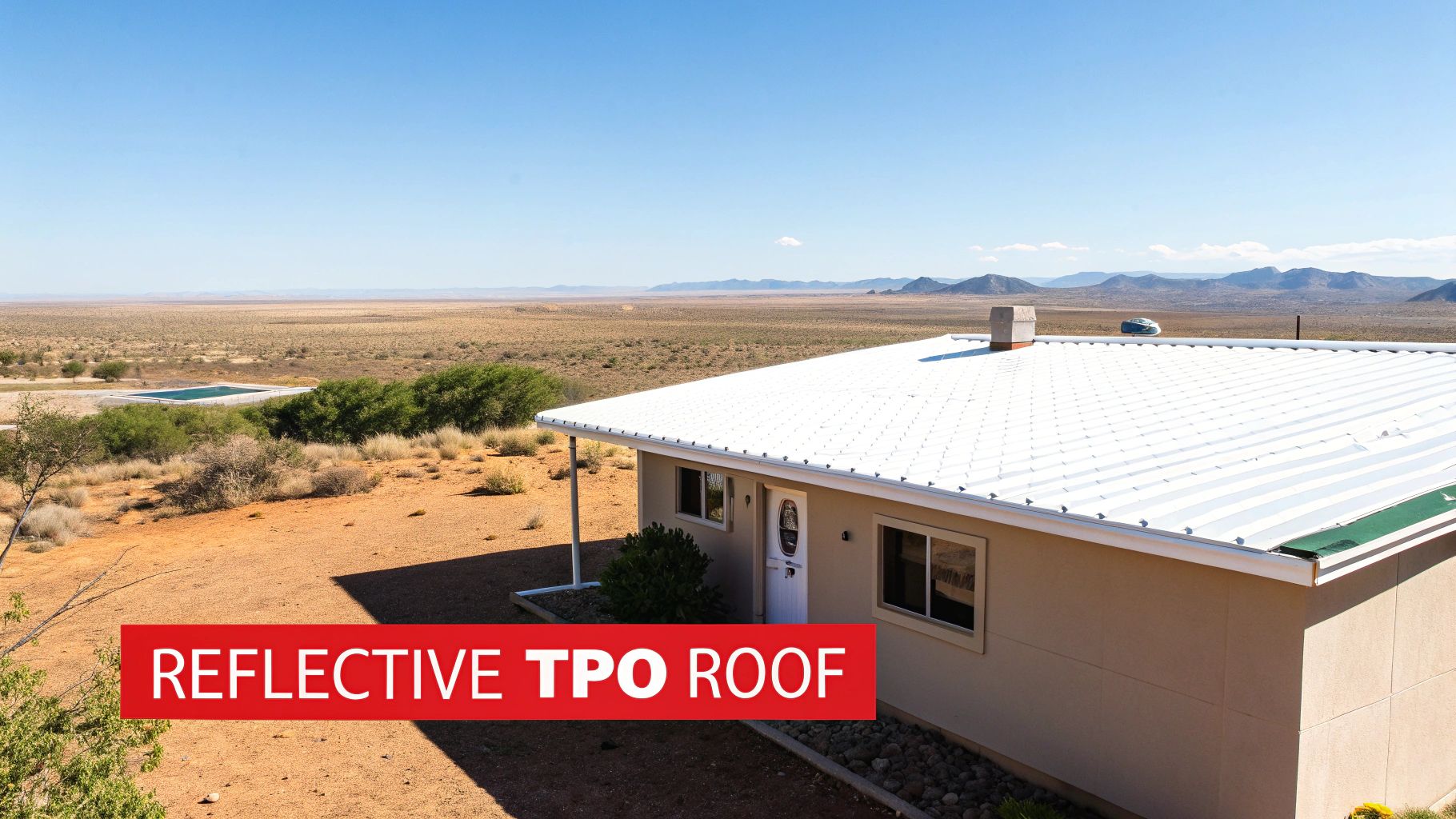
The Arizona sun doesn't play games, and your roof is on the front line of that relentless battle every single day. For homes with flat or low-slope designs, picking the right material isn't just about looks—it's about survival and efficiency. This is where residential TPO roofing really shines, as it's practically tailor-made for our harsh desert climate.
Its biggest advantage against the heat is its brilliant white, reflective surface. Think of it as a massive shield for your home. While dark asphalt or tile roofs soak up solar radiation and pump that heat right into your attic, a white TPO membrane does the exact opposite. It bounces the vast majority of UV rays back into the atmosphere, keeping the roof itself dramatically cooler.
A cooler roof means less heat getting into your home, which takes a huge load off your air conditioning unit. This leads directly to lower energy use and smaller utility bills, especially during those brutal summer months when cooling costs go through the roof.
On top of a cool roof, homeowners can find even more savings by exploring easy tips to make your home energy efficient. Combining strategies creates a powerful defense against high energy bills.
Built Tough for Monsoon Season
Arizona’s climate isn’t just about the heat. We also have to contend with the powerful and unpredictable monsoon season. These storms unleash heavy, wind-driven rain that can find the tiniest weakness in a roof, especially at the seams.
This is another area where TPO stands out. Its seams are heat-welded, fusing them together into one solid, continuous sheet. Unlike taped or glued seams that can break down and peel apart after years of thermal stress, TPO’s welded bonds are incredibly strong and watertight. This creates a monolithic barrier that’s perfect for fending off the kind of penetrating moisture monsoons are known for, preventing leaks and costly water damage.
Standing Up to Constant UV Exposure
Finally, that same intense sunlight that heats our homes also blasts roofing materials with damaging ultraviolet radiation. Over time, UV rays can make materials like asphalt brittle, causing them to crack and fall apart, which shortens their lifespan considerably.
TPO, on the other hand, is specifically formulated with UV inhibitors that help it resist this breakdown. Its chemical makeup allows it to handle constant sun exposure without losing its flexibility or protective qualities. This built-in resistance makes it a durable, long-lasting solution that’s perfectly suited for Southwest homeowners. As you weigh your choices, understanding TPO is a key step in discovering the top efficient roofing options to lower your energy bills.
Frequently Asked Questions About Residential TPO Roofing
What is residential TPO roofing?
Residential TPO (Thermoplastic Polyolefin) roofing is a single-ply membrane system popular for homes with flat or low-slope roofs. Originally used on commercial buildings, it is prized for its durability, energy-saving reflective surface, and waterproof heat-welded seams that create a seamless barrier against leaks.
How long does a residential TPO roof last?
A professionally installed TPO roof typically lasts between 20 and 30 years. The final lifespan depends on several factors, including the thickness of the membrane (e.g., 45-mil vs. 60-mil), local climate conditions, the quality of the installation, and performing regular maintenance.
Is TPO roofing a good choice for houses?
Absolutely. TPO is an excellent choice for houses, especially those with modern, flat, or low-angled rooflines. Its ability to reflect sunlight helps keep the interior cooler, reducing A/C costs. Its seamless, welded design also offers superior protection against leaks compared to many older flat roofing methods.
Can you walk on a TPO roof?
Yes, you can walk on a TPO roof for routine maintenance and inspections. However, it's best to wear soft-soled shoes to avoid scuffing the surface or causing punctures. Avoid dropping sharp tools or dragging heavy equipment across the membrane to protect its integrity.
What colors does TPO roofing come in?
While TPO is available in several colors, the most common for residential use are white, grey, and tan. White is by far the most popular choice, especially in sunny climates, because its high solar reflectivity provides the greatest energy savings by keeping the roof and the home beneath it cooler.
Is TPO roofing an eco-friendly choice?
Yes, TPO is considered one of the more environmentally friendly flat roofing materials. Its primary green benefit is its energy efficiency, which reduces a home's cooling-related energy consumption. Additionally, TPO is a recyclable material at the end of its service life, which helps reduce landfill waste.