
Choosing a new roof is one of the most significant investments you'll make in your home. For homeowners seeking a blend of modern aesthetics, unparalleled durability, and long-term value, standing seam roofing has become the gold standard. Unlike traditional materials that require frequent replacement, a standing seam system offers a permanent solution designed to withstand harsh weather, improve energy efficiency, and elevate your home's curb appeal for decades to come.
This comprehensive guide will walk you through everything you need to know, from how the technology works to what you can expect in terms of cost and performance.
Key Takeaways
- Exceptional Longevity: Standing seam metal roofs are built to last 50 years or more, far surpassing the 15-20 year lifespan of typical asphalt shingles.
- Superior Weather Resistance: The interlocking panel design with concealed fasteners creates a nearly impenetrable barrier against high winds, heavy rain, and hail.
- Energy Efficiency: Many standing seam systems feature "cool roof" coatings that reflect solar heat, significantly reducing attic temperatures and lowering air conditioning costs, especially in hot climates.
- Higher Upfront Cost, Lower Lifetime Cost: While the initial investment is greater than for asphalt shingles, the long lifespan, minimal maintenance, and energy savings make it a more cost-effective choice over the long term.
- Professional Installation is Crucial: This is not a DIY project. The performance and longevity of a standing seam roof depend entirely on a precise, professional installation by experienced contractors.
The Rise of a Smarter Roofing Solution
Imagine a roof that does more than just keep the rain out. What if it could also boost your home's value, slash your energy bills, and look fantastic for half a century? That's the promise of a standing seam roofing system. It's a serious upgrade from the roofing materials most of us are used to, delivering top-tier performance with a clean, modern look.
More and more, homeowners are getting tired of the endless cycle of replacing asphalt shingles every 15-20 years. They're looking for a permanent solution, and that's where standing seam metal roofing comes in. It's built to last, giving you real peace of mind through decades of whatever the weather throws at it.
Why It's a Game-Changer
- Built to Last: A standing seam metal roof can easily last 50 years or more, blowing past the lifespan of typical asphalt shingles.
- Smarter Investment: Yes, the upfront cost is higher. But with its incredible longevity, minimal maintenance, and energy efficiency, it pays for itself over time.
- Sharp, Modern Look: The clean lines and hidden fasteners create a sleek, premium finish that works with almost any style of home.
- Tough as Nails: The way the panels lock together forms a nearly impenetrable shield against wind, rain, and hail.
Think of it as a high-performance zipper for your roof. The system uses vertical metal panels that join together in raised seams, well above the roof's surface. This clever design hides all the fasteners, protecting them from rust and weather while eliminating the thousands of tiny holes that can cause leaks in roofs with exposed screws.
This photo really captures how the crisp, vertical lines of a standing seam roof give a home a sharp, contemporary look.
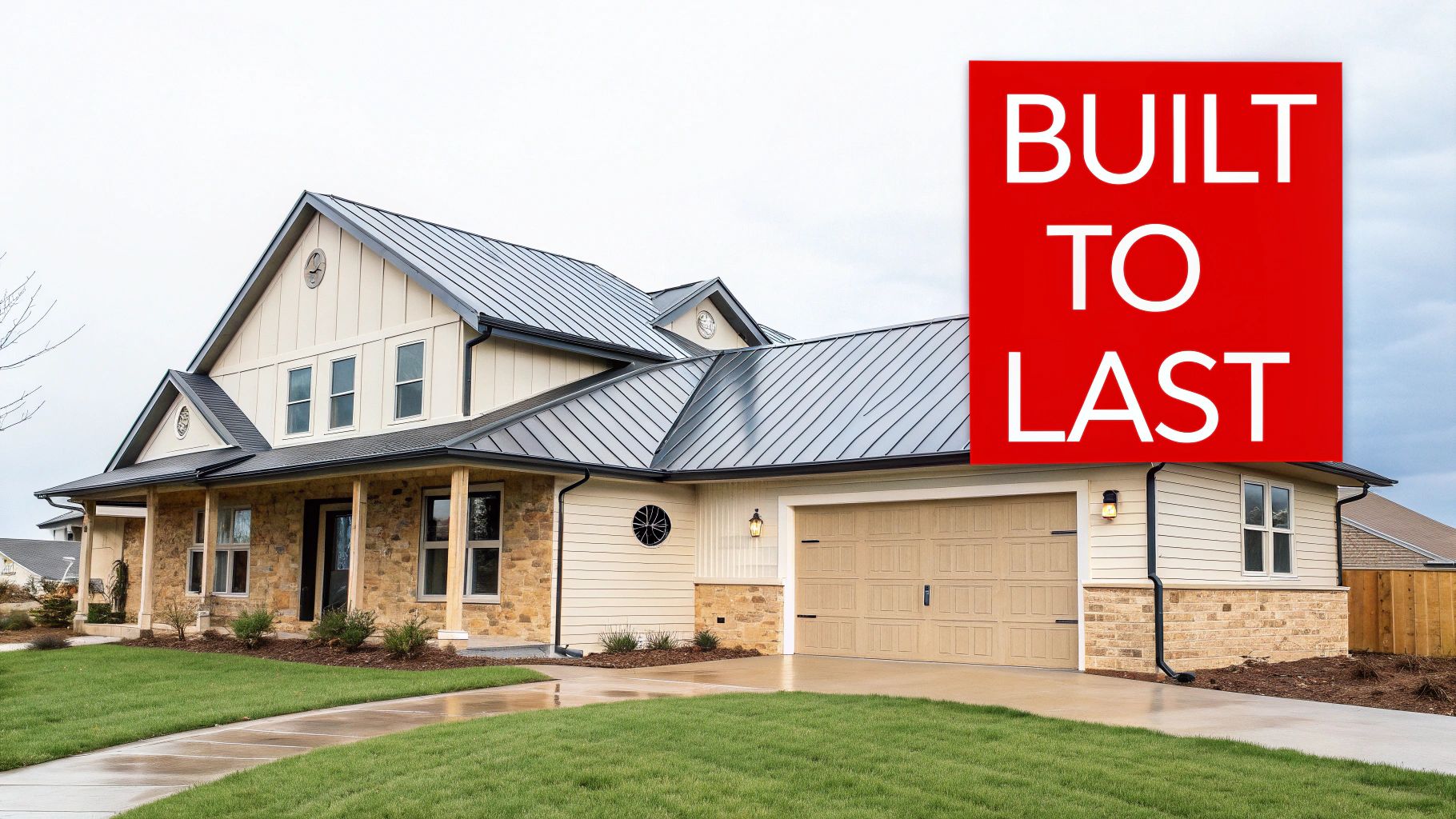
The result is a smooth, seamless appearance that really makes a home's architectural details pop.
It's Not Just a Niche Product Anymore
This isn't just a trend; it's a fundamental shift in what people want for their homes. The numbers back it up. The global metal roofing market hit USD 22.55 billion in 2024 and is expected to climb to USD 32.83 billion by 2032.
Standing seam systems are a huge part of that growth, signaling a clear move toward building materials that are more durable, efficient, and sustainable. If you're curious about the data, you can dig into the full report on metal roofing market trends to see where things are headed.
How a Standing Seam Roof Actually Works
To really get what makes a standing seam roofing system so darn good, you have to look at how it’s put together. On a traditional roof, you have thousands of nails or screws punched right through the shingles. Every single one is a potential spot for a future leak. Standing seam flips that entire concept on its head.
The panels are designed to interlock with each other above the roof deck, hiding the fasteners completely. This simple but brilliant design is the secret sauce behind its incredible weather resistance.
The "seam"—that raised rib where two panels meet—is the real hero here. It lifts the connection point up and away from the water line. This means rain, snow, and ice flow right off your roof without ever getting near a fastener. It’s an elegant solution to an age-old problem.
Snap-Lock vs. Mechanically Seamed Panels
Now, there are two main ways these panels come together, and picking the right one depends on your home’s design and our Arizona climate.
Think of Snap-Lock Panels like a high-end Ziploc bag. One side of the panel has a "male" leg and the other has a "female" leg, and they're designed to snap together with a firm push. You get a solid, weather-tight seal without needing special tools, which makes the installation process quicker and can help keep labor costs down. It’s a fantastic choice for most residential homes.
Mechanically Seamed Panels are the next level up—think of them like a sealed can of soup. The panels are laid together, and then a special tool, often called a robotic seamer, runs along the seam to bend and crimp the metal together. This creates an incredibly strong, monolithic seal that offers the absolute best protection against extreme wind and pooling water.
This diagram shows you exactly what's happening at the seam for both types.
You can see the snap-lock just clips in, while the mechanical seam is physically folded over for that permanent, watertight bond.
Because they are so incredibly watertight, mechanically seamed roofs are our go-to for buildings with very low slopes. When you have a roof that's nearly flat, you have to assume water might sit for a while, and a mechanical seam gives you the peace of mind that nothing is getting through.
To make it even clearer, here’s a quick rundown of the main differences between the two.
Comparing Standing Seam Panel Types
| Feature | Snap-Lock Panels | Mechanically Seamed Panels |
|---|---|---|
| Installation | Panels "snap" together. Faster and simpler installation. | Requires a special seaming tool to crimp the panels. |
| Labor Cost | Generally lower due to speed. | Higher due to the extra seaming step. |
| Best For | Most residential roofs with a standard pitch (3:12 or greater). | Low-slope roofs, commercial buildings, and high-wind areas. |
| Performance | Excellent weather resistance and wind uplift protection. | The highest level of protection against wind and water. |
Ultimately, both are fantastic systems. The choice really comes down to matching the panel's strengths to your specific roof and budget.
The Core Materials That Define Performance
The type of seam is only half the story; the metal itself plays a huge role in your roof’s performance, look, and lifespan.
- Galvanized Steel (G-90): This is the workhorse of the metal roofing world. It’s a strong steel base coated in zinc (the G-90 rating tells you it's a thick, high-quality coating) to prevent rust. It gives you an amazing mix of toughness, longevity, and value.
- Aluminum: Incredibly lightweight and naturally 100% rust-proof, aluminum is a great pick for coastal areas. Even here in Arizona, its lighter weight can be an advantage, putting less stress on your home's structure.
- Copper: This is the top of the line, no question. A copper roof is a lifetime investment that develops a gorgeous blue-green patina over the years. It's the most expensive option by a wide margin, but nothing beats its longevity and timeless, classic look.
It's no surprise that more and more homeowners are choosing these systems. The standing seam market is booming, valued between US$636 million to US$659 million in 2024. Experts predict it will climb to US$839 million by 2031, which just goes to show that people are willing to invest in a roof that lasts. You can read more about the growing standing seam market trends if you want to dig into the data behind this shift.
Weighing the Pros and Cons
Like any major home investment, choosing a new roof means you need to look at it from all angles. A standing seam roofing system is a serious upgrade, so it's smart to get a clear picture of the good and the bad before you commit. This will help you figure out if it’s truly the right long-term solution for your home.
The upsides are pretty compelling, especially when you think about long-term value and performance. These are the big reasons homeowners decide the initial investment is worth it.
The Clear Advantages of Standing Seam
The first thing that grabs most people's attention is the lifespan. A properly installed standing seam metal roof can easily last 50 years or more. In many cases, it’s a "one-and-done" roof—you’ll likely never have to think about replacing it again.
That durability also means it's tough as nails against the elements. The interlocking panel design creates an incredibly strong shield against high winds, which is a huge relief during Arizona's monsoon season. On top of that, metal is naturally fire-resistant and stands up to hail damage in a way asphalt shingles just can't.
Energy efficiency is another massive win. Many standing seam panels come with "cool roof" coatings specifically designed to reflect the sun's harsh rays instead of absorbing them. This can dramatically lower the temperature in your attic, giving your air conditioner a much-needed break and trimming down your cooling costs.
This diagram shows a great visual breakdown of the two main panel types, which really helps in understanding how the system works.
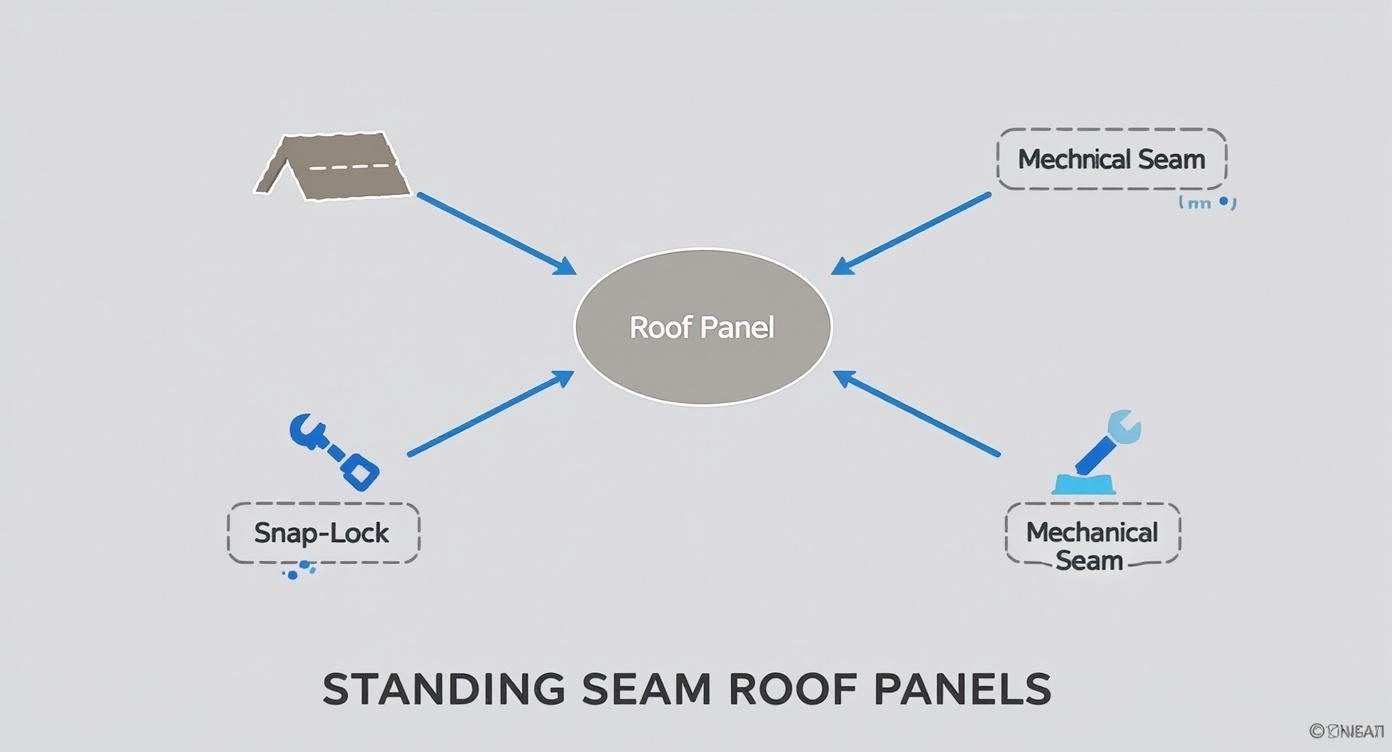
You can see how snap-lock panels are designed for a simpler installation, while the mechanically seamed panels are all about creating the tightest possible seal against the weather.
Addressing the Common Concerns
Of course, no roofing system is perfect, and it’s important to be realistic about the potential downsides. The biggest hurdle for most people is the higher upfront cost compared to traditional materials like asphalt shingles.
While the initial price tag is steeper, it’s more accurate to see it as an investment, not just an expense. When you factor in the 50+ year lifespan, the minimal repair costs, and the energy savings, the total life-cycle cost is often much lower than replacing a shingle roof two or even three times over that same period. For a deeper dive, you can explore more about the metal roofing benefits and drawbacks in our complete guide.
Another thing you hear is the old myth about metal roofs being noisy in the rain. That idea usually comes from thinking about old barns where the metal was slapped right onto open framing. Modern home installations are a completely different ballgame.
Your standing seam roof is installed over a solid roof deck, a layer of underlayment, and sits above all of your attic insulation. This combination of materials deadens the sound of rainfall beautifully, making it just as quiet—if not quieter—than a shingle roof. Forget the loud clang; it’s more of a gentle pitter-patter.
Finally, the quality of the installation is absolutely critical. This is not a weekend DIY project. A standing seam system requires special tools and a deep understanding of how metal expands and contracts to get a permanent, weather-tight seal.
- Installer Experience: You have to go with a contractor who has proven, hands-on experience with these specific systems.
- Proper Tools: The crew needs specialized seaming tools and equipment to get that professional, leak-proof finish.
- Attention to Detail: The flashing around chimneys, vents, and roof valleys has to be custom-fabricated and installed with precision.
Hiring the right installer is non-negotiable if you want the roof to perform as promised and keep your warranty intact. As you weigh the pros and cons, it also helps to think about the bigger picture of roof repair vs. replacement to make sure you're making the best choice for your home's current needs.
Performance in Demanding Climates Like Arizona
A roof’s real test isn’t a gentle spring shower; it's how it stands up to the absolute worst Mother Nature can throw at it. For those of us in Arizona, that means dealing with a brutal summer sun, fierce monsoon winds, and the occasional hailstorm that can shred a lesser roof to pieces. This is where a standing seam roofing system really shines, offering a level of toughness that’s perfectly matched for our demanding desert climate.
This isn't just a niche product; it's a rapidly growing segment of the entire industry. The global market for standing seam roofing hit a staggering USD 11.53 billion in 2024, largely because people are actively seeking out durable, energy-efficient materials that can take a beating. You can find more details on the expansion of the standing seam market in recent industry reports.
Beating the Arizona Heat
In Arizona, the sun is public enemy number one for any roof. Traditional asphalt shingles just bake in the heat, soaking up solar radiation and turning your attic into a sweltering oven. That puts a huge strain on your AC unit and sends your energy bills through the roof.
Standing seam metal roofing offers a much smarter approach.
Think about it like getting dressed on a 110-degree day. An asphalt shingle roof is the equivalent of wearing a heavy, black wool sweater—it absorbs and traps every bit of heat. A light-colored standing seam roof, on the other hand, is like wearing a lightweight, white t-shirt. It reflects a huge portion of the sun’s rays away from your house, keeping the attic and the rest of your home significantly cooler. This "cool roof" effect isn't just a gimmick; it directly translates to real savings and a more comfortable living space.
This modern Arizona home is a perfect example, blending clean, contemporary style with the high performance of a standing seam system.
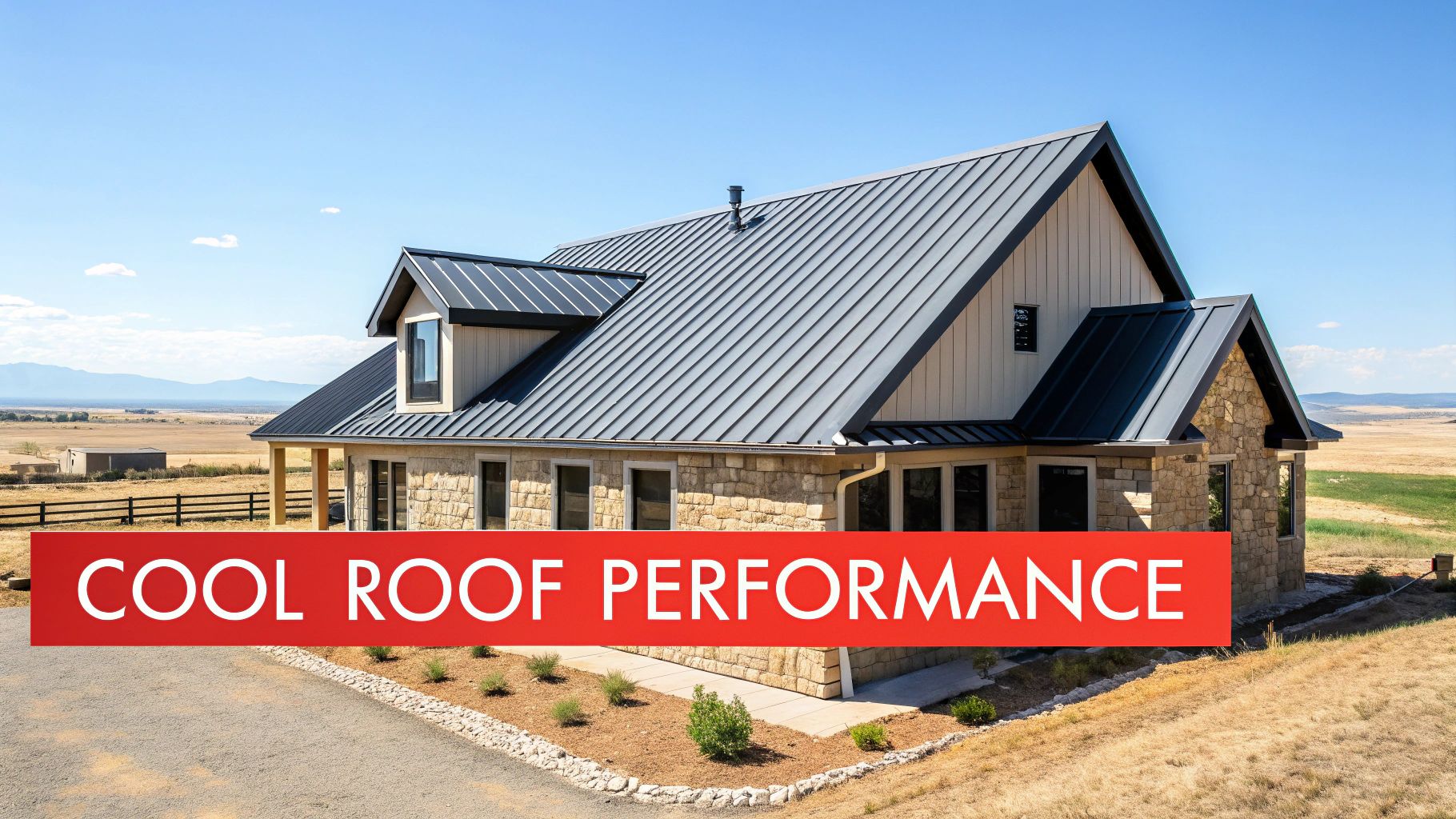
This ability to fight back against the sun is a game-changer in a climate where cooling costs are one of the biggest household expenses.
Standing Strong Against Monsoon Winds
When the monsoons roll in, the wind can be absolutely destructive. It’s notorious for catching the edges of traditional shingles, lifting them, and peeling them right off, which instantly creates a path for water to get in. A standing seam roof is built completely differently.
The panels are designed to interlock, creating a single, unified surface with no exposed edges for the wind to grab onto. Each panel is securely fastened and locked to its neighbors, resulting in a cohesive system that can handle wind speeds well over 100 mph. That incredible wind uplift resistance gives you genuine peace of mind when a big storm is on the horizon.
The secret is in the seams. By raising the connection points well above the roof deck and interlocking the panels, the entire system works as one to deflect the wind. It’s a totally different ballgame from a shingle roof, which basically gives the wind thousands of individual pieces to try and rip off one by one.
Resilience in the Face of Hail
Hail is the other big threat that can pulverize an Arizona roof in minutes. While no roof is truly "hail-proof," standing seam systems are exceptionally resistant. It’s important to understand the difference between cosmetic and functional damage here.
- Cosmetic Dents: A serious hailstorm might leave some small dings on the metal panels. You might notice them if the light hits just right, but these are purely cosmetic. They don’t affect the roof’s performance or its ability to keep your home dry.
- Functional Damage: This is the bad stuff—punctures or deep creases that actually break through the protective finish and expose the raw metal. This kind of damage is much, much rarer with a quality standing seam roof because of the inherent strength of the steel or aluminum.
The thickness of the metal, known as its gauge, is key. It’s a bit counterintuitive, but a lower gauge number means thicker, stronger metal (so, 24-gauge is much tougher than 26-gauge). Choosing the right gauge for our region gives you a fantastic line of defense, ensuring your roof stays structurally sound even after the storm passes.
Breaking Down the Total Cost
https://www.youtube.com/embed/tiuQHi2L2Dk
Let's talk numbers. There's no getting around it—a standing seam metal roof is a significant upfront investment. But to really understand the cost, you have to look past the initial price tag and see the bigger picture: its incredible lifespan and almost non-existent maintenance needs.
Unlike slapping on a few bundles of shingles, quoting a standing seam roof isn't a simple price-per-square-foot calculation. Several key variables come together to shape the final figure, and understanding them will give you a much clearer idea of what your project will actually cost.
Key Factors That Influence Your Quote
Your final quote is a custom calculation, not a one-size-fits-all number. A handful of factors have a major impact on where that price lands.
- Material Choice: This is the biggest driver. Galvanized steel (G-90) is the popular, budget-friendly workhorse. Aluminum is a great mid-range option—it's lighter and naturally rust-proof. At the very top end, you have copper, which offers timeless beauty and a lifespan that can be measured in generations, but it comes with a premium price tag.
- Panel Thickness (Gauge): We're also looking at the thickness of the metal itself, known as its gauge. It's a bit counterintuitive, but a lower gauge number means thicker metal. A 24-gauge panel, for example, is thicker, stronger, and more expensive than a lighter 26-gauge panel.
- Roof Complexity: A straightforward, single-gabled roof is a much simpler job than a complex roof peppered with hips, valleys, dormers, and skylights. Every angle, penetration, and transition requires custom cuts, detailed flashing, and careful sealing, which all add to labor time and material costs.
- Labor Rates: The cost for skilled installers can vary quite a bit depending on where you live. Putting on a standing seam system isn't a job for a general handyman; it demands specialized training and specific tools to get that perfect, watertight finish. You're paying for true expertise.
As this shows, even though the initial ticket price for metal is higher, its sheer longevity often makes it the smarter financial choice over decades compared to materials you'll have to replace two or even three times.
Roofing Materials Cost and Lifespan Compared
See how the upfront cost and long-term durability of standing seam metal compare to other popular residential roofing choices.
| Roofing Material | Average Installed Cost (Per Sq. Ft.) | Expected Lifespan (Years) |
|---|---|---|
| Standing Seam Metal | $12 – $25 | 50 – 70+ |
| Asphalt Shingles | $4 – $8 | 15 – 30 |
| Concrete Tile | $8 – $18 | 50+ |
| Clay Tile | $10 – $25 | 100+ |
| Wood Shakes | $7 – $15 | 20 – 40 |
This table really puts the numbers into perspective. While some materials have a similar lifespan, standing seam metal delivers that longevity with far less maintenance and superior weather resistance.
Understanding Life-Cycle Cost
The best way to evaluate the expense is by looking at its life-cycle cost. This isn't just about what you pay today; it's the total cost of owning that roof for as long as it's on your house.
A standing seam roof might cost twice as much as an asphalt shingle roof upfront, but it will last three to four times as long. This reframes the expense from a simple purchase to a calculated, long-term investment in your home's protection and value.
When you realize you won't be paying for another roof replacement in 15 or 20 years (and maybe not ever again), the financial logic starts to click. Throw in the potential for lower cooling bills each summer and minimal repair expenses, and the value proposition becomes even more compelling.
For a more detailed look at the numbers, our complete guide to the cost of a standing seam roof breaks it down even further.
And if you're planning a larger project, it can be helpful to get a handle on estimating overall home renovation costs, which covers everything from materials and labor to permits and unexpected expenses.
From Install Day to Decades Later: What to Expect
A standing seam metal roof isn’t just a product; it's a meticulously crafted system. Understanding how it comes together and the simple steps to care for it will ensure you get every ounce of value from your investment. The installation is a true craft, but the long-term care? That's the easy part.
First things first, we need a clean slate. The installation process almost always starts with a full tear-off of your old roof, right down to the wood decking. This isn't just about making room—it's a critical opportunity to inspect the foundation of your roof for any hidden rot or damage that needs fixing before we build on top of it.
With a solid, repaired deck, we roll out the next line of defense: a high-performance synthetic underlayment. This isn't your grandfather's tar paper. It's a modern, robust secondary water barrier that provides incredible durability and moisture protection. Making the right choice here is vital, and you can dive deeper into why by exploring our guide on the best underlayment for a metal roof.
The Installation Process Unpacked
Once the underlayment is down, the real artistry begins. Unlike shingles that come out of a package, standing seam panels are often custom-formed right there on your property using a portable roll-forming machine. This gives us perfect, full-length panels that stretch from the peak of your roof all the way down to the eaves. No horizontal seams means dramatically fewer places for water to even think about getting in.
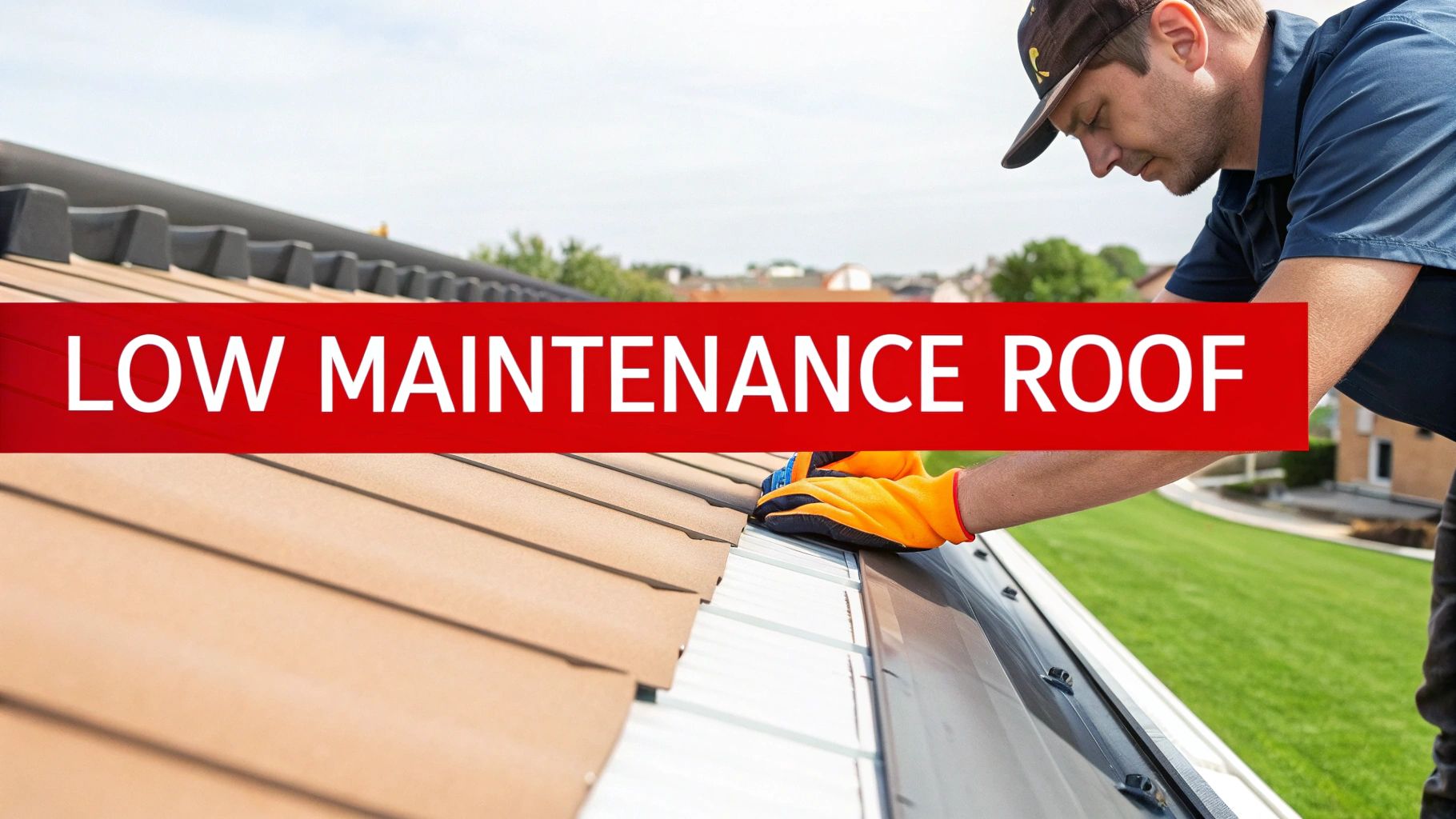
This kind of precision is what makes the system so incredibly weather-tight. Each panel is fastened to the roof deck with hidden clips, so there are no exposed screws to back out or leak. The panels are then locked together, creating those iconic raised seams that give the roof its name and its strength.
Simple Steps for Long-Term Care
Here's the beautiful part: one of the biggest selling points of standing seam roofing is how wonderfully low-maintenance it is. Now, "low-maintenance" isn't "no-maintenance," but the checklist is refreshingly short compared to other roofs.
A standing seam roof is designed to shed water, snow, and debris all on its own. Your primary job is to just let it do its thing by making sure nothing gets in the way.
Here’s a simple routine to keep your roof in prime condition for decades:
- Keep Gutters and Valleys Clear: Debris like leaves and pine needles can build up, especially after a storm. Clogged gutters can cause water to dam up and push back underneath the panels, so a quick clean-out once or twice a year is smart.
- Trim Overhanging Branches: Keep tree limbs from scraping against the metal. Over time, that constant rubbing can wear away the protective finish on the panels. A good trim also means less debris on the roof in the first place.
- Schedule Occasional Professional Inspections: Every few years, it's a good idea to have an expert take a look. A trained eye can check the flashings, seams, and sealants to catch any minor issues before they have a chance to grow. A little preventative care goes a long, long way.
Frequently Asked Questions About Standing Seam Roofing
Investing in a new roof is a major decision, and it's natural to have questions. Here are clear, straightforward answers to some of the most common concerns we hear from homeowners considering a standing seam metal roof.
Is a standing seam roof noisy when it rains?
This is one of the biggest myths about metal roofing. Unlike an old barn where the metal is installed on open purlins, a modern residential standing seam roof is installed over a solid wood deck, a layer of high-tech underlayment, and your attic insulation. This combination of materials provides excellent sound dampening, making a metal roof just as quiet—if not quieter—than an asphalt shingle roof during a rainstorm.
Will a metal roof make my house more likely to be struck by lightning?
No, a metal roof does not attract lightning. Lightning seeks the path of least resistance to the ground, which typically means the tallest object in an area, like a tree or utility pole. In the unlikely event your home is struck, a metal roof is actually safer. Because metal is non-combustible and a great conductor, it would safely dissipate the electrical charge to the ground, significantly reducing the risk of fire compared to flammable materials like wood or asphalt.
Can I install a standing seam roof over my old shingles?
While it is sometimes possible, it is almost never recommended. A complete tear-off of the old roof allows for a thorough inspection of the roof deck for rot or damage that must be repaired. Installing over old shingles can also trap moisture and prevent the new roof from lying perfectly flat, potentially voiding the manufacturer's warranty. For the best performance and longevity, always start with a clean, solid deck.
How does standing seam compare to a tile roof?
Both are excellent, long-lasting options, but they have key differences. Standing seam metal is significantly lighter than concrete or clay tile, putting far less stress on your home's structure. Metal is also more resistant to impact from hail and is generally more energy-efficient due to "cool roof" coatings that reflect solar heat. Tile, however, offers a different aesthetic that may be preferred for certain architectural styles like Mediterranean or Spanish.
Is it okay to walk on a standing seam metal roof?
It's best to avoid it. While you can walk on the flat "pan" sections of the panels with soft-soled shoes, stepping on the raised seams can cause permanent damage and compromise the roof's weather-tightness. For any maintenance, inspections, or repairs, it is always safest and most effective to hire a qualified roofing professional with the proper safety equipment and experience.