
Choosing the right roofing material in Arizona is a critical decision, and the debate between concrete and clay tiles is at the heart of it. Both offer exceptional durability and a classic look perfectly suited for the Southwestern climate, but they come with distinct differences in cost, longevity, and aesthetics. This guide is designed to walk you through every aspect of the concrete vs. clay decision, from how they stand up to the desert sun to long-term maintenance realities, helping you make an informed choice that protects your home and boosts its curb appeal for decades to come.
Key Takeaways
- Longevity & Cost: Clay tiles are a lifetime investment, often lasting 50-100+ years with a higher upfront cost. Concrete tiles offer a more budget-friendly initial price and a very respectable 40-70 year lifespan.
- Color That Lasts: Clay's color is baked into the material and will never fade. Concrete's color is a surface coating that will fade over decades under Arizona's intense UV exposure.
- Weight & Structure: Both materials are heavy and require a structural assessment. Concrete is generally heavier (900-1,200 lbs/sq) than clay (600-1,200 lbs/sq), making a professional evaluation of your home's framing a mandatory first step.
- Durability: Both have a Class A fire rating. Concrete is very resilient and less brittle, while clay is stronger but more fragile and can crack more easily from impact or improper foot traffic.
Choosing Your Roof: A Quick Comparison
Picking between concrete and clay means understanding the trade-offs, especially in a place as demanding as Arizona. Both are tough, fire-resistant, and look fantastic, but they have real differences in price, weight, and how they look two or three decades down the line. It's about balancing what you spend now with the look you want and the upkeep you're willing to do later.
This quick overview will give you the essential facts. We'll touch on the big-picture items that matter most, whether you're dealing with the blistering sun in Phoenix or the occasional snowfall up in Flagstaff.
Concrete vs. Clay Roof Tiles At a Glance for Arizona Homes
Here’s a high-level summary to help you see the core differences at a glance. Think of this as your starting point before we dive deeper into the details.
| Attribute | Concrete Tiles | Clay Tiles |
|---|---|---|
| Average Lifespan | 40-70 years | 50-100+ years |
| Initial Cost | Lower to moderate | Higher |
| Weight | Heavier (900-1,200 lbs/sq) | Lighter (600-1,200 lbs/sq) |
| Color Retention | Can fade over time | Excellent, color is permanent |
| Durability | Very durable, less brittle | Durable, but more brittle/fragile |
| Maintenance | May require more cleaning | Low maintenance |
While this table gives you the basics, the right choice often comes down to the specifics of your home, your budget, and your personal taste. Both are fantastic, proven roofing systems for Arizona, but they get you there in slightly different ways.
Alright, let's break down how concrete and clay tiles really stack up against each other, especially for homes here in Arizona. When you get past the sales pitches, the right choice comes down to the details—how each material handles our intense sun, monsoon downpours, and what it means for your wallet and your home's structure.
This isn't just about picking a color. We're going to dig into durability, cost, weight, and energy efficiency to give you a clear, honest comparison. My goal is to arm you with the real-world knowledge you need to choose with confidence, whether you're building new or replacing an old roof.
To get started, think about what's driving your decision. Is it budget, or is it a specific aesthetic you're after? This can often point you in the right direction from the get-go.
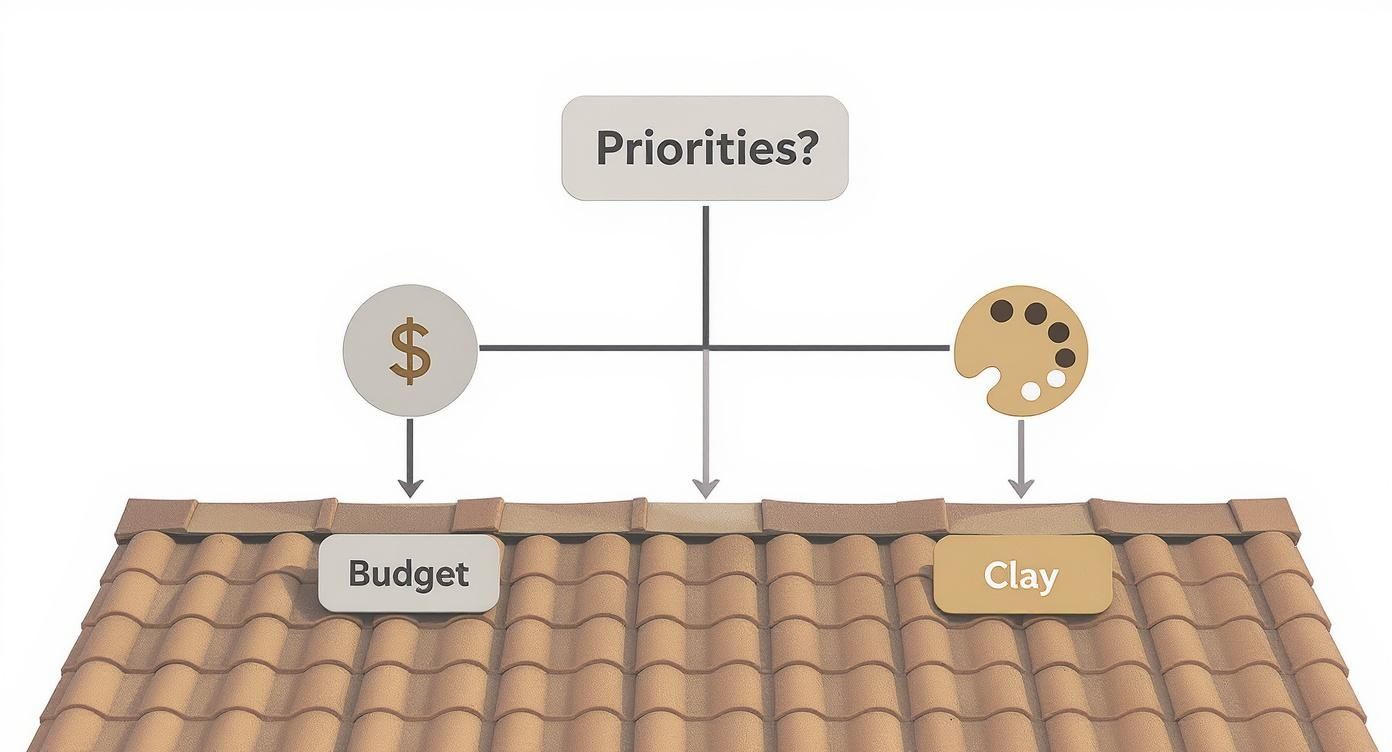
As you can see, if keeping upfront costs down is your main goal, concrete is usually the front-runner. But if you’re set on authentic, classic Southwestern style with color that lasts a lifetime, clay is probably where you’re headed.
Durability Under the Desert Sun
Both concrete and clay are tough as nails, and they’ll easily outlive common materials like asphalt shingles. They also both carry a Class A fire rating, which is a huge deal in our dry climate. But how they hold up over the decades is where they start to differ.
Concrete tiles are incredibly resilient. They can take a beating from foot traffic during maintenance or even a fallen tree branch without cracking. You can realistically expect a concrete tile roof to last a solid 40 to 70 years.
Clay tiles, on the other hand, have a legendary lifespan that can push past 100 years if cared for properly. They are strong but more brittle than concrete. A dropped tool or a clumsy step can crack one, meaning replacements require a careful touch.
Key Differentiator: The single biggest difference you'll see under the Arizona sun is color. Clay's color is baked all the way through the tile—it’s permanent and won’t fade. Concrete's color is a surface layer that, after decades of our intense UV rays, will inevitably fade and weather.
Cost Analysis and Long-Term Value
The money conversation with concrete and clay is a classic tale of spending now versus spending later. Each one wins in a different category, depending on how you look at your investment.
Concrete Tiles: The Budget-Friendly Choice
- Initial Cost: Concrete is the clear winner on price. The tiles themselves and the labor to install them are almost always less expensive than clay, making it a go-to for builders and homeowners trying to keep project costs in check.
- Long-Term Value: While you save a lot upfront, you need to factor in what might happen down the road. The color will fade over time, which can impact your home’s curb appeal. They also tend to absorb more water, which can sometimes lead to more frequent cleanings.
Clay Tiles: The Lifetime Investment
- Initial Cost: There's no getting around it—clay tiles cost more to start. The manufacturing process is more intensive, and installation is a more specialized skill, both of which drive up the price.
- Long-Term Value: That higher initial price tag is balanced by an exceptionally long life, almost no maintenance, and color that never quits. A clay roof can genuinely be a one-and-done investment, often adding significant resale value to your home.
Structural and Weight Considerations
You can't talk about concrete or clay roof tiles without talking about weight. Both are heavyweights and need a strong roof structure to support them, but concrete consistently tips the scales a bit more.
A standard concrete tile roof weighs in at 900 to 1,200 pounds per square (a 10×10 foot section). That’s a serious load, and it almost always means you’ll need an engineer to sign off on your roof structure, especially if you’re switching from a lighter material like shingles.
Clay tiles are a little lighter, typically running between 600 to 1,200 pounds per square. While the top end of that range overlaps with concrete, many popular styles are on the lower end. Even so, it’s heavy enough that a structural inspection isn't just a good idea—it’s a mandatory step before any work begins. Skipping this can lead to sagging and serious damage over time.
Energy Efficiency for Lower Cooling Bills
In Arizona, your roof is your first line of defense against the heat. A roof that keeps your house cool can make a huge difference in your comfort and your summer electricity bills. Both tile options are great insulators.
The natural air pocket created underneath the curved tiles acts as a thermal barrier, dramatically slowing down heat transfer into your attic. This is a massive advantage over materials like asphalt shingles that are nailed flat to the roof deck.
That said, clay often has a slight performance advantage. Clay is naturally a better insulator than concrete (it has lower thermal conductivity), meaning less heat makes it through the tile itself.
A study on roofing materials found that clay tiles can cut the amount of heat getting into an attic by as much as 70% compared to a standard asphalt shingle roof.
You can also find "cool roof" colors in both concrete and clay. These lighter, more reflective surfaces bounce a significant amount of sunlight away from your home, easing the burden on your AC. No matter which material you choose, look for tiles with a high Solar Reflectance Index (SRI) to maximize your energy savings.
How Tiles Perform in Arizona's Climate
Arizona’s climate doesn’t just test a roof; it wages a daily war against it. From the searing summer heat of the Valley to the surprising freeze-thaw cycles up in the high country, how a roofing material performs is everything. When you're choosing between concrete or clay roof tiles, you have to understand how each one handles these unique environmental stressors to make a smart, long-term decision.
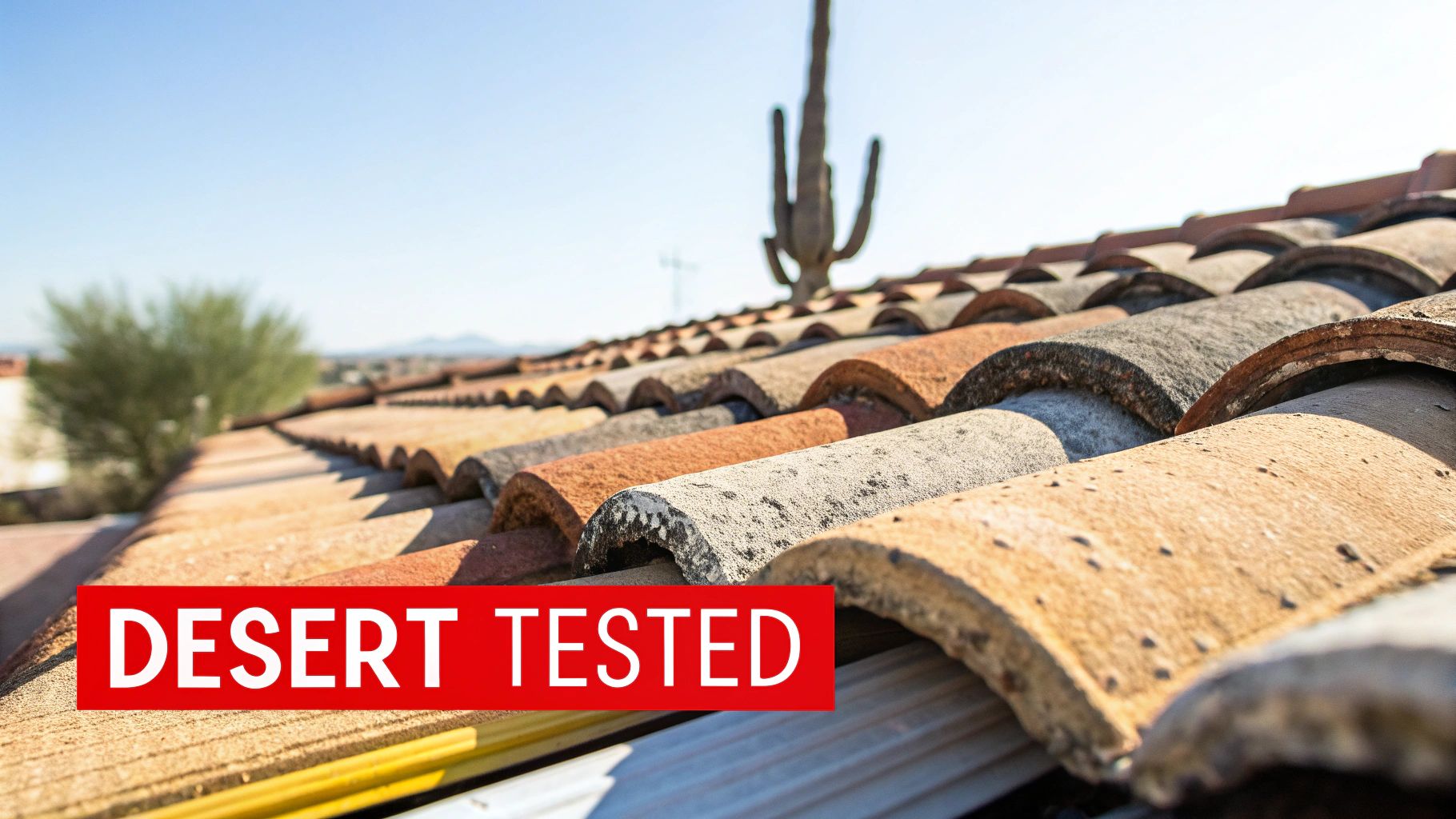
The relentless sun is probably the biggest challenge. That intense ultraviolet (UV) radiation is notorious for breaking down materials and bleaching out colors. This is where you’ll see one of the biggest differences between the two tiles.
Clay tiles have a natural advantage here. Their color is baked right into the material at incredibly high temperatures. This process essentially makes the color permanent and exceptionally fade-resistant, ensuring your roof looks just as good decades from now.
Concrete tiles get their color from pigments added to the mix or from a surface coating applied after they've cured. While modern manufacturing has definitely improved color retention, the simple fact is that this surface-level color will gradually fade over 20 to 30 years of constant UV exposure.
Responding to Monsoon Season Extremes
Then comes monsoon season, bringing a whole different set of problems—from torrential downpours to powerful microbursts. A roof's ability to shed water and resist wind is put to the ultimate test.
Water absorption is a key factor. The difference might seem small on paper, but it has real long-term implications for your roof's health and appearance.
- Clay Tiles: These are incredibly dense, with a very low water absorption rate of around 6%. This helps them resist moisture staining and makes them less friendly to algae or mold growth.
- Concrete Tiles: Being naturally more porous, concrete tiles can have a water absorption rate as high as 13%. This means they hold onto more moisture after a rainstorm, which can sometimes lead to staining and require more frequent cleaning.
That higher absorption rate in concrete also adds a little weight to the roof after a heavy rain. It’s a minor factor, but it does contribute to the overall structural load. Of course, both tile systems, when installed correctly with a quality underlayment, provide excellent protection against leaks.
Expert Insight: Wind uplift is a major concern during Arizona monsoons. Both concrete and clay tile systems are engineered to withstand high winds, often rated for speeds well over 100 mph. The interlocking design and sheer weight of the tiles provide a robust defense against even the strongest gusts.
Performance Across Arizona's Diverse Geographies
Arizona isn't just one climate. The needs of a roof in Flagstaff are worlds apart from one in Phoenix or Tucson. Both tile types can work across the state, but their unique traits make them better suited for certain environments.
In the southern and central valleys, where extreme heat and UV are the main enemies, clay's superior colorfastness gives it an edge for homeowners who care about long-term aesthetics. You can learn more about how a roof impacts energy bills by exploring the details of R-value roofing materials in our complete guide.
Up in high-elevation communities like Flagstaff or Prescott, you have to think about freeze-thaw cycles. Here, the higher water absorption of concrete could potentially lead to tiny cracks over many seasons if trapped moisture freezes and expands.
Clay is generally less susceptible to this specific issue because it's less porous. That said, both materials are incredibly durable. A more common concern in these areas is hail. Here, the slightly less brittle nature of concrete can sometimes offer a small advantage. A severe hailstorm can crack either type of tile, but clay’s brittleness can make it more likely to shatter from a sharp impact.
Installation, Repair, and Maintenance: The Real-World Picture
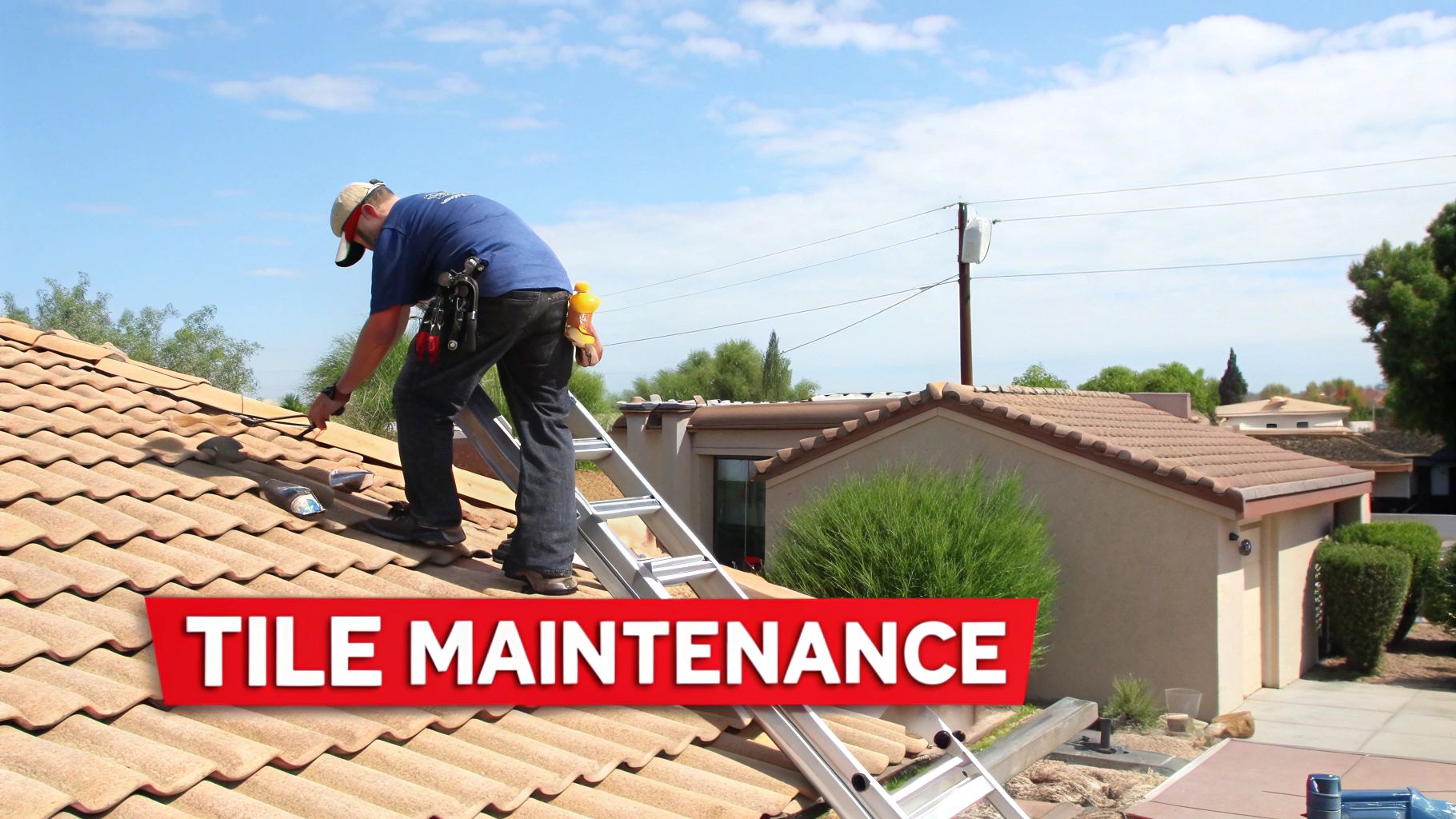
When you choose between concrete or clay roof tiles, you're not just picking a color or style. You're making a decision that impacts your home for decades. This is a long-term relationship, and understanding the practical realities of installation, repairs, and upkeep is what separates a smart investment from a future headache.
It's no surprise that homeowners are flocking to these materials. Globally, the roofing tile market was valued at about USD 36.2 billion and is forecast to hit USD 70.5 billion. The residential sector makes up a massive 57% of that demand, a testament to how many people are opting for long-lasting tile solutions. You can dig into the numbers yourself in this comprehensive report on the future of roofing tiles.
The Installation Process: A Job for Pros
Putting on a tile roof isn’t like slapping on some shingles; it’s a craft. It demands a level of precision and expertise that only seasoned professionals have. While both concrete and clay require skilled hands, they present unique challenges on the job site.
Working with Concrete Tiles
- Tougher Underfoot: Concrete tiles are a bit more forgiving. They can handle being walked on during installation without easily cracking, which means less breakage and waste for the crew.
- Predictable and Uniform: Since they're made in molds, concrete tiles are incredibly consistent. Every tile is the same size and shape, which helps installers lay them out faster and more efficiently.
Working with Clay Tiles
- Handle with Care: Clay's biggest downside during installation is its fragility. Drop a tile or step on it wrong, and it can shatter. This brittleness demands a careful touch and often leads to higher material costs due to waste.
- True Artistry Required: Laying classic S-shaped or Mission-style clay tiles correctly is an art form. If the roofer doesn't get the fastening and alignment perfect, you’re looking at a compromised roof and potential leaks down the road.
The Bottom Line: Don't even think about cutting corners on installation. The underlayment, flashing, and batten system are the unsung heroes of your roof. A poor installation will sabotage even the best tile money can buy, every single time.
Navigating Repairs and Finding Replacements
Over 50 years, things happen. A monsoon storm might break a tile, or a falling tree branch could cause damage. How easy—and expensive—it is to fix that damage really depends on the material you chose.
Finding a replacement concrete tile is usually pretty simple. Manufacturers produce them in large, consistent batches, so getting a color and style match, even years later, is often no sweat. This keeps repair costs down and gets your roof back in shape quickly.
Fixing a clay tile roof, on the other hand, can be a real treasure hunt. The color and texture of clay can vary between production runs, and finding a perfect match for an older or discontinued style is sometimes next to impossible. This can force you to either pay for expensive custom-made tiles or settle for salvaged ones that don't quite match, disrupting your roof's aesthetic. To learn more, check out these best practices for effective tile roof repair, including tips and costs.
What to Expect for Long-Term Maintenance
Both concrete and clay are low-maintenance champions, but that doesn't mean "no maintenance." A little proactive care goes a long way in helping them reach their full lifespan.
Because it's more porous, concrete has a higher water absorption rate—around 13%. In damp or shady spots, this can sometimes lead to mildew or algae. A periodic power washing is usually all it takes to keep it looking fresh.
Clay is much denser, absorbing only about 6% of water, which makes it naturally resistant to that kind of organic growth. For clay, maintenance is mostly about visual inspections. After a big storm, it's smart to check for any cracked or slipped tiles. For both types, keeping gutters and valleys clear of leaves and debris is a must to prevent water from backing up.
Navigating Warranties, Insurance, and Local Permits
https://www.youtube.com/embed/LvoSft3tf0U
Deciding between concrete and clay roof tiles is about more than just looks and durability. You also have to navigate the paperwork—the warranties, insurance policies, and local permits that truly protect your investment. This isn't just red tape; it's the framework that makes your new roof a secure, long-term asset for your Arizona property.
Think of these documents as your safety net. A solid warranty means the manufacturer has your back. The right insurance protects you from the unexpected. And proper permits ensure the entire project is built to code, keeping you and your family safe.
Understanding Manufacturer Warranties
A new tile roof is a long-term commitment, and the manufacturer's warranty is a critical piece of that puzzle. But you have to look closely, because not all warranties offer the same level of protection.
Both concrete and clay tile warranties typically cover manufacturing defects that cause the tiles to fail prematurely. Where they often differ is on color. Concrete tile warranties frequently include a clause guaranteeing the color won't significantly fade for a set time, often 15 to 20 years. You rarely see this with clay tiles because their color is baked in and naturally permanent.
Key Takeaway: Remember that the manufacturer’s warranty usually just covers the tiles themselves. Your roofer’s workmanship warranty is a separate—and equally important—guarantee that covers the quality of the actual installation.
How Your Tile Choice Affects Homeowners Insurance
Did you know your choice of roofing material can directly influence your homeowners insurance premiums? It's true. Insurers reward homeowners who choose durable, fire-resistant materials, and both concrete and clay tiles are top performers here.
Most tile roofs carry a Class A fire rating, the highest available, which can often lead to a nice discount on your policy. While clay's natural fire resistance might give it a slight edge with certain insurance carriers, the biggest win is upgrading from a less resilient material, like old asphalt shingles, to any robust tile system.
If a monsoon storm rolls through and you need to file a claim, knowing the ropes is essential. We have a detailed guide on navigating a storm damage roof insurance claim that can walk you through the process.
Adhering to Arizona Building Codes and Permits
Here in Arizona, any significant roofing project is subject to strict local building codes and permitting requirements. These rules aren't just for show—they exist to ensure the structural integrity of your home, especially when dealing with heavy materials like tile.
Before a single tile goes up, your contractor must confirm that your home's structure can handle the weight of a concrete or clay system. This is a crucial, non-negotiable step that sometimes requires a structural engineer to sign off. Pulling the right permits ensures your local municipality inspects and approves the work, guaranteeing it meets all current safety and installation standards.
It’s also smart to confirm your roofer has the right coverage. You can learn more by Understanding Contractor Insurance Requirements.
Still on the Fence? Let's Tackle Your Lingering Questions
Even with all the facts laid out, making the final call between concrete and clay roof tiles is a big decision. It’s a huge investment, so you want to be absolutely sure. This is where we clear up the last few "what ifs" we hear all the time from Arizona homeowners, giving you straightforward answers so you can choose with confidence.
We'll get into specific scenarios, from what works best for a luxury build in Scottsdale to the practical realities of weight and energy savings. Let's get those final uncertainties sorted out.
Frequently Asked Questions
Which tile is better for a custom home in Scottsdale?
For high-end custom homes, especially in places like Scottsdale or Paradise Valley, clay tiles are almost always the preferred choice. There's an authenticity to their rich, permanent colors that just perfectly complements classic upscale styles like Mediterranean or Spanish Colonial. Clay’s biggest advantage is its superior colorfastness—it won’t fade under our brutal Arizona sun. While the upfront cost is higher, most custom builders and homeowners see it as a worthwhile trade-off for that premium, lasting finish.
Do I need to reinforce my roof for tile?
Almost certainly, yes, especially if your home currently has a lighter material like asphalt shingles. Both concrete and clay tiles are incredibly heavy, and your home's existing structure likely wasn't engineered to support that kind of load. Before any work begins, a licensed structural engineer or qualified roofer must inspect your home’s framing to confirm it can handle the weight. Reinforcement is a common and necessary part of most tile reroofing projects.
How does tile color affect my Arizona energy bills?
In a place like Arizona, tile color is a huge factor in cooling costs. Lighter-colored tiles—often called "cool roof" tiles—reflect significantly more sunlight and absorb far less heat than darker colors. This means less heat seeping into your attic, which reduces the load on your air conditioner and can lead to lower electricity bills. When shopping, ask for a tile's Solar Reflectance Index (SRI) value; a higher number means better reflectivity and more potential savings.
Can I walk on my tile roof safely?
No, homeowners should stay off their tile roofs. This is a job strictly for trained and insured roofing professionals who know how to move without causing damage. Both concrete and clay tiles can crack under a misplaced footstep, with clay being particularly vulnerable due to its brittle nature. Professionals are trained to walk on specific supported parts of the tiles to avoid breakage. Attempting to do it yourself risks cracking tiles (leading to leaks) and, more importantly, serious personal injury.