
A clean roof is more than just a matter of curb appeal; it’s a critical component of your home's health and longevity. Over time, roofs accumulate dirt, dust, algae, and debris that can trap moisture, damage materials, and even increase your energy bills. This guide will walk you through the professional methods for safely and effectively cleaning your roof, ensuring you protect your investment without causing unintended harm. We'll cover everything from essential safety precautions to the right techniques for different roofing materials, helping you restore your roof's appearance and function.
Key Takeaways
- Prioritize Safety: Always use proper safety gear, including non-slip shoes, a safety harness, and a securely placed ladder. Roof work is inherently dangerous.
- Use a "Soft Wash" Approach: High-pressure washing can severely damage most roofing materials. A low-pressure wash combined with an appropriate cleaning solution is the safest and most effective method.
- Match the Method to the Material: Different roofing materials like asphalt shingles, tiles, and metal require specific cleaning solutions and techniques to avoid damage.
- Know When to Hire a Pro: For steep roofs, two-story homes, or extensive algae growth, hiring a professional is the smartest and safest choice.
Why Bother Cleaning Your Roof in Arizona?
Here in Arizona, your roof takes a beating. It’s constantly bombarded by intense UV rays, coated in dust from monsoon storms, and then baked by the relentless sun. Letting all that gunk sit up there is more than just an eyesore—it can cause some serious, expensive headaches down the road. A clean roof is a healthy roof, and it all starts with understanding why it's so important.
The Real Impact of Our Desert Climate
That layer of dust and debris isn't just sitting there. When the monsoons roll in, it traps moisture against your roofing material, creating the perfect breeding ground for algae and mildew—yes, even in our dry climate. Over time, that organic growth eats away at your roof.
Even worse, a dirty roof absorbs more heat. All that grime reduces its ability to reflect sunlight, which means your attic gets hotter, your AC unit works overtime, and your energy bills start to climb. A simple cleaning can actually help keep your home cooler.
For a more structured way to stay on top of things, our roof maintenance checklist is a great resource for keeping your roof in prime condition all year.
A clean roof isn't just about curb appeal—it’s a crucial part of preserving your home's structural integrity and energy efficiency. Neglecting it allows contaminants to compromise protective coatings, leading to premature aging and potential leaks.
Getting Your Gear Together: The Roof Cleaning Safety Checklist
Before you even think about setting a ladder against your house, let’s talk safety. This is, without a doubt, the most important part of cleaning your own roof. I've seen enough close calls to know that getting up on a roof isn't something to take lightly. A little prep work on the ground goes a long way toward making sure you get the job done without any accidents or damage.
Think of it like this: you wouldn't go on a long road trip without checking your tires and oil. This is the same principle. Skipping any of these steps dramatically increases your risk. A fall from even a single-story roof can change your life in an instant, which is why we pros are decked out in safety gear. You should be too, even if it’s just for one weekend project.
Your Personal Protective Equipment (PPE): Don't Skip This Stuff
The first line of defense is what you're wearing. The right gear is what keeps you safe from a fall, protects you from the cleaning chemicals, and handles all the little hazards you might not even think about. Seriously, don't cut corners here.
Here's your must-have PPE list:
- Slip-Resistant Footwear: Get yourself a pair of soft-soled boots or work shoes. You want something with a deep, aggressive tread that can really grip. Roof tiles and shingles get incredibly slick when they're wet, and good footwear can make all the difference.
- Safety Harness and Rope: This is your lifeline, plain and simple. A properly fitted fall-arrest system, securely anchored on the opposite side of the roof from where you're working, is the one thing that will catch you if you slip.
- Gloves and Safety Glasses: Grab a pair of chemical-resistant gloves to protect your hands. For your eyes, get some wrap-around safety glasses to shield them from chemical splashes or any debris that gets kicked up.
Look, the goal is always to prevent a fall in the first place. But a harness is what saves your life if you do slip. If your roof has any kind of pitch to it, a harness isn't a suggestion—it's an absolute necessity.
How to Set Up for a Safe Climb
Your ladder is what gets you from the ground to the roof. It needs to be rock-solid. A wobbly ladder is a recipe for disaster, so take a minute to make sure it's set up correctly.
First off, grab a sturdy extension ladder that can reach at least three feet above the edge of your roof. That extra length gives you a secure handhold when you’re getting on and off the roof, which is one of the most common times for a fall to happen.
Next, it’s all about the angle. Use the 4-to-1 rule: for every four feet you go up, the base of the ladder should be one foot out from the wall. This is the sweet spot for stability. Make sure the ladder's feet are on firm, level ground. It's also a great idea to have a spotter—a friend or family member—hold the base steady, at least for your first couple of trips.
Picking the Right Cleaning Tools and Solutions
Okay, with the safety gear sorted, let's talk about the actual cleaning supplies. The mission here is to get the roof clean without damaging it. That means aggressive tools are out. A high-powered pressure washer can blast the protective granules right off your shingles or crack your tiles. A gentle touch is always the better way to go.
Here’s what you'll want to have on hand:
- Low-Pressure Washer or Garden Hose: If you have a pressure washer, dial it way down to its lowest setting (think under 500 PSI). A regular garden hose with a good spray nozzle will work just fine for rinsing, too.
- Pump Sprayer: A basic garden pump sprayer is perfect for this job. It lets you apply the cleaning solution evenly across the roof without a bunch of overspray getting everywhere.
- Soft-Bristle Brush: For those really stubborn patches of moss or algae, a long-handled brush with soft bristles is your best friend. It gives you just enough scrubbing power to loosen grime without scratching or scuffing the roof material.
As for the cleaner itself, you can buy a pre-made roof wash or mix your own. A go-to DIY recipe is a 50/50 mix of water and oxygen bleach. It's much gentler on your plants and landscaping than chlorine bleach. This whole "soft wash" method is about letting the solution do the hard work, breaking down all the gunk so you can just rinse it away with very little force.
Choosing The Right Cleaning Method For Your Roof
Alright, you've got your safety gear on and the ladder is steady. Now for the real work. The secret to cleaning a roof without wrecking it isn't about blasting away the grime—it's about finesse. You absolutely have to match your cleaning method to your specific roof material. A technique that works wonders on one surface can permanently ruin another, turning a weekend chore into a five-figure replacement job.
Here in Arizona, our roofs get a special kind of abuse from the intense sun, gritty dust, and monsoon downpours. This combo bakes on dirt that requires a smart approach. Simply grabbing a pressure washer and going to town is a rookie mistake that leads to cracked tiles, stripped shingles, and corroded metal panels. You have to know your roof's weak spots to clean it effectively.
Cleaning Arizona Tile Roofs
Clay and concrete tile roofs are everywhere in Arizona for a good reason: they're tough. But they're not invincible. The biggest mistake I see homeowners make is hitting them with high-pressure water. Sure, the tiles themselves are strong, but the protective glaze and the underlayment beneath them aren't. Too much pressure can easily crack a tile or, worse, force water underneath where it can cause rot you won't see until it's too late.
With tile, the goal is to gently lift off the dust and kill any organic growth without causing collateral damage.
- Clear the Loose Stuff First: Before a single drop of water hits the roof, use a leaf blower or a soft-bristle broom to get rid of loose leaves, twigs, and dirt. If you skip this, you’re just creating an abrasive, gritty sludge that can scratch the tiles when you start rinsing.
- Pick the Right Cleaner: A simple, oxygenated bleach solution is your best friend here. Just mix one part oxygen bleach to four parts water in a standard garden pump sprayer. It’s powerful enough to break down algae but gentle on the tile and safer for your landscaping.
- How to Apply It: Lightly wet a small section of the roof with a garden hose. Then, grab your pump sprayer and apply the solution, working from the bottom up to keep it from streaking. Let it sit and do its thing for 15-20 minutes, but don't let it dry out completely.
- Rinse Gently: Use a regular garden hose with a decent spray nozzle or a pressure washer on its absolute lowest setting (stay well under 500 PSI). Always aim the water down the roof, mimicking the natural flow of rain. This prevents you from driving water up and under the tiles.
Here's a pro tip that can save you a world of hurt: never walk on tile roofs incorrectly. Always place your feet on the lower, overlapping portion of the tile where it’s fully supported by the one beneath it. Stepping on the unsupported middle arc of a tile is a guaranteed way to hear a crack.
This decision tree gives you a good visual on how your roof material dictates the tools you should be using.
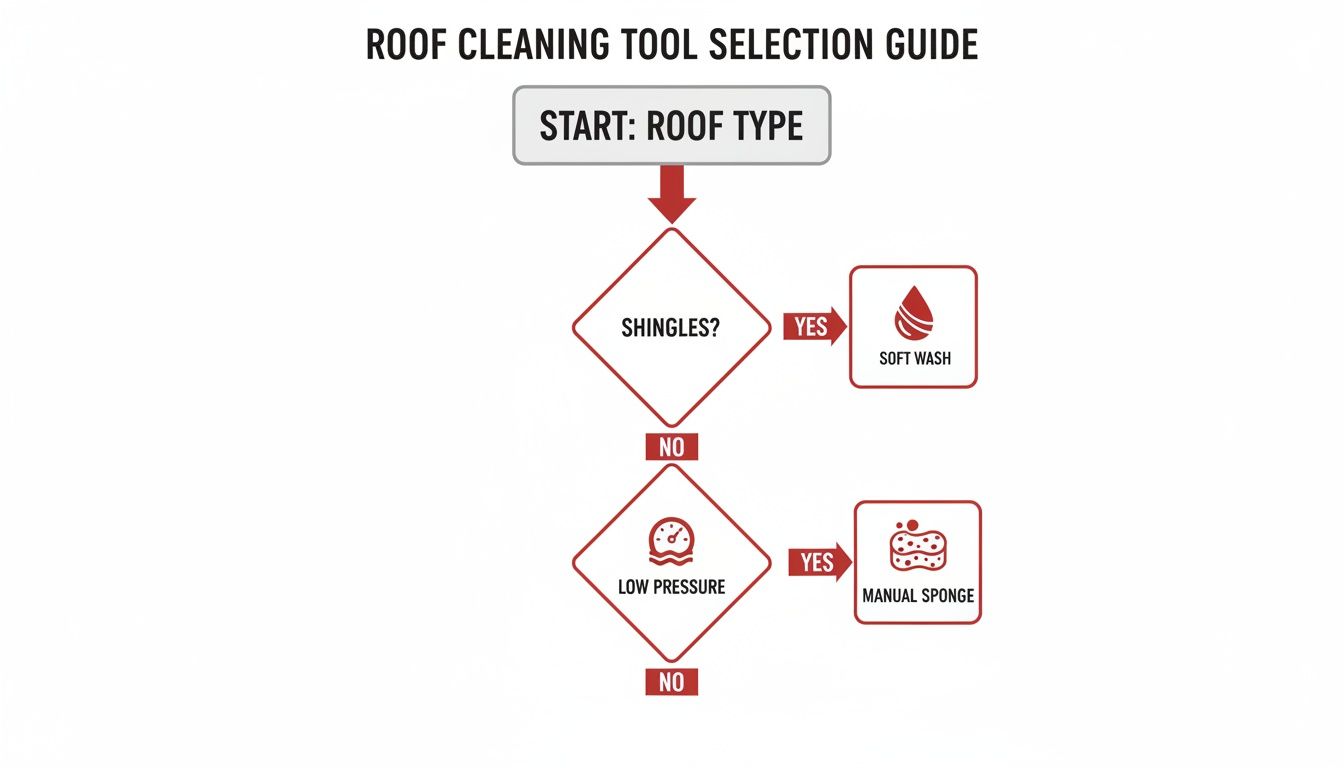
As the chart shows, materials like asphalt shingles demand a soft wash, and even durable tile needs low pressure. It hammers home the point that high-pressure blasting is almost never the right answer.
Tackling Asphalt Shingle Roofs
Asphalt shingles are the most common roofing in America, but they're also one of the most delicate when it comes to cleaning. Each shingle is covered in tiny ceramic granules that act as a shield against UV rays. If you use too much pressure or a stiff brush, you'll scrape those essential granules right off, dramatically shortening the life of your roof.
The main culprit for ugly black streaks on asphalt is an algae called Gloeocapsa magma. The whole point of cleaning is to kill this algae without physically damaging the shingles. A soft wash isn't just a recommendation here—it's the only safe way to do it.
You have to get this right. For asphalt, you’ll use a soft wash, but for tile, you need a low-pressure rinse (around 150 PSI) to avoid cracks. A tried-and-true DIY cleaner is a mix of 50% water, 30% regular household bleach, and 20% laundry detergent in a pump sprayer. Apply it from the top down and let it sit for 15-25 minutes—this is usually enough to kill about 95% of the moss and algae. Then, rinse it all off with a wide fan tip from at least 20 feet away.
Safety is non-negotiable. Wear slip-resistant shoes and make sure your ladder is secure; OSHA documents over 5,000 serious roof-related injuries every year. Never, ever work on a wet roof, where the risk of a fall can easily triple.
Maintaining Metal Roofs
People love metal roofs for their longevity, but their protective coatings can be surprisingly sensitive. Scratching the surface with an abrasive tool or using a harsh chemical can compromise that coating, opening the door for rust and corrosion.
Thankfully, cleaning a metal roof is usually just a matter of washing off surface dirt and pollen.
- The Right Soap Matters: A simple mix of mild soap (like a car wash soap or gentle dish detergent) and water is usually all it takes. Steer clear of citrus-based cleaners or anything with harsh solvents that can eat away at the paint.
- Gentle Does It: Use a soft-bristle brush, a microfiber mop, or a sponge on an extension pole to apply the soapy water. Work in small, manageable sections and gently scrub any stubborn spots.
- Rinse, and Rinse Well: Immediately rinse each section with a garden hose. You don't want soap scum drying on the surface, which creates a film that actually attracts more dirt.
The core principles of safe roof cleaning are pretty universal. You can even find helpful parallels in guides that offer expert tips for cleaning RV roofs safely and effectively, as they deal with similar challenges of exposure, grime, and sensitive materials on a large, elevated surface.
Roof Cleaning Methods By Material Type
Feeling a bit overwhelmed by the options? This quick-reference table breaks down the essentials for Arizona's most common roofing materials, helping you make the right call.
| Roof Material | Recommended Solution | Max Water Pressure | Key Precaution |
|---|---|---|---|
| Clay/Concrete Tile | Oxygen Bleach & Water Mix | 500 PSI | Avoid walking on the center of tiles; always step on the lower overlaps. |
| Asphalt Shingle | Diluted Bleach or Roof Cleaner | 100 PSI (Rinse Only) | Never use a pressure washer to apply solution. Do not scrub granules. |
| Metal | Mild Detergent & Water | 400 PSI | Avoid abrasive chemicals or stiff brushes that can scratch the finish. |
Think of this table as your final gut check before you get started. By respecting what your specific roof needs, you’ll get the job done right—protecting your home's curb appeal and its structural integrity for years to come.
Can You Pressure Wash a Roof? A Word of Caution
Grabbing a pressure washer to blast away that layer of Arizona dust and grime feels like the quickest path to a clean roof. It’s a tempting idea, for sure. But in my experience, it's often the fastest way to cause thousands of dollars in hidden damage that you won't discover until the next big monsoon storm hits.
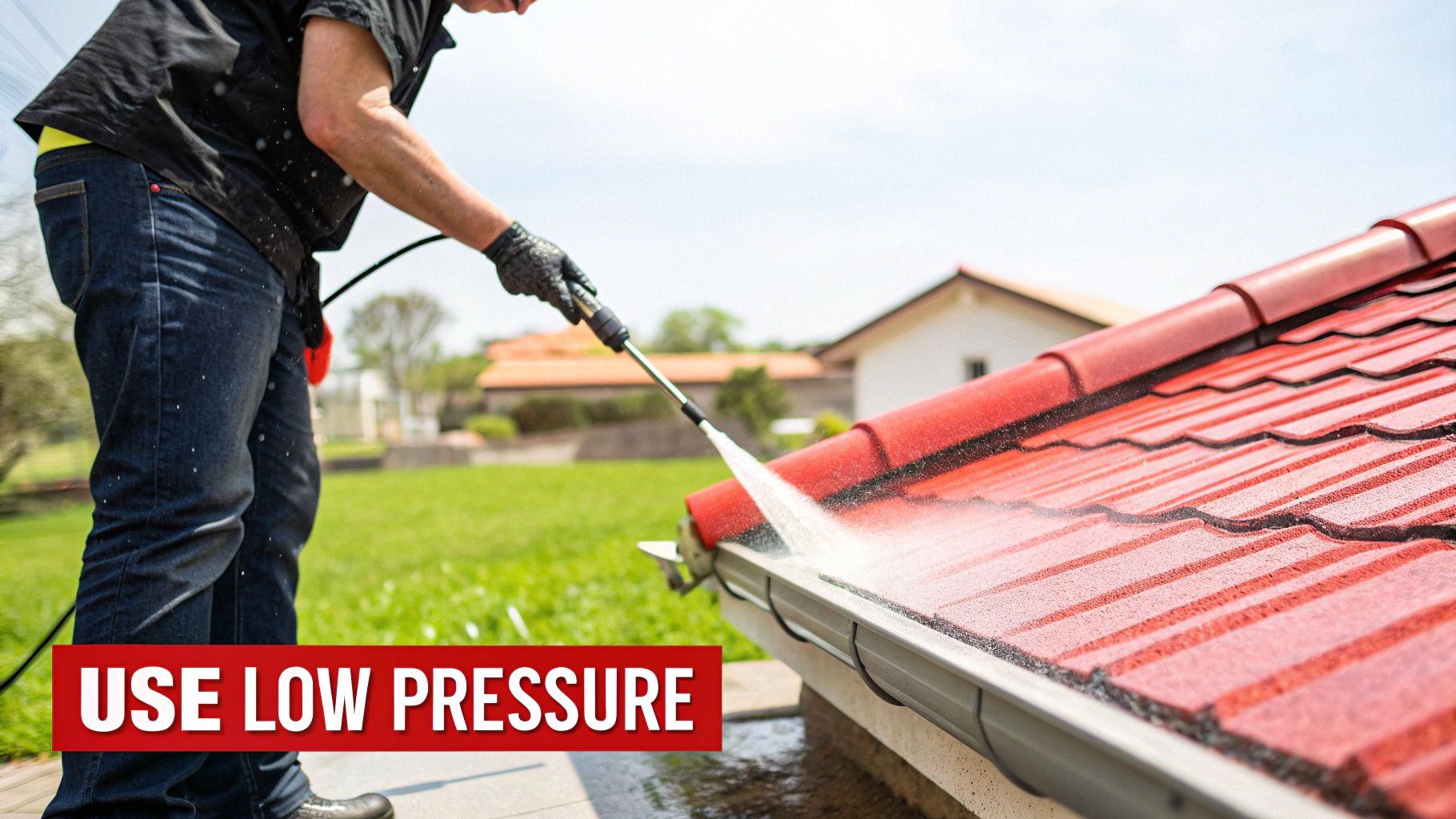
Think of high-pressure water as a liquid knife. It can easily strip away protective coatings, crack tiles, and force water deep into your home's structure where it has no business being. Understanding when and—more importantly—how to use a pressure washer is the key to avoiding a very costly mistake.
The Hard 'Don'ts' of Roof Pressure Washing
Before we even get into the right way to do things, let's talk about the absolute deal-breakers. Breaking these rules is a one-way ticket to a damaged roof. A pressure washer is an aggressive tool, and your roof is a surprisingly delicate system.
- Never Use High Pressure on Asphalt Shingles: This is the cardinal sin of DIY roof cleaning. Those little granules on your shingles are like sunscreen, protecting the asphalt from our intense UV rays. High pressure will blast them right off, dramatically shortening your roof's lifespan. You can learn more about the right way to care for them in our complete guide to asphalt shingle roof maintenance.
- Never Spray Water Upwards: Always, always point the nozzle down the slope of the roof. You want to work with gravity, just like rain does. Shooting water upwards under the edge of shingles or tiles pushes moisture straight past the weatherproofing barriers and into your attic or onto the roof deck.
- Never Use a Narrow, High-Impact Nozzle: That zero-degree, "pencil point" nozzle concentrates all the machine's power into a tiny, destructive jet. It will crack a tile, dent a metal panel, or even punch a hole through older materials before you can even react.
- Never Stand on a Wet, Soapy Roof: This seems obvious, but it has to be said. A roof surface becomes treacherously slick when it's wet. Add in the backward push from a pressure washer wand, and you have a recipe for a serious, life-altering fall.
The Right Way: Using Low Pressure Safely
There are some very specific cases where a pressure washer can be used safely, but it’s always about low pressure and the right technique. This method is really only for tough surfaces like concrete tiles that can handle a bit more of a rinse than asphalt or metal can.
If you're set on going the DIY route, the professional approach starts with a low-pressure rinse (under 500 PSI) just to wet the surface. Then, you apply a soft wash solution—often a diluted, oxygenated bleach formula—from the bottom up to prevent streaks. Let that solution sit and do its job for 15-20 minutes, then rinse it all off thoroughly. This doesn't just make the roof look new; it can improve its reflectivity, which might even lower your summer cooling bills by 10-15%.
Think of the pressure washer as a rinsing tool, not a scrubbing tool. The cleaning solution does the hard work of breaking down algae and grime. The water just washes it all away.
Why Soft Washing Is Almost Always the Better Answer
For nearly every residential roof out there, the smartest and safest strategy is soft washing. This technique doesn't rely on force at all. Instead, it uses a specialized, eco-friendly cleaning solution to kill the algae, mold, and mildew that cause those ugly black streaks.
The solution is applied with a low-pressure pump, given time to neutralize the organic growth, and then gently rinsed away with water from a standard garden hose or a pressure washer on its absolute lowest setting.
This approach is fundamentally safer because it takes the risk of high-pressure damage completely off the table. It cleans more deeply and effectively without brute force, preserving the integrity of your roof and helping it last longer. It’s the method we professionals use because it delivers superior, longer-lasting results without putting the roof's structure at risk.
Knowing When to Call a Professional Roof Cleaner
There's a lot to be said for a can-do attitude, but when you're working on a roof, knowing your limits is the most important tool you have. Tackling your own roof cleaning can feel rewarding, but some situations just aren't cut out for a weekend project. The risks can quickly outweigh the rewards, making a call to a professional the smartest move you can make.
Knowing how to clean a roof is one thing; knowing when not to is what keeps you safe.
Red Flags That Signal It's Time for a Pro
It's crucial to recognize when a job moves beyond a safe DIY scope. Certain conditions make the work far more complex and dangerous, and that's when you hand the job over to an experienced, insured crew.
- Steep Roof Pitch: Got a steep roof? Anything over a 6/12 pitch makes it incredibly challenging to keep your footing, even with safety gear. Pros have specialized equipment and training to handle these angles safely.
- Two-Story Homes: The height of a second-story roof dramatically increases the danger. A fall from that height is no small matter. Juggling ladders, hoses, and cleaning tools two stories up is a skill that comes with professional experience.
- Severe Algae or Moss Growth: If your roof looks more green than its original color, take that as a serious warning. A thick layer of moss or algae isn't just a sign of a dirty roof—it's incredibly slippery and often points to underlying moisture problems a professional can spot.
Hiring a pro isn't giving up; it's smart risk management. They bring the right equipment, years of experience, and—most importantly—liability insurance that protects you and your home if anything goes wrong.
The Clear Advantages of Hiring a Professional
Beyond just playing it safe, calling in a professional service offers real-world benefits you just can't get on your own. They show up with commercial-grade equipment and a trained eye that can actually save you money down the road.
While they're up there cleaning, a good professional is also doing an informal inspection. They're trained to spot subtle issues like a cracked tile, a piece of loose flashing, or a deteriorating sealant around a vent—things most of us would never notice.
Catching these small problems early prevents them from becoming the big, expensive leaks that cause major headaches. In fact, studies show that unmaintained roofs are 50% more likely to develop leaks within five years. For those managing commercial properties, integrating professional services into a commercial building maintenance checklist is standard procedure for this very reason.
Of course, finding a qualified expert is key. Our guide on how to find a good roofer can help you sort through the options. Here in Arizona, you can expect to pay anywhere from $300 to $700 for a professional cleaning on an average-sized home. It’s a small price for the safety, quality, and peace of mind you get in return.
Frequently Asked Questions
How often should I clean my roof?
For most homes, cleaning your roof every two to three years is sufficient to prevent the buildup of dirt, algae, and debris. However, if your home is in a particularly dusty area or under trees that shed leaves and needles, an annual cleaning might be necessary.
Can I use a pressure washer on my roof?
It is strongly advised not to use a high-pressure washer on your roof, especially on asphalt shingles. The intense force can strip away protective granules, crack tiles, and force water underneath roofing materials, leading to significant damage. A low-pressure "soft wash" is always the safer alternative.
What are the black streaks on my roof?
Those black streaks are typically a type of algae called Gloeocapsa magma. This organism feeds on the limestone filler in asphalt shingles, which can degrade them over time. A proper soft wash with an appropriate cleaning solution will kill the algae and remove the stains without harming the shingles.
Can roof cleaning damage my landscaping?
Yes, the runoff from cleaning solutions can harm plants and grass. To prevent this, thoroughly water the ground and plants around your home's foundation before you begin. You can also cover sensitive plants with plastic sheeting. After you're done, give everything another rinse with clean water.
What is the best time of day to clean a roof?
The best time to clean a roof is on a calm, overcast day. Direct sunlight can cause cleaning solutions to evaporate too quickly before they can work effectively, potentially leaving a splotchy finish. Windy conditions make working on a ladder or roof unsafe and can cause overspray to drift onto other surfaces.