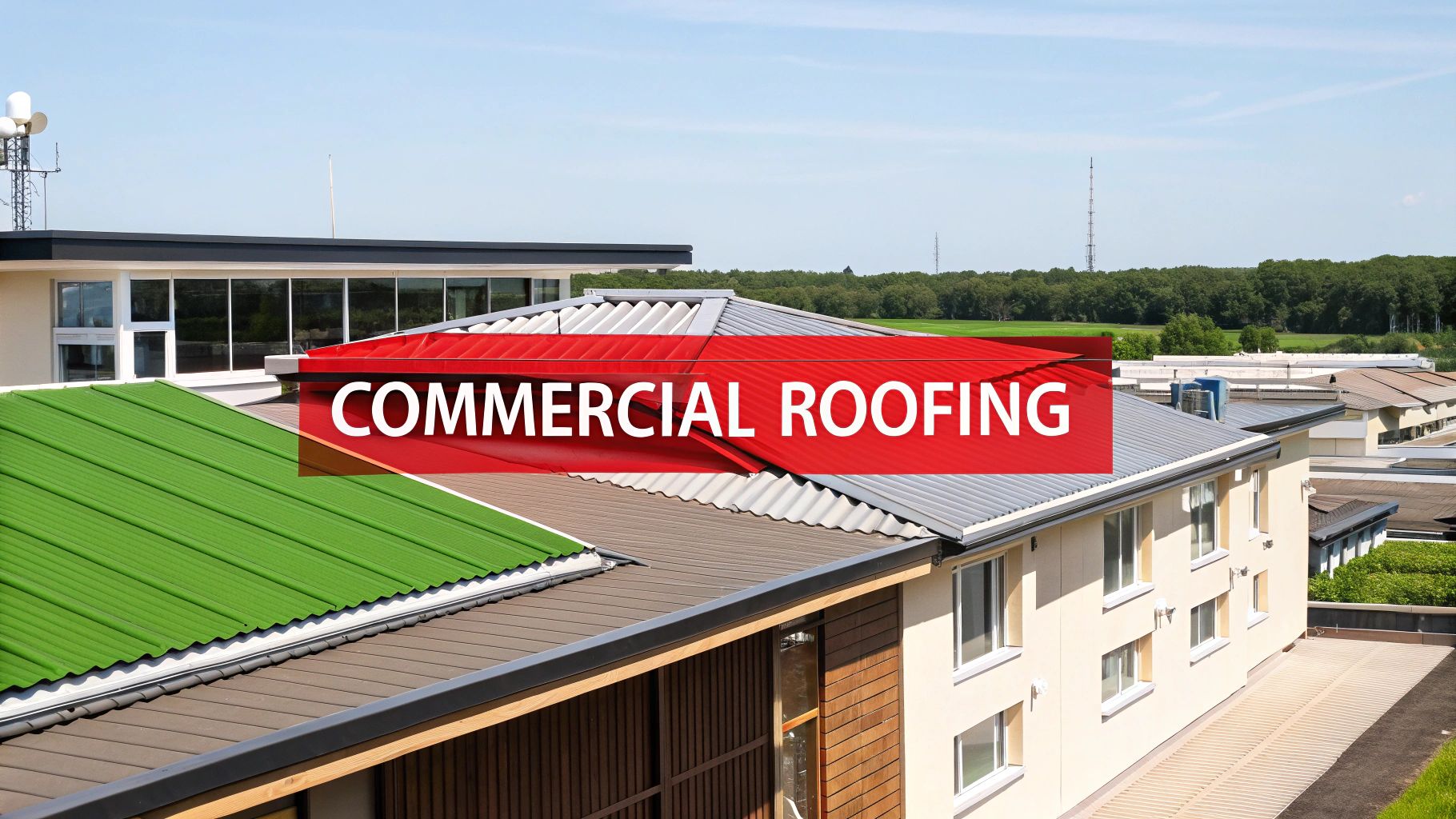

When choosing a roof, you're not just picking a color or material—you're selecting a critical architectural feature that defines your home's style, energy efficiency, and defense against the elements. From the classic peak of a Gable roof to the modern lines of a Butterfly design, each shape offers distinct advantages and challenges. Understanding these differences is the key to making a smart, long-lasting investment in your property.
This visual guide breaks down 10 of the most common different types of roofs with pictures to help you see how each style looks and performs. We'll explore the pros, cons, and best applications for each, with a special focus on what works best in demanding climates. Whether you're building new, replacing an old roof, or just curious, this guide provides the clear insights you need.
Key Takeaways
- Function Follows Form: A roof's shape directly impacts its ability to shed water, withstand wind, and support attic space. Steeply sloped roofs like Gable and Gambrel are excellent for drainage, while aerodynamic Hip roofs offer superior wind resistance.
- Aesthetics and Architecture: The roof type is a defining element of your home's architectural style. A Mansard roof creates an elegant, European look, while a Shed roof offers a clean, modern aesthetic.
- Climate is Crucial: Local weather patterns should heavily influence your choice. In sunny climates, consider roof types that accommodate solar panels (like a Shed roof) or provide extra shade (like a Pyramid roof). In rainy areas, designs that prevent water pooling are essential.
- Cost vs. Value: Simple designs like Gable and Shed roofs are generally more affordable to build. Complex styles like Mansard or Butterfly roofs are more expensive due to intricate framing and labor but can add significant usable space or unique architectural value.
1. Gable Roof
A gable roof is arguably the most recognizable and classic roof style, especially in North American residential architecture. Its design is simple yet effective: two roof planes slope downwards from a central ridge, forming a distinct triangular shape, or "gable," at each end of the structure. This design's enduring popularity stems from its excellent water and snow-shedding capabilities and its cost-effective construction.
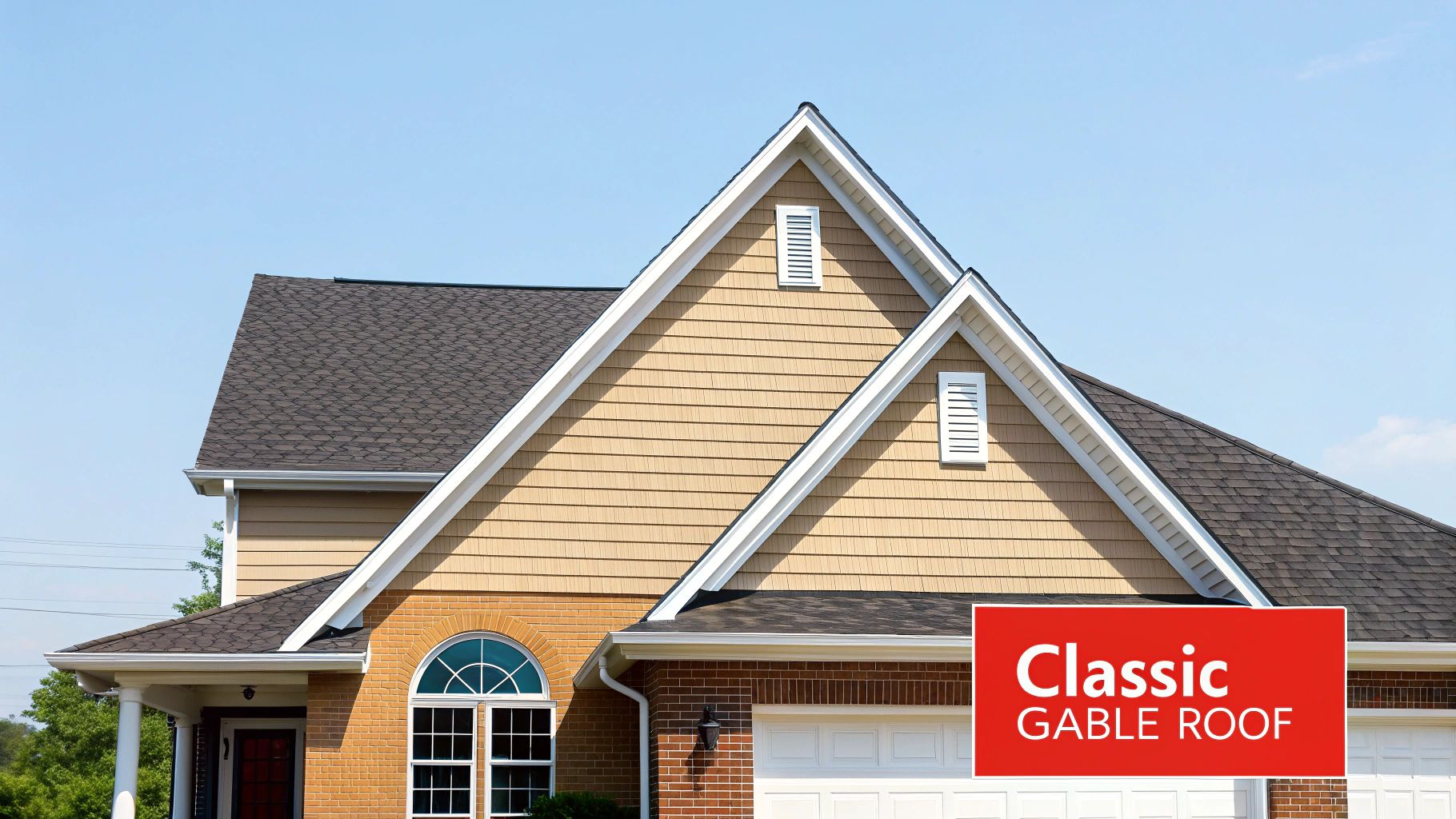
The pitched nature of the gable roof also creates valuable vaulted ceilings or attic space, which can be used for storage or even converted into living areas. This makes it a versatile choice for various home styles, from traditional farmhouses and New England Colonials to modern residential cottages.
Suitability for Arizona
In Arizona, a gable roof is a highly practical option. The steep pitch is less critical for snow, but it excels at quickly draining heavy monsoon rains, preventing water from pooling. The design also allows for easy installation of attic ventilation systems like ridge and soffit vents, which are crucial for expelling the intense heat that builds up during Arizona's hot summers. Proper ventilation helps reduce cooling costs and prolongs the lifespan of your roofing materials.
Gable Roof Pros & Cons
Pros:
- Cost-Effective: Simple design requires fewer materials and less labor.
- Excellent Drainage: The steep slope easily sheds rainwater.
- Versatile: Accommodates various roofing materials, from shingles to metal.
- Good Ventilation: The attic space allows for superior airflow.
Cons:
- Wind Vulnerability: Susceptible to damage in high-wind events if not properly braced. Overhangs can catch wind, leading to uplift.
- Complex Framing: Can be more complex to frame than a simple shed or flat roof.
The gable is a type of pitched roof, which is defined by its slope. For more details on the characteristics and benefits of sloped designs, you can explore this overview of what a pitched roof is. This timeless design remains a favorite for its blend of functionality, aesthetic appeal, and affordability.
2. Hip Roof
A hip roof, also known as a hipped roof, is characterized by its four sloping sides that meet at a central ridge or a single peak. Unlike a gable roof with its triangular ends, all sides of a hip roof slope downwards towards the walls, creating a more gentle, pyramid-like shape. This design is inherently more stable and durable than a gable roof, making it a popular choice in areas prone to high winds and severe weather.
The self-bracing nature of the hip design provides excellent resistance against wind uplift. Its continuous eave line on all four sides also offers better protection for the home's walls from the elements. This sturdy and balanced aesthetic is commonly found on various home styles, including Ranch, Mediterranean, and many modern suburban residences.
Suitability for Arizona
In Arizona, a hip roof is an exceptional choice due to its outstanding performance against strong winds, particularly during intense monsoon storms. The aerodynamic design allows wind to flow over and around the structure more easily, significantly reducing the risk of uplift and damage. The eaves on all sides also provide extra shade for the exterior walls, helping to keep the home cooler and reduce energy consumption during the blazing summer months.
Hip Roof Pros & Cons
Pros:
- Superior Wind Resistance: The self-bracing, sloped design is ideal for high-wind areas.
- Excellent Durability: With no large, flat ends to catch the wind, it is inherently more stable.
- Good Drainage: All four sides effectively channel water away from the foundation.
- Provides Shade: Overhangs on all sides help shade windows and walls from the sun.
Cons:
- Higher Cost: The more complex design requires more materials and skilled labor, increasing installation costs.
- Ventilation Challenges: Can be more difficult to ventilate properly compared to a gable roof, requiring specific hip and ridge vents.
- Less Attic Space: The inward-sloping sides reduce the amount of usable attic space.
The hip roof is a type of pitched roof celebrated for its robust construction. For those prioritizing storm-readiness and a solid, cohesive look, this design offers a fantastic blend of performance and curb appeal.
3. Mansard Roof
A mansard roof, also known as a French roof, is defined by its four sides, each featuring two distinct slopes. The lower slope is very steep, often almost vertical, while the upper slope is much flatter, sometimes not even visible from the ground. This elegant design, popularized by French architect François Mansart, maximizes the usable living space in the attic, effectively creating an entire extra floor known as a garret.
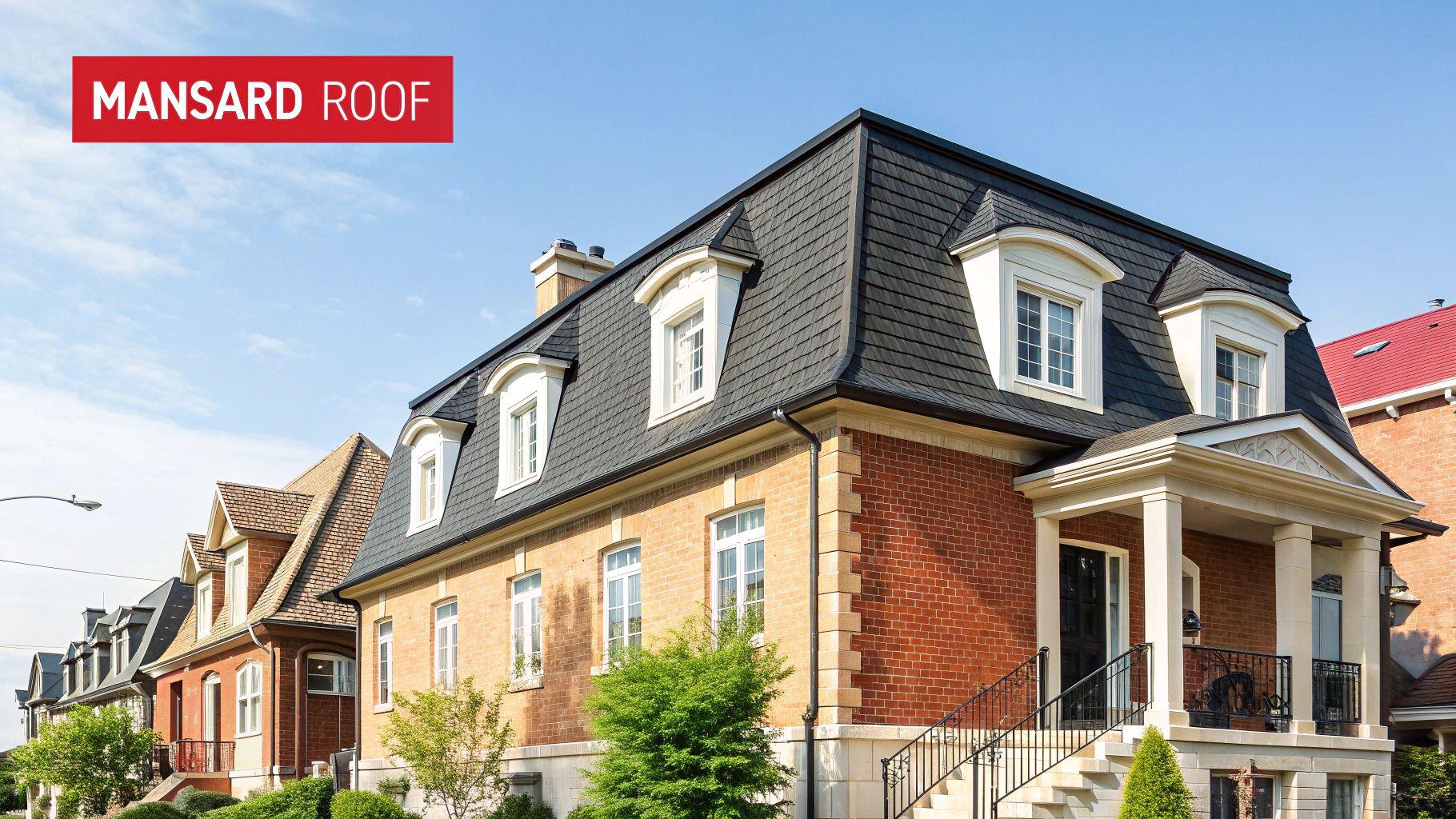
This distinctive style is frequently seen on Victorian mansions, Parisian apartment buildings, and high-end residential estates. The steep sides often feature dormer windows, which add architectural character while bringing natural light into the expanded attic space. Its unique profile offers a sophisticated and commanding aesthetic that stands out among other roofing styles.
Suitability for Arizona
In Arizona, a mansard roof presents both challenges and opportunities. The low-sloped upper portion is susceptible to intense sun exposure and potential water pooling during monsoon season, making material choice critical. However, the design provides an excellent opportunity to add a full story to a home without altering the main structure. Proper ventilation is absolutely essential to combat heat buildup in the large attic space, helping to manage cooling costs in the desert climate. The steep lower slopes are well-suited for shedding rain quickly.
Mansard Roof Pros & Cons
Pros:
- Maximizes Space: Creates a full, livable attic or upper story, adding significant square footage.
- Aesthetic Appeal: Offers a unique, elegant, and historic look that enhances curb appeal.
- Future Flexibility: The design simplifies future home additions and expansions.
- Natural Light: Easily accommodates dormer windows for a bright and airy top floor.
Cons:
- High Cost: Complex framing and construction lead to higher installation costs.
- Weather Vulnerability: The low-sloped upper section is prone to leaks and requires premium, weather-resistant materials.
- Difficult Repairs: Maintenance and repairs can be more complex and expensive due to the unique shape and access challenges.
The mansard is a complex but rewarding choice, offering unparalleled space and style. To better understand how its unique shape fits within various architectural approaches, you can explore more details about different roofing designs. This roof type is ideal for homeowners looking to make a grand statement while significantly expanding their living area.
4. Gambrel Roof
A gambrel roof, often called a barn roof, is a symmetrical two-sided roof with two slopes on each side. The upper slope is positioned at a shallow angle, while the lower slope is steep. This distinctive design maximizes headspace and usable floor area within the upper level, which is why it has been a staple of American barns, farmhouses, and Dutch Colonial-style homes for centuries.
This roof style is a popular choice for homeowners looking to create a spacious loft, attic, or a full upper story without increasing the overall height of the house significantly. Its classic, rustic charm adds significant curb appeal to properties, evoking a sense of traditional, countryside living.
Suitability for Arizona
In Arizona, a gambrel roof's steep lower slope is excellent for shedding heavy monsoon rains quickly, preventing water ponding. The large internal volume it creates can be a double-edged sword; while it offers great space, it can also trap a significant amount of hot air. Therefore, integrating a robust ventilation system with ridge vents and soffit vents is absolutely essential to manage heat buildup and maintain energy efficiency during the intense summer months. The design also works well with materials like metal roofing, which are popular in Arizona for their durability and heat-reflective properties.
Gambrel Roof Pros & Cons
Pros:
- Maximum Space: Creates a spacious attic or loft area, ideal for living quarters or storage.
- Simple Construction: Relatively easy to frame and build, which can help manage costs.
- Good Drainage: The steep lower slope effectively sheds rain.
- Classic Aesthetic: Provides a timeless, rustic look popular in many architectural styles.
Cons:
- Wind Vulnerability: The broad, flat upper slope can be susceptible to damage from high winds and uplift if not properly reinforced.
- Leak Prone: The ridges where the two slopes meet can be potential weak points for water intrusion if not correctly flashed and sealed.
A gambrel is one of the many different types of roofs with pictures that homebuilders choose for both style and function. For those considering this style, often associated with barns, understanding potential upkeep is important. You can learn more about typical Barn Roof Replacement Cost to better plan for long-term maintenance.
5. Shed Roof (Mono-Pitch)
A shed roof, also known as a mono-pitch or skillion roof, features a single sloping plane. Unlike traditional dual-pitched roofs, it angles in one direction, creating a simple, asymmetrical, and distinctly modern aesthetic. This minimalist design is increasingly popular for its clean lines, ease of construction, and practical benefits, making it a favorite for contemporary homes, additions, and commercial buildings.
The single-slope design allows for unique architectural features, such as taller walls on the high side, which are perfect for large window installations that let in abundant natural light. This makes the shed roof a functional choice for everything from artist studios and modern extensions to entire custom homes that prioritize an open, airy feel and a connection to the outdoors.
Suitability for Arizona
The shed roof is an excellent choice for Arizona’s climate. Its simple, sloped surface provides outstanding drainage during intense monsoon downpours, effectively preventing water pooling and potential leaks. Furthermore, the single-plane design is ideal for optimizing solar panel placement. The entire roof can be oriented to face south to maximize sun exposure, significantly boosting energy production and reducing utility costs.
The taller wall created by the slope also allows for clerestory windows, which can be strategically placed to capture daylight without direct, harsh sun exposure, helping to keep interiors bright and cool. This design is also well-suited for modern, desert-adapted architecture.
Shed Roof Pros & Cons
Pros:
- Simple Construction: Easier and faster to build than more complex roof types, often reducing labor costs.
- Excellent Drainage: The continuous slope efficiently directs rainwater away.
- Solar-Ready: The single plane is perfect for maximizing solar panel installation and efficiency.
- Modern Aesthetic: Provides a clean, minimalist look popular in contemporary architecture.
Cons:
- Lower Ceiling Issues: The lower end of the slope can result in limited ceiling height and headroom.
- Potential Gutter Strain: The single, long run of guttering must handle all roof runoff, requiring a robust system to prevent overflow.
- Limited Attic Space: The design typically does not create a usable attic area for storage or living space.
6. Pyramid Roof
A pyramid roof is a distinctive and structurally robust design where four triangular sides slope upwards to meet at a single peak, forming a pyramid shape. This type of hip roof is most commonly found on square or nearly square structures. Its sleek, geometric lines lend an air of elegance and permanence, making it a popular choice for everything from small gazebos and pool houses to grand architectural statement homes.
The inherent strength of the pyramid design comes from its self-bracing nature. Without the flat gable ends found on other roof types, all four sides are sloped and aerodynamic. This makes it exceptionally resistant to high winds and severe weather, as wind flows over the structure rather than battering against a vertical surface.
Suitability for Arizona
For Arizona properties, the pyramid roof offers significant advantages. Its aerodynamic shape provides superior performance against the strong winds associated with monsoon storms. All four sloped sides are excellent at shedding heavy rainwater quickly, which prevents pooling and potential leaks.
Furthermore, the generous eaves on all four sides of a pyramid roof can provide substantial shade, helping to keep the home's exterior walls and windows cooler. This passive cooling effect can contribute to lower energy bills during Arizona's intense summer heat. The design is well-suited for premium materials like tile or metal that reflect solar radiation.
Pyramid Roof Pros & Cons
Pros:
- Highly Durable: Extremely resistant to high winds and severe weather.
- Energy Efficient: The overhangs provide shade, and the large internal volume allows for more insulation.
- Aesthetically Pleasing: Offers a unique, symmetrical, and sophisticated look.
- Good Drainage: The slope on all four sides ensures excellent water runoff.
Cons:
- Higher Cost: More complex to design and build, requiring more materials and skilled labor.
- Reduced Attic Space: The converging slopes limit usable attic or storage space compared to a gable roof.
- Complex Repairs: Repairs and maintenance can be more difficult and expensive due to the design's complexity.
7. Dutch Gable Roof
A Dutch gable roof, also known as a gablet roof, is a hybrid design that elegantly combines the characteristics of both gable and hip roofs. It features a hip roof for the main, lower portion and a small gable, or "gablet," at the peak. This distinctive style adds architectural flair and visual interest, making it a popular choice for homeowners looking to create a more sophisticated and unique exterior.
This hybrid construction provides the practical benefits of a hip roof, such as improved wind resistance, while the upper gable adds attic space and improves ventilation. Its unique appearance can be seen in Dutch Colonial homes, traditional European architecture, and many Victorian-era properties, offering a touch of classic, stately charm.
Suitability for Arizona
For Arizona homeowners, the Dutch gable roof offers a compelling blend of storm resilience and heat management. The lower hip portion provides excellent stability against the strong winds common during monsoon season, much like a standard hip roof. The upper gablet, however, is key for our climate as it allows for the easy installation of a louvered vent. This vent provides a direct escape route for the intense heat that builds up in the attic, significantly improving your home's energy efficiency and reducing cooling costs during the scorching summer months.
Dutch Gable Roof Pros & Cons
Pros:
- Enhanced Attic Space: The gablet provides more usable attic room and natural light compared to a full hip roof.
- Aesthetic Appeal: Offers a unique and sophisticated architectural look that boosts curb appeal.
- Good Ventilation: The gable section allows for excellent ventilation, which is crucial in hot climates.
- Improved Wind Resistance: The hip design elements provide better performance in high-wind conditions than a standard gable.
Cons:
- Complex Construction: The hybrid design is more complicated and costly to frame and build than a simple gable or hip roof.
- More Potential Leak Points: The numerous joints and valleys between the hip and gable sections create more areas where leaks could develop if not sealed perfectly.
8. Butterfly Roof (Inverted V-Roof)
A butterfly roof is a dramatic and visually striking design often found in modern and mid-century modern architecture. It essentially inverts the traditional V-shape of a gable roof, with two planes sloping upwards from a central valley. This unique silhouette resembles a butterfly's wings in flight, creating an unmistakable aesthetic that allows for larger windows and more natural light.
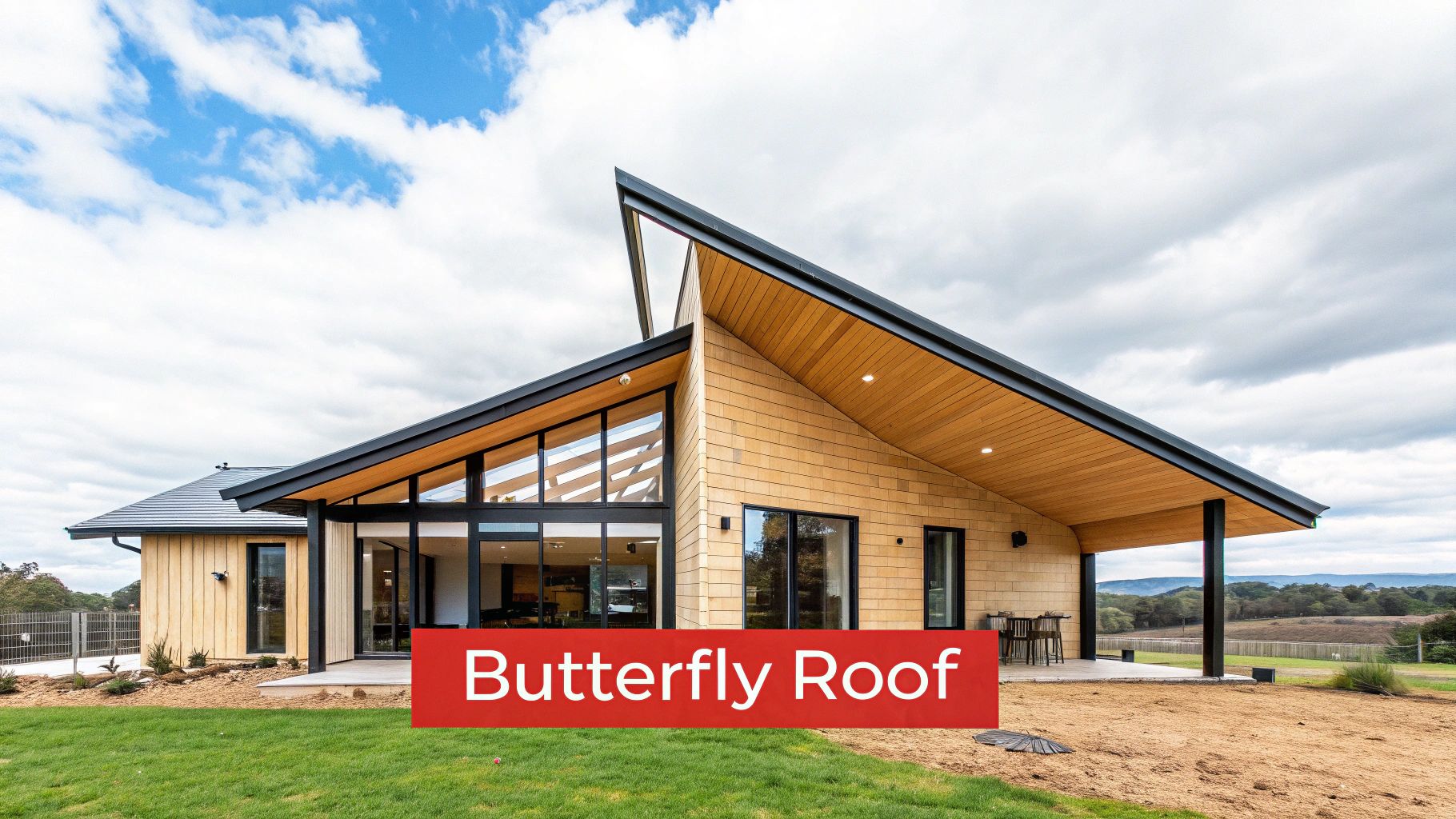
Beyond its bold look, the butterfly roof is functional. The central valley is ideal for collecting rainwater, making it a popular choice for eco-conscious homeowners who want to implement rainwater harvesting systems. The upward-angled eaves allow for taller exterior walls, accommodating expansive clerestory windows that flood interiors with daylight while maintaining privacy.
Suitability for Arizona
In Arizona, the butterfly roof is a statement piece that also offers practical benefits. Its design is perfect for rainwater collection, a significant advantage in an arid climate where water conservation is key. The ability to install large, high windows helps bring in ambient light without direct, harsh sun exposure, which can help manage indoor temperatures. However, the central valley requires meticulous waterproofing and a robust drainage system to handle intense monsoon downpours and prevent catastrophic leaks.
Butterfly Roof Pros & Cons
Pros:
- Aesthetic Appeal: Provides a unique, modern, and high-end architectural look.
- Natural Light: Allows for larger, higher windows (clerestory windows) that maximize daylight.
- Rainwater Collection: The central valley is ideal for efficiently channeling water to a collection system.
- Wind Resistant: The aerodynamic shape can perform better in high winds compared to traditional designs with large overhangs.
Cons:
- Complex & Expensive: Construction and installation are more complex and costly than standard roof types.
- Water Pooling Risk: The central valley is a major weak point; improper drainage or maintenance can lead to significant water pooling, leaks, and structural damage.
- Maintenance Intensive: Requires regular inspections and cleaning of the central drainage channel to prevent clogs.
This design merges elements of both sloped and flat roofing systems, requiring specialized installation. You can compare the foundational principles of its construction in this guide on flat roofs vs. pitched roofs. Ultimately, a butterfly roof is a fantastic choice for those prioritizing modern design and sustainability, provided it is expertly installed and maintained.
9. Dome Roof
A dome roof is a striking and ancient architectural design, featuring a hemispherical structure that sits atop a building. Its curved shape is not only visually impressive but also incredibly strong, distributing stress evenly across its surface. This inherent structural integrity allows domes to span vast open areas without the need for interior support columns, making them a choice for grand public buildings and unique residential homes.
From the historic Pantheon in Rome to modern geodesic domes, this roof type has been a symbol of innovation and permanence. The interior space beneath a dome is equally dramatic, often creating soaring ceilings and unique acoustics. Materials can range from traditional masonry and concrete to modern glass, metal, and advanced composites.
Suitability for Arizona
For Arizona, a dome roof offers exceptional energy efficiency. The curved surface minimizes the area exposed to direct overhead sun during the hottest parts of the day, reducing solar heat gain. This can significantly lower cooling costs. Their aerodynamic shape also makes them highly resistant to the high winds experienced during monsoon season. Furthermore, materials often used for domes, like concrete or spray foam, have excellent insulating properties well-suited to the desert climate.
Dome Roof Pros & Cons
Pros:
- Superior Durability: The shape is inherently strong and highly resistant to wind and other extreme weather.
- Energy Efficient: Less surface area for its volume reduces heat transfer, lowering heating and cooling bills.
- Long-Lasting: Often constructed from highly durable materials like concrete or metal.
- Spacious Interior: Creates a large, open interior space without needing support beams.
Cons:
- High Cost & Complexity: Construction is complex, requiring specialized labor and materials, making it very expensive.
- Difficult to Shingle: Applying traditional roofing materials like shingles is challenging and often impractical.
- Potential for Leaks: The numerous seams in some designs (like geodesic domes) can be prone to leaking if not expertly sealed.
A dome roof is a premium choice known for its strength and efficiency. While the initial investment is high, its longevity and energy-saving benefits can make it a worthwhile consideration for a truly unique and resilient structure.
10. Saltbox Roof
A saltbox roof is a unique and historically significant style, instantly recognizable by its asymmetrical design. This roof features two sloping sides of unequal length that meet at a central ridge, creating a distinctive profile that resembles the lidded, wooden boxes used to store salt in Colonial times. The rear roof plane is much longer and steeper, often extending down to the first-floor level, while the front has a shorter, more traditional pitch.
Originally developed in 17th-century New England, the design was often a practical way to add a lean-to addition to the back of a home. This added space on the first floor while creating a high, vaulted ceiling on the second. Today, its historic charm and functional layout make it a popular choice for traditional farmhouses, heritage property renovations, and custom-built homes seeking a classic American aesthetic.
Suitability for Arizona
While less common in Arizona's desert landscape, a saltbox roof can be a surprisingly practical choice. The long, steep rear slope is excellent for shedding heavy monsoon downpours, minimizing the risk of ponding water. This steep pitch is also ideal for mounting solar panels, allowing homeowners to maximize sun exposure and improve energy efficiency. The design provides natural shade on the side with the long overhang, helping to keep interior spaces cooler during the intense summer heat.
Saltbox Roof Pros & Cons
Pros:
- Excellent Durability: The steep rear slope provides natural durability against rain and wind.
- Good Drainage: Effectively sheds rainwater, preventing leaks and water damage.
- Additional Interior Space: Creates more usable living area on the first floor and vaulted ceilings on the second.
- Unique Aesthetics: Offers a distinctive, historical charm that stands out.
Cons:
- Complex Construction: The asymmetrical design is more complex and costly to frame than a simple gable.
- Limited Second-Floor Space: The sloped ceiling can create cramped rooms on one side of the upper level.
- Design Constraints: May not be suitable for all home layouts or architectural styles.
This roof style is a beautiful example of how historic designs can offer practical benefits. The saltbox is one of the many different types of roofs with pictures that combines functional water-shedding capabilities with a timeless architectural statement.
Visual Comparison of 10 Roof Types
| Roof Type | 🔄 Implementation Complexity | ⚡ Resource & Build Efficiency | ⭐ Key Advantages / Performance | 📊 Expected Outcomes / Impact | 💡 Ideal Use Cases / Tips |
|---|---|---|---|---|---|
| Gable Roof | Low — straightforward framing | Low materials & cost; fast to build | Excellent water/snow drainage; good attic ventilation | Efficient, cost-effective; maximizes attic space | Most climates; brace in high winds, add gutters |
| Hip Roof | Medium–High — more joints and hips | More materials & labor; slower build | Superior wind resistance; balanced appearance | Stable protection on all sides; less attic volume | Coastal/windy areas; use quality underlayment and ventilation |
| Mansard Roof | High — complex multi-slope framing | High cost and materials; slow build | Maximizes usable interior space; elegant look | Adds near-full additional story; higher maintenance risk | High-end/historic buildings; hire experienced contractors |
| Gambrel Roof | Medium — multiple slope transitions | Moderate–high materials; moderate build time | Maximizes loft/attic space; iconic barn profile | Good space utilization; needs careful flashing | Barns/colonial homes; use valley flashing and wind bracing |
| Shed Roof (Mono-Pitch) | Low — single sloping plane | Low cost; very efficient and quick | Modern clean aesthetic; ideal for solar panels | Excellent one-direction drainage; efficient for additions | Contemporary homes/studios; ensure structural support and gutters |
| Pyramid Roof | High — precise carpentry on four sides | High materials & labor; slower build | Strong structural integrity; superior wind resistance | Symmetrical drainage; best on square plans | Statement or square buildings; plan apex ventilation |
| Dutch Gable Roof | Medium–High — hybrid detailing | More materials; moderate build time | Combines gable attic space with hip stability | Improved wind resistance vs gable; more attic than hip | Dutch colonial/traditional projects; hire skilled roofers |
| Butterfly Roof | Very High — complex valley and drainage | High cost; specialized detailing; maintenance-heavy | Excellent for rainwater harvesting; dramatic interiors | Central valley requires upkeep; strong eco potential | Modern/eco homes; install premium waterproofing and gutters |
| Dome Roof | Very High — specialized engineering | Extremely high cost; specialized contractors | Exceptional strength; spans large areas without columns | Iconic appearance; high structural performance and cost | Civic/architectural projects; work with dome specialists |
| Saltbox Roof | Medium — asymmetrical framing loads | Moderate materials; moderate build time | Traditional colonial character; sheltered lean-to | Economical for additions; asymmetrical load management | Historic renovations/additions; ensure structural support and flashing |
Making the Right Choice for Your Arizona Roof
Navigating the world of roofing can feel overwhelming, especially with the sheer number of different types of roofs with pictures available for consideration. From the classic, functional Gable and Hip roofs that dominate residential landscapes to the architectural statements made by Mansard or Butterfly designs, each style presents a unique combination of aesthetics, performance, and cost. We've explored how a roof’s shape impacts everything from interior space and curb appeal to its ability to handle Arizona's intense solar radiation and monsoon winds.
The journey doesn't end with the roof's structure. As we've seen, selecting the right material, be it long-lasting tile, energy-efficient foam, or cost-effective asphalt shingles, is a critical decision. Each material offers a distinct set of pros and cons related to durability, maintenance, and its ability to reflect heat, a non-negotiable factor in our desert climate.
Strategic Takeaways for Your Roofing Project
To distill this information into actionable insights, let's recap the core strategic considerations for any Arizona property owner. Mastering these concepts will empower you to make an informed, confident decision that protects your investment for decades.
- Prioritize Climate Compatibility: Your roof is your home's first line of defense against the Arizona sun. Styles like the Hip roof offer superior wind resistance, while materials with high solar reflectivity (like light-colored tile, metal, or reflective coatings) are essential for energy efficiency and lower cooling bills.
- Balance Aesthetics with Functionality: While a unique style like a Dome or Butterfly roof can be visually stunning, weigh its architectural appeal against practical factors like installation complexity, maintenance requirements, and long-term performance.
- Understand the Lifecycle Cost: The cheapest upfront option is rarely the most cost-effective over time. A more expensive material like clay tile might have a higher initial cost but could outlast several asphalt shingle roofs, saving you money in the long run. To get a clear picture of what different options might cost for your specific property, it's wise to request a professional roofing estimate from qualified experts.
- Factor in Maintenance Realities: Flat and low-slope roofs, common in contemporary Arizona architecture, require diligent maintenance to prevent ponding water and ensure the integrity of their seals. In contrast, steeply pitched roofs shed debris and water more effectively, often requiring less frequent intervention.
Your Actionable Next Steps
Feeling empowered with this knowledge is the first step. Now it’s time to put it into action. Here is a clear roadmap to guide you from learning to doing:
- Assess Your Current Roof: Start by evaluating your existing roof. Is it performing well? Are there signs of wear, leaks, or heat intrusion? Understanding its current condition will inform whether you need a simple repair or a full replacement.
- Define Your Priorities: Create a checklist of what matters most to you. Is it energy efficiency, curb appeal, long-term durability, or budget? Rank these priorities to help narrow down your choices from the many different types of roofs.
- Consult with Local Professionals: The most crucial step is to connect with a reputable, licensed, and insured Arizona roofing contractor. A local expert can provide a thorough inspection, offer recommendations tailored to your home’s specific needs and our unique climate, and provide accurate cost breakdowns.
- Verify Materials and Warranties: Once you have a recommendation, investigate the specific materials proposed. Ask about manufacturer warranties and the contractor’s workmanship guarantee. A strong warranty is a sign of a quality product and a confident installer.
Your roof is more than just a structural component; it is a complex system that defines your home's character, efficiency, and safety. By thoughtfully considering the styles and materials we’ve covered, you are investing in the long-term health and value of your property. Making the right choice ensures peace of mind, knowing your home is well-protected and beautifully crowned for years to come.
Frequently Asked Questions (FAQs)
What is the most common type of roof for a house?
The most common type of residential roof in North America is the Gable roof. Its simple, triangular design is cost-effective to build, excellent at shedding water and snow, and provides ample space for an attic or vaulted ceilings, making it a versatile and popular choice.
Which roof type is the most durable and wind-resistant?
The Hip roof is generally considered one of the most durable and wind-resistant designs. With four sloping sides, it has an inherently self-bracing structure that is more aerodynamic than a gable roof, allowing high winds to flow over it with less risk of uplift. Pyramid roofs and Domes are also exceptionally strong and wind-resistant.
Which type of roof is best for solar panels?
A Shed roof (or mono-pitch roof) is often the best design for maximizing solar panel efficiency. Its single, large plane can be oriented to face the sun directly (south-facing in the northern hemisphere) without any hips, valleys, or gables interrupting the layout. Simple Gable roofs also provide a good, uninterrupted surface for solar arrays.
What is the most expensive type of roof?
Complex designs like the Mansard, Butterfly, or Dome roof are typically the most expensive. Their high cost is due to intricate framing, the need for specialized labor and materials, and more complex waterproofing and drainage requirements. The Mansard adds a full story of living space, while the Butterfly requires a robust central drainage system, both of which add significantly to the overall expense.
How do I choose the right roof for my climate?
For hot, sunny climates, prioritize roofs that offer shade (like Hip or Pyramid roofs) and are suited for reflective materials. For rainy areas, focus on steeply pitched designs like Gable, Gambrel, or Saltbox roofs that shed water quickly. In windy regions, aerodynamic shapes like Hip and Dome roofs offer the best performance. Always consult with a local roofing professional who understands the specific demands of your region.
Guides written and reviewed by the licensed roofers at Arizona Roofers (ROC#356304 · ROC#356639), a GAF Master Elite® contractor and 2026 GAF President’s Club Residential Award winner. About our team →