
Wondering "how long does a roof normally last?" is a crucial question for any homeowner. The lifespan of your roof is one of the most significant factors in your home's long-term health and value. A roof isn't just a simple cover; it's a complex system designed to protect your biggest investment from the elements. Its longevity can range dramatically, from a modest 20 years to well over a century.
This huge variation depends on several key factors: the roofing material itself, the quality of the installation, the climate you live in, and how well you maintain it over the years. Understanding these elements is the first step to accurately gauging how long your own roof will last and making informed decisions about its care and eventual replacement.
Key Takeaways
- Material Matters Most: The type of shingle, tile, or metal on your roof is the biggest predictor of its potential lifespan. Asphalt shingles typically last 20-30 years, while materials like slate can last over 100 years.
- Installation Quality is Crucial: A professional, high-quality installation is non-negotiable. Shoddy workmanship can cut a roof's life in half, regardless of the material used.
- Climate is a Constant Stress Test: Intense sun, high winds, hail, and freeze-thaw cycles all work to wear down your roof over time. A roof in a harsh climate will not last as long as one in a mild one.
- Maintenance is Your Best Defense: Regular inspections and proactive maintenance, like cleaning gutters and trimming trees, can significantly extend your roof's service life and prevent costly premature failure.
Understanding Your Roof's Lifespan
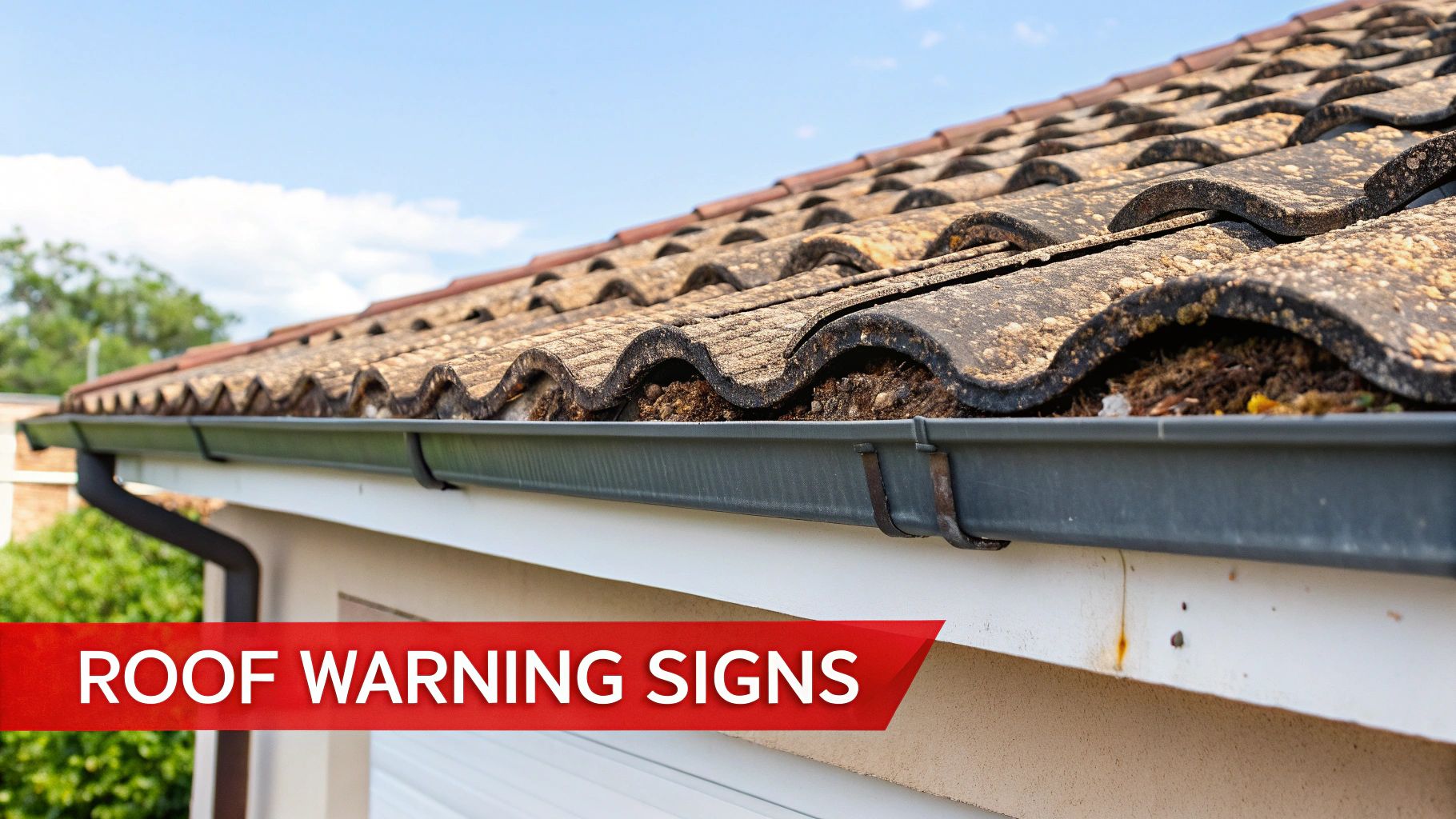
A roof isn't just a single product; it's a complete system working together. Just like a car's longevity depends on its model, how you drive it, and whether you get the oil changed, your roof's health is a mix of its core materials and the daily stress it's put under. Think of its lifespan less like a hard expiration date and more like a performance window.
Average Roof Lifespan by Material
The material you choose is the foundation of your roof's lifespan. To give you a clearer picture, here’s a quick breakdown of what you can expect from the most common residential roofing options.
| Roofing Material | Typical Lifespan (Years) | Key Considerations |
|---|---|---|
| Asphalt Shingles | 20-30 | Most popular and affordable, but less durable in extreme climates. |
| Metal Roofs | 40-70 | Highly durable and energy-efficient, but a higher upfront investment. |
| Clay/Concrete Tiles | 50-100 | Excellent longevity and fire resistance, but heavy and can be brittle. |
| Slate | 75-200+ | The ultimate in durability and aesthetics, but also the most expensive and heavy. |
As you can see, the jump from standard asphalt to premium slate is massive. For a deeper dive into the specifics of each material, you can find more insights on roofing timelines at graduatecontracting.com.
A Look at Different Roofing Materials and How Long They Last
The single biggest factor in your roof's lifespan is the material it's made from. Think of it like a winter coat—a simple windbreaker won't protect you from a blizzard the same way a heavy-duty parka will. Each roofing material offers a different level of protection and, consequently, a different expected service life.
Getting a handle on these differences is the first step to understanding how long your own roof should last.
Asphalt Shingles: The Go-To Choice for Most Homeowners
Drive through any neighborhood in America, and you'll see a sea of asphalt shingles. They're popular for a good reason: they hit a sweet spot between affordability and reliability. But it's important to know that not all asphalt shingles are the same.
- 3-Tab Shingles: This is your basic, entry-level shingle. They have a flat, single-layer design that gets the job done at a lower cost, but you can expect a shorter lifespan of around 15 to 20 years.
- Architectural Shingles: These are a significant step up. With a thicker, layered construction, they not only look better with more dimension but are also far more durable. You can realistically expect them to last 25 to 30 years, sometimes even longer.
That extra thickness in architectural shingles gives them much better resistance to wind and hail. While they cost more upfront, you're buying an extra decade or more of performance.
Metal Roofing: A Tough and Long-Lasting Option
Metal roofing has become a real contender in recent years, especially for homeowners looking for a long-term solution. A metal roof laughs at things that plague other materials—it won't crack, rot, or lose granules. It’s also incredibly resistant to fire and insects.
The lifespan can vary a bit depending on the specific metal:
- Steel (Galvanized or Galvalume): The most common choice for residential metal roofs. Modern coatings keep rust at bay, giving these roofs a solid lifespan of 40 to 70 years.
- Aluminum: A fantastic option, especially near the coast. It's lighter than steel and naturally rust-proof, so you don't have to worry about salty air. Expect it to last 50 years or more.
- Copper and Zinc: These are the heirlooms of the roofing world. They're a major investment, but they can easily last for 100+ years, developing a beautiful, natural patina as they age.
If you're intrigued by the idea of a roof that could last a lifetime, it's worth weighing the various benefits and drawbacks of metal roofing to see if it makes sense for your home and budget.
This infographic gives you a quick visual breakdown of how different materials stack up.
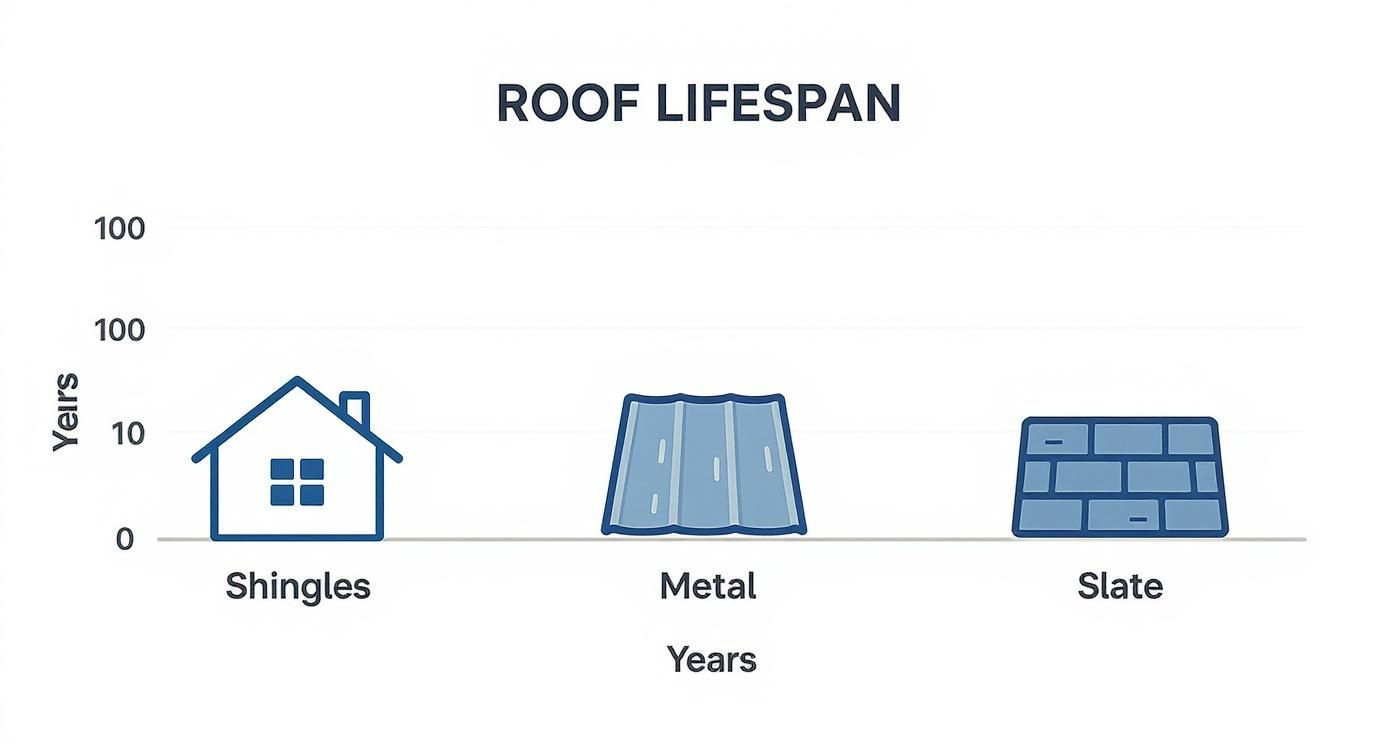
As you can see, the jump from standard shingles to materials like metal is huge, which really highlights the long-term value you're getting.
Tile, Slate, and Wood: The Classic, Time-Tested Materials
Beyond the mainstream options, there are a few classic materials that have been protecting homes for centuries.
Slate: When it comes to longevity, nothing beats natural stone. A slate roof, when installed correctly, can last an incredible 75 to 200 years. It will almost certainly outlive you! The main hurdles are its immense weight and significant cost.
Clay and Concrete Tiles are another fantastic choice, particularly for certain home styles like Mediterranean or Spanish Colonial. They're fireproof and incredibly tough, often lasting 50 to 100 years. Just be aware they are also heavy and can crack from a severe impact.
Wood Shakes and Shingles, usually made from cedar, offer a gorgeous, rustic look that many people love. If you keep up with maintenance to fend off moss and rot, a wood roof can last 25 to 40 years. Its performance, however, really depends on living in a climate that's not constantly damp.
How Your Local Climate Impacts Your Roof's Health
A roof’s warranty might give you a nice, clean number for its lifespan, but that's based on perfect lab conditions. Out here in the real world, your local climate is the single biggest factor working against your roof, day in and day out. Getting a handle on how weather impacts your specific roof is key to understanding how long it will actually last.
Think of constant, intense sun as a never-ending sunburn for your shingles. All that ultraviolet (UV) radiation slowly bakes the vital oils right out of the asphalt. This abuse leaves them brittle, dried-out, and far more likely to crack and fail years ahead of schedule. It's a massive problem in sun-belt states where the sun is relentless.
For a deep dive into how that desert heat really punishes a roof, check out our complete lifespan guide for Arizona homeowners.
The Impact of Wind and Rain
It's not just the sun you have to worry about. High winds and constant rain bring their own brand of trouble. Wind damage isn't just a hurricane-level event; even steady, everyday gusts can slowly lift the edges of shingles, breaking their factory seals. Once that seal is compromised, that shingle is just waiting for the next big storm to tear it right off.
A study from the Insurance Institute for Business & Home Safety (IBHS) was pretty eye-opening. They found that over 40% of homes older than five years in windy areas had shingle damage, even from low-speed winds. Their research showed that aging alone can slash a roof's real-world lifespan to just 10 to 15 years in these tougher climates.
That data is a stark reminder of how much your local weather can cut a roof's life short, no matter what the manufacturer's estimate says. You can see the full research about the performance of asphalt shingle roofs to learn more.
Damage from Hail and Ice
In other parts of the country, hail and ice are the primary villains. Hailstones are basically little hammers falling from the sky, leaving dents in metal panels, cracking tiles, and blasting the protective granules off asphalt shingles. Every impact creates a weak spot, an invitation for a future leak.
Then you have the destructive freeze-thaw cycle in colder regions. It's a sneaky process:
- Sunlight melts snow on the upper part of your roof, and the water runs down toward the colder edges.
- At the eaves, where it’s still below freezing, that water refreezes into a ridge of ice called an ice dam.
- More meltwater gets trapped behind this dam, with nowhere to go but up and under your shingles, eventually leaking into your home.
This relentless cycle of expansion and contraction puts immense stress on roofing materials, causing them to warp, split, and ultimately fail. A roof in a mild, stable climate just doesn't have to endure that kind of constant battle, which is exactly why location plays such a massive role in answering, "how long does a roof normally last?"
The Hidden Factors That Can Wreck Your Roof's Lifespan
You can pick the best shingles on the market and live in a mild climate, but a few hidden culprits can still secretly destroy your roof from the inside out. Even top-of-the-line materials can't stand up to a botched installation or a hostile attic environment. Understanding these threats is the real key to figuring out how long your roof will actually last.
The single biggest wild card that can doom a roof right from the start is the quality of the installation. It’s like building a beautiful house on a crumbling foundation—it doesn't matter how strong the walls are if the base is bad.
A shoddy installation—think improperly driven nails, sloppy flashing around chimneys, or weak seals—can cause a brand-new, premium roof to fail in less than a decade. This is exactly why your contractor's reputation is every bit as important as the materials they're putting on.
A roof installed the right way is set up to win. One that isn't is just a countdown to an expensive, premature replacement.
Your Attic: Your Roof's Best Friend or Worst Enemy?
Believe it or not, your roof needs to breathe. An attic without good ventilation becomes a pressure cooker in the summer, trapping super-heated air that literally bakes your shingles from below. This intense heat melts the adhesive that holds them together, causing them to curl, crack, and fail years ahead of schedule.
Come winter, the problem reverses. All that warm, moist air from your showers, cooking, and daily life rises into the attic. If it has nowhere to go, it condenses on the cold underside of your roof deck. This creates a perfect storm for:
- Mold and mildew that can rot the wooden frame of your roof.
- Decay of the roof decking, which weakens the whole structure.
- Ice dams that build up on the edge of your roof, pushing water back up under the shingles.
Beyond the obvious, hidden moisture sources from things like an improper dryer vent installation that can lead to attic moisture problems can silently shave years off your roof's life. A healthy, well-ventilated attic is non-negotiable for a long-lasting roof.
What's Happening Around Your Roof Matters, Too
Finally, don't forget to look at the immediate surroundings. What's happening around your roof is just as important as what's on it. Overhanging tree limbs are a classic culprit; they can scrape off the protective granules on your shingles every time the wind blows. Worse, a heavy branch can snap in a storm and cause serious impact damage.
Clogged gutters are another major threat. When they can't drain properly, rainwater backs up and overflows, constantly soaking the edge of your roof. This persistent moisture will rot out the fascia boards and the underlying roof decking, creating a perfect entry point for leaks and widespread damage.
It all goes to show that a roof isn't just a single product—it's a complete system. Its lifespan depends on every part working together in harmony: the installation, the ventilation, and the ongoing maintenance.
Proactive Maintenance to Maximize Your Roof's Lifespan
https://www.youtube.com/embed/koDbhaJV6bo
Think of your roof like a car—you wouldn't just drive it for years on end without an oil change and expect it to run perfectly. The same logic applies to your roof. Proactive maintenance is hands-down the most effective way to protect your investment and ensure it lasts as long as it was designed to. A little attention now can save you from massive, expensive problems down the road.
Putting off maintenance isn't just a gamble; it's a guaranteed way to shorten your roof's life. Here in the U.S., about 7% of single-family homes get re-roofed every year, and a surprising number of those replacements happen prematurely because of avoidable wear and tear. With the average asphalt roof replacement costing around $10,000, a little preventative care is a pretty smart financial move.
Your Seasonal Maintenance Checklist
Regular inspections are the bedrock of a healthy roof. When you catch small issues early, you stop them from escalating into major leaks or, worse, structural damage. Following a simple seasonal checklist can make all the difference.
-
Spring Cleaning: Once the winter weather breaks, it's time to check for any damage from ice, snow, or wind. Look for any loose or missing shingles and get those gutters and downspouts cleaned out from all the winter debris.
-
Summer Watch: The intense summer sun can be brutal, causing some materials to warp or crack. Keep an eye out for signs of UV damage and double-check that your attic ventilation is working properly to prevent a massive heat buildup.
-
Fall Preparation: Before the rain and snow return, clear all the leaves, twigs, and branches off your roof and out of your gutters. It’s also the perfect time to trim back any overhanging limbs that could scrape the roof surface or snap off during a storm.
-
Winter Check-In: After a heavy snowfall, safely check for ice dams forming along the edge of your roof. These ridges of ice can trap melting snow, forcing water up under your shingles and causing some pretty serious leaks.
As a rule of thumb, give your roof a good look twice a year—once in the spring and again in the fall. It's also wise to do a quick check after any major storm. This simple habit is the key to getting the most out of your roof's lifespan.
When to DIY and When to Call a Pro
Many basic maintenance tasks are well within the reach of a confident homeowner. Cleaning out gutters or trimming back small branches are great examples.
However, anything that requires you to walk on the roof, repair flashing, or deal with significant damage is a job best left to a professional. A trained roofer can spot subtle issues that an untrained eye would easily miss. Our detailed roof maintenance checklist is a great resource to help guide you on what to look for.
And if your home has solar panels, don't forget about them. Knowing how to properly maintain them, which might include hiring professional solar panel cleaning services, is another piece of the puzzle. Keeping them in good shape ensures their mounting integrity remains solid and prevents debris from building up, which indirectly helps your roof last longer.
Telltale Signs Your Roof Needs Replacement
Even the toughest, best-installed roof won't last forever. While knowing the average lifespan of your roofing material is a great starting point, the real key is learning to spot the specific warning signs yourself. Catching them early lets you address a small issue before it escalates into a full-blown disaster.
Thankfully, you don't need to be a professional to play roof detective—many of these red flags are easy to see from the ground. Start by just looking up. Do you see shingles that are curling up at the edges? Are there visible cracks or shingles that look buckled? These are classic signs that your shingles are getting old, brittle, and have lost their waterproofing integrity after years of baking in the sun.
Another obvious giveaway is finding entire shingles missing from your roof. Those gaps are like an open door, inviting rain to seep into the underlying structure and cause some serious, and often hidden, damage.
What to Look for Up Close
If you can safely get a closer view (maybe from a ladder or by checking your gutters), you'll find even more clues. For asphalt shingle roofs, one of the biggest tells is finding a buildup of shingle granules in the gutters.
Think of these granules as a protective shield for the shingle. When that layer starts washing away, it leaves behind "bald spots" that expose the shingle to harsh UV rays, dramatically speeding up its decline.
When you start seeing piles of these tiny, sand-like particles in your downspouts, take it seriously. It’s one of the clearest signals out there that your roof's primary line of defense is breaking down and it’s nearing the end of its life.
Keep an eye out for these other common trouble spots as well:
- Dark Streaks or Stains: This is often just cosmetic algae, but widespread, dark staining can also be a sign of trapped moisture beneath the surface.
- Sagging Roof Deck: If your roofline looks droopy or bowed, don't wait. A sagging roof points to a serious structural problem that demands immediate attention from a professional.
- Sunlight in the Attic: This one is a dead giveaway. Head up to your attic on a sunny day—if you see beams of light coming through the roof boards, you have active holes.
Spotting these issues early puts you in control. It gives you the power to plan for a roof replacement on your own timeline, rather than making a frantic call for an emergency repair during the next big storm.
Frequently Asked Questions
When it comes to your roof, a little bit of knowledge goes a long way. Here are answers to some of the most common questions homeowners have about roof longevity.
Can I install a new roof over my old one?
While building codes sometimes allow for a second layer of asphalt shingles, it is rarely a good idea. This "roof-over" approach can trap moisture, hide serious problems with the roof deck underneath, and add significant extra weight to your home's structure. A full tear-off is almost always the better, safer long-term solution.
Does a long-term warranty guarantee my roof's lifespan?
Not exactly. A manufacturer's warranty is designed to cover defects in the shingles themselves—like premature cracking or granule loss due to a factory flaw. It will not cover failures caused by poor installation, storm damage, or inadequate attic ventilation. That’s why securing a separate workmanship warranty from your contractor is so important.
How much value does a new roof add to a house?
A new roof is a major selling point and a huge boost to curb appeal. While you might not recoup 100% of the cost, national data suggests homeowners can expect to recover over 60% of the expense of a new asphalt roof in added home value. For potential buyers, a new roof means peace of mind and one less major expense to worry about, making your home much more attractive on the market.
Is it worth paying more for a metal or tile roof?
This depends on your long-term plans. If you intend to stay in your home for many years, then premium materials are often a smart investment. While metal, tile, and slate have a higher upfront cost, they can last 50 years or more. Over that time, you might need to replace a standard asphalt roof twice. When you factor in the superior durability and potential energy savings, the initial investment can make excellent financial sense.