
Deciding whether to repair or replace your roof is one of the most significant decisions a homeowner can face. It's a balance between a short-term fix and a long-term investment that protects your entire home. A simple repair can solve minor, isolated issues, but widespread damage or an aging system often demands a full replacement. Understanding the key differences in cost, lifespan, and value is crucial to making a confident, cost-effective choice.
Key Takeaways
Before we dive deep, here are the essential points to guide your decision:
- Age is a Major Factor: An asphalt shingle roof over 20 years old is often a better candidate for replacement, as repairs on an end-of-life system are rarely cost-effective.
- Scope of Damage is Critical: Small, contained problems like a few missing shingles or a minor leak are perfect for a repair. Widespread issues like curling shingles, significant granule loss, or sagging indicate a full replacement is necessary.
- Cost vs. Value: Repairs offer a low-cost, immediate solution to a specific problem. A replacement is a significant upfront investment but provides decades of protection, boosts your home's resale value, and can improve energy efficiency.
- Insurance Coverage: Homeowners insurance typically covers sudden, unexpected damage (like from a storm) but will not pay to replace a roof that has failed due to old age or lack of maintenance.
Your Quick Guide to Roof Repair vs Replacement
Figuring out whether to patch up your roof or replace it entirely is one of the biggest decisions you'll make as a homeowner. It's a classic case of a short-term fix versus a long-term investment.
A repair is a targeted strike, perfect for taking care of specific problems like a few shingles that went missing in a storm or a small leak cropping up around a vent. A full replacement, on the other hand, is a complete overhaul—it’s what you do when the entire roofing system is failing, usually due to age or massive damage.
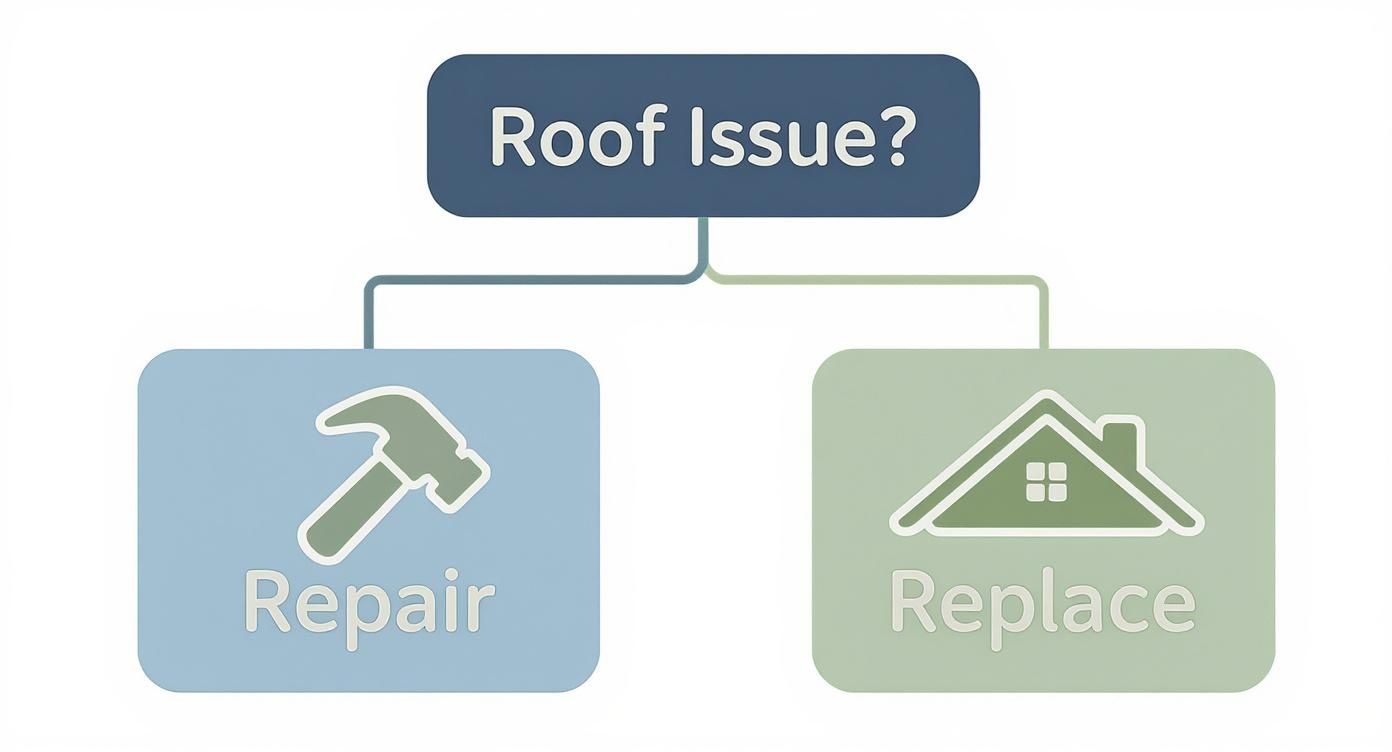
As the graphic shows, it almost always comes down to the roof's age and just how bad the damage is. Those two factors will steer you toward either a quick patch or a complete do-over.
Decision Matrix Repair vs Replace At a Glance
Sometimes you just need to see it all laid out. This table breaks down the key factors to help you decide between a repair and a full replacement.
| Factor | Ideal for Roof Repair | Necessary for Roof Replacement |
|---|---|---|
| Damage Scope | Localized to a small area (under 30% of the roof) | Widespread, systemic damage affecting large sections |
| Roof Age | Under 15-20 years old with years of life remaining | Exceeding its expected lifespan (e.g., 20+ years for asphalt) |
| Project Cost | Low upfront cost, typically a few hundred to a couple thousand dollars | Significant investment, often thousands of dollars |
| Issue Type | A few missing/cracked shingles, minor flashing issues, small leaks | Extensive granule loss, sagging, widespread curling shingles, major leaks |
| Long-Term Value | Addresses immediate problem, extends current roof's life slightly | Boosts home value, provides 20-50 years of protection, improves energy efficiency |
This quick comparison should make it clearer which path is the right one for your specific situation.
Key Insight: I always tell homeowners to think of it like car maintenance. A repair is like getting new brake pads—a targeted, necessary fix. A replacement is like getting a whole new engine—it’s a major investment you make when the core system just can't be trusted anymore.
This same logic applies to other parts of your roof. For example, when you have problems with skylights, you have to weigh skylight repairs versus upgrading. Sometimes, a full upgrade offers far better long-term performance and efficiency, just like a new roof.
Getting Real About the Cost of Your Roofing Decision
When you're staring down a roof problem, the first quote you get is just the beginning of the story. Deciding between a repair and a full replacement isn't just about the immediate bill—it's about understanding the long-term financial picture. This is a major investment, one that directly impacts your home's safety, value, and your own peace of mind for years, even decades.
Let's talk numbers. Nationally, the average roof repair runs about $750. Of course, that's a huge range. A few missing shingles might only set you back $300, while a serious fix involving water damage could easily top $2,000.
On the other hand, a full replacement for an average-sized home with asphalt shingles is now around $30,680. That figure is up nearly 15% from 2022, thanks to rising material costs and a shortage of skilled labor. Industry reports have been tracking these trends, showing just how much the market has shifted.
The Real Price of a "Simple" Repair
A minor repair can feel like a no-brainer. After a storm blows through, replacing a few shingles for a few hundred bucks seems like an easy win. And sometimes, it is.
If your roof is still fairly new and in otherwise great condition, a targeted repair is absolutely the right call. But context is everything. Slapping that same patch on a 20-year-old roof is often just kicking the can down the road. You might stop one leak today, only to find another one starting a few feet away next month.
Expert Insight: Think of it this way: making constant repairs on an old roof is like a subscription you can't cancel. Shelling out $500 three times a year adds up to $1,500 fast. That's money that could have gone toward a brand-new roof that comes with a solid, multi-decade warranty.
Understanding the Investment in a New Roof
A full roof replacement is a big number on paper, no doubt about it. But it's better to think of it as an investment in certainty. You're buying durability, protection, and a long-term solution. The final price tag, however, depends on several key things every homeowner needs to know.
The materials you choose play a huge role in both the cost and the final look.
As you can see, the options range from classic asphalt to long-lasting tile, and each one comes with a different price point and lifespan.
But the shingles are only part of the equation. Here are the main factors that drive the total cost:
- Material Choice: Standard asphalt shingles are the most common and budget-friendly choice. If you step up to architectural shingles, metal, or tile, you'll pay more upfront, but you'll also get a much longer lifespan and a serious boost in curb appeal.
- Roof Complexity: A simple, low-sloped gable roof is straightforward and less costly to replace. A roof with steep pitches, multiple valleys, dormers, and skylights is a different story. All those angles and features require more time, skill, and specialized flashing, which adds up.
- Local Labor Rates: Labor is a huge chunk of the final bill, often making up 40-60% of the total cost. These rates swing pretty widely depending on where you live and the demand for experienced roofing crews in your area.
- Hidden Damage: You never truly know what's underneath until the old roof comes off. If the crew pulls back the shingles and finds rotted decking or compromised trusses, those necessary repairs will be added to the final invoice.
To get a clearer picture of what a new roof might cost for your home, using a detailed estimator is a great next step. You can learn more about the variables by exploring our guide on what goes into a roof replacement cost estimator. This helps you move from a ballpark guess to a realistic budget, making it easier to weigh the long-term security of a replacement against the short-term savings of another repair.
Decoding the Signs: When to Repair vs. Replace
Knowing how to read the warning signs on your roof is the first—and most important—step in making the right call. Some issues are just minor annoyances that need a quick fix, while others are symptoms of a much deeper, systemic failure. Getting this diagnosis right saves you money, stress, and protects the very structure of your home.

Think of this as a field guide to your home’s most important shield. We’ll walk through the specific signs of damage to help you distinguish between a problem that needs a simple patch and one that signals your roof's time is up.
Clear Signals for a Targeted Roof Repair
A roof repair makes perfect sense when the damage is isolated and the rest of your roofing system is still in good shape. These are usually straightforward jobs that target a specific point of failure without needing a massive overhaul.
You're likely in the clear for a repair if you spot these issues:
- A Few Missing Shingles: It’s not uncommon to lose a few shingles after a heavy windstorm. As long as it's a small number and the surrounding shingles look healthy, a roofer can easily slide new ones into place.
- Localized Leaks: See a small water stain on your ceiling? It often points to a single problem area, like the flashing around a chimney, vent pipe, or skylight. These seals are common culprits and can usually be repaired on their own.
- Minor Granule Loss: A small pile of asphalt granules in your gutters is a normal part of a roof's aging process. If the amount is minor, it's not a five-alarm fire, but it is a reminder to keep an eye on things.
The key word here is containment. If the problem is confined to one small area and your roof is less than 15-20 years old, a professional repair can buy you several more years of solid performance.
Red Flags That Point to a Full Replacement
While repairs handle the small stuff, a full replacement becomes the only real option when the entire system is compromised. These aren't just isolated incidents; they're signs of widespread material failure or just plain old age. Ignoring them is asking for trouble.
Critical Takeaway: A roof is a complete system. When multiple parts start failing at once, patching one leak is like putting a band-aid on a broken arm. A full replacement is the only way to restore the roof's integrity for the long haul.
Keep an eye out for these undeniable red flags:
- Your Roof's Age: This is the big one. An asphalt shingle roof is built to last about 20-25 years. If your roof is creeping up on that age—or has already passed it—replacement becomes the smart, proactive choice, even if the damage doesn't look that bad from the ground.
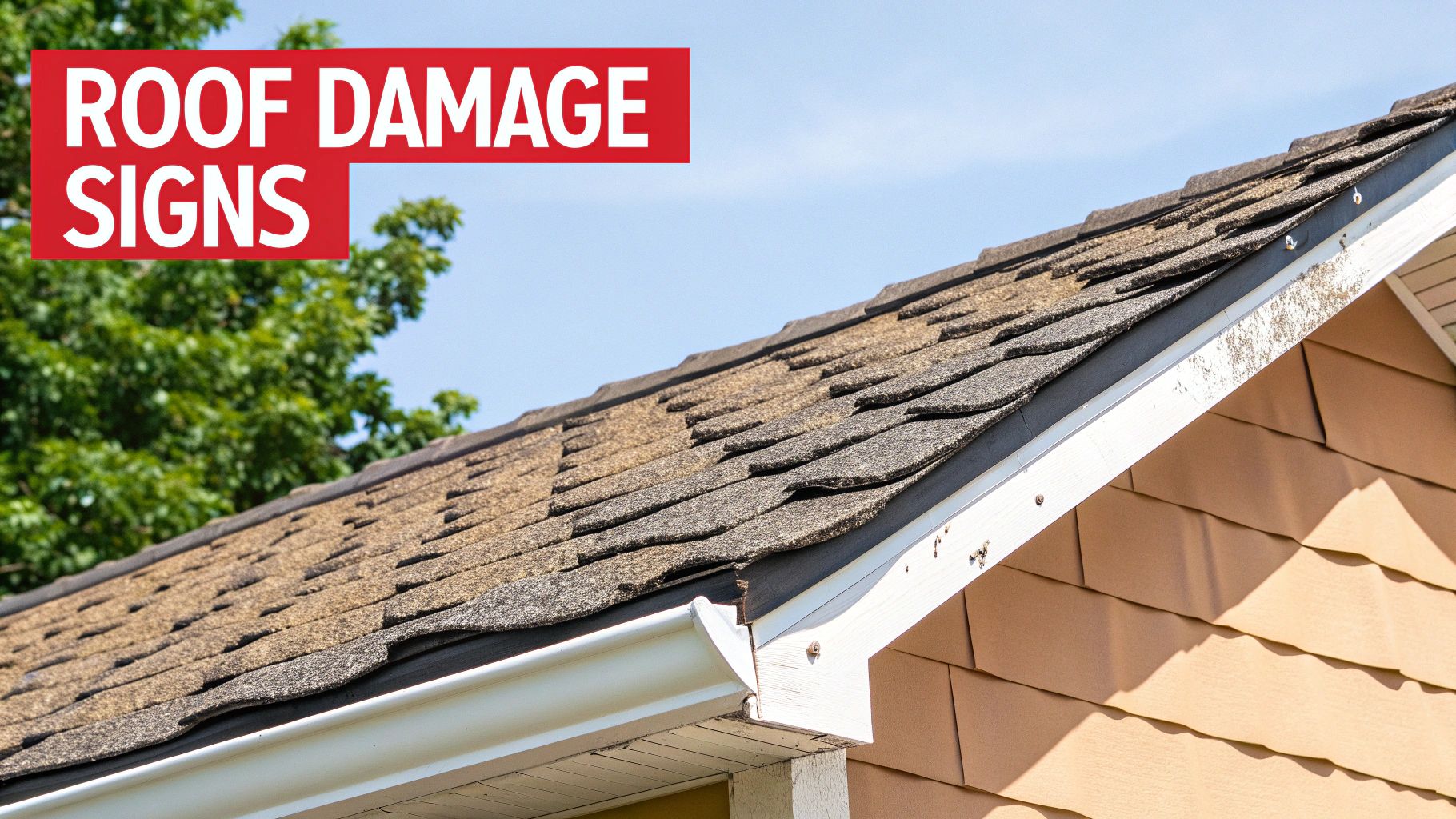
- Widespread Curling or Buckling Shingles: When you see entire sections of shingles curling up at the edges or buckling in the middle, it’s a clear sign of advanced weathering and moisture problems. They just aren't shedding water like they used to.
- Significant Bald Spots: Large patches where the shingle granules have worn away are bad news. This exposes the underlying asphalt to direct UV rays, which rapidly breaks it down, making shingles brittle and prone to cracking.
- A Sagging Roof Deck: A sagging or drooping roof is a serious structural red flag. It usually means the decking underneath is waterlogged and rotting, which compromises the entire support system. This is an urgent problem that demands immediate attention and a full replacement.
Ultimately, the right call comes down to an honest assessment. One or two missing shingles on a 10-year-old roof? A repair is a logical move. But if that same roof is 22 years old and showing widespread curling and granule loss, you're just throwing good money after bad by patching it. A replacement is the only reliable long-term solution.
Navigating Insurance Claims and Financing Options
Let's talk about the big question: how to pay for all this. A major roofing project can feel like a huge financial hurdle, but the good news is you might not have to foot the entire bill yourself. Getting a handle on how homeowners insurance works and what financing options are available is the key to making a smart decision without breaking the bank.
Whether a sudden storm tore up your shingles or you're just facing an old roof that's seen better days, having a financial game plan will make the whole process feel much less stressful.
Will Your Homeowners Insurance Cover It?
This is usually the first thing homeowners ask, and the answer almost always comes down to why your roof is damaged. Homeowners insurance is really there for sudden, unexpected events—what they often call "acts of God."
Your policy will likely cover damage from things like:
- Storms: Think high winds that rip shingles off or hail that leaves a mess of dents and bruises.
- Fallen Objects: A classic example is a heavy tree branch crashing down during a storm.
- Fire: If a fire damages your roof, that’s almost always a covered event.
What insurance won't cover is simple old age or neglect. If your 25-year-old roof is failing just because it’s lived a full life, you'll be on the hook for the replacement cost. Insurance sees that as routine maintenance, not a sudden loss.
Expert Tip: Before you even pick up the phone to call your insurance agent, it’s a smart move to understand what you're working with. Getting familiar with how to read an insurance policy can save you a ton of headaches and help you set realistic expectations.
The Insurance Claim Process Step-by-Step
If you're confident the damage is a covered event, you need to act fast but also be methodical. A well-organized claim is an easier claim to get approved.
- Document Everything Immediately: Before anyone touches anything, grab your phone. Take tons of pictures and videos of the damage, both from the ground and—only if it’s safe—from up on the roof.
- Get a Professional Inspection: Call a trusted local roofer to come out for an assessment. Their detailed report and professional estimate will be the backbone of your claim.
- File Your Claim: Contact your insurance company to get the ball rolling. They'll assign an adjuster who will need to come out and do their own inspection.
- Meet the Adjuster: This is a big one. Try to have your roofer there when the adjuster shows up. Your contractor can point out damage the adjuster might otherwise miss and make sure the scope of the repair is accurate.
Financing When Insurance Is Not an Option
So what happens if insurance says no? Or if you’re just ready to upgrade your roof before a problem starts? A new roof is a serious investment in your home’s safety and value, and thankfully, there are solid ways to manage the cost.
Here are the most common financing routes homeowners take:
- Home Equity Loans or HELOCs: If you have equity built up in your home, you can borrow against it. These loans usually have pretty good interest rates.
- Personal Loans: These are straightforward, unsecured loans from a bank or credit union. The funds are often available quickly, and you don't have to use your home as collateral.
- Contractor Financing: Many well-established roofing companies have partnerships with lenders. They can offer financing plans designed specifically for this kind of project, often with competitive rates and a simple application.
It's definitely worth looking into all your options. To help you sort through the pros and cons, our guide on how to finance a roof replacement breaks everything down so you can find a path that fits your budget.
The Long-Term Impact on Your Home’s Value and Wallet
Deciding whether to repair or replace your roof goes far beyond the immediate fix. This choice has a real, lasting impact on your home's financial future, from its market value and monthly energy bills to your long-term maintenance budget. To make the right call, you have to think years down the road.
https://www.youtube.com/embed/K72Gty4KEMc
Opting to repair an older roof can feel like a quick win for your wallet, but it often kicks off a frustrating cycle of escalating costs. Sure, patching one leak solves today's problem. But on a roof that's nearing the end of its lifespan, it's usually just a matter of time before another weak spot fails. Those recurring repair bills really start to add up, becoming a slow but steady financial drain.
On the other hand, a full roof replacement is a powerful investment in your property. It’s one of the most important upgrades you can make, and the payback comes in several forms. For starters, a new roof is a massive selling point for potential buyers. It signals that your home is well-maintained and saves them from facing a huge expense down the line, which often translates directly into a higher resale value.
Boosting Resale Value and Curb Appeal
A new roof delivers a substantial return on investment, with most homeowners recouping a large chunk of the cost when they sell. But it's not just about the numbers. It gives your home’s curb appeal a major facelift, making a fantastic first impression.
The quality of the installation, however, is everything. The global roofing industry is projected to hit a staggering $280 billion market size by 2029, a boom driven by countless repair and replacement projects. With so much work happening, it's absolutely critical to pick a vetted, certified contractor to make sure your investment is built to last and actually adds the value you expect. You can find more details about these roofing industry trends at thisoldhouse.com.
Long-Term Savings and Energy Efficiency
The financial upside of a new roof doesn’t end with its resale value. Modern roofing materials and installation methods can make a huge difference in your home's energy efficiency.
- Cool Roofing Technology: Many new materials have high solar reflectivity, which means they bounce the sun's intense heat away from your home and keep your attic from baking.
- Reduced Utility Bills: When your attic stays cooler, your air conditioning system doesn't have to fight nearly as hard. That leads to real, noticeable savings on your monthly energy bills.
- Improved Insulation: A complete replacement ensures the entire system—from underlayment to ventilation—is working in harmony to help regulate your home's temperature year-round.
This boost in efficiency is a game-changer, especially in hot climates. If you're curious about how materials perform under intense sun, our guide on how long a roof lasts in Arizona is a great resource, as the right choice directly impacts both lifespan and cooling costs.
Final Takeaway: Think of it this way: a repair is like treating a symptom, while a full replacement cures the disease for decades. It's a strategic investment that boosts your home’s value, cuts ongoing costs, and gives you priceless peace of mind, making it the smarter long-term financial move for any aging or failing roof.
Frequently Asked Questions
How long does a roof repair take compared to a full replacement?
A standard roof repair, like swapping out a few shingles or resealing flashing, can usually be completed in just a few hours. A full roof replacement is a more involved project, typically taking 2 to 4 days for an average-sized home, depending on factors like weather, roof complexity, and the chosen materials.
Can I install new shingles over my old ones?
While some building codes permit installing one layer of new shingles over an existing one (an "overlay"), it is generally not recommended. This practice can hide underlying problems like rotted decking and the added weight can strain your home's structure. A complete tear-off is the best practice for ensuring a long-lasting, reliable new roof.
Will a new roof actually increase my home's value?
Yes, absolutely. A new roof is a significant selling point for potential buyers, signaling that the home is well-maintained and that they won't face a major expense soon. National studies consistently show that homeowners can recoup over 60% of the cost of a new roof in added home value at resale.
How do I know if my roof leak needs a repair or a full replacement?
If the leak is isolated to one small area and the rest of your roof is in good condition and under 15-20 years old, a repair is likely sufficient. However, if you have multiple leaks, or if the leak is accompanied by other signs of widespread failure like curling shingles or a sagging deck, a full replacement is the safer and more cost-effective long-term solution.
What is the average lifespan of an asphalt shingle roof?
The lifespan of a standard asphalt shingle roof is typically 20 to 25 years. Architectural shingles can last longer, around 30 years. Factors like climate, ventilation, and maintenance can influence how long your specific roof will last. If your roof is approaching or has surpassed this age range, you should start budgeting for a replacement.