
A commercial roof is more than just a cover; it's a critical asset protecting your entire business operation. But without a proactive strategy, this vital shield can quickly become your biggest liability. A commercial roof maintenance program shifts your approach from costly, reactive repairs to a smart, preventative plan. It's about maximizing your roof's lifespan, preventing catastrophic failures, and turning an unpredictable expense into a manageable, budgeted investment.
Key Takeaways
- Proactive vs. Reactive: A maintenance program saves significant money by catching small issues before they become expensive emergencies, preventing business downtime and inventory loss.
- Extend Roof Lifespan: Regular, professional care can add years to your roof's service life, pushing the massive expense of a full replacement far into the future.
- Warranty Compliance is Crucial: Most commercial roofing warranties require documented proof of regular maintenance. A formal program ensures you remain compliant and your investment stays protected.
- Arizona's Climate Demands a Custom Plan: Intense UV radiation, monsoon storms, and thermal shock require specialized strategies, including post-monsoon inspections and the use of reflective coatings.
Your Commercial Roof: The Unsung Hero of Your Business
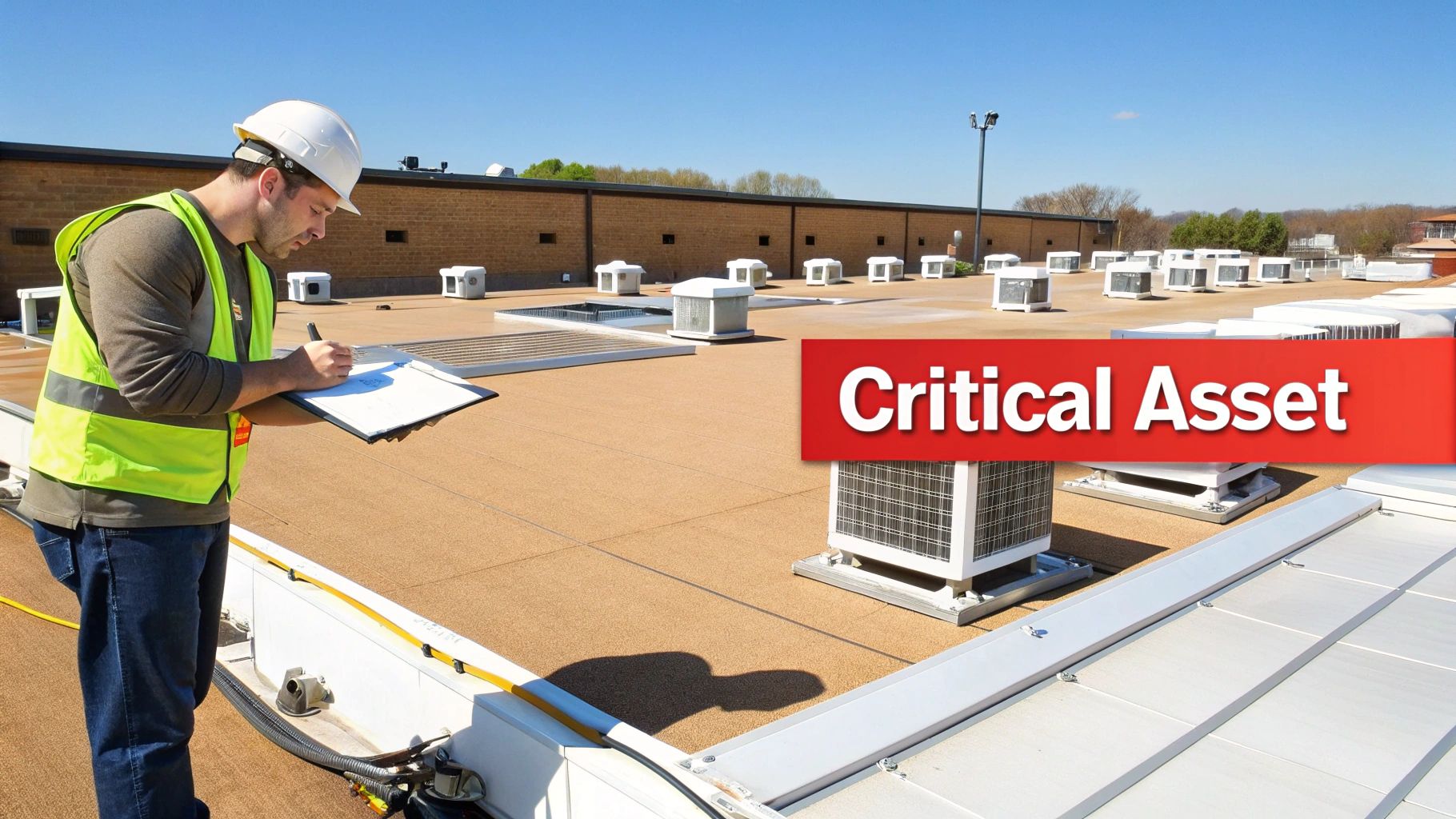
Think about your roof for a second. It’s not just a cover; it’s a high-performance shield working 24/7 to protect everything your business holds dear. Ignoring it is like running a critical piece of machinery without ever checking the oil. Sooner or later, it’s going to break down, and when it does, the consequences can be catastrophic.
A single, undiscovered leak can quickly spiral out of control, ruining expensive inventory, halting operations, and creating serious safety risks for your team and customers.
Why It's a Game-Changer
- Proactive vs. Reactive: A maintenance plan flips the script from dealing with expensive, chaotic emergencies to a predictable, preventative strategy that saves a lot of money over time.
- Total Asset Protection: Your roof is the first line of defense for your equipment, inventory, and people. If it fails, everything underneath is at risk.
- Keeping Your Warranty Intact: Most commercial roofing warranties aren't unconditional. They demand regular, documented maintenance to stay valid. A formal program is your proof of compliance.
- A Longer-Lasting Roof: It’s simple: consistent care can add years to your roof's service life, pushing that huge expense of a full replacement far into the future.
It’s Time for a Mindset Shift
The old "if it ain't broke, don't fix it" model is a massive gamble for any business owner. You're basically just waiting for a problem to announce itself, usually at the worst possible time, and then paying a premium for an emergency call-out. This isn't just more expensive—it causes far more disruption to your daily operations.
A proactive maintenance plan is the single best way to turn unpredictable roofing costs into a manageable, budgeted expense. It reframes your roof from a potential liability into a controlled investment in your building's future.
When you adopt a strategic maintenance mindset, you take back control. You start catching small, easy-to-fix issues—like a clogged drain, a cracked sealant, or a tiny puncture in the membrane—before they explode into five-figure headaches. This kind of foresight is the bedrock of smart facility management and the whole point of a commercial roof maintenance program.
This guide will show you exactly how to build a strategy that defends your investment and delivers real peace of mind.
So, What Exactly Is a Proactive Roof Maintenance Program?
Let's get one thing straight: a commercial roof maintenance program isn't just a service you call for when something goes wrong. It’s a genuine partnership with your roofing contractor. Think of it less like a repair service and more like a wellness plan for your building's most important shield.
Instead of waiting for the roofing equivalent of a heart attack—a catastrophic leak that floods your operations—this approach is all about regular check-ups. We're talking preventive treatments and long-term health monitoring to catch problems when they're small and cheap to fix. This completely flips the script on how you manage your facility, moving you from a chaotic, expensive "break-fix" cycle to a predictable, budget-friendly "predict-and-prevent" strategy.
Turning a Liability into a Controlled Asset
Without a formal plan, your roof is basically a ticking time bomb—an unpredictable liability waiting to cause havoc. With a program, it transforms into a managed asset with a clear budget and a reliable lifespan.
Every scheduled visit has a purpose. We’re on the hunt for the little things: a clogged drain, a cracked seam, a minor puncture from a dropped tool. By catching and correcting these small vulnerabilities immediately, we stop them from spiraling into budget-destroying disasters. It’s the difference between a small, planned fee for a tune-up and a massive, unplanned bill for an emergency overhaul after a major failure.
The real goal of a commercial roof maintenance program is surprisingly simple: to turn unpredictable roofing costs into a manageable, budgeted line item. It’s about taking control back.
Why This Model Just Plain Works
This structured approach isn't some new fad; its value is recognized across the globe. In fact, the market for commercial roof maintenance is growing fast, largely because building owners are demanding more sustainable and energy-efficient solutions. Flat roofs, which are on most commercial buildings, hold the biggest market share because they absolutely require regular upkeep to maintain their integrity and performance. You can dig into more of the data on this trend over at Archive Market Research.
A formal program ensures your roof is always ready for whatever comes its way, whether that’s a brutal Arizona monsoon or the relentless wear and tear from our year-round sun. The whole concept is built on three foundational pillars:
- Maximizing Lifespan: Consistent, professional care can add years to your roof's service life, pushing that enormous replacement cost much further down the road.
- Maintaining Warranty Compliance: Did you know most manufacturer warranties are void without documented proof of regular maintenance? A program handles this for you, protecting your initial investment.
- Ensuring Occupant Safety: A healthy roof prevents leaks that can cause slip-and-fall hazards, dangerous mold growth, or even structural damage, keeping everyone inside safe.
At the end of the day, a proactive maintenance plan is about peace of mind. It’s the quiet confidence that comes from knowing your building's most vital protector is being professionally watched over and managed for peak performance, year in and year out.
The Core Components of an Effective Maintenance Plan
A solid commercial roof maintenance program isn't just about a quick glance from the ground. It’s a structured, systematic approach where every piece of the puzzle fits together to protect your building. Think of it like a regular health check-up; you don't wait for a serious illness to see a doctor. You go for preventative care to catch small issues before they become major problems. A truly effective plan is built on four non-negotiable pillars.
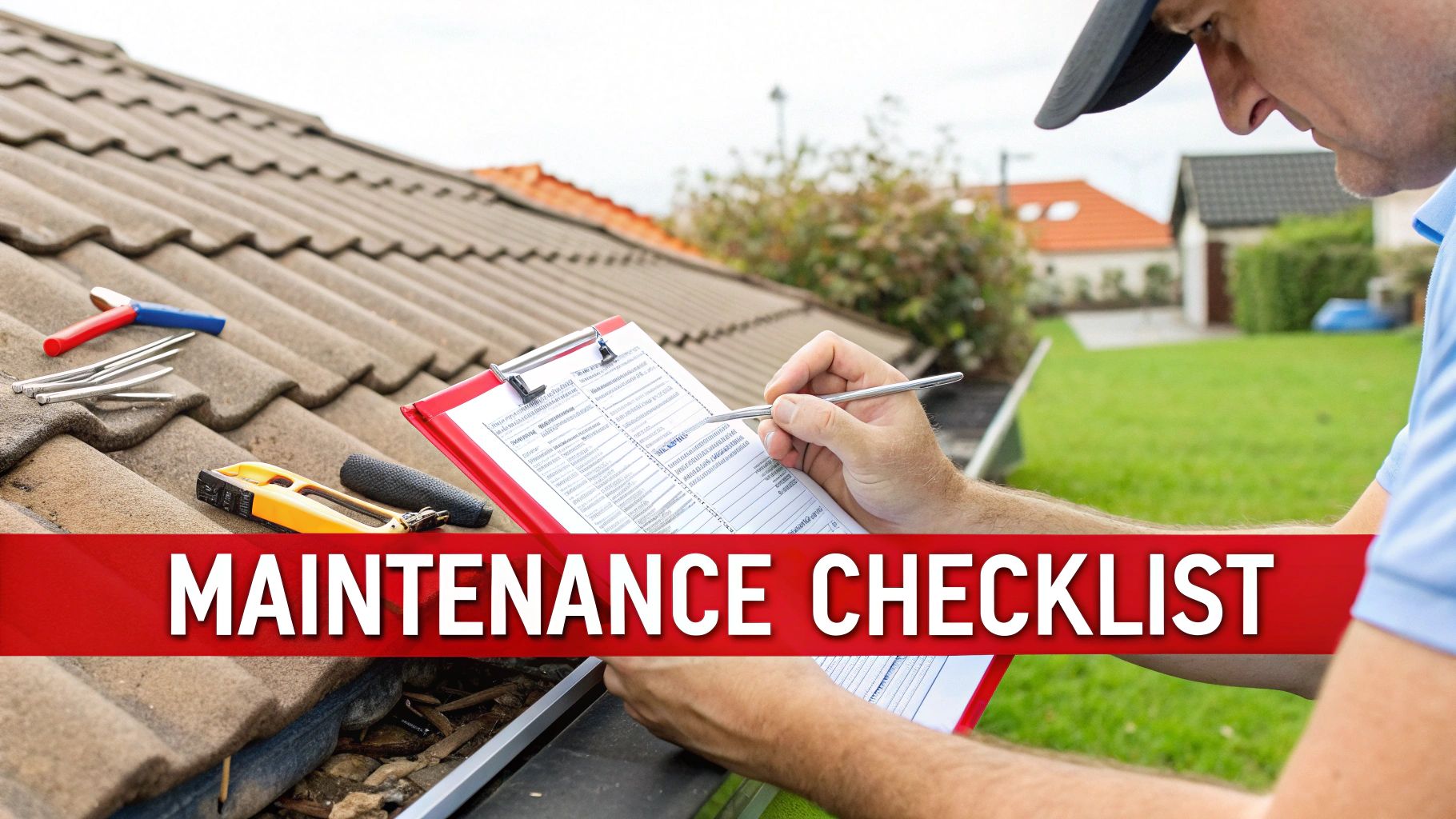
These core services are the foundation of any program designed to deliver real, measurable value. Let’s break down what you should expect.
Regularly Scheduled Inspections
Everything starts with the inspection. This is the cornerstone of any good maintenance plan, and it's far more than a casual walkthrough. A trained professional, who knows exactly what to look for, performs a detailed assessment. We recommend inspections at least twice a year—once in the spring to prep for the summer heat and monsoons, and again in the fall to recover from them.
During these visits, technicians methodically check every aspect of your roofing system:
- Membrane Condition: Searching for punctures, blisters, and the tell-tale signs of UV degradation.
- Seams and Flashings: These are the usual suspects for leaks, so they get extra attention for any cracks or separation.
- Rooftop Equipment: HVAC units, vents, and skylights are checked to ensure their seals are watertight and secure.
This process is all about early detection. Finding a small crack in a flashing today prevents a massive interior leak during the next monsoon downpour. To see how in-depth this process can be, you can learn more about our commercial roof inspection services and how they give you a complete picture of your roof's health.
Debris Removal And Drainage Cleaning
It’s amazing what can end up on a commercial roof. Leaves, dirt, trash, you name it. On a flat or low-slope roof, this buildup is more than just an eyesore; it’s a direct threat. Debris inevitably finds its way into drains, scuppers, and gutters, causing clogs.
When water can't escape, it creates "ponding." That standing water adds an incredible amount of weight to your roof structure and dramatically speeds up the deterioration of your roofing materials.
A single clogged drain can turn a minor rain shower into a serious structural threat. Proactive cleaning is one of the simplest yet most effective ways to prevent water-related damage.
Routine cleaning ensures your drainage system can do its job, moving water off the roof and away from your building’s foundation just as it was designed to.
Proactive Minor Repairs
One of the biggest advantages of a formal maintenance program is that when a technician finds a small issue during an inspection—like cracked sealant, a loose fastener, or a minor puncture—they can often fix it right then and there.
This is the key difference between proactive care and a reactive, "break-fix" approach. Sealing a small crack today costs next to nothing. Ignoring it allows water to seep into the insulation and roof deck, leading to rot, mold, and a repair bill that is exponentially higher. This immediate action stops the cycle of damage before it truly begins. Some crews even use advanced multispectral imaging techniques to spot moisture issues that are completely invisible to the naked eye.
Comprehensive Documentation And Reporting
Finally, any professional maintenance program worth its salt will provide you with a detailed report after every single visit. Think of this as your roof's official health record. It should include photos, notes on your roof's condition, and a clear log of all maintenance and repairs performed.
This paperwork is invaluable for several reasons. It helps you budget for future work, make informed decisions about long-term capital expenses, and—this is a big one—prove you've met the maintenance requirements of your manufacturer's warranty. Without that paper trail, you could easily have a future warranty claim denied.
A well-structured plan integrates all these services to provide complete protection. Below is a simple breakdown of how these components work together.
Essential Services in a Roof Maintenance Program
| Component | Description | Primary Benefit |
|---|---|---|
| Scheduled Inspections | In-depth, semi-annual assessments of the entire roof system by a trained professional. | Early Detection: Identifies minor issues before they escalate into costly problems. |
| Drainage Cleaning | Removal of all debris from drains, gutters, scuppers, and the general roof surface. | Water Damage Prevention: Ensures proper water flow to prevent ponding and structural stress. |
| Minor Repairs | Immediate on-site fixing of small issues like sealant cracks or loose flashing. | Cost Savings: Prevents small, cheap fixes from becoming large, expensive repairs. |
| Detailed Reporting | Comprehensive documentation, including photos and a log of all work performed. | Warranty Compliance: Provides the necessary proof of maintenance to keep your warranty valid. |
As you can see, each service plays a critical role. Together, they form a defensive strategy that not only saves you money but also gives you peace of mind.
The Financial Case for Proactive Roof Maintenance
It’s easy to look at a commercial roof maintenance program and see just another expense on the balance sheet. But experienced facility managers and property owners know the truth: it's not a cost at all. It's one of the highest-return investments you can make for your building. Forget vague promises—let's look at the numbers and see how proactive care pays for itself many times over by preventing financial disasters.
Think of it like this: a small, predictable annual fee is your shield against a massive, unexpected budget blow. A tiny leak that goes unnoticed can easily spiral into a five-figure emergency repair bill, and that’s before you even account for the costs of interior water damage or ruined inventory.
Shifting from Reactive Costs to Proactive Investment
The old "wait until it breaks" model is a financial gamble, plain and simple. You wait for a problem, then you pay a premium for an emergency crew to show up and disrupt your entire operation. A proactive maintenance plan completely flips that script.
Every year in the U.S., there are over 50,000 commercial roofing projects, and the average repair after a major storm often soars past $15,000. What’s truly shocking is that unscheduled emergency repairs still account for about 30% of all commercial roof work. That represents a huge, avoidable expense. When you catch vulnerabilities early, those budget-draining surprises simply disappear. You can dive deeper into these trends with some eye-opening commercial roofing statistics on zipdo.co.
For those managing multiple properties, technology can be a game-changer. Using dedicated property management apps allows you to keep meticulous records, schedule inspections, and actually track the long-term ROI of your maintenance plan with incredible efficiency.
Extending Roof Lifespan: The Ultimate ROI
Here's where the real money is saved: drastically extending the life of your roof. A properly maintained roof can easily last up to twice as long as one that's been ignored.
Just think about the cost of a full commercial roof replacement. We're often talking well into the six figures.
Delaying a $150,000 roof replacement by just five years through a modest annual maintenance investment represents one of the smartest capital expenditure decisions a building owner can make. The ROI is not just positive; it's exponential.
Pushing that huge expense down the road frees up capital you can put toward growing your business. Your roof stops being a ticking clock and starts being a properly managed asset.
Preventing Business Interruption
Finally, ask yourself: what’s the real cost of shutting your business down for a day? A week? When a major roof failure happens, the repair bill is often the least of your worries. The lost revenue and damage to your reputation can be far more devastating.
- Retail: Lost sales and customers who may never come back.
- Manufacturing: Production lines grind to a halt, leading to missed deadlines.
- Warehousing: Damaged inventory and a complete breakdown in logistics.
A proactive commercial roof maintenance program is your insurance policy against this kind of crippling downtime. By keeping your building's most important shield in top condition, you’re protecting your ability to do business. The financial case couldn't be clearer: proactive maintenance doesn’t cost you money; it saves it.
Adapting Your Maintenance Program for Arizona's Climate
Here in Arizona, a generic, off-the-shelf maintenance plan is a recipe for disaster. Our climate is an absolute assault on roofing materials. You've got the relentless sun, the punishing monsoon storms, and wild temperature swings that declare war on your roof every single day.
A standard commercial roof maintenance program just won't cut it. Your strategy has to be specifically built to handle the brutal desert environment.
The sun's intense UV radiation is enemy number one. It bakes the life right out of roofing membranes, making them brittle and prone to cracking. Then, the monsoon season hits. Torrential downpours can overwhelm drainage systems in minutes, causing dangerous water pooling and immediate leaks.
Responding to Arizona's Extremes
But the most underrated threat might be thermal shock. When a roof that’s been baking all day is hit with a sudden temperature drop after sunset, the materials rapidly contract. This constant cycle of expansion and contraction puts enormous stress on seams and flashings, eventually pulling them apart and creating sneaky entry points for water.
An effective Arizona maintenance plan isn't just about routine check-ups; it's a strategic defense against a unique set of environmental attacks. The focus has to be on materials and schedules that directly counter the desert's harsh realities.
To fight back, a smart, localized program needs a few key adjustments:
- Mandatory Post-Monsoon Inspections: After the storm season ends, an inspection is non-negotiable. It’s the only way to catch and repair damage from high winds and heavy rain before small problems become catastrophic failures.
- A Laser Focus on UV Protection: This is critical. Using UV-resistant materials and reflective coatings isn't a luxury; it's a necessity. These materials deflect the sun’s rays, keeping the roof surface cooler and dramatically slowing down material breakdown.
- Extra Scrutiny on Vulnerable Points: We always pay more attention to seams, flashings, and anywhere pipes or vents penetrate the roof. These are the weak spots that fail first under the stress of thermal shock.
As this infographic shows, being proactive with maintenance isn't just about avoiding headaches—it's about the bottom line.
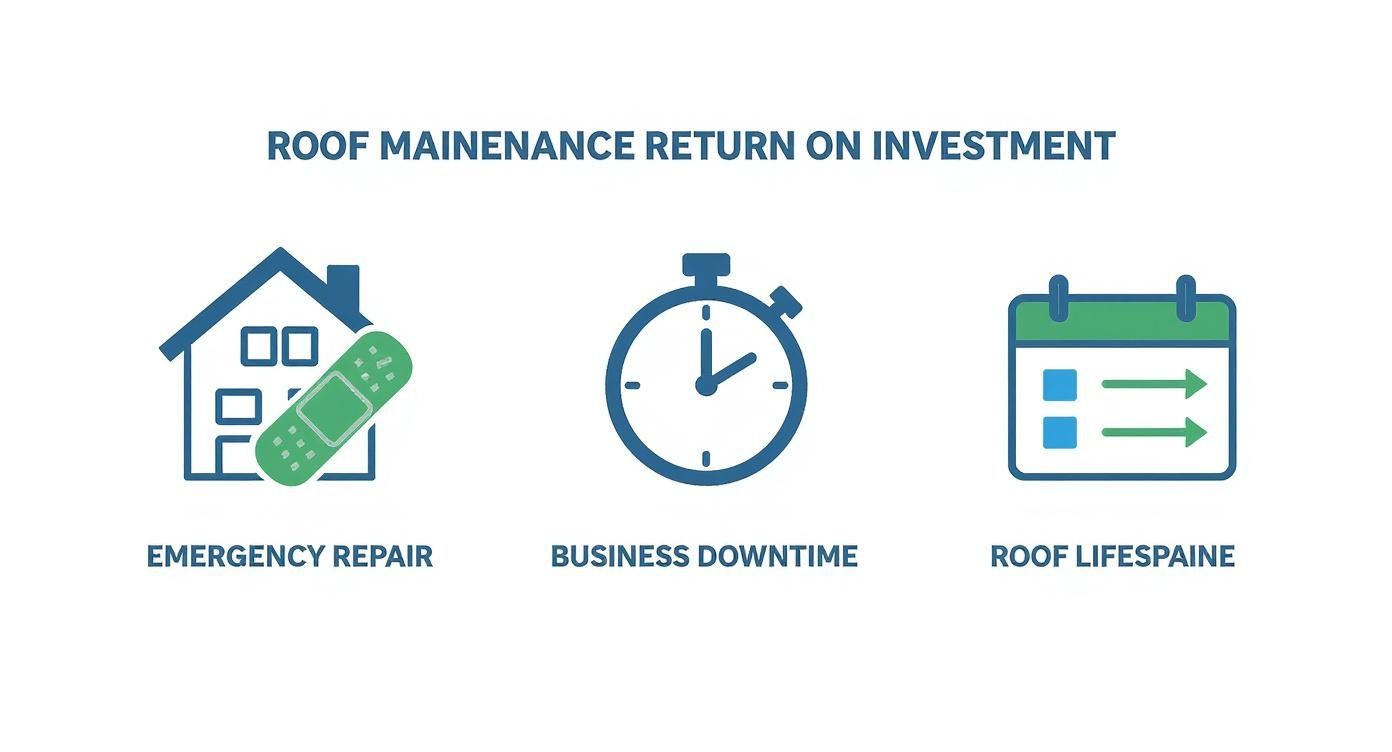
The numbers don't lie. Investing a little in preventative care saves a fortune compared to reacting to a full-blown emergency.
The Role of Reflective Coatings
One of the most powerful weapons in our arsenal for an Arizona-specific plan is an advanced roof coating. Applying a high-quality reflective coating can drop a roof's surface temperature by an incredible 50-60 degrees.
This simple step drastically reduces thermal shock and adds years to the life of the membrane underneath. If you're considering this, it's worth learning what an elastomeric roof coating is to see how it creates a seamless, waterproof, and UV-resistant shield for your building.
Ultimately, tailoring your commercial roof maintenance program to our local climate isn't just a smart move—it's essential for protecting your investment and making sure your roof survives everything Arizona throws at it.
How to Choose the Right Commercial Roofing Partner
Let’s be honest: your commercial roof maintenance program is only as good as the team you hire to run it. This isn't just about finding someone to patch a leak; it's about building a genuine, long-term partnership with a crew you trust to protect one of your most valuable assets. Choosing wisely means looking past the lowest bid and really digging into a company's experience, reputation, and how they operate.
Think of your selection process as a high-stakes interview. The commercial roofing market is massive and growing—it's expected to hit USD 50 billion by 2035, with maintenance becoming a huge piece of that pie. You can read more about this trend over at wiseguyreports.com. This growth just underscores how critical it is to find a stable, professional partner who is genuinely invested in extending the life of your roof, not just racking up repair bills.
Key Vetting Criteria
Before you even think about signing a contract, there are a few non-negotiables you need to check off your list. Your goal here is to find a contractor who runs their business with total professionalism and accountability.
- Licensing and Insurance: First things first, confirm they are fully licensed, bonded, and insured to work in Arizona. Ask to see the actual certificates for their general liability and worker's compensation insurance. This isn't just a formality—it protects your business from any potential liability.
- Experience with Your Roof Type: You wouldn't hire a plumber to do electrical work. The same logic applies here. If you have a TPO roof, you need a TPO specialist. If it's spray foam or modified bitumen, make sure they have a long track record and deep, hands-on experience with that specific system.
- A Solid Safety Record: A contractor who cuts corners on safety is a massive red flag. Ask about their safety protocols, what kind of training their team receives, and what their safety record looks like. You need a crew that will maintain a secure, professional environment on your property at all times.
Digging Deeper with the Right Questions
Once you've sorted out the basics, it's time to get a feel for their communication style and the quality of their work. We've got a whole list of questions in our guide on how to choose a roofing contractor, but here are a couple of crucial ones to get you started.
A great roofing partner acts as a strategic advisor. They should be able to provide clear, detailed reports that empower you to make informed financial decisions about your property, not just sell you a service.
Ask to see a sample maintenance report. Is it just a one-page checklist, or is it a detailed document with high-quality photos and clear, actionable recommendations? You should be able to understand the health of your roof at a glance.
Also, be sure to nail down their emergency response plan. When a major leak springs on a Saturday during a monsoon storm, what happens next? Who do you call, and how fast can you expect them on-site? Getting these answers upfront is how you build a partnership that truly protects your investment for years to come.
Got Questions About Roof Maintenance? We’ve Got Answers.
Jumping into a full-on maintenance program is a big decision, and it’s natural to have a few questions. We get it. Over the years, we've heard just about everything, so we’ve put together some straight answers to the most common questions building owners ask.

Let's clear up any lingering doubts you might have about costs, warranties, and what happens when we find something unexpected up there. Our goal is to make sure you have all the facts, so you can move forward feeling confident.
So, What's the Investment for a Maintenance Program?
The honest answer is: it depends. The final cost is based on your roof's size, what it's made of, and its current shape. That said, you can generally expect a budget of around $0.10 to $0.35 per square foot, per year.
Think of it less as an expense and more as a predictable investment in your building's health. This small, planned cost pales in comparison to the five- or six-figure bill for an emergency repair or, even worse, a full replacement that comes years too soon. Any reputable roofing partner will give you a firm, custom quote only after they've been on your roof and seen it for themselves.
Will This Mess With My Manufacturer's Warranty?
Quite the opposite—it's the best way to protect it. Most commercial roofing warranties aren't just a piece of paper; they come with strings attached. And the biggest string is the requirement for regular, documented maintenance.
In fact, failing to perform professional upkeep is one of the top reasons manufacturers deny warranty claims. A solid maintenance program gives you the exact paper trail you need to prove you’ve held up your end of the bargain, keeping that valuable warranty ironclad.
How Often Do You Really Need to Inspect My Roof?
The baseline for most of the country is twice a year. A spring inspection gets the roof ready for the summer onslaught, and a fall check-up clears away debris and preps it for the cooler months. But this is Arizona, and our weather plays by its own rules.
Here, we strongly recommend a third inspection, specifically after our monsoon season wraps up. The intense sun, wind, and rain can cause a lot of hidden damage. A post-monsoon walkthrough lets us catch and fix any storm-related issues right away before they have a chance to become serious headaches.
What Happens If You Find a Major Problem During an Inspection?
If our team spots something serious that goes beyond a simple tune-up, we don’t just slap you with a surprise bill. The process is straightforward and keeps you in the driver's seat.
First, we immediately document everything with detailed notes and high-resolution photos. Then, we sit down with you and present a full report. We'll show you exactly what we found, explain why it's a concern, and give you a clear proposal with different options for the repair. You'll have all the information you need to make the right call, with no pressure and no hidden costs.
Frequently Asked Questions
What exactly is a commercial roof maintenance program?
A commercial roof maintenance program is a scheduled, proactive service plan designed to protect your roofing asset. It includes regular inspections, debris cleaning, preventative repairs, and detailed documentation. The primary goal is to identify and fix small issues before they become catastrophic failures, thereby extending the roof's lifespan and preventing costly business interruptions.
Why is proactive roof care so important for a business?
Proactive care is crucial because it transforms an unpredictable liability into a managed asset. It saves money by avoiding expensive emergency repairs, protects valuable inventory and equipment from water damage, prevents business downtime, and ensures you comply with the terms of your manufacturer's warranty, which could be voided due to neglect.
How much does a commercial roof maintenance program cost?
The cost varies based on the roof's size, type, age, and overall condition. However, a general budget estimate is between $0.10 and $0.35 per square foot, per year. This predictable, annual investment is significantly lower than the cost of a single major emergency repair or a premature roof replacement.
Can I just have my own facilities team handle roof maintenance?
While an in-house team is great for spotting obvious issues, they often lack the specialized training, tools, and experience to identify subtle signs of roof degradation. A professional roofing contractor understands the specific failure points of different roofing systems and can provide the detailed documentation required to keep your manufacturer's warranty valid.
What happens if a major problem is found during an inspection?
If a significant issue is discovered that falls outside the scope of minor preventative repairs, a professional contractor will not proceed without your approval. They will document the problem thoroughly with photos and detailed notes, explain the potential consequences, and provide you with a clear, itemized proposal outlining repair options and costs. You remain in complete control of the decision-making process.