
Investing in a new roof is one of the most significant decisions a homeowner can make. It's not just a purchase; it's a long-term investment in your property's safety, value, and curb appeal. A common question we hear is, "How long do new roofs last, especially in Arizona's harsh climate?" The answer depends heavily on the materials you choose, the quality of the installation, and how well you maintain it against our relentless sun.
A high-quality asphalt shingle roof, the most common choice for American homes, can provide a solid 20 to 30 years of protection. However, for those seeking a true "lifetime" solution, premium materials like clay tile or standing seam metal can safeguard your home for 50 years or even longer. Understanding these differences is the first step toward making a confident and informed decision for your home's future.
Key Takeaways
- Asphalt Shingles: Expect a 20-30 year lifespan from modern architectural shingles, which are far superior to older 3-tab styles for handling Arizona's sun and heat.
- Clay & Concrete Tile: A tile roof is an excellent long-term investment, lasting 50 to 100+ years. However, the underlayment beneath it is critical and typically needs replacement every 20-40 years.
- Metal Roofing: Known for durability and energy efficiency, metal roofs have a lifespan of 40 to 70 years. They excel at reflecting solar heat and resisting high winds.
- Installation is Crucial: A poor installation can cut a roof's lifespan in half, regardless of the material quality. Professional, certified installation is non-negotiable.
- Climate Impact: Arizona's intense UV radiation, extreme temperature fluctuations, and monsoon storms are the primary factors that accelerate roof aging.
A Quick Guide to Arizona Roof Longevity
When you get a new roof, you're buying more than just shingles and nails—you're investing in decades of security and peace of mind. But here in Arizona, the sun is a different beast. That relentless heat and UV exposure mean we have to think differently about roofing.
The real lifespan of your roof is a mix of three key ingredients: the materials you pick, the skill of the crew who installs it, and how you keep it up against our desert climate. Let's break down the basics.
This chart gives you a quick visual of what to expect from the most common roofing materials we see here in the Valley.
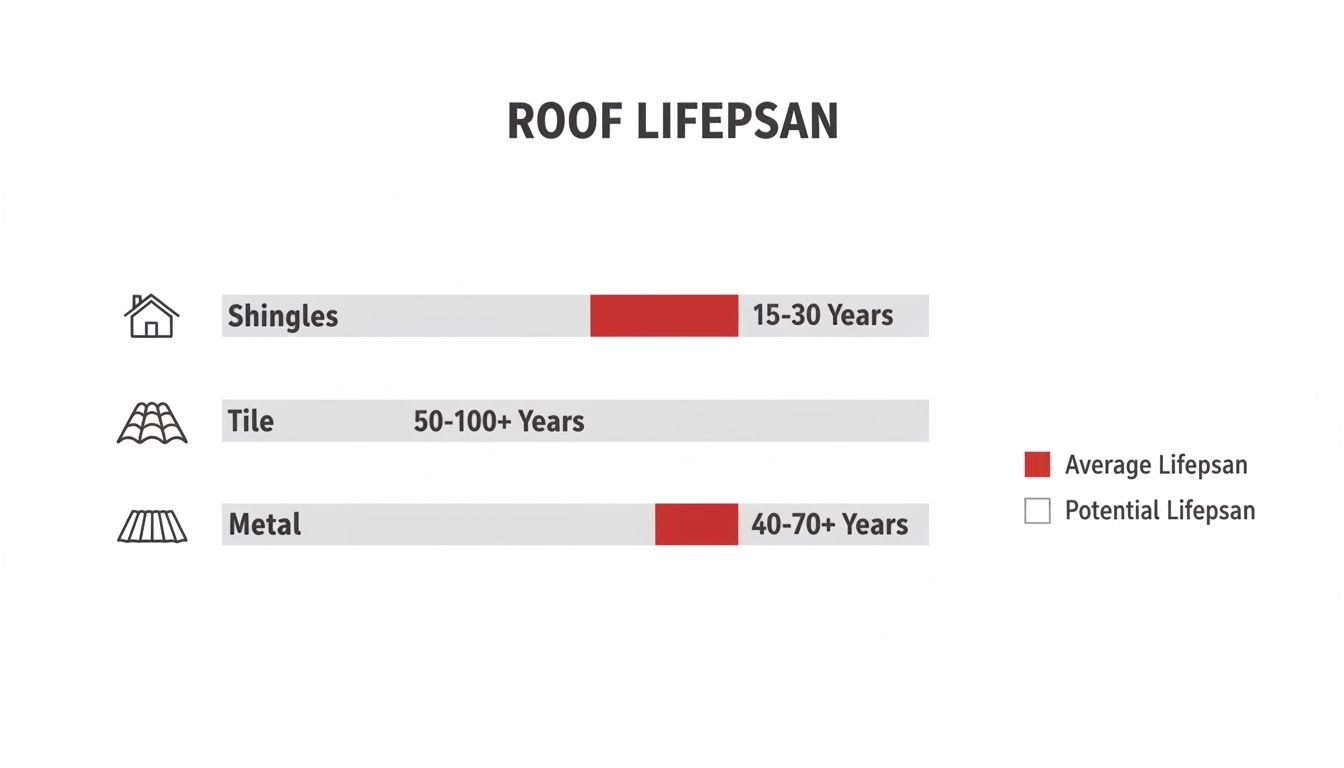
It’s clear that while shingles provide a reliable and popular solution, both tile and metal are more of a lifetime investment for your property. Knowing these key differences is the first step to making a smart, confident choice for your home.
How Long Do Asphalt Shingle Roofs Last?
Asphalt shingles are hands-down the most popular roofing choice in America, and for good reason. They hit that sweet spot between affordability, looks, and solid performance. In fact, you'll find them on about 80% of homes across the country. But here in Arizona, where the sun is relentless, the type of shingle you have makes all the difference.
The lifespan of your roof really boils down to one key decision: are you using basic three-tab shingles or the more robust architectural shingles? Think of it like this: a three-tab shingle is a single, flat layer of protection, while an architectural shingle is thicker, layered, and built to take a beating. For any home in Phoenix, Mesa, or the surrounding valley, this choice is a big deal.
Three-Tab vs. Architectural Shingles
Let's break down the two main options. Standard three-tab shingles are the budget-friendly choice, and you can generally expect them to last about 15 to 20 years. They're made of a single, flat layer, which unfortunately makes them more vulnerable to being lifted by monsoon winds and getting baked by our intense UV rays. Over the years, the Arizona sun essentially cooks them until they become brittle and start to crack.
Architectural shingles, on the other hand, are a serious step up. They’re constructed with multiple, laminated layers of asphalt, which creates a much thicker and more durable product. This design not only gives your roof a richer, more dimensional look but also helps it stand up to much higher winds. These shingles are engineered to last 25 to 30 years, with some premium versions even boasting 50-year warranties. That extra durability is why they're a much smarter investment for protecting a home in our climate.
Key Insight: Simply choosing architectural shingles over the three-tab style can add a full decade or more to your roof's lifespan in Arizona. Their laminated design offers far better resistance to brutal heat, UV damage, and high winds.
The "Sunscreen" Analogy: Why Granules Matter
Ever wonder about that gritty, sandpaper-like texture on your shingles? Those are granules, and you can think of them as a powerful layer of sunscreen for your roof. Their main job is to shield the asphalt underneath from the sun's damaging UV radiation.
Here in Arizona, the sun is constantly trying to wear down that protective layer. Every day, the intense heat causes granules to slowly break away, a process that gets a major boost from our monsoon downpours and winds. As more granules fall off, the asphalt becomes exposed, leading it to dry out, crack, and eventually cause leaks. If you've ever seen a sand-like substance in your gutters, you're looking at your roof's "sunscreen" washing away.
Making Your Roof Last in the Desert Heat
So, how do you fight back against the sun? A couple of things make a huge impact: shingle color and professional installation.
Lighter-colored shingles, often called "cool roofs," do a much better job of reflecting sunlight instead of absorbing it as heat. This keeps your attic cooler, which not only slows down the aging of your shingles but can also trim your summer energy bills. Studies have shown that reflective shingles can extend a roof’s life by as much as 10% in hot climates like ours.
Proper installation is just as critical. A GAF-certified installation ensures every part of your roof—from the underlayment to the attic ventilation—is put together as a complete, functioning system. Good ventilation is key, as it prevents heat from building up in the attic and literally cooking your shingles from below. For a deeper dive into proactive care, check out our guide on asphalt shingle roof maintenance.
While the national average lifespan for asphalt shingles is 20-30 years, real-world numbers vary a lot by region. States in "hail alley" might only get 15 years out of a roof. Here in Arizona, our dry climate helps us push that average closer to 22 years. By investing in quality architectural shingles installed by a certified pro like AZ Roof Co, you're giving your roof the best possible chance to hit its maximum lifespan and protect your home through decades of 110°F summers.
The Impressive Longevity of Tile Roofs
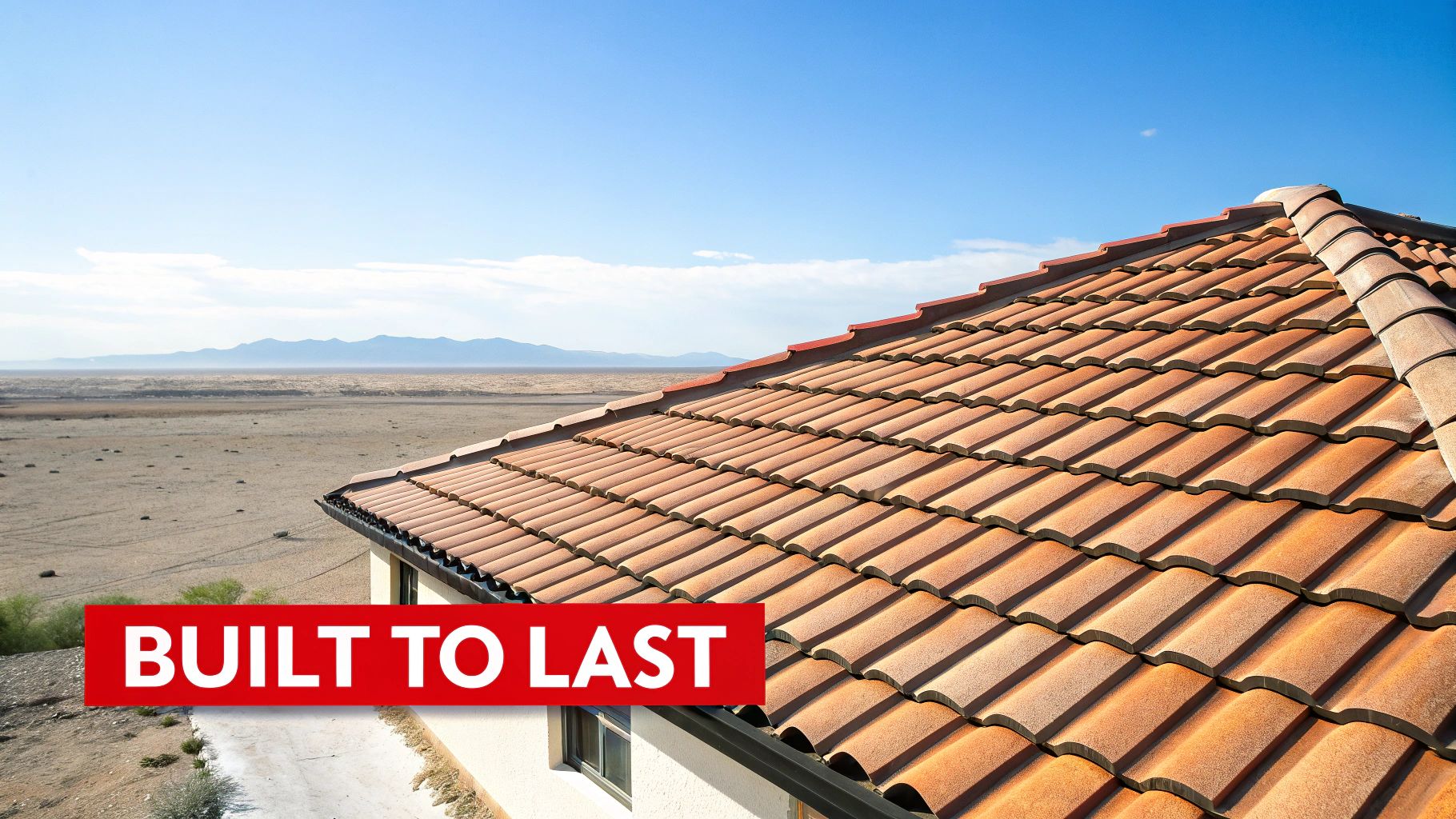
Drive through just about any neighborhood in Scottsdale or Tucson, and you'll see them everywhere: the elegant, unmistakable silhouette of tile roofs. They're an iconic part of the Arizona landscape for a simple reason—they are built to handle our intense climate like nothing else. For any homeowner asking "how long do new roofs last?", tile offers one of the best answers you can get.
Unlike asphalt shingles that have a pretty clear expiration date, tile roofs are in a completely different league. Both clay and concrete tiles are incredibly tough, easily lasting 50 to 100 years and sometimes even longer with the right care. They naturally resist fire, rot, and insects, and they won’t curl up or warp under the punishing Arizona sun. It's this incredible durability that makes them such a fantastic long-term investment.
The Unsung Hero Underneath Your Tiles
Here’s the thing, though. While the tiles themselves can last for a century, the complete roofing system has a weak link: the underlayment.
Think of the underlayment as the secret weapon of your tile roof. It's the waterproof barrier that sits between the tiles and the roof deck, acting as your final line of defense against moisture. If the underlayment gives out, water can sneak in, leading to hidden leaks, wood rot, and serious structural problems—all while your tiles look perfectly fine from the street.
Underlayment is the single most critical component determining the functional life of a tile roof system. While the tiles provide a tough outer shell, the underlayment is what truly keeps your home dry.
Even though it’s shielded from direct UV rays, the underlayment still ages. Here in Arizona, the extreme attic heat means this material usually needs to be replaced every 20 to 40 years. This job, called a "lift and re-lay," involves carefully removing the tiles, stripping off the old underlayment, installing a new layer, and then putting the original tiles back. It’s a vital maintenance step to make sure your "lifetime" roof actually lasts a lifetime.
Energy Efficiency and Natural Insulation
Beyond their amazing lifespan, tile roofs give you a huge advantage in energy efficiency. Clay and concrete have a high thermal mass, which is just a technical way of saying they absorb and release heat very slowly. This natural insulation helps keep your house cooler on those scorching summer days and a bit warmer on chilly desert nights.
Here’s how it works:
- Heat Absorption: The dense tiles soak up a ton of the sun's heat during the day, stopping it from baking your attic and living spaces.
- Airflow: The classic curved or "S" shape of many tiles creates a natural air channel between the tile and the roof deck. This allows air to circulate and carry heat away.
- Nighttime Release: As the temperatures drop overnight, the tiles slowly let go of that stored heat back into the atmosphere, not down into your home.
This built-in efficiency can lead to real savings on your cooling bills—a major perk for any Arizona homeowner. Building experts confirm that both clay and concrete tiles are rated to last over 100 years, with clay being especially good at handling temperatures above 100°F without breaking down. If you want to dive deeper, you can explore the differences between clay and concrete roof tiles. These materials don’t just boost your home's curb appeal; they provide a powerful, long-lasting defense against the desert climate.
A Closer Look at Metal and Flat Roofs
When we move past the more traditional look of shingles and tile, we get into some seriously high-performance options perfect for Arizona's unique architecture. Modern metal roofs and tough flat roof systems are at the top of the list for both homeowners and commercial property managers who prioritize durability and long-term value.
Metal roofing, in particular, has become the go-to choice for anyone wanting a roof that will stand strong for decades. Think of it less like a covering and more like permanent armor for your property, built to handle everything from our intense sun to monsoon winds without breaking a sweat.
The Power and Longevity of Metal Roofs
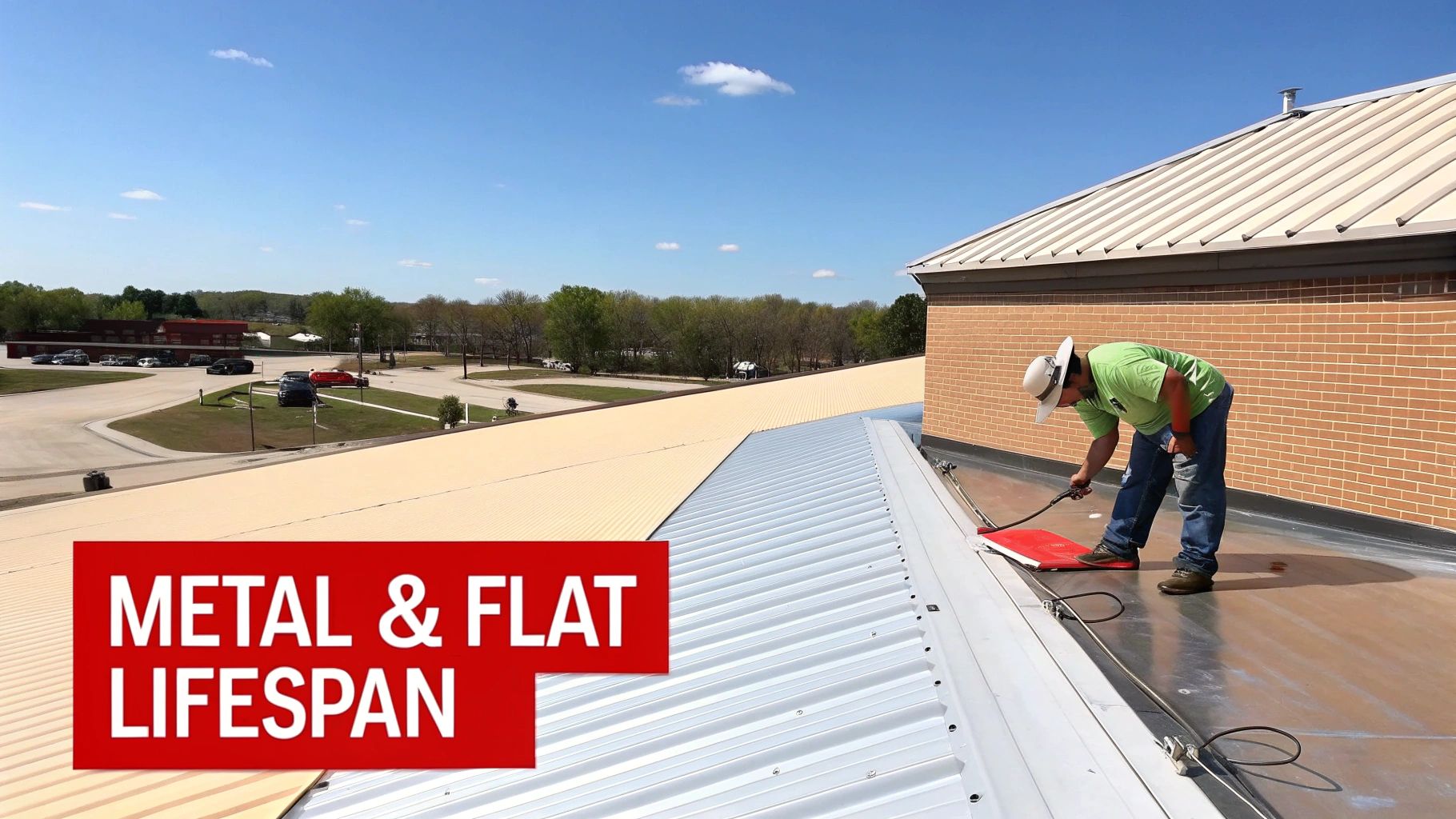
Forget any old image you have of rusty tin barns. Today’s metal roofing systems, like standing seam steel and aluminum, are a completely different animal. They are engineered to last an incredible 40 to 70 years.
That kind of longevity makes them a brilliant investment, often outlasting a standard asphalt shingle roof two or even three times over. Their sheer strength is a huge plus here in Arizona. Metal easily handles the high winds we see during monsoon season and is exceptionally fire-resistant—a feature you can't overvalue in our dry climate.
But here’s the real kicker: energy efficiency. Metal roofs are highly reflective, meaning they bounce a massive amount of solar heat back into the atmosphere instead of letting your home absorb it. This one characteristic can make a huge difference in your attic's temperature, which in turn helps lower your summer cooling bills. To dig deeper, you can explore the benefits and drawbacks of metal roofing in our detailed guide.
When you start comparing the long-term value, metal really shines. The upfront cost is higher, no doubt. But with its extended lifespan and energy savings, the total cost of ownership is often much lower over the life of your home.
Understanding Flat Roof Systems
While you don't see them on every suburban home, flat and low-slope roofs are everywhere on commercial buildings and modern homes across Arizona. These systems work differently since they can't use gravity to shed rain the way a pitched roof does. Because of that, their lifespan is directly tied to the specific material used and, just as importantly, the skill of the installation team.
Here are a few of the most common flat roof systems we see:
- Spray Polyurethane Foam (SPF): This is a phenomenal choice for Arizona. A seamless layer of foam is sprayed on and then topped with a protective coating. It provides incredible insulation, and as long as you recoat it every 10-15 years, an SPF roof can last 50 years or more.
- TPO (Thermoplastic Polyolefin): TPO is a single-ply membrane with heat-welded seams that create a fully waterproof surface. It's a popular choice for being both durable and energy-efficient, and you can expect it to last 15 to 30 years.
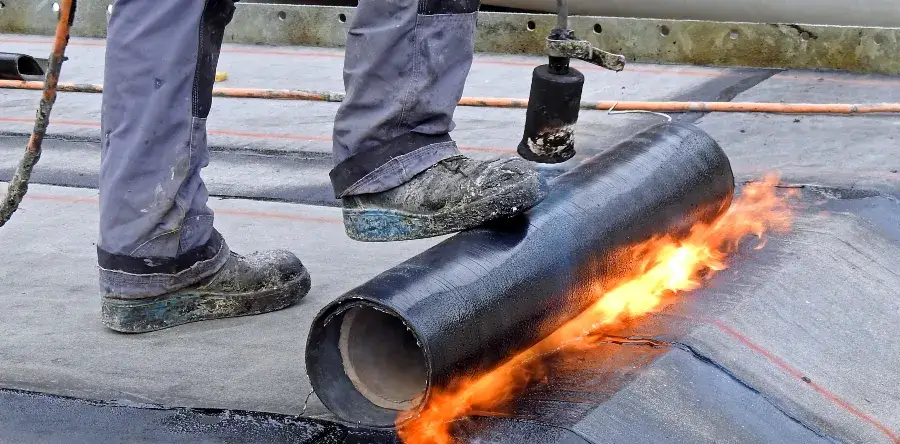
- Modified Bitumen: Think of this as a multi-layered system that blends asphalt with rubber or plastic polymers for added toughness. It’s known for being highly resistant to tears and generally has a lifespan of 10 to 20 years.
The absolute worst enemy of a flat roof is standing water, often called "ponding." If water pools up after a storm and just sits there, it will eventually wear down the material and find a way in. This is exactly why professional installation is non-negotiable for flat roofs. A seasoned crew knows how to build in a slight, almost invisible slope that ensures water drains properly, preventing the pooling that causes most flat roof failures.
Critical Factors That Can Cut Your Roof's Lifespan in Half
Picking the right roofing material is a great start, but that number on the package—the "30-year" or "50-year" lifespan—is just a best-case scenario. It's not a guarantee. The truth is, a handful of critical factors can easily slash that number in half, turning a long-term investment into a premature, expensive headache.
Think of it this way: you can buy the best, most expensive set of tires, but if they're installed improperly, misaligned, and never rotated, they won't last anywhere near their advertised mileage. Your roof is no different. The real-world performance depends entirely on what happens after the materials leave the factory.
Poor Installation: The Number One Roof Killer
If there's one thing that will torpedo a roof's lifespan faster than anything else, it's a shoddy installation. We see it all the time. A roof that was supposed to last 30 years is already failing at year 15 simply because the crew that put it on cut corners.
Here are a few of the most common installation mistakes we find:
- Improper Nailing: This is a huge one. When nails are driven in at the wrong angle, too deep, or not deep enough, shingles can't properly seal. The first big monsoon wind that rolls through will lift them up and rip them right off.
- Flashing Failures: Flashing is the metal work that protects the most vulnerable spots—chimneys, vents, and valleys where different roof planes meet. If it's not installed with precision, it's an open invitation for water to get in.
- Missing the Drip Edge: It might seem like a small detail, but skipping the metal drip edge along the eaves allows water to wick back under the shingles, rotting out the underlying wood decking.
A professional, certified installation is the single most important investment you can make in your roof's longevity. It ensures every component works together as a cohesive system designed to withstand Arizona’s demanding climate.
Inadequate Attic Ventilation
Your attic needs to breathe. If it can't, it becomes a pressure cooker that literally bakes your roof from the inside out. On a hot Arizona summer day, a poorly ventilated attic can easily top 150°F.
That intense, trapped heat wreaks havoc. It makes asphalt shingles brittle and prone to cracking, and it places an enormous load on your air conditioner as it struggles to cool your home. A properly designed system with intake vents (low on the roof) and exhaust vents (high on the roof) creates a constant, cooling airflow that can dramatically extend the life of your roof.
The Unrelenting Arizona Climate
We live in a beautiful place, but our environment is tough on buildings. The very things we love about Arizona are what put roofs to the test every single day.
- Intense UV Radiation: The sun is relentless here. Just like it fades the paint on your car, it slowly but surely breaks down the protective oils and granules on shingles and other roofing materials.
- Monsoons and Haboobs: Our summer storms are no joke. Fierce winds can tear at shingles, while torrential rain drives water into the tiniest of cracks. And those famous dust storms? They're like a slow-motion sandblaster, gradually scouring away the protective surface of your roof.
- Neglected Maintenance: Out of sight, out of mind is a dangerous philosophy for a roof. A single cracked tile or a small patch of missing shingle granules might not look like a big deal, but it's a weak spot. Water will find it, and before you know it, you're dealing with rotted wood and a major repair bill. Regular inspections are your best defense against small problems turning into big ones.
Turning Knowledge Into Action: Protecting Your Arizona Property
Knowing how long a roof should last is one thing. Actually protecting that investment is another ball game entirely. Your roof is one of the most significant assets your property has, and being smart about its upkeep can save you a mountain of cash and headaches down the road.
The real trick is knowing when a simple patch-up job will do and when it’s time to face the music and plan for a full replacement. This isn't just about a quick glance from your driveway; it’s about recognizing the warning signs, understanding what your warranty actually covers, and knowing how to handle an insurance claim after a wild monsoon season. Getting a handle on this stuff now helps you make a plan, whether it's for an inspection next week or a new roof in a few years.
The Big Question: Repair or Replace?
Deciding whether to patch a problem or tear the whole thing off can be a tough call. A single leak doesn’t automatically signal a total roof failure, but you also don't want to sink money into a system that’s already on its last legs.
Here’s a quick mental checklist to run through:
- How Old Is It? If you have an asphalt shingle roof that’s pushing past the 20-year mark and you're seeing problems pop up everywhere, a full replacement is almost always the smarter financial move. Patching an old, tired roof is like playing whack-a-mole—you'll be chasing new problems constantly.
- How Widespread Is the Damage? Is the damage contained to one small spot? A few shingles ripped off by a gust of wind is usually an easy fix. But if you're seeing widespread issues like curling, cracking, or bald spots (granule loss) all over the place, it's a sign the whole system is failing.
- What’s Happening Underneath? If you spot water stains in the attic or feel spongy spots when walking on the roof, you’ve got bigger problems than just shingles. Those are red flags for moisture penetrating the roof deck, which often means a full replacement is the only way to fix the compromised structure underneath.
Navigating Warranties and Insurance Claims
Warranties and insurance policies are your best friends when things go wrong, but they can be tricky to understand. That 50-year warranty on your shingles? It usually only covers a defect in the shingles themselves, not damage from a haboob or a shoddy installation job. This is exactly why your roofer's workmanship warranty is just as important—it covers the quality of the actual installation.
When a monsoon rolls through and leaves its mark, your homeowner's insurance is what you'll turn to. Working with an experienced, reputable roofer like AZ Roof Co can make a world of difference here. We can provide the professional assessment and detailed documentation you need to make sure your claim is processed fairly and without unnecessary delays.
Your roof is a complex system, and a proactive mindset is key to its longevity. This approach isn't just for your home; it applies to all your valuable assets. Just as you protect your physical property, it's wise to safeguard your digital presence with the same diligence. For instance, understanding website security best practices is crucial for protecting your online business and personal data. This holistic view of security ensures all your investments, both physical and digital, are well-protected.
Frequently Asked Questions About Roof Lifespan
How long should my new roof last in Arizona?
The lifespan depends entirely on the material. A standard architectural asphalt shingle roof will typically last 20-30 years. A tile roof can last 50-100+ years, though the underlayment beneath it needs replacing every 20-40 years. Metal roofs are also a long-term solution, lasting 40-70 years.
What is the number one factor that shortens a roof's life?
Poor installation is the single biggest cause of premature roof failure. Mistakes like improper nailing, failed flashing, or inadequate attic ventilation can cut a roof's expected lifespan in half, no matter how high-quality the materials are.
Does a "lifetime warranty" mean my roof will last forever?
Not exactly. A manufacturer's "lifetime" warranty typically covers defects in the roofing material itself, not issues caused by storm damage, lack of maintenance, or improper installation. The installer's workmanship warranty, which covers the quality of the labor, is equally important for protecting your investment.
Can regular maintenance really extend the life of my roof?
Absolutely. Annual inspections, keeping gutters clean, and addressing small issues like a cracked tile or missing shingles before they become big leaks can easily add 5-10 years to your roof's functional life. Proactive care is always more cost-effective than reactive repairs.