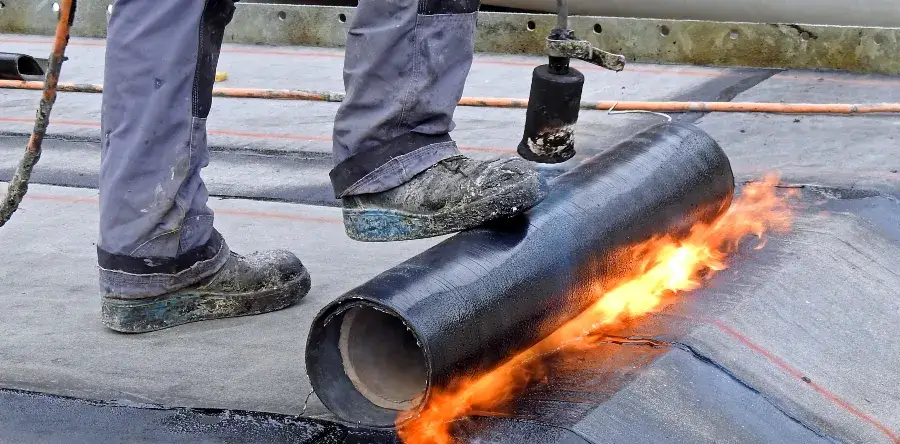

Your roof is more than just shingles and tiles; it’s a complete system designed to protect your home. Hiding beneath the surface is one of its most vital components: the underlayment. For decades, asphalt felt paper was the standard, but modern technology has introduced a superior alternative. Synthetic roofing underlayment is an engineered fabric that offers unmatched durability, water resistance, and longevity, making it an essential upgrade for any homeowner looking for long-term peace of mind.
This guide will walk you through everything you need to know about this high-performance material, from how it compares to traditional felt to why it’s the smart choice for surviving Arizona’s harsh climate.
Key Takeaways
- Superior Durability & Water Resistance: Unlike asphalt felt which can absorb water and tear easily, synthetic underlayment is a water-repellent, tear-resistant barrier that provides a robust secondary layer of protection for your roof deck.
- Built for Extreme Heat: Engineered from polymers like polypropylene, it withstands high temperatures without cracking or degrading, making it ideal for the intense Arizona sun.
- Faster, Safer Installation: Synthetic rolls are significantly lighter than felt and often feature a slip-resistant surface, improving safety for roofing crews and potentially reducing labor time.
- Long-Term Value: While the initial material cost is higher, its extended lifespan (25-50 years) and superior performance offer a better return on investment by preventing costly repairs and premature roof failure.
- Essential for Modern Roofs: It is a critical component for tile and metal roofing systems, providing a crucial moisture barrier against leaks and condensation.
Your Roof's High-Tech Armor
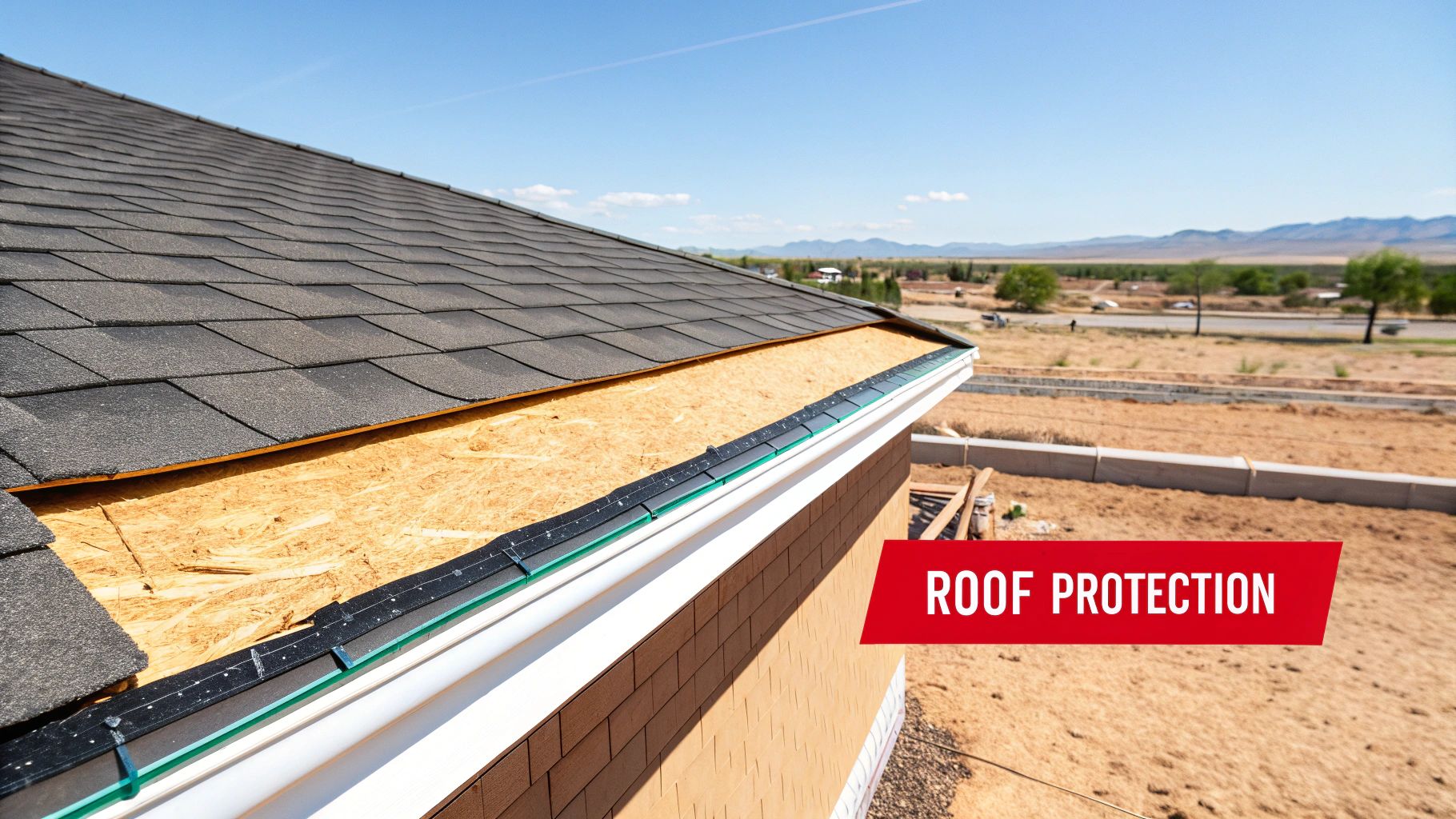
A good analogy is to think of it like high-performance athletic gear for your home. Your shingles are the visible jacket, but the synthetic roofing underlayment is the moisture-wicking, breathable base layer that does the real work of keeping you dry and protected from the elements.
This is a game-changer, especially here in Arizona. We all know what the sun does to things. Traditional asphalt felt just can't handle the relentless heat—it dries out, becomes brittle, and cracks over time. Then, when the monsoon rains hit, that compromised felt can absorb moisture like a sponge, leading to leaks and rot in the roof deck. Synthetic underlayment completely sidesteps this issue.
At AZ Roof Co, we've installed miles of this material on homes from Phoenix to Tucson. We've seen it perform flawlessly through blistering heat waves and torrential downpours. It's not just a small upgrade; for an Arizona roof built to last, it's an essential component.
Synthetic Underlayment Versus Traditional Asphalt Felt
For decades, if you were putting on a new roof, the choice for underlayment was simple: asphalt felt, or "tar paper." It was the only game in town. But today, sticking with felt is like choosing an old flip phone over a new smartphone. Sure, they both technically do the job, but one is lightyears ahead in performance, durability, and reliability—especially when you’re talking about surviving the brutal Arizona sun.
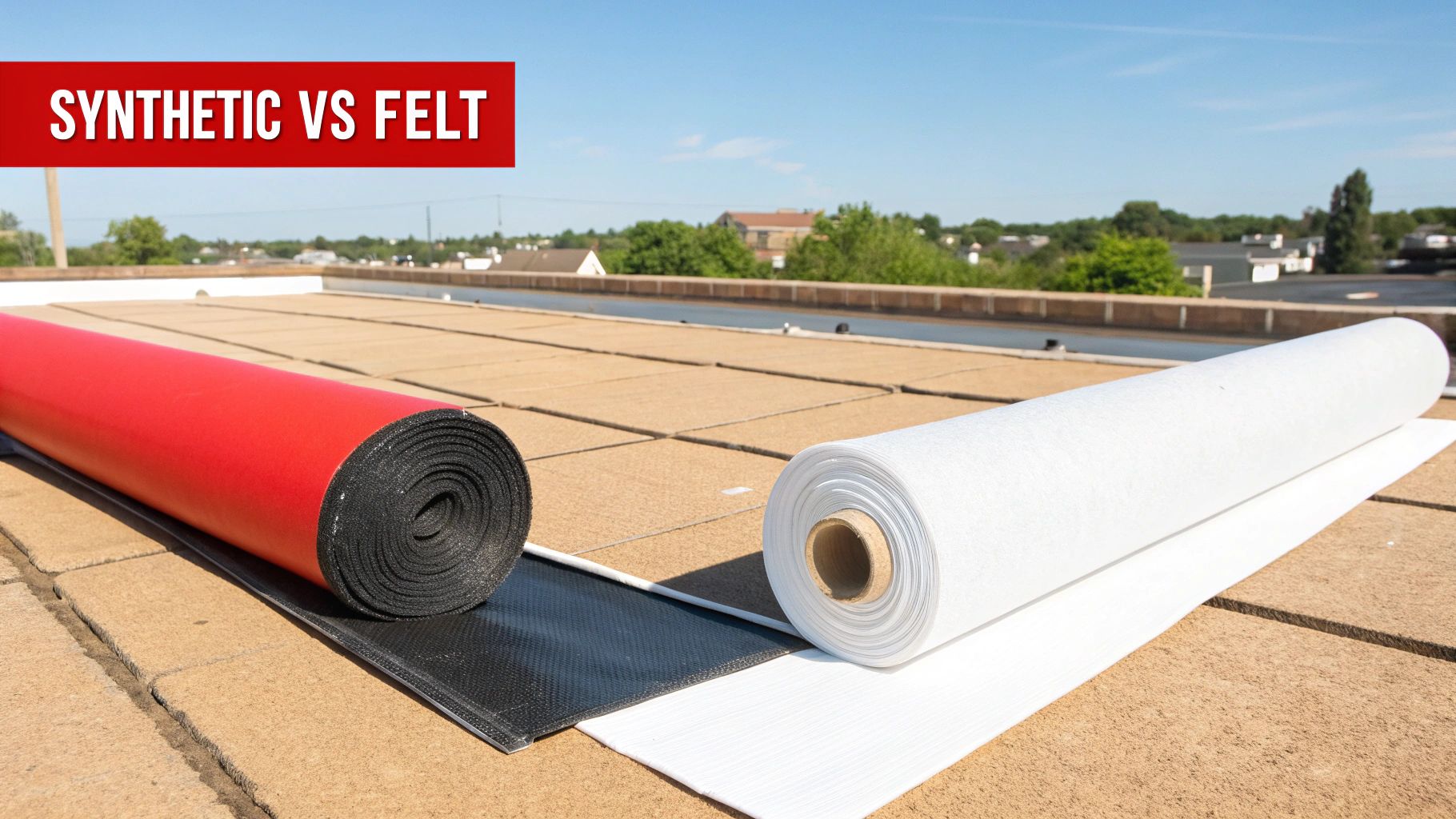
The difference isn't just cosmetic. Synthetic roofing underlayment is a truly engineered product, designed from the ground up to fix all the problems that have plagued felt for years. It’s no surprise this modern material is quickly becoming the new industry standard.
You don't have to take our word for it—the numbers speak for themselves. Industry projections show non-bitumen synthetic underlayments are on track to grab 47.3% of the total market revenue by 2025. This explosive growth is because synthetics are incredibly resistant to moisture, mold, and tearing. Those are the exact issues that cause felt to fail, especially in a place like Arizona where UV rays are relentless. For a closer look at these trends, you can explore the full report on roofing underlayment.
Synthetic Underlayment vs. Traditional Felt: A Performance Showdown
When you get down to the nitty-gritty, how do these materials really stack up? This table cuts through the noise and shows you what matters most for an Arizona roof.
| Feature | Synthetic Underlayment | Traditional Asphalt Felt |
|---|---|---|
| Water Resistance | Hydrophobic: Actively repels water, preventing absorption and protecting the roof deck. | Water Resistant: Can absorb moisture over time, leading to rot and degradation. |
| Tear Strength | Extremely High: Resists tearing from fasteners, foot traffic, and high winds. | Low: Tears easily, often requiring immediate repairs during installation. |
| Weight | Lightweight: A typical roll weighs 25-40 lbs, making it safer and faster to install. | Heavy: A roll of felt can weigh 75 lbs or more, increasing labor and safety risks. |
| UV Exposure | Excellent: Can be left exposed for 6-12 months without degrading. | Poor: Begins to break down after just a few days of direct sun exposure. |
| Temperature Tolerance | Superior: Remains stable in extreme heat; doesn't crack in the cold. | Poor: Can melt and stick in high heat; becomes brittle and cracks in cold weather. |
Seeing them side-by-side makes the choice pretty clear. Synthetics are engineered to handle exactly the kind of extreme conditions we see here every year.
Practical Benefits on an Arizona Roof
So, what do all those technical specs actually mean for your home? A lot, it turns out.
That superior tear strength isn't just an abstract number. It means that when a powerful monsoon gust kicks up mid-installation, the underlayment isn't going to shred and leave your home exposed. This simple fact prevents costly delays and ensures your roof is watertight from the moment we start working.
The lightweight nature of synthetic rolls is a significant advantage for our AZ Roof Co crews. It means faster, more efficient, and safer installations, ultimately saving our customers time and reducing labor costs on their roofing project.
Its ability to stand up to UV rays is another massive win in our sunny climate. Construction projects can hit unexpected snags. With old-school felt, even a few days of delay means the sun is already cooking and weakening that crucial protective layer. Synthetic products, on the other hand, can sit exposed for months and still be at 100% integrity when we’re ready to install your shingles or tiles.
All this adds up to one thing: synthetic roofing underlayment is simply a smarter, more durable investment for any Arizona home or business.
A Look at the Different Types and Materials in Synthetic Underlayment
It's easy to think all synthetic underlayments are the same, but that's far from the truth. While they all offer a major upgrade from old-school felt, knowing what they're made of and how they're installed is crucial for picking the right one for your home.
Think of synthetic underlayment as a high-tech woven fabric, a lot like the material you'd find in a heavy-duty camping tent or a quality hiking backpack. It's engineered to be tough.
This fabric is usually built from one of three core polymers, and each one brings something different to the table:
- Polypropylene (PP): This is the go-to material for most synthetic underlayments. It's incredibly strong for its weight and resists tearing like a champ, making it the reliable workhorse for the majority of roofing projects.
- Polyethylene (PE): A bit lighter and more flexible than polypropylene, PE is often the choice when the underlayment needs to be more pliable and easier to work with around complex roof shapes.
- Polyester: If you're looking for top-tier durability, polyester is it. It stands up exceptionally well to heat and moisture, though that premium performance usually comes with a higher price tag.
Mechanically Fastened vs. Self-Adhering
Beyond the material, the installation method is a huge part of the equation.
Mechanically fastened underlayment is the traditional approach. We roll it out across the roof deck and secure it with special roofing caps and staples. This creates a tough, breathable barrier that’s perfect for the main field of most roofs.
Then there's the second type: self-adhering underlayment. This stuff is a real game-changer. Often called "peel-and-stick," this technology is so effective that the market for it hit USD 2.5 billion in 2024 and is expected to grow to USD 4.1 billion by 2033.
Instead of nails, it has an adhesive backing that bonds directly to the roof deck. This creates a completely waterproof, seamless membrane. With no nail holes, the seal against wind-driven rain and air intrusion is far superior—a massive advantage during our Phoenix monsoon storms. You can dig deeper into this growing market in this detailed industry report.
Here at AZ Roof Co, we use a "best of both worlds" strategy. For the most vulnerable parts of a roof—the valleys, eaves, and around chimneys—we almost always lay down a self-adhering product. It acts like a powerful, waterproof gasket exactly where you need it most.
By combining these advanced polymers with smart installation techniques, we can build a roofing system that's truly built to last. It’s all about matching the right material to the right roof, like using a high-temperature underlayment for a metal roof to stand up to the Arizona sun. This ensures your home in Scottsdale or Mesa has a defense system that can handle whatever our weather throws at it.
For anyone thinking about a metal roof, be sure to check out our guide on the best underlayment for metal roof systems.
Benefits and Drawbacks for Arizona Property Owners
When you're putting a roof over your head in Arizona, every single component matters. Our climate is no joke. For decades, traditional felt was the go-to, but synthetic roofing underlayment has come along and, frankly, changed the game for homeowners in Phoenix, Scottsdale, and across the valley.
It all comes down to how it handles our state’s biggest roofing enemies: blistering sun and ferocious monsoon storms. On that front, synthetics offer a defense that old-school felt just can't match.
A Modern Solution for a Harsh Climate
Let's break down why this material is so well-suited for our homes here.
- Superior Water Resistance: Think of asphalt felt like a paper towel—it absorbs water. Synthetic underlayment, on the other hand, is like a raincoat. It’s hydrophobic, meaning it actively sheds water. During a heavy monsoon downpour, this provides a much more reliable secondary water barrier to protect your roof deck.
- High-Temperature Tolerance: We all know what the Arizona sun can do. It bakes traditional felt, turning it brittle and causing it to crack over time. Synthetics are engineered specifically to handle extreme heat without melting, degrading, or losing their protective qualities.
- Improved Installer Safety: A safer crew is a better crew. Many synthetic products come with a built-in high-traction surface. For our teams working on the steep tile roofs so common in Arizona, this slip resistance is a huge safety advantage.
Looking at the Bigger Picture: Long-Term Value
Beyond just surviving the weather, synthetic underlayment offers other real-world benefits. It's highly resistant to mold and fungus, which is a major plus anywhere moisture might try to creep in. When you pair it with other energy-efficient roofing materials, it helps create a more secure, sealed system, which can lead to a cooler attic and even a little relief on your summer energy bills.
The numbers back this up on a global scale. The market for synthetic roofing underlayment was valued around USD 2,705.9 million in 2025 and is expected to jump to over USD 4,520.4 million by 2032. Why the surge? Because builders and homeowners everywhere are recognizing its superior moisture resistance and longevity are essential in a world with more extreme weather. You can learn more about these market trends and material findings on Metastat Insight.
The only real "catch" with synthetic underlayment is the upfront cost—it's higher than traditional felt. But calling it a 'drawback' is missing the point of what you're actually buying.
That initial investment pays for itself over the long haul. Its incredible durability means fewer worries about repairs and a lifespan that can match your primary roofing material. Here at AZ Roof Co, we see it as an investment in your peace of mind. You’re choosing a product engineered not to fail when the storms roll in, and that delivers a much better return over the life of your roof.
Installation Process and Code Requirements in Arizona
Getting synthetic roofing underlayment installed correctly is a game of precision. It’s not just about rolling out a sheet of material—it's about creating a flawless, waterproof barrier before a single shingle or tile is laid down. This is where it really differs from old-school felt, which can be heavy, brittle, and tear-prone. Synthetics require a specific touch and a deep understanding of how to create a perfect seal, which is why having an experienced crew makes all the difference.
It all starts with the roof deck. We make sure it's completely clean, dry, and smooth—no rogue nails or splinters that could puncture the underlayment. Then, our team lays the material with meticulously measured overlaps, dictated by the manufacturer's specs. This creates a shingling effect that forces any water to run down and off the roof, never sideways or underneath. The fastening is just as crucial; we use specific cap nails at precise intervals to make sure the underlayment won’t get ripped off during one of our notorious Arizona monsoons.
Meeting Arizona's Strict Building Codes
Here in Arizona, our weather isn’t messing around, and neither are our building codes. They're not just guidelines; they're rigid rules put in place to protect your home from everything from extreme heat to violent winds and sudden downpours. Local regulations, particularly in the Phoenix area, are laser-focused on wind uplift resistance and water intrusion. Fortunately, high-quality synthetic underlayment is engineered to handle exactly these challenges, often blowing past the minimum code requirements.
A professional installation is your guarantee that every single detail is up to code. Our project managers know the ins and outs of the requirements for different roofing systems, from tile and shingle to flat commercial roofs. This expertise takes the guesswork out of the process, giving you confidence that your roof is built right. For a deeper dive into this, you can check out our guide on navigating building permits in Phoenix, Arizona.
This infographic breaks down why synthetics are such a smart investment, weighing the benefits against the initial cost.
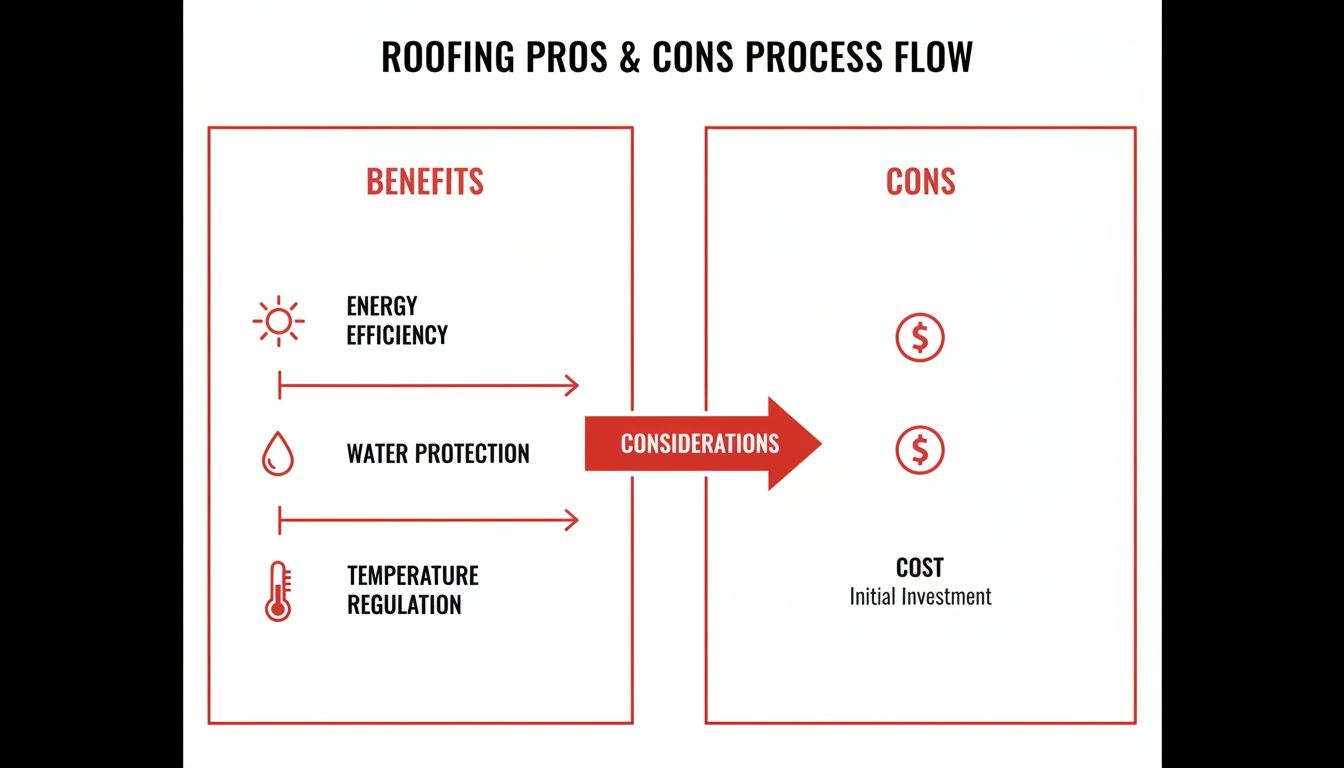
As you can see, the long-term gains in durability and protection against our harsh climate easily justify the upfront investment.
The AZ Roof Co Commitment to Compliance
At AZ Roof Co, we don't just install roofs. We engineer complete roofing systems that are built to exceed every local code and ordinance. This commitment is about protecting you and your home, ensuring your roof isn't just built to last, but built to comply.
By focusing on precise installation techniques and adhering strictly to Arizona building codes, we guarantee that the synthetic roofing underlayment on your home provides a superior, long-lasting defense against the elements. This isn't just best practice; it's the core of a durable roofing system.
Cost, Lifespan, and Warranty: The Bottom Line
When you're investing in a new roof, you’re looking at more than just the shingles or tiles you see from the street. You need to know the practical stuff: what it costs, how long it will last, and what kind of protection you're getting. With synthetic roofing underlayment, the numbers tell a story of long-term value, not just upfront price.
Sure, the initial cost per square foot for synthetic material is a bit higher than old-school felt. But that number doesn't tell the whole story. Because synthetics are so much lighter and easier to handle, our crews at AZ Roof Co can install them faster, which often trims down the labor costs. We also see far less material waste because it doesn't tear easily, helping keep the overall project budget in check.
A Tale of Two Timelines
The real payoff shows up when you look at the lifespan. A roof is a complete system, and it’s only as strong as its weakest component.
- Traditional Felt: You can expect felt to last around 15-20 years. Here in the Arizona sun, it often gives up even sooner, becoming brittle and cracking under the constant heat.
- Synthetic Underlayment: This stuff is built to last 25-50 years. It’s designed to match, or even outlast, the lifespan of the primary roofing material you put over it.
This incredible durability means you won't be facing a premature roof failure because the underlayment gave out—a classic problem we see with older felt roofs. Getting a handle on your roof's future requires weighing these lifespans and understanding when to repair or replace your roof.
If you'd like a personalized estimate for your own project, our roof replacement cost estimator is a great place to start.
A System of Protection: Your Warranties
A great roof is always backed by solid warranties. When you choose synthetic underlayment, you're getting two layers of protection. First, the manufacturer backs the material itself, guaranteeing it against defects.
This manufacturer warranty works hand-in-hand with AZ Roof Co’s robust workmanship warranty. We stand behind our installation, ensuring every component of your roof system works together flawlessly for long-term performance and your complete satisfaction.
Why Choose AZ Roof Co for Your Underlayment Installation
Picking the right underlayment is a huge step, but it's only half the story. A high-tech material is only as good as the hands that install it, and that’s where the real difference is made. For something as critical as your roof, especially here in Arizona, you need a team that truly gets it.
At AZ Roof Co, we bring over 25 years of hands-on, local experience to every single project. We’ve seen firsthand what the Arizona sun can do, and we know exactly how to install synthetic roofing underlayment to stand up to it for decades to come.
With over 1,000 installations per year, we’ve refined our process to be efficient and meticulous. That volume isn't just a number; it’s a track record of trust that Arizona homeowners have placed in us. This is our craft, and we take pride in doing it right.
Your Partner from Start to Finish
We know roofing projects can feel overwhelming, so we’ve built our process around making it as straightforward and stress-free as possible. From the first call to the final nail, we’re with you every step of the way.
Here’s what you can expect when you work with us:
- Free Inspections & Same-Day Quotes: We’ll come out, perform a thorough inspection of your roof, and give you a clear, honest quote that same day. No strings attached.
- Dedicated Project Management: You'll have a single point of contact—a dedicated project manager—to answer your questions and keep you in the loop from start to finish.
- Insurance Claim Assistance: Dealing with storm damage? We know how to work with insurance companies to make sure your claim is handled smoothly and fairly.
Our GAF Certification isn’t just a logo we put on our trucks. It’s a promise that we hold ourselves to the highest standards in the industry for both quality and safety. We don’t just build roofs; we build confidence and lasting protection for your home.
We’ve earned our 5.0-star reputation one project at a time, focusing on exceptional results and making sure every customer is 100% satisfied.
Ready to see what a modern roofing system can do for your home? Contact AZ Roof Co today for a free consultation and find out why we’re the roofing experts Arizona trusts.
Frequently Asked Questions About Synthetic Roofing Underlayment
Is synthetic roofing underlayment worth the extra cost?
Absolutely. While the upfront material cost is higher than traditional asphalt felt, its superior durability, water resistance, and significantly longer lifespan (25-50 years vs. 15-20 for felt) provide a much better long-term return on investment. It helps prevent costly water damage and premature roof failures, saving you money and stress down the road.
Can synthetic underlayment help lower my energy bills?
Yes, it can contribute to better energy efficiency. By creating a superior air and moisture barrier compared to felt, it helps seal the roof deck more effectively. This reduces the transfer of heat from the attic into your living space, meaning your air conditioning system doesn't have to work as hard, which can lead to lower cooling costs.
How long can synthetic underlayment be exposed to the sun?
Most high-quality synthetic underlayments are UV-stabilized and can be safely exposed to direct sunlight for 6 to 12 months without degrading. This is a major advantage over asphalt felt, which can become brittle and fail after just a few days of sun exposure, providing crucial flexibility during the construction or roof replacement process.
Do I need synthetic underlayment for a tile or metal roof?
While not always required by code, it is highly recommended by roofing professionals. For tile roofs, it provides a critical secondary water barrier in case a tile cracks or shifts. For metal roofs, it prevents condensation from forming on the underside of the metal panels from reaching and damaging the roof deck. It is an essential layer of protection for these premium roofing systems.