
The angle of your roof does a lot more than just shape your home’s look—it’s a workhorse. That slope is a huge player in how long your roof lasts, how energy-efficient your home is, and whether it can handle the intense Arizona climate. Getting a handle on different pitch roofs is crucial for any homeowner, as it affects everything from how well your roof sheds a monsoon downpour to the size of your summer cooling bills.
Key Takeaways
- Pitch is Performance: Roof pitch, or the steepness of your roof, is measured in "rise over run" (e.g., 6/12). This angle is critical for water drainage, weather resistance, and energy efficiency.
- Low vs. Steep: Low-pitch roofs (below 3/12) offer usable space and a modern aesthetic but require specialized, seamless waterproofing. Steep-pitch roofs (above 9/12) excel at shedding rain and debris, leading to longer material life but higher installation costs.
- The "Goldilocks Zone": Medium-pitch roofs (4/12 to 9/12) are the most common because they offer a balanced, cost-effective solution with excellent drainage and a wide variety of material options.
- Materials Matter: The pitch of your roof dictates which materials are suitable. Asphalt shingles work well on medium pitches, while flat roofs need membranes like TPO or foam, and steep roofs are best suited for durable options like slate or metal.
A Homeowners Guide to Choosing the Right Roof Pitch
Think of roof pitch like the steepness of a hiking trail. A flat path is simple to walk on, but you'll find puddles everywhere after a rainstorm. A steep mountain trail is tough to climb, but water runs right off it. Your roof's "pitch" operates on the same principle, and choosing the right one is all about finding that sweet spot between looks, performance, and our local climate demands.
In Arizona, that choice is even more important. Your roof’s angle directly impacts how it deals with our heavy monsoon rains and how it holds up to the relentless sun, which in turn affects attic temperatures and your home's overall energy use. Plus, not every roofing material is suitable for every slope. The pitch will dictate whether you can use classic clay tiles, asphalt shingles, or specialized foam roofing.
This guide will walk you through the real-world pros and cons of each style, from sleek, modern flat roofs to dramatic, steep ones. Our goal is to give you the confidence to make a smart, informed decision for your home. For those interested in the deeper architectural details, this guide on mastering Revit roof forms is a fantastic resource.
What Is Roof Pitch and Why It Matters in Arizona
When you look at a roof, you're seeing more than just shingles and rafters; you're seeing its pitch. Put simply, roof pitch is the technical term for how steep your roof is. It's not just a design choice—it's the blueprint that dictates how your roof will stand up to the elements.
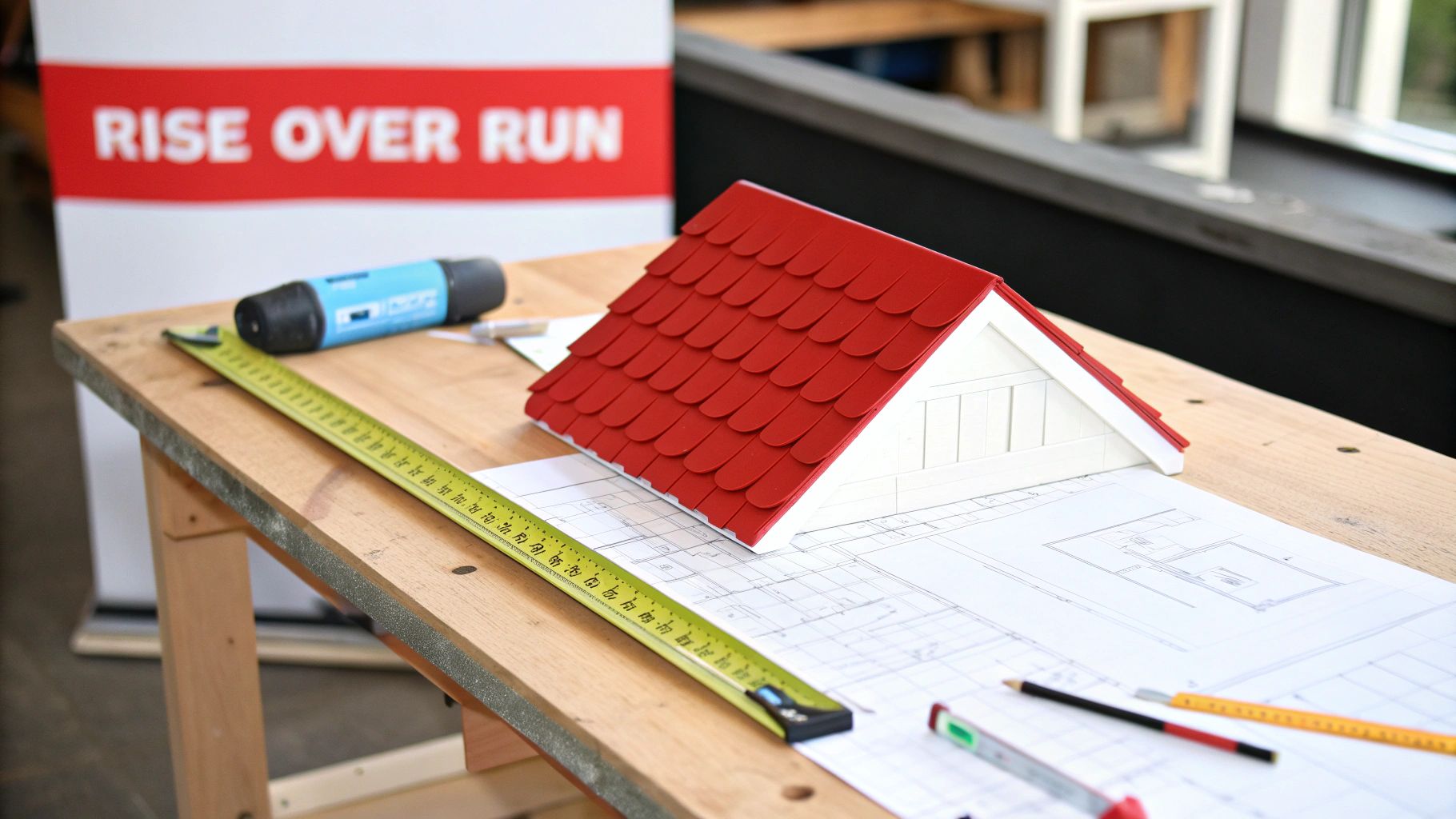
We measure it with a simple "rise over run" formula. Think of it like this: for every 12 inches you move horizontally across your roof (the "run"), how many inches does it go up vertically (the "rise")? A roof with a 6/12 pitch rises 6 inches for every foot it runs. The bigger that first number, the steeper the slope.
That angle is a huge deal, especially here in Arizona where our weather goes from one extreme to the other.
The Role of Pitch in Arizona's Climate
Living in a state famous for its blistering sun and intense monsoon downpours means your roof's pitch is its first and most important line of defense. That single design element influences everything from your summer energy bills to whether you'll be dealing with leaks after a storm. For a deeper look, check out our guide that breaks down what a pitched roof is and why it's so fundamental.
A steeper pitch is a champion at shedding the massive amount of water a monsoon can drop in minutes. Gravity does the work, pulling water off quickly and dramatically reducing the chance of it pooling up and finding a way inside. On the flip side, a lower-pitched roof can be more vulnerable to water damage if it isn't designed with very specific, specialized materials.
Your roof's pitch is the unsung hero of your home's cooling system. A steeper angle creates a larger attic space, which acts as a crucial buffer zone. This added volume allows for better ventilation, helping to dissipate the super-heated air that builds up under the intense Arizona sun, ultimately reducing the load on your AC unit.
Pitch and Its Structural Connection
Choosing a roof's angle isn't something you decide in a vacuum. It’s fundamentally tied to your home's entire structure, all the way down to the foundation. After all, the roof’s integrity relies completely on understanding the framing that defines it.
This connection is also what determines the types of roofing materials you can safely install. Heavy options like our iconic clay or concrete tiles demand a much beefier support system, which has to be planned right alongside the pitch. Getting a handle on the different pitch roofs is the first real step in designing a system that’s durable, efficient, and perfectly suited for your Arizona home.
What's the Deal with Flat and Low-Slope Roofs?
Sleek and minimalist, flat and low-slope roofs have a modern look that’s hard to miss. These designs, defined by a pitch of 3/12 or less, create those clean, horizontal lines you see on many contemporary homes and commercial buildings across Arizona. It's a sharp, distinct style that really sets a property apart.
But it’s not just about looks. One of the biggest draws of a low-slope roof is how you can actually use the space. Unlike a steep roof that’s just… well, a roof, a flat surface can become a genuine extension of your property.
Turning Your Rooftop into Usable Space
Think of a flat roof as a blank canvas. It opens up all sorts of possibilities for adding functional real estate to your home or business, which is something you just can't do with a traditional pitched roof.
- Rooftop Patios and Decks: Imagine having an outdoor lounge up there—a private spot perfect for entertaining, setting up a container garden, or just kicking back to watch a classic Arizona sunset.
- HVAC and Equipment: Moving those big, noisy HVAC units onto the roof frees up precious yard space and keeps the operational hum away from your windows and patios.
- Perfect for Solar Panels: Installing solar arrays is typically much easier on a flat roof. It gives installers the freedom to position the panels at the ideal angle for maximum sun exposure, which can mean better energy production for you.
Why Waterproofing is Everything
Here’s the main challenge for any low-slope roof, especially in our climate: water. When a monsoon storm hits, a roof with a minimal angle doesn't shed water nearly as fast. This can lead to puddles, a problem we call "ponding."
That standing water puts a ton of pressure on your roof and will find any tiny flaw or weak spot, eventually causing leaks and even structural damage.
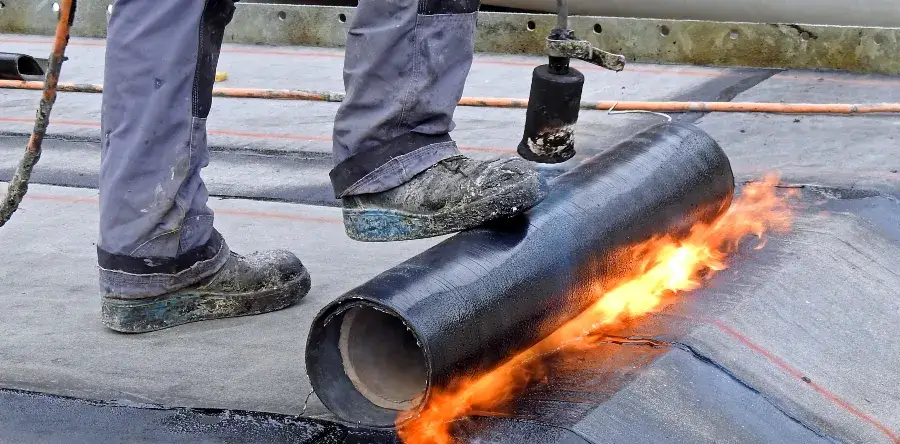
Because of this risk, materials like standard asphalt shingles are a complete non-starter. Flat and low-slope roofs need something different—a seamless, waterproof membrane that creates a single, impenetrable barrier against moisture.
For a flat roof in Arizona, top-notch waterproofing isn't just a nice-to-have; it's absolutely critical. Between the intense UV rays and the sudden deluges of rain, you need a system built to form a solid, watertight seal that can handle ponding water without failing.
This is where specialized materials like spray polyurethane foam (SPF) or single-ply membranes (TPO and PVC) come into play. They are engineered specifically for the unique demands of a nearly flat surface, giving you the robust protection needed to stand up to our weather. To see how these factors stack up, check out our detailed comparison of a flat roof vs a pitched roof.
The popularity of these systems isn't just a local trend. Flat roofing solutions are a huge part of the construction industry, accounting for over 74.6% of the global roofing market's revenue in 2020. This just goes to show how vital they are for modern commercial and residential buildings. You can explore more about this roofing market trend to see the full picture.
The Versatility of Medium-Pitch Roofs
As you explore the world of different pitch roofs, you’ll find a popular middle ground that hits the mark for most homeowners: the medium-pitch roof. Think of it as the "Goldilocks zone" of roofing. Typically falling between a 4/12 pitch and a 9/12 pitch, this is by far the most common style you'll see on homes across Arizona and, frankly, the entire country.
There's a good reason for its popularity. Medium-pitch roofs strike a near-perfect balance between aesthetics and performance. They have enough of an angle to shed our heavy monsoon rains with ease, preventing the water pooling that plagues flatter designs. At the same time, they aren't so steep that they become a nightmare for installation, maintenance, or future repairs.
The Sweet Spot of Function and Cost
The secret to their success really comes down to practicality and cost-effectiveness. That moderate angle makes the roof walkable for trained professionals. This might not sound like a big deal, but it keeps labor costs for inspections and repairs more reasonable than what you'd see on steep-slope roofs, which often require specialized safety gear and extra precautions.
This balance is a huge factor in the residential market. The global roofing industry jumped from $267.64 billion in 2023 to $277.42 billion in 2024, and the residential segment is leading that charge. This growth reflects a strong demand from homeowners for reliable, affordable solutions, and medium-pitch roofs fit that bill perfectly. You can discover more insights about the global roofing industry to get a sense of this trend.
A medium-pitch roof provides just enough slope for gravity to do its job effectively during a downpour, yet it remains accessible enough for straightforward maintenance. It's the practical, reliable workhorse of the residential roofing world.
Unmatched Material Flexibility
Another major perk of a medium-pitch roof is its incredible versatility. It’s not picky. While flat or very steep roofs can be quite limiting in what materials you can use, this moderate slope opens the door to a huge range of options, giving you total freedom to get the look you want.
Here are a few popular choices that really shine on a medium pitch:
- Asphalt Shingles: As the go-to roofing material in the U.S., asphalt shingles are affordable, simple to install, and ideally suited for this pitch range.
- Clay and Concrete Tiles: A true Arizona classic. These heavy tiles need a solid structure to support them, but they offer fantastic durability and a timeless Southwestern look that a medium pitch handles beautifully.
- Metal Roofing: Standing seam metal is another fantastic choice, known for its long life and energy efficiency on these moderate slopes.
- Wood Shakes: If you're going for a rustic aesthetic, wood shakes are a great fit. The pitch ensures water runs off properly, which helps the wood dry out and last longer.
This flexibility means you can tailor your roof to your home's architectural style and your budget without sacrificing performance. It’s what makes the medium-pitch roof the reliable, go-to choice for a durable and attractive home.
Steep-Pitch Roofs: A Bold and Functional Choice
Now we get to the dramatic end of the spectrum: steep-pitch roofs. These are the showstoppers, with a pitch of 10/12 or higher, creating a powerful visual statement that often defines a home's entire character. You’ll recognize these impressive slopes on styles like Tudor, Gothic Revival, and A-Frame houses, where the roof isn't just a component—it's the main event.
The primary job of a steep pitch is to get rid of water and debris, and it does this better than any other design. Imagine a steep waterfall versus a gentle stream; rain, snow, and fallen leaves simply have nowhere to go but down. Gravity does all the work, clearing the roof surface almost instantly. This powerful shedding action is your best defense against leaks and moisture damage, helping your roofing materials last much, much longer.
A Long-Term Investment in Durability
While the look is what catches your eye, a steep-pitch roof is a profoundly practical choice for anyone focused on long-term durability. Because water and debris are gone in a flash, the roofing materials themselves face far less stress and wear over the years.
But this high-performance design does come with a few things to keep in mind.
- Higher Installation Costs: That extreme angle makes the installation process much more challenging and slower. Roofers need specialized safety gear like harnesses and scaffolding to work on such a surface, which naturally drives up labor costs.
- Specialized Maintenance: Simple repairs or routine inspections are also more involved. Anything that requires a professional to get on the roof will demand extra equipment and time, making it more expensive than the same job on a standard roof.
- Material Selection is Key: Not just any shingle will do. You need materials that can handle the steep incline and match the roof's inherent longevity.
A steep-pitch roof is more than just a covering for your home. It’s a prominent architectural feature that also happens to be a high-performance drainage system. The higher upfront cost often pays for itself through fewer long-term headaches from water intrusion and material decay.
The Best Materials for a Steep Slope
To get the most out of a steep-pitch design, you need to pair it with materials that are just as tough and long-lasting. This is where premium materials really prove their worth, as they can stand up to the elements and live up to the promise of such a robust structure.
The best options are materials like metal roofing, which provides a clean, modern look and incredible longevity. Natural materials like slate or high-end architectural shingles are also fantastic choices. They're not just durable; their weight helps them resist wind uplift, which is a major concern on a large, steep roof that acts like a sail. The initial investment might be higher, but combining a steep pitch with top-tier materials creates a roofing system that's truly built to last for generations.
Matching Roofing Materials To Different Pitches
Your roof’s pitch is more than just an aesthetic choice—it’s the single biggest factor determining which roofing materials will actually work for your home. The angle of your roof and the material covering it have to work together as a single, cohesive system. Nailing this combination is absolutely critical for a roof that can handle Arizona's brutal sun and intense monsoon downpours.
It’s a bit like choosing the right tires for your vehicle. You wouldn’t put slick racing tires on an off-road truck because they’re completely unsuited for the terrain. In the same way, you can’t just install any roofing material on any pitch. The slope dictates exactly how water will behave, and the material has to be designed to manage that flow correctly.
Why Pitch Dictates Your Material Options
The connection between pitch and materials is all about one thing: water management.
On a steep roof, gravity is your best friend. Rainwater sheds off almost instantly, which means the materials don't need to be completely waterproof on their own; their main job is to direct water down and away.
But on a low-slope or flat roof, gravity isn’t much help. Water moves slowly and can easily pool up after a storm, putting constant pressure on the surface. This demands a material that forms a seamless, watertight membrane to prevent any possibility of a leak. Slapping asphalt shingles on a flat roof is a recipe for disaster because they’re designed to overlap and shed water, not hold it back like a swimming pool liner.
The graphic below highlights some of the key advantages of a steeper pitch, which helps explain why certain durable materials are such a great fit for them.
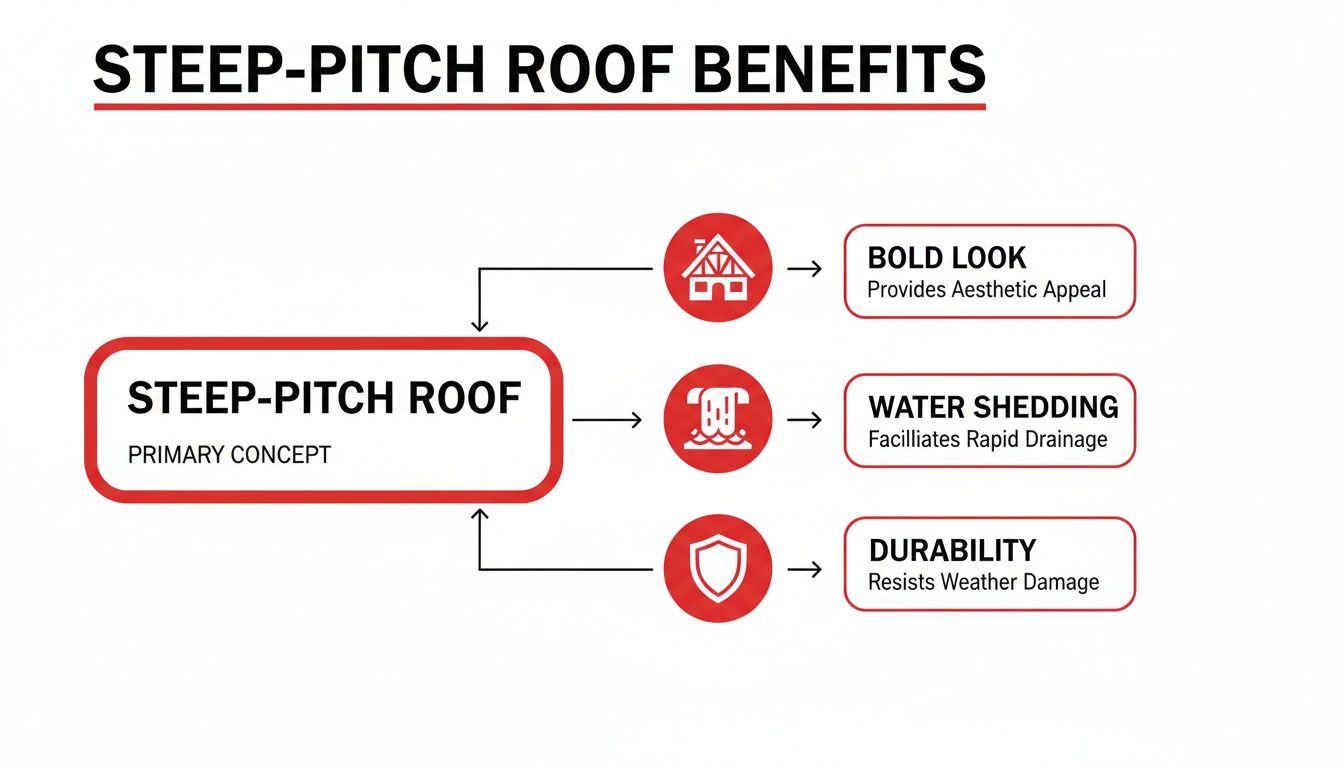
This visual shows how a steep pitch excels at rapid drainage and weather resistance, reinforcing why it’s often paired with premium, long-lasting materials.
Pairing the right material with your roof's pitch isn't just a suggestion—it's the foundation of a durable, leak-free roof. A mismatch is one of the fastest ways to guarantee premature failure, water damage, and expensive repairs down the line.
Weight is another piece of the puzzle. Heavy materials like clay or concrete tiles are a classic part of Arizona's architectural style, but they demand a seriously beefed-up support structure. The roof framing has to be engineered to handle that load from day one, a decision made right alongside the pitch. For homeowners looking for durability without the extreme weight, it’s worth exploring the pros and cons of metal roofing, as it works well on a wide variety of pitches.
To make things easier, we've put together a quick-reference table that matches common Arizona roof pitches with the best material choices.
Roof Pitch and Material Compatibility Guide for Arizona Homes
This table matches common roof pitch categories with the most suitable roofing materials, outlining the key pros and cons for each combination in the Arizona climate.
| Roof Pitch Category (Rise/Run) | Recommended Materials | Pros in Arizona | Cons / Considerations |
|---|---|---|---|
| Flat Roofs (<2:12) | Foam (SPF), TPO, PVC, Modified Bitumen | Reflective coatings dramatically reduce heat absorption, lowering cooling costs. Excellent for mounting solar panels and HVAC units. | Requires flawless installation to prevent pooling water. More frequent inspections and maintenance are necessary. |
| Low Slope (2:12 to 4:12) | Metal (Standing Seam), Modified Bitumen (Rolled Roofing), TPO | Standing seam metal offers excellent durability and water runoff. Modern low-slope materials are highly UV-resistant. | Limited aesthetic options. Asphalt shingles are generally not warrantied for pitches below 2:12 and risky under 4:12. |
| Medium Pitch (4:12 to 9:12) | Asphalt Shingles, Concrete/Clay Tile, Metal (All types) | The most versatile pitch, compatible with nearly all materials. Balances walkability for repairs with effective water shedding. | This is the "sweet spot" with very few downsides, making it a popular and practical choice for most homes. |
| Steep Pitch (>9:12) | Slate, Clay/Concrete Tile, Premium Asphalt Shingles, Metal | Superior water and debris shedding. Creates dramatic architectural appeal and allows for attic or vaulted ceiling space. | Difficult and dangerous to walk on, making repairs and maintenance more expensive. Can be vulnerable to high winds if not properly installed. |
Ultimately, this guide helps illustrate the crucial partnership between your roof's design and its protective covering, ensuring you make an informed choice that will last for decades.
Got Questions About Roof Pitch? We Have Answers.
Walking through the details of different pitch roofs can spark a lot of questions. We get it. To help you feel confident as you plan your project, here are some straight answers to the questions we hear most often from fellow Arizona homeowners.
How Does Roof Pitch Affect My Attic And Airflow?
Your roof's pitch has a huge impact on the size and function of your attic. A steeper pitch, say a 10/12, gives you a cavernous attic, while a low 4/12 pitch results in a much tighter space.
In a place like Arizona, that extra volume is a game-changer. It gives all that blistering hot air a place to rise, moving it far away from your ceiling. This also creates plenty of room for robust ventilation systems—a must-have for pushing hot air out and keeping your home cooler.
Think of a well-ventilated attic as your home's first line of defense against the sun. A decent pitch creates a crucial buffer zone that takes the pressure off your insulation and AC, which often translates into real savings on your summer energy bills.
What's The Best Roof Pitch For Solar Panels?
You can put solar panels on just about any roof, but flat and low-slope roofs give you the most bang for your buck. Why? On a pitched roof, your panels are stuck at whatever angle the roof is.
With a flat roof, however, installers can mount the panels on racks and tilt them to the perfect angle to catch the most sun. This customization can significantly boost your energy production, especially if you have a big, open roof to work with.
Frequently Asked Questions
What is the most common roof pitch for a house?
You'll find that most homes have a pitch somewhere in the medium-slope range, from 4/12 to 9/12. This is the go-to for a reason. It strikes a great balance, offering solid water drainage without making installation and future repairs overly difficult or expensive.
Does a steeper roof last longer?
Often, yes. A steeper roof is an expert at shedding water and debris. Rain, leaves, and everything else just slide right off. This quick runoff means there's far less chance for water to pool and cause leaks or moisture damage, which can add years to the life of your roofing materials.
Can you change the pitch of an existing roof?
You can, but it's a massive project. Changing a roof's pitch isn't a simple facelift; it's a major structural renovation. The entire roof frame has to be rebuilt, which is both complex and expensive. It requires a professional engineer to make sure the rest of your house can even support the new design.