
Choosing the right roof in Arizona is a major decision, pitting the timeless elegance of clay against the versatile strength of concrete. Both are excellent choices for our demanding climate, but they serve different priorities. Clay tiles offer unparalleled longevity and color that never fades, making them a true "once-in-a-lifetime" investment. Concrete tiles provide a more budget-friendly initial cost and a vast array of design options, capable of mimicking everything from wood shake to classic slate. This guide will walk you through the key differences in durability, weight, cost, and aesthetics to help you make the best choice for your home.
Key Takeaways
- Longevity is the Key Difference: Clay tile roofs can last 80-100+ years, while concrete tile roofs typically last 30-50 years.
- Color That Lasts: Clay's color is baked through the tile and will not fade. Concrete's surface color can fade over decades under the intense Arizona sun.
- Weight Matters: Concrete tiles are significantly heavier (820-1,100 lbs/sq) than clay tiles (600-650 lbs/sq). This may require a structural assessment and potential reinforcement for your home.
- Cost vs. Value: Concrete has a lower upfront cost, but clay's longer lifespan often results in a lower "cost per year of service," making it a better long-term investment.
When you're trying to decide between a clay tile roof and a concrete one, it really boils down to a classic trade-off: longevity versus initial cost. Clay tiles are the traditional choice, famous for their classic beauty and an incredible lifespan that can stretch up to 100 years. They're a true "forever" investment for your home. On the other hand, concrete tiles offer a lot more flexibility in design and come with a more budget-friendly price tag upfront, though they typically last about 30-50 years.
So, what are the big differentiators?
- Longevity is the real story: A clay roof can easily last twice as long as a concrete one. While you'll pay more initially, the long-term value is undeniable.
- Color that lasts: Clay's color is baked all the way through, so it simply won't fade, even under the relentless Arizona sun. Concrete's color is often a surface coating, which can show its age after a few decades.
- Weight matters: Concrete tiles are significantly heavier than clay. This isn't a minor detail—it often means you'll need a structural assessment to confirm your home's framing can handle the extra load.
- The heart of the material: Clay is a natural material, fired in a kiln for a timeless finish. Concrete is a composite of cement, sand, and pigment, which is why it can be molded into so many different shapes and styles.
Choosing Your Forever Roof in Arizona
For any Arizona homeowner, a roof is far more than just shelter. It's your home's primary defense against blistering summer heat and the fierce downpours of monsoon season. Making the right choice here affects your home’s safety, curb appeal, and resale value for decades to come.
While both clay and concrete tiles are fantastic options for our desert climate, they have key differences that you need to understand. This guide will take you past the simple pros and cons and dive into the factors that truly matter, from lifecycle costs and structural weight to how each material holds up under years of intense UV exposure.
Clay vs. Concrete Tiles: An Initial Overview
Let's start by getting a clear picture of the fundamental distinctions between these two roofing titans. Here's a quick side-by-side look at how they compare.
| Feature | Clay Tiles | Concrete Tiles |
|---|---|---|
| Lifespan | 80-100+ Years | 30-50 Years |
| Weight | Lighter (600-650 lbs/sq) | Heavier (820-1,100 lbs/sq) |
| Color Retention | Excellent (Color is integral) | Good (Surface color can fade) |
| Initial Cost | Higher | Lower |
| Water Absorption | Low (Approx. 6%) | Higher (Approx. 13%) |
Industry data and real-world experience consistently show clay tile roofs outperforming concrete in the long run. We're talking about a lifespan of 80–100 years for clay, compared to the 30–50 years you can realistically expect from concrete. You can learn more about the durability of different roofing tiles from industry experts.
A Quick Look: Clay vs. Concrete Tile
When you're trying to decide between a clay and a concrete tile roof, a quick side-by-side look can clear things up fast. For Arizona homeowners who want the bottom line without the fluff, we've broken down the key differences into a simple comparison.
This isn't about getting lost in the weeds just yet. Think of this as the high-level snapshot—a way to quickly compare crucial factors like how long each roof will last under our intense sun, how much they weigh, what they cost upfront, and how well they'll hold their color over the years.
Clay vs Concrete Tile Roof Feature Comparison
Here's a straightforward table that cuts right to the chase, outlining the fundamental differences you'll want to consider for your property.
| Feature | Clay Tiles | Concrete Tiles |
|---|---|---|
| Lifespan | 80-100+ years | 30-50 years |
| Weight | Lighter (approx. 600-650 lbs per square) | Heavier (approx. 820-1,100 lbs per square) |
| Color Fade Resistance | Excellent; color is baked through the tile. | Good; surface color can fade over decades. |
| Initial Cost | Higher upfront investment. | More affordable initial cost. |
| Water Absorption | Low (around 6%); resists algae growth. | Higher (around 13%); may require cleaning. |
As you can see, the choice often comes down to balancing initial budget against long-term performance and aesthetics.
The biggest difference you'll see over the long haul comes down to how they age. Clay's color is integral—it's baked all the way through—so it looks fantastic for a century. Concrete, on the other hand, has a surface pigment that can fade with decades of sun exposure, and its higher porosity can sometimes lead to more visible aging.
This visual gives you a great summary of why tile roofing is such a smart choice for Arizona homes, emphasizing its durability, longevity, and overall value.
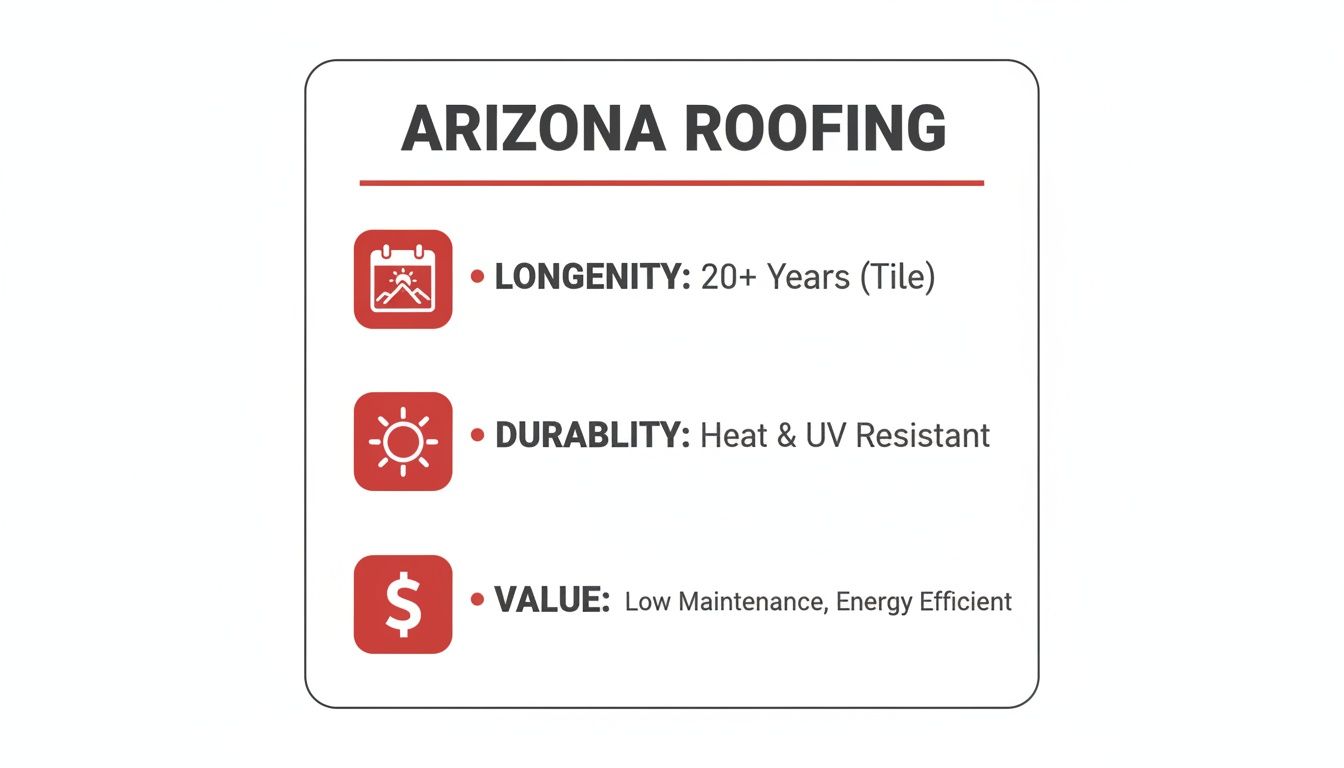
While both are solid options, the extended lifespan of clay often makes it a superior investment over the lifetime of your home.
Evaluating Durability and Lifespan in the Arizona Climate
When you’re picking a roof in Arizona, durability isn’t just a nice-to-have—it’s everything. The sun is relentless, the heat hits triple digits for months, and the temperature swings from day to night put a massive strain on any material. This is where the real differences between clay and concrete tiles start to show.
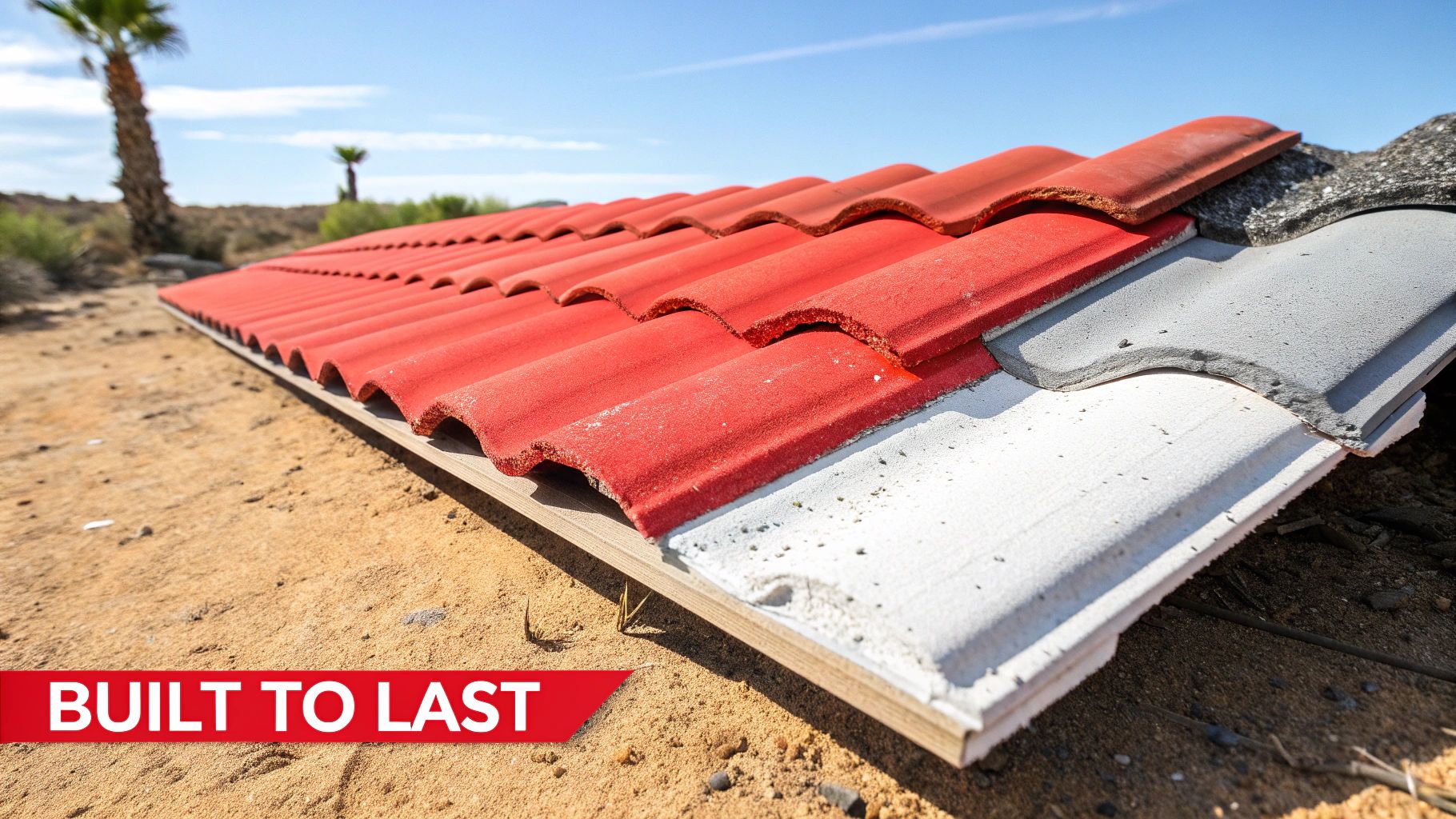
Sure, both options are tough. But how they perform over decades in our specific, harsh environment is what really matters. You can’t just look at a warranty; you have to consider how these materials actually age under intense UV radiation and daily thermal shock.
Color Longevity Under the Arizona Sun
One of the first things to go on an aging roof is the color. The Arizona sun is famous for bleaching everything, and this is a major point of difference between clay and concrete.
Clay tiles get their beautiful, earthy look from the actual minerals in the clay. The color is literally baked through the entire tile in a kiln, making it a permanent part of the material. What this means for you is that clay tiles do not fade. A clay roof we install today will still have its rich, authentic color 100 years from now.
Concrete tiles are a different story. Their color comes from pigments mixed into the cement or from a color coating that’s applied to the surface. While today’s manufacturing is pretty good, that top layer is still fighting a losing battle against decades of brutal UV exposure. Over time, you might see a concrete tile roof start to look faded or even blotchy, which can really impact your home's curb appeal.
For Arizona homeowners, the bottom line is this: clay gives you true, permanent color. It’s an investment in an aesthetic that won’t degrade. Concrete gives you more options upfront but expect its color to show its age down the road.
Resisting Thermal Shock Day After Day
Our climate is defined by crazy temperature swings. A roof can easily cook at over 150°F during the day and then cool down by 40 degrees or more as soon as the sun sets. This daily cycle of expanding and contracting is called thermal shock, and it’s a killer for building materials.
Because they're fired at such high temperatures, clay tiles are incredibly dense and handle this stress exceptionally well. Their structure is inherently stable, so they can expand and contract day after day without becoming brittle or developing tiny cracks.
Concrete is also strong, but it's a more porous material. This makes it just a little more vulnerable to the long-term effects of thermal shock. Over many years, this constant stress—combined with the fact that concrete absorbs more water—can lead to the tiles becoming more brittle as they age. If you want to dive deeper into what makes a roof last, our guide on how long new roofs last breaks down all the factors.
Lifespan: A Tale of Two Timelines
The ultimate test of durability is how long the roof actually lasts. When installed correctly by a professional, both tile systems will far outlive common materials like asphalt shingles.
But the timelines are very different:
- Clay Tile Roof: You can expect a lifespan of 80 to 100+ years. A clay tile roof is genuinely a "once-in-a-lifetime" investment that will often outlast the people living in the home.
- Concrete Tile Roof: The expected lifespan here is closer to 30 to 50 years. It’s a very durable roof, but it will likely need replacing within that window, especially as the underlayment beneath it wears out.
This huge gap in longevity is what really drives the long-term value of clay. While concrete is a solid, reliable choice for a few decades, clay offers a kind of permanence that's simply in a different league.
Understanding Roof Weight and Structural Requirements
When people talk about clay versus concrete tiles, they usually jump right to looks and how long the roof will last. But one of the most important things they forget to consider is the sheer weight of these materials. This isn't a minor detail—it's a serious structural and safety issue.
The total weight of your roof affects everything from your home's structural integrity to how complicated—and expensive—the installation will be. Before you fall in love with a particular tile, you absolutely have to know if your home can handle the load. For many homeowners, especially those with older houses, the first step is always a professional structural assessment.
The Pounds Per Square Difference
The weight gap between clay and concrete is pretty significant, and it’s often the deciding factor. When you get down to the numbers, concrete is always the heavyweight champion.
You’re looking at about 820–1,100 pounds per 100 square feet for concrete tiles. Clay tiles, on the other hand, come in much lighter at 600–662 pounds per 100 square feet. That makes clay roughly 40% lighter.
But it doesn't stop there. Water absorption makes that gap even wider. Concrete tiles can soak up about 13% of their weight in water, which is more than double the 6% absorption rate for denser clay tiles. On an average-sized roof, that difference can add up to thousands of extra pounds straining your home’s frame.
Water Absorption During Monsoon Season
Here in Arizona, a roof's dry weight is only half the picture. When our monsoon season hits, all that rain puts a roof to the test, and this is where clay and concrete really show their differences.
Concrete is just naturally more porous than clay. During a heavy downpour, a concrete tile roof acts like a sponge, soaking up a ton of water and getting heavier. That water eventually dries out, of course, but during the storm itself, the extra load can be immense.
Clay is a different story. It’s fired at much higher temperatures, making it incredibly dense with a very low water absorption rate. This means it stays close to its original weight, even when it's completely saturated.
The crucial takeaway for Arizona homeowners is that a concrete roof's weight fluctuates. It's heaviest when you need it to be the strongest—during a severe monsoon storm. This factor must be accounted for in any structural evaluation.
Do You Need Structural Reinforcement?
Whether you'll need to beef up your home's structure really depends on how it was built. A lot of modern Arizona homes were designed from the start to hold a tile roof, so they can typically handle either concrete or clay without any extra work. But if you're switching from a much lighter material like asphalt shingles, a structural check-up is non-negotiable.
Here’s what a professional roofer will look at:
- Rafters and Trusses: We inspect the size, spacing, and condition of the main support beams.
- Roof Decking: The plywood or OSB sheathing has to be thick and sturdy enough for the concentrated load.
- Foundation and Load-Bearing Walls: The entire house, from the roof down to the foundation, has to be able to safely transfer that massive weight to the ground.
If it turns out you need reinforcement, that can be a major hidden cost. It's a big reason why the lighter weight of clay tiles can sometimes make them the more practical and budget-friendly choice in the long run, even if the tiles themselves cost more upfront. If you want to dive deeper into the installation process, our guide on concrete tile roof systems is a great resource.
It's also smart to think ahead. If you're considering future upgrades, like a solar panel installation, you need to be sure your roof structure can handle that additional weight on top of the tiles. Factoring this in now can save you a lot of headaches later.
Comparing Aesthetics and Long-Term Curb Appeal
Your roof can make up a whopping 40% of what people see from the street, so it's a massive part of your home's curb appeal. When you're weighing clay tile against concrete, you're doing more than just picking a material; you're making a design choice that will define your home's look for decades to come.
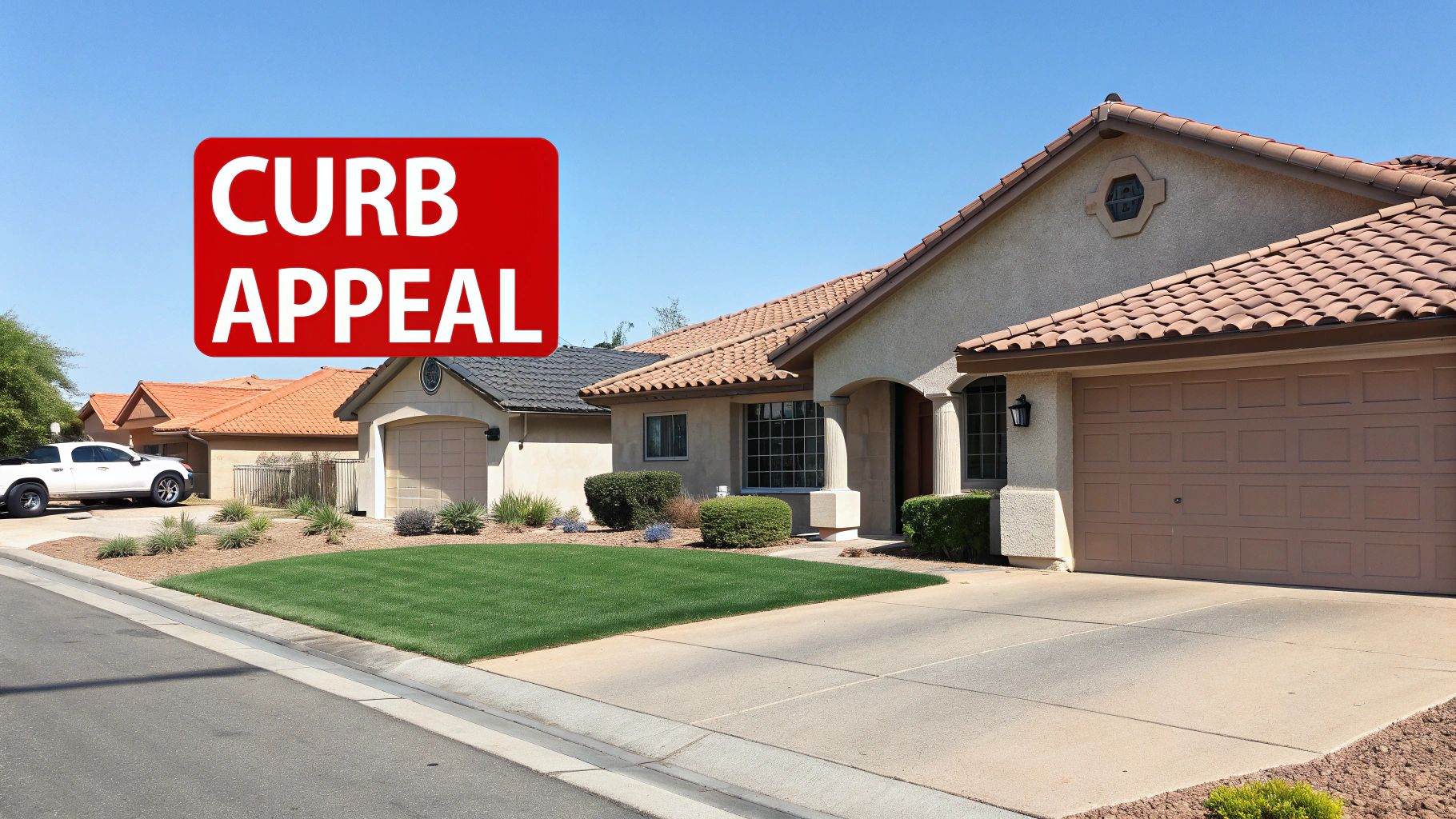
It’s about more than just the initial color. You have to consider how each material gets its look, how it will stand up to the brutal Arizona sun, and which style truly fits your home’s architecture.
The Timeless Authenticity of Clay Tiles
Clay tiles just scream classic. They have an authentic feel that’s right at home in traditional Southwestern, Spanish, and Mediterranean designs. Those rich, earthy tones aren't just painted on; they're baked right into the tile itself when natural clays are fired at incredibly high temperatures.
This firing process is what gives clay its signature appearance and its biggest aesthetic advantage: true color permanence.
- Integral Color: That iconic terra-cotta red is part of the tile's very DNA, not just a surface layer.
- Fade-Proof Performance: Since the color runs all the way through, it simply can’t fade, peel, or wash off. It will look the same after a century in the Arizona sun as it did on day one.
- Natural Variation: No two batches are exactly alike. This creates subtle, beautiful variations in color across the roof, giving it real character and depth.
What this all means is that a clay roof you install today will look just as vibrant 50 years from now. It’s an investment in lasting curb appeal.
The aesthetic promise of clay is longevity. It delivers a premium, classic look that remains consistent, making it a true "forever" design choice that never looks dated or worn out.
The Design Versatility of Concrete Tiles
If clay is the champion of authenticity, concrete is the king of versatility. It’s made from a mix of cement, sand, and pigment, which means it can be poured into almost any mold and colored in countless ways. This opens up a much wider world of design possibilities.
Concrete is a master of imitation, which is a huge part of its appeal. It can convincingly replicate the look of far more expensive roofing materials.
- Style Mimicry: Concrete tiles can be shaped to look like rustic wood shakes, high-end slate, or even traditional clay tiles.
- Expansive Color Options: Pigments can be mixed throughout or applied as a surface coat, creating an almost limitless color palette, from deep charcoals to light desert tans.
- Uniform Appearance: The manufacturing process is very consistent, resulting in a clean, uniform look that’s a great fit for modern or contemporary homes.
But there's a trade-off for all that flexibility. With most concrete tiles, the color is primarily a surface application. After decades of baking under Arizona's intense UV rays, that surface pigment will eventually start to fade. Modern sealants do a good job of slowing this down, but it’s an unavoidable part of how the material ages.
For homeowners wanting to explore the full spectrum of options, our guide on tile roof colors can help you find the perfect match for your home's style.
The Real Cost: Upfront Price vs. Lifetime Value
When you're comparing clay and concrete tile roofs, it’s easy to get fixated on the initial quote. Concrete almost always looks cheaper on paper, but that number doesn't tell the whole story. To make a smart financial decision, you have to think like an investor and look at the total cost of ownership over the decades.
This means factoring in everything—the materials, the installation, long-term upkeep, repair costs, and even how your choice affects your home's resale value. When you crunch all the numbers, the more "expensive" option can surprisingly end up being the better deal.
Breaking Down the Initial Installation Costs
Let's start with that first bill: the installation. Yes, concrete tiles cost less per square foot, which makes them a go-to for many builders and homeowners working with a tighter budget. But the cost of the material is just one piece of the puzzle.
Here's the kicker: concrete tiles are heavy. They can weigh up to 40% more than clay tiles. This isn't just a minor detail; it often means you'll need a structural engineer to inspect your roof framing to make sure it can handle the extra load. If your home wasn't built for that kind of weight, you'll have to pay for structural reinforcements, and that can quickly wipe out any savings you saw on the materials. Clay’s lighter weight means you can often skip that entire step—and the cost that comes with it.
The Power of "Cost Per Year of Service"
The best way to see the true financial picture is to calculate the "cost per year of service." It’s a simple but powerful metric: just divide the total installation cost by the roof’s expected lifespan.
Here’s a quick example to illustrate the point:
- Concrete Tile Roof: A $25,000 roof that you can expect to last 40 years breaks down to $625 per year.
- Clay Tile Roof: A $35,000 roof that will last 80 years or more comes out to just $437.50 per year.
In this scenario, the clay roof—despite its higher initial price—is almost 30% cheaper every single year. You're essentially paying once for a roof that will last a lifetime, instead of paying to replace a concrete roof twice in the same timeframe.
Thinking About Property Value and Insurance
A high-quality roof isn't just an expense; it's an asset that boosts your home's curb appeal and resale value. Homebuyers recognize a clay tile roof as a "forever" roof. Its timeless look and color that never fades send a powerful signal of quality and permanence, which can make your home stand out and command a higher price.
On top of that, both clay and concrete tiles have a Class A fire rating—the best you can get. This excellent fire resistance can translate into real savings on your homeowner's insurance premiums. It's always worth a call to your insurance agent to see what kind of discount you can get for installing a top-tier tile roof. The logic of balancing upfront costs with durability is a common theme in home improvement; for example, homeowners often weigh similar concrete paver installation considerations for their outdoor projects.
Ultimately, choosing your roofing material is a major financial decision. Concrete might save you money today, but clay’s incredible longevity and proven performance often make it the smarter, more valuable investment for your Arizona home in the long run.
So, What’s the Right Choice for Your Arizona Home?
When it comes to picking between clay and concrete tiles, the best answer really depends on what you value most for your home. We've walked through everything from durability and weight to aesthetics and long-term value, and now it's about matching those details to your specific situation.
To make things a bit clearer, let's boil it down to a few key questions. Think of this as your final gut-check before making a decision.
Your Decision Checklist
Ask yourself these three things:
- Longevity vs. Budget: Are you looking for a "forever roof" with an 80+ year lifespan that you'll never have to think about again? If so, clay is your answer. Or, does a lower upfront cost for a perfectly durable 30-50 year roof make more sense for your financial plans? That points toward concrete.
- Structural Capacity: Has your home's structure been evaluated? Clay's lighter weight is often a straightforward fit, while the heftier concrete tiles might require some structural reinforcement—an added cost and consideration.
- Aesthetic Priority: Is the timeless, authentic look of classic clay, with its naturally fade-proof color, the only thing that will do? Or are you more drawn to the huge variety of shapes and colors that concrete offers, which can mimic anything from wood shake to slate?
Ultimately, the right roof is the one that lets you sleep at night, knowing you made a solid, confident investment. Our job is to give you all the information and straight-shooting advice you need to get there, based on decades of experience with both systems right here in Arizona.
As local roofers, we’ve seen it all. We know how both clay and concrete perform under the intense desert sun, through monsoon storms, and over many years. We’re not just here to install a roof; we're here to provide a solution that truly lasts.
Ready to get a clear recommendation tailored specifically to your property? Let's talk. Contact the experts at AZ Roof Co today to schedule your free, no-pressure consultation. We’ll help you make the perfect choice for your home.
Frequently Asked Questions
When you're weighing your options between a clay and concrete tile roof here in Arizona, you're bound to have a few questions. We get them all the time. Let's walk through some of the most common ones to clear things up and help you feel confident about your decision.
Which Tile Is Better for Arizona's Extreme Heat?
Both materials are fantastic performers in the heat, creating a natural air gap that acts as a thermal barrier and can seriously cut down your cooling costs. That said, clay generally has a slight edge. Its natural density is just a bit better at reflecting the sun's harsh rays.
But here's the real secret: for either material, color choice is king. A lighter tile with a high Solar Reflectance Index (SRI) will always outperform a darker one when it comes to keeping your house cool. We can show you the top-rated SRI options for both clay and concrete to make sure you get the most energy efficiency possible.
While both are excellent choices for our climate, clay's natural properties give it a small, inherent advantage against the Arizona sun. But remember, a light-colored concrete tile will beat a dark-colored clay tile every time.
Will My Home's Structure Need Reinforcement for a Tile Roof?
This really depends on how your home was originally built. If it was designed from the start with a tile roof in mind, you're likely good to go. However, if you're switching from something lighter like shingles, you might need some reinforcement.
This is especially true for concrete, which is roughly 40% heavier than clay. In fact, clay is often the go-to solution for homes that can't handle the immense weight of concrete without expensive structural work. A professional evaluation is non-negotiable here; it's the only way to guarantee safety and compliance, and it's a standard part of our initial inspection process.
How Does Maintenance Compare Between Clay and Concrete Tiles?
Both are incredibly durable and don't ask for much, but there are subtle differences. Clay is less porous, which means it’s more resistant to the algae or mildew that can pop up after a strong monsoon season. Concrete’s surface, being a bit more absorbent, might need a cleaning now and then to keep it looking fresh.
The real maintenance hero for any tile roof, though, is the underlayment. It's the hidden layer doing the heavy lifting of waterproofing. This is what needs to be checked on periodically throughout the roof's life. Our maintenance plans are built around keeping this crucial barrier in top shape, which is the key to making your roof last for decades.