
A concrete tile roof is more than just a covering for your home; it's a long-term investment in durability, style, and peace of mind. Especially in climates with intense sun and harsh weather, choosing the right roofing material is one of the most critical decisions a homeowner can make. With a lifespan that can exceed 50 years and the strength to withstand extreme conditions, concrete tile offers a permanent solution that enhances your home's value and protection for generations to come.
This guide provides a comprehensive overview of what makes concrete tile roofing a top-tier choice. We'll explore its impressive durability, versatile aesthetics, and long-term financial benefits, giving you the clear, straightforward information you need to decide if it's the right fit for your home.
Key Takeaways
- Exceptional Lifespan: A professionally installed concrete tile roof can last 50 years or more, often outliving the homeowner.
- Superior Durability: Concrete tiles boast a Class A fire rating and offer excellent resistance to high winds, hail, rot, and insect damage.
- Energy Efficiency: The thermal mass of concrete, combined with the air gap created during installation, helps keep homes cooler and can lower air conditioning costs.
- Aesthetic Versatility: Available in a vast range of profiles and colors, concrete tiles can mimic the look of classic clay, slate, or wood shake to suit any architectural style.
- Structural Consideration: Due to their significant weight, a structural assessment by a professional is often required to ensure your home can support the load.
What Is a Concrete Roof Tile, Really?
When most of us hear the word "concrete," our minds immediately go to sidewalks, driveways, or building foundations. Strong and functional, sure, but hardly beautiful. That's what makes concrete tile roofing such a surprise.
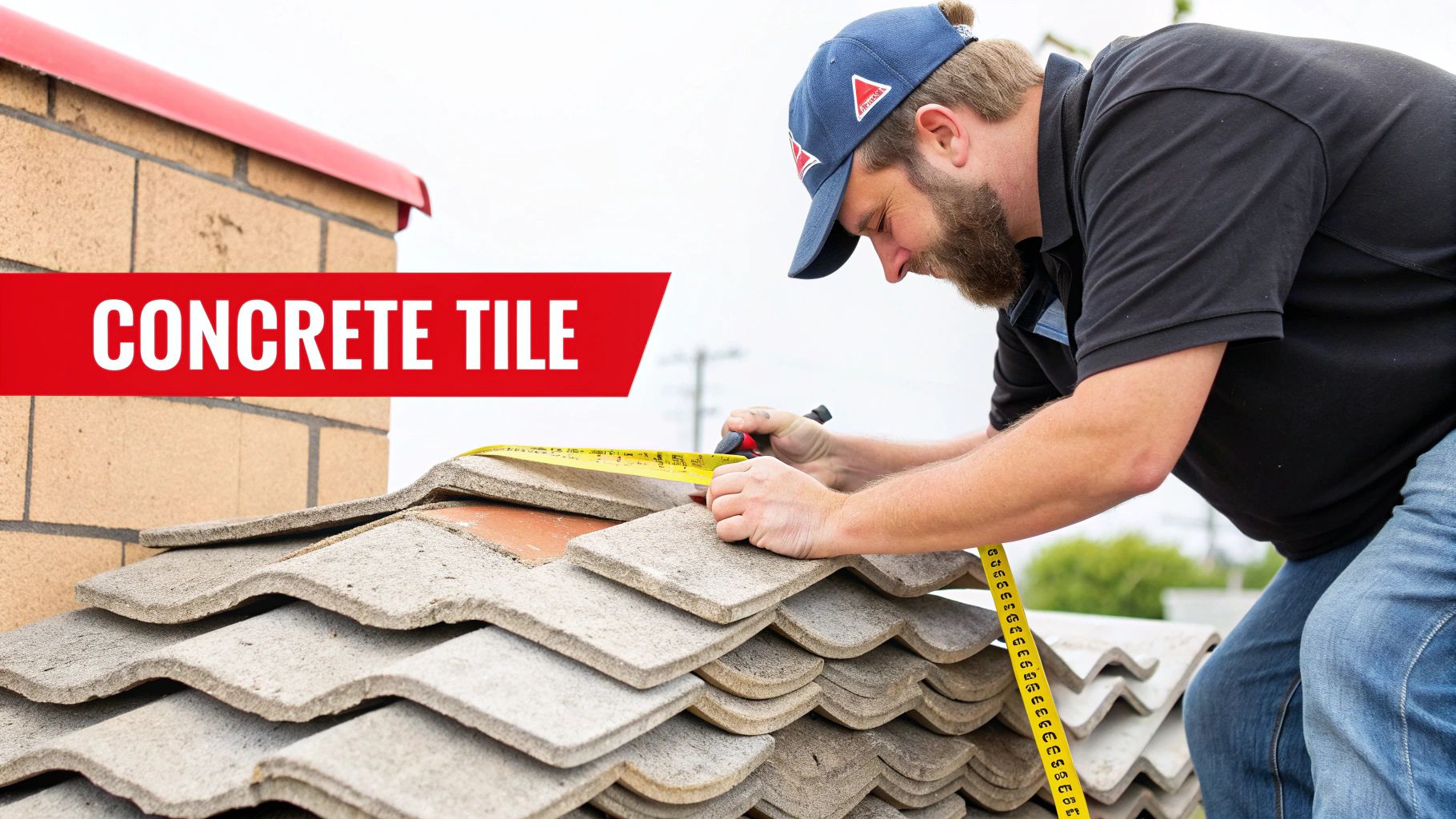
The creation process is less like pouring a slab and more like baking a high-strength cake. It starts with a precise blend of sand, cement, and water that gets molded into shape. Then, under intense heat and pressure, this mixture is cured, forcing the materials to bond into an incredibly dense and resilient tile. This is what gives a concrete tile its power to withstand decades of abuse from the elements.
A Master of Disguise
Here's where concrete tiles really shine: their incredible versatility. This is not a one-size-fits-all product. The manufacturing process allows for a massive range of colors, textures, and profiles, letting them beautifully mimic more expensive materials.
This chameleon-like quality has made them a dominant force in the global roofing market. While their core ingredients—sand, water, and Portland cement—are prized for durability and low maintenance, it's their design flexibility that wins homeowners over. You can get the look of classic clay, wood shake, or natural slate without the associated price tag or upkeep. You can dive deeper into the global roofing tiles market data on Mordor Intelligence.
Common Concrete Tile Profiles
The shape of the tile, its "profile," has a huge impact on your home's final look. Simply by choosing the right profile, you can achieve nearly any architectural style you can imagine, from rustic and traditional to sharp and modern.
Here are a few of the most popular styles you’ll see:
- Flat Tiles: If you're going for a clean, contemporary look, flat tiles are the way to go. They lay flush against the roof deck, creating a smooth, minimalist appearance that’s very similar to natural slate.
- S-Tiles (Spanish Tiles): These create that iconic Mediterranean or Spanish villa vibe. Their distinct "S" shape produces dramatic shadow lines that give the roof incredible texture and dimension.
- Barrel Tiles (Mission Tiles): With a high-profile, semi-cylindrical shape, these tiles deliver a deeply textured, rustic look. They’re often linked to historic Spanish architecture and offer a bold, timeless appeal.
By choosing the right profile and color, a homeowner can achieve the high-end look of a slate or clay roof without the premium cost or specialized maintenance that often comes with them.
This flexibility means your roof is more than just a protective shield—it's a core design element. Whether you’re dreaming of a classic Tuscan estate or a sleek modern home, there’s a concrete tile profile that fits your vision perfectly. The strength is built-in; the style is all yours.
Weighing the Pros and Cons of a Concrete Tile Roof
Every roofing material has its trade-offs, and concrete tile is certainly no exception. To make a smart, confident decision for your home, you have to look at the full picture—the powerful advantages alongside the potential drawbacks. Let's break it down so you know exactly what you're getting into.
The Clear Advantages of Concrete Tiles
For many homeowners, especially here in the demanding Arizona climate, the benefits of concrete tile roofing are hard to ignore. They really shine when you start thinking about long-term performance, safety, and the overall value you get over the decades.
-
Incredible Durability and Lifespan: This is the big one. A concrete tile roof that’s installed correctly can easily last for 50 years or more. In many cases, it will outlive the person who had it installed. Think of it less like a component that needs replacing every 15-20 years and more like a permanent part of your home's structure.
-
Exceptional Fire Safety: Concrete simply doesn't burn. That's why concrete tiles earn a Class A fire rating, which is the highest possible mark for any roofing material. In dry regions where the threat of embers from wildfires is a real concern, this provides an invaluable layer of protection and peace of mind.
-
Natural Energy Efficiency: Concrete is dense, giving it a high "thermal mass." This just means it absorbs the sun's blistering heat slowly during the day and releases it gradually at night. That process, combined with the natural air gap underneath the tiles, acts as a buffer, keeping your attic and home cooler and giving your AC unit a much-needed break.
Choosing a concrete tile roof is an investment in unparalleled longevity and safety. Its ability to withstand fire, resist rot, and endure for over half a century makes it a formidable shield for your home.
- Resistance to Rot and Insects: Unlike wood shakes or even some types of underlayment, concrete is completely immune to rot, mold, and mildew. It's also not on the menu for termites or other pests, which eliminates a huge vulnerability common to other roofing systems.
Understanding the Potential Disadvantages
While the upsides are compelling, it’s just as important to be realistic about the challenges. These factors mostly come down to the initial investment, the sheer weight of the material, and the need for a true specialist to handle the job.
-
Higher Upfront Installation Cost: There's no getting around this—a concrete tile roof costs more to install than common options like asphalt shingles. The materials themselves are pricier, and the installation is far more labor-intensive. The key, however, is to view this cost over the roof's entire lifespan; you might have to pay to replace an asphalt roof two or three times in the same period you'd have a single concrete tile roof.
-
Substantial Weight: These tiles are heavy. Seriously heavy. Before you can even consider this option, a professional needs to inspect your home's structure to confirm it can handle the load. Some homes, particularly older ones, might need extra reinforcement, which will add to the project's final cost.
-
Requires Specialized Installation: This is not a job for a handyman or a general-purpose roofer. Installing concrete tile correctly requires deep expertise in underlayment systems, flashing techniques, and precise tile placement to guarantee it won't leak and will last for decades. Hiring a contractor with proven experience in tile roofing isn't just a good idea—it's absolutely essential.
Concrete Tile Roof At a Glance
To make things even clearer, here’s a simple table summarizing the key points we've covered.
| Feature | Pros (Advantages) | Cons (Disadvantages) |
|---|---|---|
| Lifespan | Can last 50+ years; often a one-time investment for a homeowner. | A significant upfront financial investment compared to other materials. |
| Durability & Safety | Class A fire rating (non-combustible); highly resistant to rot, insects, and high winds. | Its heavy weight may require a structural engineer's approval or costly frame reinforcement. |
| Installation | When done by an expert, it's a permanent and reliable roofing system. | Requires highly specialized installers; improper installation can lead to major issues. |
| Energy Efficiency | Natural thermal mass and air gap help insulate the home, potentially lowering cooling costs. | The initial cost may take years to be fully offset by energy savings alone. |
| Maintenance | Requires minimal upkeep; individual tiles can be replaced if cracked or broken. | Tiles can be brittle and may crack if walked on improperly; repairs require a specialist. |
Ultimately, a concrete tile roof is a premium product with a price tag and specific requirements to match. But for those who are looking for a permanent, high-performance solution that adds lasting value, the benefits are tough to beat.
While a concrete tile roof is a great start for energy savings, exploring other proven ways to lower your electric bill can boost your home’s overall efficiency even more. When you combine a top-tier roof with other smart energy strategies, you can really maximize your savings year after year.
Understanding the Real Cost and Lifespan
Let's be honest, the initial price tag for a concrete tile roof can give homeowners a moment of pause, especially when they see how it stacks up against other materials at first glance. But looking only at that upfront cost is like judging a book by its cover—you miss the whole story. The real value of concrete tile shines through when you look at what it costs over its entire, incredibly long life.
Think about it this way: an asphalt shingle roof is often a temporary solution, something you'll likely have to replace every 15 to 25 years. A concrete tile roof is a different beast altogether. It’s a one-and-done capital improvement that protects your home for 50 years or more. You're not just buying a roof; you're making a single, smart investment that ends the cycle of repeated replacement costs.
Breaking Down the Investment
So, what are we talking about in terms of dollars and cents? Typically, installing a concrete tile roof will run you somewhere between $8 to $18 per square foot. Of course, that's a range, and the final number depends on a few key things, like the unique shape of your roof and the specific style of tile you fall in love with.
Here are the main factors that will influence your final quote:
- Roof Complexity: If your roof has a lot of hips, valleys, gables, and dormers, it’s going to require more skilled labor and custom-cut tiles, which nudges the price up. A simple, straightforward roof is less complex and therefore less expensive.
- Tile Profile: You have options! Sleek, modern flat tiles often have a different price point than the classic, high-profile "S" or barrel tiles that create that iconic Southwestern look.
- Structural Needs: Concrete is heavy. If your home's existing structure wasn't built for it, we may need to add some reinforcement to safely support the weight. This is a critical step for a safe, long-lasting installation.
- Underlayment Quality: Here in Arizona, the underlayment is your roof's secret weapon against the brutal sun. Choosing a premium, high-temperature synthetic underlayment is non-negotiable, and while it costs more upfront, it's essential for the roof's longevity.
While the initial outlay is higher, the return on investment for a concrete tile roof is substantial. You are essentially pre-paying for a lifetime of protection, avoiding the cycle of tear-off and replacement required by less durable materials.
The Long-Term Financial Picture
Beyond just skipping future replacement bills, a concrete tile roof brings some serious long-term financial perks. Its incredible durability and classic, high-end look significantly boost your home's curb appeal. That's not just about looking good—it can directly translate into a higher resale value when you decide to sell. It stops being just an expense and becomes a smart financial move.
This shift toward durable, long-lasting materials isn't just a local trend; it's happening worldwide. The global roofing tiles market is growing, driven by homeowners who want resilient solutions like concrete. People are starting to prioritize performance and longevity over the cheapest option. You can see this trend reflected in this market analysis on roofing tiles.
Lifespan and Return on Investment
At the end of the day, the phenomenal lifespan of concrete is its biggest financial selling point. Instead of setting aside money for a new roof every couple of decades, you get a roof that just keeps on performing. For a deeper dive into how this compares with other common materials, check out our guide on how long a roof normally lasts.
This kind of durability means your investment pays you back year after year. It's a workhorse, shielding your home from monsoons and intense sun, helping with your energy bills, and boosting your property value—delivering a return that makes the initial cost well worth it.
Concrete vs. Clay vs. Asphalt Shingles
Picking the right roof for your home is a big deal. You're balancing cost, looks, and how long it's going to last. When you put concrete tile up against its two biggest rivals—traditional clay tile and the ever-present asphalt shingle—the pros and cons of each really start to stand out. Let's break down those differences so you can find the perfect fit for your home and budget.
Asphalt shingles are everywhere, and for one main reason: they're cheap upfront. They're also lightweight, which means they can be installed on almost any home without a fuss. But that initial savings comes with a catch. You might end up replacing an asphalt roof two, or even three, times in the same period you'd have a single concrete tile roof.
When you look at the big picture, the real value of concrete tiles becomes clear, especially when you consider the cost over time, its impressive lifespan, and the return on your investment.
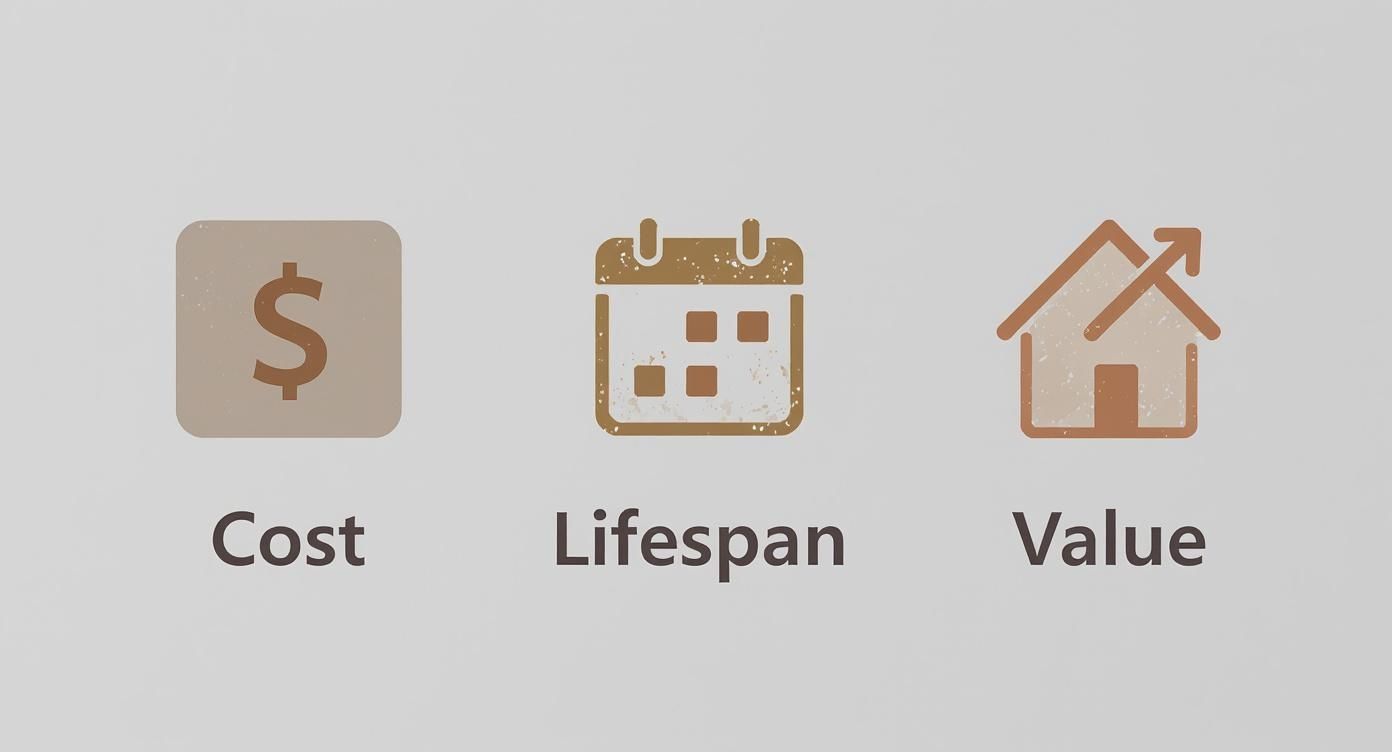
This really drives home the point: while the initial ticket price is higher, the sheer longevity and enduring value make concrete a smart financial move for the long haul.
Concrete Tiles vs. Clay Tiles
From a distance, you might mistake concrete and clay tiles for each other. They're both heavyweights in the roofing world, offering incredible durability, a top-tier Class A fire rating, and a lifespan that can easily top 50 years. Think of them as permanent roofing systems. But when you get up close, you start to see the differences, especially in price and style options.
Clay tiles have that classic, earthy charm, but they usually come with a higher price tag. Concrete, however, is the chameleon of the two. It can be manufactured in a massive range of colors and profiles, letting it convincingly imitate everything from old-world slate to rustic wood shakes. This makes a concrete tile roof a more flexible and often more budget-friendly way to get the exact look you want.
If you're weighing these two, we have a complete guide that digs even deeper into clay tile vs. concrete tile roofing.
Concrete Tiles vs. Asphalt Shingles
The matchup between concrete and asphalt is the classic tale of long-term investment versus short-term savings. There's no contest on the initial cost—asphalt shingles are way cheaper, and their light weight means you won't need to worry about reinforcing your roof structure.
But that's where the advantages for asphalt end. A concrete tile roof is simply in a different class when it comes to performance. It stands up far better to our intense Arizona sun, wind, and hail. Plus, its natural thermal mass helps keep your home cooler, which can lead to real savings on your energy bills.
The market shows that homeowners are catching on. Concrete and clay tiles command a huge share of the global roofing market because people recognize their lasting beauty, longevity, and sustainability. For homeowners looking for a true "forever" roof, concrete is often the go-to choice.
At the end of the day, asphalt is a quick and affordable fix. But a concrete tile roof is an investment in your home's future, delivering a lifetime of security, beauty, and value.
Hiring the Right Concrete Tile Roofing Contractor
Let’s be clear: even the best concrete tiles on the market are worthless without a top-notch installation. Putting on a tile roof isn't a weekend warrior project; it's a specialized craft that takes years of experience to master. Choosing the right contractor is probably the most critical decision you'll make in the entire process, directly impacting whether your roof lasts a solid 50 years or fails in just a few.
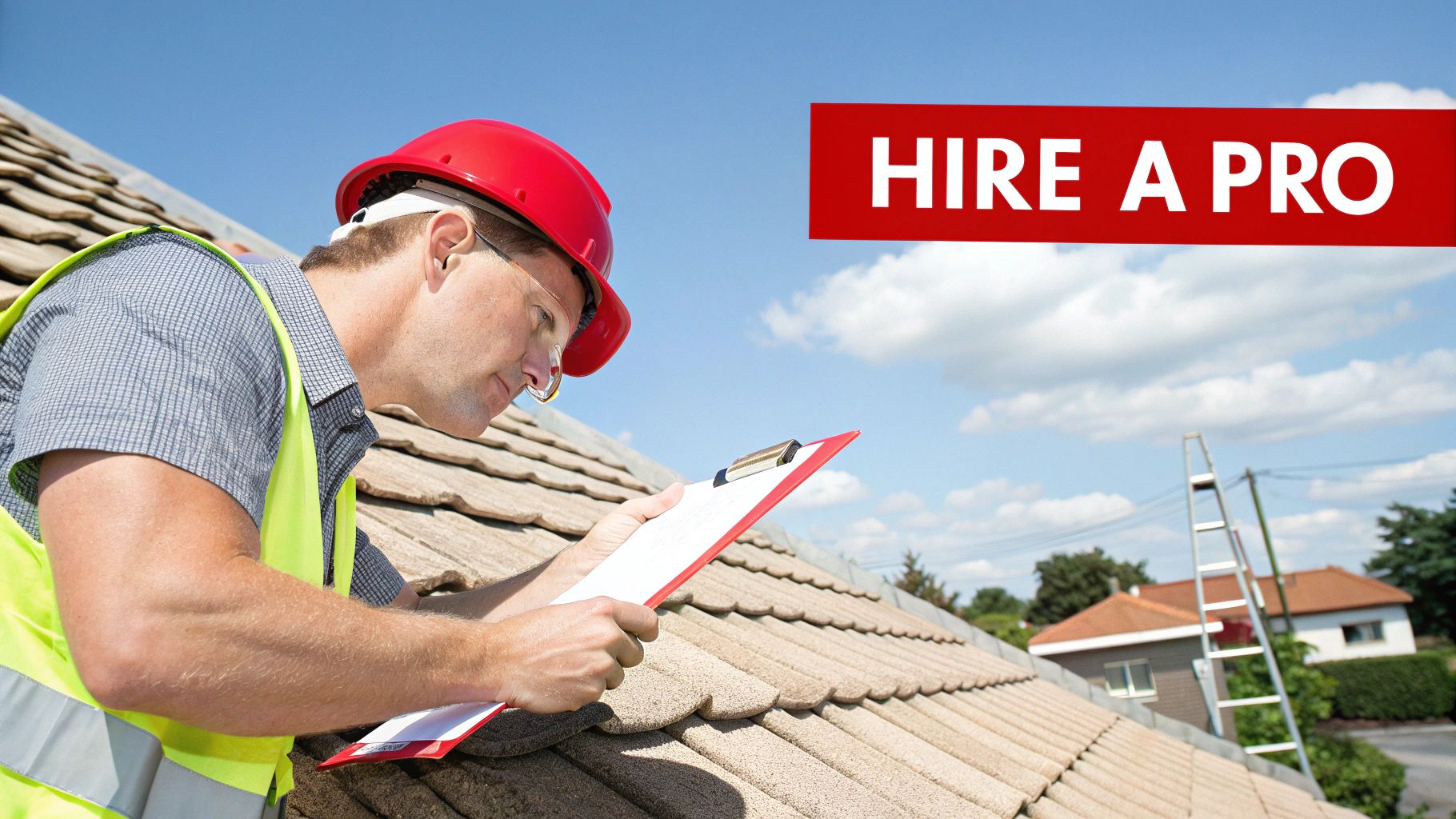
A professional installation is so much more than just nailing down tiles. It requires a deep understanding of how water moves, proper flashing techniques for our monsoon storms, and the unique stresses the Arizona sun puts on a roof. An inexperienced crew can easily make mistakes that cause hidden leaks, cracked tiles, and a roof that fails decades before it should.
Your Contractor Vetting Checklist
It's tempting to jump on the lowest bid, but that's almost always a mistake. A bargain-basement price usually means they're cutting corners on materials, labor, or both—a "savings" that will cost you dearly down the road.
Before you even think about signing a contract, make sure any roofer you're considering checks these essential boxes:
- Arizona Licensing: They absolutely must have a valid contractor's license with the Arizona Registrar of Contractors (ROC). No license, no deal.
- Comprehensive Insurance: Ask to see proof of general liability insurance and workers' compensation. This is what protects you if an accident happens on your property.
- Proven Tile Experience: They need to show you a portfolio of finished concrete tile roofs. Don't just take their word for it; ask for addresses and go see their past work for yourself.
Think of hiring a roofer as starting a partnership. You're trusting them with the single most important part of your home's defense system. You want a team that values quality craftsmanship and open communication, not just a quick paycheck.
Critical Questions to Ask Every Potential Roofer
Once you have a shortlist of qualified companies, it's time to get into the details. How they answer these questions will tell you everything you need to know about their expertise and whether they're the real deal. A true pro will be happy to answer; a roofer who gets defensive is a major red flag.
For a complete checklist, our guide on how to find a good roofer is a great resource.
Here are a few must-ask questions specifically for an Arizona concrete tile installation:
- Underlayment: What kind of underlayment do you plan to use, and why is it the right choice for our heat? (You're listening for something about a high-temperature synthetic underlayment).
- Fastening Method: How are you going to attach the tiles? Will it be nails, screws, foam, or some kind of combination?
- Flashing and Penetrations: Walk me through your process for sealing around vents, chimneys, and skylights. How do you guarantee they won't leak?
- Workmanship Warranty: What exactly does your warranty on the installation cover, and for how long? Make sure you get the details in writing.
Pay attention to how they run their business, too. A company that’s invested in modern tools for customer service, like the best AI receptionist for roofers, shows they care about being responsive and professional. It’s a good sign that their commitment to quality extends from the first phone call all the way through to the final inspection.
Frequently Asked Questions About Concrete Tile Roofs
Can my home support the weight of concrete tiles?
This is a critical first question. Concrete tiles are significantly heavier than asphalt shingles, and not every home's structure is designed to handle the load. Before committing, you must have a qualified roofer or a structural engineer inspect your home's framing to confirm it can bear the weight. In some cases, minor structural reinforcements may be necessary, which is an added cost to consider.
What kind of maintenance does a concrete tile roof require?
One of the major benefits of concrete tile is its low maintenance. The primary task is an annual visual inspection (and another after any severe storms) to check for cracked, broken, or shifted tiles. It's also important to keep gutters and roof valleys clear of leaves and debris to ensure proper water drainage. Avoid pressure washing, as it can damage the tile's protective surface.
How do concrete tiles help with energy bills?
Concrete tiles improve energy efficiency in two ways. First, their high thermal mass means they absorb and release heat slowly, reducing the amount of heat transferred into your attic. Second, the installation method creates an air gap between the tiles and the roof deck. This space allows for natural airflow that ventilates heat away, keeping your home cooler and reducing the strain on your air conditioning system.
What happens if a single tile breaks?
Fixing a single broken tile is typically a straightforward and inexpensive repair for a professional. A roofer can remove the damaged tile and replace it with a new one without disturbing the rest of the roof. This modular nature is a significant advantage over systems where a small area of damage might require a much larger repair. It's a good practice to keep a few extra tiles from the initial installation to ensure a perfect color and style match for any future repairs.
How does the color of the concrete tiles affect my home's temperature?
The color of your roof tiles can have a noticeable impact on your home's internal temperature and energy bills. Lighter-colored tiles, often referred to as "cool roofs," reflect more sunlight and absorb less heat than darker tiles. In a hot climate, choosing a lighter shade can contribute to a cooler attic and reduce your home's cooling load.