
A home's roof is its first line of defense against the elements, but it's an investment many homeowners don't think about until a problem arises. Understanding how long your roof is expected to last isn't just about avoiding leaks; it's about smart financial planning, protecting your property's value, and ensuring your family's safety. The lifespan of a roof can vary dramatically, from a couple of decades to a lifetime, depending on the materials used, the quality of the installation, and the climate it endures.
This guide provides a clear, practical overview of roof longevity. We'll break down the lifespans of different materials, explain how Arizona's unique climate impacts your roof, and show you the warning signs that indicate it's time for a professional inspection.
Key Takeaways
- Asphalt Shingle Roofs: The most common type, typically lasting 15 to 30 years.
- Metal and Tile Roofs: Premium, long-term investments that can last 50 years or more.
- Climate is Crucial: Arizona's intense sun and monsoon storms significantly shorten a roof's lifespan compared to milder climates.
- Installation Quality Matters: Poor installation can cause even the best materials to fail prematurely. Professional work is non-negotiable.
- Maintenance is Key: Regular inspections and proactive repairs are the most effective ways to maximize your roof's service life.
Your Quick Guide to Roof Longevity
Think of your roof as the ultimate shield for your home. How long that shield holds up isn't just a single number; it's a combination of a few crucial things working in harmony. It's a lot like a car—the model you buy is just the starting point. Its real lifespan comes down to how well it was built, how you drive it, and whether you keep up with the oil changes.
A roof is no different. You have the material itself, the skill of the crew who installed it, and the care you give it over the years. Getting all three right is the key to maximizing your investment.
Key Factors Influencing Roof Lifespan
When we break it down, three big-picture items really dictate how long your roof will be with you:
- Roofing Material: This is the foundation of your roof's lifespan. An asphalt shingle is a great, cost-effective choice for a couple of decades, whereas materials like tile and metal are a bigger upfront investment designed to last a lifetime.
- Installation Quality: You can have the best materials in the world, but if they're installed poorly, you're in for a world of hurt. A roof is a complex system of shingles, underlayment, flashing, and ventilation. A professional installation ensures all these parts work together seamlessly to prevent leaks and premature aging.
- Climate and Environment: Here in Arizona, our roofs are in a constant battle with the elements. The relentless sun and intense UV rays are brutal on materials, and the sudden violence of a monsoon storm puts unique stress on the entire system. This is a much different challenge than what a roof faces in a milder, overcast climate.
A Visual Comparison of Common Roof Materials
This chart gives you a quick, at-a-glance look at what you can expect from the most common roofing materials we see on homes today.
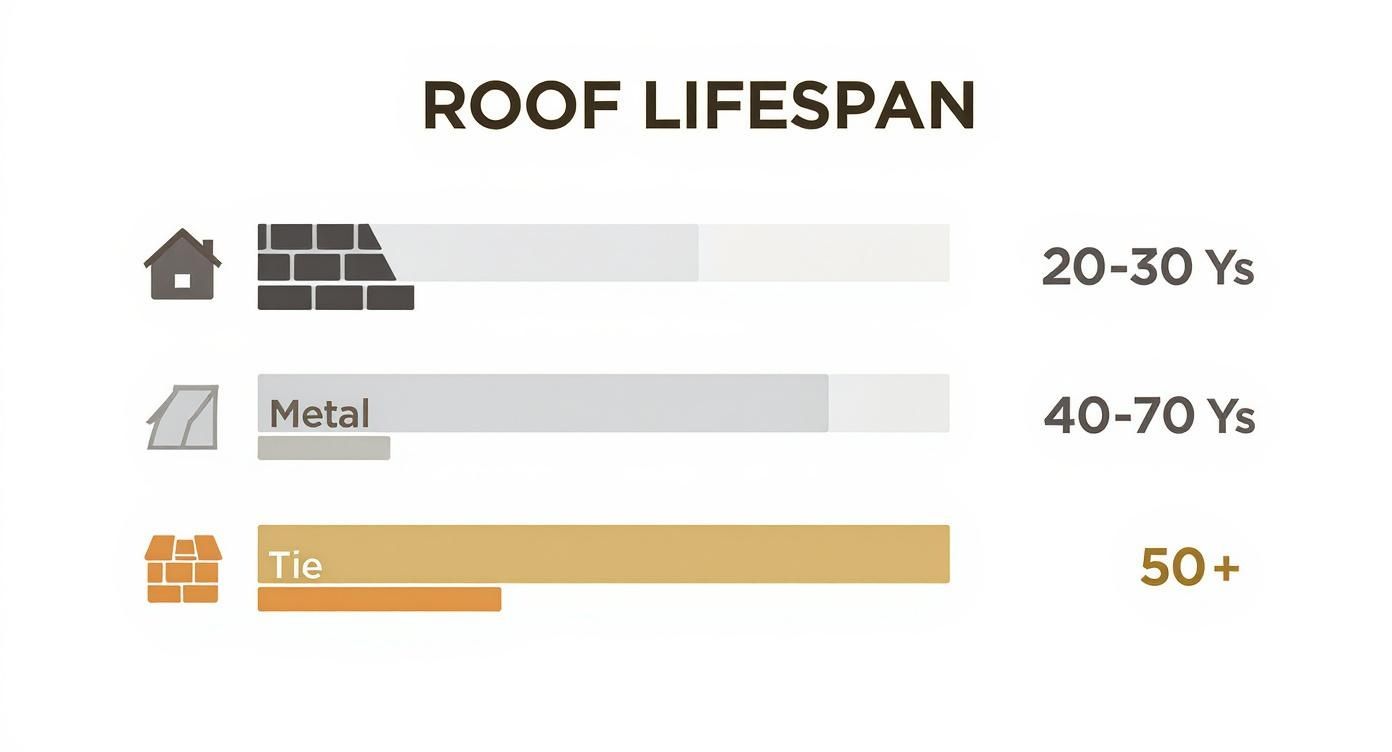
As you can see, there's a huge leap in expected service life once you move from standard shingles into the premium material categories.
A roof's lifespan is a promise, not a guarantee. The material sets the potential, but it's the quality of the installation and ongoing maintenance that determines if you actually get there.
While these numbers are great guidelines, the exact lifespan varies. A basic asphalt shingle roof generally lasts about 20 to 30 years, but a high-end metal roof can go for 40 to 70 years, sometimes longer. For a deeper dive into how these materials compare, the folks at This Old House have some great information.
Now that you have the fundamentals down, we can get into the specifics of each material and figure out which one makes the most sense for your home and our tough Arizona climate.
Exploring Different Roofing Material Lifespans
Choosing a roofing material is the single biggest factor that determines how long it will last. It's a lot like picking tires for a truck; you wouldn't put standard highway tires on a vehicle meant for rugged, off-road trails. Every roofing material is engineered for a different balance of price, durability, and performance.
To make a smart investment, you need to understand the "why" behind each material's expected lifespan. Let's walk through the most common options you'll find on Arizona homes, from the everyday workhorse to the once-in-a-lifetime champions.
Asphalt Shingles: The Popular Workhorse
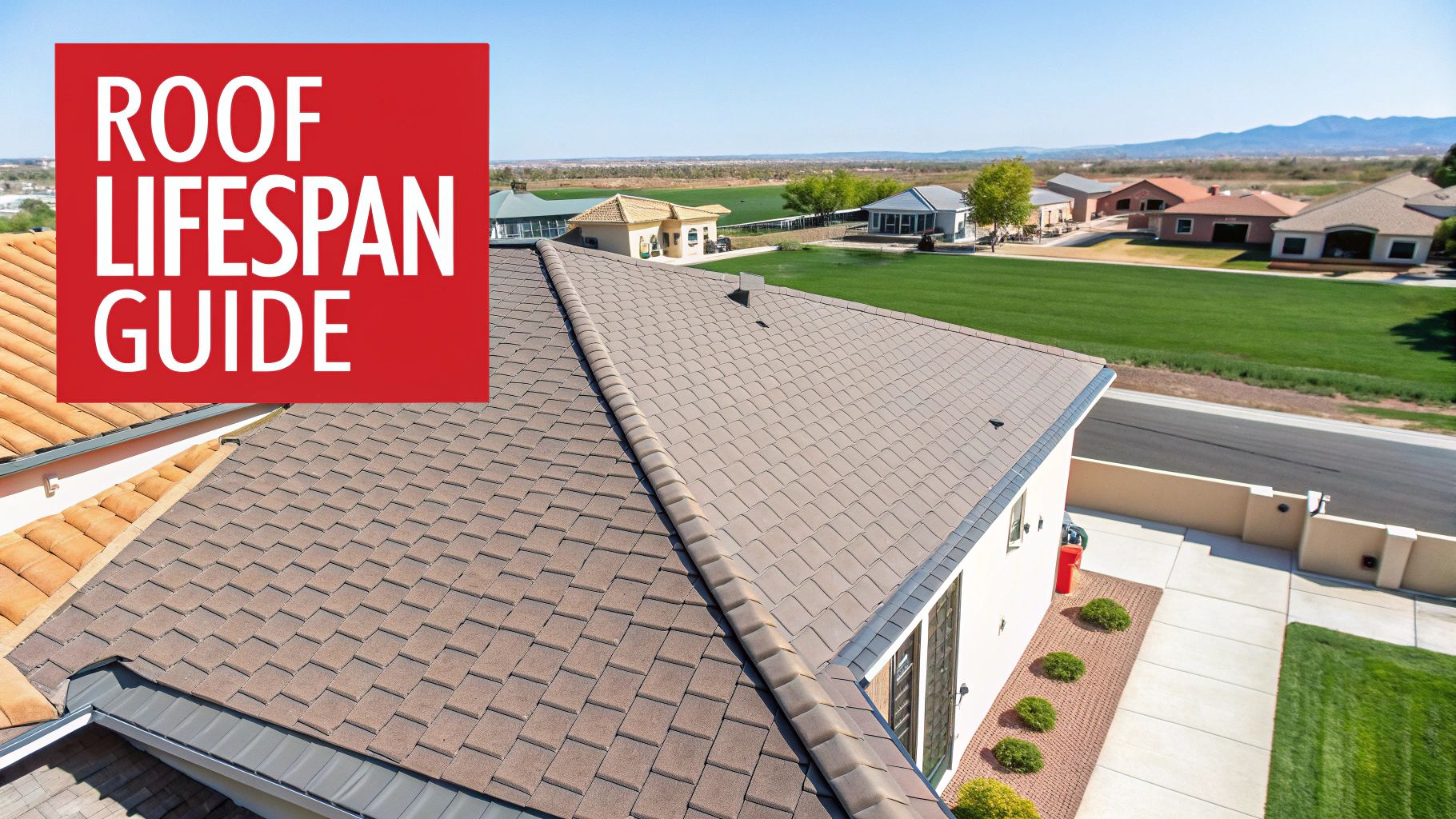
There’s a good reason asphalt shingles are the most common roofing material in America. They hit a sweet spot, offering great affordability, straightforward installation, and a huge variety of styles and colors. A typical shingle roof should last anywhere from 15 to 30 years.
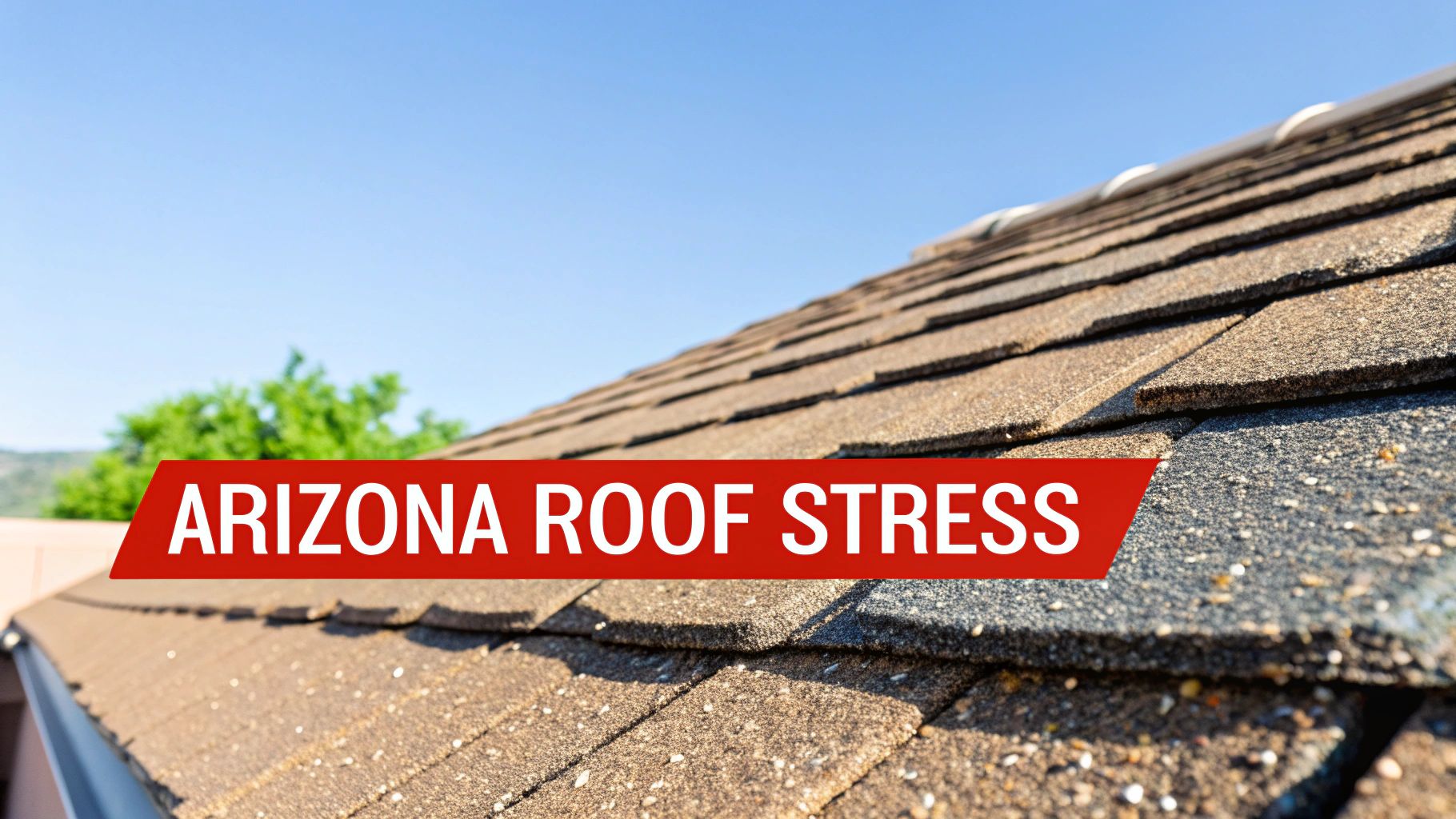
But not all shingles are created equal. The basic "builder-grade" shingles you see on many tract homes will be on the lower end of that range. Step up to premium architectural or dimensional shingles, and you’re looking at something that can push toward the 30-year mark. Their biggest enemy, especially here in Arizona, is the relentless sun. Intense heat and UV rays break them down, making them brittle and stripping away the protective granules over time.
Metal Roofing: The Lifetime Investment
If you’re asking, "how long does a roof last?" and want the most impressive answer, look no further than metal. With a lifespan of 40 to 70 years—and often much longer—a metal roof is something you buy once and forget about. The materials can range from tough steel and aluminum to high-end options like copper and zinc.
Metal truly shines in harsh weather. It stands up to wind, resists fire, and sheds water effortlessly. Plus, its reflective surface is a massive advantage in our sun-baked climate, making it incredibly energy-efficient. While the upfront cost is higher than shingles, the exceptional longevity and minimal maintenance often make it the smarter financial choice in the long run. To get the full picture, you can dive into the various metal roofing benefits and drawbacks in our detailed guide.
A metal roof isn't just a covering; it's a structural upgrade. Its longevity and resilience fundamentally change how you think about roof maintenance, shifting from a cycle of replacement to a lifetime of performance.
Tile Roofing: The Classic Champion
Tile roofing, whether clay or concrete, is a defining feature of Arizona's architecture for a reason. These roofs are built to last, with a lifespan that can easily sail past 50 years. In many cases, the tiles themselves can survive for a century or more.
The real secret to a tile roof's longevity, however, lies in the underlayment. This waterproof layer is what truly protects your home from the elements. A standard felt underlayment in Arizona might only last 15-20 years before the heat gets to it. But modern synthetic underlayments can last 25 to 35 years. The great thing is, the tiles can often be carefully removed and reinstalled over new underlayment, giving the entire system a new lease on life.
- Clay Tiles: Famous for their timeless beauty and holding their color, but they can be more fragile against direct impacts.
- Concrete Tiles: Incredibly durable and versatile. They're heavier and the color might fade just a bit after decades in the sun, but they are built like a tank.
Flat Roof Systems: The Arizona Essentials
Many homes across the Valley have flat or low-slope roofs, which need special materials designed to handle pooling water and non-stop sun. The two most popular and effective solutions are Spray Polyurethane Foam (SPF) and single-ply membranes like TPO.
Spray Polyurethane Foam (SPF)
Think of an SPF roof as a seamless, spray-applied system that does two jobs at once: waterproofing and insulating. The foam itself is incredibly durable and can last for 50 years or more. The catch? It needs a protective coating to shield it from UV rays, which must be reapplied every 5 to 10 years. Sticking to this recoating schedule is the key to making an SPF roof last a lifetime.
Single-Ply Membranes (TPO and PVC)
Single-ply roofing, like Thermoplastic Olefin (TPO), is made of large, flexible sheets of synthetic material. A roofer heat-welds the seams together on-site, creating a single, continuous membrane that is totally waterproof. These bright white systems are highly reflective, durable, and generally last between 15 and 30 years. You'll see them on commercial buildings everywhere and, increasingly, on modern homes.
Choosing the right material really comes down to matching its strengths to your home’s architecture and our demanding climate. Each of these options offers a different path to long-term protection.
To help you compare these choices side-by-side, we've put together a simple table outlining the key pros and cons for each material.
Pros and Cons of Common Roofing Materials
This table provides a snapshot comparison of the most popular roofing materials, highlighting their key advantages, potential drawbacks, and typical cost to help you make a more informed decision for your home.
| Material Type | Pros | Cons | Average Lifespan |
|---|---|---|---|
| Asphalt Shingles | Affordable, wide variety of styles and colors, easy to install and repair. | Shorter lifespan, susceptible to heat and UV damage in hot climates, can be damaged by high winds. | 15-30 Years |
| Metal Roofing | Extremely durable and long-lasting, fire and wind resistant, energy-efficient. | Higher upfront cost, can be noisy during rain without proper insulation, requires specialized installation. | 40-70+ Years |
| Tile (Clay/Concrete) | Very long lifespan, excellent fire resistance, classic aesthetic. | Heavy (may require reinforced structure), tiles can be brittle and break, higher initial cost. | 50-100+ Years |
| Spray Foam (SPF) | Seamless and waterproof, excellent insulator, lightweight and durable. | Requires regular recoating to protect from UV rays, installation is weather-dependent. | 30-50+ Years (with recoating) |
| TPO/Single-Ply | Highly reflective (energy-efficient), resistant to punctures and tears, good for flat/low-slope roofs. | Shorter lifespan than tile or metal, seams can be vulnerable if not properly welded. | 15-30 Years |
Ultimately, the best roof is one that fits your budget, complements your home's style, and is tough enough to handle everything the Arizona climate throws at it.
How Arizona's Climate Tests Your Roof
A roof in a mild, forgiving climate has it easy. But a roof here in Arizona? It’s locked in a constant, high-stakes battle against the elements. The standard lifespan estimates you see online often feel like they were written for another planet—they just don't account for the unique and punishing conditions our roofs have to survive.
To really get a handle on "how long does a roof last" in the Sonoran Desert, you have to understand the three main adversaries it faces every single day: brutal UV radiation, dramatic temperature swings, and the annual monsoon onslaught.
The Relentless Sun: UV Breakdown
Think of your roof's surface as a layer of sunscreen. Under normal conditions, it does its job. But under the intensity of the Arizona sun, that protection gets burned away much, much faster. This constant, high-altitude ultraviolet (UV) radiation is probably the single most destructive force your roof faces, relentlessly breaking down the chemical bonds that hold roofing materials together.
This UV assault is especially tough on asphalt shingles. It literally bakes the essential oils and polymers right out of them, causing them to become brittle, crack, and shed their protective granules. For foam roofs, direct UV exposure without a fresh, reflective coating is a death sentence; the foam will begin to chalk and degrade, losing both its waterproofing and insulating power.
The Daily Stress of Thermal Shock
Beyond the sun’s chemical attack, there’s a powerful physical stress at play here: thermal shock. It's not uncommon for a dark roof in Phoenix or Tucson to hit 160°F or higher during the day, only to plummet by 50 or 60 degrees after the sun goes down.
Every single day, this cycle forces your entire roofing system to expand in the heat and contract in the cold. This constant movement puts an incredible amount of strain on seams, fasteners, flashing, and seals. It’s like bending a paperclip back and forth; eventually, even the strongest material develops weak points. After thousands of these cycles, those tiny movements can loosen fasteners and create openings just large enough for water to find its way in.
The Monsoon Season Onslaught
After spending months getting baked and stretched, your roof faces its next big test: the monsoon. These aren’t gentle summer showers. We’re talking about violent storms that unleash torrential rain and howling, high-velocity winds.
A small crack or a single loose tile that you could ignore in May can suddenly become a catastrophic failure in July. Those powerful winds can get underneath shingles and tiles, lifting them up and driving rain sideways into your attic. In a matter of minutes, a minor flaw becomes a major, active leak.
The lifespan of a roof in Arizona isn't just about the passage of time. It's a direct measure of its resilience against a specific, brutal set of environmental conditions. A roof that might last 30 years in a temperate climate could easily fail in 15 here if it’s not the right material installed the right way.
This isn’t just an Arizona problem, either. The broader trend of climate change is magnifying these challenges across the country. In Florida, another state that gets hammered by heat and storms, the average lifespan of asphalt shingles has reportedly dropped to just 10 to 12 years—a scary drop from the traditional estimates. You can read more about how climate impacts roofing on money.com to see how this is becoming a national issue.
The takeaway is simple: a roof in Arizona doesn’t just get old, it fights for its life every day. That’s why choosing materials built for this environment—and having them installed by a pro who truly understands these challenges—is the only way to get a long, trouble-free service life.
The Hidden Factors: Installation and Maintenance
You can pick the best roofing material on the market, but its ultimate lifespan often comes down to two things: the quality of the installation and the consistency of the maintenance. It's a hard truth, but even a 50-year tile roof can fail in 10 years if it was installed poorly or completely neglected.
Think of it like a high-performance car. The engine might be world-class, but if the tires are put on wrong or you never change the oil, you're not going to get very far. Your roof is no different. The installation is its foundation, and maintenance is the ongoing tune-up that keeps it running right.
Why Proper Installation is Non-Negotiable
A professional roof installation isn't just about nailing down shingles. It’s a complex system where every single detail matters. Cutting corners to save a few hours on installation day can easily shave years off your roof’s life, setting you up for leaks and premature failure.
Some of the most common installation shortcuts we see cause the biggest headaches later:
- Improper Nailing: Nails driven too deep will punch right through the shingle, while nails left sticking up won't hold anything down. Both create weak spots that wind and water love to exploit.
- Poor Flashing: Flashing is the metalwork that seals the gaps around chimneys, vents, and valleys. When it's done wrong, it’s like leaving a window open in a rainstorm—it’s one of the top causes of roof leaks.
- Inadequate Attic Ventilation: Without proper airflow, your attic becomes an oven. That trapped, superheated air bakes the roofing materials from the inside out, causing them to become brittle and fail much faster.
A roof isn't just a pile of materials; it's a complete, interconnected system. A quality installation ensures every single component—from the underlayment to the ridge cap—works together to form a seamless, watertight shield over your home.
These kinds of mistakes are rarely visible from the sidewalk, but their consequences become painfully obvious during the first big monsoon storm. A well-installed roof is the best defense you have against those costly, emergency repair calls.
The Power of Proactive Roof Maintenance
Once your roof is on, the game shifts to upkeep. Thinking about regular maintenance as a chore is a mistake; it's actually the single most effective way to protect your investment and squeeze every last year out of your roof's expected lifespan. A little attention now saves a world of trouble later.
A simple maintenance routine is all about catching small issues before they spiral into disasters. It's the difference between replacing a single cracked tile and dealing with a massive interior leak that's caused thousands in water damage.
Using a guide like a comprehensive maintenance checklist can give you a structured way to stay on top of things.
For those of us here in Arizona, we put together a specific guide to help you stay ahead of our unique climate challenges. Check out our detailed roof maintenance checklist designed for local homeowners. Following these steps helps you spot trouble early, extend the life of your roof, and save a ton of money in the long run.
Telltale Signs Your Roof Needs Attention
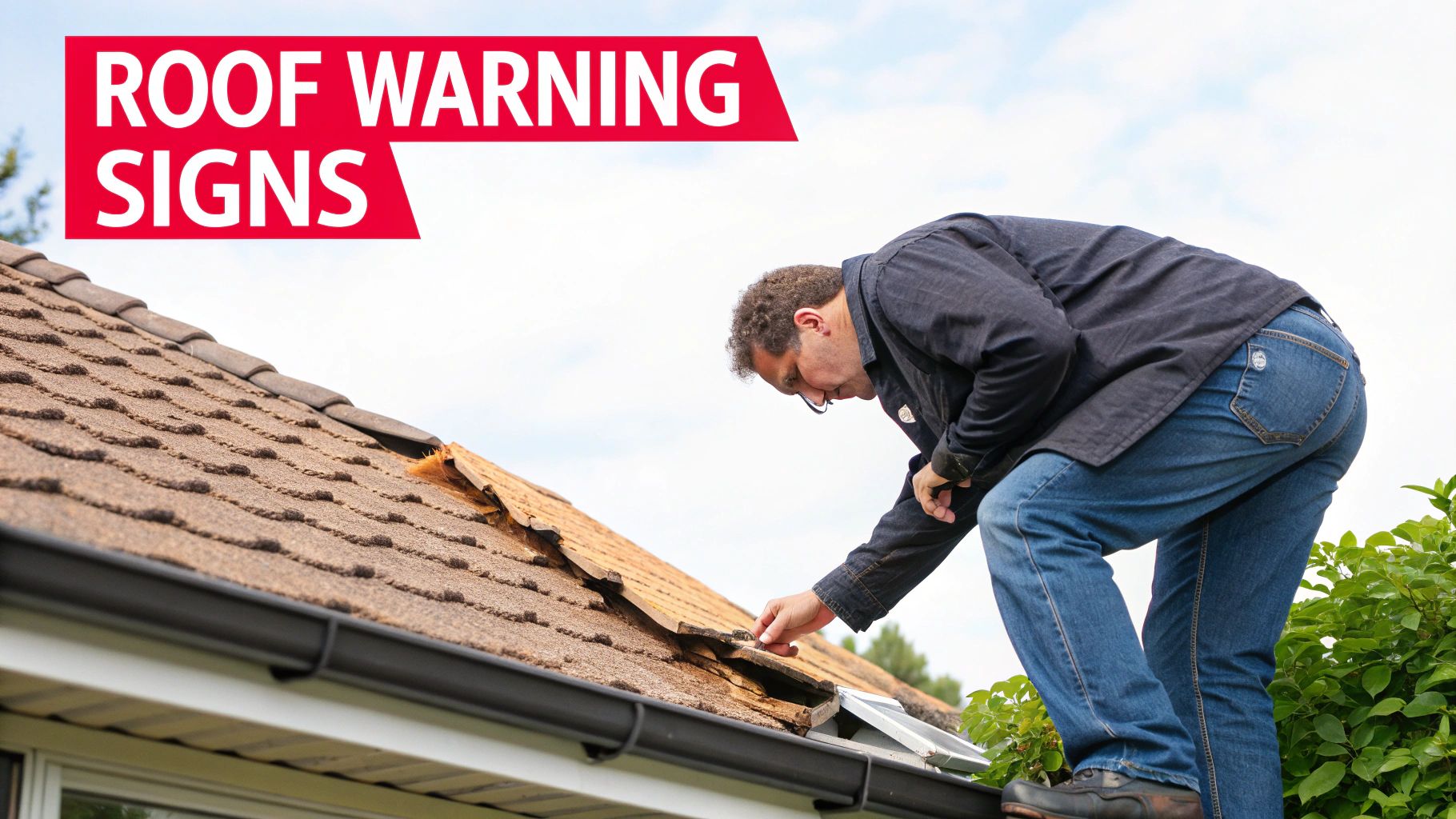
Your roof is always talking. The problem is, it usually whispers before it screams. Learning to spot those early, subtle signs is the difference between a simple repair and a full-blown crisis that ends with buckets on the living room floor. Think of it like a faint rattle in your car's engine—you can ignore it, but you know it’s only going to get worse (and more expensive).
It's a huge blind spot for many homeowners. A recent report found that 8% of homeowners have no idea how old their roof is, and another 15% guess it’s already over 20 years old. That means almost a quarter of us are living under roofs that are likely on borrowed time, making a proactive look absolutely essential. You can dig into the specifics in this report on homeowners' awareness of their roof's health.
From the Ground Up: A Visual Inspection Checklist
The good news? You don't need to climb a ladder to play detective. A careful walk around your property can tell you a lot about your roof's health. Grab a pair of binoculars and keep an eye out for these classic red flags.
-
Curling or Clawing Shingles: When you see the edges of your shingles start to turn up, or the tabs begin to lift in the middle, they're showing their age. This isn't just a cosmetic flaw; it’s a sign the asphalt has become brittle and can no longer protect your home from water.
-
Missing Granules: Notice any "bald spots" on your shingles? How about a build-up of black, sandy-looking material in your gutters? Those little granules are like sunscreen for your roof. Once they wash away, the raw asphalt is exposed to the brutal Arizona sun, and its lifespan shortens dramatically.
-
Cracked or Missing Tiles: A single broken or slipped tile might not seem like a big deal, but it’s a direct invitation for water to get underneath to the underlayment. The underlayment is your roof's real waterproofing layer, and exposing it to the elements is a recipe for premature failure.
Interior Clues and Hidden Dangers
Sometimes, the most serious warnings aren't on the outside of your roof, but right inside your house. These signs often mean a small problem has already become a serious breach.
Your attic is the first witness to a failing roof. Water stains, mold, or musty smells are not just cleanup jobs; they are urgent signals that your roof’s waterproofing system has been compromised.
Don’t ever ignore these interior clues:
- Water Stains on Ceilings: This is the most obvious sign of trouble. That brownish spot on your ceiling is a clear indication that water is getting in. The tricky part is that the source of the leak on the roof could be far from where the stain shows up, which is why a professional eye is so important.
- Sagging Roof Deck: Look at your roofline from the street. Does it appear to have a dip or "swayback" in the middle? From inside your attic, look up to see if the wood decking is bowing inward. This points to a potential structural problem, often caused by trapped moisture that has rotted the wood.
- Dark Streaks or Algae Growth: While many people write this off as an aesthetic issue, those dark streaks—usually a type of algae—can hold moisture against the shingles. This prevents the roof from drying out properly and can accelerate its aging process.
Catching these problems early is half the battle. For a deeper dive, our guide on the top signs you need a new roof provides an even more exhaustive checklist to help you know for sure.
Frequently Asked Questions
Can I install new shingles over my old ones?
Technically, you sometimes can, but it’s a really bad idea here in Arizona. This shortcut, often called a "roof-over," traps a massive amount of heat between the layers. You essentially end up baking the new shingles from underneath, which can slash their lifespan dramatically. Beyond the heat issue, this method completely hides the roof deck, so a roofer has no way to check for rot or water damage. The only way to do the job right is a complete tear-off.
How much does a professional roof inspection cost?
Many professional roofers, including us at AZ Roof Co, offer free inspections and estimates if you're worried about a leak or thinking about a replacement. This is the perfect way to get an expert opinion without any commitment. However, if you need a detailed written report for an insurance claim or a home sale, that usually comes with a fee, typically a few hundred dollars.
Does my roof color affect its lifespan in Arizona?
You bet it does. In a place where the sun is as intense as it is here, choosing lighter-colored or "cool roof" materials makes a huge difference. These surfaces reflect a significant amount of solar radiation instead of absorbing it. This keeps the material cooler, reducing the daily stress from thermal shock. That simple choice can genuinely add years to your roof's life and even trim your summer cooling bills.
How do I know if I have storm damage?
After a big monsoon rolls through, do a quick visual check from the ground. Look for obvious signs like missing, cracked, or flipped-up shingles. Check metal vents and flashing for dents, which are tell-tale signs of hail. A more subtle clue is finding a sudden collection of gritty, sand-like granules in your gutters. If you spot anything that doesn't look right, your next move should be to call a professional for a safe, thorough inspection.