
Choosing the right material for a low-slope roof is one of the most critical decisions a property owner can make, especially in a demanding climate like Arizona's. Unlike steep roofs that shed water quickly, low-slope systems must function as a single, impenetrable waterproof barrier to prevent leaks and structural damage. The material you select will directly impact your building's energy efficiency, long-term maintenance costs, and overall durability.
This guide is designed to demystify the options, from modern single-ply membranes like TPO and PVC to time-tested systems like Modified Bitumen. We'll break down the pros, cons, costs, and lifespans of each, helping you make an informed investment that protects your property for decades to come.
Key Takeaways
- Low Slope vs. Flat: People often use these terms interchangeably, but there's a key difference. A low-slope roof has a slight, intentional pitch for drainage. A truly flat roof doesn't, which is a recipe for problems.
- The Material is Everything: Since water moves off these roofs so slowly, the material absolutely must be a waterproof shield. The main players are single-ply membranes (like TPO and PVC), multi-layer systems (Modified Bitumen), and liquid-applied options (Spray Foam).
- Arizona's Sun Changes the Game: With our intense heat and UV rays, your choice of roofing material directly impacts your energy bills and how long the roof lasts. Reflective "cool roof" materials aren't a luxury here; they're essential.
What Exactly Is a Low-Slope Roof?
Think about most commercial buildings you see. Their roofs look completely flat, right? In reality, they're what we call low-slope roofs. They have a very slight, engineered pitch—usually less than 3 inches of vertical rise for every 12 inches of horizontal run.
This subtle angle is everything. It's the roof's only defense against its biggest enemy: standing or "ponding" water. Unlike a steep roof that lets gravity do all the work, a low-slope system has to function as one continuous, watertight membrane. One small failure in a seam or the material itself can let water in, leading to some serious damage. This is why choosing the right material isn't just a good idea; it's critical for protecting your building.
Why Your Roof's Pitch Dictates Your Options
The precise pitch of your roof is the first thing a good roofer will check. It narrows down which materials are even on the table. If you're curious, you can get a rough idea and calculate your roof's pitch with online tools. Knowing that number helps you understand why a professional might recommend one system over another.
For a deeper dive into how these systems are fundamentally different from traditional angled roofs, check out our guide comparing a flat roof vs. a pitched roof.
A low slope roof isn't just a design choice; it's an engineering system. The material you select must work in harmony with the roof's minimal pitch to ensure decades of reliable performance, especially under the harsh Arizona sun.
Getting this decision right from the beginning saves you from a world of headaches, costly repairs, and having to replace your roof way too soon. The first step toward a sound investment is understanding the real-world differences between the key low slope roofing materials—from how they hold up over time to how much they can save you on cooling costs.
Decoding Single-Ply Membrane Roofing Systems
When you get into modern low-slope roofing, you'll quickly find that single-ply membranes run the show. The best way to think about them is like high-tech jackets for your building. Each type offers a specific kind of protection, and picking the right one is all about matching its strengths to the environment—especially our intense Arizona climate.
These systems are basically large, flexible sheets of synthetic material. We roll them out across the roof and then seal the seams to create one continuous, waterproof layer. They've become so popular for a reason: they hit a sweet spot of durability, relatively simple installation, and fantastic energy performance.
The Technical Jackets of Modern Roofing
To really get a handle on the options, let's use an analogy. Say you’re gearing up for an outdoor adventure and need the right jacket.
-
TPO (Thermoplastic Polyolefin) is like a lightweight, super reflective, and breathable jacket. It’s the perfect choice for long, hot days in the sun because it keeps you cool without being heavy. Its white surface is engineered to bounce sunlight away.
-
PVC (Polyvinyl Chloride) is your rugged, all-conditions parka. This one is exceptionally tough and stands up to chemicals, grease, and punctures. It’s what you’d want for tougher environments where durability is priority number one.
-
EPDM (Ethylene Propylene Diene Monomer) is the classic, time-tested rubber rain jacket. It's incredibly durable, stays flexible in wild temperature swings, and has a decades-long reputation for being reliable. While it's usually black, you can now get white versions to improve reflectivity.
This diagram helps visualize how factors like sun exposure, budget, and your energy-saving goals all play a part in choosing the right material.
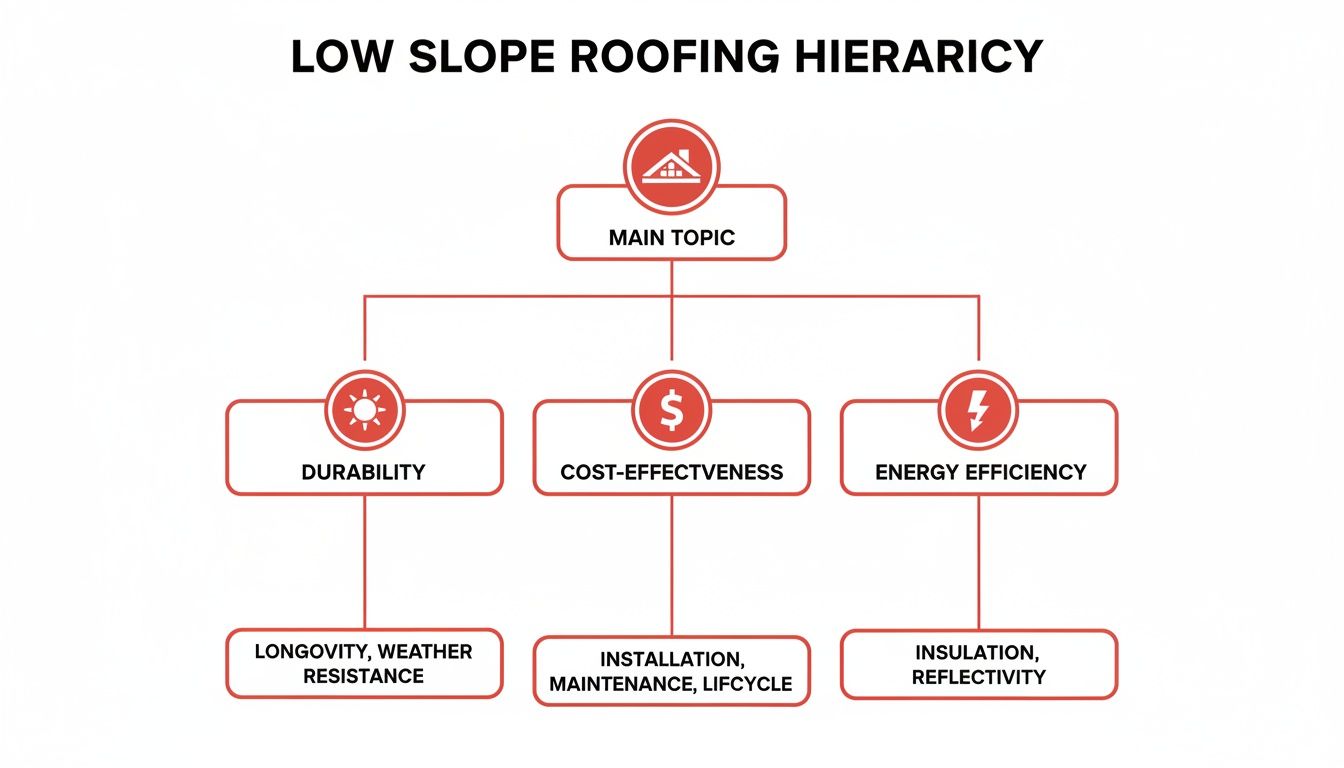
As you can see, selecting the right system isn't about picking the "best" one, but finding the right balance between performance, cost, and energy savings for your specific property.
TPO: The Reflective Sun Shield
TPO has quickly become the most popular low-slope roofing material in North America, and for good reason. It’s made from a blend of polypropylene and ethylene-propylene rubber, which results in a material that's both flexible and strong.
Here in Arizona, its biggest advantage is its brilliant white surface. This acts like a giant shield against the sun, reflecting a huge amount of solar radiation. That high solar reflectivity keeps the roof's surface temperature down, meaning less heat gets transferred into your building.
A cooler roof means your air conditioning doesn't have to work nearly as hard. We often see energy savings of 10-15% on summer cooling costs, making a white TPO roof an incredibly smart investment for any Arizona property.
On top of that, TPO seams are hot-air welded. This process literally fuses the sheets together at a molecular level, creating a single, seamless membrane that's far more reliable against leaks than old-school adhered or taped seams. For homeowners considering this option, our guide on residential TPO roofing digs into more detail.
PVC: The Heavy-Duty Protector
PVC roofing has been a solid choice for decades, known for its sheer strength and long life. It’s made of polyvinyl chloride, and just like TPO, its seams are hot-air welded for a completely watertight bond.
Where PVC really shines, though, is its resistance to all sorts of environmental and chemical punishment. It holds up incredibly well against grease, oils, and various chemicals. This makes it a go-to choice for restaurants, manufacturing plants, or any building with rooftop HVAC units that might leak oils or condensates.
Its natural fire and puncture resistance add another layer of security. While it has the same "cool roof" benefits as white TPO, its beefier formulation makes it a premium choice for buildings that face more than just the sun.
EPDM: The Proven Workhorse
EPDM is basically a synthetic rubber membrane, and it has the longest track record of all the single-ply options. For years, it was the standard for low-slope roofs and is famous for its incredible durability and flexibility.
Traditionally, EPDM comes in black, which obviously absorbs heat. To keep up with the energy efficiency of TPO and PVC, manufacturers now offer white EPDM options that do a much better job reflecting sunlight.
The main knock against EPDM has always been its seams. They're usually glued together with special tapes or liquid adhesives. While these methods work, they can become weak spots over time compared to the welded seams of TPO and PVC. This means you have to be a bit more diligent with maintenance to prevent leaks. Still, its proven lifespan—often pushing past 30 years—keeps it a trusted and relevant material in the roofing world.
Choosing the right single-ply system means weighing these distinct pros and cons. To make it a bit easier, here’s a quick side-by-side look.
Single-Ply Roofing Comparison: TPO vs. PVC vs. EPDM
| Feature | TPO | PVC | EPDM |
|---|---|---|---|
| Primary Strength | Energy efficiency & cost-effectiveness | Extreme durability & chemical resistance | Proven longevity & flexibility |
| Seam Technology | Heat-welded | Heat-welded | Adhered with tape or adhesive |
| Best For | Most commercial & residential buildings in hot climates | Restaurants, industrial facilities, high-traffic roofs | Buildings where long-term durability is key, any climate |
| Cost | $$ | $$$ | $$ |
| Lifespan (Years) | 20-30 | 25-35 | 25-35+ |
| Puncture Resistance | Good | Excellent | Very Good |
| Chemical Resistance | Good | Excellent | Fair |
| Color Options | White, gray, tan | White, gray, tan | Black (standard), White (optional) |
This table should give you a clear starting point for figuring out which "jacket" is the best fit for your building's specific needs and budget.
The dominance of these materials isn't just talk. Industry data shows that in the Western U.S., low-slope roofs account for about 54% of the total roofing market. Within that huge slice, single-ply membranes like TPO, EPDM, and PVC hold a commanding 51.1% market share. TPO alone makes up roughly 36.7%, solidifying its spot as the single most-installed low-slope roofing material today. You can read more about the data and see how the low-slope roofing market's growth on WesternRoofing.net.
Diving Into Multi-Layer and Applied Roofing Systems
While single-ply membranes are a huge part of the market, there's another class of low slope roofing materials built for pure, heavy-duty protection. Think of these as the tanks of the roofing world. These systems rely on multiple layers or applied-in-place construction to create a resilient, waterproof barrier.
Let's break down two of the biggest players in this category: Modified Bitumen and Spray Polyurethane Foam (SPF). Each takes a completely different approach to keeping a building dry and protected from the elements.
Modified Bitumen: The Modern Evolution of Tar and Gravel
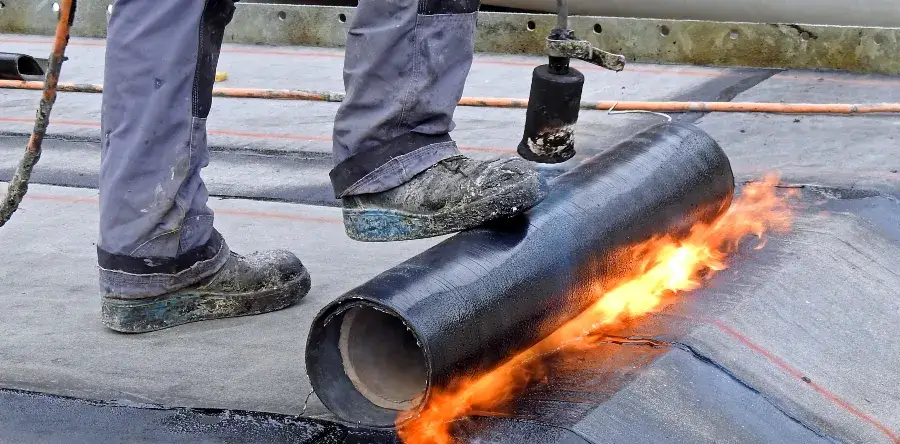
If you've ever seen an old "tar and gravel" roof, you're looking at the granddaddy of Modified Bitumen (or Mod-Bit). Mod-Bit is the high-performance, modern version of that classic system. Instead of simply mopping hot asphalt, we now use factory-made sheets that blend asphalt with powerful polymer modifiers.
These polymers give the asphalt incredible strength and flexibility, creating tough, rubber-like rolls. A typical Mod-Bit roof is built up in two or three layers. Crews fuse these layers together on the roof using methods like torch-welding, hot asphalt mopping, or cold-applied adhesives. This multi-ply design is its greatest strength—it builds in redundancy. If one layer ever gets damaged, you have backup layers ready to stop water in its tracks.
The final layer, called the cap sheet, is usually covered in mineral granules. These aren't just for looks; they provide fire resistance, a safe walking surface, and crucial UV protection. Here in Arizona, we almost always recommend a "cool roof" cap sheet with bright white granules to reflect the desert sun and help lower cooling costs. To get a deeper look at this powerhouse system, check out our guide that explains what Modified Bitumen roofing is.
Why Choose Modified Bitumen?
- Tough as Nails: Its multi-layer build offers fantastic resistance to punctures and tears. This makes it perfect for roofs that see a lot of foot traffic for HVAC maintenance.
- Proven Track Record: This isn't some new, unproven technology. Mod-Bit has been successfully protecting buildings in harsh climates for decades.
- Weather-Ready: The blend of asphalt and polymers creates a formidable waterproof barrier that expands and contracts with our extreme temperature swings.
Even with the rise of single-ply systems, these traditional asphaltic roofs are still a cornerstone of the commercial roofing industry. While surveys show that around 80% of contractors work with single-ply, a nearly identical 77% still actively install low-slope asphalt products like Modified Bitumen. That tells you just how trusted and reliable it remains.
Spray Polyurethane Foam: A Seamless, Insulating Shield
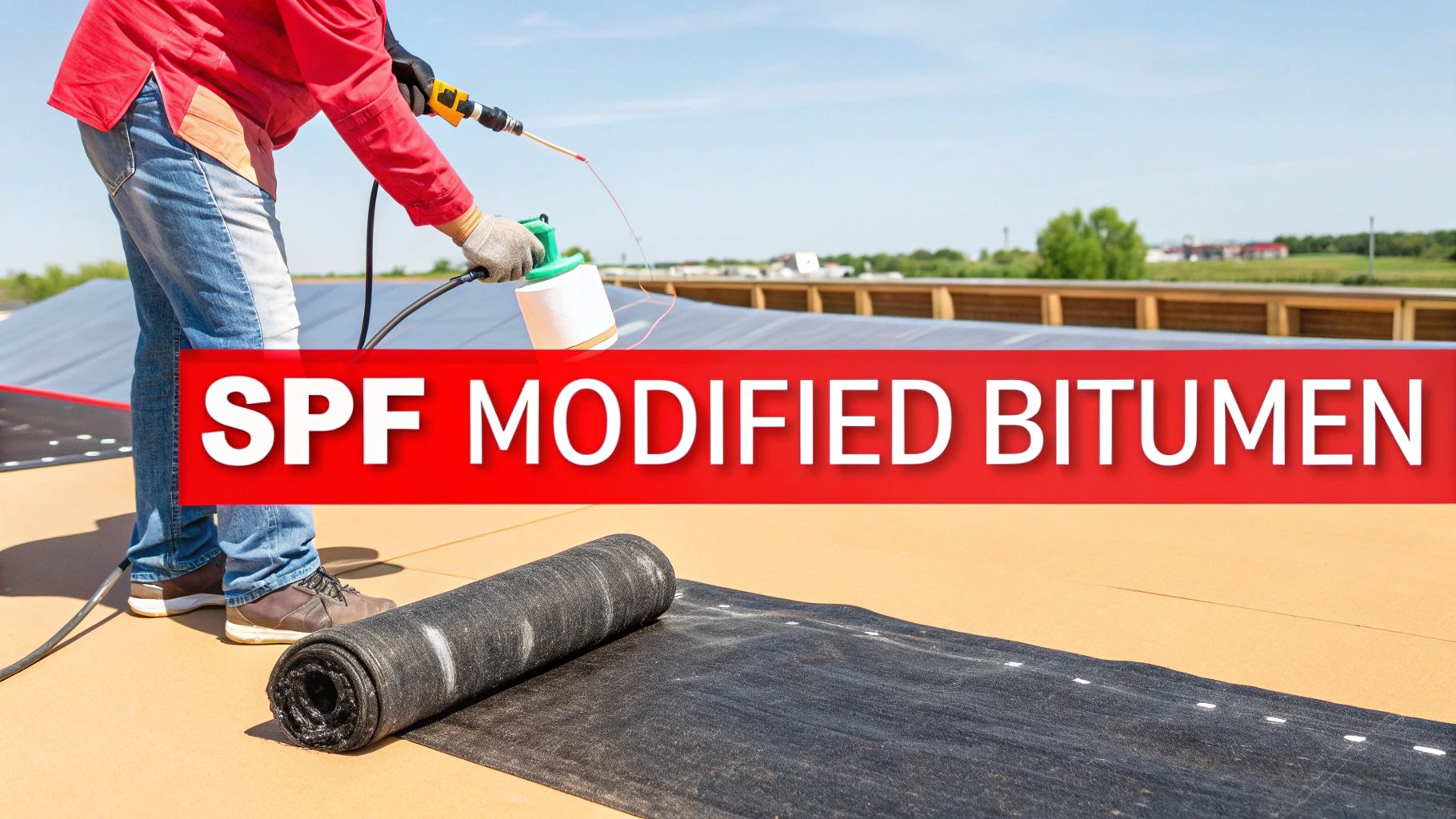
Spray Polyurethane Foam (SPF) roofing is a totally different animal. It doesn't come in a roll. Instead, it’s a liquid that’s manufactured right on your roof.
Crews mix two liquid components at the spray gun, which triggers a chemical reaction. As the mixture is sprayed onto the roof deck, it expands to about 30 times its original volume in a matter of seconds, hardening into a solid, seamless layer of rigid foam. This process creates a single, continuous barrier with zero seams, joints, or fasteners—the most common points of failure on other roof types. It perfectly conforms to every pipe, vent, and oddly shaped curb, forming an absolutely airtight and waterproof seal.
The real superpower of an SPF roof is its insulation. It provides one of the highest R-values per inch of any commercial roofing material, typically R-6.5 to R-7 per inch. This makes it an absolute champion of energy efficiency.
Once the foam cures, it's protected with a tough, reflective elastomeric coating. This top layer shields the foam from UV rays and physical damage. In Arizona, a bright white coating transforms an SPF roof into a top-tier cool roof, bouncing the sun's heat back into the sky and dramatically lowering the building's air conditioning load.
With proper maintenance, which usually just means a fresh topcoat every 10-15 years, an SPF roof can easily last for 50 years or more, making it one of the most compelling low slope roofing materials for any building owner focused on long-term energy savings.
How to Choose the Right Material for Your Roof
Picking the right low-slope roofing material isn’t about finding one “best” product. It’s about making a smart investment that’s a perfect fit for your specific building, budget, and long-term goals. Think of it like putting together a business plan for your roof—you have to weigh the initial sticker price against future performance, energy savings, and upkeep.
Let’s walk through the key factors. By balancing your budget, energy needs, and how long you expect the roof to last, you can confidently pick a system that delivers real value for years to come.
Aligning Your Budget with Material Costs
The first question is always about the bottom line. While it’s tempting to go with the lowest bid, you’ve got to look at the whole financial picture. The price per square foot is just the beginning; it doesn’t tell you anything about long-term value.
Here’s a general breakdown of what you can expect for installed costs in our market:
- TPO & EPDM: These single-ply membranes are often the most budget-friendly upfront, typically running $7 to $13 per square foot. Their cost-effectiveness makes them a go-to for a huge range of commercial projects.
- Modified Bitumen: This tough, multi-layer system is in a similar ballpark, from $8 to $14 per square foot. You get excellent durability for the money.
- PVC: As a premium single-ply option known for its fantastic resistance to chemicals and punctures, PVC will cost a bit more, usually between $10 to $16 per square foot.
- Spray Polyurethane Foam (SPF): Because it’s both a roofing and an insulation material, SPF is a premium investment. Expect costs from $9 to $18 per square foot, reflecting its incredible energy-saving performance.
Maximizing Energy Efficiency in the Arizona Sun
Here in Arizona, your roof is your primary shield against punishing cooling costs. This is where a “cool roof” stops being a buzzword and starts being a financial tool. These roofs use highly reflective materials to literally bounce sunlight and heat away from your building before it can be absorbed.
A good cool roof can reflect up to 85% of the sun's UV rays, dropping the roof's surface temperature by more than 50°F. This simple difference can lead to a 10-15% reduction in your building's peak cooling demand, taking a massive strain off your HVAC system and your wallet.
The champions in this category are white TPO, white PVC, and SPF with a reflective coating. Their bright white surfaces are engineered for one job: reflecting the sun. For any property owner in Phoenix, Tucson, or anywhere else in the valley, this should be a top consideration.
Comparing Lifespan and Long-Term Durability
Your roof is a long-term asset, so how long it’s expected to last is a huge part of the equation. Of course, proper installation and maintenance are everything, but each material has its own built-in lifespan.
Here's what you can realistically expect under the intense Arizona sun:
- TPO & PVC: 20 to 30 years.
- Modified Bitumen: 15 to 25 years.
- EPDM: 25 to 35+ years.
- Spray Foam (SPF): 50+ years, as long as you recoat it periodically.
There's no denying the growth in this sector. Low-slope roofing is one of the fastest-moving parts of the construction market, driven by commercial buildings and multifamily housing. In fact, the market for roofing membranes alone hit $4.33 billion in 2021 and is on track to blow past $5.47 billion by 2025—a jump of over 26% in just four years. You can dig into the numbers in this roofing membrane market report from CognitiveMarketResearch.com.
Understanding Future Maintenance Commitments
Finally, you need to think about the long-term care. Every roof needs regular check-ups to hit its maximum lifespan, but some are definitely more hands-on than others.
- TPO & PVC: These are pretty low-maintenance. The main thing is to have a professional inspect the heat-welded seams every so often to make sure they’re still watertight.
- Modified Bitumen: Needs a closer eye. You’ll want to check regularly for granule loss, blisters, or cracks, paying special attention to flashings and areas where vents or pipes come through the roof.
- Spray Foam (SPF): The big commitment here is recoating the protective top layer every 10-15 years. It’s a pretty straightforward process that essentially renews the roof’s waterproofing and UV protection, getting it ready for another decade-plus of service.
By taking a hard look at these four areas—cost, energy savings, lifespan, and maintenance—you can stop just "buying a roof" and start investing in a high-performance asset for your property.
Selecting a Qualified Arizona Roofing Contractor
You’ve done the research and picked out the perfect low-slope roofing material for your building. That’s a great first step, but it’s only half the battle. The best roofing system in the world is only as good as the hands that install it.
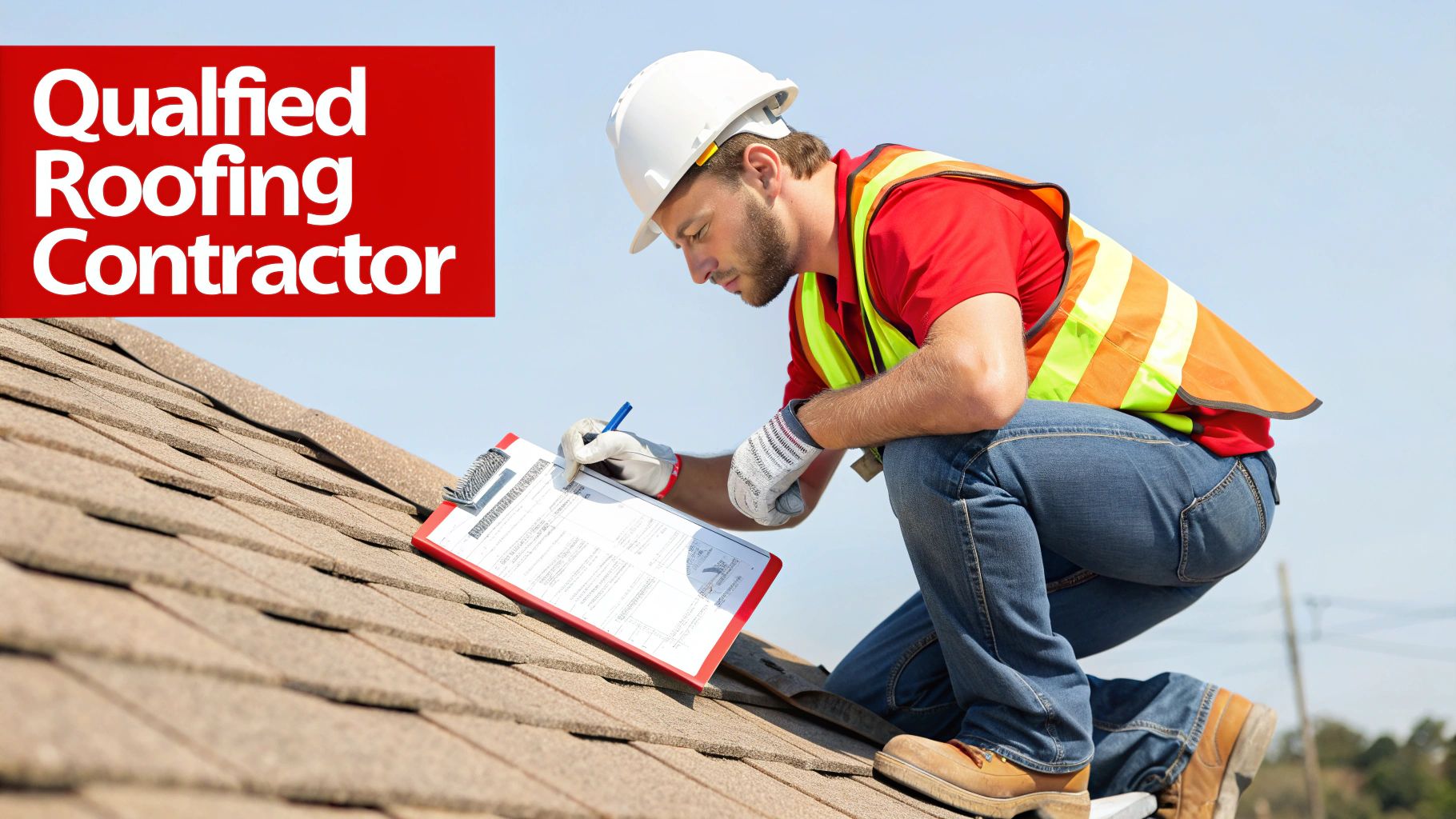
A flawless installation is everything. Even the most advanced, high-performance materials are guaranteed to fail if they aren’t put on with absolute precision. This is why finding a skilled and trustworthy Arizona roofing contractor isn't just a detail—it’s the most critical part of your entire project. You need a pro who gets the unique challenges of our desert climate.
Vetting Your Contractor: A Non-Negotiable Checklist
Don't just pick a name from a truck and hope for the best. A true professional will be an open book, ready to show you their qualifications without you even having to push. Understanding how reputable contractors market themselves, including their strategies for acquiring roofing leads, can give you insight into their business practices.
Before you even think about signing a contract, make sure you verify these essentials:
- Licensing and Insurance: This is non-negotiable. In Arizona, your contractor must be licensed with the Registrar of Contractors (ROC). Never hire an unlicensed contractor. Period. Ask for proof of their general liability insurance and workers' compensation, too. This is what protects you from any liability if an accident happens on your property.
- Bonding: A surety bond is your financial safety net. It protects you if the contractor bails on the job or fails to live up to their end of the deal. Think of it as insurance for your investment.
- Specific Low-Slope Experience: Don’t be shy about asking for their portfolio. You want to see pictures and addresses of low-slope projects similar to yours. A company that spends all day on steep, shingled roofs might not have the specialized skills or equipment needed for TPO, PVC, or foam.
A contractor's manufacturer certification is more than a fancy piece of paper. It’s proof that the crew has been trained by the people who actually made the material. This isn't just for show—it's often required to get the best warranties.
Understanding Warranties and Certifications
Warranties can feel like a maze of fine print, but they are your ultimate long-term protection. You'll typically get two: one from the contractor covering their workmanship, and one from the manufacturer covering the material itself. A great contractor stands behind their work with a solid workmanship warranty.
Look for roofers who are certified by the big names in the industry, like GAF, Carlisle, or Mule-Hide. This certification signals that their teams have been trained to meet the manufacturer's strict standards. Not only does this lead to a better installation, but it often unlocks access to enhanced warranties that cover both labor and materials, giving you complete peace of mind.
Frequently Asked Questions (FAQs)
When it comes to low-slope roofing, it's easy to get overwhelmed. You're not just putting a cover on your building; you're making a major investment, and you want to get it right. To help you navigate the process with a bit more confidence, we've pulled together the most common questions we hear from property owners just like you across Arizona.
Let’s cut through the noise and get straight to the practical answers you need.
What is the best low slope roofing material for Arizona heat?
In Arizona, the sun isn't just a mild inconvenience—it's a relentless force. The best roofing materials don't just endure the heat; they actively fight it. That’s why reflective "cool roof" systems are king here. White TPO and PVC membranes are fantastic choices. Their bright, reflective surfaces are like a mirror for the sun, bouncing solar radiation back into the sky instead of letting it absorb into your building. Another top contender is Spray Polyurethane Foam (SPF), especially when topped with a reflective elastomeric coating. This system is a double threat: it provides some of the best insulation on the market (a high R-value) and creates a seamless, waterproof barrier.
How long does a low slope roof typically last?
A roof's lifespan really boils down to three key things: the material you choose, the quality of the installation, and how consistently you maintain it. Assuming it's installed by a professional, here’s a general idea of what to expect:
- TPO and PVC Membranes: Typically last 20 to 30 years.
- EPDM (Rubber Roofing): Can go for 25 to 35 years, sometimes even longer.
- Modified Bitumen: Generally has a lifespan of 15 to 25 years.
- Spray Foam (SPF): A well-maintained SPF roof can last over 50 years because you're just recoating the protective layer every 10-15 years, not replacing the whole system.
Can I install a new roof over my existing low slope roof?
Sometimes, yes. This is called a "roof overlay" or "re-cover," and it can save you a good chunk of money by avoiding a full tear-off. However, an overlay is only on the table if the existing roof structure is solid, you only have one layer of roofing on there already, and the insulation and deck beneath are completely dry. You absolutely need a professional to inspect it first. Slapping a new roof over hidden moisture or a compromised structure is a recipe for disaster.
What are the signs my low slope roof needs replacement?
Your roof will almost always give you warning signs before it fails completely. Keep an eye out for these tell-tale signs:
- Recurring leaks or growing water stains.
- Ponding water that remains for more than 48 hours after rain.
- Obvious damage to the membrane, like deep cracks, large blisters, or bubbles.
- Seams that are clearly pulling apart, leaving gaps for water to get in.
- On modified bitumen roofs, look for large "bald spots" where the protective granules have worn away.
If your roof is already pushing 20+ years, it's smart to get a professional inspection to know exactly what you're dealing with before a small problem becomes a major one.