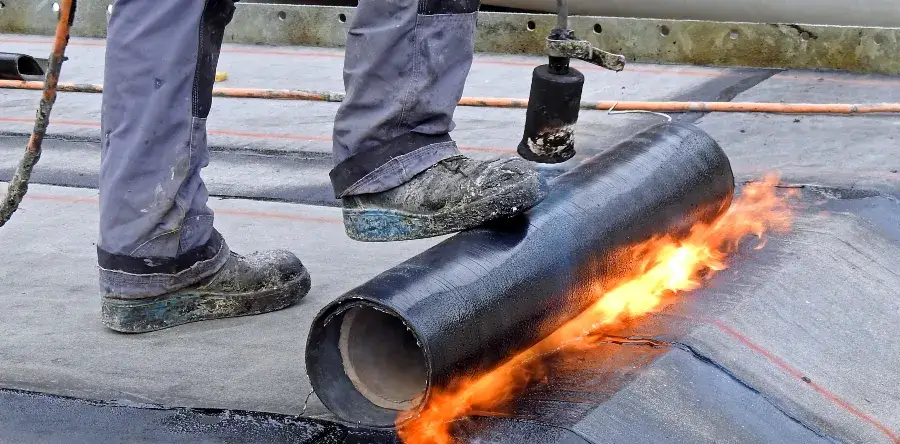

Spray polyurethane foam (SPF) roofing is a high-performance, liquid-applied system that creates a seamless, insulated, and waterproof barrier over your existing roof. Especially effective in harsh climates like Arizona's, it offers exceptional energy efficiency by reflecting solar heat and providing superior insulation. This guide explores how an SPF roof works, its benefits over traditional materials, the installation process, and its long-term value, helping you determine if it's the right investment for your property.
Key Takeaways
- Exceptional Energy Savings: SPF roofing offers a high R-value (around 6.5 per inch) and a reflective topcoat, which can reduce cooling costs by 20-50% in hot climates.
- Seamless and Waterproof: The liquid application creates a single, monolithic layer with no seams, eliminating the most common source of roof leaks, especially around vents and pipes.
- Long Lifespan: With proper maintenance, including recoating every 15-20 years, a spray foam roof can last for 50 years or more, offering significant long-term value.
- Goes Over Existing Roofs: In many cases, SPF can be applied directly over an existing roof, saving on the cost and waste of a full tear-off.
- Professional Installation is Crucial: The performance of an SPF roof is entirely dependent on the quality of the installation. Choosing a certified, experienced SPF contractor is essential for success.
Ever seen a roof being sprayed on from a hose? It might look a little strange, but what you're seeing is one of the most effective and energy-efficient roofing systems available today: spray polyurethane foam (SPF).
Unlike traditional roofing that relies on overlapping materials and fasteners, an SPF roof is a liquid-applied system. It starts as two separate liquid components that, when mixed and sprayed, react and expand into a solid, seamless foam layer.
What Is a Spray Polyurethane foam Roof?
Think of it like a custom-molded, insulated helmet for your entire roof. Instead of cutting and fitting individual pieces like shingles or membranes, trained technicians spray the liquid mixture directly onto the existing roof deck.
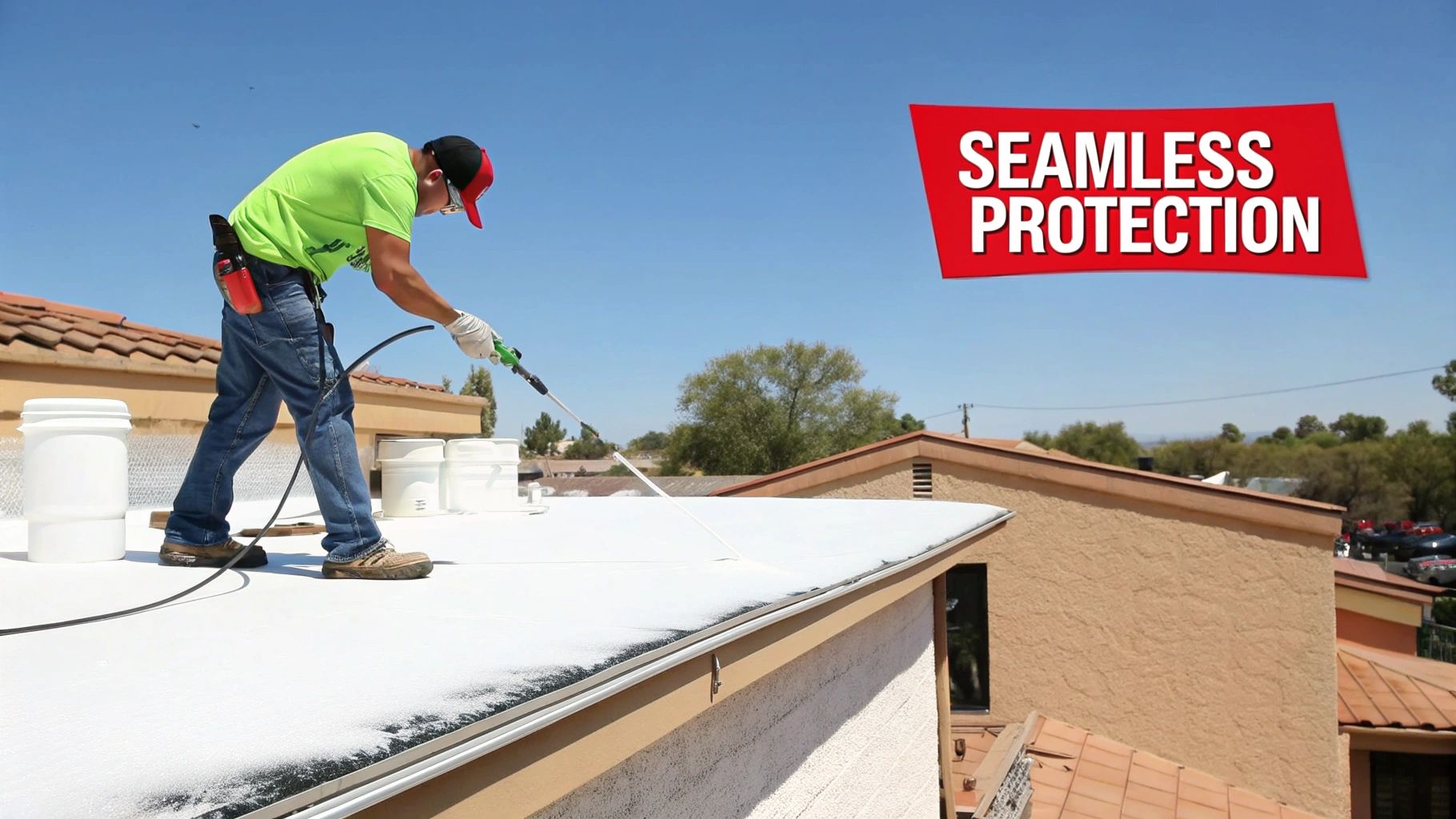
This mixture, a precise blend of polyol and isocyanate, undergoes a rapid chemical reaction. In just a matter of seconds, it expands up to 30 times its original volume, hardening into a rigid, lightweight foam. This process creates a single, continuous membrane that perfectly contours to every pipe, vent, and angle on your roof, completely eliminating the seams and joints where most leaks begin.
Core Components of an SPF System
An SPF roof isn't just the foam itself. It's a complete, two-part system designed to work together for decades of protection.
- The Foam Layer: This is the workhorse of the system. It provides the primary waterproofing and some of the best insulation you can get, boasting an impressive R-value of around 6.5 per inch.
- The Protective Coating: Once the foam has cured, we apply a flexible, durable topcoat—typically silicone or acrylic. This top layer acts as a shield, protecting the foam from damaging UV rays and adding another layer of waterproofing. Its reflective surface is key to bouncing the sun's intense heat away from your building.
A simple way to think about it is this: the foam is the armor, and the topcoat is the shield. Together, they create a formidable defense that keeps your home cool, dry, and protected for decades.
Why It Is a Smart Investment
This isn't just another roofing material; it's a strategic upgrade to your home's performance, especially here in Arizona. An SPF roof directly tackles our two biggest climate challenges: brutal summer heat and torrential monsoon storms.
By creating a super-insulated, completely seamless barrier, a foam roof actively lowers your energy bills by keeping the heat out and prevents the kind of water damage that can be so destructive. It’s more than just a roof—it’s an investment in your home’s comfort and efficiency.
Here’s what you really need to know.
When it comes to roofing in Arizona, spray polyurethane foam is one of the smartest investments you can make. It creates a seamless, completely waterproof layer over your entire roof, and its insulating power is second to none.
For us here in the Valley, that means serious savings on cooling bills. The system is designed to reflect the brutal solar heat, not absorb it. With proper care, an SPF roof can easily last 50 years or more, making it a fantastic long-term value.
Think of a spray foam roof less like a simple covering and more like an active energy management system for your home. It’s built to stop leaks dead in their tracks and can often be installed right over your existing roof—saving you a bundle on tear-off costs and keeping old materials out of the landfill.
Why SPF Roofing Excels in Arizona's Climate
Arizona's weather isn't just hot—it's an all-out assault of blistering sun and violent monsoon storms. This kind of environment demands a roof that does more than just provide cover; it needs to be an active defense system. This is where a spray polyurethane foam (SPF) roof really shines, because it's built to handle exactly these kinds of extremes.
Its biggest weapon against the heat is its incredible insulating power. SPF has one of the highest R-values—the measurement of how well something resists heat flow—per inch of any roofing material out there. You can think of it as a thick, seamless thermal blanket custom-molded to the top of your building.
This solid layer of foam is a master at stopping "thermal bridging," which is just a technical way of saying it stops heat from sneaking through the structural parts of your roof. When it’s 115°F outside, that means a lot less of that solar heat makes it into your home, giving your AC a much-needed break.
A Seamless Defense Against Monsoon Rains
Then there’s the monsoon season. The intense downpours and high winds are notorious for finding every little weakness in a traditional roof. All those shingles, seams, and fasteners create thousands of potential entry points for water.
An SPF roof is fundamentally different. It’s sprayed on as a liquid that expands and hardens into one single, solid piece. There are no seams, no gaps, and no joints. This monolithic surface is incredibly tough for water to get through, especially around tricky areas like vents, pipes, and skylights where leaks most often start.
A spray polyurethane foam roof doesn't just resist water; it creates an impenetrable barrier. It’s like shrink-wrapping your roof in a custom-fit, waterproof shield that has no weak points for moisture to find.
For homeowners serious about performance, this combination of top-tier insulation and seamless waterproofing is a huge win. When you start researching the best roof insulation for hot climates, you'll find that SPF systems consistently come out on top for this very reason.
The Reflective Shield That Lowers Temperatures
The final piece of the puzzle is the protective topcoat. Once the foam is in place, we seal it with a highly reflective coating, usually a silicone or elastomeric material. This coating acts like a giant layer of sunscreen for your entire building.
It reflects the sun’s damaging UV rays and literally bounces solar heat back into the atmosphere before it can be absorbed. This is a game-changer in a state where a roof’s surface can easily top 170°F.
This powerful combination of insulation and reflection delivers real, measurable savings. In a place like Arizona, where summer days can easily push past 110°F, an SPF roof with a reflective coating can deflect up to 85% of solar heat. For your utility bill, that can mean cutting air conditioning use by a staggering 25-40% compared to a dark shingle roof that just soaks up the sun all day long.
SPF Roofing vs Traditional Roofing Materials in Arizona
When you put SPF head-to-head with other common roofing materials in Arizona, its advantages become even clearer. Here's a quick breakdown:
| Feature | Spray Polyurethane Foam (SPF) | Asphalt Shingles | Clay/Concrete Tile |
|---|---|---|---|
| Insulation (R-Value) | Excellent (R-6.5 per inch) | Poor (R-1 to R-2 total) | Fair (Air gap provides some insulation) |
| Waterproofing | Excellent (Seamless, monolithic) | Fair (Many seams, vulnerable to wind) | Good (Relies on underlayment) |
| Energy Efficiency | Excellent (High R-value + reflectivity) | Poor to Fair (Dark colors absorb heat) | Good (Reflectivity and air gap) |
| Durability | Excellent (Seamless, UV protected) | Fair (Prone to cracking and wind damage) | Excellent (Long-lasting but can crack) |
| Lifespan | 30-50+ years with maintenance | 15-25 years | 50+ years (Underlayment replacement needed) |
| Wind Resistance | Excellent (Adheres directly to deck) | Poor to Fair (Vulnerable to uplift) | Good (Heavy, but can be dislodged) |
| Initial Cost | Moderate to High | Low to Moderate | High |
While materials like tile offer longevity, they can't match the combined energy efficiency and seamless waterproofing that an SPF system provides—a crucial advantage in our demanding climate.
A Look at the Installation Process, Step by Step
Watching a spray polyurethane foam roof come to life is pretty incredible. It starts as a liquid and, right there on your roof, transforms into a tough, seamless barrier. But this isn't a simple DIY job; it's a science that requires real skill and precision. Seeing how it's done makes it crystal clear why the quality of the installation crew is just as crucial as the material itself.
The whole process is usually much faster and less disruptive than tearing off and replacing an old roof. It boils down to four key stages.
Stage 1: Meticulous Surface Preparation
You wouldn't build a house on a weak foundation, right? The same logic applies here. The first—and arguably most important—step is getting the existing roof surface ready. We're not talking about a quick sweep with a broom. This is an intensive cleaning process to get rid of every bit of dirt, dust, loose gravel, and moisture.
A professional crew will typically power wash the entire surface to get it perfectly clean. They'll also repair any small cracks or damaged areas on the existing roof. This step is non-negotiable. The foam needs a clean, dry, and solid base to grab onto and create a permanent bond. Skipping this or doing a lazy job is a recipe for adhesion failure later on.
Stage 2: The Foam Application
This is where the magic happens. Using highly specialized equipment, our technicians mix two liquid components—isocyanate and polyol—at an exact temperature and pressure. This mixture is then sprayed directly onto the prepared roof deck.
The second it hits the surface, a chemical reaction kicks in, causing the liquid to expand up to 30 times its original volume in just a few seconds. It hardens into a solid, rigid layer of foam that forms a single, seamless membrane. This incredible expansion allows the foam to perfectly mold itself around every vent, pipe, and odd corner on your roof, leaving no seams for water to sneak through. We carefully control the thickness to guarantee a consistent R-value and create the right slope for proper drainage.
The infographic below shows just how different an SPF roof is from a traditional one when it comes to handling the sun's heat.
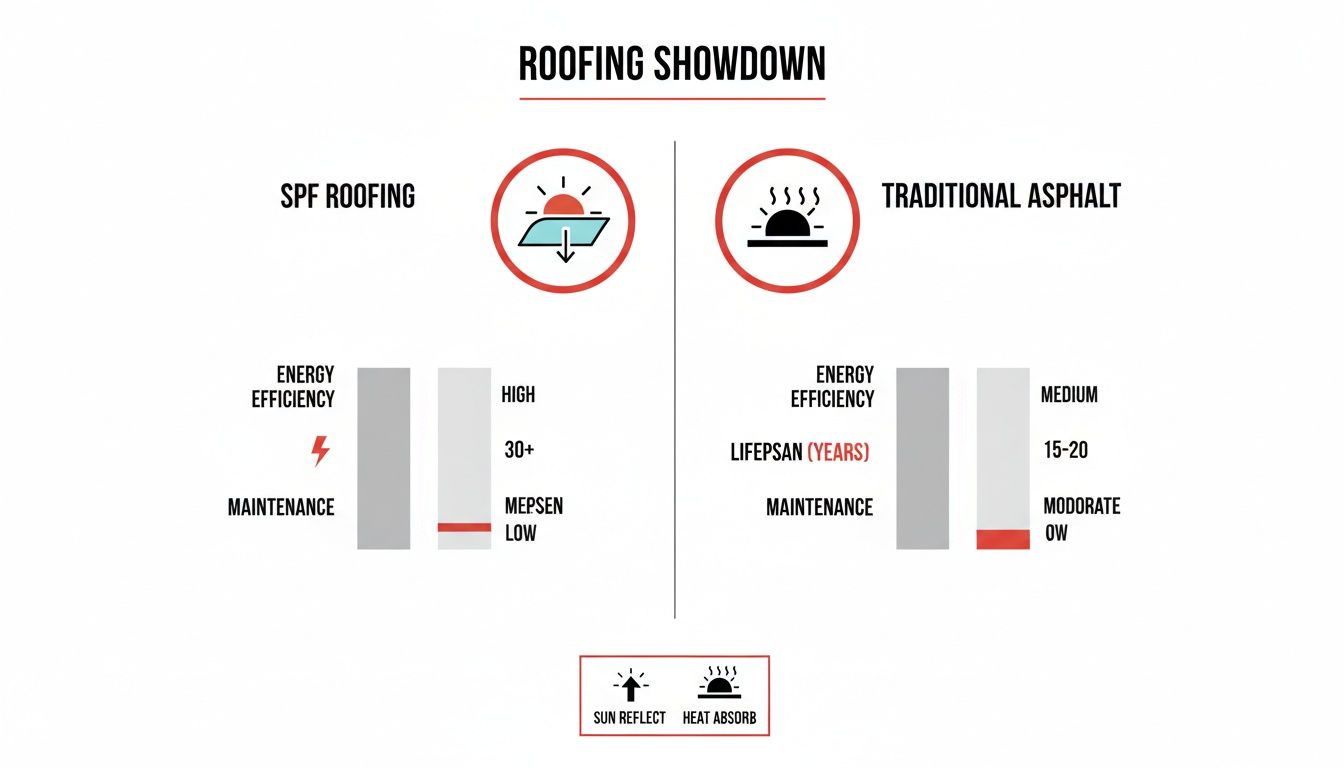
As you can see, the reflective topcoat on an SPF system acts like a mirror, deflecting sunlight and heat away from the building. In contrast, dark asphalt shingles just soak it all up, transferring that heat right inside.
Stage 3: Applying the Protective Coating
While the foam itself is a powerhouse insulator and waterproofer, it has one weakness: the sun. It's susceptible to damage from ultraviolet (UV) radiation. To solve this, we apply a durable, elastomeric topcoat over the entire foam surface. This coating is the roof's shield, protecting the foam from UV breakdown while adding another tough layer of weather resistance.
Think of this coating as industrial-strength sunscreen for your roof. It doesn't just protect the foam underneath; it also creates the bright white, reflective surface that does the heavy lifting in bouncing solar heat away—a must-have for slashing energy bills here in Arizona.
Stage 4: The Final Inspection
After the protective coating has fully cured, it's time for one last, thorough inspection. The crew foreman will walk every inch of the roof, checking for consistent foam thickness, complete coating coverage, and a perfect seal around every pipe, vent, and skylight.
This final quality check is our guarantee that your new spray polyurethane foam roof was installed exactly to the manufacturer's specifications and is ready to perform for decades. It's the final seal of approval on a job done right.
The Real Cost and Long-Term Value of an SPF Roof
When you're looking at different roofing options, the initial price tag is just the starting point. It's easy to get sticker shock, but with a spray polyurethane foam roof, the upfront cost is only half the story. The real financial power of an SPF system shines through over its entire lifespan.
Of course, the initial investment depends on several things—the size of your roof, what kind of shape it's in, and how much prep work is needed. For a complete rundown, take a look at our guide to understanding roofing costs in our 2025 guide. But if you only focus on that first number, you’ll miss the incredible return on investment (ROI) an SPF roof delivers.
Breaking Down the Long-Term ROI
The true value of an SPF roof comes from three key areas. When you add them up, it becomes clear that this system isn't just another bill to pay—it's an investment that actively puts money back in your pocket.
- Serious Energy Savings: With an incredible R-value of 6.5 per inch and a reflective topcoat that bounces sunlight away, an SPF roof dramatically cuts down on heat seeping into your building. This means your air conditioner doesn't have to work nearly as hard, with many property owners seeing their HVAC costs drop by 20-50%.
- Decades of Durability: A well-maintained SPF roof can easily last 50 years or more. Think about that for a second. You get to skip the massive expense and headache of a full roof replacement every 15-25 years, which is the typical lifespan for many traditional materials.
- Minimal Maintenance Costs: Because a foam roof is a single, seamless layer, you won't be chasing down and patching failing seams year after year. Maintenance is straightforward: a simple annual inspection and a recoat of the protective layer every 15-20 years is all it takes to keep it going indefinitely.
Think of an SPF roof as a long-term financial strategy. The money you save on energy bills, combined with avoiding future replacement costs, often means the roof pays for itself in under five years, especially for commercial buildings.
It's no surprise that demand for these systems is booming. The global market for spray foam roofing was valued at $2.1 billion in 2024 and is expected to more than double to $4.3 billion by 2033. This isn't just a trend; it's a direct response to the clear financial upside, particularly in hot climates like Arizona where cooling can account for a staggering 60-70% of a building’s total energy bill. You can dig deeper into these market drivers in this detailed industry report.
How to Choose a Qualified SPF Roofing Contractor in Arizona
All those incredible benefits we've talked about? They only happen if the spray foam is installed perfectly. This isn't a weekend DIY project. The most advanced roofing material on the planet can fail spectacularly if the team applying it doesn't know what they're doing.
Honestly, choosing your contractor is the single most important decision you'll make in this entire process.
You don't just want a general roofer who dabbles in foam. You need a dedicated SPF specialist. Applying spray foam is a science, requiring expensive, specialized equipment and a deep understanding of the chemical reactions at play. An inexperienced crew can easily make catastrophic mistakes that lead to leaks, poor insulation, and a roof that fails years before it should.
Your Vetting Checklist for Arizona Contractors
Think of this as your shield against shoddy work. A true professional will have no problem answering these questions and backing up their claims with proof. Don't be afraid to ask.
- Proper Licensing and Insurance: This is non-negotiable. Your contractor absolutely must be licensed, bonded, and insured to work in Arizona. Ask to see their paperwork for general liability and worker’s compensation—it protects you from any accidents on your property.
- Verifiable SPF Experience: How long have they been specifically installing spray foam roofs? A decade of shingle work doesn't count here. Ask to see a portfolio of local foam projects and look up their reviews on Google.
- Manufacturer Certifications: The best contractors are officially certified by the companies that make the foam and coatings. This is your proof that they've been professionally trained to install the system exactly the right way, meeting the highest industry standards.
Choosing the right contractor isn't a one-time transaction. You're finding a long-term partner who will protect your property for years to come. A great installation is the foundation for decades of performance and real energy savings.
Beyond the Basics: What Sets the Best Apart
Once a contractor checks the essential boxes, dig a little deeper. The best pros stand out through their professionalism. You should expect clear communication, a detailed written estimate explaining every step of the job, and a solid warranty that covers both the materials and their workmanship.
It also helps to understand the challenges and standards within the broader roofing industry to see who truly rises above. At the end of the day, you're trusting them with one of your most valuable assets.
For a deeper dive into this topic, take a look at our complete guide on how to choose a roofing contractor.
Frequently Asked Questions About SPF Roofing
It's smart to have questions when you're looking at a different kind of roofing system like spray polyurethane foam. We get it. Here are the answers to the questions we hear most often from homeowners right here in Arizona, laid out plain and simple.
How Long Does a Spray Foam Roof Last?
This is where SPF really shines. A spray foam roof that's properly looked after can last for 50 years or more. Seriously.
The foam itself is incredibly resilient. The secret to its long life is the protective topcoat. Every 15 to 20 years, we'll reapply this coating to shield the foam from the brutal Arizona sun and keep it waterproof. Think of it like a tune-up that resets the clock on your roof's lifespan, making it a roofing solution you might only have to install once.
Can You Walk on a Spray Foam Roof?
You bet. A properly installed, closed-cell SPF roof is much tougher than people think. It’s dense and strong, easily handling the foot traffic that comes with routine HVAC servicing or a simple roof inspection.
If you have areas with constant, heavy traffic or bulky equipment, we can even install special walkway pads. These just add an extra buffer of protection right where you need it most.
Can SPF Be Installed Over My Existing Roof?
Yes, and this is a huge plus for many homeowners. In most cases, as long as your current roof is structurally sound and free of moisture, we can apply spray foam directly over it.
This saves you from the massive cost, mess, and headache of a full tear-off. It’s also a much greener option, keeping tons of old roofing material out of our local landfills.
What Kind of Maintenance Does It Require?
SPF roofing is about as low-maintenance as it gets. We recommend a quick inspection once a year to look for any minor punctures—maybe from a fallen branch or debris—and to make sure the surface is clean.
Then, as mentioned, the crucial part is reapplying the protective elastomeric coating every 15-20 years. This simple step is what keeps the Arizona sun from breaking down the foam and is the key to making the roof last for decades.
How Does SPF Handle Arizona’s Monsoon Storms?
Because an SPF roof is a single, seamless membrane that adheres directly to the roof deck, it is exceptionally resistant to high winds and uplift. There are no shingles or panels to be torn off. Furthermore, its monolithic, waterproof nature means there are no seams for driving rain to penetrate, making it an ideal system for withstanding the intense downpours common during monsoon season.