
Picking the right roofer from the dozens of roofing companies in Tucson, AZ can feel overwhelming, especially when you're staring down a leak during monsoon season or just know your old shingles can't take another summer. It's about more than just a good price; it's about finding someone who gets what a roof needs to survive the Sonoran Desert.
We're talking about a roof that can handle relentless sun, surprise hail, and those torrential downpours. The trick is to focus on genuine local expertise, the right credentials, and materials that are actually made for our climate. This guide will walk you through verifying credentials, choosing the right materials for our desert climate, and understanding estimates so you can make a confident, informed decision.
Key Takeaways
- Credentials are Non-Negotiable: Always verify a roofer's Arizona Registrar of Contractors (ROC) license and ask for proof of both general liability and workers' compensation insurance before getting an estimate.
- Desert-Ready Materials Matter: Your choice of roofing material—from concrete tiles to reflective metal—directly impacts your home's durability and energy efficiency in Tucson's harsh climate.
- Detailed Estimates Prevent Surprises: Insist on itemized quotes that break down costs for materials, labor, tear-off, and disposal. Vague estimates are a significant red flag.
- Warranties Protect Your Investment: Understand the difference between a manufacturer's material warranty and the roofer's workmanship warranty, which covers installation quality.
How to Actually Find a Great Roofer Here in Tucson
Let's cut through the noise. Finding a trustworthy roofer in Tucson means looking past the flashy ads and focusing on what protects your home. Your roof is what stands between you and 110-degree heat, not to mention the wild monsoon storms. Making the right choice directly impacts your home’s safety and even your summer cooling bills.
What Really Matters When You're Choosing
To keep things simple, I always tell people to zero in on a few make-or-break areas. This way, you're comparing apples to apples and making a decision based on quality, not just a sales pitch.
- Check the Paperwork First: Before you even schedule an estimate, verify their Arizona Registrar of Contractors (ROC) license. No license, no conversation. Also, ask for proof of both general liability and workers' compensation insurance. This protects you from any accidents on your property.
- Insist on Local, Seasoned Pros: A company that has been roofing in Tucson for years knows exactly what our climate does to different materials. They’ll recommend tile, reflective coatings, or specific underlayments because they’ve seen what fails and what lasts under the intense UV exposure.
- Get Clear on the Guarantees: You need to understand the two types of warranties you'll get. The manufacturer covers the materials themselves against defects, but the roofer's workmanship warranty is what covers you if the installation was done poorly. A confident roofer will always stand behind their work with a solid guarantee.
Your First Move: Checking Licenses and Insurance
Before you even think about tile colors or get a single quote, there's a crucial first step: vetting the roofer's credentials. This is non-negotiable.
Any legitimate roofer in Tucson absolutely must have an active license with the Arizona Registrar of Contractors (ROC). Think of this as your first line of defense against fly-by-night operations.
Next up is insurance. You need to see proof of two specific policies: general liability and workers' compensation. These aren't just pieces of paper; they're your financial shield. If an accident happens on your property—say, a ladder falls and damages your A/C unit, or worse, a worker gets injured—these policies protect you from being held liable.
A true professional also invests in their team's safety. Don't be shy about asking how they protect their crew. Do they use appropriate working at height safety equipment? A company that cuts corners on safety is likely to cut corners on your roof, too.
A commitment to professionalism usually shows up in their paychecks. It’s worth noting that experienced Tucson roofers often earn a good deal more than the state average, which tells you it’s a market driven by high demand and quality work. You can see more on local contractor wages here.
Choosing The Right Roofing Materials For The Sonoran Desert
Putting a roof on a home in Tucson isn't like roofing anywhere else. Here, your roof is on the front lines, battling relentless UV rays, wild temperature swings from day to night, and, of course, the dramatic monsoon season.
When you're talking to roofing companies in Tucson AZ, the conversation should quickly turn to materials built for this specific climate. The right choice is about more than just looks; it's a long-term investment in durability, energy efficiency, and monsoon-readiness. Choosing well means lower energy bills and fewer repair headaches down the road.
Tucson Roofing Material Comparison
To make sense of your options, it helps to see a direct comparison. Each material has its own set of pros and cons when it comes to handling the desert heat and storms.
| Material Type | Average Cost (per sq ft) | Typical Lifespan | Heat Reflectivity | Monsoon Resistance |
|---|---|---|---|---|
| Asphalt Shingles | $1.50–$2.50 | 15–20 years | Low | Moderate |
| Concrete Tiles | $4.00–$6.00 | 50+ years | Medium | High |
| Metal Roofing | $5.00–$8.00 | 40–60 years | High | High |
| Flat Roof Systems | $3.00–$4.50 | 20–25 years | Variable | Moderate |
As you can see, while asphalt shingles are budget-friendly upfront, materials like concrete tile and metal roofing offer superior longevity and performance against our intense sun and heavy rains—a trade-off every Tucson homeowner has to consider.
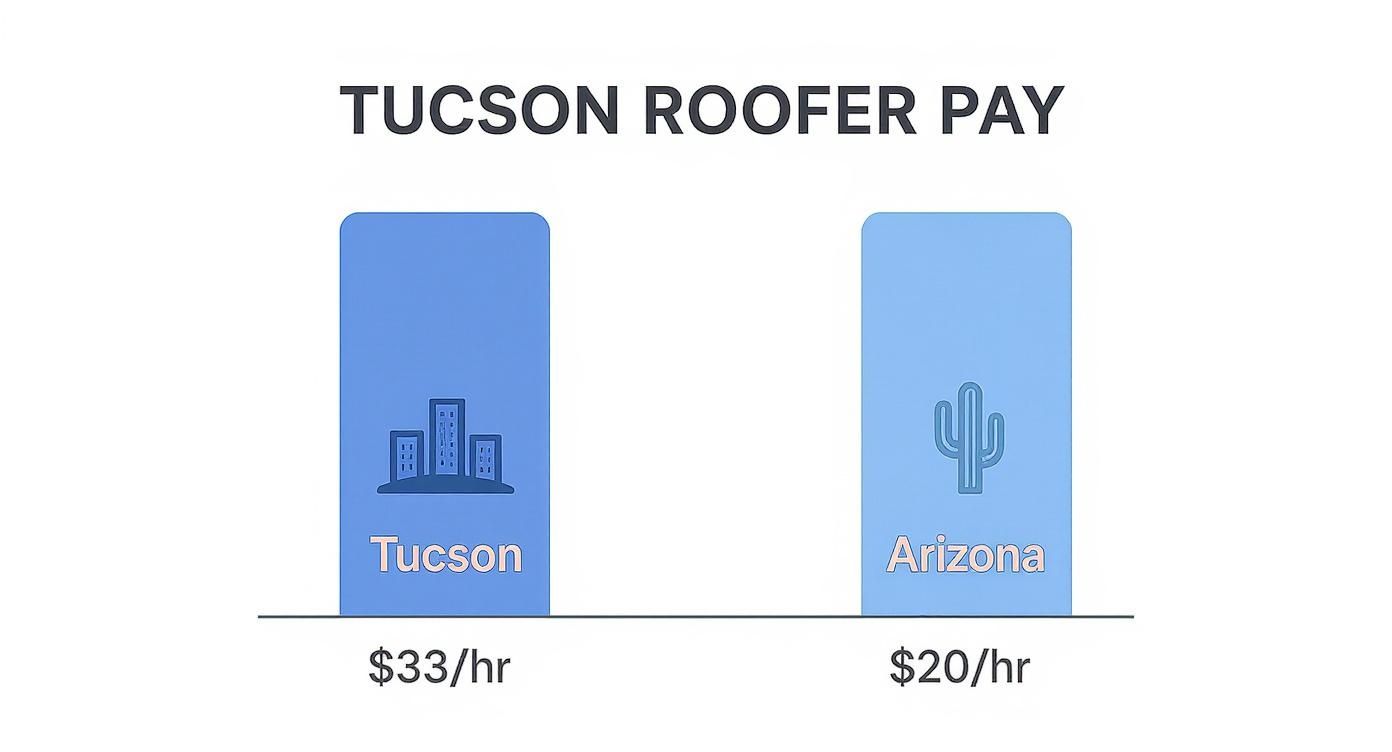
This data also sheds light on the local market. The fact that experienced Tucson roofers often earn a premium ($33/hr compared to the statewide average of $20/hr) speaks to the specialized skill required to install these climate-appropriate systems correctly.
A roof built to withstand the desert doesn't just protect your home—it cuts your cooling and maintenance costs for decades.
For a deeper dive into how your roof can impact your utility bills, take a look at these top efficient roofing options to lower your energy bills.
Making Sense of Roofing Estimates and Project Costs

A roofing estimate can feel like trying to read a foreign language. The key is to look for a detailed breakdown. A good quote won't just give you a single number; it will list everything out, from materials and labor to tear-off and disposal fees. If an estimate is vague, that’s a major red flag.
I always tell homeowners to get at least three quotes. This isn’t just about finding the lowest price—it's about seeing how different roofing companies in Tucson, AZ, structure their bids and what they include.
In Tucson, the average cost for a new residential asphalt roof is about $53,748. You can find more details on roof replacement costs in Tucson to see how your quotes stack up. The best companies use advanced tools to ensure their measurements and estimates are spot-on.
Comparing these detailed bids is your best move. To really dig into what should be included in every quote you receive, our guide on how to understand a roof repair estimate is an invaluable resource.
Digging into a Roofer's Reputation and Warranties

Here's a hard truth about roofing: a warranty is only as good as the company that writes it. You could have a 50-year warranty, but it’s just a piece of paper if the roofer who installed it is out of business in five. This is why a company's reputation and the warranties they offer are so intertwined.
The Two Types of Roofing Warranties
When you're looking at proposals, you'll see two different kinds of warranties, and it’s critical to understand the difference.
First, there’s the material warranty. This comes directly from the manufacturer of the shingles, tiles, or other roofing materials. It covers defects in the product itself.
More importantly, though, is the workmanship warranty. This one comes from your roofer. It's their promise that the installation was done correctly, and it's your protection against leaks or failures caused by mistakes during the install. Frankly, this is where most early roof problems come from.
Reputation is Everything
A great reputation is the best indicator you have that a company will actually be around to honor its workmanship guarantee down the road. It shows they've built a sustainable business on quality work and customer service, not just chasing quick jobs. While online reviews can be a starting point, they don't tell the whole story. Some businesses have perfected their effective local business marketing strategies but might lack the on-the-ground track record.
Look beyond the 5-star Google rating. A genuinely solid local reputation is built over years of consistent, high-quality work. You can verify this by checking for a clean record with the Arizona ROC and by asking for local references you can actually call or drive by. Taking the time to learn how to find a good roofer means digging into these essential background details before you even think about signing a contract.
Finalizing Your Choice and Signing the Contract
You’ve done the hard work. You've checked the licenses, sifted through quotes, and finally settled on the right team for the job. Now comes the most critical step: the contract.
This document is more than just a formality; it’s your single best protection if things go sideways. Before you sign anything, pull out the estimate you agreed to and compare it line-by-line with the contract. Every material, every labor cost, and every timeline should match up perfectly.
Don't let the excitement of starting the project rush you. A few extra minutes of careful review now can save you from major headaches and unexpected costs down the road.
The demand for high-quality roofing companies in Tucson, AZ is booming. The industry as a whole saw a massive median revenue growth of 163% between 2021 and 2024. You can see the full breakdown of this industry growth on RoofingContractor.com.
This final check ensures your project is backed by a solid agreement, holding your contractor to the same high standards driving that growth.
Answering Your Top Tucson Roofing Questions
When you're staring down a roof replacement, it's natural to have a lot of questions. I get it. Over the years, I've heard just about everything, so let's tackle some of the most common concerns homeowners have right here in Tucson.
How Long Does a Typical Roof Replacement Take in Tucson?
For a standard single-family home, say around 2,000 square feet, you can generally expect an asphalt shingle roof replacement to take about 2 to 4 days. That’s the typical timeframe.
Of course, that can change. A surprise monsoon storm can put a hard stop on things for safety reasons. We also might find extensive damage to the underlying wood decking once we tear off the old roof, which adds time for repairs. Heavier materials like concrete tiles or a custom standing-seam metal roof will also naturally extend that timeline a bit.
Do I Need a Permit for a Roof Replacement in Tucson?
Yes, almost always. Both the City of Tucson and Pima County require a building permit for a re-roofing project.
Don't think of this as just a bureaucratic headache. That permit is your assurance that the job is being done right—meeting all the local building codes for wind resistance, safety, and even energy efficiency. Any trustworthy contractor will handle the entire permitting process for you, from filing the paperwork to scheduling the final inspections. It should be part of their standard service.
How Do I Know if My Roof Has Monsoon Storm Damage?
After a big monsoon rolls through, it’s always a good idea to walk around your house and do a quick visual check from the ground. You don't need to get on the roof yourself.
Look for these tell-tale signs:
- Shingles or tiles that are obviously missing, cracked, or lifted.
- A pile of asphalt granules (they look like coarse black sand) in your gutters or where your downspouts empty.
- Noticeable dents or dings on any metal components, like your roof vents or flashing.
- The most obvious sign: new water stains on your ceilings or signs of a leak in the attic.
If you see any of this, your next call should be to a professional. Most reputable roofing companies in Tucson, AZ, will offer a free inspection to assess any potential storm damage without any obligation. It's the safest way to know for sure.
Frequently Asked Questions
What is the best type of roof for a house in Tucson?
For Tucson's climate, concrete tile and metal roofing are often the best long-term choices. They offer superior durability against intense sun and monsoon rains, and their reflective properties can help lower cooling costs. While more expensive upfront than asphalt shingles, their lifespan of 50+ years makes them a cost-effective investment.
How much does it cost to replace a roof in Tucson, AZ?
The cost varies widely based on size, materials, and the condition of the underlying structure. A typical asphalt shingle roof replacement can range from $8,000 to $15,000, while tile or metal roofs can cost significantly more. It is essential to get at least three detailed estimates from licensed roofing companies.
Can I get my roof replaced during monsoon season?
Yes, but with caution. Experienced roofing companies in Tucson know how to work around the monsoon schedule. They will only remove sections of the roof they can replace and seal in the same day to avoid leaving your home exposed to a sudden downpour. Communication about weather delays is key during this time.
How often should I have my roof inspected in Tucson?
It's a good practice to have your roof professionally inspected at least once a year, ideally before the start of monsoon season. An annual inspection can catch small issues like cracked tiles or failing sealant before they turn into major, expensive leaks.