
Your roof is the most critical shield protecting your home from the elements. Choosing the right company to repair or replace it is one of the most important decisions you'll make as a homeowner. It's a major investment in your property's safety, value, and your own peace of mind. Navigating the crowded field of contractors can feel overwhelming, but with the right approach, you can find a trustworthy professional who will get the job done right. This guide will walk you through the essential steps, from verifying credentials to understanding warranties, so you can make your final decision with total confidence.

Key Takeaways
- Credentials First: Before you even talk about quotes, you must verify a roofer’s license, insurance, and bond. Think of this as your first line of defense against unqualified operators or outright scams.
- Compare Itemized Quotes: Never, ever accept a verbal agreement or a one-line price. Real value is found by comparing detailed, written estimates that break down every cost—materials, labor, permits, and disposal.
- Understand Both Warranties: A quality roofing job is backed by two separate warranties: one for the materials from the manufacturer and another for workmanship from the contractor. Make sure you get both in writing.
Starting Your Search for the Right Roofer
Your roof is the single most important shield protecting your home from the elements—especially under that intense Arizona sun. Choosing a contractor isn't just about finding a good price; it’s a major investment in your home's long-term safety, value, and your own peace of mind. In a market this competitive, you can't afford to skip a careful vetting process.
Gathering Referrals and Vetting Online Reviews
The absolute best place to start your search is by asking around. Talk to friends, family, or neighbors who’ve had roof work done recently. A firsthand recommendation gives you priceless insight into a company's reliability and how they treat their customers when things get complicated.
Next, hit the web. Use online reviews from platforms like Google and the Better Business Bureau to screen potential candidates. You're looking for patterns. A single grumpy review isn't a dealbreaker, but consistent complaints about poor communication, blown deadlines, or surprise costs are huge red flags.
As you start your search, it helps to understand that reputable companies invest in their presence. Knowing the basics of effective construction marketing strategies can help you spot the pros who are serious about their reputation. That's why I always recommend shortlisting at least three to five potential companies. This gives you enough options for a solid comparison without getting overwhelmed. If you're looking for a place to begin, our guide to the best roofing companies in Phoenix is a great resource.
Navigating a Crowded Industry
Let's be honest, picking a roofer can feel overwhelming, partly because the industry is booming. The U.S. roofing market is on track to hit $76.4 billion by the end of 2025. While growth is good, it also means a flood of new contractors in the field, making it even more critical to choose a company with a proven track record.
How to Verify Credentials and Spot Red Flags
Before you even start looking at quotes, you need to do a little homework. This is arguably the most important part of choosing a roofing company—it’s where you separate the legitimate pros from the fly-by-night operators who can leave you with a mess. A few minutes of research now can save you from massive headaches and financial loss down the road.
Licensing, Bonding, and Insurance: The Non-Negotiables
First things first, let's talk about the legal stuff. In Arizona, any legitimate roofing contractor must be licensed by the Registrar of Contractors (ROC). This isn't just a fancy certificate; it means they've proven their experience and passed a trade exam. It’s your first layer of protection.
Being bonded is the second piece of the puzzle. Think of it as a safety net. If the contractor botches the job, fails to finish, or skips out on paying for materials, the bond is there to help cover your financial losses. You can easily check both the license and bond status by searching for the company on the Arizona ROC website. Just type in their name or license number.
Next up is insurance, and I can't stress this enough: it is absolutely essential. Hiring a roofer without proper insurance is a massive gamble. If a worker gets hurt on your property or a mistake causes damage to your home, you could be on the hook for every penny.
A pro will always carry two critical policies:
- General Liability Insurance: This covers damage to your property. For example, if a ladder falls and breaks a window, this is the policy that pays for it.
- Worker’s Compensation Insurance: This protects their crew. If an employee is injured on your roof, this insurance covers their medical bills—not you.
My advice? Don't just take their word for it. Always ask for a certificate of insurance sent directly from their insurance agent. This proves the policy is active and provides the coverage they claim.
Checking Their Track Record and Watching for Red Flags
Once you’ve confirmed they’re legally sound, it’s time to dig into their reputation. The Better Business Bureau (BBB) is a great starting point. What's their rating? Are there any complaints, and more importantly, how were they handled? A long track record of happy customers speaks volumes.
Beyond online reviews, pay close attention to how they act during your initial conversations. Your gut instinct is a powerful tool here. A pushy salesperson trying to rush you into a decision is a major warning sign. Same goes for anyone who gives vague, evasive answers to your questions. True professionals are patient, transparent, and happy to explain their process because they have nothing to hide.
To make things easier, I've put together a quick checklist of common warning signs I've seen over the years. If you spot any of these, it's a good idea to proceed with caution or simply walk away.
Contractor Red Flag Checklist
| Red Flag | Why It's a Concern |
|---|---|
| High-Pressure Sales Tactics | Rushing you into a decision is a classic move to prevent you from researching their company or getting other bids. A good deal today will still be a good deal tomorrow. |
| Demands for a Large Cash Deposit | Established companies are financially stable enough to front the cost of materials. A huge upfront payment, especially in cash, often indicates cash flow problems. |
| Vague Verbal Agreements | If it isn't in writing, it doesn't count. Every detail—from the specific materials used to the project timeline and payment schedule—needs to be documented in a contract. |
| Lack of a Physical Address | A roofer operating out of a P.O. Box or a truck might be a "storm chaser." These companies often follow bad weather, do shoddy work, and disappear before you notice a problem, leaving you with a worthless warranty. |
These warning signs are your first line of defense against problem contractors.
By taking the time to carefully vet each company against these criteria, you can confidently build a shortlist of qualified, trustworthy professionals ready to work on your home or business.
Decoding Estimates to Find the Best Value
You’ve done your homework and have a solid shortlist of vetted contractors. Now for the moment of truth: getting the quotes. But here's where a lot of people trip up. Getting a few prices is easy; knowing how to read between the lines to find genuine value is the real skill.
Think of a professional quote as more than just a number—it's the blueprint for your entire project. I can't stress this enough: never, ever accept a verbal quote or a simple one-line price on a piece of paper. You need a detailed, itemized, and written estimate from every single roofer. It's the only way to compare apples-to-apples and protect yourself from those dreaded surprise costs down the road.
This is why we always tell homeowners to do their due diligence before this stage. You need to confirm their credentials first.
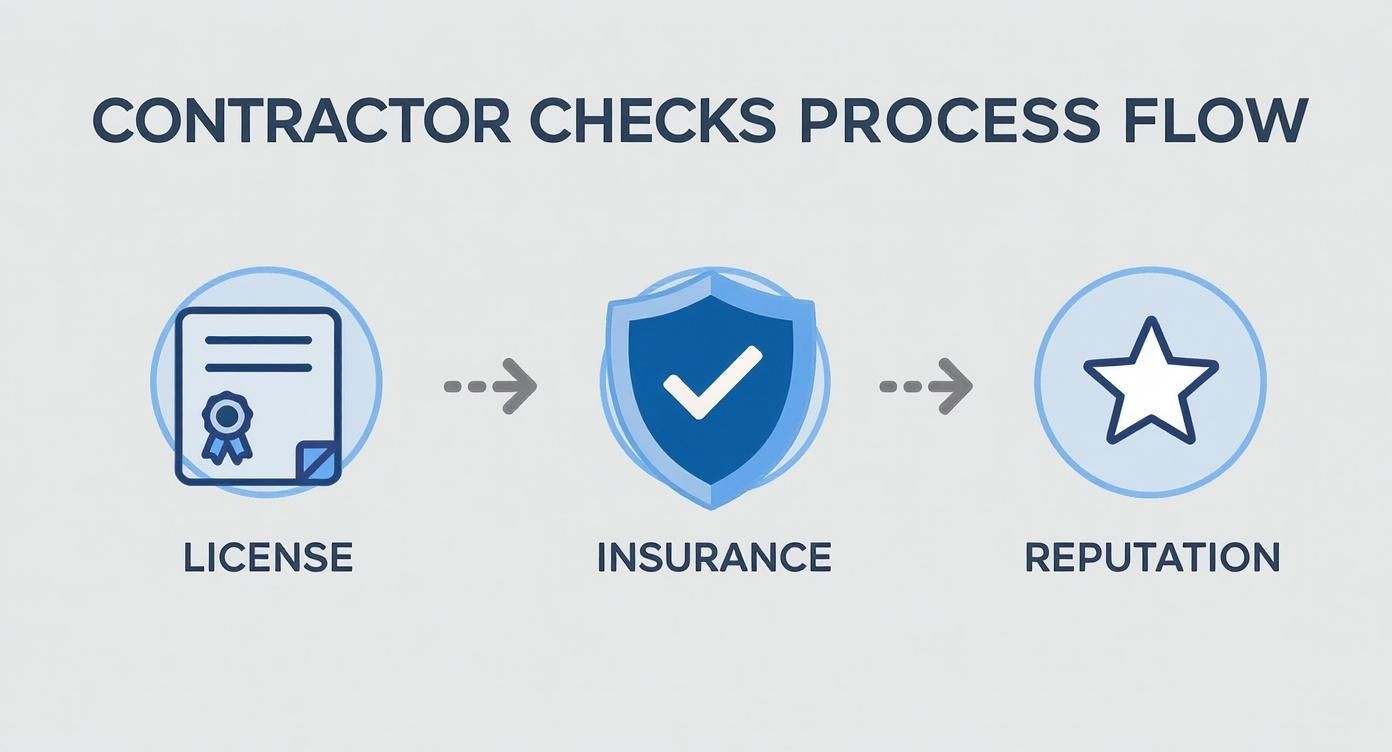
Checking these three fundamentals—license, insurance, and reputation—is the non-negotiable first step. A trustworthy pro who provides an honest, detailed estimate will always have these things in order.
What a Professional Quote Actually Looks Like
A legitimate quote from a seasoned professional leaves zero room for guesswork. It should be broken down into specific line items that cover every piece of the job.
Here’s what you should be looking for:
- Materials: Does it list the exact brand, type, and color of shingles, underlayment, and flashing? Vague phrases like "quality shingles" are a massive red flag.
- Labor: The cost for the crew's time to get the job done right.
- Tear-Off and Disposal: The cost to remove your old roof and haul away the debris. Don't assume this is included.
- Permits: The cost for pulling any necessary city or county permits.
- Contingencies: A clear plan for how they'll handle the unexpected. For instance, what happens if they tear off the old shingles and find rotted decking underneath? The quote should explain how that's billed.
Insisting on this level of detail is your best defense against a contractor swapping in cheaper materials at the last minute or hitting you with surprise charges.
If there's one mistake I see homeowners make over and over, it's jumping at the lowest price. A suspiciously low bid is almost always a sign that something critical is missing—proper insurance, quality materials, or even the cost of a dumpster.
Let’s Compare Some Real-World Quotes
To see why the details are so crucial, let's walk through a scenario I see all the time. Imagine you get three quotes for the same roof replacement.
- Quote A ($8,500): This is just a single line on an invoice: "Roof replacement – $8,500." It’s shockingly low and tells you nothing. What materials are they using? Is cleanup included? Are they even licensed? Run, don't walk.
- Quote B ($12,000): This one is a little better, listing "Materials and Labor for New Roof." But it's still way too vague. What kind of materials? What brand of shingles? What happens if they find damaged wood? This ambiguity is a recipe for conflict and unexpected bills.
- Quote C ($13,500): This quote is fully itemized. It specifies GAF Timberline HDZ shingles, synthetic underlayment, new flashing, labor, tear-off, dumpster fees, and the permit cost. It also has a clause stating that if any plywood needs replacing, it will be billed at a specific rate per sheet, but only after you approve it.
While Quote C has the highest price tag, it clearly offers the best value. It gives you total transparency, locks in high-quality materials, and protects you from financial surprises. That's the mark of a true professional.
For a deeper dive into what to look for, you can check out our comprehensive roof repair estimate guide for more tips on getting fair pricing.
Look Beyond the Price Tag
Finally, once you’ve dissected the numbers, read the actual contract terms. A solid agreement should clearly spell out the project timeline and a fair payment schedule.
Most importantly, make sure it mentions lien waivers. A lien waiver is a document you get from the contractor stating they've been paid and are waiving their right to put a lien on your home. This is a critical piece of protection that ensures you won't be on the hook if your roofer forgets to pay their material supplier.
Getting a Handle on Roofing Warranties and Your Real Protection
A new roof is a massive investment in your home, and the warranty is your safety net. But let's be honest, wading through the fine print can feel like reading a foreign language. It's a critical part of choosing a roofing company, so let's break it down. A quality job doesn't just come with one warranty; it should have two distinct layers of protection.
https://www.youtube.com/embed/5YOZsK1410I
The Manufacturer's Promise: Material Warranties
First up is the warranty that comes straight from the company that made the shingles or tiles. A manufacturer's warranty is designed to protect you if the materials themselves fail—think shingles that start curling, cracking, or shedding their granules way too soon.
These warranties look great on paper, often covering you for 20 to 50 years. But they come with a lot of strings attached. Seriously. Something as simple as poor attic ventilation or a misplaced satellite dish can void the entire thing. This is exactly why a professional, by-the-book installation is non-negotiable.
The Roofer's Guarantee: Workmanship Warranties
The second layer of protection, and frankly the one you'll probably care about most, is the workmanship warranty. This one comes directly from your roofing contractor, and it covers any mistakes made during the actual installation.
Why is this so important? Because the vast majority of roof failures I see aren't due to faulty products—they're caused by human error during installation. This warranty is your first line of defense against leaks and other problems. They are shorter, usually lasting between 2 and 10 years, and that timeframe tells you a lot about how much confidence a company has in its own crews.
A contractor who confidently offers a solid, multi-year workmanship warranty isn't just selling you a roof. They're selling you peace of mind. It’s a direct signal that they stand behind their work and will be around to make things right if their installation causes a problem.
The Questions You Absolutely Must Ask About Warranties
Don't just nod when a contractor says "it comes with a warranty." You need to dig in and ask the right questions to make sure you're actually protected.
- Who do I call if there's a problem? Get it straight—is your first call to the contractor or the manufacturer? You need to know who owns the problem.
- Can I transfer the workmanship warranty if I sell my house? This can be a huge plus for a potential buyer.
- What, specifically, will void my warranties? Ask for a clear list of no-nos.
- Do you offer any upgraded manufacturer warranties? Hiring a factory-certified installer, like a GAF Master Elite contractor, can unlock much better warranty options that other roofers can't even offer.
It’s also worth noting that the roofing industry is shifting. Many homeowners are looking for energy-efficient solutions, and companies that offer modern options like solar-ready roofs are often the same ones delivering top-tier service and warranties. Getting a handle on your warranty is just as important as knowing how long a roof lasts in Arizona's climate.
Making Your Final Decision with Confidence
You've done the legwork. You’ve sifted through estimates, checked credentials, and talked to a few different companies. Now comes the final step: pulling all that information together to pick the right partner for the job. The goal here is to sign that contract feeling completely sure of your choice, not having second thoughts later on.

Let’s be clear—this decision isn’t just about finding the lowest price. It’s about finding the best overall value. The contractor who was easy to reach, took the time to answer all your questions, and gave you a transparent, detailed quote is probably the one who’s going to deliver a great experience from start to finish.
Evaluating Beyond the Price Tag
Think back over your interactions with each company. How was their communication? Did they get back to you quickly? Did they explain the technical stuff without making you feel lost?
A contractor's communication style during this early phase is a sneak peek into how they’ll operate once they’re on your roof. That responsiveness can be the tie-breaker between two companies that look great on paper.
Choosing a roofing company is about more than just credentials and cost. It’s about hiring a team whose communication and professionalism give you the confidence that they will handle your project—and any unexpected issues—with expertise and care.
The Crew and Workforce Stability
Here’s something a lot of homeowners don’t think to ask about: the crew. Who will actually be doing the work? The roofing industry has been dealing with skilled labor shortages for years—in fact, around 85% of contractors say it’s tough to find qualified workers. This can have a real impact on your project's timeline and quality.
So, don't be shy about asking who will be on your roof. It's smart to inquire about the experience of the installation team and how long the project foreman has been with the company. A business with a stable, seasoned crew is much more likely to deliver a top-notch installation. You can dig into more industry labor trends at Rooflink.com if you're curious.
Your Final Pre-Signature Checklist
Before you put pen to paper, do one last mental run-through. This is your final check to make sure everything is covered and you feel good about moving forward.
- Written Agreement: Is every single detail written down? I’m talking material brands, the project timeline, when payments are due, and info on lien waivers.
- Contingency Plan: What happens if they find something unexpected, like rotted decking? The contract should clearly spell out how that gets handled and billed.
- Warranty Confirmation: Make sure you have the material and workmanship warranties in writing. Don't just take their word for it.
- Gut Feeling: At the end of the day, how do you feel about this company? Trust your instincts. If something feels off, it probably is.
Once you’ve checked these boxes, you can sign that contract knowing you’ve made a solid, well-informed decision for your home.
Frequently Asked Questions
When it comes to a project as big as a new roof, questions are a good thing. It means you’re doing your homework. Over the years, I've heard just about every question in the book from homeowners trying to make the right call. Let's walk through some of the most common ones.
How many estimates should I get for a new roof?
You should aim for three to five detailed, written estimates from companies you've already vetted. This is the sweet spot. It gives you a clear picture of fair market pricing without leading to "analysis paralysis." The key is making sure every quote is itemized so you can compare apples to apples on materials, labor, and other line items.
Is the cheapest roofing quote a good deal?
Almost never. A bid that's significantly lower than the others is often a massive red flag. It could mean they're using subpar materials, don't carry proper insurance, are using unskilled labor, or simply didn't understand the full scope of your project. The best value comes from a fairly priced bid from a licensed, insured, and reputable contractor who gives you a comprehensive estimate and stands behind their work with a solid warranty.
What's the difference between a manufacturer and workmanship warranty?
This is a critical distinction. A manufacturer warranty covers defects in the roofing materials themselves—think shingles that crack or fail way too early. This warranty is long-term, often 20 years or more. A workmanship warranty is provided by your contractor and covers any mistakes made during the installation. Frankly, this is the more important of the two, since the vast majority of roof failures are due to installation errors, not faulty products. This warranty is usually for a shorter period, anywhere from 2 to 10 years.
What should I look for in a roofing contract?
A good contract is detailed and transparent. It should clearly list the specific materials being used (brand and type), a project start and end date, a clear payment schedule, proof of insurance, and details on both the material and workmanship warranties. It should also include a contingency plan for unexpected issues, like rotted wood, and mention lien waivers to protect you from supplier disputes. If it isn't in writing, it doesn't count.
Should a roofer ask for a large down payment?
Be very wary of a roofer who asks for a large sum of money upfront, especially in cash. While a small deposit to cover materials is standard (typically 10-30%), a demand for a huge payment can be a sign of financial instability. Established, reputable companies have the credit and cash flow to purchase materials without needing a large deposit from you. Never pay for the entire job before the work is completed to your satisfaction.