
A lot of Arizona homeowners reach the same point. A patio roof starts looking tired. A garage roof begins to bubble. A flat addition over the family room shows a stain after monsoon rain. The first question is usually simple: what is the cheapest way to cover it and keep water out?
That is where rolled roofing for flat roof surfaces enters the conversation. It looks practical, it goes down fast, and the upfront price can seem hard to ignore. In Phoenix, Mesa, Chandler, Scottsdale, Tucson, and other Arizona cities, that first quote often feels like relief.
The problem is that flat roof decisions in the desert should never be made on price alone. Arizona heat changes how roofing ages. Materials that seem affordable on day one can turn into a repair cycle that drains money over time. The better question is not “What costs less today?” It is “What still makes sense after years of sun, thermal movement, and storm exposure?”
Table of Contents
- Is Rolled Roofing the Right Choice for Your Arizona Home?
- What Exactly Is Rolled Roofing?
- The Pros and Cons of Rolled Roofing in Arizona
- Comparing Rolled Roofing to Better Flat Roof Alternatives
- Installation Process and Critical Maintenance Needs
- Signs Your Flat Roof Needs Replacing and How to Hire an Expert
- Making the Smartest Investment for Your Arizona Roof
Is Rolled Roofing the Right Choice for Your Arizona Home?
A homeowner in Phoenix with a flat-roof patio usually sees rolled roofing as a quick fix. The roof is small, the leak seems manageable, and a low initial price feels reasonable. For a detached shed or a simple utility structure, that thinking can be understandable.
For a home, though, the answer gets more complicated fast.
Arizona roofs deal with relentless UV exposure, high surface temperatures, and sharp day-to-night movement in the roofing material. A roof over a living room, bedroom, office, or enclosed addition has a bigger job than just blocking a little rain. It has to stay sealed, resist breakdown, and protect insulation, drywall, framing, and indoor comfort.
Where rolled roofing can make sense
There are situations where rolled roofing may still be considered:
- Small secondary structures: Detached storage buildings, basic patio covers, and simple utility roofs.
- Short-term holding plans: A property owner may need a temporary stopgap before a full replacement.
- Tight budget situations: Some homeowners need an interim solution while planning for a stronger system later.
That does not make it the right answer for every flat roof.
The question that matters more than price
A flat roof in Chandler or Scottsdale may look fine right after installation. What matters is what happens after years of heat. If a cheaper roof needs repeated patching, coating, seam repairs, or early replacement, the “savings” disappear.
Key takeaway: On an Arizona home, the best roofing decision usually comes from evaluating lifespan, maintenance burden, code fit, and energy performance together, not just the first invoice.
For roofs over occupied space, homeowners usually benefit from viewing rolled roofing as the baseline option, not the best option.
What Exactly Is Rolled Roofing?
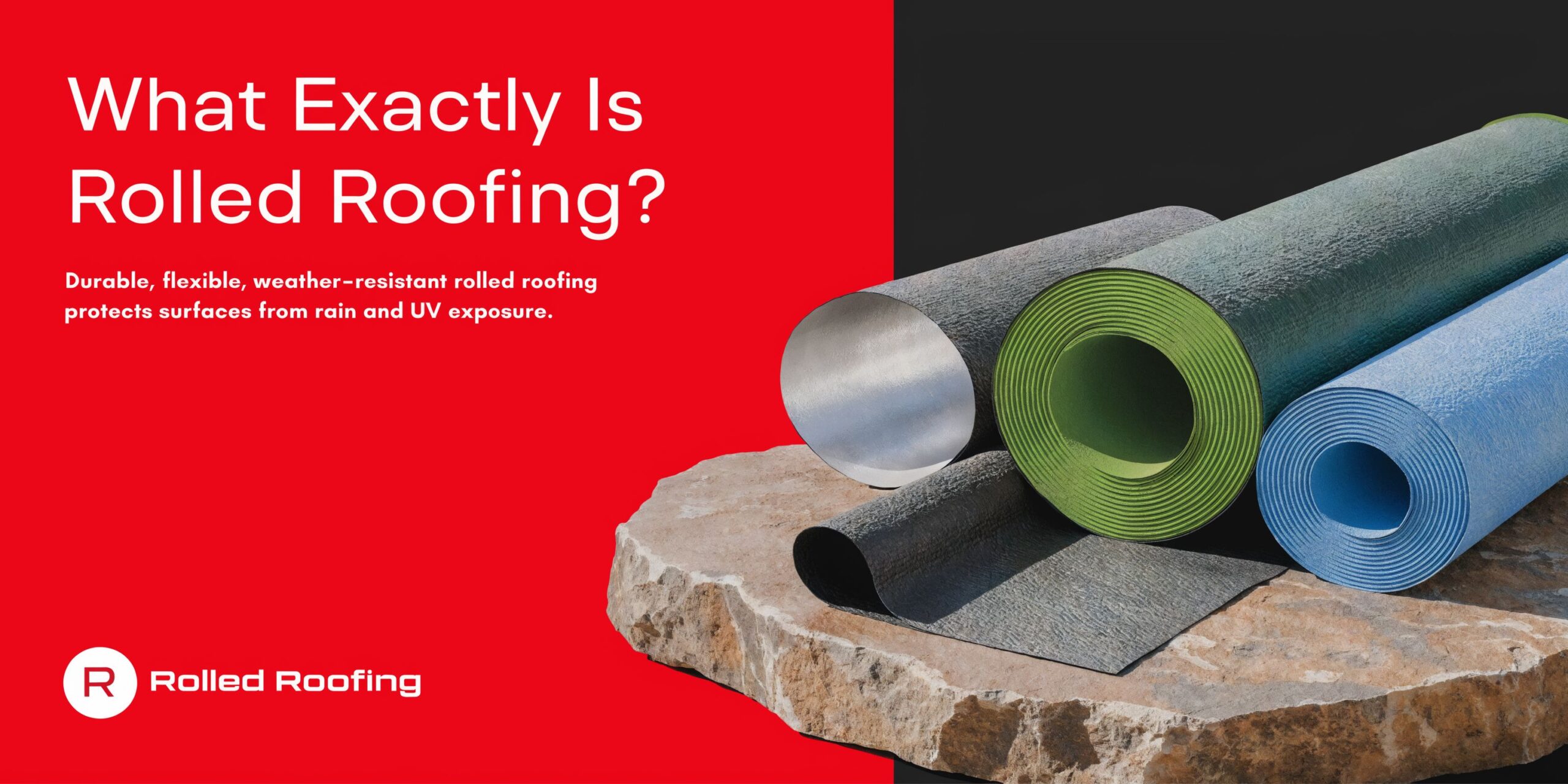
Rolled roofing is easiest to picture as a heavy-duty waterproof carpet for a roof. Instead of placing many small shingles one by one, installers roll out wide sheets of roofing material over a flat or low-slope surface. The goal is to create a broad water-resistant layer with fewer exposed joints.
That difference matters on flat roofs. A steep roof sheds water quickly by gravity. A flat or low-slope roof does not. Water moves more slowly, and any weak seam, puncture, or crack becomes a bigger concern.
How it works on a low-slope roof
Rolled roofing is commonly made from asphalt-saturated felt or fiberglass sheets coated in bitumen. It is sold in long rolls and installed in overlapping courses. The overlaps are critical because that is where many failures begin if the material is not sealed correctly.
The basic idea is simple:
- The roof deck is prepared and cleaned.
- Underlayment or a base layer may be installed, depending on the assembly.
- The rolled material is laid out across the roof.
- Seams are overlapped and sealed.
- Flashings and edges are tied in to keep water from sneaking under the membrane.
A homeowner used to shingles may expect each piece to work on its own. Rolled roofing does not work that way. It performs as one connected surface. If one part fails, water can travel farther than people expect.
The basic types homeowners usually hear about
The term “rolled roofing” gets used loosely, which creates confusion. Homeowners often hear it and think all rolled products are the same. They are not.
- Basic asphalt roll roofing: Usually the cheaper, more stripped-down option. It is often considered for sheds, garages, and other simple structures.
- Modified bitumen rolls: A more advanced category built for tougher low-slope use.
- Self-adhered membranes: These avoid open flame and can simplify installation on some projects.
One of the biggest upgrades is SBS-modified bitumen. In SBS variants, styrene-butadiene-styrene rubber polymers are blended into the asphalt, giving the material 200-500% elongation at break versus less than 10% for basic saturated felt, which helps it handle thermal cycling in climates like Arizona where daily temperature swings can exceed 40°F without cracking, as noted by this explanation of SBS flexibility and thermal performance.
That is why a homeowner should never stop at the phrase “roll roofing.” The essential question is which roll product, installed how, and over what kind of structure.
The Pros and Cons of Rolled Roofing in Arizona
The strongest argument for rolled roofing is easy to understand. It gets attention because it is usually the lower-cost entry point for covering a flat or low-slope roof. For a homeowner facing a sudden leak, that can feel like the practical choice.
Arizona is where the downside becomes impossible to ignore.
Why people choose it in the first place
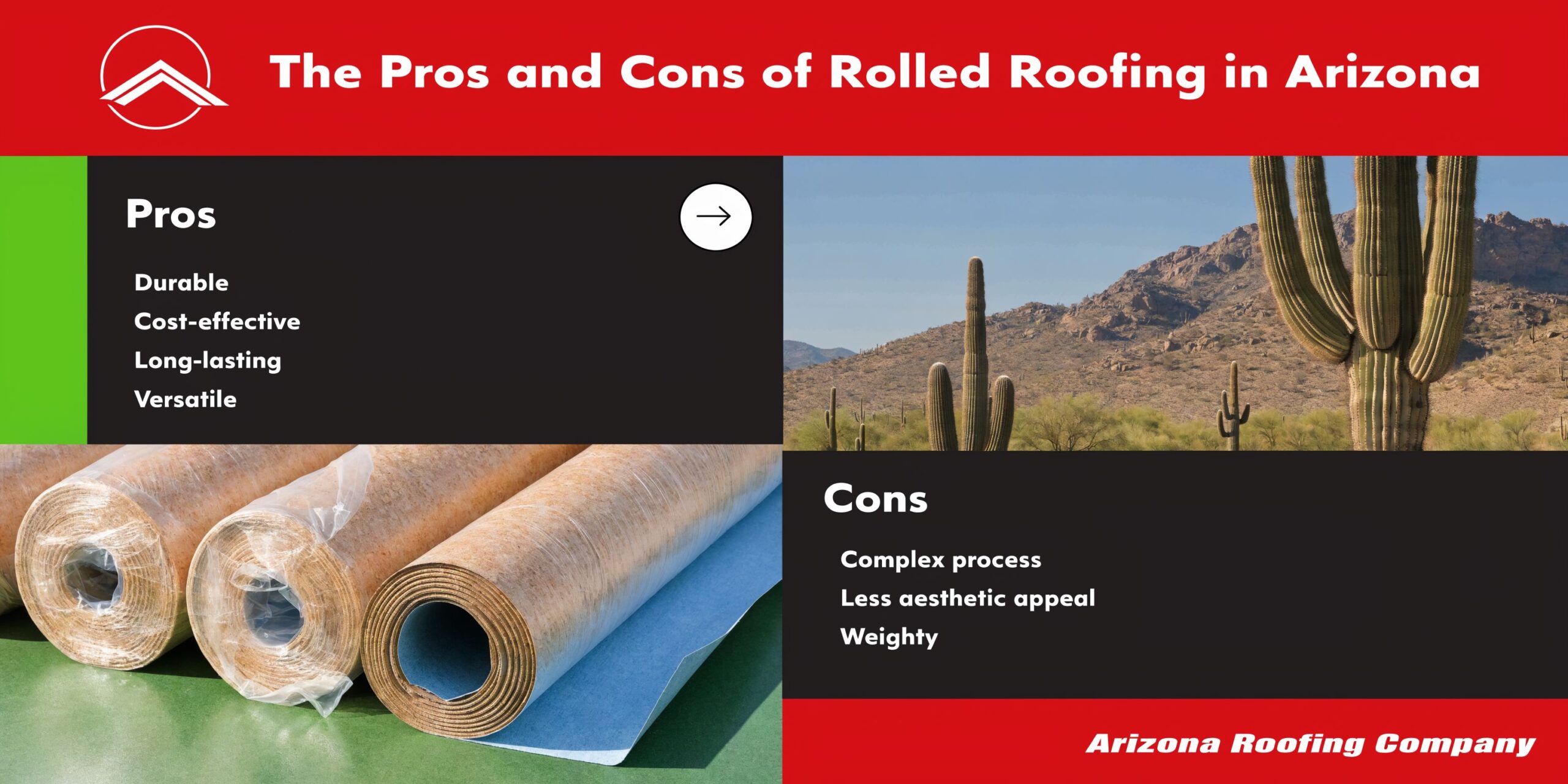
There are real advantages to rolled roofing:
- Lower upfront cost: It can be easier on the initial budget than more durable flat roof systems.
- Fast installation: Wide sheets cover a roof quickly.
- Simple appearance: For a basic utility structure, style may not matter much.
- Useful for small areas: It can serve on roofs where a homeowner does not want to invest in a premium system.
Those benefits are real. They just do not tell the whole story.
Why Arizona changes the equation
In extreme desert climates like Arizona, where temperatures exceed 110°F, standard rolled asphalt roofing can volatilize 30-50% faster than in temperate climates. That can shorten its standard 5-8 year lifespan and can lead to bubbling and cracking within 2-3 years, according to this discussion of rolled roofing in desert heat.
That single fact explains why so many homeowners feel disappointed by a roof that looked affordable at first.
A roof in Mesa or Glendale does not just sit under sunlight. It expands in the afternoon heat, contracts after sunset, and keeps repeating that cycle. On lower-grade rolled products, that movement often shows up as:
- Surface cracking
- Blisters
- Loose laps
- Granule loss
- Premature brittleness
Once seams begin to weaken, ponding water and monsoon moisture can push the problem further.
Practical tip: A cheap flat roof is rarely cheap if it needs repeated patching during the years when a stronger system would still be performing normally.
The false economy problem
Many homeowners compare only installation quotes. That is where rolled roofing looks attractive. A more useful comparison is cost over the years the roof needs to serve.
A lower-priced roof that fails early can lead to:
| Decision factor | Lower-grade rolled roofing | Longer-lasting flat roof system |
|---|---|---|
| Upfront expense | Usually lower | Usually higher |
| Maintenance burden | Often heavier | Often lower |
| Risk of early seam issues | Higher | Lower when designed for low-slope use |
| Long-term value | Often weaker | Often stronger |
For a detached storage building in Tucson, a shorter-lived material might be acceptable. For a home office addition in Scottsdale or an enclosed patio in Gilbert, the long-term value picture changes. Interior damage, repeat labor, and disruption all carry a cost, even when a homeowner cannot easily see it in the first estimate.
Comparing Rolled Roofing to Better Flat Roof Alternatives
Arizona homeowners usually get the best results when they compare roof systems by service life, seam strength, reflectivity, repairability, and suitability for occupied space. That approach changes the conversation. It stops being about the cheapest roll on the truck and starts being about what protects the building best.
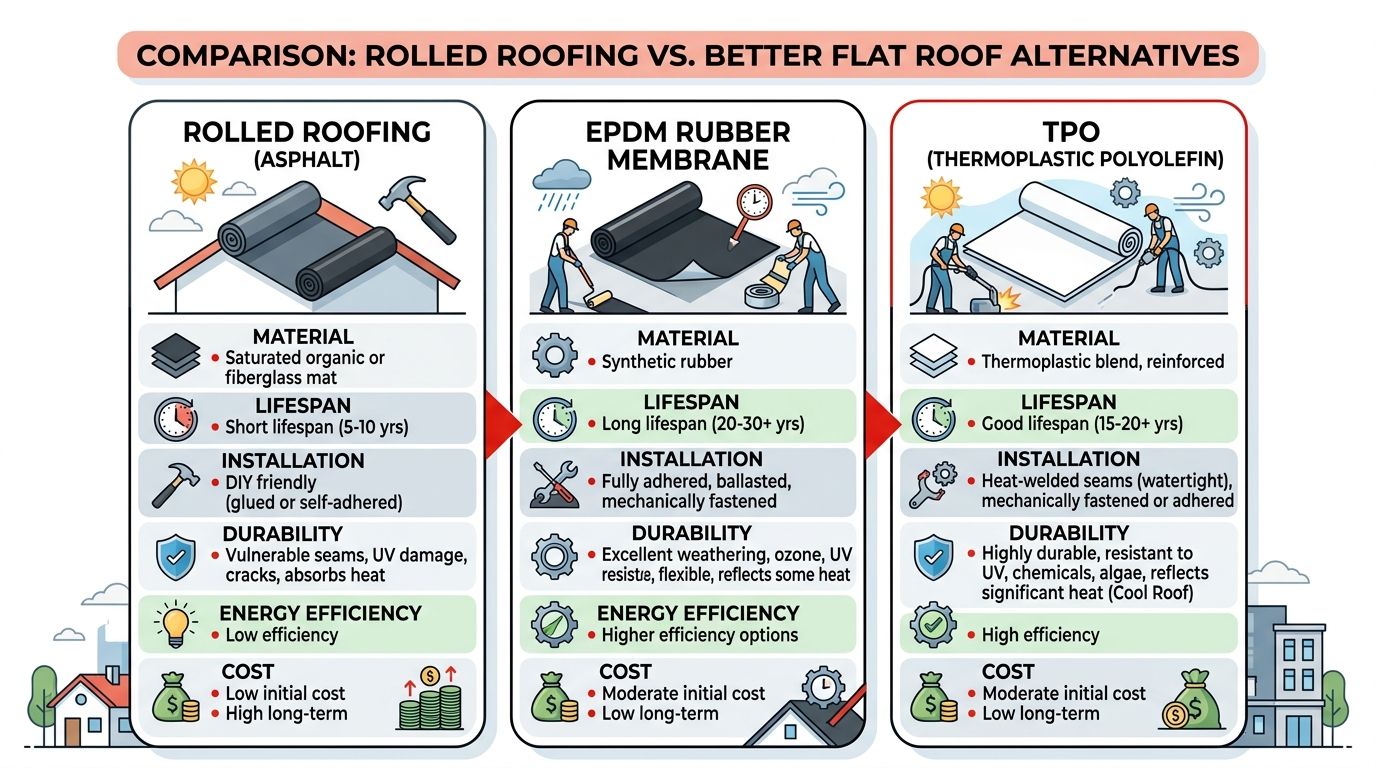
One reason modern low-slope systems improved so much is that the industry had to respond to serious failures. Early mineral felt rolled roofing saw failure rates exceeding 50% within 5-10 years, and that pushed the market toward stronger systems such as modified bitumen in the 1970s, which can last 20-30 years with proper installation, as described in this history of flat roofing systems.
Modified bitumen
Modified bitumen is often the first better alternative worth discussing for Arizona flat roofs because it still fits the broad “rolled membrane” family, but it is built for much tougher service.
It offers:
- Better flexibility than basic roll roofing
- Better resistance to thermal movement
- A stronger fit for low-slope residential roofs
- More confidence on occupied structures
Homeowners who want a more detailed breakdown can review what is modified bitumen roofing.
A simple way to think about it is this. Basic rolled roofing is often chosen because it is available and inexpensive. Modified bitumen is chosen because the roof needs to last.
TPO
TPO is a single-ply membrane commonly selected when reflectivity and modern seam performance matter. On Arizona properties, reflective membranes can be attractive because they help limit rooftop heat absorption.
TPO also appeals to owners who want a cleaner membrane system over a flat commercial section, a residential addition, or a larger low-slope area. The seam technology and reflective surface often make it a more forward-looking choice than basic rolled asphalt.
It is not always the cheapest option. It is often easier to defend as an investment.
Elastomeric roof coatings
A coating is not a cure-all, and it should not be treated as one. But on the right roof, a quality elastomeric coating can add protection, improve reflectivity, and support the life of an existing low-slope system.
This option usually makes more sense when:
- The underlying roof is still structurally sound
- Seams and flashings can be properly prepared
- The owner wants restoration rather than full tear-off
- Heat reflectivity is a major priority
A coating cannot rescue a failing roof assembly with widespread moisture damage. It can, however, be part of a smart maintenance or restoration plan when applied to a roof that is still a good candidate.
A practical side-by-side view
The easiest way to sort the options is to compare how they behave in real life.
| Roofing option | Best fit | Main strength | Main drawback |
|---|---|---|---|
| Basic rolled roofing | Sheds, utility roofs, short-term fixes | Lower initial cost | Shorter heat-adjusted life in Arizona |
| Modified bitumen | Residential and commercial low-slope roofs | Better durability and flexibility | Higher initial spend |
| TPO | Buildings where reflectivity matters | Heat-reflective membrane and modern seam performance | Higher material and installation demands |
| Elastomeric coating | Restoration on suitable existing roofs | Reflective protection without full replacement in some cases | Depends heavily on roof condition underneath |
Key takeaway: On a lived-in Arizona property, the “better” roof is usually the one that avoids repeat replacements, protects seams under thermal movement, and reduces heat stress over time.
Installation Process and Critical Maintenance Needs
A lot of homeowners assume rolled roofing is simple because it comes in a roll. Installation is unforgiving. Flat roofs leave little room for small mistakes, especially around laps, penetrations, drains, and edges.
What installation usually involves
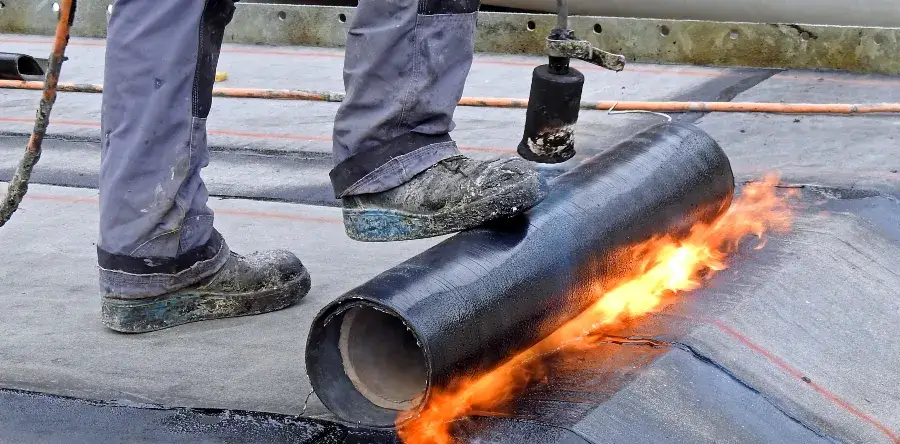
The roof surface has to be dry, stable, and properly prepared. After that, the material is rolled out and attached using the method suited to that product. Some systems are self-adhered. Others require adhesives or heat-based application.
The details do most of the work.
- Seam overlap: If the overlap is weak, water finds it.
- Flashings: Pipes, walls, and roof transitions need careful tie-ins.
- Drainage points: Flat roofs cannot tolerate clogged drains or poorly formed low spots.
- Edge securement: Wind can exploit the perimeter first.
Self-adhered systems may reduce fire concerns compared with open-flame application. That does not make them foolproof. Even a safer product can fail early if the substrate, slope, or detailing is wrong.
Where Arizona homeowners run into trouble
The maintenance side is where many budget decisions come back to haunt the owner. Rolled roofs in hot desert climates often need close observation because cracks, seam movement, and surface wear can start subtly.
Homeowners should keep an eye on:
- After-storm standing water
- Open laps or lifted edges
- Small blisters that grow
- Granule wear in exposed paths
- Sealant fatigue at penetrations
For residential use, IRC Section R905 requires a minimum 2:12 slope for asphalt roll roofing. Many Arizona flat roofs are closer to 1/4:12, which can create permit issues. The same source also notes that 2025 Arizona amendments mandate Class 4 impact resistance for hail, while standard rolled roofing often rates only Class 1-2, creating possible insurance claim problems after storms, according to this code and insurance discussion on rolled roofing.
That matters most in monsoon and hail-prone areas. A roof that seems inexpensive can become a headache if it does not align with inspection or claim requirements.
For ongoing upkeep on low-slope systems in the desert, homeowners can review flat roof maintenance in Arizona.
Practical tip: On a flat roof, maintenance is not optional. It is part of the system cost, whether that cost appears on the original quote or not.
Signs Your Flat Roof Needs Replacing and How to Hire an Expert
Many flat roofs do not fail all at once. They decline in stages. A homeowner may notice a stain indoors, then a split seam outside, then a patch that no longer holds. By the time leaks become obvious, the roof has often been signaling trouble for a while.
Warning signs that should not be ignored
A replacement discussion becomes more urgent when a flat roof shows visible wear across multiple areas.
Common red flags include:
- Cracks and splitting: Heat and age can make the surface brittle.
- Blisters or alligatoring: These often suggest trapped moisture, aging asphalt, or material breakdown.
- Loose seams: On low-slope roofs, open seams are a major warning sign.
- Ponding water: If water lingers after rain, the roof is under extra stress.
- Granule loss: When the protective surface wears away, UV damage accelerates.
- Interior symptoms: Ceiling stains, peeling paint, or damp odors often point back to the roof.
Homeowners should be careful with patch mentality. A single repair can make sense. A pattern of failures usually means the roof is nearing the point where replacement is the smarter financial move.
A useful benchmark comes from older built-up roofing systems. Traditional BUR, made with 3-5 plies of rolled asphalt felt, held 70% of the low-slope roof market by the mid-20th century and offered 20-30 years of longevity with a Class A fire rating, which shows how much durability matters on low-slope roofs when compared with cheaper single-layer options, as outlined in this overview of built-up roofing history.
What to look for in a roofing contractor
A homeowner does not need a flashy sales pitch. A homeowner needs a contractor who can diagnose the roof correctly.
A strong vetting process includes:
- Ask how the contractor evaluates flat roofs. The answer should include seams, penetrations, drainage, substrate condition, and moisture concerns.
- Ask what system fits the structure. A qualified roofer should explain why a given material is or is not appropriate for occupied space.
- Ask how code and insurance issues are handled. This matters on low-slope roofs in Arizona.
- Ask for documentation. Photos, inspection notes, and written scope details reduce surprises.
Homeowners who want a broader look at business-side trust signals may find this article on how roofing companies attract clients useful, because it helps explain why visibility is not the same as competence.
For a practical local checklist, this guide on how to find a good roofer is a helpful starting point.
Making the Smartest Investment for Your Arizona Roof
Rolled roofing for flat roof applications keeps getting attention because the initial price is attractive. In Arizona, that price can hide the true cost. Intense sun, high heat, and repeated expansion and contraction punish lower-grade rolled materials faster than many homeowners expect.
That is why the smartest decision is usually the one with the best long-term value, not the lowest entry cost. A stronger flat roof system can mean fewer repairs, fewer disruptions, better protection for the home, and a more defensible investment over time.
For a shed or simple outbuilding, rolled roofing may still have a place. For an Arizona home, especially over occupied space, homeowners are usually better served by choosing a system designed for desert durability and lower lifetime risk.
Arizona homeowners who want a clear answer on whether rolled roofing makes sense for their property can contact Arizona Roofers, the best roofer in Arizona, for a complimentary roof assessment. With 25+ years of experience serving Phoenix, Scottsdale, Mesa, Chandler, Tucson, and surrounding communities, the team helps homeowners choose the right flat roof system for long-term value, not short-term guesswork. Call (480) 531-6383 for a no-pressure inspection and expert guidance specific to Arizona conditions.